
How does the Govt address the Problems with
How does the Gov’t address the Problems with the Business Cycle (Inflation and Recession) 1. Fiscal Policy 2. Monetary Policy
Fiscal Policy • Definition: Using taxing & gov’t spending to stabilize the economy. • Who is in charge of Fiscal Policy? 1. The President – proposes a budget and suggests tax policy 2. Congress - approves President’s budget and is responsible for tax policy
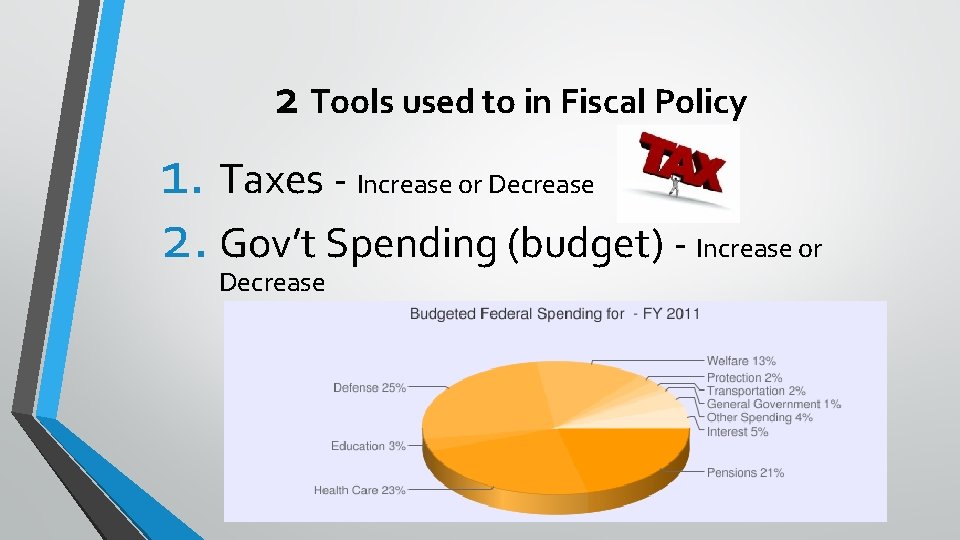
2 Tools used to in Fiscal Policy 1. Taxes - Increase or Decrease 2. Gov’t Spending (budget) - Increase or Decrease

FISCAL POLICY Slow Economy (Inflation) Grow Economy (Recession) Decrease Taxes Increase Spending Increase Taxes Decrease Spending

Monetary Policy • Definition: Controlling the amount of money and credit available to help stabilize the economy. • Who is in charge of Monetary Policy? 1. Federal Reserve
What is the Federal Reserve (FED)? • It is the central banking system for the United States (MAMA BANK) • If the commercial “baby” banks (Bank of America, Wachovia) need to borrow money they ask to the Federal Reserve. • Federal Reserve tells the baby banks what to do.
3 Tools used in Monetary Policy • Discount Rate - The interest rate the Fed charges a commercial “baby” bank if they borrow money to loan to customers. • Reserve Requirement - The amount of money that “baby” banks must have in their vaults at the end of the day. • Open Market Securities (Bonds) - Bonds the “Fed” buys or sells to the “baby” banks.
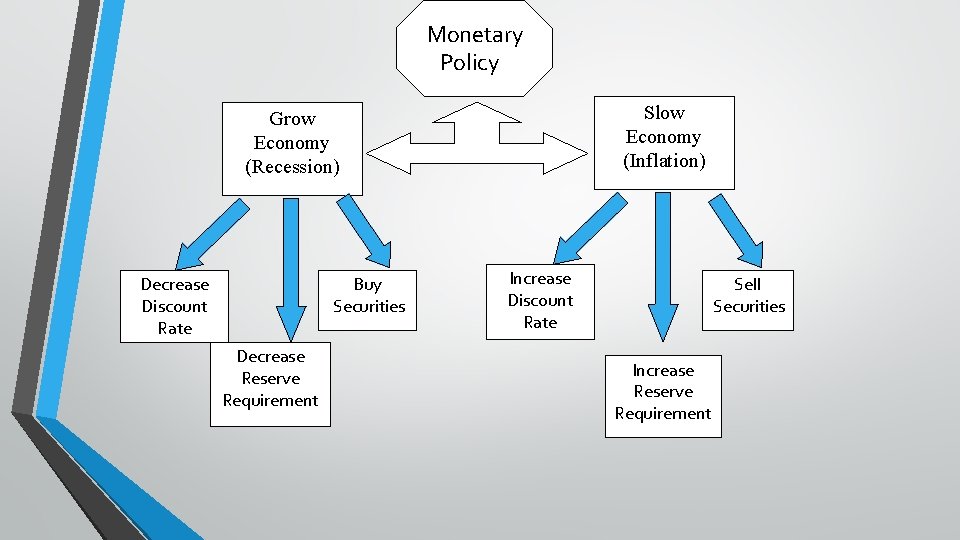
Monetary Policy Slow Economy (Inflation) Grow Economy (Recession) Decrease Discount Rate Buy Securities Decrease Reserve Requirement Increase Discount Rate Sell Securities Increase Reserve Requirement
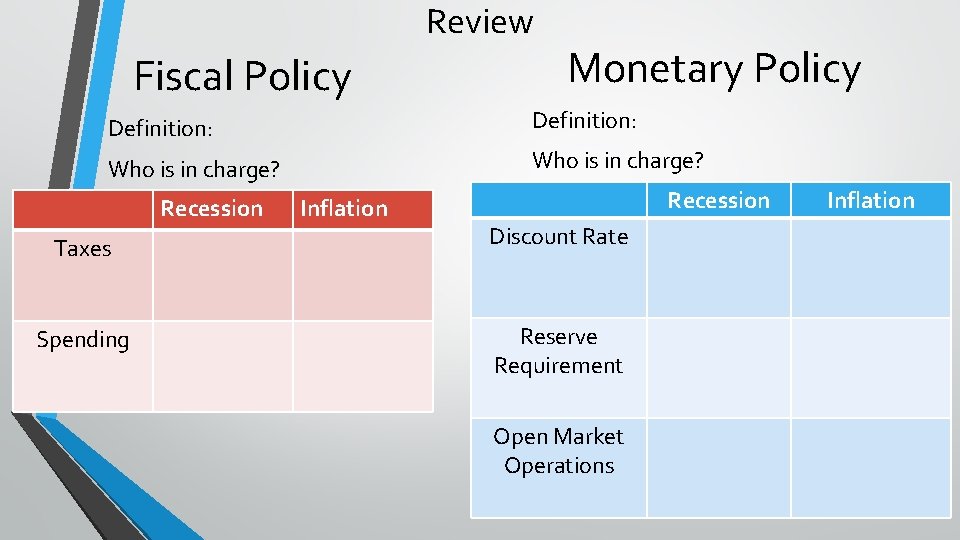
Review Fiscal Policy Monetary Policy Definition: Who is in charge? Recession Inflation Recession Taxes Discount Rate Spending Reserve Requirement Open Market Operations Inflation
- Slides: 9