
How does the Body Protect Itself The immune
How does the Body Protect Itself? The immune System
How does your immune system work? • Ted ed video • https: //ed. ted. com/lessons/how-does-the-immune-system-workemma-bryce
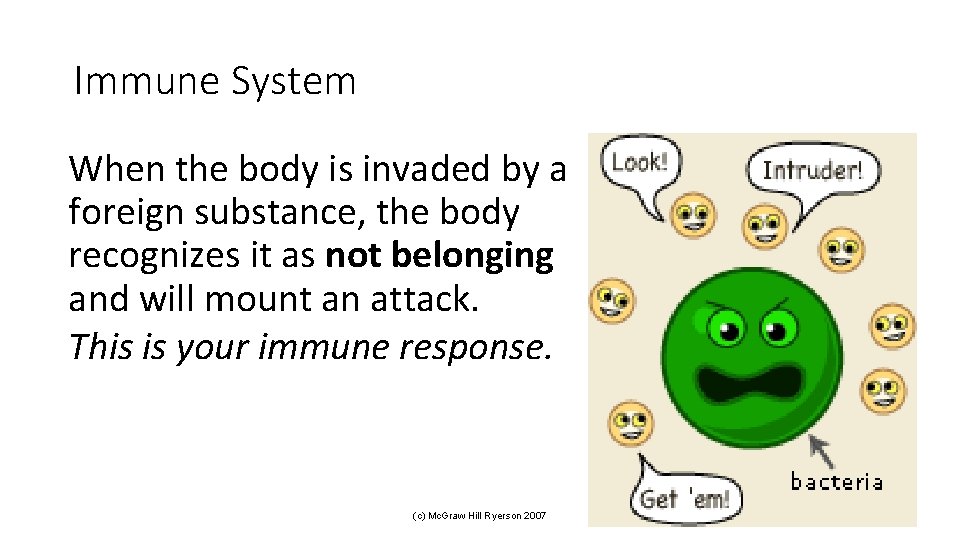
Immune System When the body is invaded by a foreign substance, the body recognizes it as not belonging and will mount an attack. This is your immune response. (c) Mc. Graw Hill Ryerson 2007
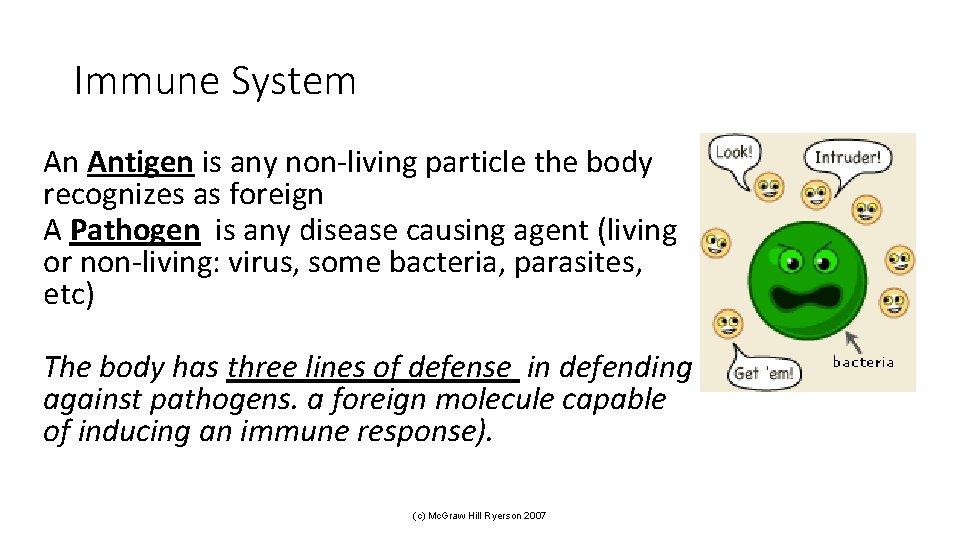
Immune System An Antigen is any non-living particle the body recognizes as foreign A Pathogen is any disease causing agent (living or non-living: virus, some bacteria, parasites, etc) The body has three lines of defense in defending against pathogens. a foreign molecule capable of inducing an immune response). (c) Mc. Graw Hill Ryerson 2007
What makes up our Immune System? The body has three lines of defense in defending against pathogens. a foreign molecule capable of inducing an immune response).
The Players: Skin, White Blood Cells and Antibodies • Barriers – skin, acid, oils, hair
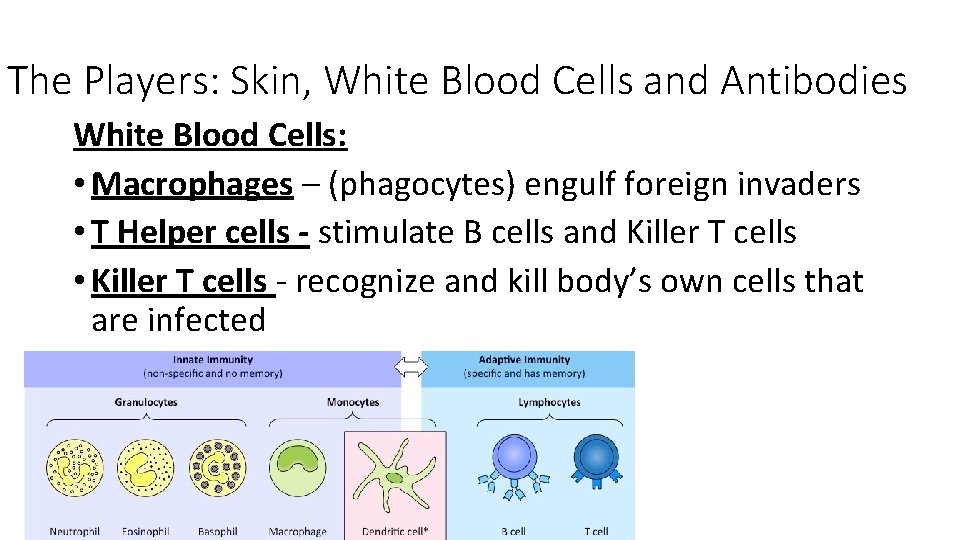
The Players: Skin, White Blood Cells and Antibodies White Blood Cells: • Macrophages – (phagocytes) engulf foreign invaders • T Helper cells - stimulate B cells and Killer T cells • Killer T cells - recognize and kill body’s own cells that are infected • B cells – produce antibodies
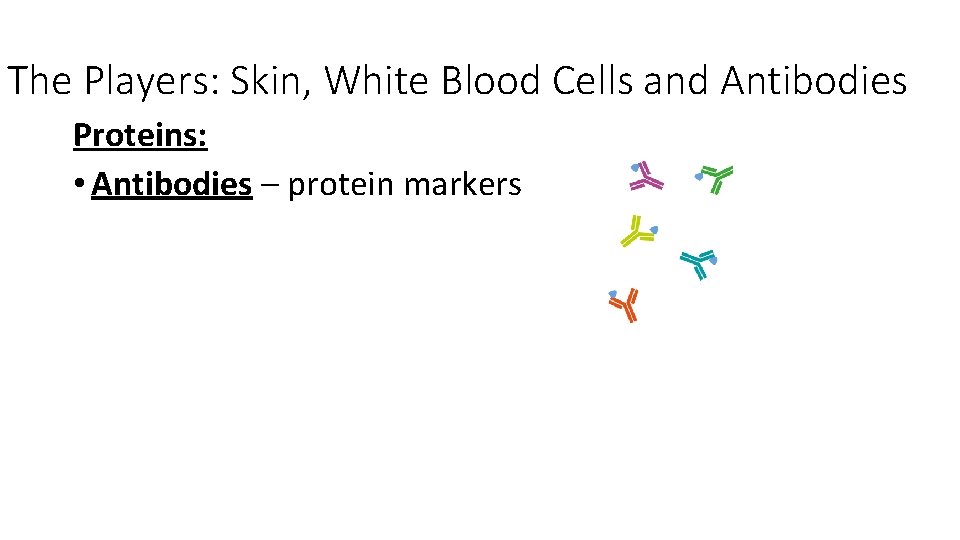
The Players: Skin, White Blood Cells and Antibodies Proteins: • Antibodies – protein markers
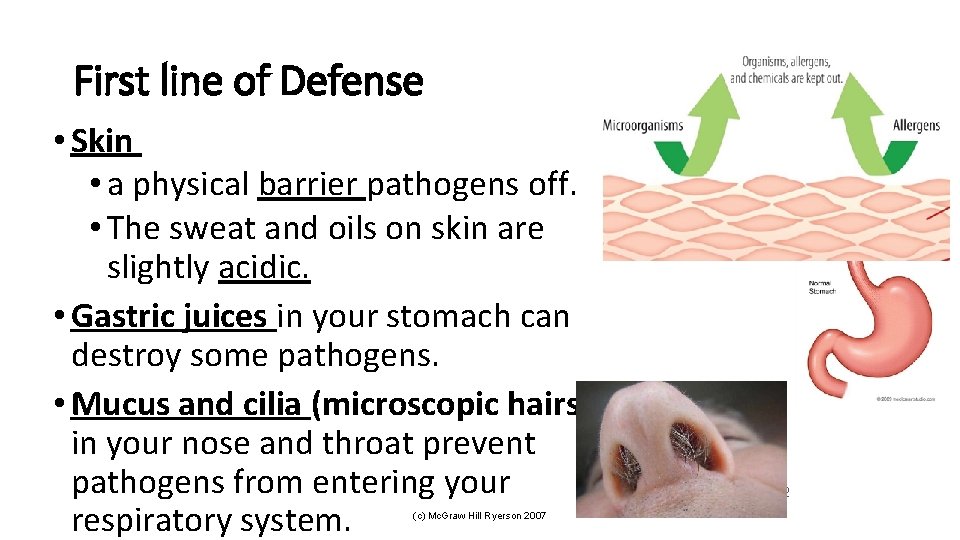
First line of Defense • Skin • a physical barrier pathogens off. • The sweat and oils on skin are slightly acidic. • Gastric juices in your stomach can destroy some pathogens. • Mucus and cilia (microscopic hairs) in your nose and throat prevent pathogens from entering your respiratory system. (c) Mc. Graw Hill Ryerson 2007 See page 102
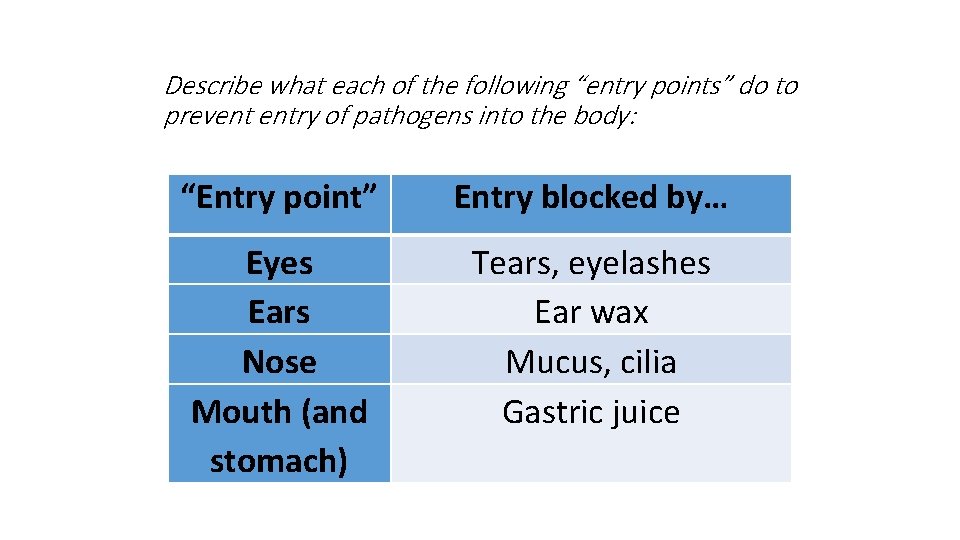
Describe what each of the following “entry points” do to prevent entry of pathogens into the body: “Entry point” Entry blocked by… Eyes Ears Nose Mouth (and stomach) Tears, eyelashes Ear wax Mucus, cilia Gastric juice
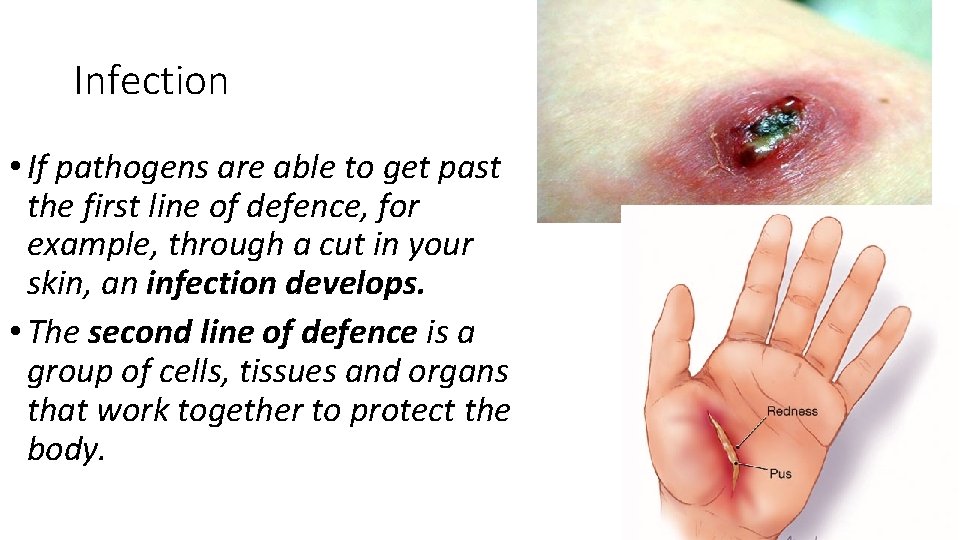
Infection • If pathogens are able to get past the first line of defence, for example, through a cut in your skin, an infection develops. • The second line of defence is a group of cells, tissues and organs that work together to protect the body.
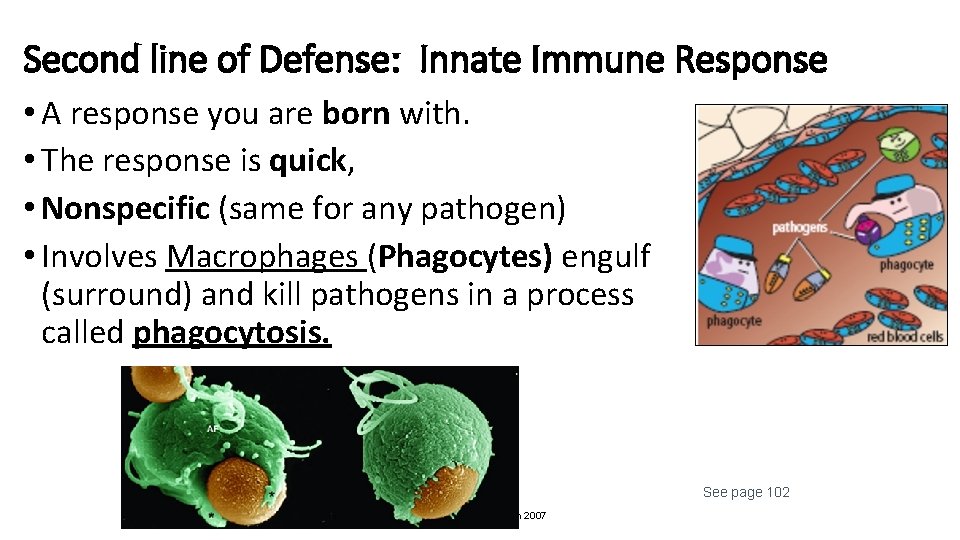
Second line of Defense: Innate Immune Response • A response you are born with. • The response is quick, • Nonspecific (same for any pathogen) • Involves Macrophages (Phagocytes) engulf (surround) and kill pathogens in a process called phagocytosis. See page 102 (c) Mc. Graw Hill Ryerson 2007
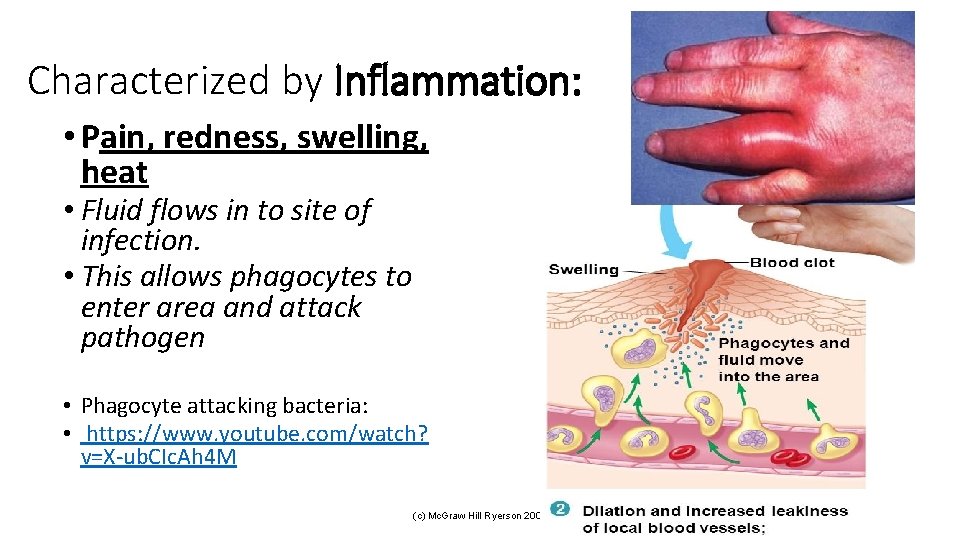
Characterized by Inflammation: • Pain, redness, swelling, heat • Fluid flows in to site of infection. • This allows phagocytes to enter area and attack pathogen • Phagocyte attacking bacteria: • https: //www. youtube. com/watch? v=X-ub. CIc. Ah 4 M See page 103 (c) Mc. Graw Hill Ryerson 2007
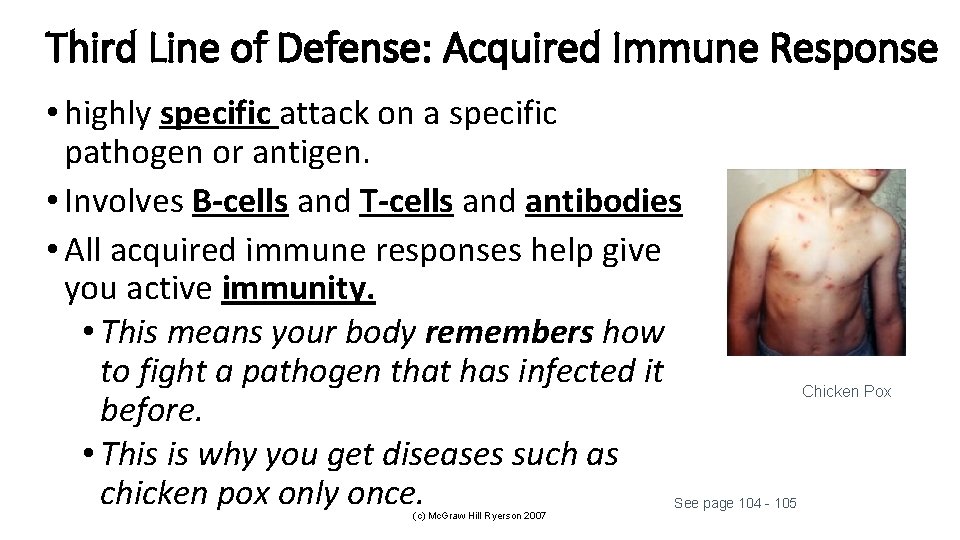
Third Line of Defense: Acquired Immune Response • highly specific attack on a specific pathogen or antigen. • Involves B-cells and T-cells and antibodies • All acquired immune responses help give you active immunity. • This means your body remembers how to fight a pathogen that has infected it before. • This is why you get diseases such as chicken pox only once. (c) Mc. Graw Hill Ryerson 2007 See page 104 - 105 Chicken Pox

Ted Ed video: Cell vs Virus https: //www. youtube. com/watch? v=oq. Gu. Jh. Oe. Mek&feature=youtu. be
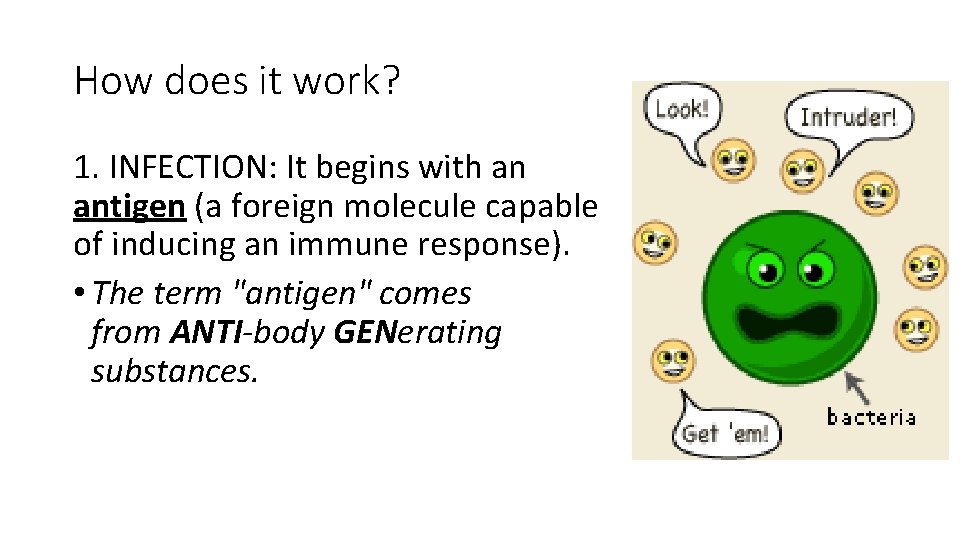
How does it work? 1. INFECTION: It begins with an antigen (a foreign molecule capable of inducing an immune response). • The term "antigen" comes from ANTI-body GENerating substances.
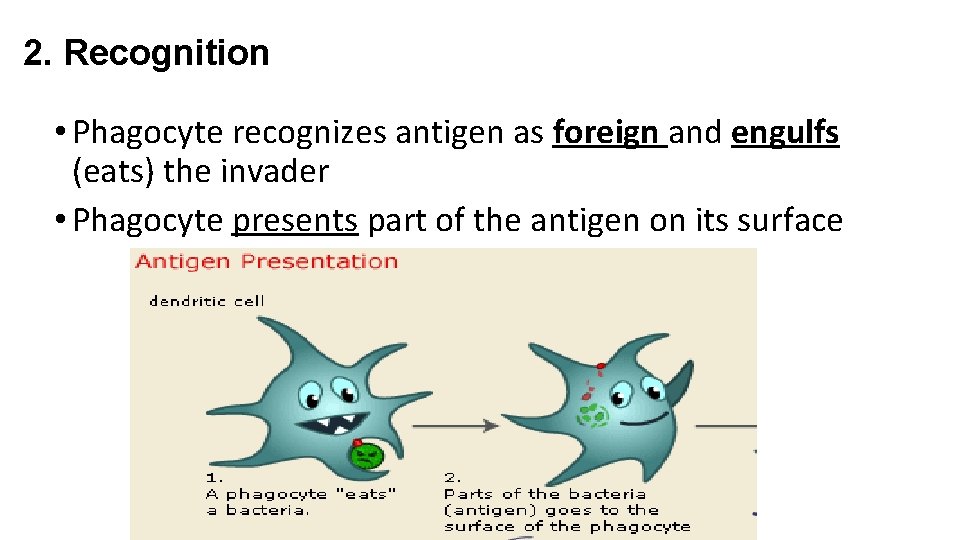
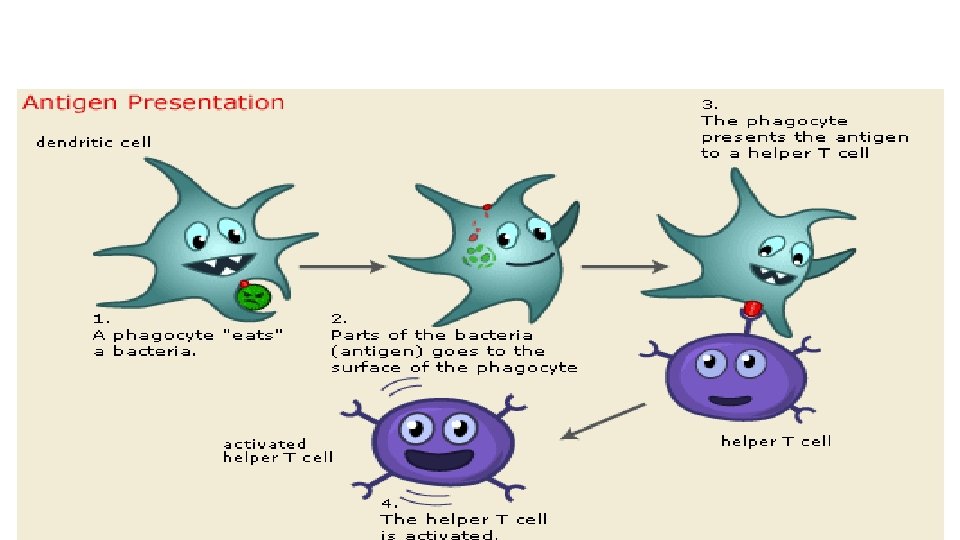
2. Recognition • Phagocyte recognizes antigen as foreign and engulfs (eats) the invader • Phagocyte presents part of the antigen on its surface
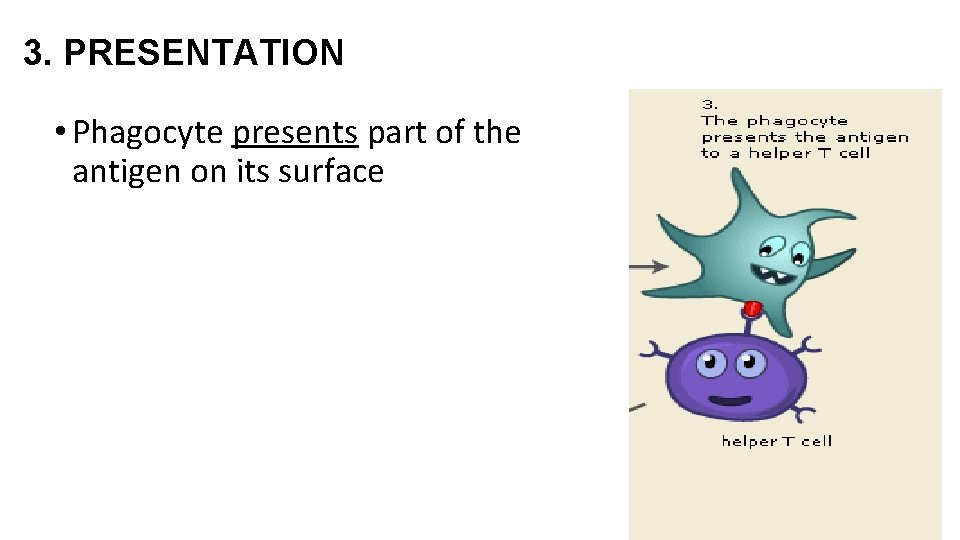
3. PRESENTATION • Phagocyte presents part of the antigen on its surface
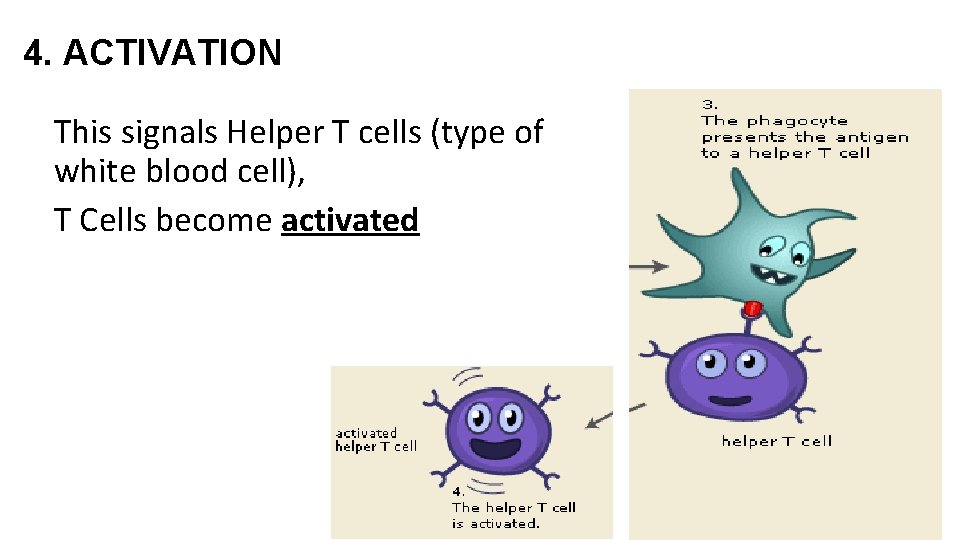
4. ACTIVATION This signals Helper T cells (type of white blood cell), T Cells become activated
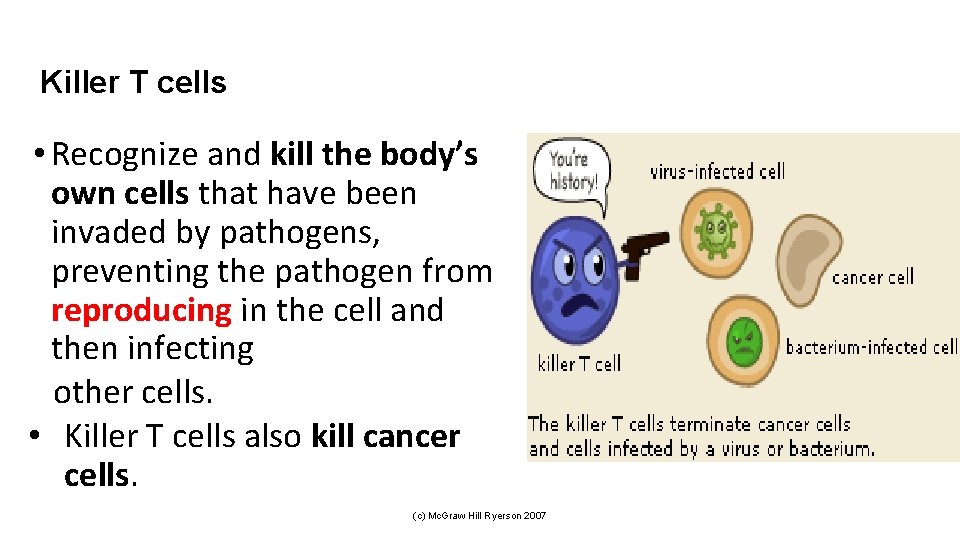
Killer T cells • Recognize and kill the body’s own cells that have been invaded by pathogens, preventing the pathogen from reproducing in the cell and then infecting other cells. • Killer T cells also kill cancer cells. (c) Mc. Graw Hill Ryerson 2007
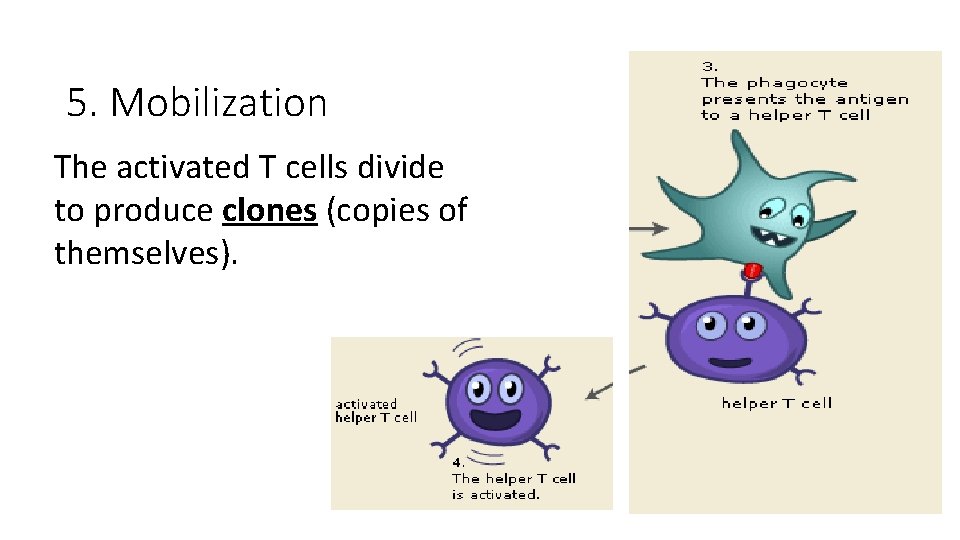
5. Mobilization The activated T cells divide to produce clones (copies of themselves).
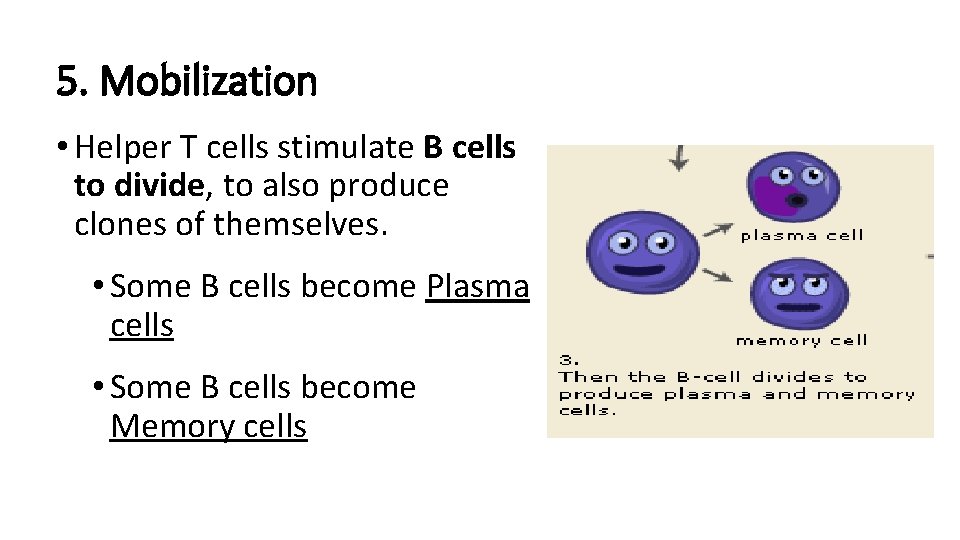
5. Mobilization • Helper T cells stimulate B cells to divide, to also produce clones of themselves. • Some B cells become Plasma cells • Some B cells become Memory cells
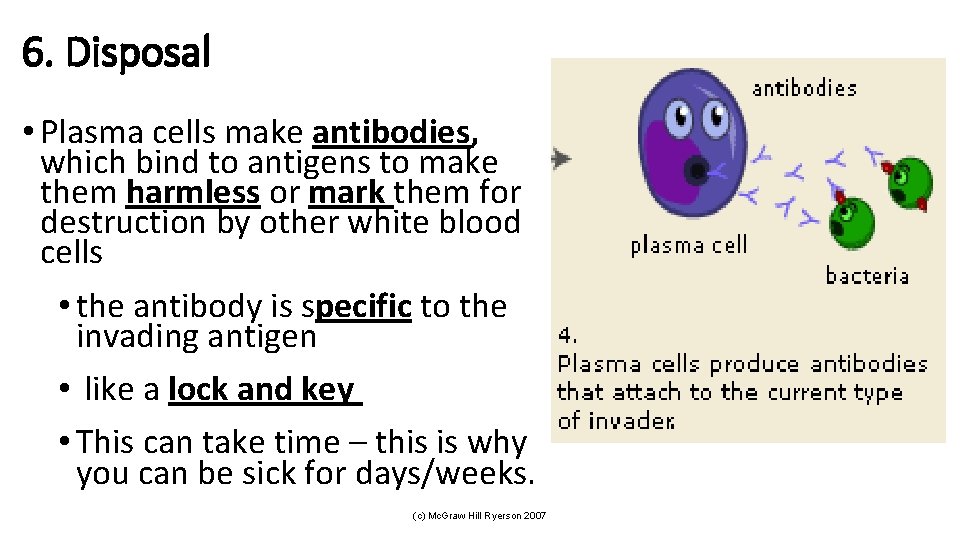
6. Disposal • Plasma cells make antibodies, which bind to antigens to make them harmless or mark them for destruction by other white blood cells • the antibody is specific to the invading antigen • like a lock and key • This can take time – this is why you can be sick for days/weeks. (c) Mc. Graw Hill Ryerson 2007
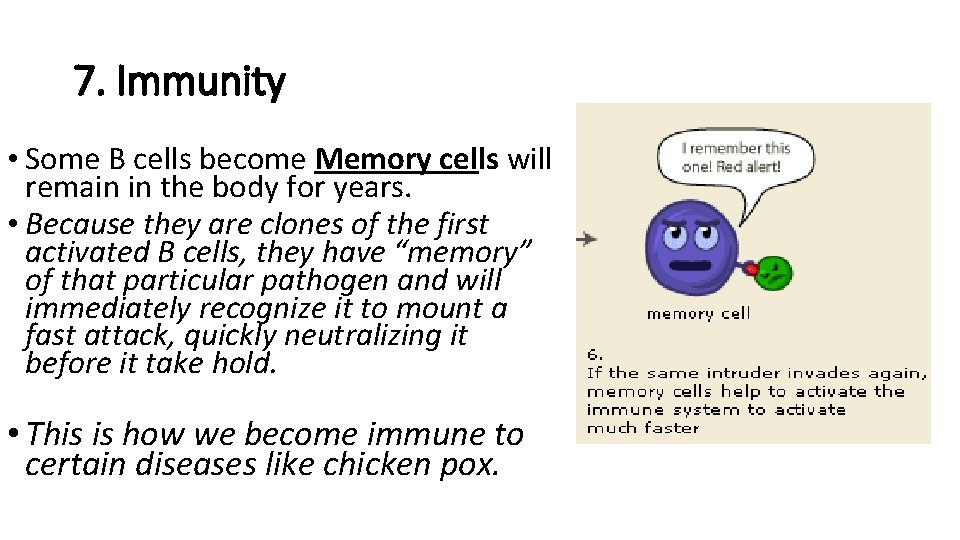
7. Immunity • Some B cells become Memory cells will remain in the body for years. • Because they are clones of the first activated B cells, they have “memory” of that particular pathogen and will immediately recognize it to mount a fast attack, quickly neutralizing it before it take hold. • This is how we become immune to certain diseases like chicken pox.
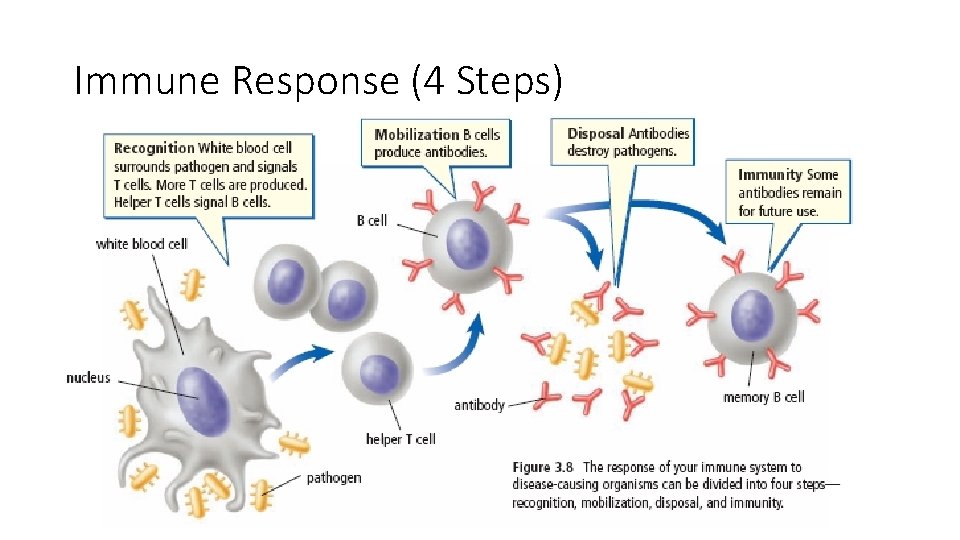
Immune Response (4 Steps) See page 105 (c) Mc. Graw Ryerson 2007 Take the Section 3. 1 Hill. Quiz
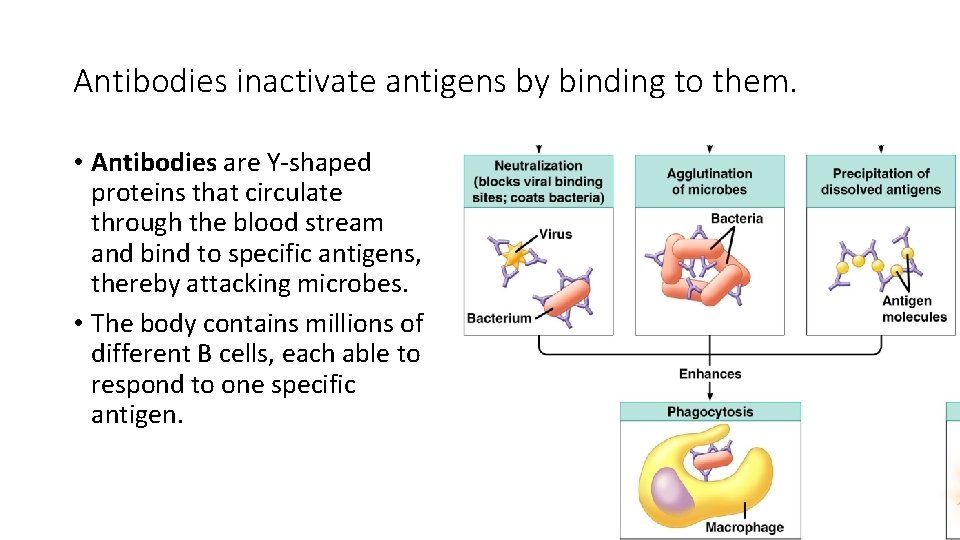
Antibodies inactivate antigens by binding to them. • Antibodies are Y-shaped proteins that circulate through the blood stream and bind to specific antigens, thereby attacking microbes. • The body contains millions of different B cells, each able to respond to one specific antigen.

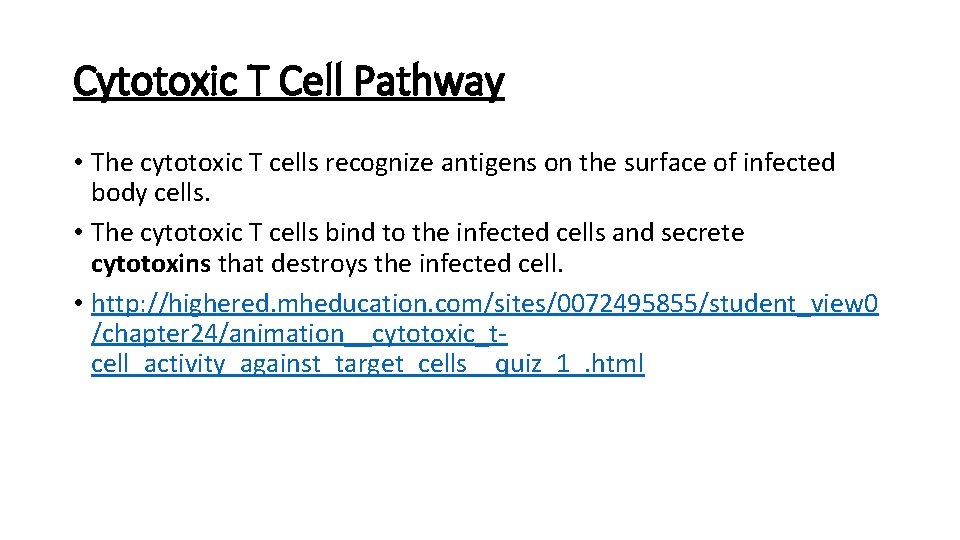
Cytotoxic T Cell Pathway • The cytotoxic T cells recognize antigens on the surface of infected body cells. • The cytotoxic T cells bind to the infected cells and secrete cytotoxins that destroys the infected cell. • http: //highered. mheducation. com/sites/0072495855/student_view 0 /chapter 24/animation__cytotoxic_tcell_activity_against_target_cells__quiz_1_. html
T Cell Pathway • T-cells can either directly destroy the microbes or use chemical secretions to destroy them. • At the same time, T cells stimulate B cells to multiply and produce antibodies and memory B cells. • If the same antigen enters the body later, the memory B cells divide to make more plasma cells and memory cells that can protect against future attacks by the same antigen. • When the T cells activate (stimulate) the B cells to divide into plasma cells, this is called antibody-mediated immunity. • http: //highered. mheducation. com/sites/0072495855/student_view 0 /chapter 24/animation__the_immune_response. html
Videos Ted ed three lines of defence https: //youtu. be/oq. Gu. Jh. Oe. Mek Immune system explained Kurzgesagt Part I bacteria https: //www. youtube. com/watch? v=z. QGOc. OUBi 6 s Immune system Kids. Health https: //www. youtube. com/watch? v=WJEc 2 GDEfz 8 Kids. Health How Immune system works https: //www. youtube. com/watch? v=24 IYt 5 Z 3 e. C 4&t=316 s Sneeze: https: //www. youtube. com/watch? v=y. Toii 3 -p-NI Ted ed How are germs spread goldilocks http: //ed. ted. com/lessons/how-do-germs-spread-and-why-do-they-make-us -sick-yannay-khaikin-and-nicole-mideo Reading Check #1 -6 pg 106 https: //www. youtube. com/watch? v=Non 4 Mk. YQp. YA (c) Mc. Graw Hill Ryerson 2007
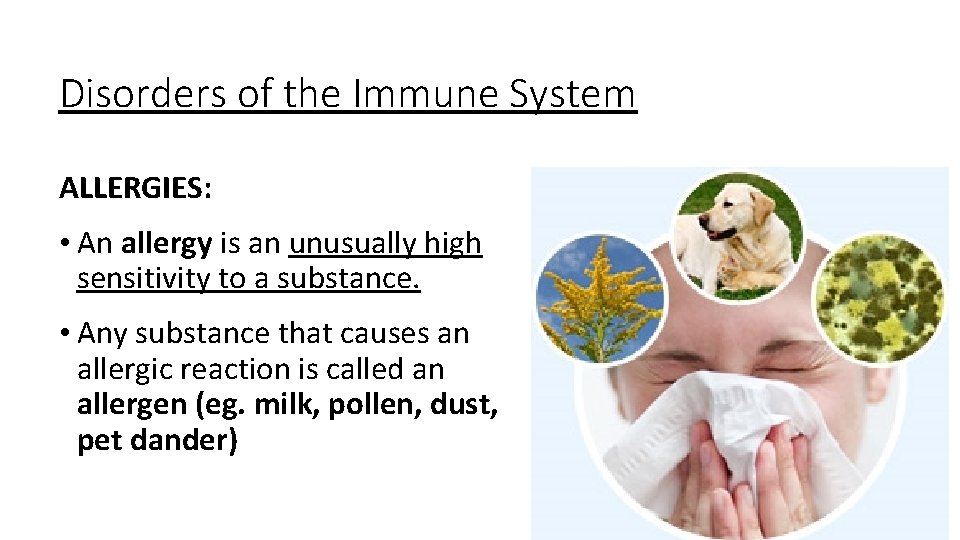
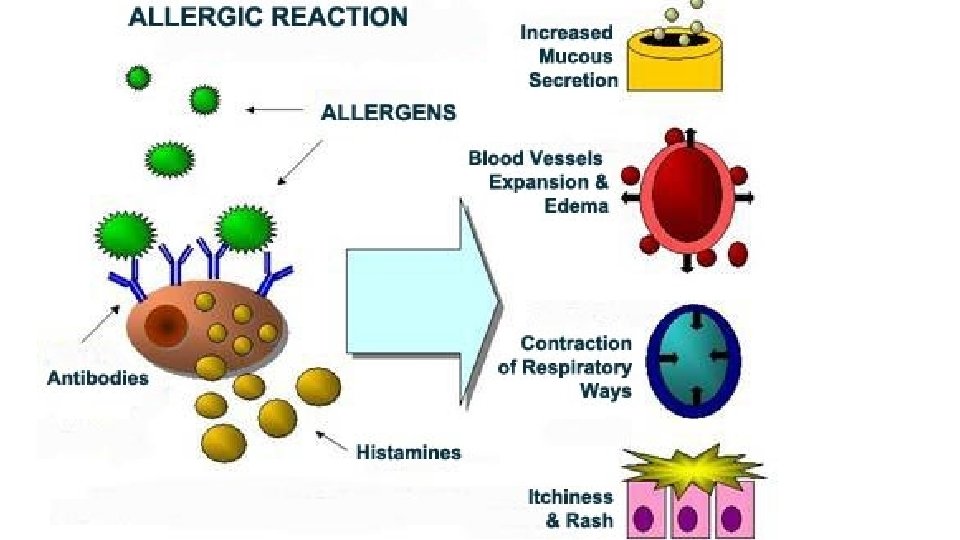
Disorders of the Immune System ALLERGIES: • An allergy is an unusually high sensitivity to a substance. • Any substance that causes an allergic reaction is called an allergen (eg. milk, pollen, dust, pet dander)
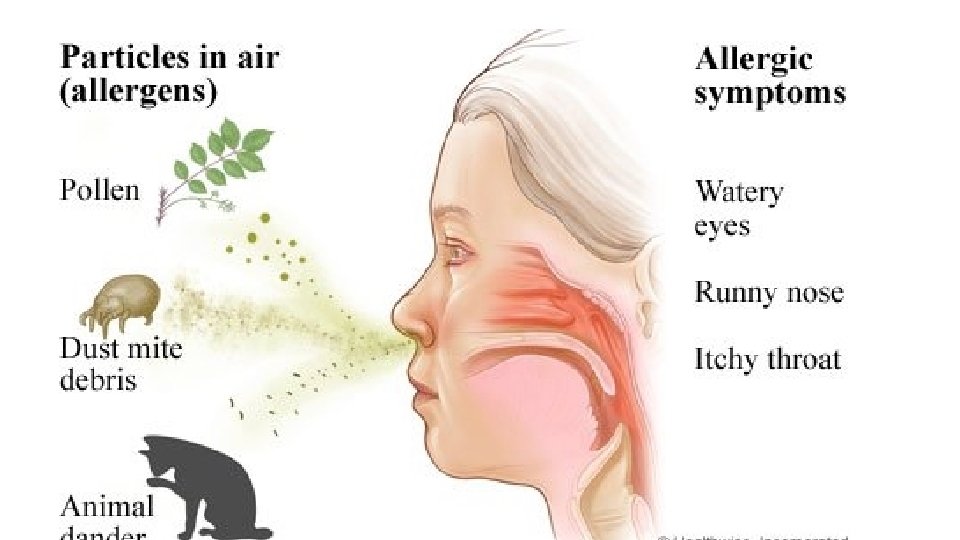
Symptoms of Allergies
ALLERGIES: • Side effects of an allergic reaction are a result of histamine. • Histamine is a chemical that your body releases when you need to fight invaders. (common symptoms: runny nose and watery eyes)
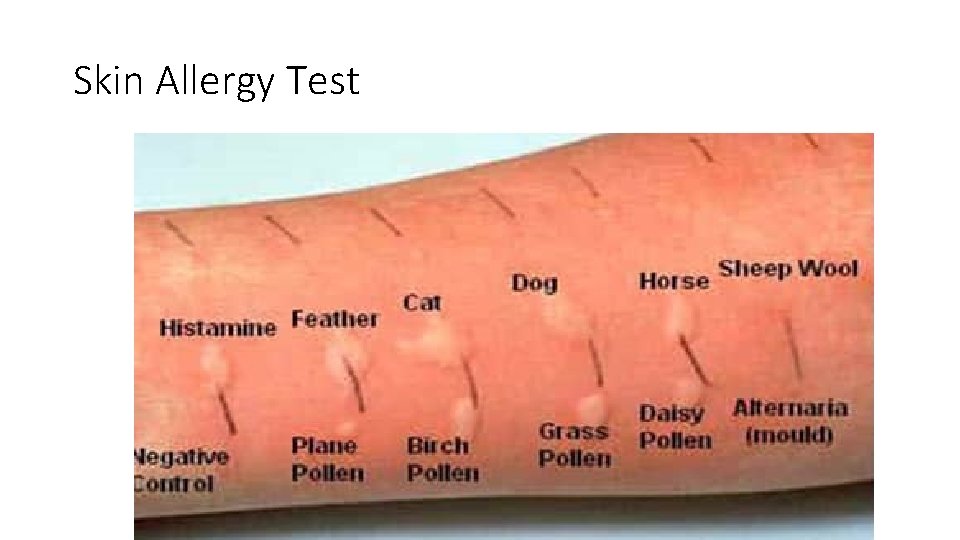
Skin Allergy Test
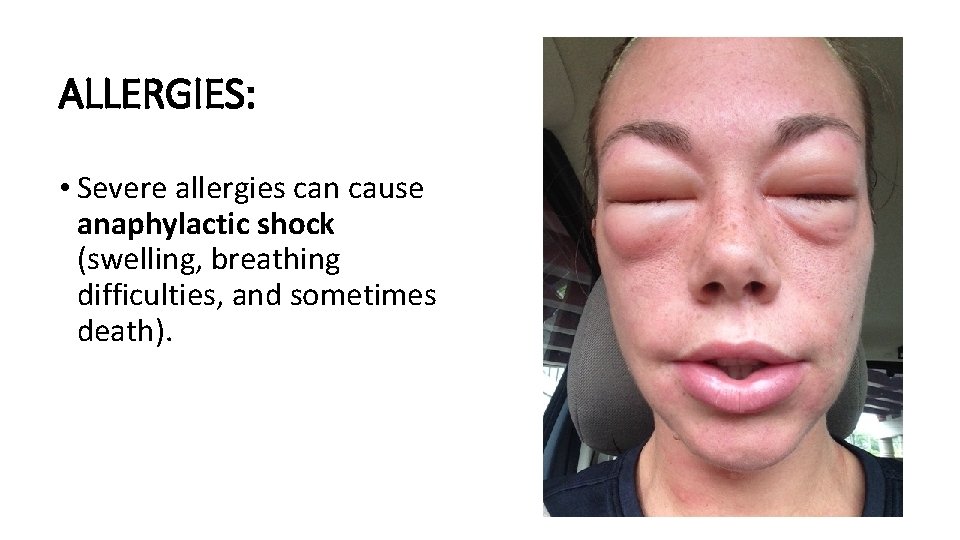
ALLERGIES: • Severe allergies can cause anaphylactic shock (swelling, breathing difficulties, and sometimes death).
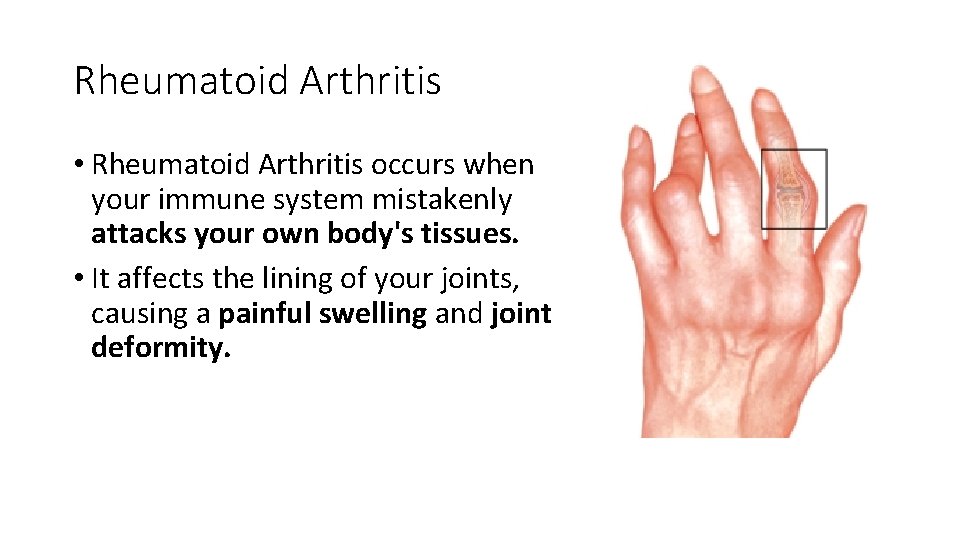
Rheumatoid Arthritis • Rheumatoid Arthritis occurs when your immune system mistakenly attacks your own body's tissues. • It affects the lining of your joints, causing a painful swelling and joint deformity.
AIDS/HIV • Acquired Immunodeficiency Syndrome (AIDS) is an infection of the immune system that leads to health complications and often death. • AIDS is cause by the human immunodeficiency virus (HIV) that attacks the immune system by infecting Helper T-cells.
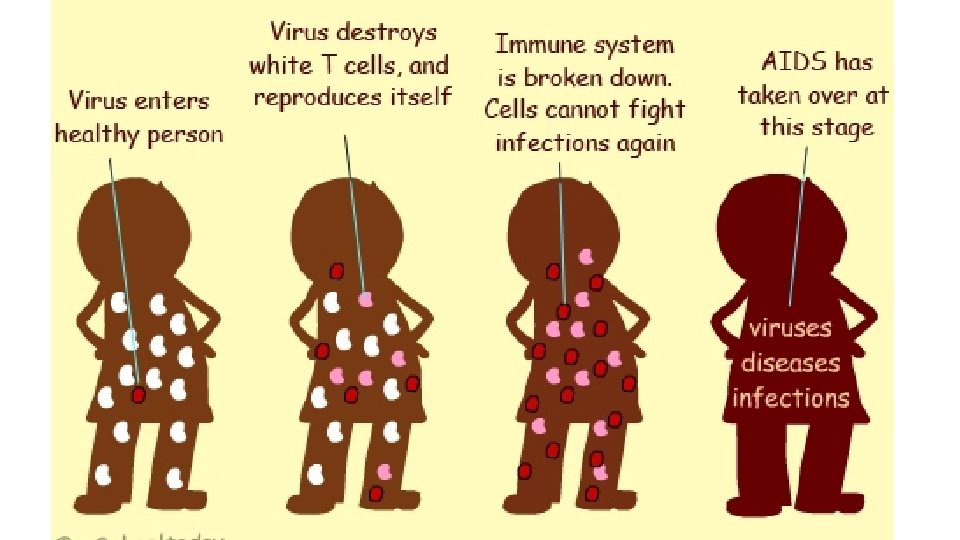
AIDS
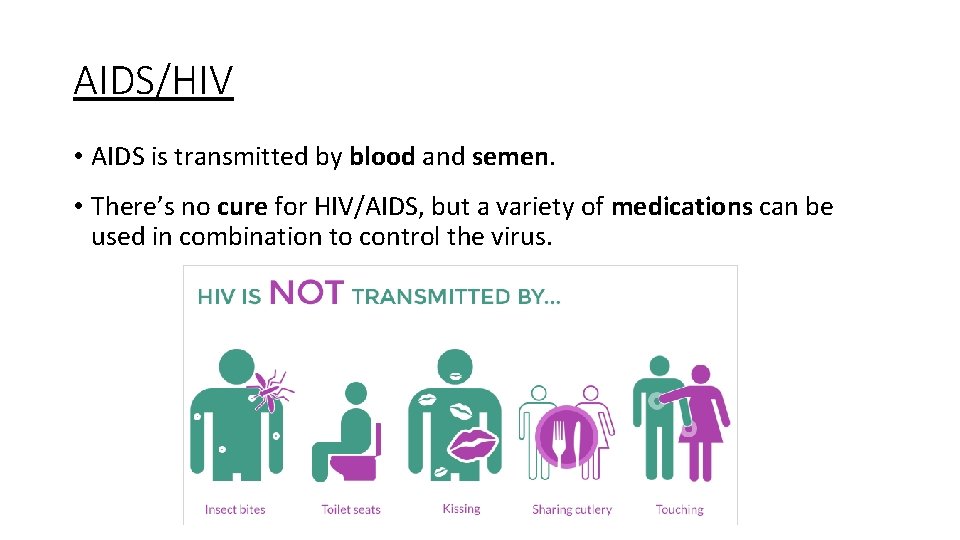
AIDS/HIV • AIDS is transmitted by blood and semen. • There’s no cure for HIV/AIDS, but a variety of medications can be used in combination to control the virus.
Why it’s so hard to cure HIV • https: //www. ted. com/talks/janet_iwasa_why_it_s_so_hard_to_cure _hiv_aids
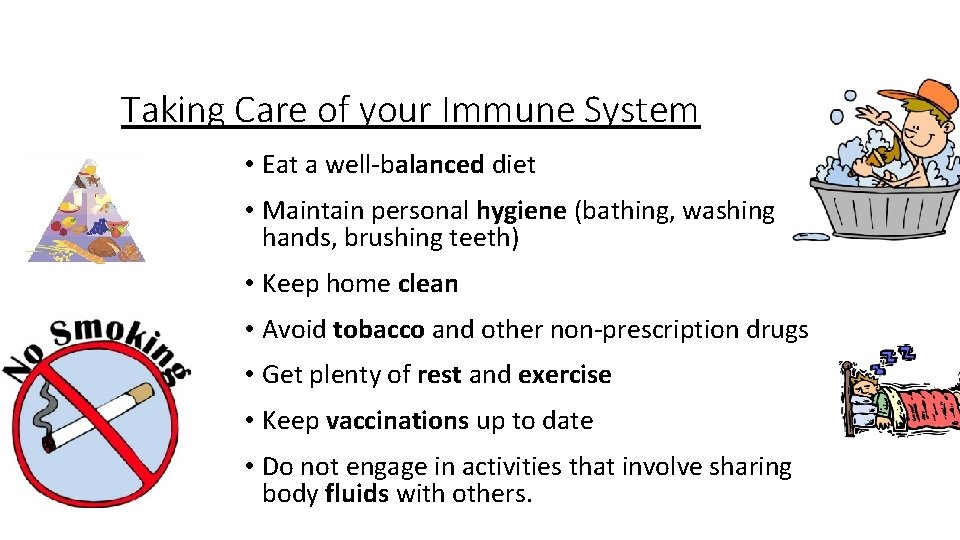
Taking Care of your Immune System • Eat a well-balanced diet • Maintain personal hygiene (bathing, washing hands, brushing teeth) • Keep home clean • Avoid tobacco and other non-prescription drugs • Get plenty of rest and exercise • Keep vaccinations up to date • Do not engage in activities that involve sharing body fluids with others.

Immune Response Comic Strip (c) Mc. Graw Hill Ryerson 2007
- Slides: 44