
How does the BC Hydro system operate Mark
How does the BC Hydro system operate? Mark Poweska, Senior Vice-President Training, Development & Generation, BC Hydro May 27, 2016
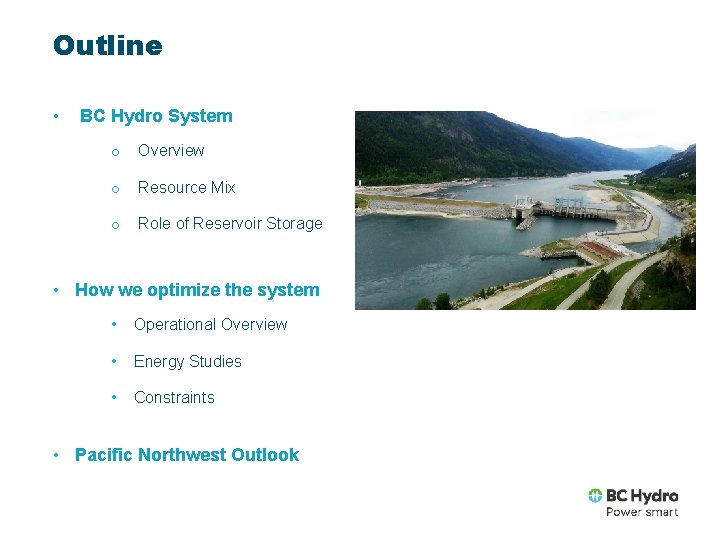
Outline • BC Hydro System o Overview o Resource Mix o Role of Reservoir Storage • How we optimize the system • Operational Overview • Energy Studies • Constraints • Pacific Northwest Outlook
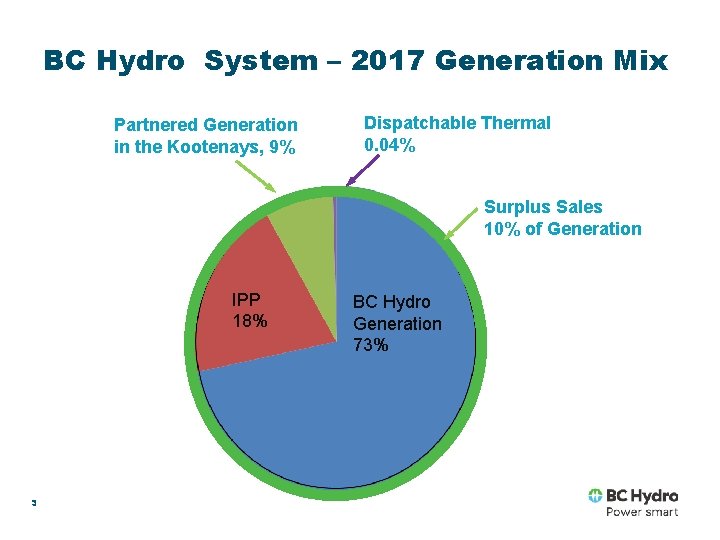
BC Hydro System – 2017 Generation Mix Partnered Generation in the Kootenays, 9% Dispatchable Thermal 0. 04% Surplus Sales 10% of Generation IPP 18% 3 BC Hydro Generation 73%
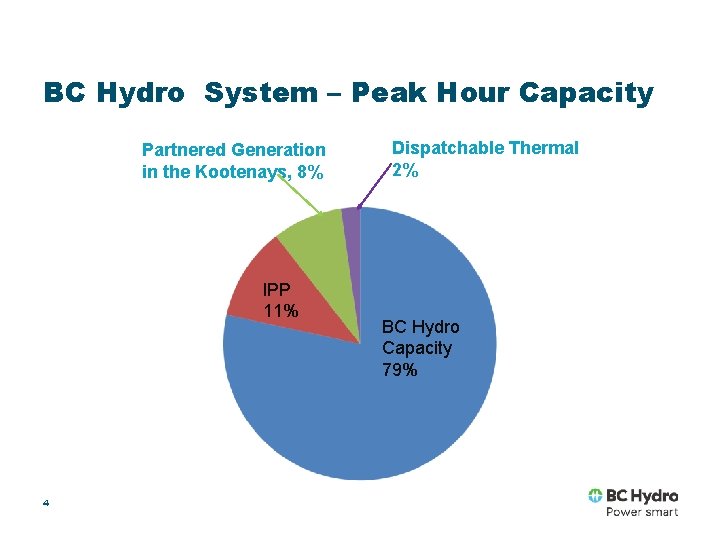
BC Hydro System – Peak Hour Capacity Partnered Generation in the Kootenays, 8% IPP 11% 4 Dispatchable Thermal 2% BC Hydro Capacity 79%
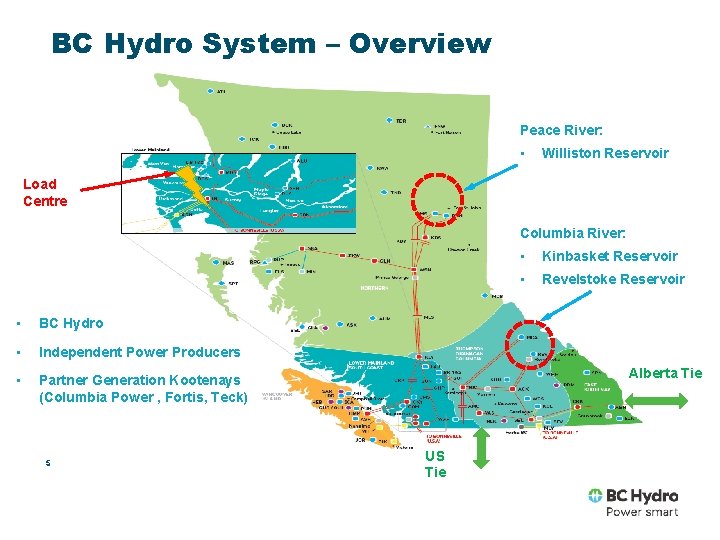
BC Hydro System – Overview Peace River: • Williston Reservoir Load Centre Columbia River: • BC Hydro • Independent Power Producers • Partner Generation Kootenays (Columbia Power , Fortis, Teck) 5 • Kinbasket Reservoir • Revelstoke Reservoir Alberta Tie US Tie
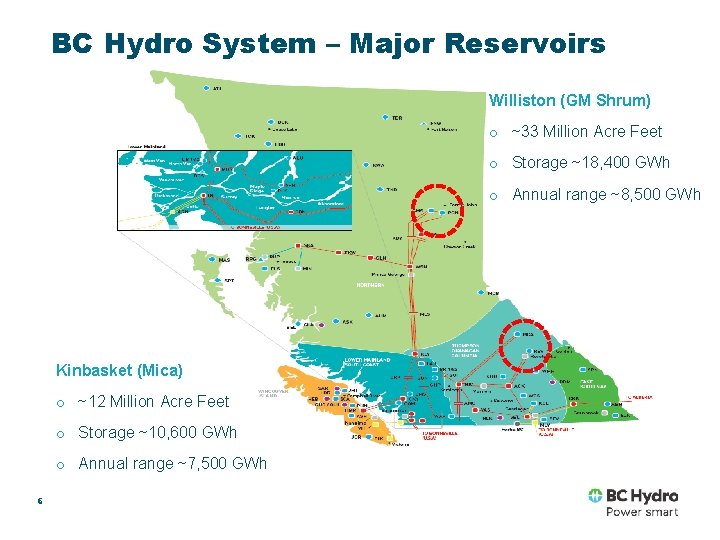
BC Hydro System – Major Reservoirs Williston (GM Shrum) o ~33 Million Acre Feet o Storage ~18, 400 GWh o Annual range ~8, 500 GWh Kinbasket (Mica) o ~12 Million Acre Feet o Storage ~10, 600 GWh o Annual range ~7, 500 GWh 6
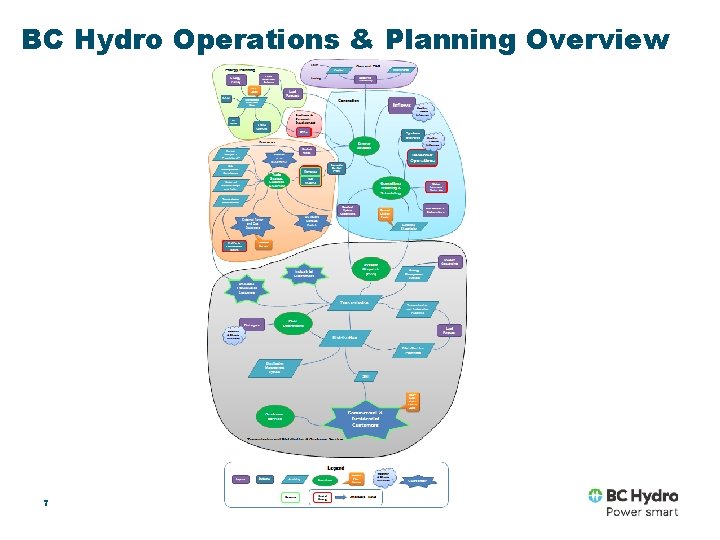
BC Hydro Operations & Planning Overview 7
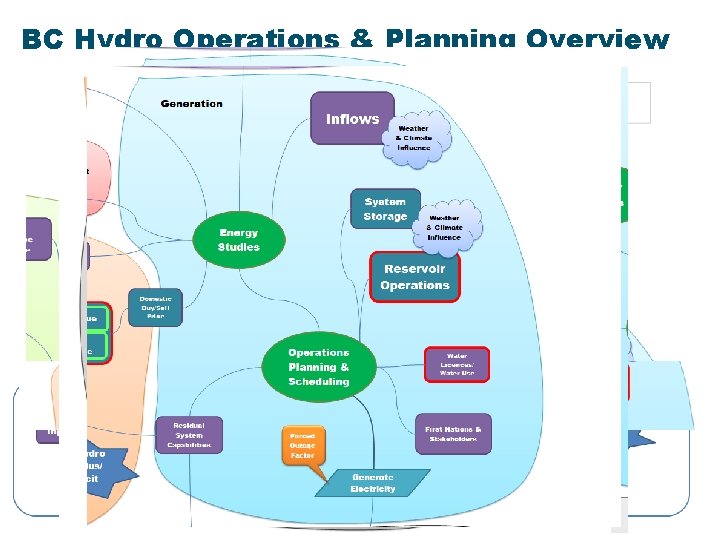
BC Hydro Operations & Planning Overview 8
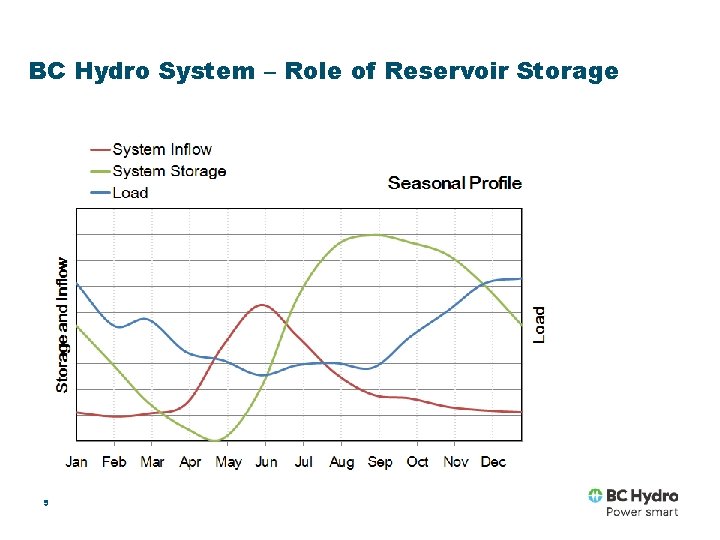
BC Hydro System – Role of Reservoir Storage 9
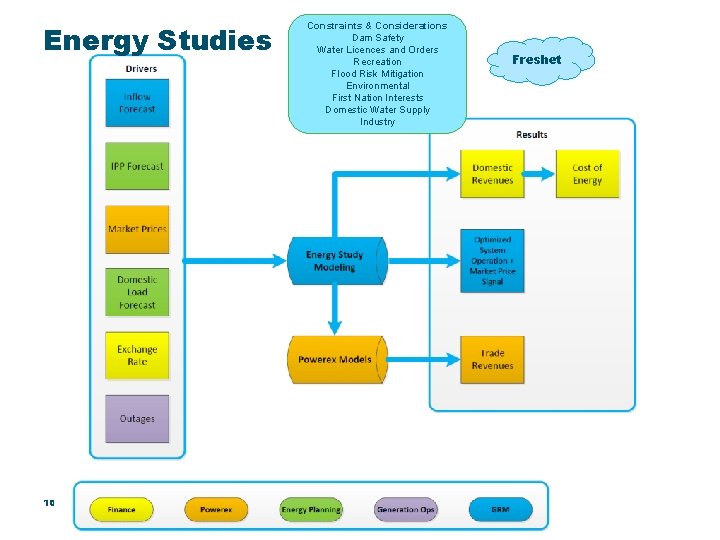
Energy Studies 10 Constraints & Considerations Dam Safety Water Licences and Orders Recreation Flood Risk Mitigation Environmental First Nation Interests Domestic Water Supply Industry Freshet
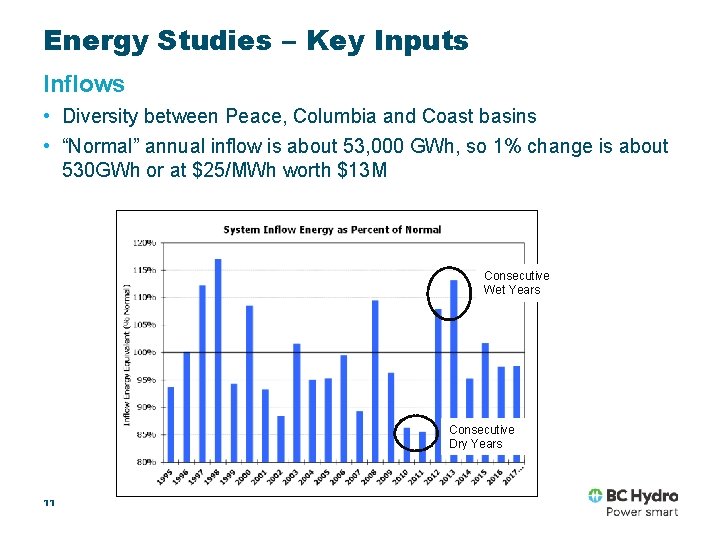
Energy Studies – Key Inputs Inflows • Diversity between Peace, Columbia and Coast basins • “Normal” annual inflow is about 53, 000 GWh, so 1% change is about 530 GWh or at $25/MWh worth $13 M Consecutive Wet Years Consecutive Dry Years 11
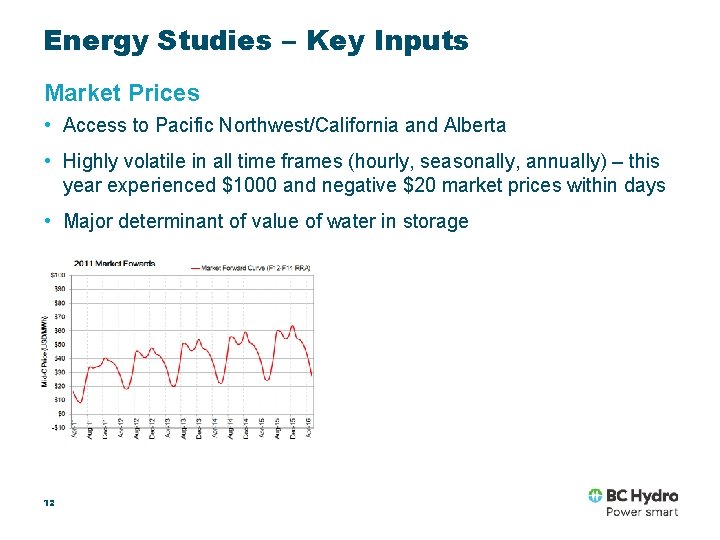
Energy Studies – Key Inputs Market Prices • Access to Pacific Northwest/California and Alberta • Highly volatile in all time frames (hourly, seasonally, annually) – this year experienced $1000 and negative $20 market prices within days • Major determinant of value of water in storage 12
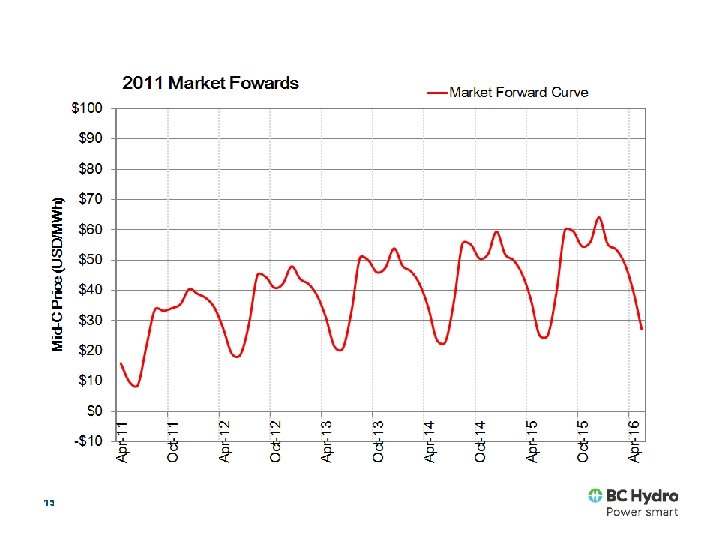
Market Prices 13
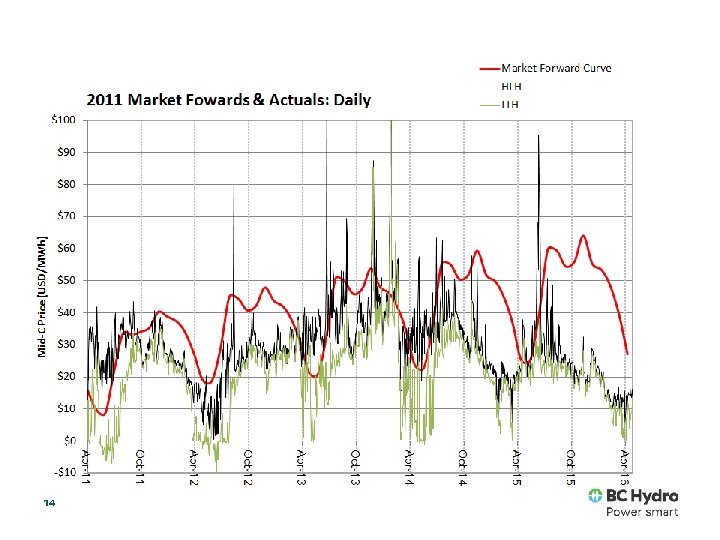
Market Prices 14
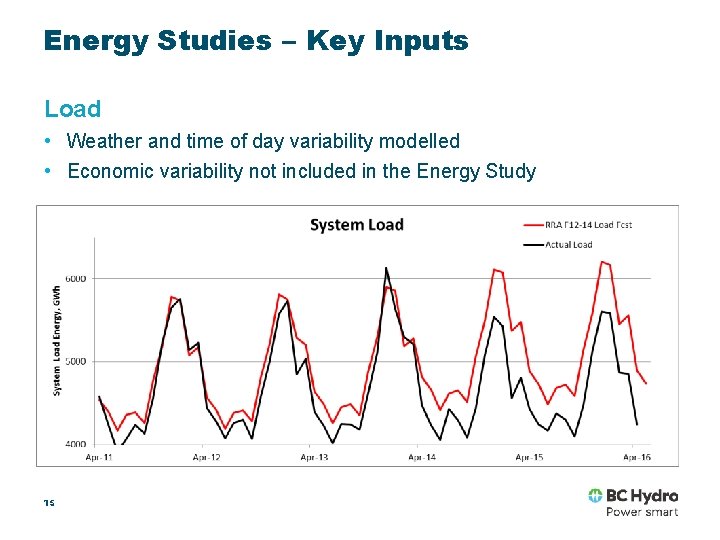
Energy Studies – Key Inputs Load • Weather and time of day variability modelled • Economic variability not included in the Energy Study 15
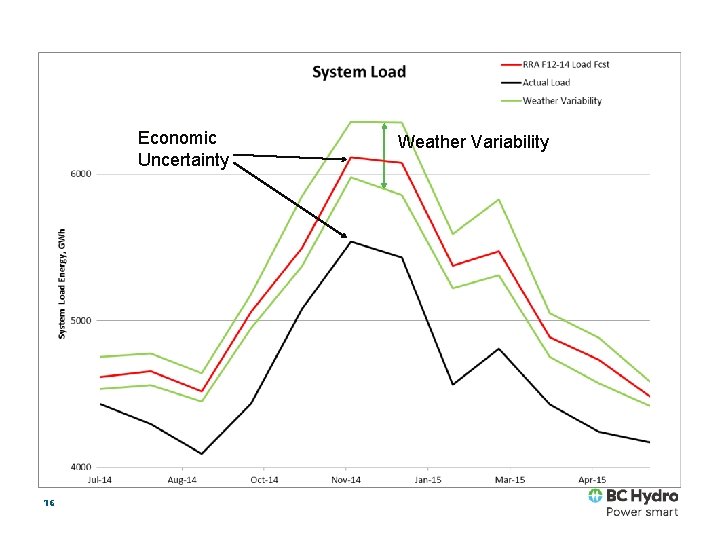
Economic Uncertainty 16 Weather Variability
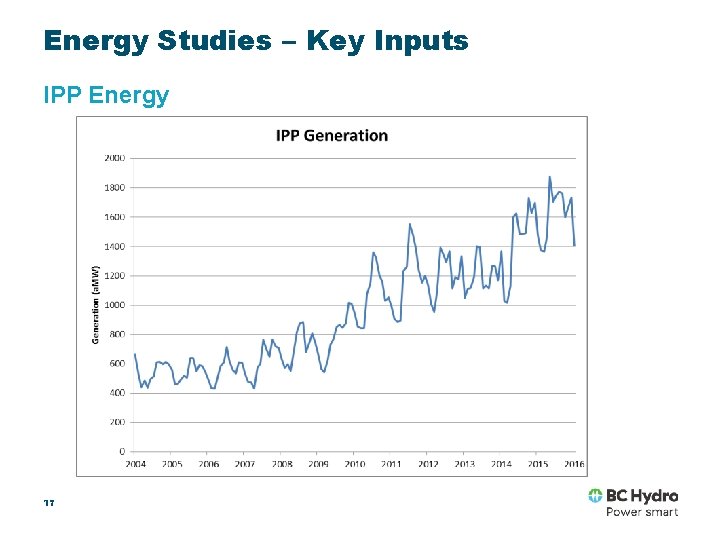
Energy Studies – Key Inputs IPP Energy 17
Energy Studies – Key Outputs Forecasts (including uncertainty around expected outcomes) of: o Water values at Williston and Kinbasket o Storage reservoir operation patterns (elevations, risk of spill) o BC Hydro domestic buy/sell price and associated forecast of system surplus capability available to generate Trade Income o Net revenue from operations 18
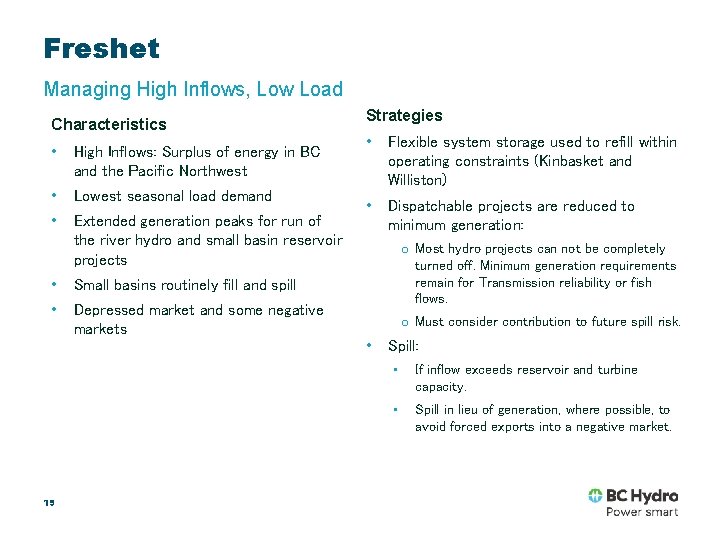
Freshet Managing High Inflows, Low Load Characteristics • High Inflows: Surplus of energy in BC and the Pacific Northwest • Lowest seasonal load demand • Extended generation peaks for run of the river hydro and small basin reservoir projects • Small basins routinely fill and spill • Depressed market and some negative markets 19 Strategies • Flexible system storage used to refill within operating constraints (Kinbasket and Williston) • Dispatchable projects are reduced to minimum generation: o Most hydro projects can not be completely turned off. Minimum generation requirements remain for Transmission reliability or fish flows. o Must consider contribution to future spill risk. • Spill: • If inflow exceeds reservoir and turbine capacity. • Spill in lieu of generation, where possible, to avoid forced exports into a negative market.
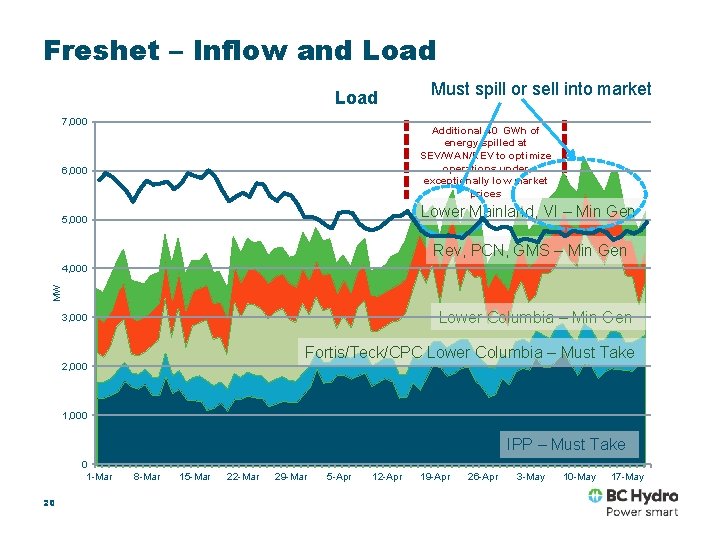
Freshet – Inflow and Load 7, 000 Must spill or sell into market Additional 40 GWh of energy spilled at SEV/WAN/REV to optimize operations under exceptionally low market prices 6, 000 Lower Mainland, VI – Min Gen 5, 000 Rev, PCN, GMS – Min Gen MW 4, 000 Lower Columbia – Min Gen 3, 000 Fortis/Teck/CPC Lower Columbia – Must Take 2, 000 1, 000 IPP – Must Take 0 1 -Mar 20 8 -Mar 15 -Mar 22 -Mar 29 -Mar 5 -Apr 12 -Apr 19 -Apr 26 -Apr 3 -May 10 -May 17 -May

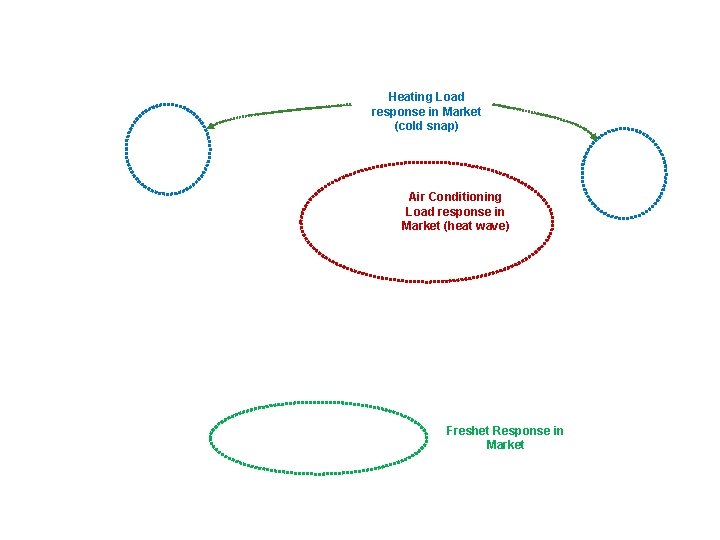
Heating Load response in Market (cold snap) Air Conditioning Load response in Market (heat wave) Freshet Response in Market
Pacific Northwest Outlook o We optimize the existing integrated system to deliver value to BC Hydro’s ratepayers o Large storage is a complimentary resource that has allowed BC Hydro to integrate renewable resources into the system o BC Hydro makes planning and acquisition decisions to deliver the best value to the ratepayer to ensure that it is able to meet the 10 Year Rates Plan and our obligations under the Clean Energy Act 23

24

- Slides: 25