
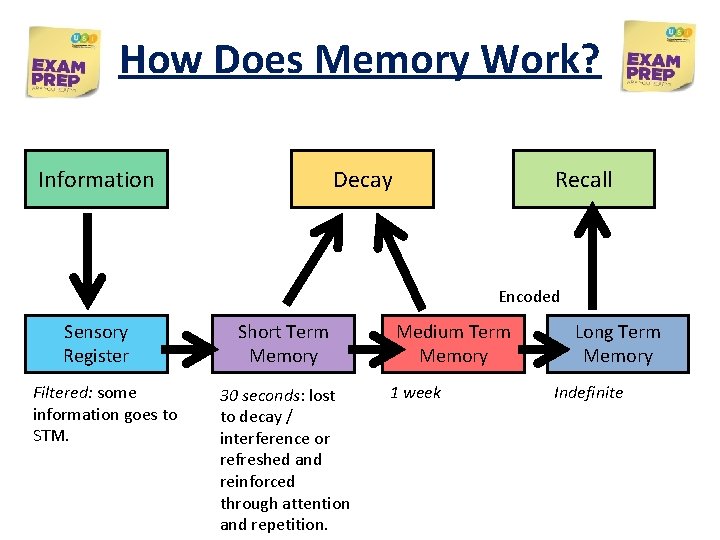
How Does Memory Work Information Decay Recall Encoded
- Slides: 27
How Does Memory Work? Information Decay Recall Encoded Sensory Register Filtered: some information goes to STM. Short Term Memory 30 seconds: lost to decay / interference or refreshed and reinforced through attention and repetition. Medium Term Memory 1 week Long Term Memory Indefinite
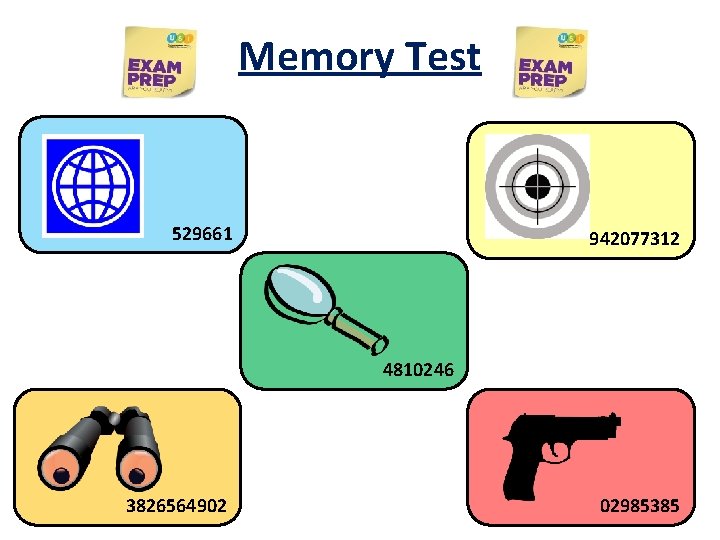
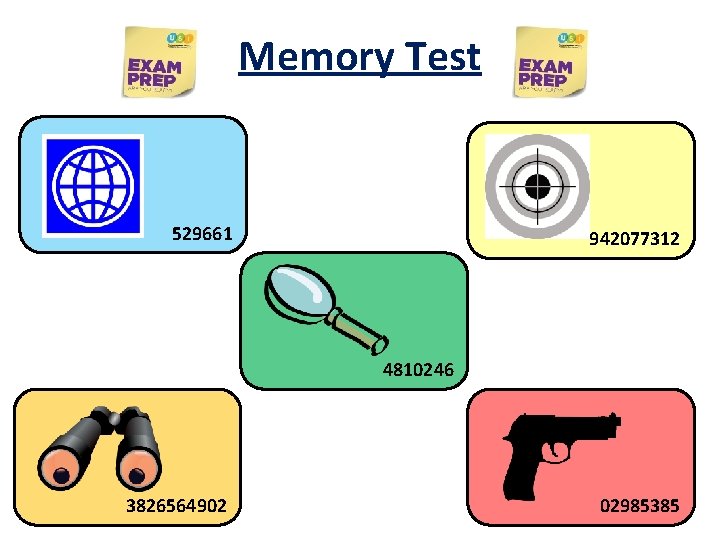
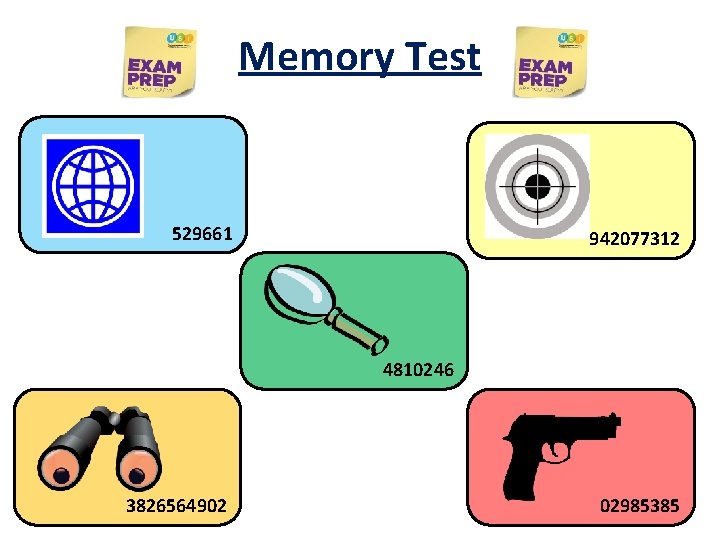
Memory Test • You are at a conference for spies, some delegates have given you their business cards with their unique spy codes. • There is just one problem: the cards self destruct after 30 seconds. • You have 30 seconds to read the cards and remember, then recall the numbers.
Memory Test 529661 942077312 4810246 3826564902 02985385
Memory Test • Write down the five unique spy code numbers. • If you can remember the image and colour of the card, include that.
Memory Test 529661 942077312 4810246 3826564902 02985385
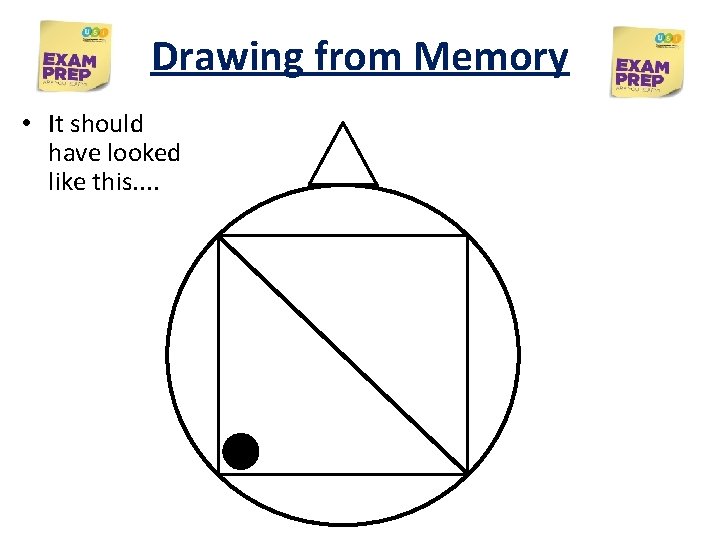
Drawing from Memory • How well can you create an image in your mind from instructions? • Pens/pencils down. • Listen to my instructions, draw an image in your mind. • When I say, draw this image on paper.
Drawing from Memory • It should have looked like this. .
Memory Test • Training your memory to store and recall more information will be a key part in helping your revision. • Let’s have a quick test. You will be read a list of 15 objects. • After I have read them out, you will have 60 seconds to write down as many as you can remember.
Memory Test • 60 seconds: recall as many objects as you can remember. • Keep note of your score out of 15.
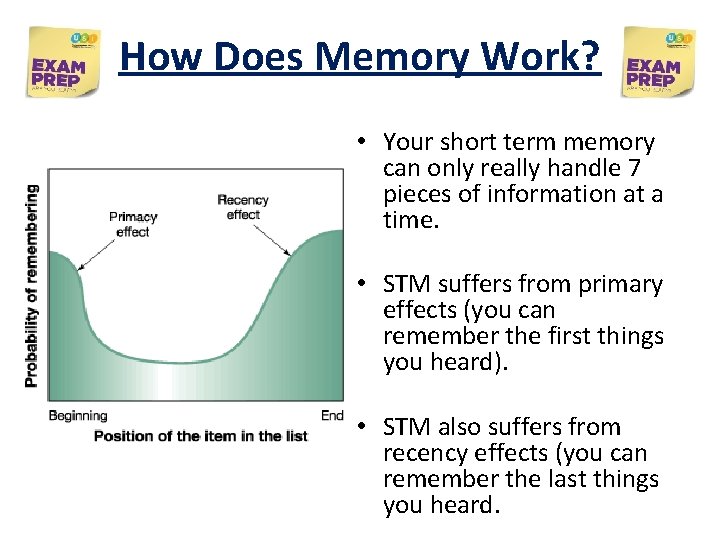
How Does Memory Work? • Your short term memory can only really handle 7 pieces of information at a time. • STM suffers from primary effects (you can remember the first things you heard). • STM also suffers from recency effects (you can remember the last things you heard.
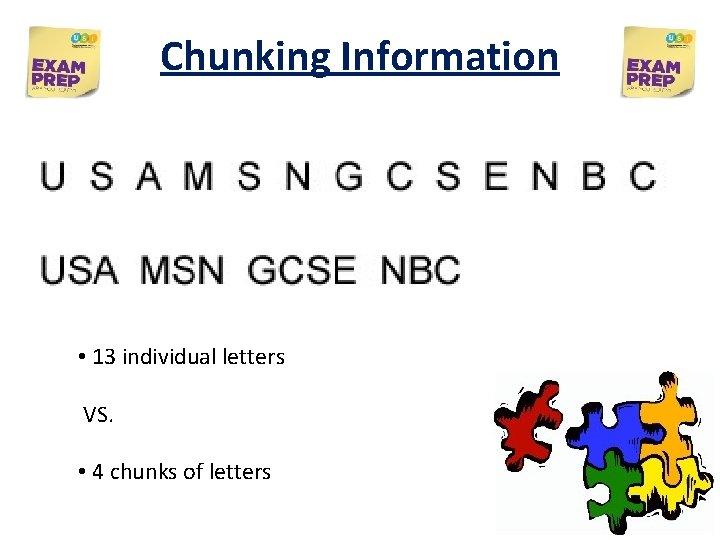
Improving Your Memory • So, knowing what you know about short term memory – what can be done to improve it? • Chunking means organising information into manageable chunks – remembering the 7 item capacity of STM. • If you can organise pieces of information into manageable chunks it may help you remember more. • Let’s try it. Remember these 13 letters.
Chunking Information • 13 individual letters VS. • 4 chunks of letters
Memory Test Attempt 2 • Use what you learnt about chunking to apply this to remember the unique spy codes. • You have 30 seconds to read the cards and remember, then recall the numbers.
Memory Test 529661 942077312 4810246 3826564902 02985385
Memory Test • Write down the five unique spy code numbers. • If you can remember the image and colour of the card, include that.
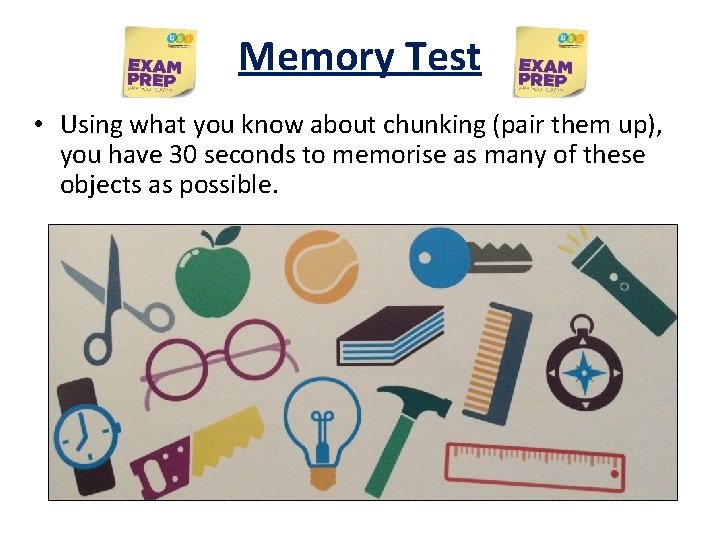
Memory Test • Using what you know about chunking (pair them up), you have 30 seconds to memorise as many of these objects as possible.
Memory Test Recall • Recall as many of the 14 objects as you can. . .
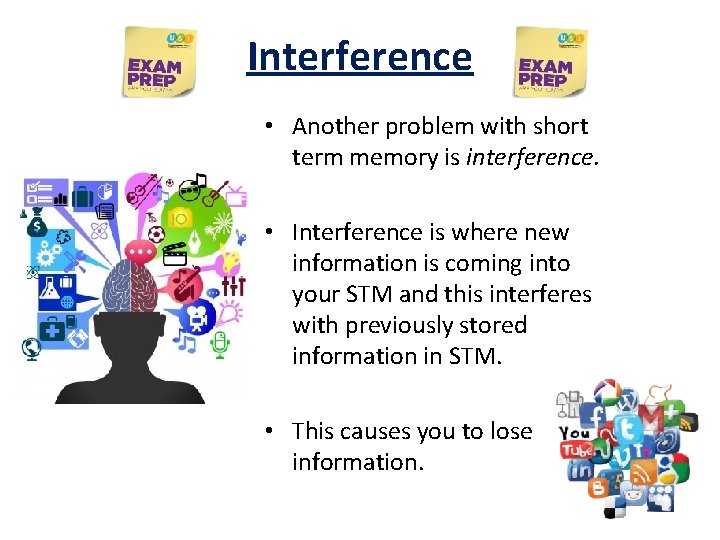
Interference • Another problem with short term memory is interference. • Interference is where new information is coming into your STM and this interferes with previously stored information in STM. • This causes you to lose information.
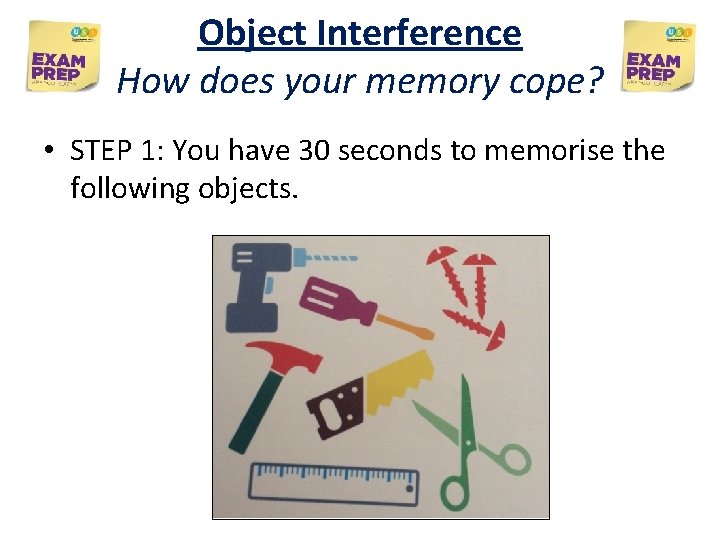
Object Interference How does your memory cope? • STEP 1: You have 30 seconds to memorise the following objects.
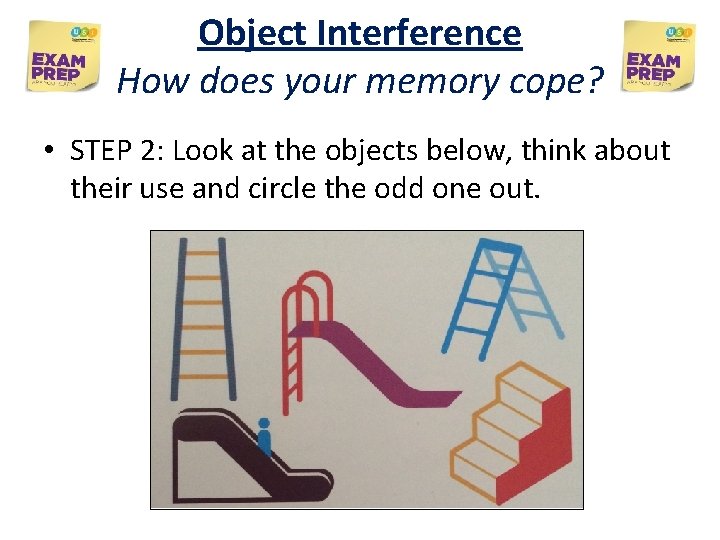
Object Interference How does your memory cope? • STEP 2: Look at the objects below, think about their use and circle the odd one out.
Object Interference How does your memory cope? • STEP 3: Recall the 7 objects shown to you in step 1. 1. 2. 3. 4. 5. 6. 7.
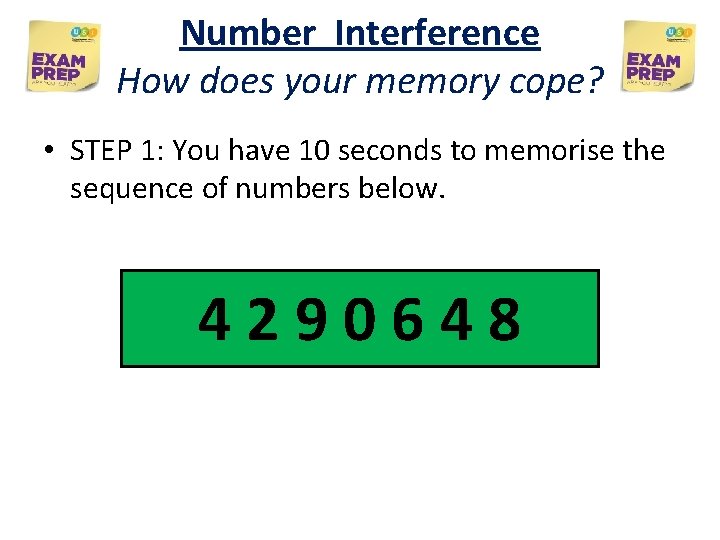
Number Interference How does your memory cope? • STEP 1: You have 10 seconds to memorise the sequence of numbers below. 4290648
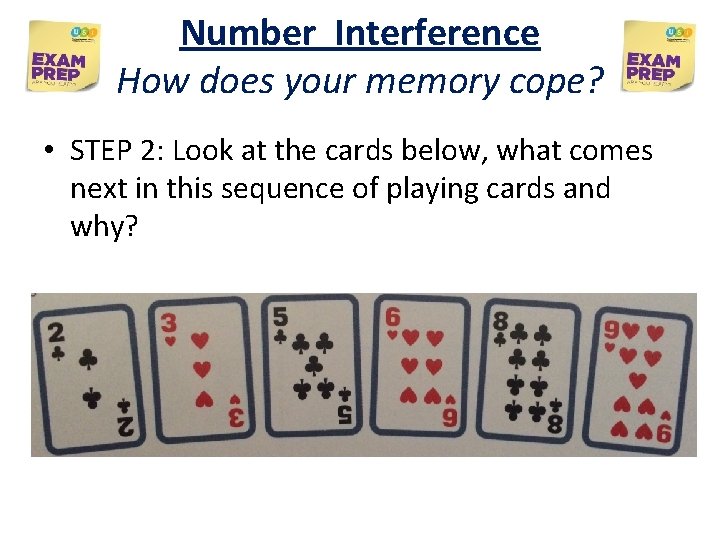
Number Interference How does your memory cope? • STEP 2: Look at the cards below, what comes next in this sequence of playing cards and why?
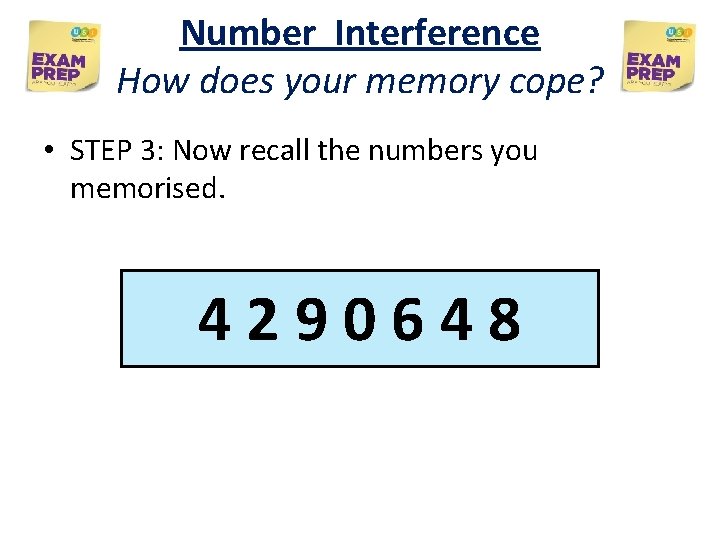
Number Interference How does your memory cope? • STEP 3: Now recall the numbers you memorised. 4290648
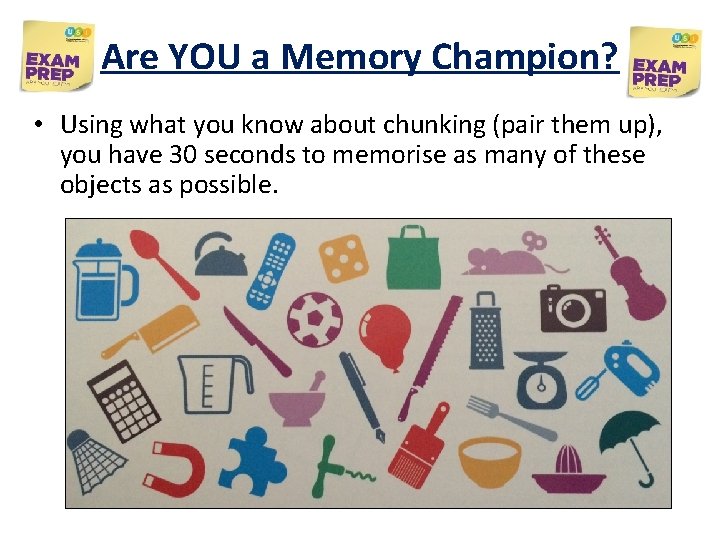
Are YOU a Memory Champion? • Using what you know about chunking (pair them up), you have 30 seconds to memorise as many of these objects as possible.
Memory Test Recall • Recall as many of the 30 objects as you can. . . • Prize for the highest recall, the memory champion!
What Can You Take Away? • Think about how your memory works and the different memory strategies explained. • Come up with and share the different ways this can help you with your revision.