
How does information get into Longterm memory LTM

- Slides: 9
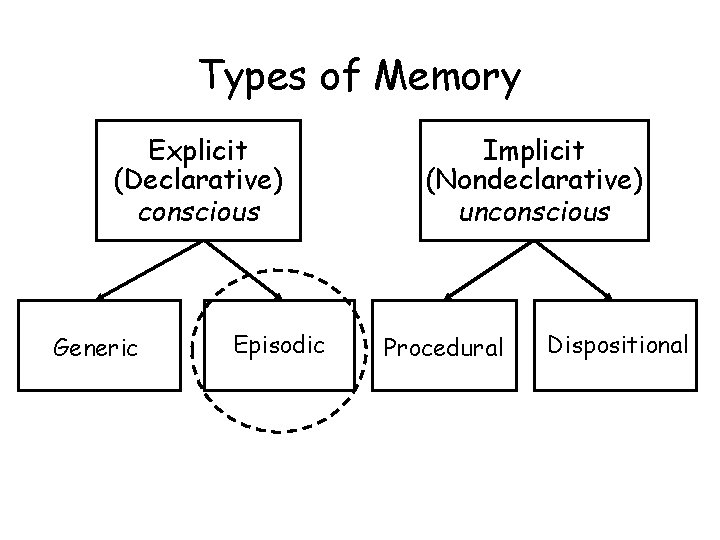
How does information get into Long-term memory (LTM)? • Long-term memory (LTM) – Explicit vs. implicit memory • Encoding: “getting it into LTM” – elaborative rehearsal – depth of processing – objective and subjective organization • (Retrieval: “getting it out of LTM”)
Types of Memory Explicit (Declarative) conscious Generic Episodic Implicit (Nondeclarative) unconscious Procedural Dispositional
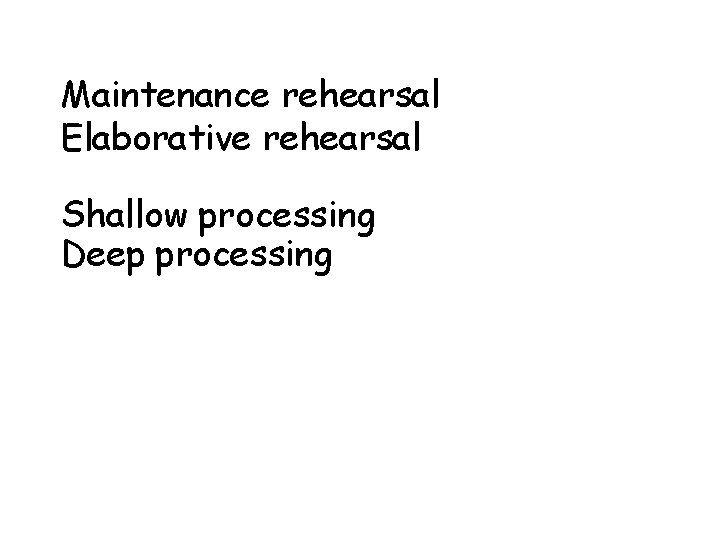
Maintenance rehearsal Elaborative rehearsal Shallow processing Deep processing
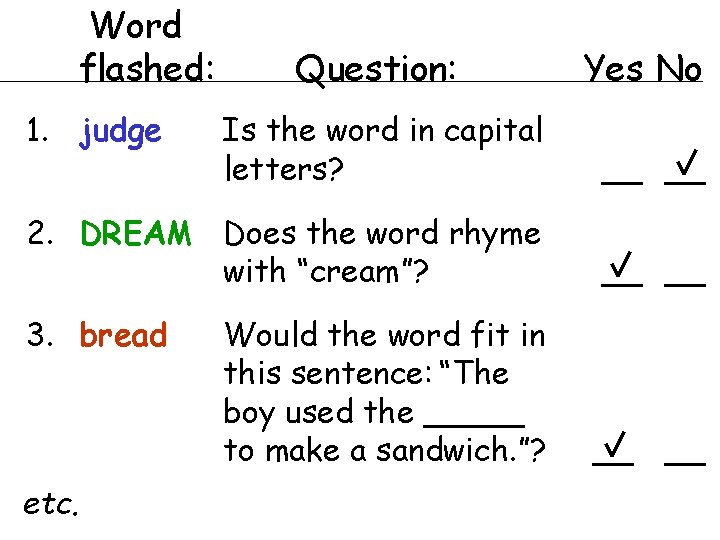
Word flashed: 1. judge Question: Yes No Is the word in capital letters? __ __ 2. DREAM Does the word rhyme with “cream”? __ __ 3. bread etc. Would the word fit in this sentence: “The boy used the _____ to make a sandwich. ”? __ __
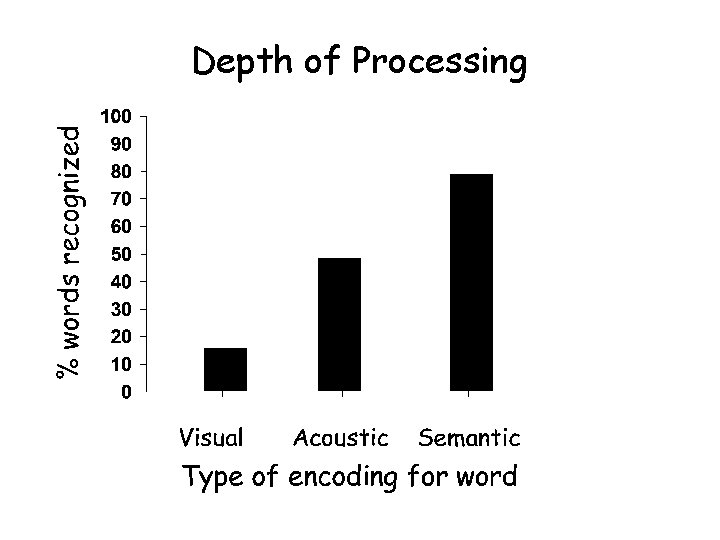
Depth of Processing
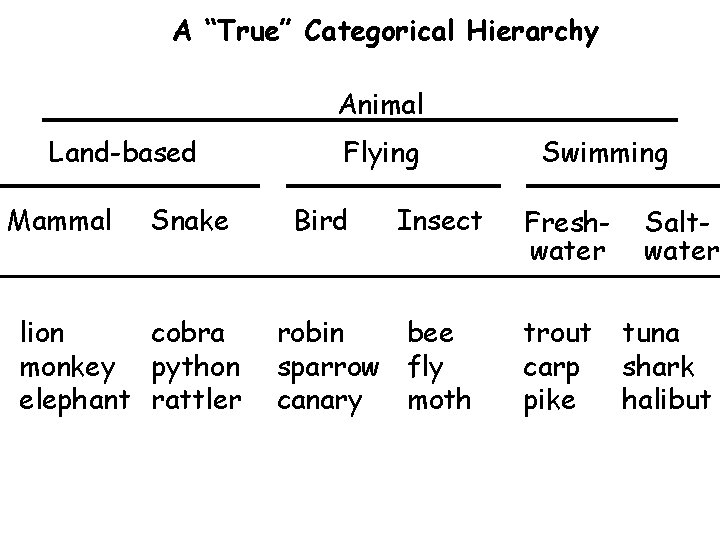
A “True” Categorical Hierarchy Animal Land-based Mammal Snake lion cobra monkey python elephant rattler Flying Bird Insect robin bee sparrow fly canary moth Swimming Freshwater trout carp pike Saltwater tuna shark halibut
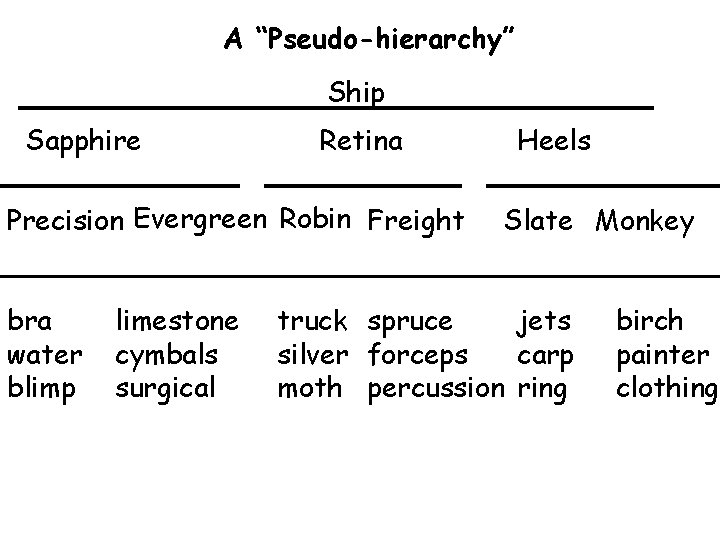
A “Pseudo-hierarchy” Ship Sapphire Retina Precision Evergreen Robin Freight bra water blimp limestone cymbals surgical Heels Slate Monkey truck spruce jets silver forceps carp moth percussion ring birch painter clothing
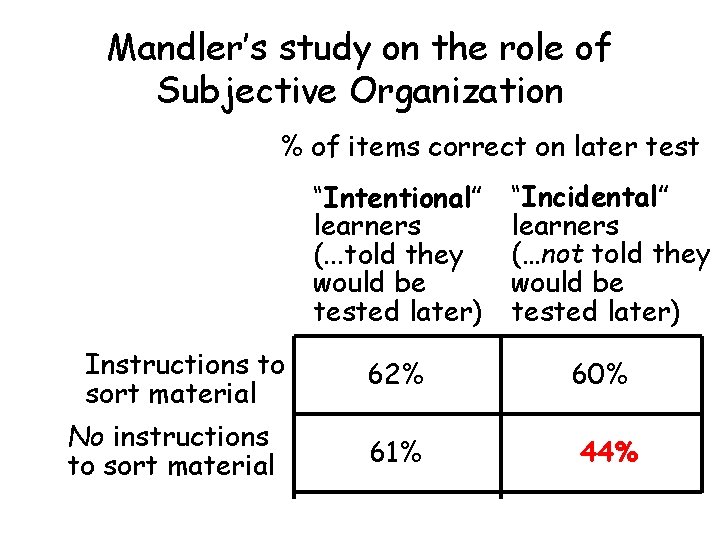
Mandler’s study on the role of Subjective Organization % of items correct on later test “Intentional” learners (. . . told they would be tested later) Instructions to sort material No instructions to sort material 62% 61% “Incidental” learners (…not told they would be tested later) 60% 44%
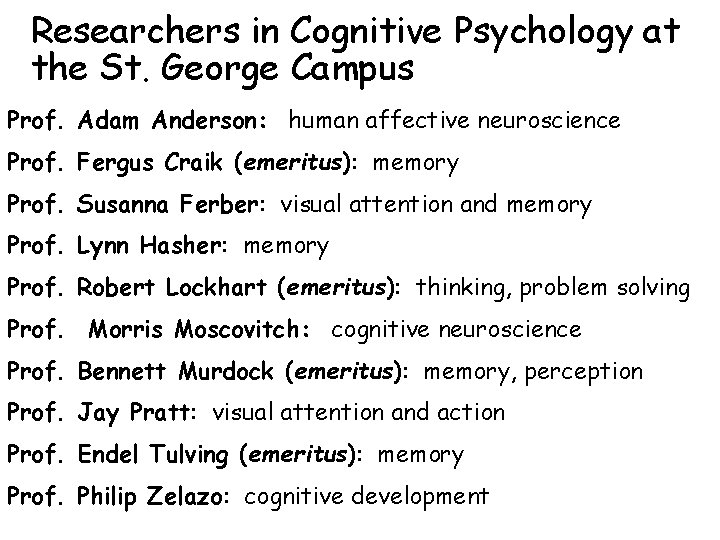
Researchers in Cognitive Psychology at the St. George Campus Prof. Adam Anderson: human affective neuroscience Prof. Fergus Craik (emeritus): memory Prof. Susanna Ferber: visual attention and memory Prof. Lynn Hasher: memory Prof. Robert Lockhart (emeritus): thinking, problem solving Prof. Morris Moscovitch: cognitive neuroscience Prof. Bennett Murdock (emeritus): memory, perception Prof. Jay Pratt: visual attention and action Prof. Endel Tulving (emeritus): memory Prof. Philip Zelazo: cognitive development