
How does genetic structure change changes in allele

- Slides: 62
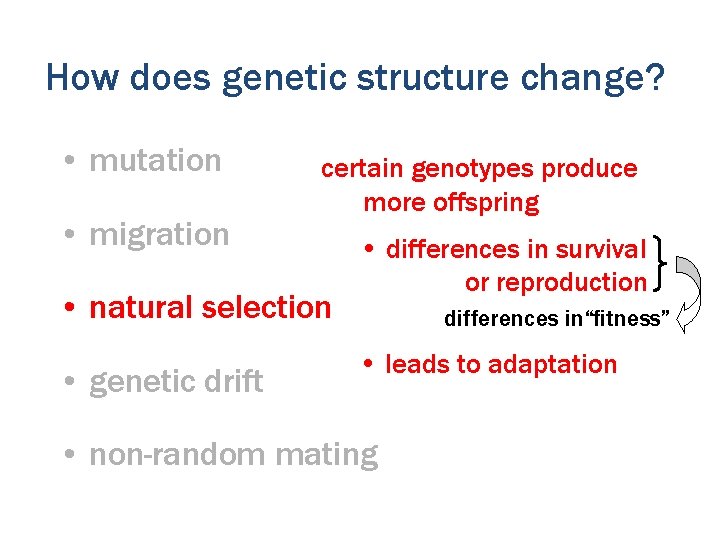
How does genetic structure change? changes in allele frequencies and/or genotype frequencies through time • mutation • migration • natural selection • genetic drift • non-random mating
The Mechanisms of Evolution • • • Mutation Gene flow Natural Selection Genetic Drift Nonrandom mating – each one is, in essence, the result of a violation of one or more of the assumptions of the Hardy. Weinberg equilibrium
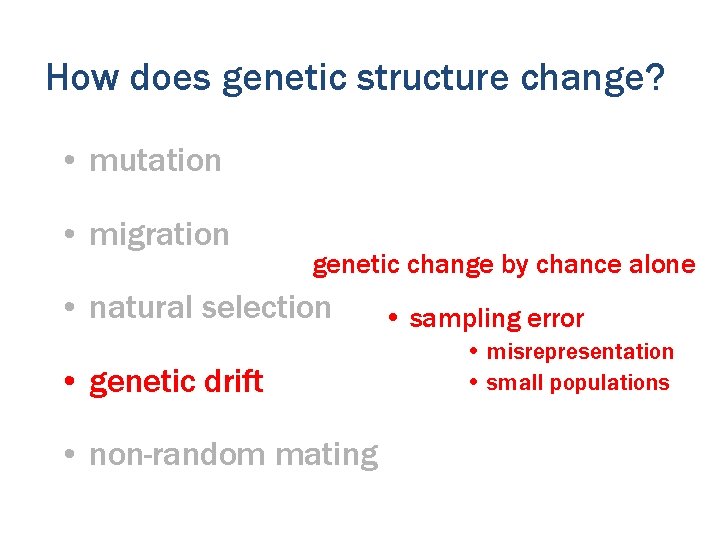
How does genetic structure change? • mutation • migration genetic change by chance alone • natural selection • genetic drift • non-random mating • sampling error • misrepresentation • small populations
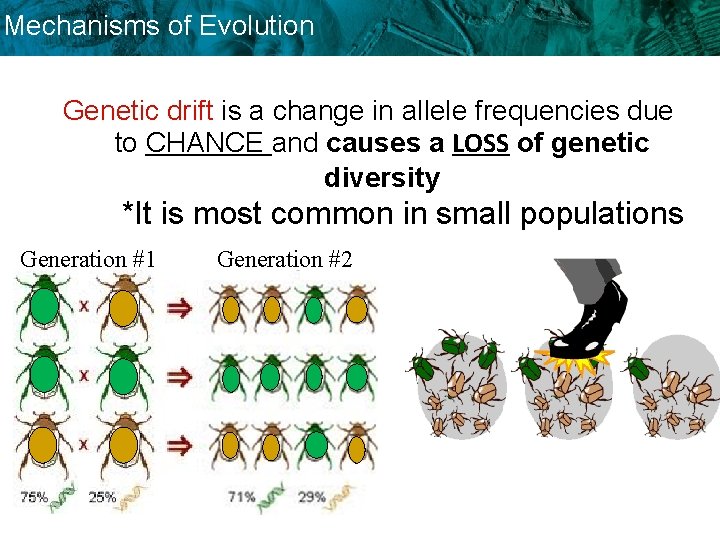
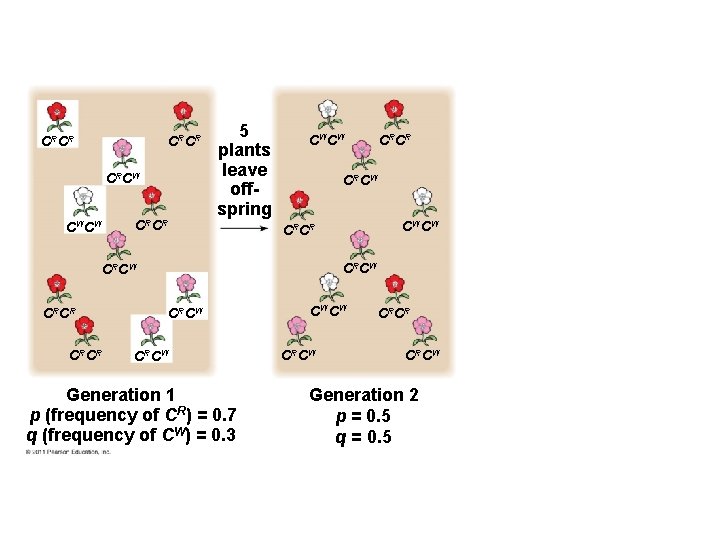
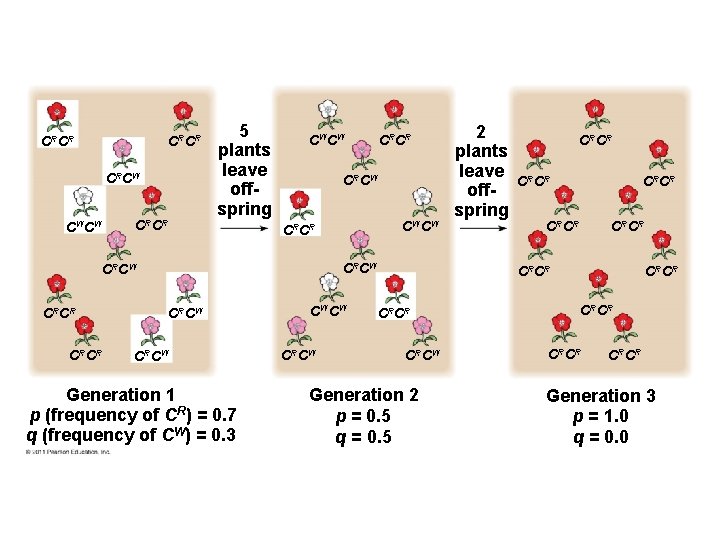
Mechanisms of Evolution Genetic drift is a change in allele frequencies due to CHANCE and causes a LOSS of genetic diversity *It is most common in small populations Generation #1 Generation #2
Genetic Drift • Genetic drift is the change in allele frequencies that occurs by chance events. In essence, it is identical to the statistical phenomenon of sampling error on an evolutionary scale. • It is a random process. • Because sampling error is greatest in small samples and smallest in large samples, the strength of genetic drift increases as populations get smaller.
· In a small population · alleles can be lost (usually the rare ones) · other alleles are fixed-their frequency reaches 1. 0 · genetic variation is lost, resulting in at population can become homozygous at many loci
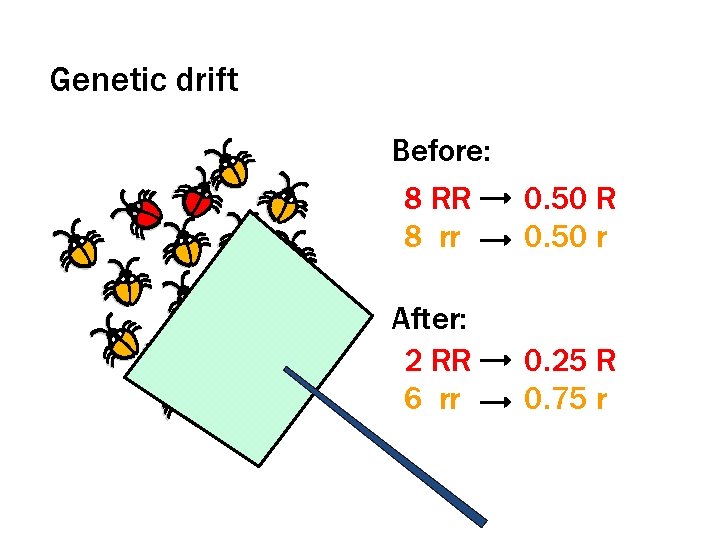
Genetic drift Before: 8 RR 8 rr 0. 50 R 0. 50 r After: 2 RR 6 rr 0. 25 R 0. 75 r
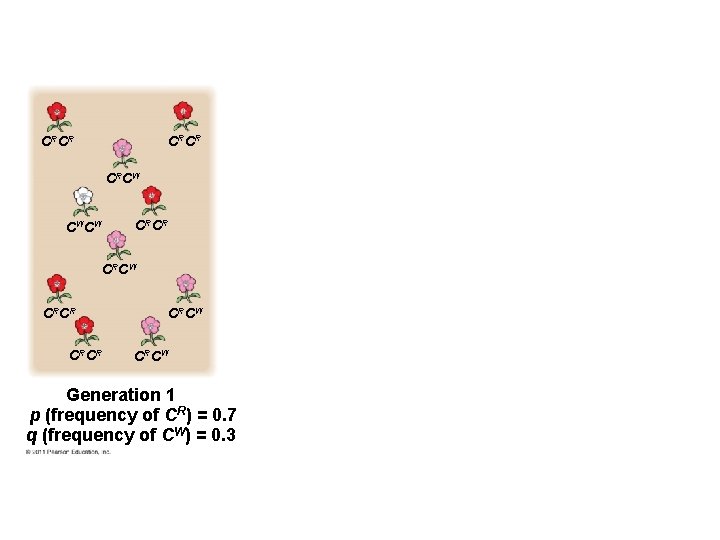
CRCR CRCW CW CW CRCR CRCW Generation 1 p (frequency of CR) = 0. 7 q (frequency of CW) = 0. 3
CRCR CRCW CW CW CRCR 5 plants leave offspring CW CW CRCR CRCW CRCR CRCW Generation 1 p (frequency of CR) = 0. 7 q (frequency of CW) = 0. 3 CW CW CRCR CRCW Generation 2 p = 0. 5 q = 0. 5
CRCR CRCW CW CW CRCR 5 plants leave offspring CW CW CRCR CRCW CRCR CRCW Generation 1 p (frequency of CR) = 0. 7 q (frequency of CW) = 0. 3 CW CW CRCW 2 plants leave offspring CRCR CRCR CRCW Generation 2 p = 0. 5 q = 0. 5 CRCR Generation 3 p = 1. 0 q = 0. 0
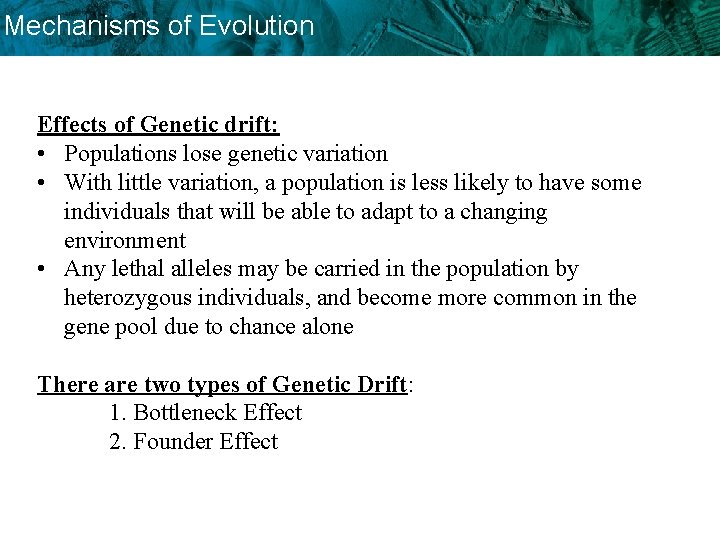
Mechanisms of Evolution Effects of Genetic drift: • Populations lose genetic variation • With little variation, a population is less likely to have some individuals that will be able to adapt to a changing environment • Any lethal alleles may be carried in the population by heterozygous individuals, and become more common in the gene pool due to chance alone There are two types of Genetic Drift: 1. Bottleneck Effect 2. Founder Effect
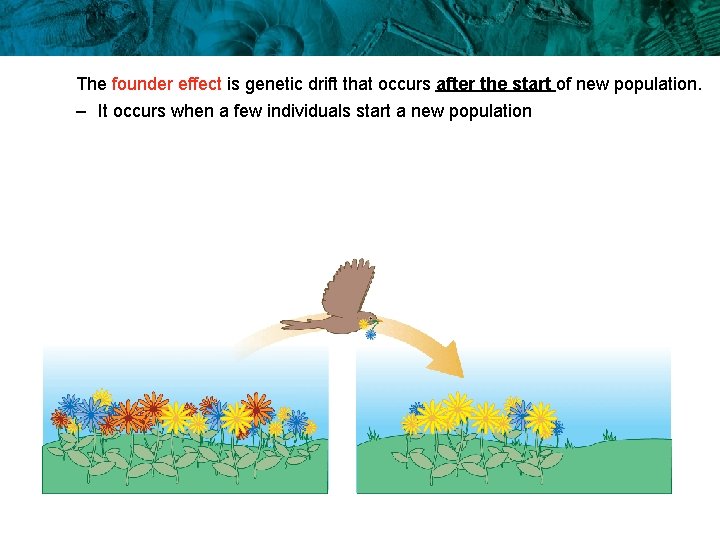
Founder Effect ·The founder effect is genetic drift that occurs when a few individuals, representing a fraction of the original allele pool, invade a new area and establish a new population.
The Founder Effect • The founder effect occurs when a few individuals become isolated from a larger population • Allele frequencies in the small founder population can be different from those in the larger parent population
The founder effect is genetic drift that occurs after the start of new population. – It occurs when a few individuals start a new population
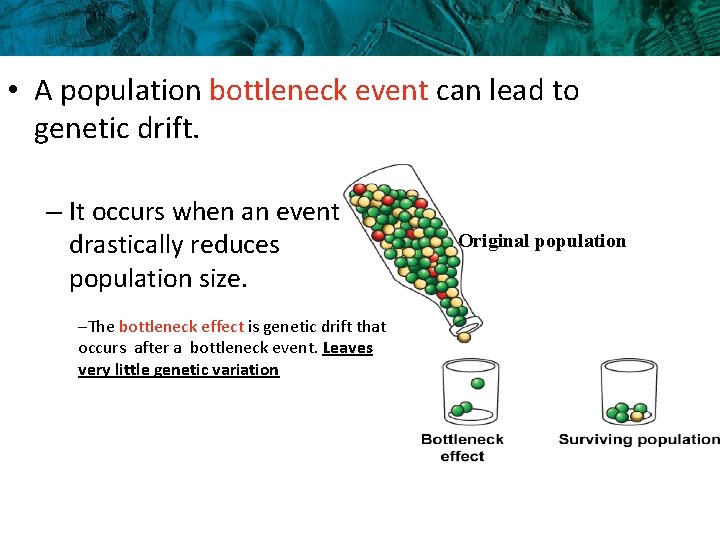
The Bottleneck Effect • sudden reduction in population size due to a change in the environment • New gene pool may not reflect original • If the population remains small, it may be further affected by genetic drift
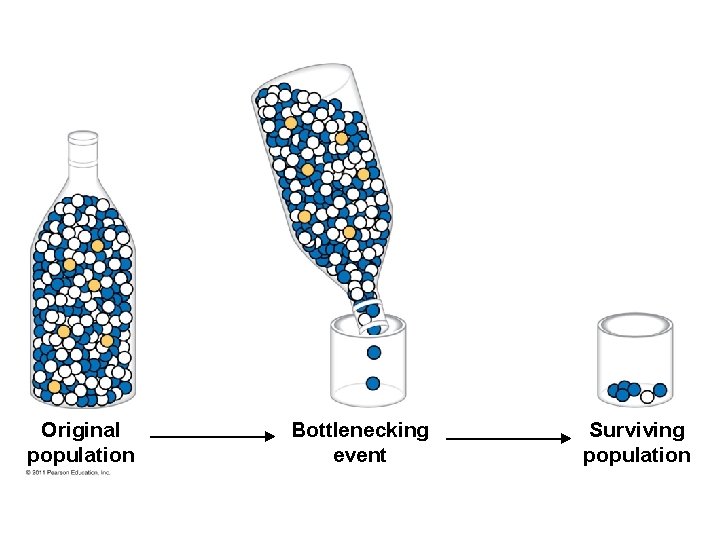
Bottlenecks · Bottlenecks are periods of very low population size or near extinction. This is another special case of genetic drift. · The result of a population bottleneck is that even if the population regains its original numbers, genetic variation is drastically reduced
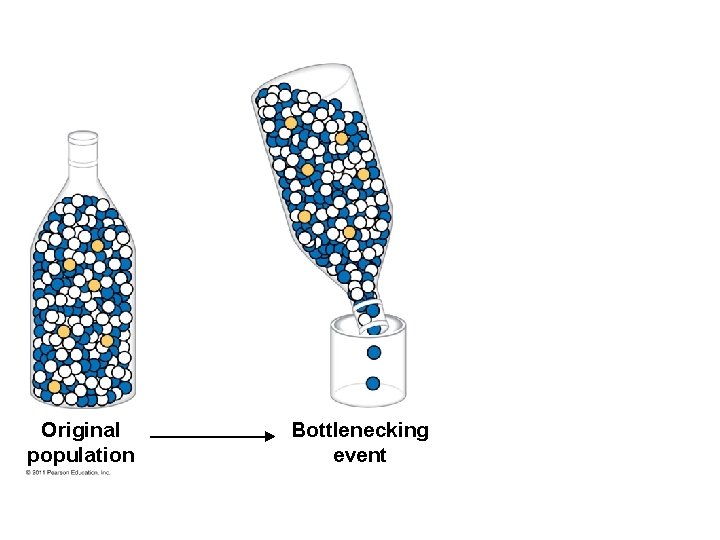
Original population Bottlenecking event
Original population Bottlenecking event Surviving population
• A population bottleneck event can lead to genetic drift. – It occurs when an event drastically reduces population size. –The bottleneck effect is genetic drift that occurs after a bottleneck event. Leaves very little genetic variation Original population
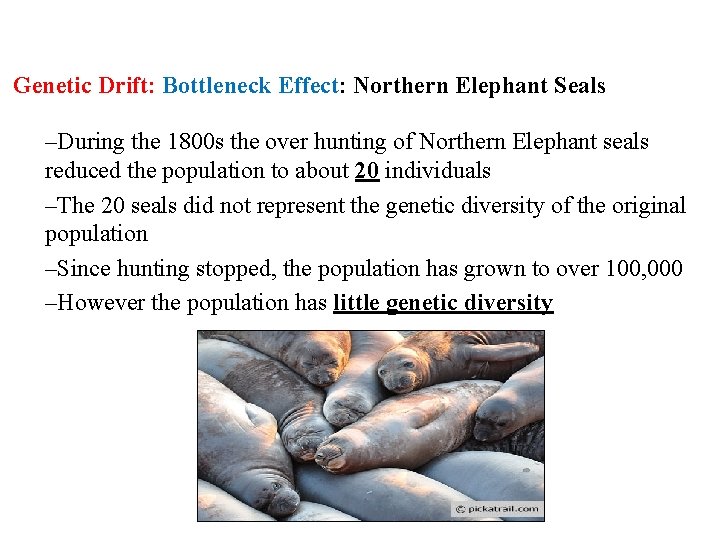
Genetic Drift: Bottleneck Effect: Northern Elephant Seals –During the 1800 s the over hunting of Northern Elephant seals reduced the population to about 20 individuals –The 20 seals did not represent the genetic diversity of the original population –Since hunting stopped, the population has grown to over 100, 000 –However the population has little genetic diversity
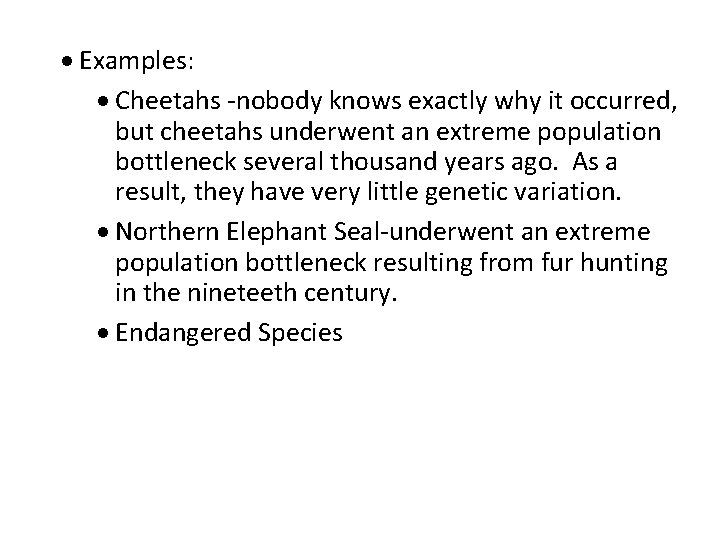
· Examples: · Cheetahs -nobody knows exactly why it occurred, but cheetahs underwent an extreme population bottleneck several thousand years ago. As a result, they have very little genetic variation. · Northern Elephant Seal-underwent an extreme population bottleneck resulting from fur hunting in the nineteeth century. · Endangered Species
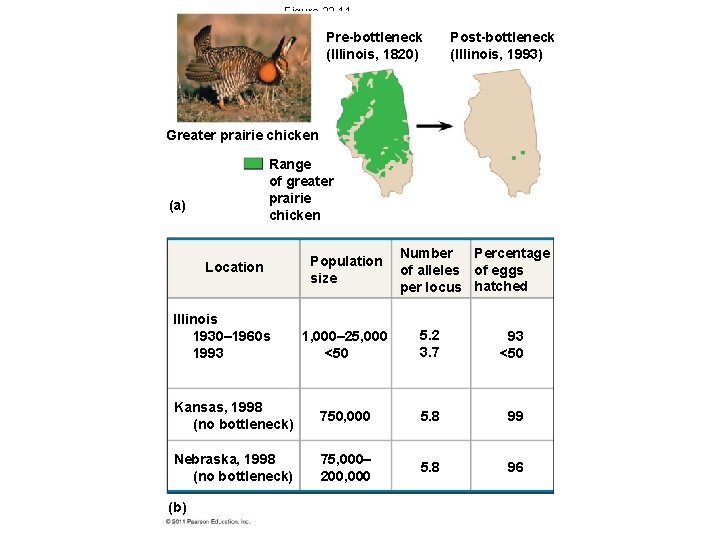
Case Study: Impact of Genetic Drift on the Greater Prairie Chicken • Loss of prairie habitat = reduction of population • The surviving birds had low levels of genetic variation, and only 50% of their eggs hatched
Figure 23. 11 Pre-bottleneck (Illinois, 1820) Post-bottleneck (Illinois, 1993) Greater prairie chicken Range of greater prairie chicken (a) Location Illinois 1930– 1960 s 1993 Population size Percentage Number of alleles of eggs per locus hatched 1, 000– 25, 000 <50 5. 2 3. 7 93 <50 Kansas, 1998 (no bottleneck) 750, 000 5. 8 99 Nebraska, 1998 (no bottleneck) 75, 000– 200, 000 5. 8 96 (b)
• Researchers used DNA from museum specimens to compare genetic variation in the population before and after the bottleneck • The results showed a loss of alleles at several loci • Researchers introduced greater prairie chickens from populations in other states and were successful in introducing new alleles and increasing the egg hatch rate to 90%
Effects of Genetic Drift: A Summary 1. significant in small populations 2. causes allele frequencies to change at random 3. can lead to a loss of genetic variation within populations 4. can cause harmful alleles to become fixed
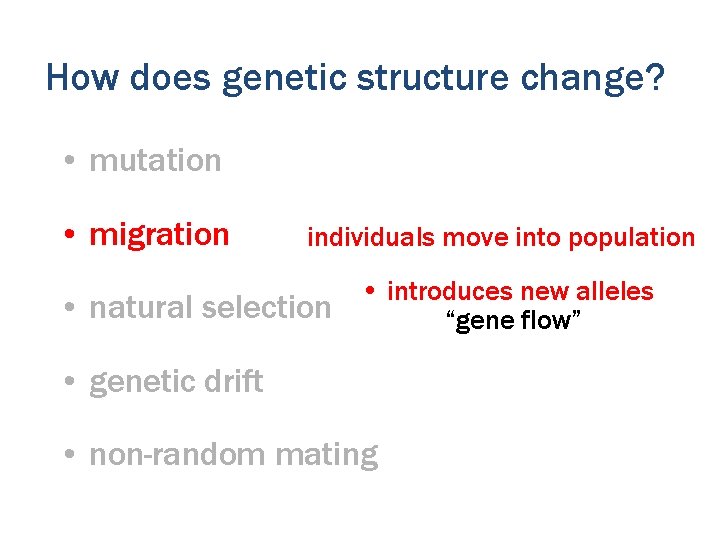
How does genetic structure change? • mutation • migration individuals move into population • natural selection • introduces new alleles “gene flow” • genetic drift • non-random mating
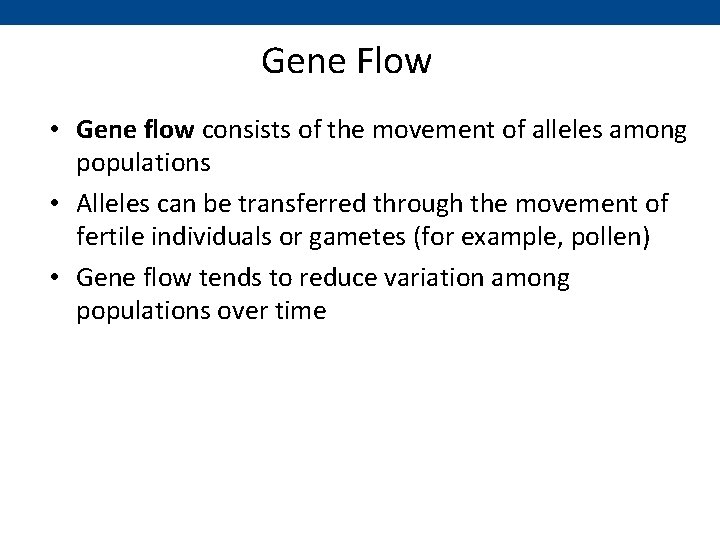
Gene Flow • Gene flow consists of the movement of alleles among populations • Alleles can be transferred through the movement of fertile individuals or gametes (for example, pollen) • Gene flow tends to reduce variation among populations over time
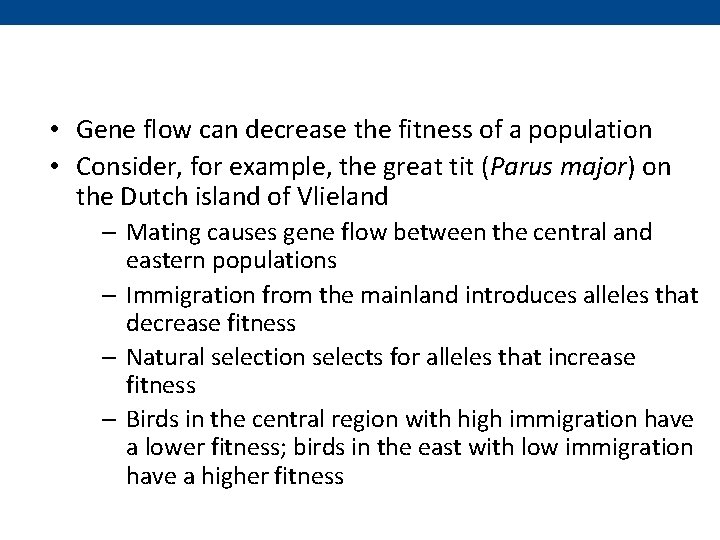
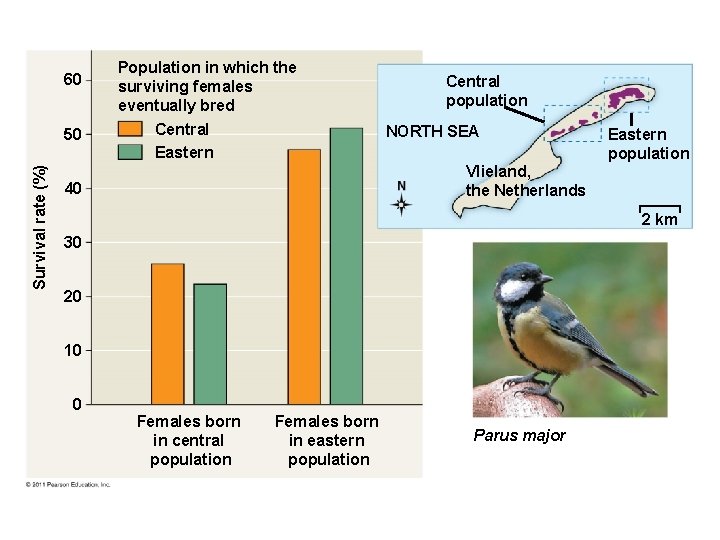
• Gene flow can decrease the fitness of a population • Consider, for example, the great tit (Parus major) on the Dutch island of Vlieland – Mating causes gene flow between the central and eastern populations – Immigration from the mainland introduces alleles that decrease fitness – Natural selection selects for alleles that increase fitness – Birds in the central region with high immigration have a lower fitness; birds in the east with low immigration have a higher fitness
60 Survival rate (%) 50 Population in which the surviving females eventually bred Central Eastern Central population NORTH SEA Eastern population Vlieland, the Netherlands 40 2 km 30 20 10 0 Females born in central population Females born in eastern population Parus major
• Gene flow can increase the fitness of a population • Consider, for example, the spread of alleles for resistance to insecticides – Insecticides have been used to target mosquitoes that carry West Nile virus and malaria – Alleles have evolved in some populations that confer insecticide resistance to these mosquitoes – The flow of insecticide resistance alleles into a population cause an increase in fitness
• Gene flow is an important agent of evolutionary change in human populations
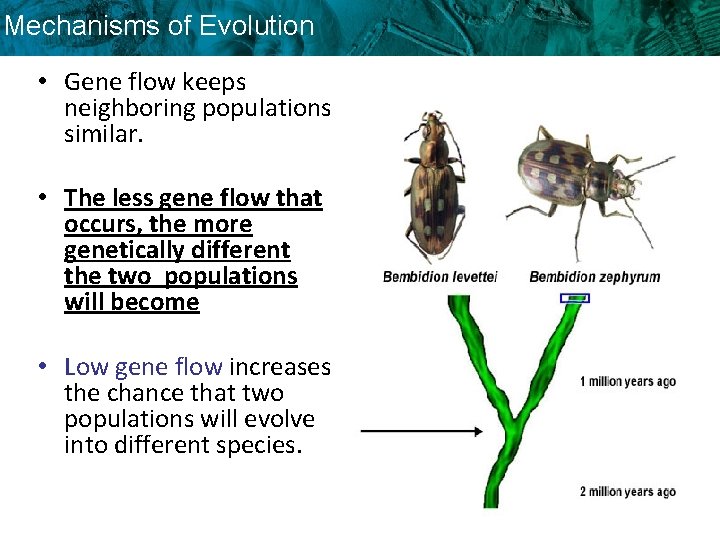
Mechanisms of Evolution • Gene flow keeps neighboring populations similar. • The less gene flow that occurs, the more genetically different the two populations will become • Low gene flow increases the chance that two populations will evolve into different species.
How does genetic structure change? • mutation spontaneous change in DNA • migration • natural selection • creates new alleles • ultimate source of all genetic variation • genetic drift • non-random mating
Mutation • A mutation is a change in the organism’s DNA. – Mutations may affect somatic (nonreproductive tissue), or they may affect the germ line (reproductive tissue). Except in clonal organisms, somatic mutations cannot generally be passed on. – Evolutionary biologists are interested in heritable mutations, the kind that can be passed on to the next generation. • A heritable mutation changes one allele into another, sometimes creating an allele that is not already present in the population.
• Some mutations create dominant alleles, some create recessive or codominant alleles. • Some mutations are harmful or lethal, many are totally neutral-they have no effect, a few are favorable. • Whether a mutation is harmful, neutral, or favorable, depends upon its environment
Some types of mutations. • Substitution: one nucleotide is substituted for another, frequently this causes no change in the resulting organism, sometimes the change can be dramatic. • Insertion: DNA is inserted into a gene, either one nucleotide or many. Sometimes, entire genes are inserted by viruses and transposable elements. • Deletion: DNA bases are removed. • Small insertions and deletions can inactivate large stretches of a gene, by causing a frame shift that renders a gene meaningless. • Duplication: an entire gene is duplicated. • Transposition: DNA is moved to a new place in the genome, frequently this happens because of errors in meiosis or transposable elements.
1) Mutations = change in genotype other than by recombination. Three types: 1) Point Mutations 2) Chromosome Mutations 3) Change in Chromosome Number
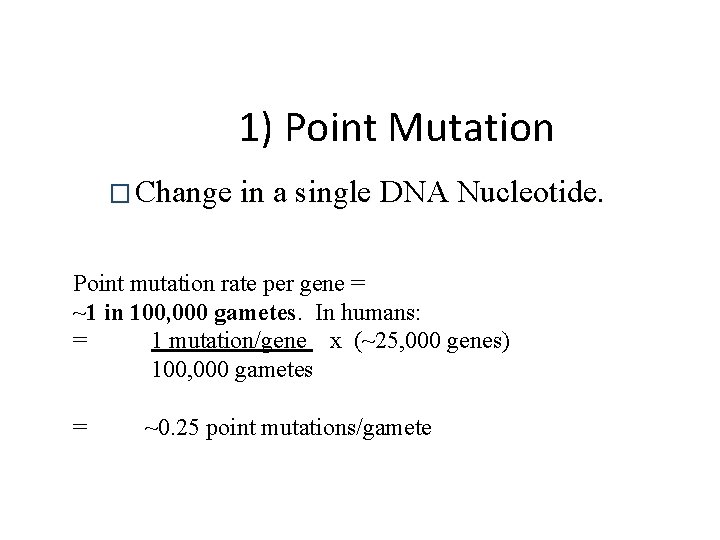
1) Point Mutation � Change in a single DNA Nucleotide. Point mutation rate per gene = ~1 in 100, 000 gametes. In humans: = 1 mutation/gene x (~25, 000 genes) 100, 000 gametes = ~0. 25 point mutations/gamete
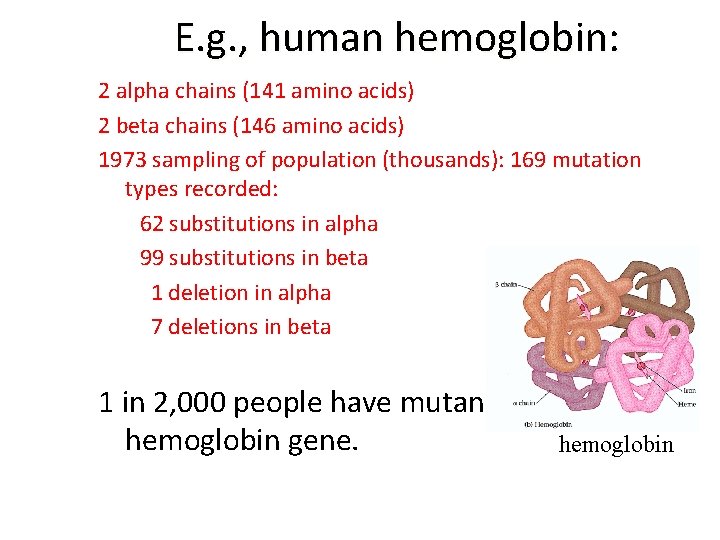
E. g. , human hemoglobin: 2 alpha chains (141 amino acids) 2 beta chains (146 amino acids) 1973 sampling of population (thousands): 169 mutation types recorded: 62 substitutions in alpha 99 substitutions in beta 1 deletion in alpha 7 deletions in beta 1 in 2, 000 people have mutant hemoglobin gene. hemoglobin
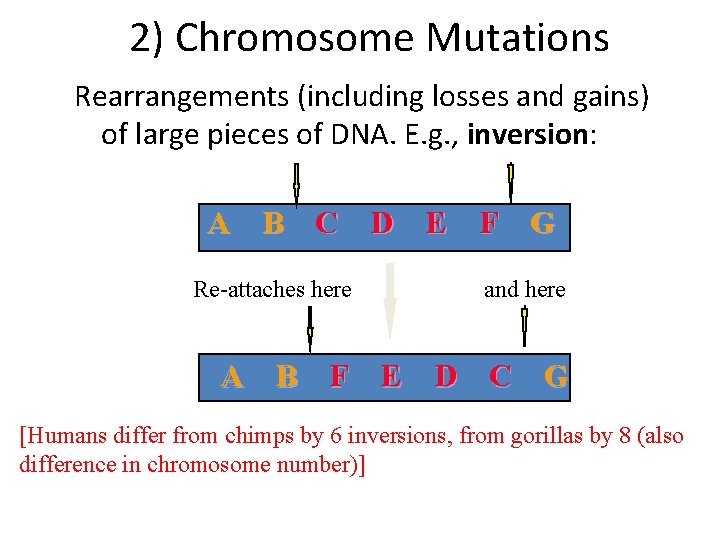
2) Chromosome Mutations Rearrangements (including losses and gains) of large pieces of DNA. E. g. , inversion: A B C D E F G Re-attaches here and here A B F E D C G [Humans differ from chimps by 6 inversions, from gorillas by 8 (also difference in chromosome number)]
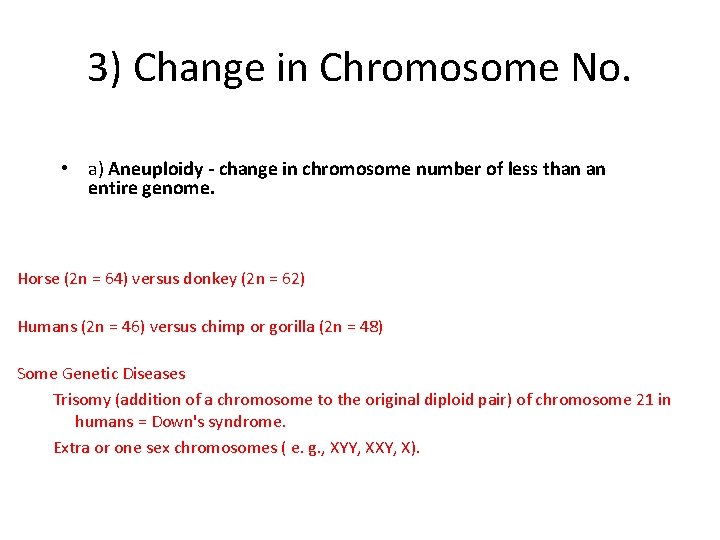
3) Change in Chromosome No. • a) Aneuploidy - change in chromosome number of less than an entire genome. Horse (2 n = 64) versus donkey (2 n = 62) Humans (2 n = 46) versus chimp or gorilla (2 n = 48) Some Genetic Diseases Trisomy (addition of a chromosome to the original diploid pair) of chromosome 21 in humans = Down's syndrome. Extra or one sex chromosomes ( e. g. , XYY, XXY, X).
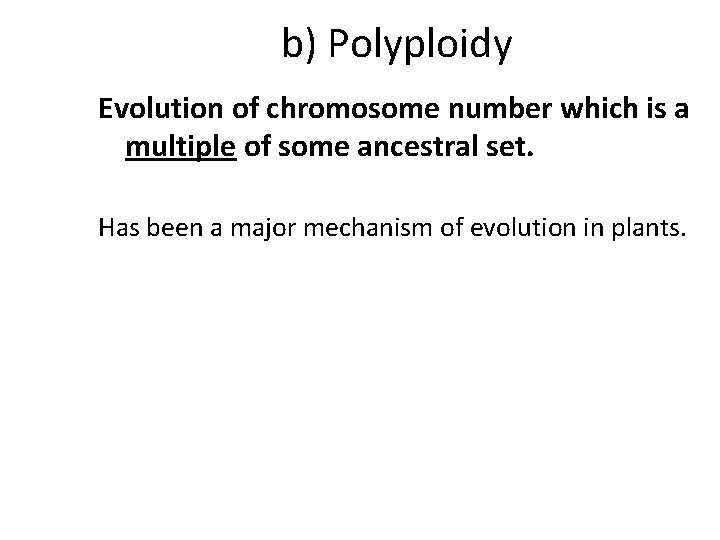
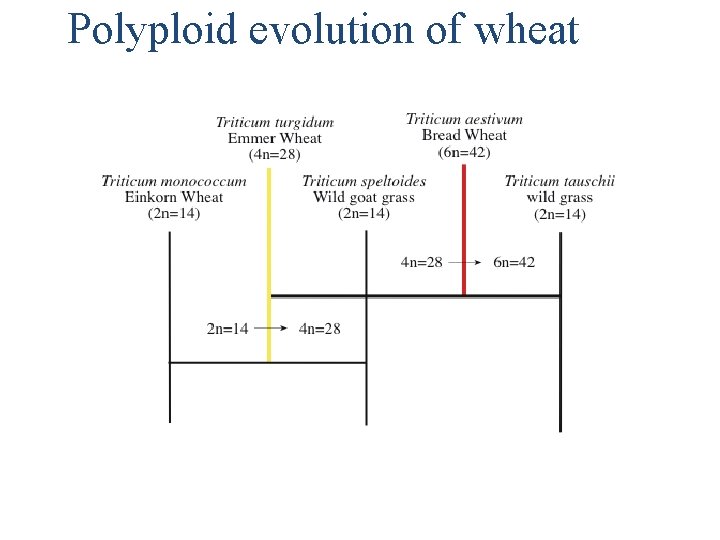
b) Polyploidy Evolution of chromosome number which is a multiple of some ancestral set. Has been a major mechanism of evolution in plants.
Polyploid evolution of wheat
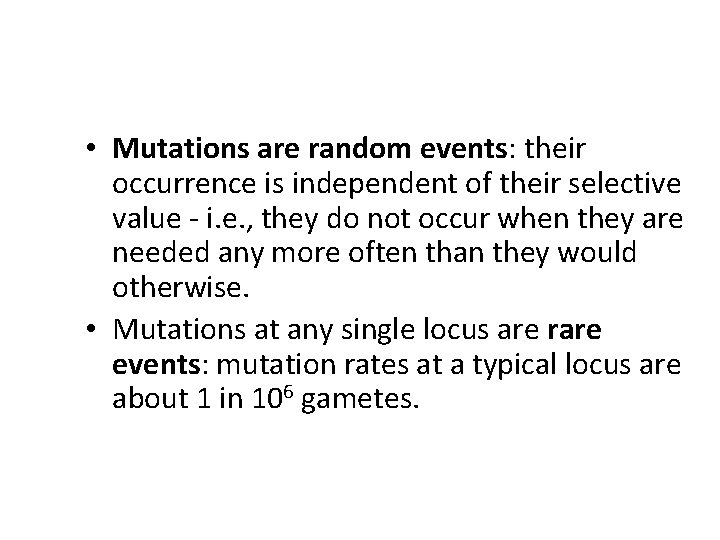
• Mutations are random events: their occurrence is independent of their selective value - i. e. , they do not occur when they are needed any more often than they would otherwise. • Mutations at any single locus are rare events: mutation rates at a typical locus are about 1 in 106 gametes.
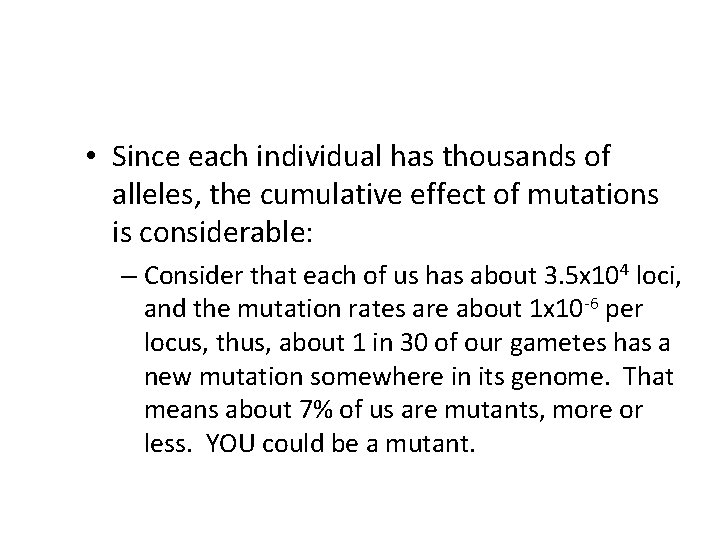
• Since each individual has thousands of alleles, the cumulative effect of mutations is considerable: – Consider that each of us has about 3. 5 x 10⁴ loci, and the mutation rates are about 1 x 10 -6 per locus, thus, about 1 in 30 of our gametes has a new mutation somewhere in its genome. That means about 7% of us are mutants, more or less. YOU could be a mutant.
Mutations are the ultimate source of genetic variation • Mutations are the only source of new alleles • Mutation is thus the ultimate source of genetic variation…it creates the raw material upon which natural selection acts.
Example-an interesting mutation: • In humans, one interesting mutation is called the CCR-d 32 allele (the locus is named CCR, it is one of many alleles at that locus) – This allele codes for a 32 base pair deletion that makes the protein nonfunctional. – Lacking this protein on the surface of their blood cells, homozygous individuals (it is effectively codominant) are essentially resistant to HIV-HIV cannot infect their cells. • This mutation did not arise because of HIV, best we can figure, it predates the evolution of HIV by hundreds or thousands of years, and was neutral (or possibly maintained by selection induced by the bubonic plague) until HIV entered out species!
How does genetic structure change? • mutation • migration certain genotypes produce more offspring • natural selection • genetic drift • differences in survival or reproduction differences in“fitness” • leads to adaptation • non-random mating
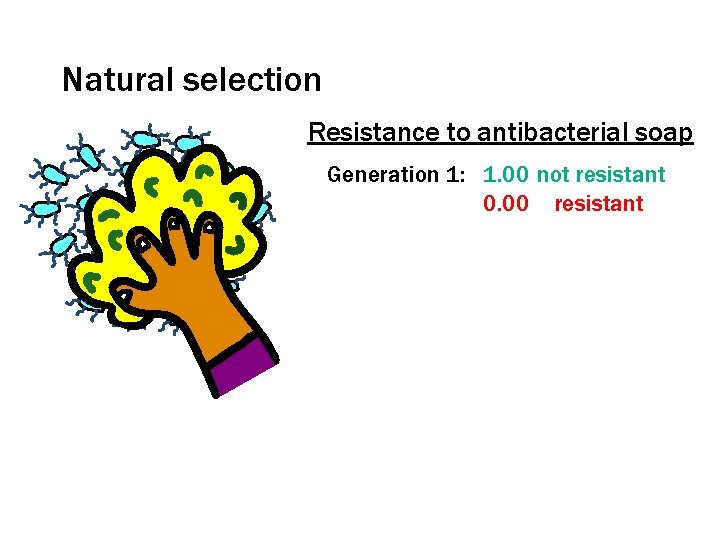
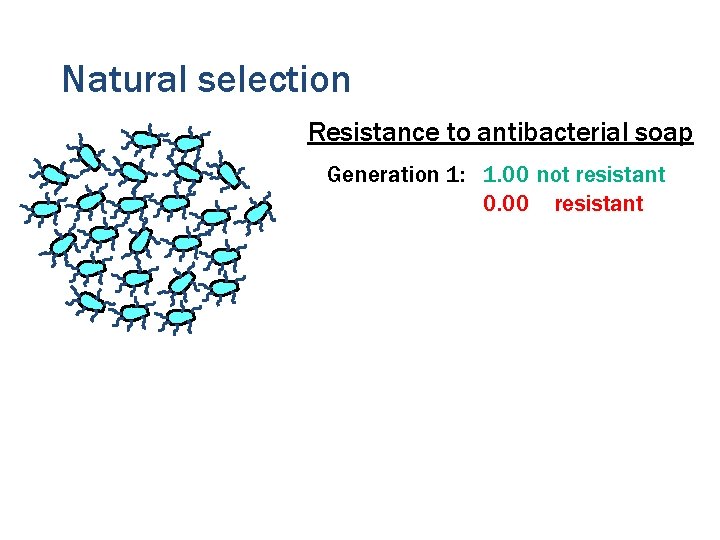
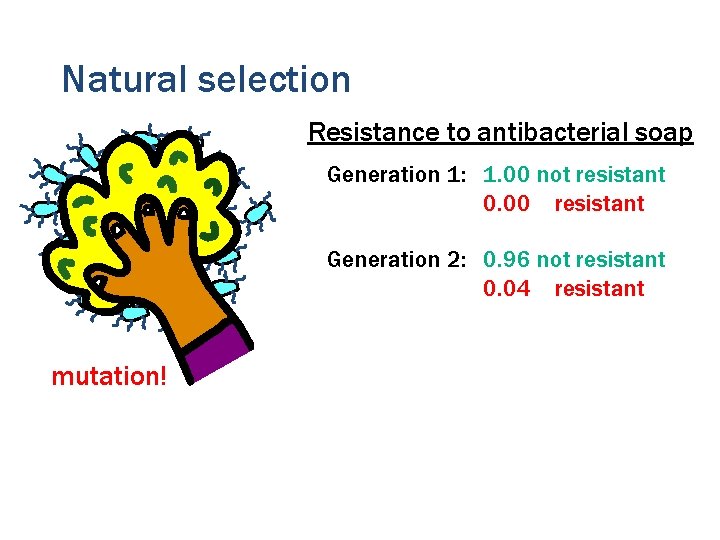
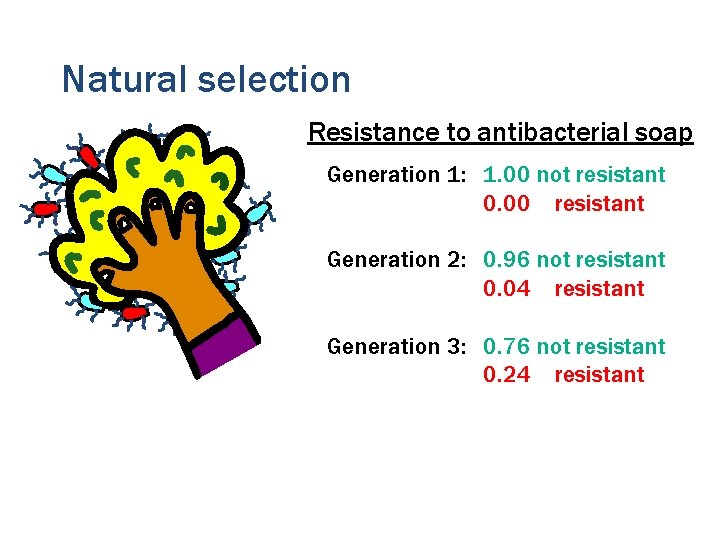
Natural Selection • Differential success in reproduction results in certain alleles being passed to the next generation in greater proportions • For example, an allele that confers resistance to DDT increased in frequency after DDT was used widely in agriculture
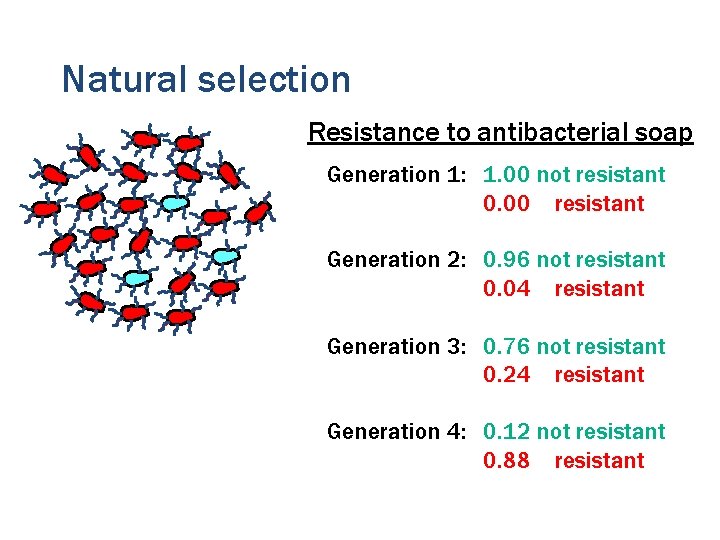
Natural selection Resistance to antibacterial soap Generation 1: 1. 00 not resistant 0. 00 resistant
Natural selection Resistance to antibacterial soap Generation 1: 1. 00 not resistant 0. 00 resistant
Natural selection Resistance to antibacterial soap Generation 1: 1. 00 not resistant 0. 00 resistant Generation 2: 0. 96 not resistant 0. 04 resistant mutation!
Natural selection Resistance to antibacterial soap Generation 1: 1. 00 not resistant 0. 00 resistant Generation 2: 0. 96 not resistant 0. 04 resistant Generation 3: 0. 76 not resistant 0. 24 resistant
Natural selection Resistance to antibacterial soap Generation 1: 1. 00 not resistant 0. 00 resistant Generation 2: 0. 96 not resistant 0. 04 resistant Generation 3: 0. 76 not resistant 0. 24 resistant Generation 4: 0. 12 not resistant 0. 88 resistant
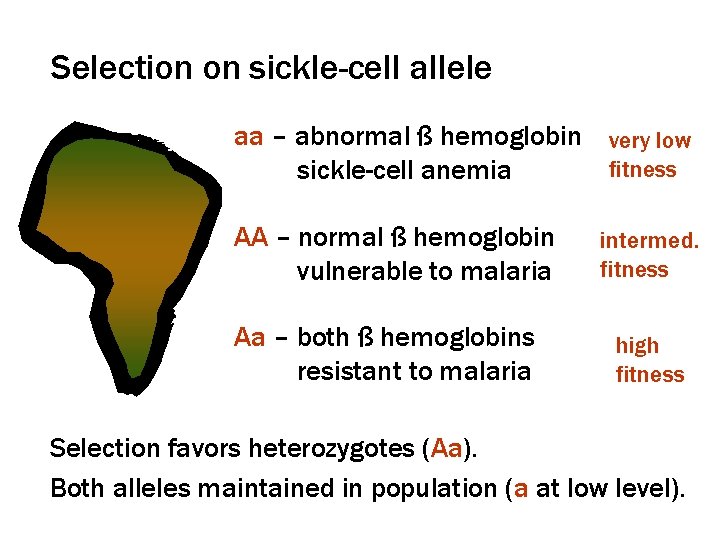
Selection on sickle-cell allele aa – abnormal ß hemoglobin very low fitness sickle-cell anemia AA – normal ß hemoglobin vulnerable to malaria Aa – both ß hemoglobins resistant to malaria intermed. fitness high fitness Selection favors heterozygotes (Aa). Both alleles maintained in population (a at low level).
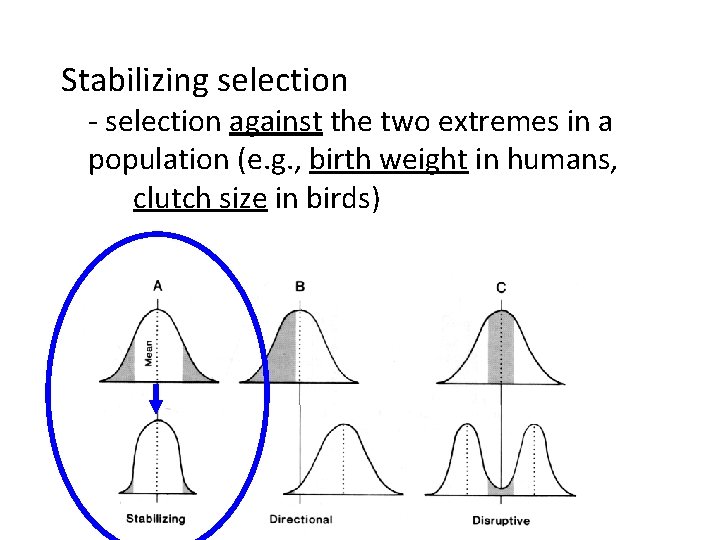
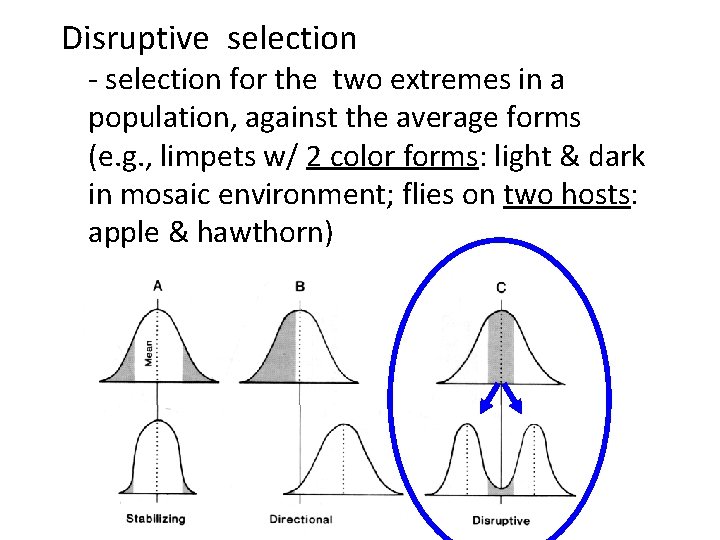
Stabilizing selection - selection against the two extremes in a population (e. g. , birth weight in humans, clutch size in birds)
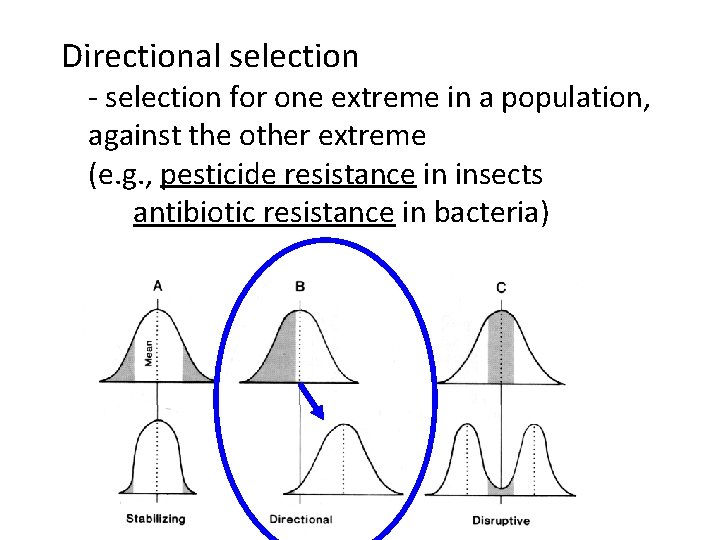
Directional selection - selection for one extreme in a population, against the other extreme (e. g. , pesticide resistance in insects antibiotic resistance in bacteria)
Disruptive selection - selection for the two extremes in a population, against the average forms (e. g. , limpets w/ 2 color forms: light & dark in mosaic environment; flies on two hosts: apple & hawthorn)
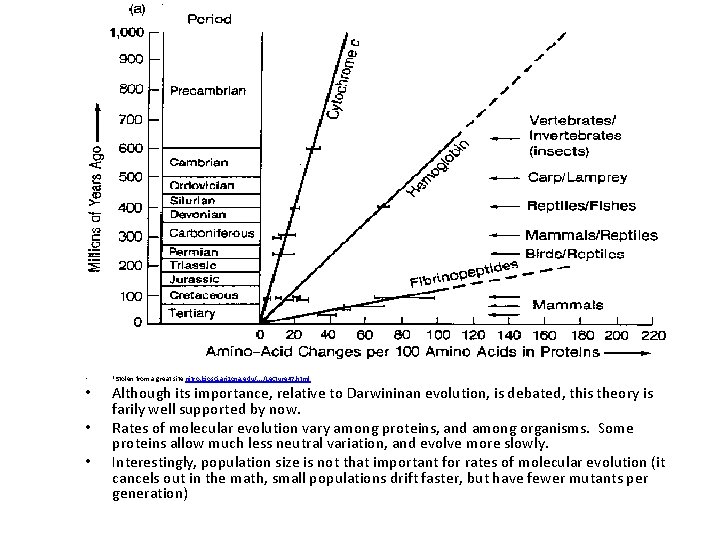
The Neutral Theory of Molecular Evolution. • One of the most interesting breakthroughs in evolutionary biology in the 1960’s-1990’s, has been the development of the neutral theory of molecular evolution. • It was introduced by the Japanese theoretician Motoo Kimura, in the late 1960’s. • It is a theory of evolution that Darwin never could have anticipated (evolutionary biology does not begin and end with Darwin). • It runs in parallel with Darwinian evolution by natural selection, though its effects are most noticeable and easiest to understand on loci for which there are no differences in fitness between alleles (thus, it is called the neutral theory). • It causes change over vast spans of time, at a more-or-less constant rate, when averaged over many loci. • For that reason, it can be used to develop a “molecular clock”. . to tell how long it has been since two lineages have diverged.
• In the 1960’s techniques of observing genetic variation in natural populations became available, and were pioneered by researchers such as Richard Lewontin. – It was discovered that, in natural populations, many selectively neutral genetic polymorphisms exist. • Kimura based his theory upon this. – Thus, he hypothesized that much of genetic variation is actually neutral – He also asserted that most evolutionary change is the result of genetic drift acting on neutral alleles. – New alleles originate through the spontaneous mutatation of a single nucleotide within the sequence of a gene. • In single-celled organisms, or asexuals, this immediately contributes a new allele to the population, and this allele is subject to drift. • In sexually reproducing, multicellular organisms, the nucleotide substitution must arise within the germ line that gives rise to gametes. – Most new alleles are lost due to genetic drift, but occasionally one becomes more common, and by random accident, replaces the original. – The chance of this is small, but over time, it happens occasionally, at a predictable rate. • In this way, neutral substitutions tend to accumulate, and genomes tend to evolve. – Many of the polymorphisms we see may be “transient”-one allele is in the process of replacing another.
• *Stolen from a great site nitro. biosci. arizona. edu/. . . /Lecture 47. html • Although its importance, relative to Darwininan evolution, is debated, this theory is farily well supported by now. Rates of molecular evolution vary among proteins, and among organisms. Some proteins allow much less neutral variation, and evolve more slowly. Interestingly, population size is not that important for rates of molecular evolution (it cancels out in the math, small populations drift faster, but have fewer mutants per generation) • •
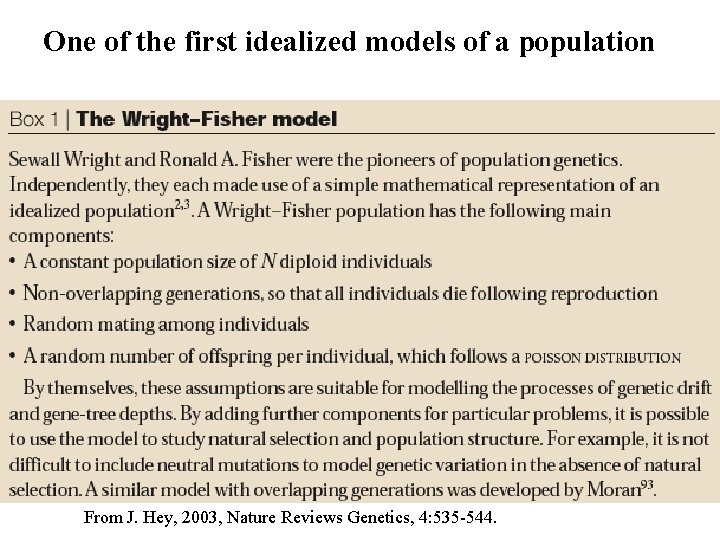
One of the first idealized models of a population From J. Hey, 2003, Nature Reviews Genetics, 4: 535 -544.