
How does a manuscript become a published paper
How does a manuscript become a published paper? EBW-1 English for chemists Yunjiao Che Leibniz-Institut für Polymerforschung Dresden e. V.
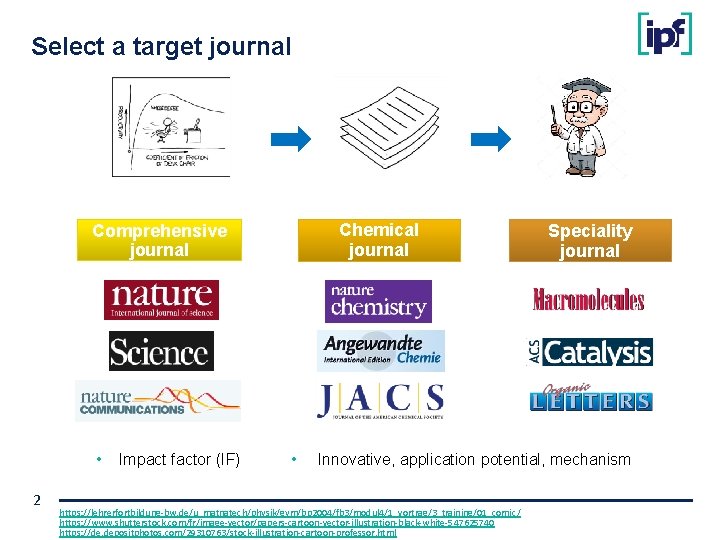
Select a target journal Chemical journal Comprehensive journal • 2 Impact factor (IF) • Speciality journal Innovative, application potential, mechanism https: //lehrerfortbildung-bw. de/u_matnatech/physik/gym/bp 2004/fb 3/modul 4/1_vortrag/3_training/01_comic/ https: //www. shutterstock. com/fr/image-vector/papers-cartoon-vector-illustration-black-white-547625740 https: //de. depositphotos. com/29310763/stock-illustration-cartoon-professor. html
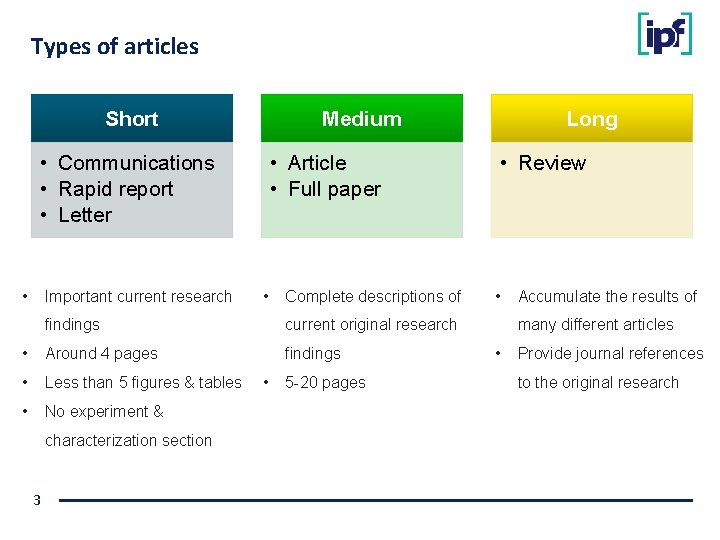
Types of articles Short Medium • Communications • Rapid report • Letter • Important current research • Article • Full paper • Complete descriptions of findings current original research • Around 4 pages findings • Less than 5 figures & tables • No experiment & characterization section 3 • 5 -20 pages Long • Review • Accumulate the results of many different articles • Provide journal references to the original research
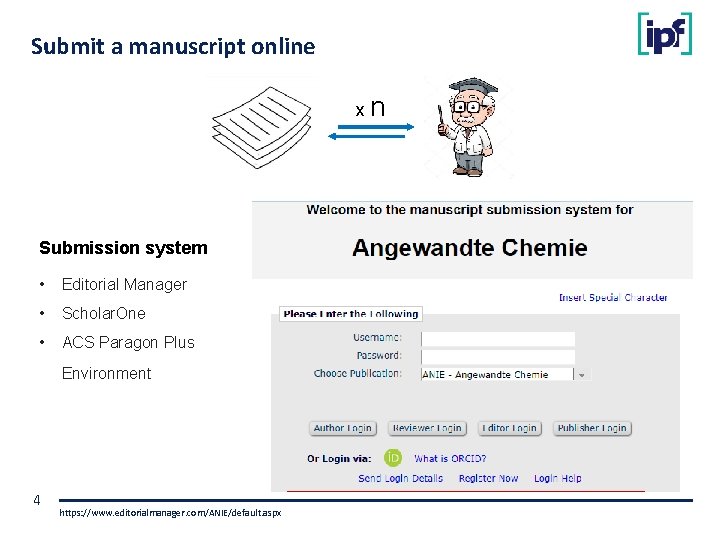
Submit a manuscript online xn Submission system • Editorial Manager • Scholar. One • ACS Paragon Plus Environment 4 https: //www. editorialmanager. com/ANIE/default. aspx
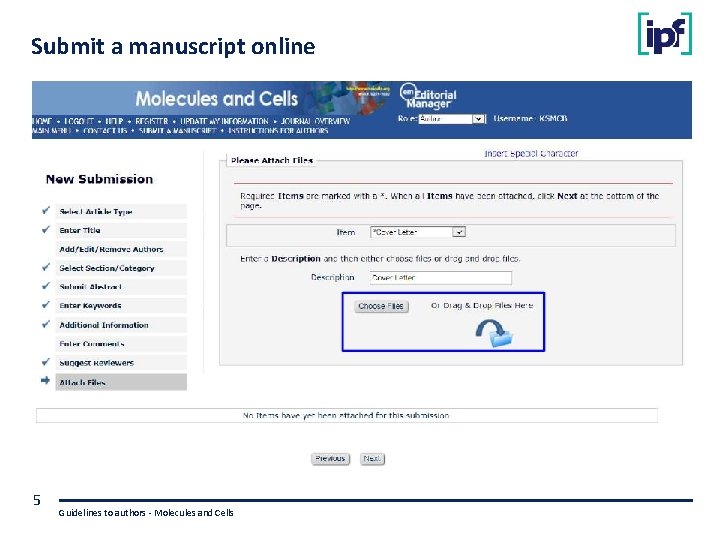
Submit a manuscript online 5 Guidelines to authors - Molecules and Cells
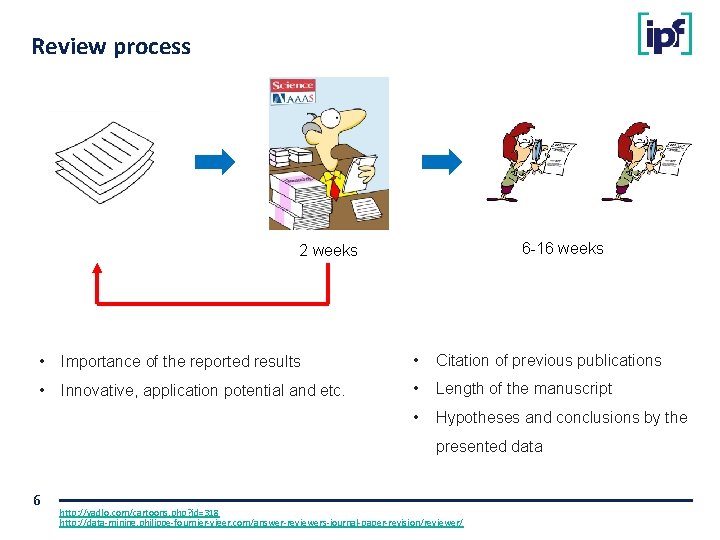
Review process 6 -16 weeks 2 weeks • Importance of the reported results • Citation of previous publications • Innovative, application potential and etc. • Length of the manuscript • Hypotheses and conclusions by the presented data 6 http: //vadlo. com/cartoons. php? id=318 http: //data-mining. philippe-fournier-viger. com/answer-reviewers-journal-paper-revision/reviewer/
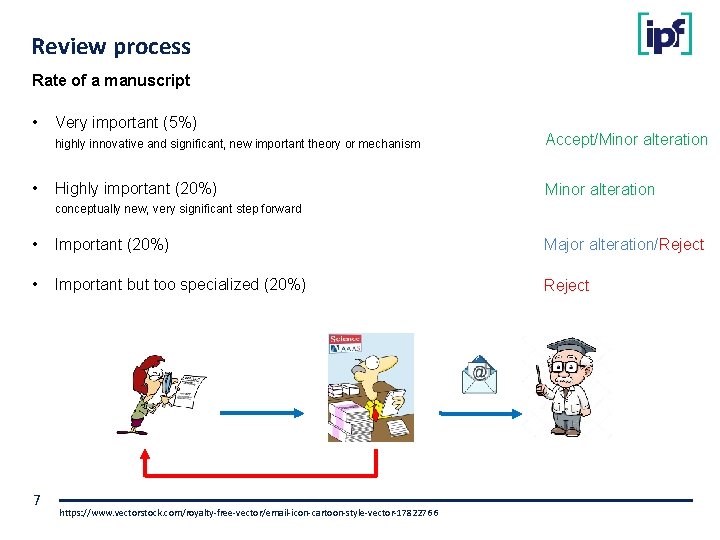
Review process Rate of a manuscript • • Very important (5%) highly innovative and significant, new important theory or mechanism Accept/Minor alteration Highly important (20%) Minor alteration conceptually new, very significant step forward • Important (20%) Major alteration/Reject • Important but too specialized (20%) Reject 7 https: //www. vectorstock. com/royalty-free-vector/email-icon-cartoon-style-vector-17822766

Revision and resubmit Minor alteration Reject Major alteration • Correct References • Appeal • Improve the quality of graphics • Resubmit • More accurate explanations for results • More experiments/calculations • Completely rewrite the manuscript Respond to Reviewer 1. In Figure 1 a, there is a vertical arrow points that the upper phase is "water and hydrophobic monomers". It's a bit confuse, since the lower phase should also be "water and hydrophobic monomers", which has involved the "on water" SI-Cu. CRP. 2. It is appreciated that the authors polymerized a variety of different monomers using the new method. But how the grafting density looks like? Is there any difference for different monomers? 3. In abstract Line 2: "that convert" should be "that converts". 4. The following recently published papers about the role of Cu 0 in CRP should be cited accordingly: 10. 1021/acs. macromol. 8 b 01306; Chem. Soc. Rev. , 2018, 47, 4357. 8 https: //www. ariessys. com/
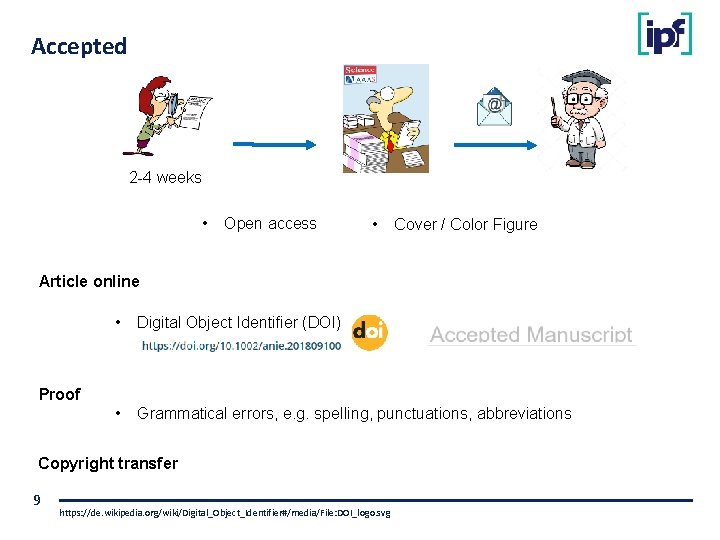
Accepted 2 -4 weeks • Open access • Cover / Color Figure Article online • Digital Object Identifier (DOI) • Grammatical errors, e. g. spelling, punctuations, abbreviations Proof Copyright transfer 9 https: //de. wikipedia. org/wiki/Digital_Object_Identifier#/media/File: DOI_logo. svg
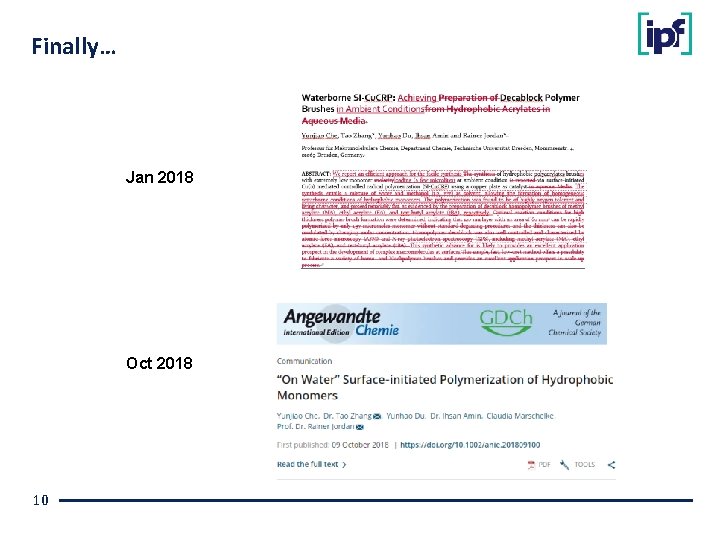
Finally… Jan 2018 Oct 2018 10
Thank you for your attention! 11
- Slides: 11