
How do we see particles Detectors and data
- Slides: 45
How do we see particles? Detectors and data acquisition for physics experiments Alessandro Scordo International Masterclass 2013 04/02/2013 LNF, Frascati
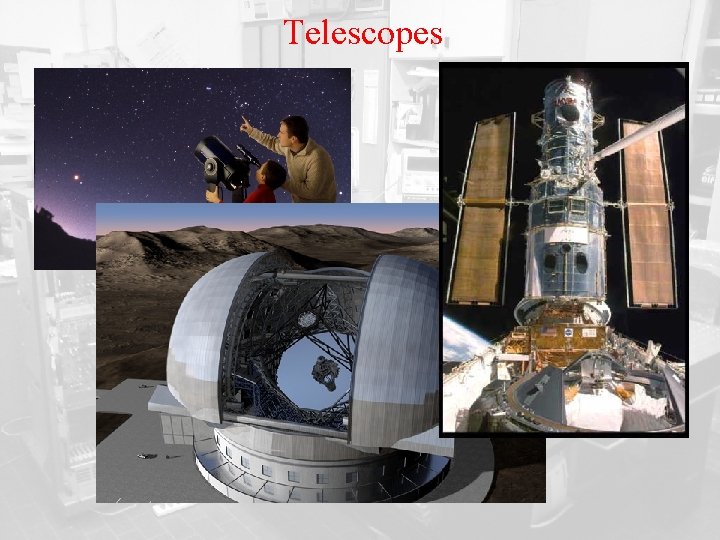
Telescopes
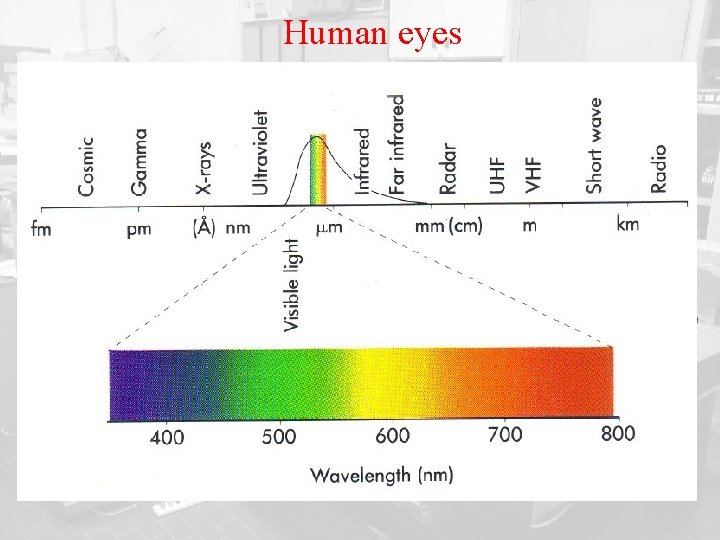
Human eyes
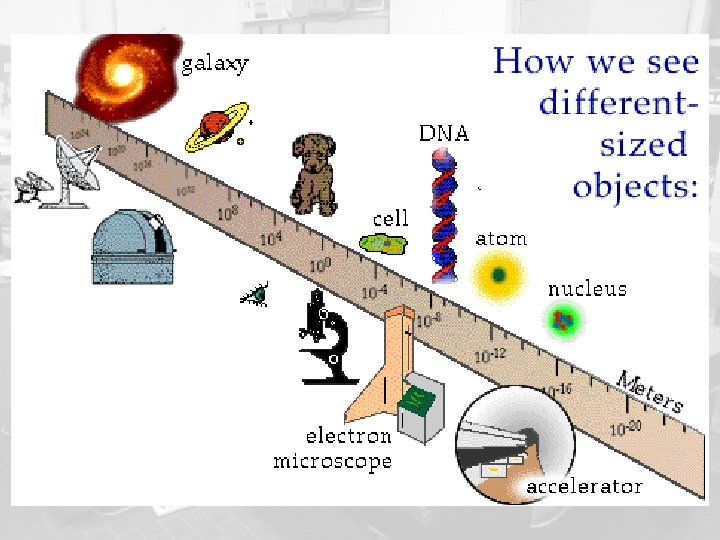
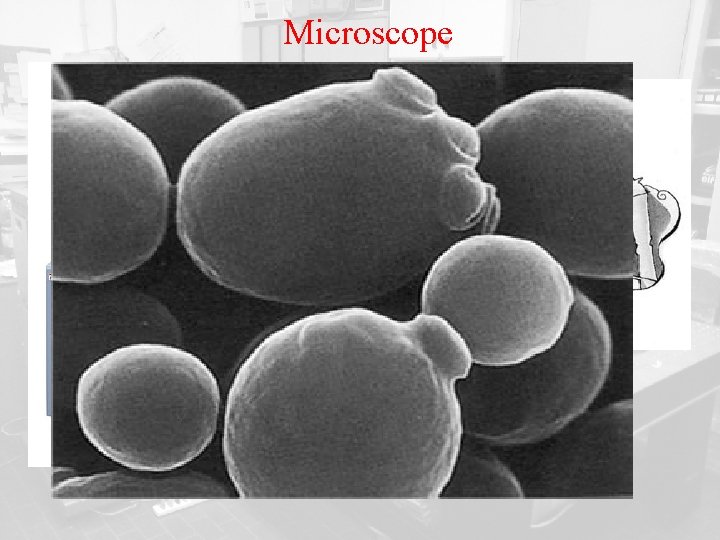
Microscope
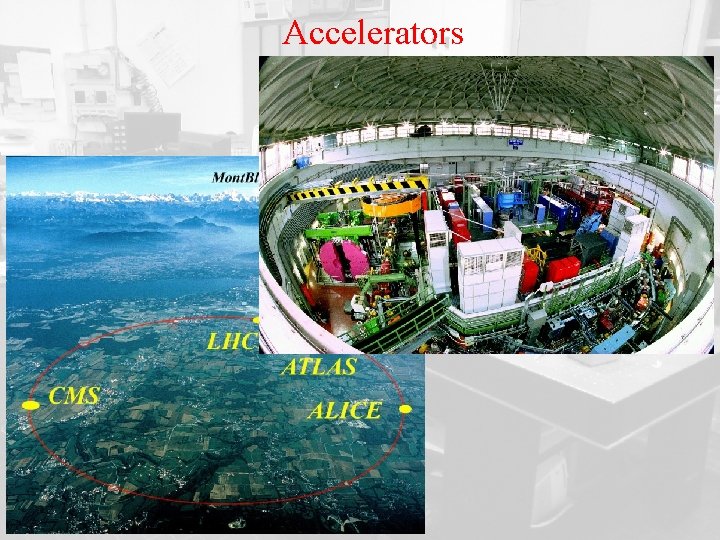
Accelerators
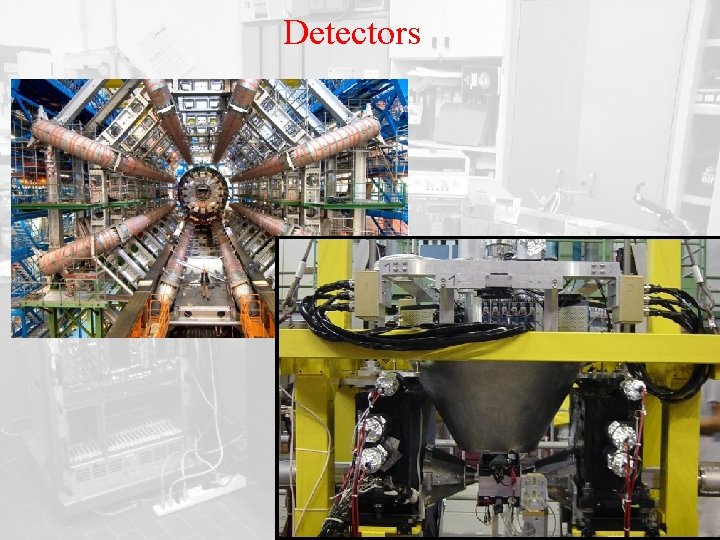
Detectors
But where does it all start from?
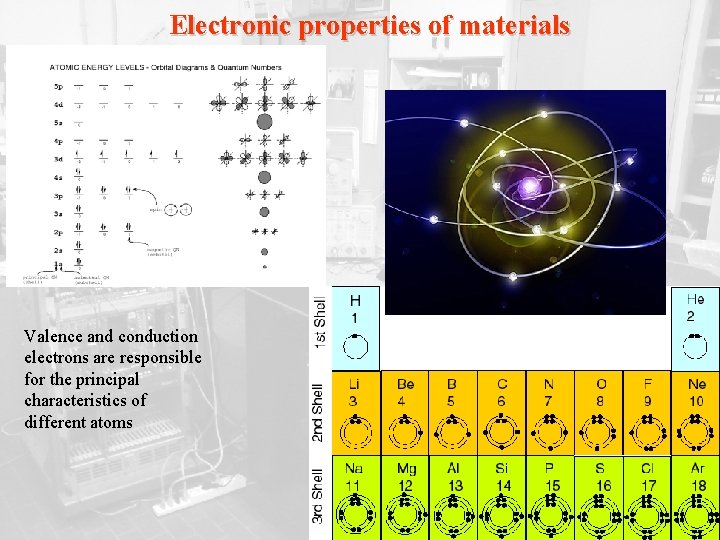
Electronic properties of materials Valence and conduction electrons are responsible for the principal characteristics of different atoms
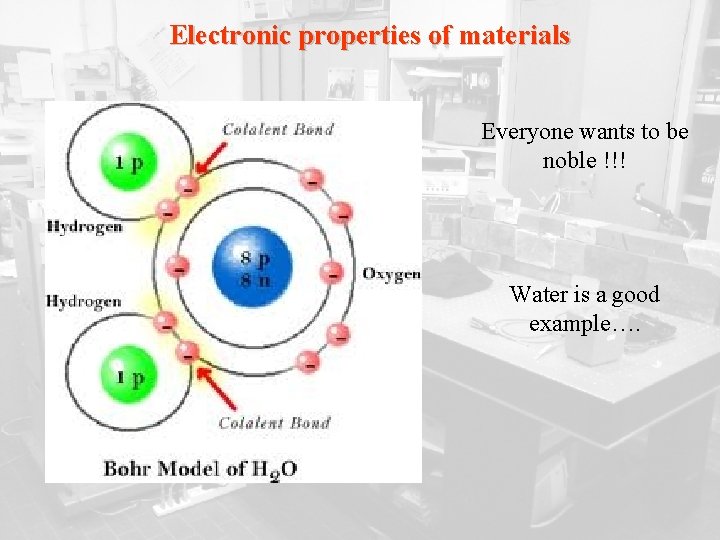
Electronic properties of materials Everyone wants to be noble !!! Water is a good example….
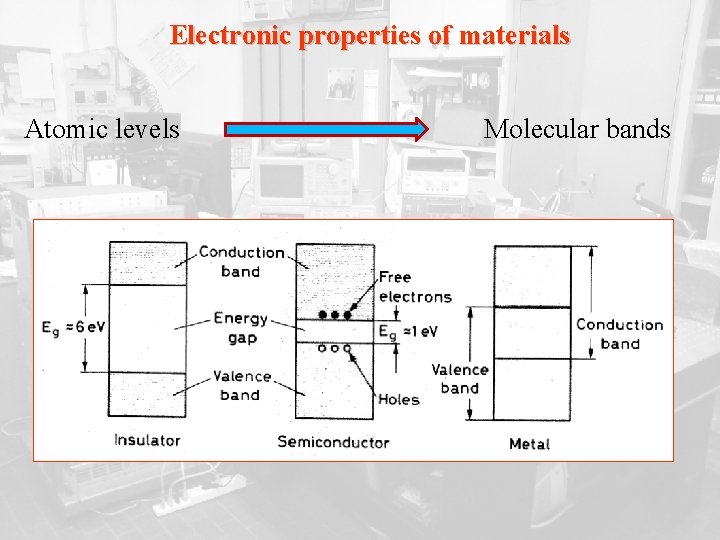
Electronic properties of materials Atomic levels Molecular bands
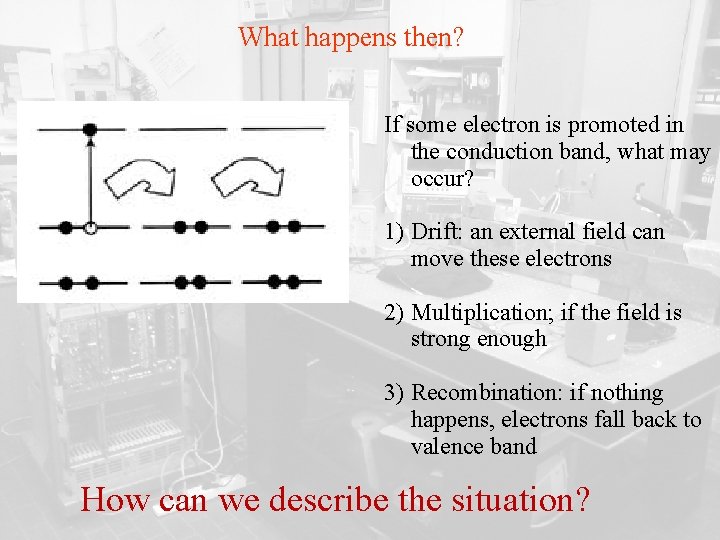
What happens then? If some electron is promoted in the conduction band, what may occur? 1) Drift: an external field can move these electrons 2) Multiplication; if the field is strong enough 3) Recombination: if nothing happens, electrons fall back to valence band How can we describe the situation?
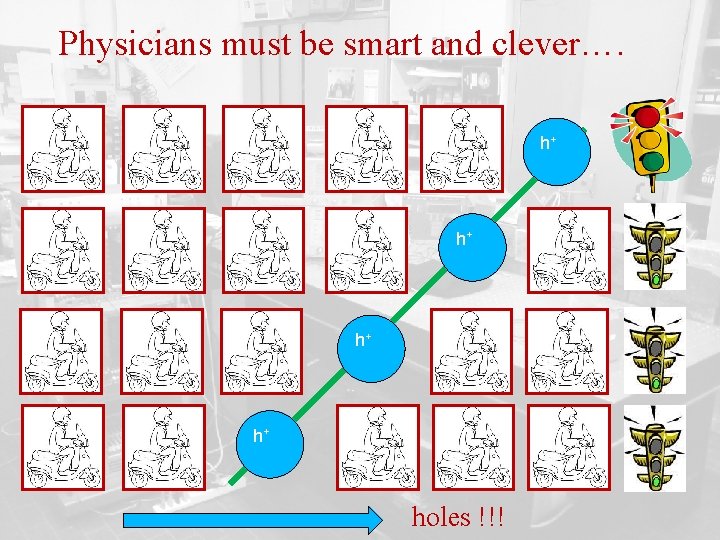
Physicians must be smart and clever…. h+ h+ holes !!!
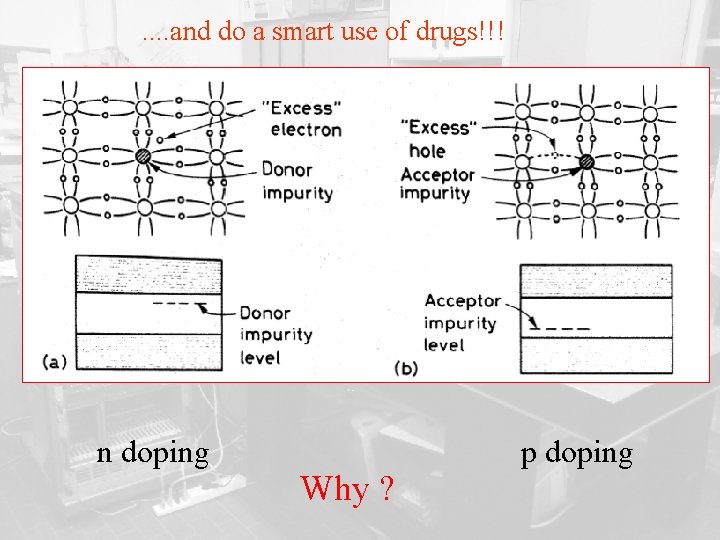
. . and do a smart use of drugs!!! n doping Why ? p doping
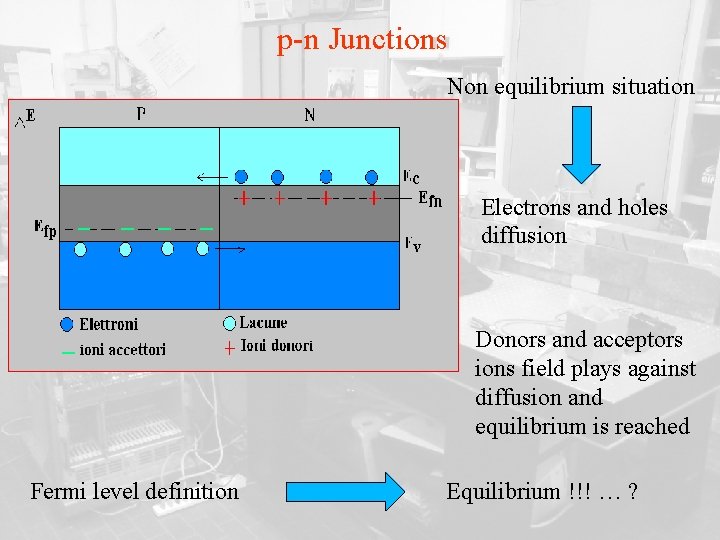
p-n Junctions Non equilibrium situation Electrons and holes diffusion Donors and acceptors ions field plays against diffusion and equilibrium is reached Fermi level definition Equilibrium !!! … ?
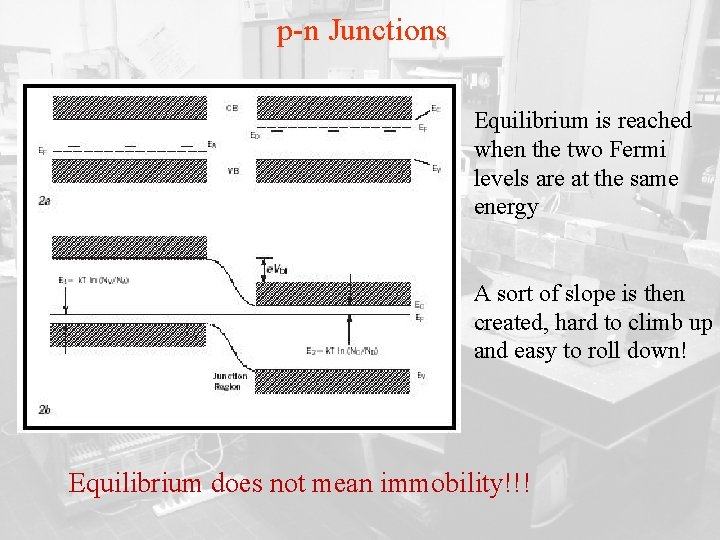
p-n Junctions Equilibrium is reached when the two Fermi levels are at the same energy A sort of slope is then created, hard to climb up and easy to roll down! Equilibrium does not mean immobility!!!
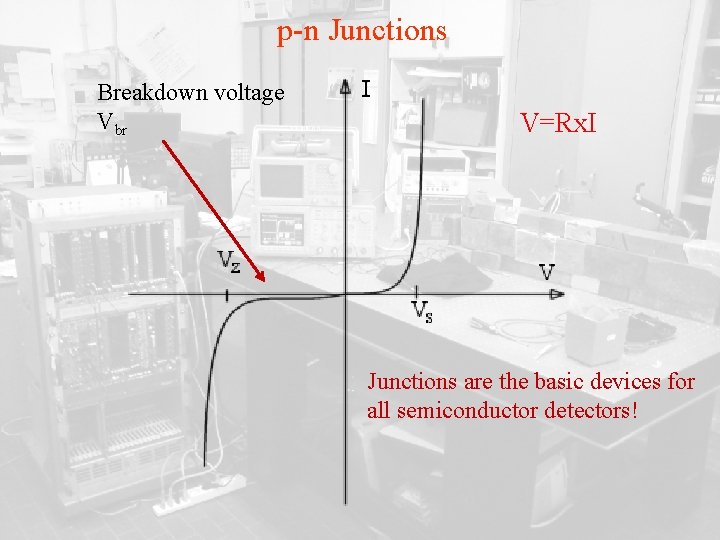
p-n Junctions Breakdown voltage Vbr V=Rx. I Junctions are the basic devices for all semiconductor detectors!
What and how we measure?
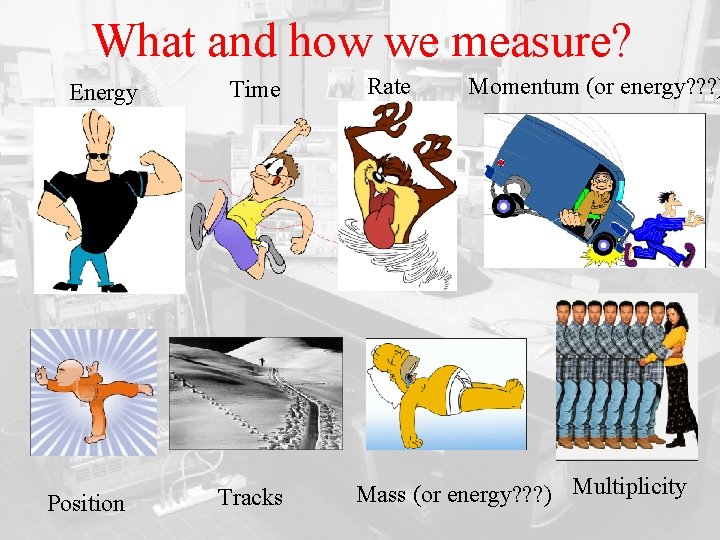
What and how we measure? Energy Position Time Tracks Rate Momentum (or energy? ? ? ) Mass (or energy? ? ? ) Multiplicity
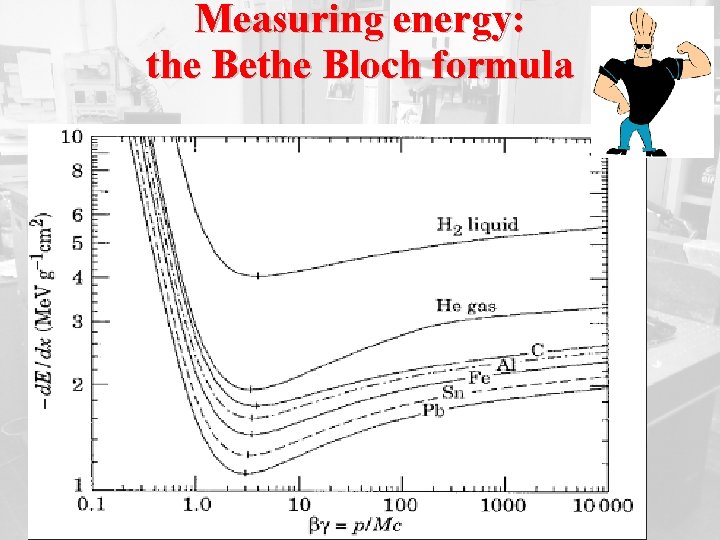
Measuring energy: the Bethe Bloch formula
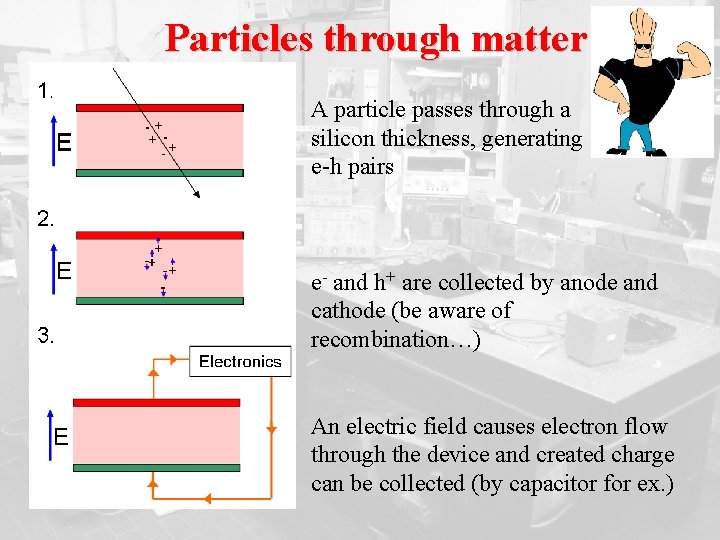
Particles through matter A particle passes through a silicon thickness, generating e-h pairs e- and h+ are collected by anode and cathode (be aware of recombination…) An electric field causes electron flow through the device and created charge can be collected (by capacitor for ex. )
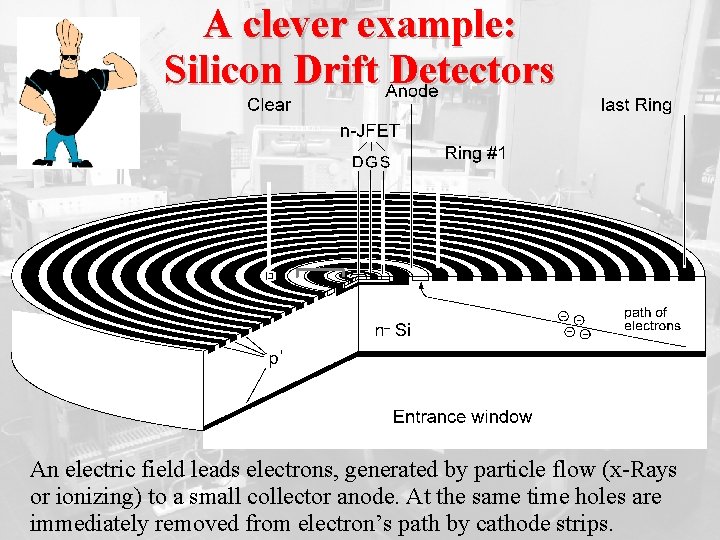
A clever example: Silicon Drift Detectors An electric field leads electrons, generated by particle flow (x-Rays or ionizing) to a small collector anode. At the same time holes are immediately removed from electron’s path by cathode strips.
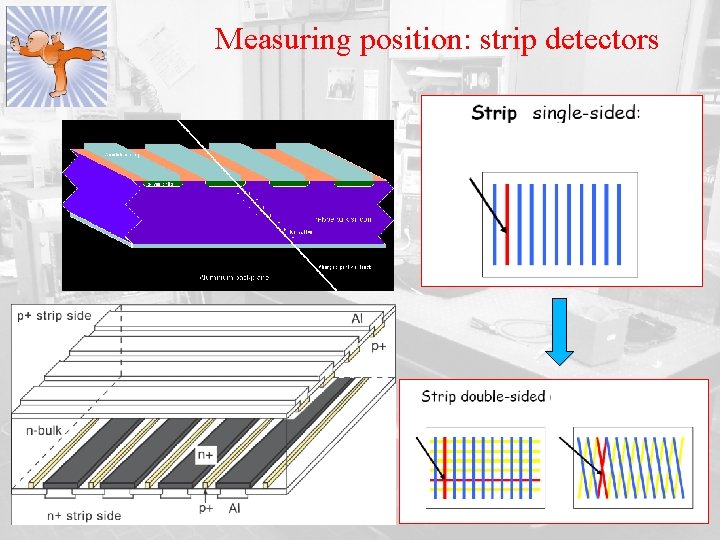
Measuring position: strip detectors
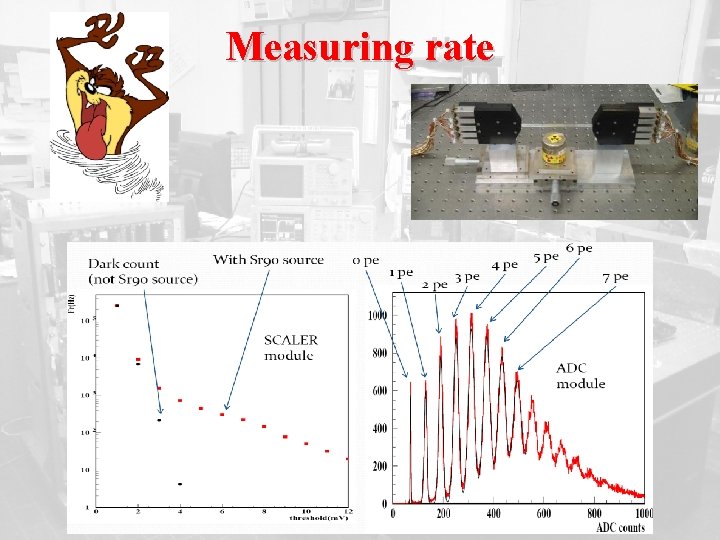
Measuring rate
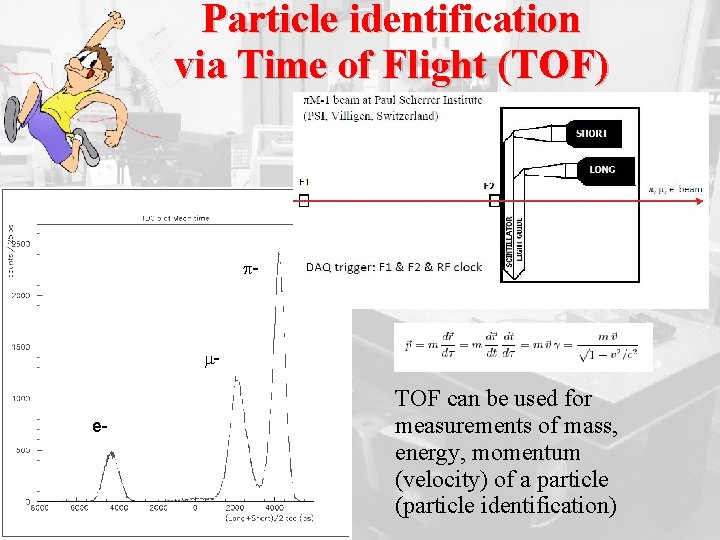
Particle identification via Time of Flight (TOF) p- m- e- TOF can be used for measurements of mass, energy, momentum (velocity) of a particle (particle identification)
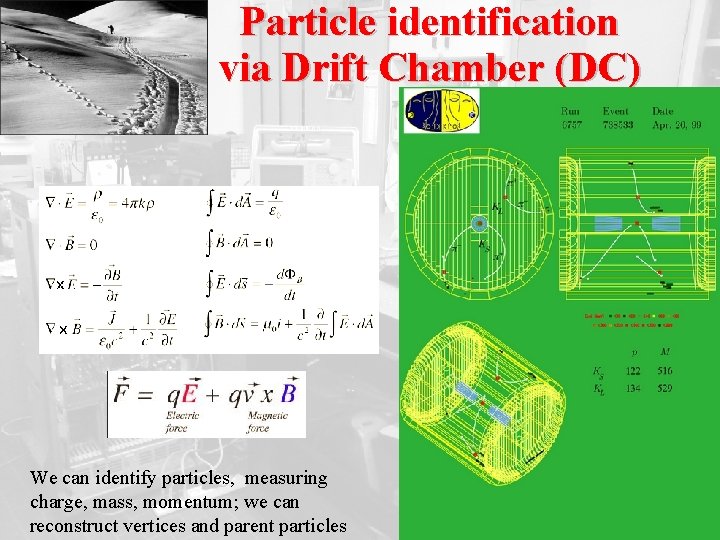
Particle identification via Drift Chamber (DC) We can identify particles, measuring charge, mass, momentum; we can reconstruct vertices and parent particles
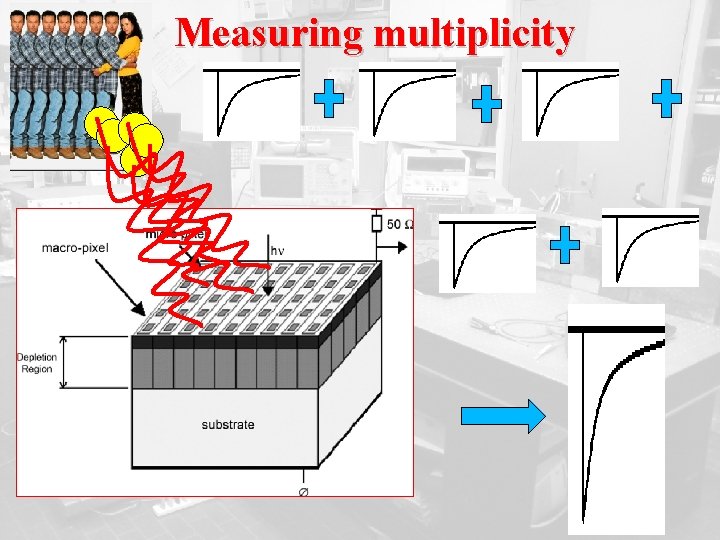
Measuring multiplicity
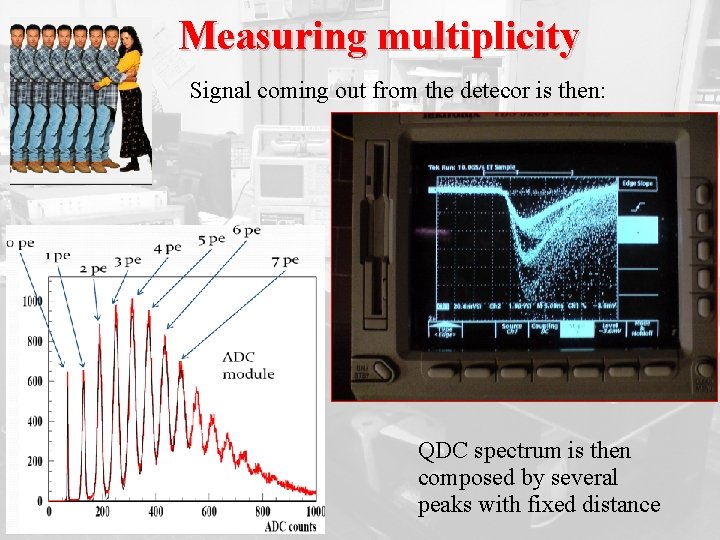
Measuring multiplicity Signal coming out from the detecor is then: QDC spectrum is then composed by several peaks with fixed distance
Quantization in your pocket: e charge estimation
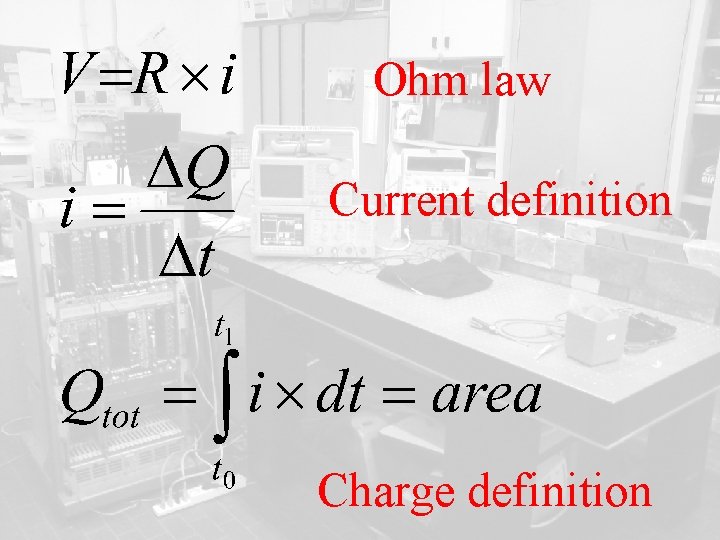
Ohm law Current definition Charge definition
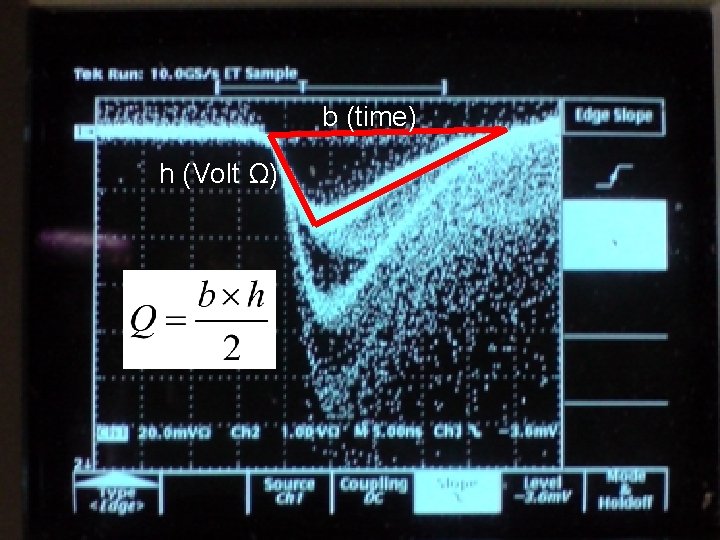
b (time) h (Volt Ω)
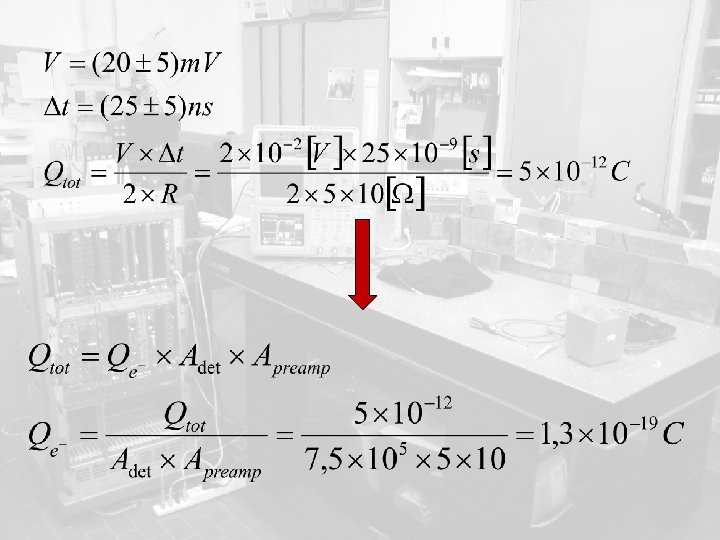
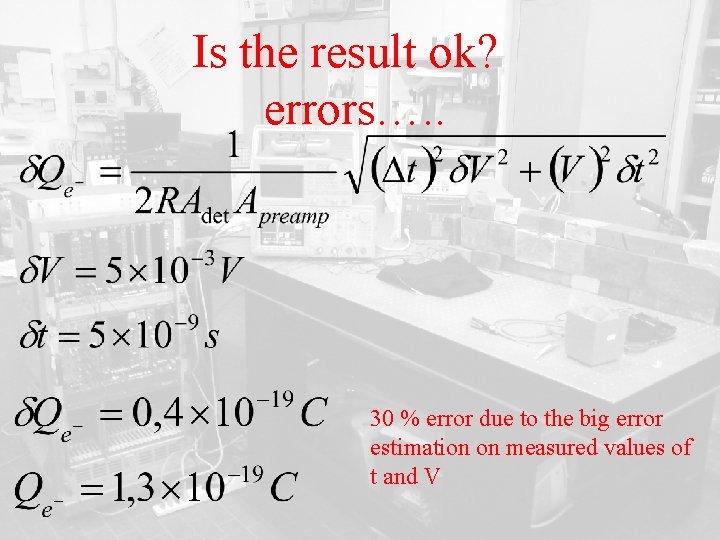
Is the result ok? errors…. . 30 % error due to the big error estimation on measured values of t and V
We got a signal. . . and now what?
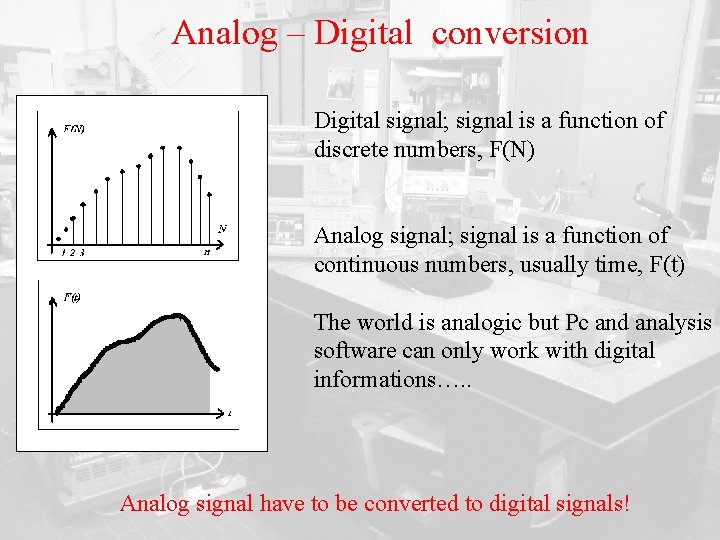
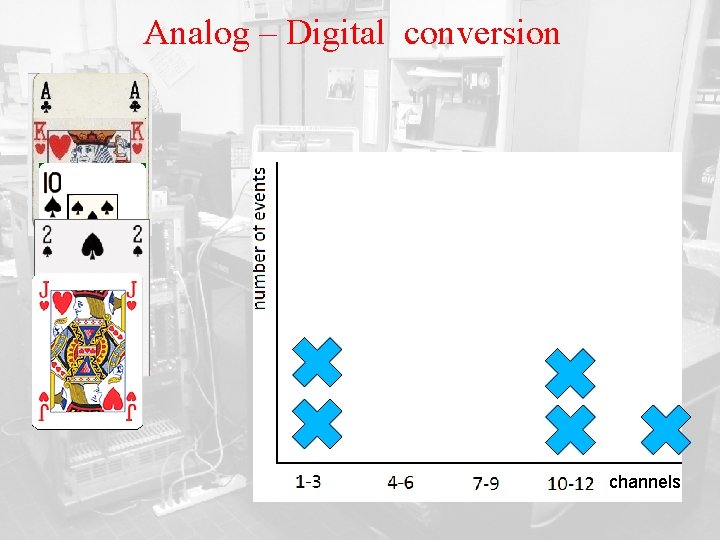
Analog – Digital conversion Digital signal; signal is a function of discrete numbers, F(N) Analog signal; signal is a function of continuous numbers, usually time, F(t) The world is analogic but Pc and analysis software can only work with digital informations…. . Analog signal have to be converted to digital signals!
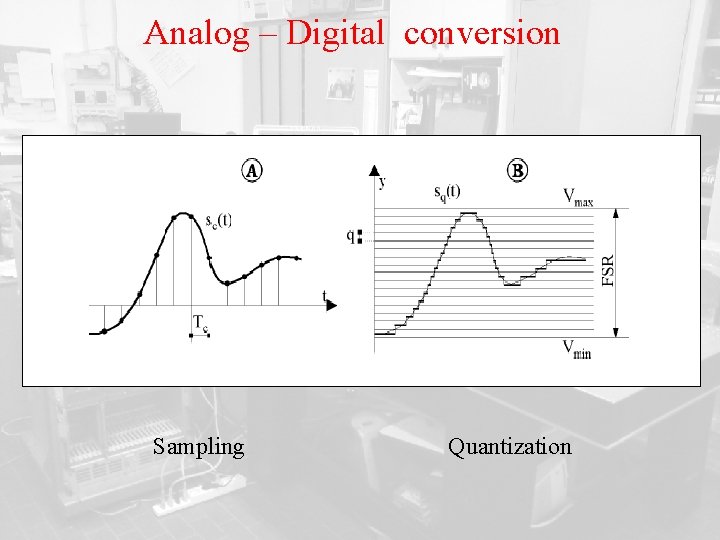
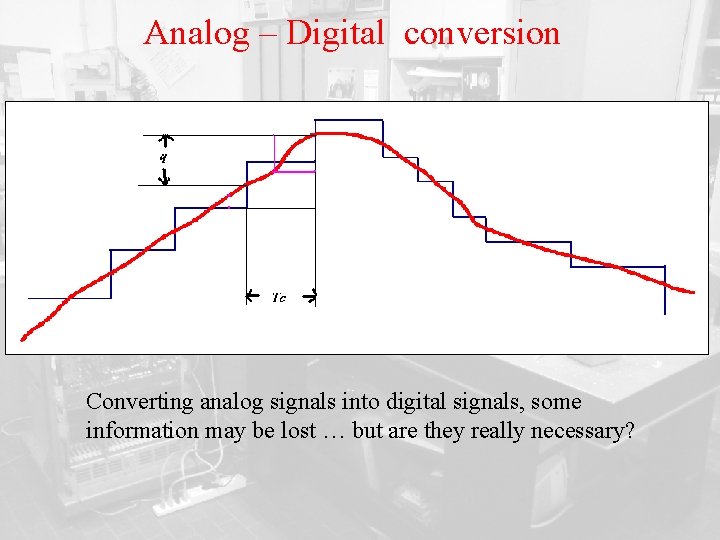
Analog – Digital conversion Sampling Quantization
Analog – Digital conversion channels
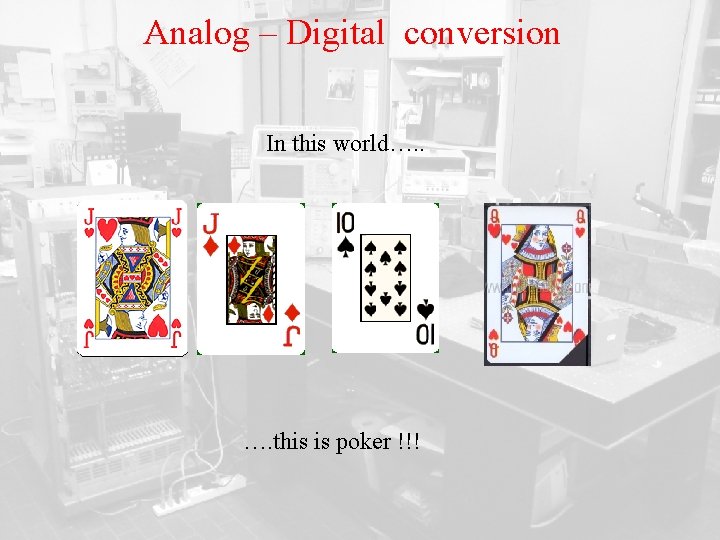
Analog – Digital conversion In this world…. . …. this is poker !!!
Analog – Digital conversion Converting analog signals into digital signals, some information may be lost … but are they really necessary?
From analog signals to files and histograms: Data AQuisition methods
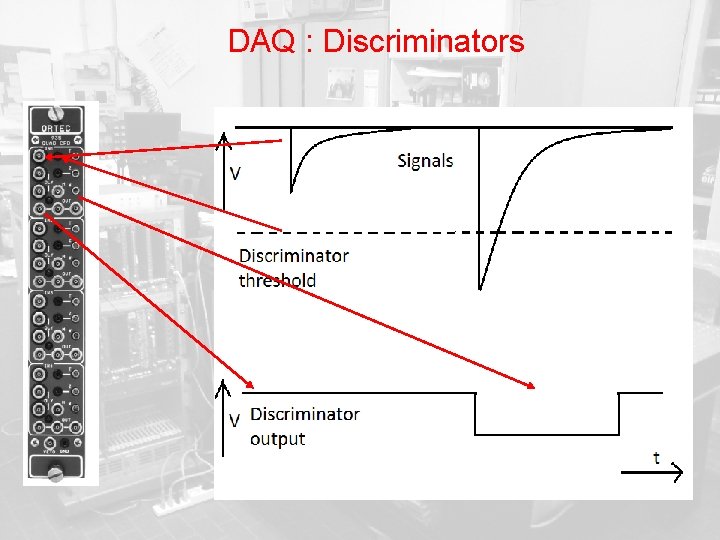
DAQ : Discriminators
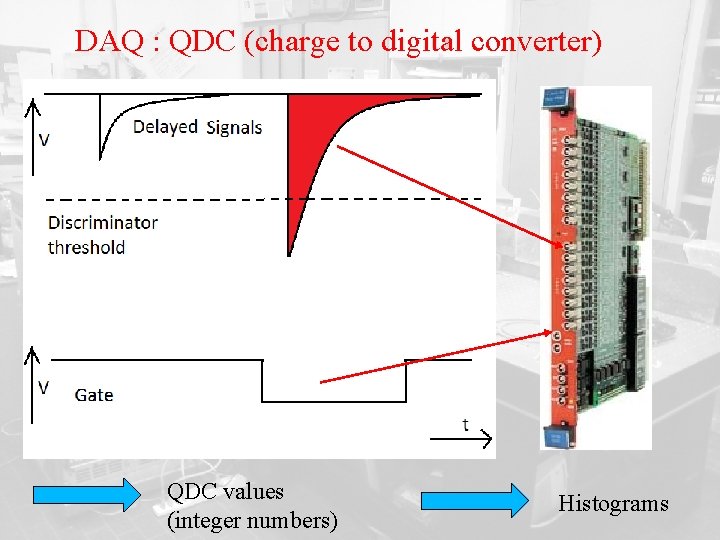
DAQ : QDC (charge to digital converter) QDC values (integer numbers) Histograms
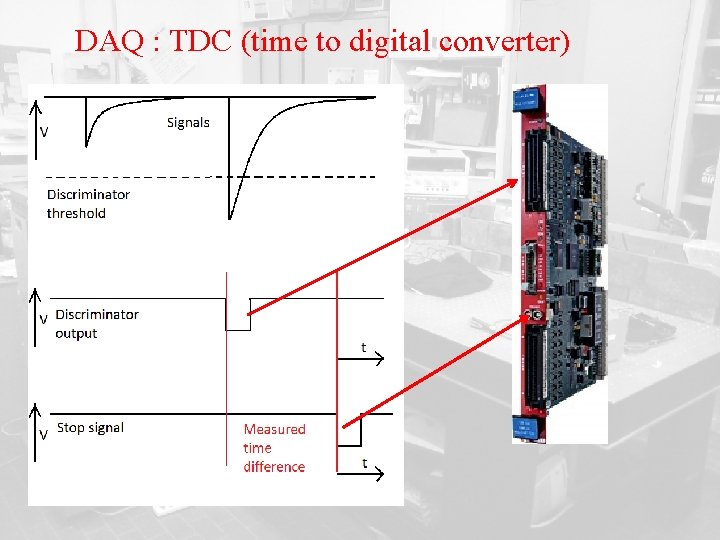
DAQ : TDC (time to digital converter)
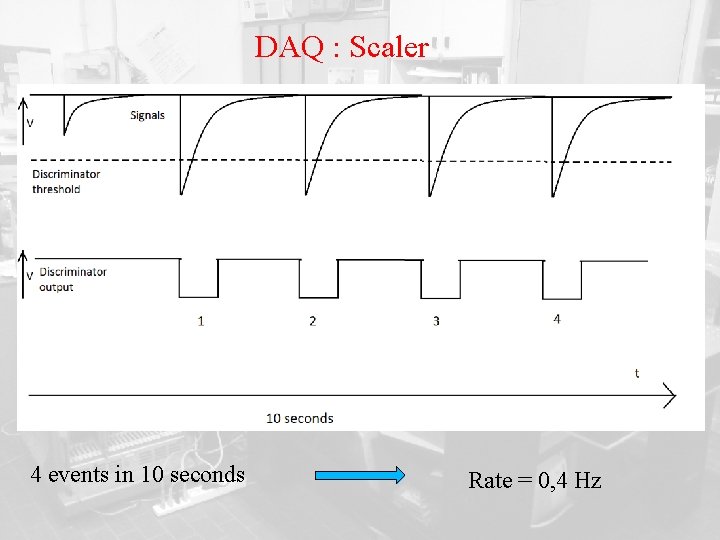
DAQ : Scaler 4 events in 10 seconds Rate = 0, 4 Hz
Questions? New physicists?