
How do we learn about the past How
How do we learn about the past?
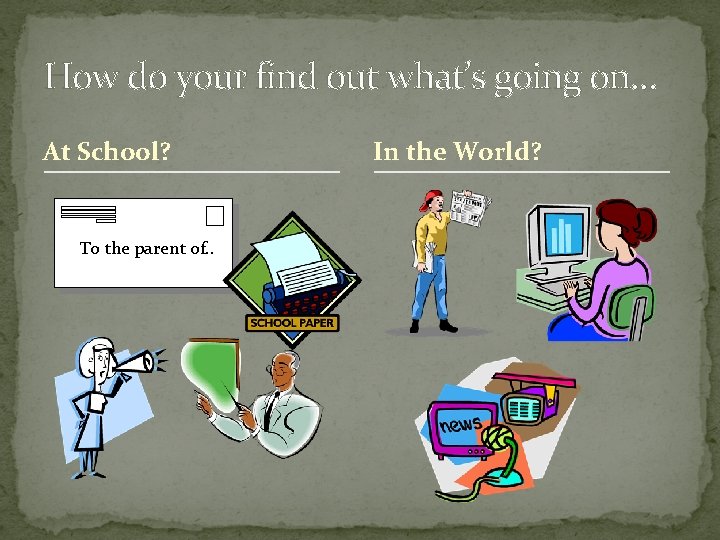
How do your find out what’s going on… At School? To the parent of. . In the World?
But… How do we know this information is accurate? �Evidence �What is evidence? �Types of evidence: � Written Sources � Artifacts � Media

Written Sources Primary Sources Secondary Sources �Firsthand accounts of �Created by people who events/people �Documents, photos, letters, diaries, etc didn’t (or couldn’t) witness event �Biographies, textbooks, Internet, etc Media: information sources Pre-History: Time before writing was invented. Must use objects left behind to study
Artifacts Objects Fossils �Anything created/used �Preserved organic matter by humans �Art, tools, weapons, etc �Human, animal, or plant remains

Who is doing all of this? �Anthropology—the study of humanity, how past and present cultures live � Culture—a people’s way of life (Beliefs, values, social classes, art, language, tradition, etc…) �Archeology—study of past cultures using artifacts left behind �History—study of past societies/events, primarily using written records
Asking the right questions… �What kind of evidence is this? �What does this object reveal about its owner? �What does it say about the society it came from? �What can we speculate (educated guess based on evidence) about the values, traditions, society, people, climate, etc of where this object can from?
But what if you’re not sure? �If an object is unfamiliar: � What is the possible function of this item? � Why might it have been used? � Who might have used it? �Beware of: � Assumptions: guesses made without evidence � Multiple Perspectives: 2 people can see one object in different ways � Bias: Making a judgment based on YOUR preferences or beliefs
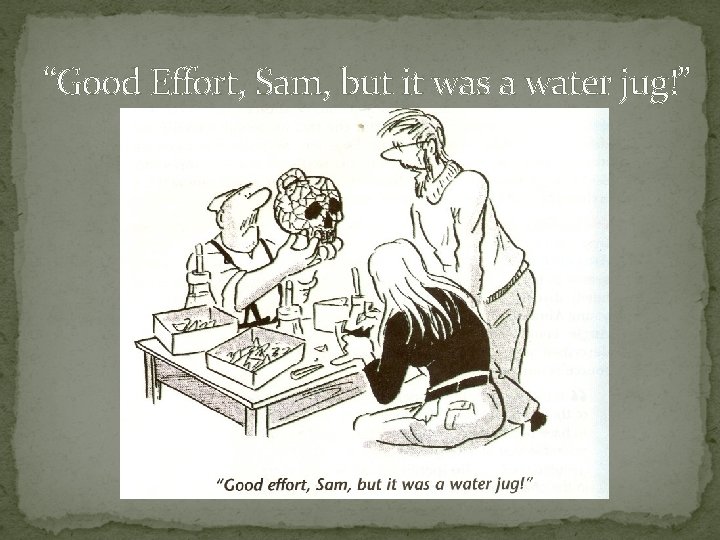
“Good Effort, Sam, but it was a water jug!”
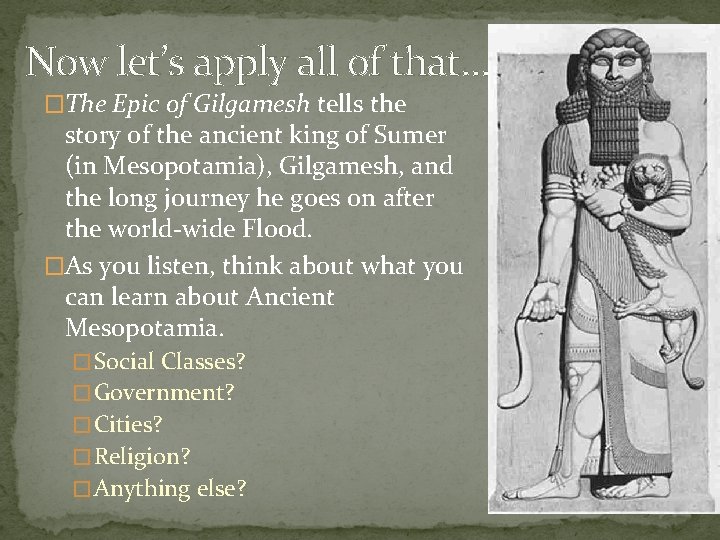
Now let’s apply all of that… �The Epic of Gilgamesh tells the story of the ancient king of Sumer (in Mesopotamia), Gilgamesh, and the long journey he goes on after the world-wide Flood. �As you listen, think about what you can learn about Ancient Mesopotamia. � Social Classes? � Government? � Cities? � Religion? � Anything else?

Prologue to The Epic of Gilgamesh I will proclaim to the world of the deeds of Gilgamesh. This was the man to whom all things were known; this was the king who knew the countries of the world. He was wise, he saw mysteries and knew secret things, he brought us a tale of the days before the flood. He went on a long journey, was weary, worn-out with labor, returning he rested, he engraved on a stone the whole story. When the gods created Gilgamesh they gave him a perfect body. Shamash the glorious sun endowed him with beauty, Adad the god of the storm endowed him with courage, the great gods made his beauty perfect, surpassing all others, terrifying like a great wild bull. Two thirds they made him god and one third man.

In Uruk he built walls, a great rampart, and the temple of the blessed Eanna for the god of the firmament Anu, and for Ishtar the goddess of love. Look at it still today: the outer wall where the cornice runs, it shines with the brilliance of copper; and the inner wall, it has no equal. Touch the threshold, it is ancient. Approach Eanna the dwelling of Ishtar, our lady of love and war, the like of which no latter-day king, no man alive can equal. Climb upon the wall of Uruk; walk along it, I say; regard the foundation terrace and examine the masonry: is it not burnt brick and good? The seven sages laid the foundations.

Your Task 1 � In a group, you will be given the picture of an artifact � On your own paper, create and fill in the chart for each artifact � When the timer rings, your group will rotate to the next artifact � If you run short on time, save speculation for later � Each group member must have their own paper. Source ID # (A. 1, A. 2, etc) Description (features, shapes) Source type (primary, secondary, artifact object) Possible Use or function (how used, who use, etc) Speculations about culture (beware of bias!) 2…

Early Man
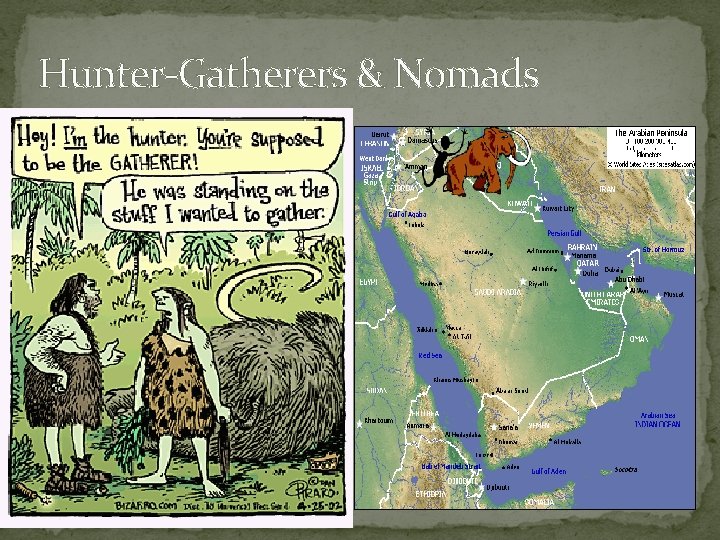
Hunter-Gatherers & Nomads
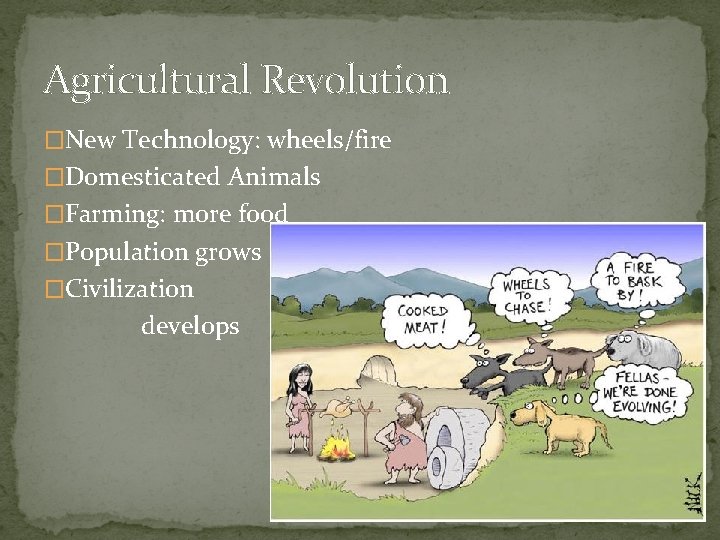
Agricultural Revolution �New Technology: wheels/fire �Domesticated Animals �Farming: more food �Population grows �Civilization develops

What makes up a civilization? �Cities �Writing �Organized Government �Complex Religion
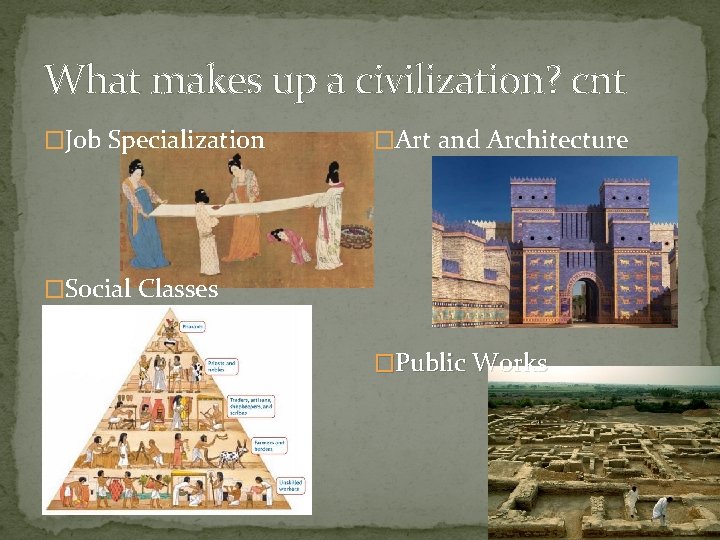
What makes up a civilization? cnt �Job Specialization �Art and Architecture �Social Classes �Public Works
Features of Civilizations Poster �Find pictures in the magazines to represent each feature �Label each & write a one sentence explanation
- Slides: 19