
How do we know the age of rocks
- Slides: 27
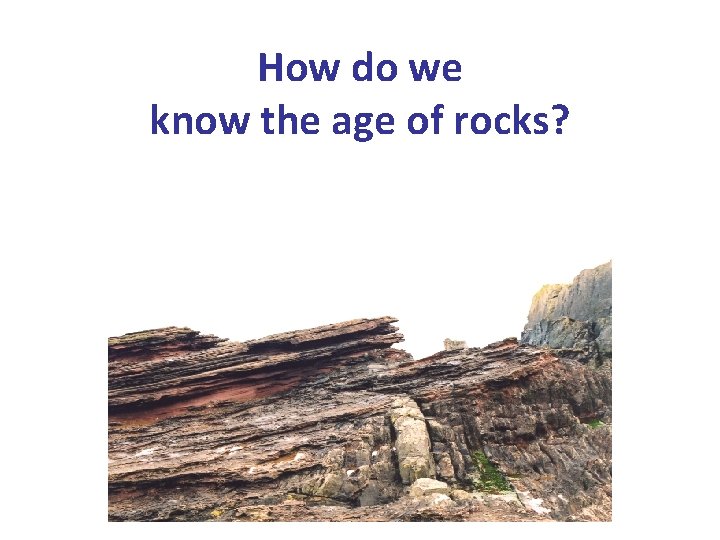
How do we know the age of rocks?
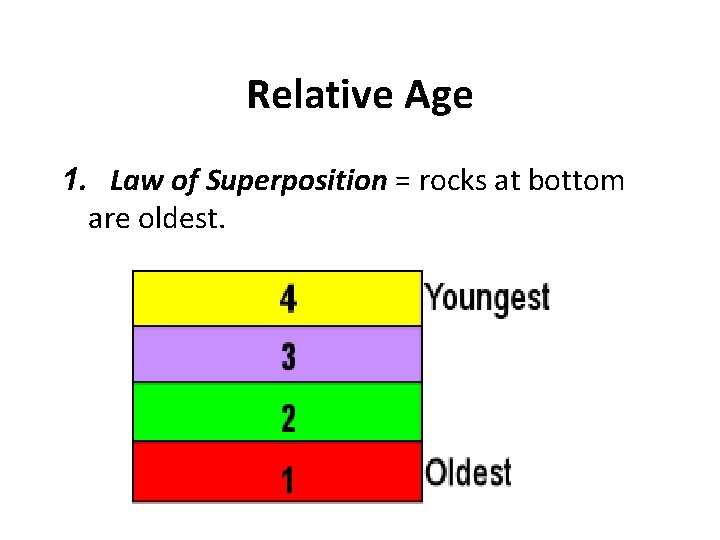
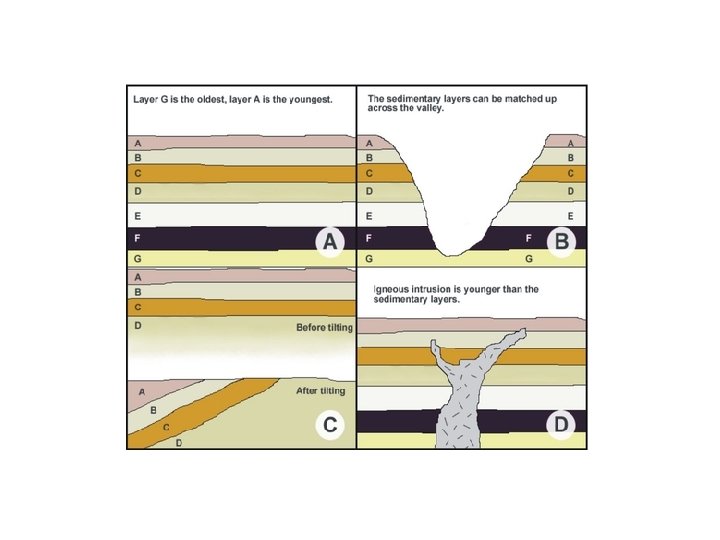
Relative Age 1. Law of Superposition = rocks at bottom are oldest.
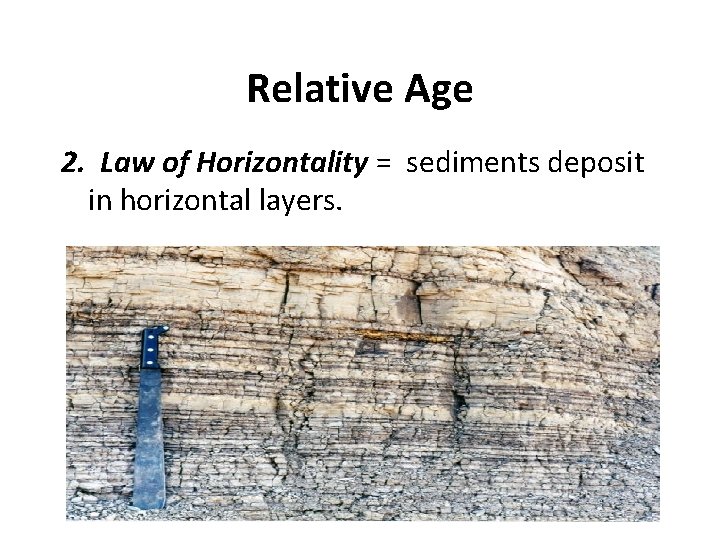
Relative Age 2. Law of Horizontality = sediments deposit in horizontal layers.
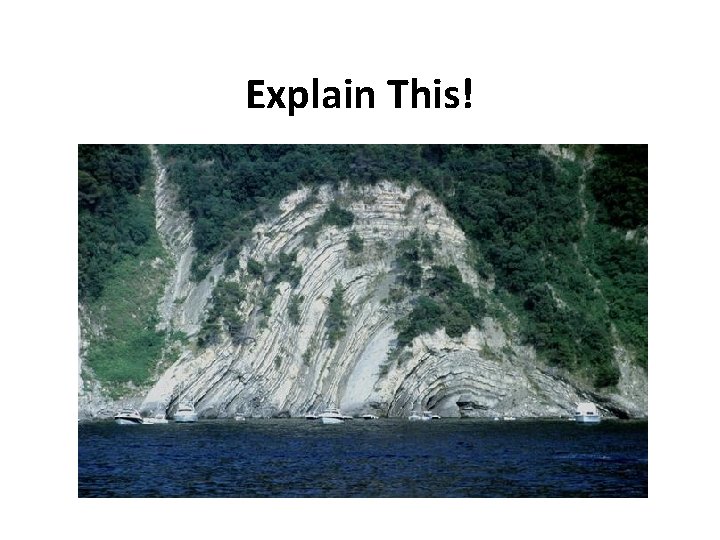
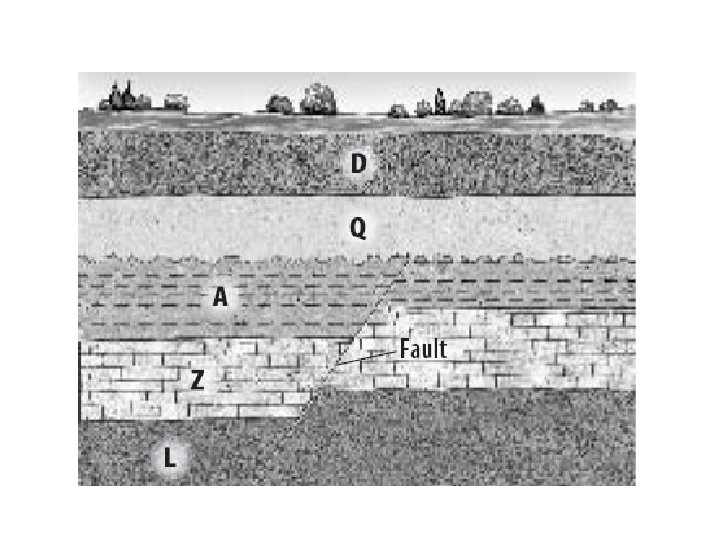
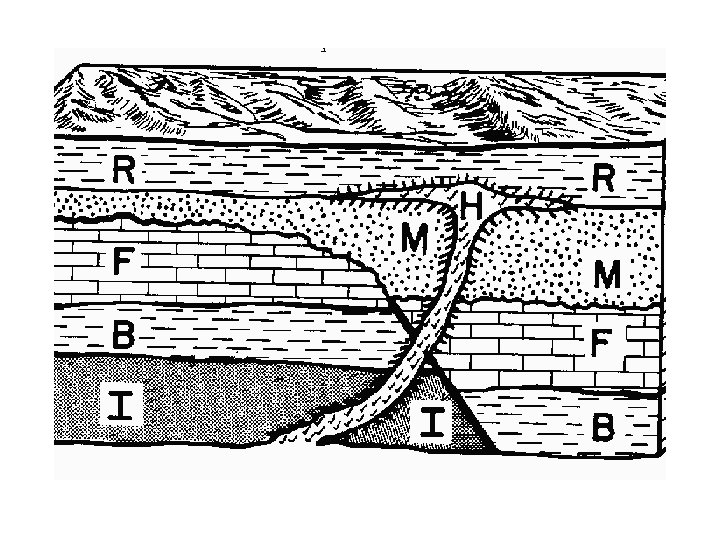
Explain This!
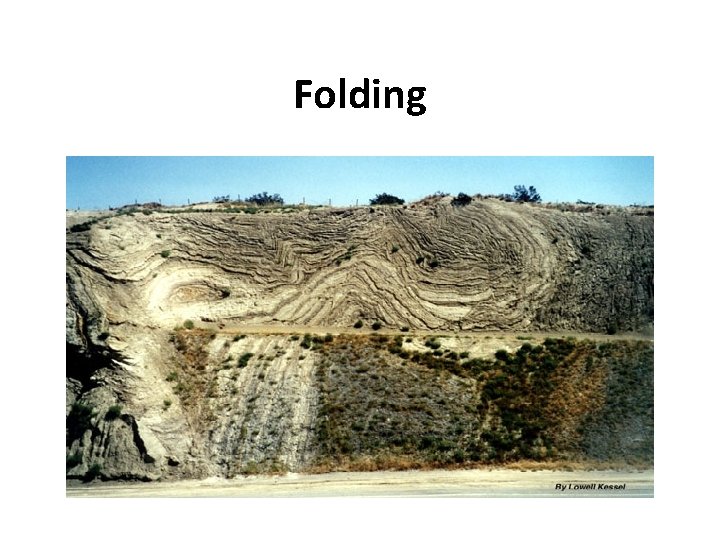
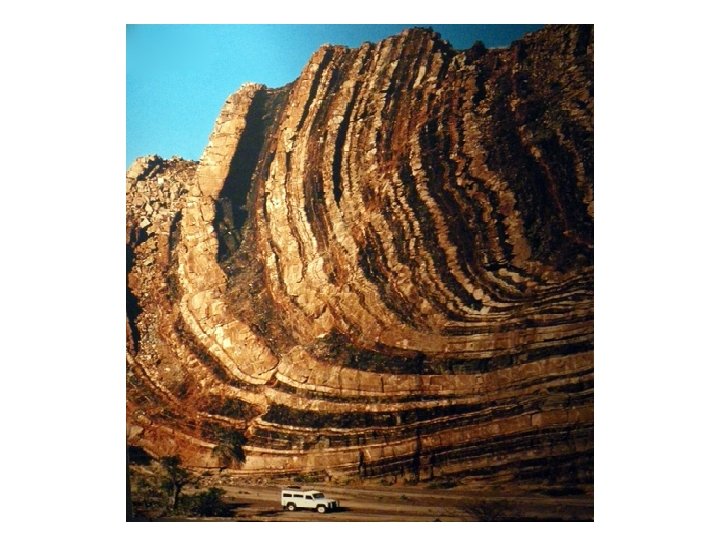
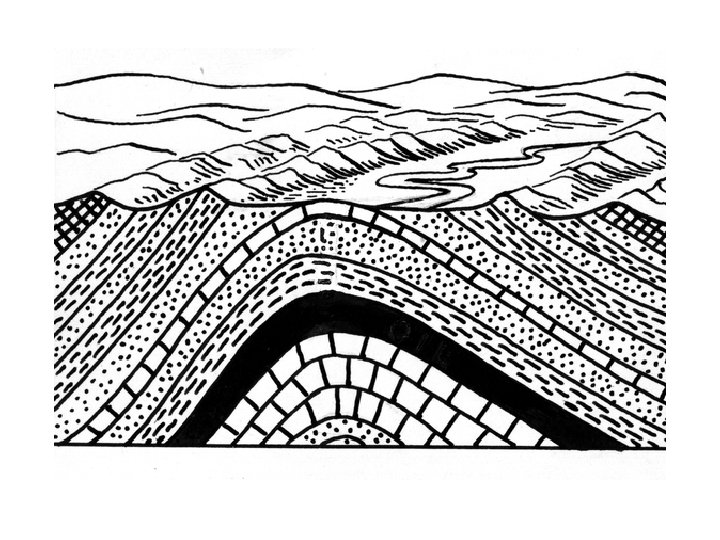
Folding
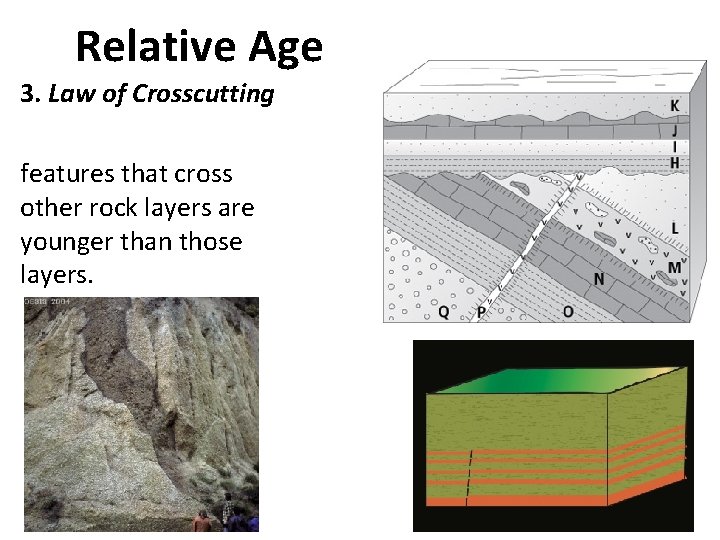
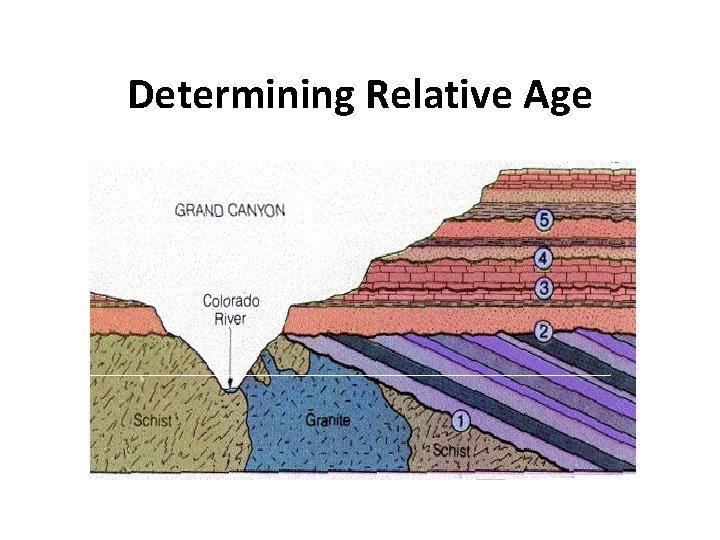
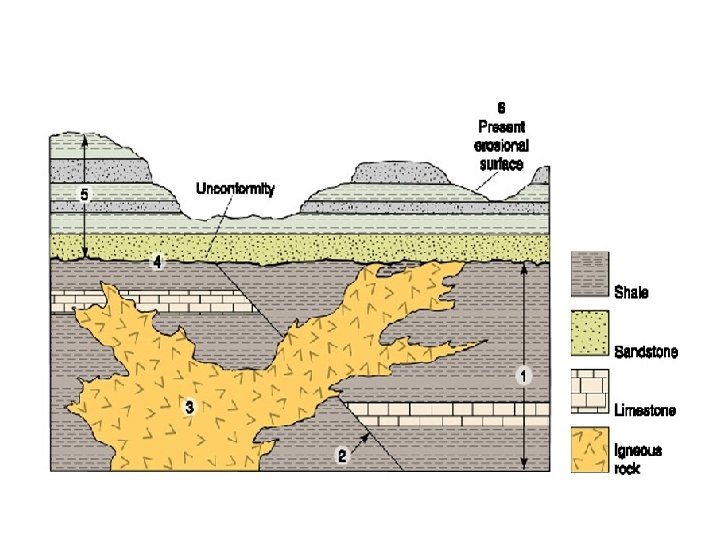
Relative Age 3. Law of Crosscutting features that cross other rock layers are younger than those layers.
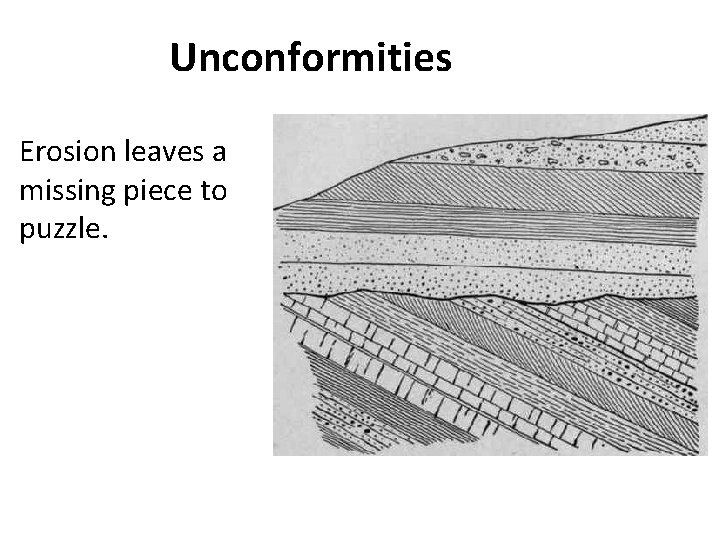
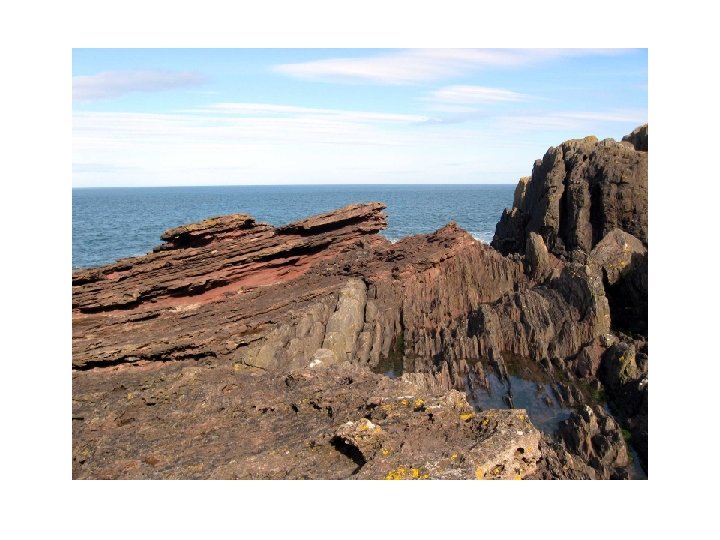
Unconformities Erosion leaves a missing piece to puzzle.
Determining Relative Age
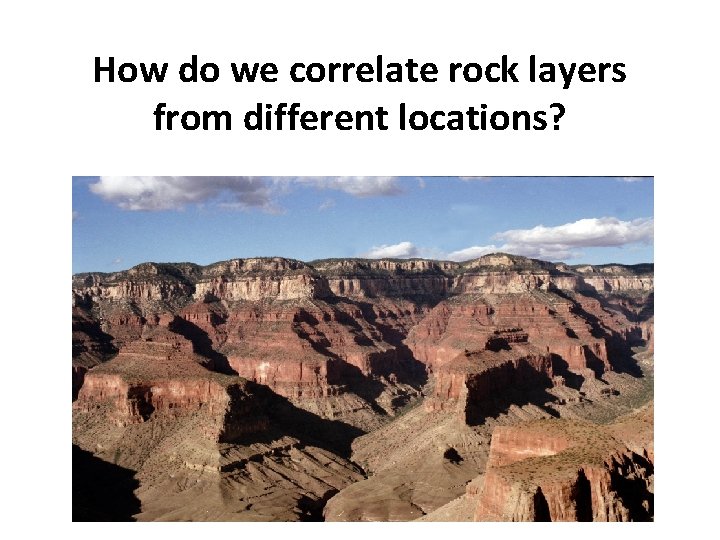
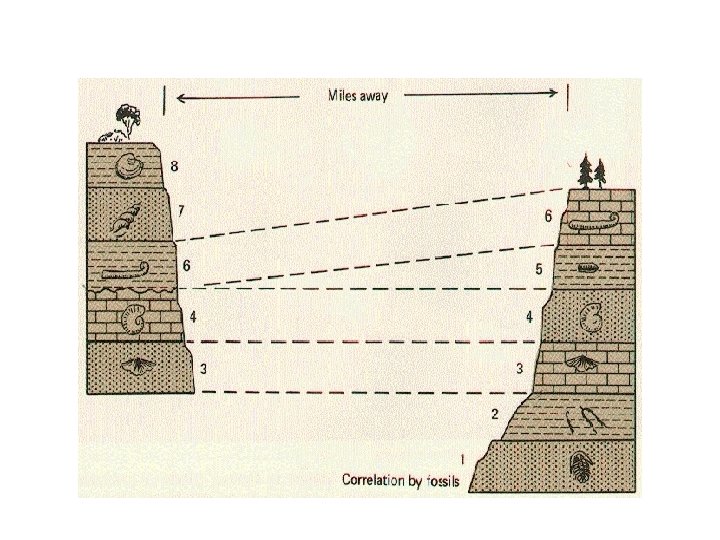
How do we correlate rock layers from different locations?
If locations are close together Walk the outcrop: Compare similarities like rock type, color, and mineral composition.
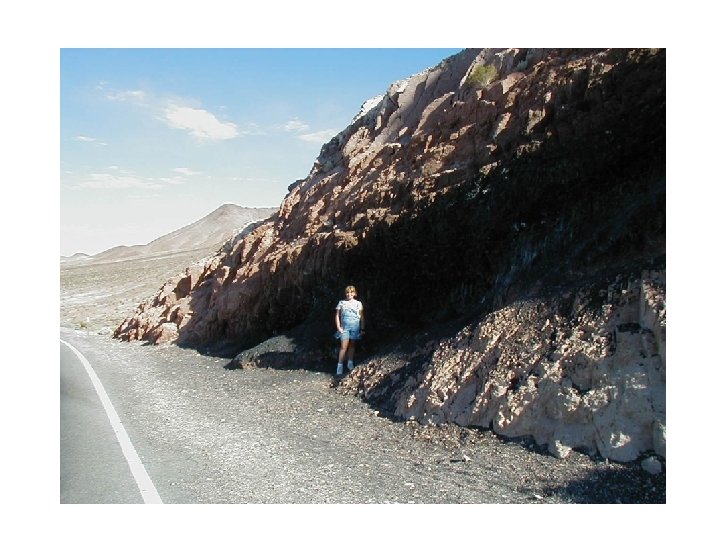
If locations are far apart 1. Volcanic Ash – unique composition, short time span, and broad distribution.
If locations are far apart 2. Asteroid Impact – unique composition, short time span, broad distribution.
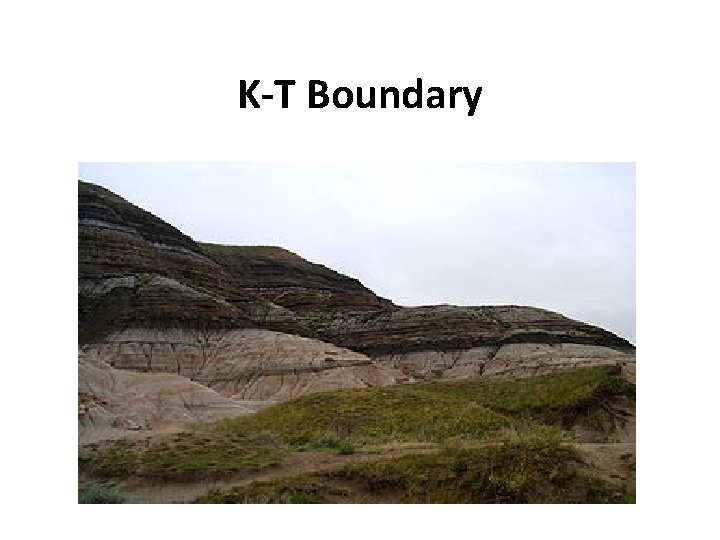
K-T Boundary
If locations are far apart 3. Index Fossils – easily identifiable, short time span, and broad distribution.
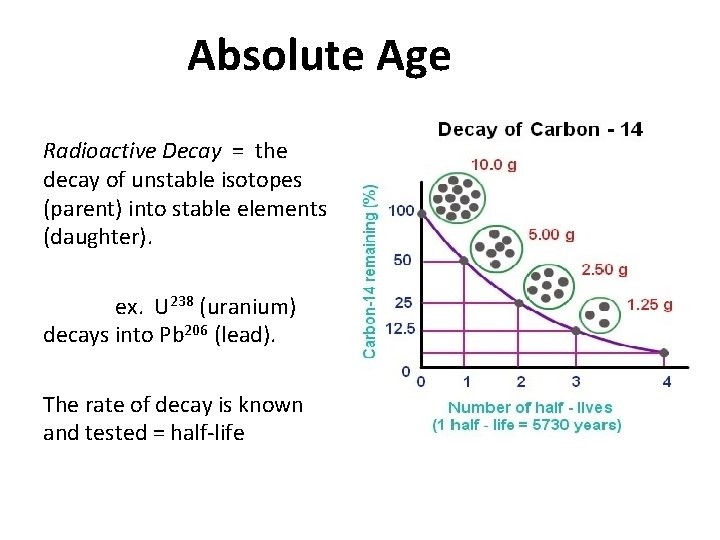
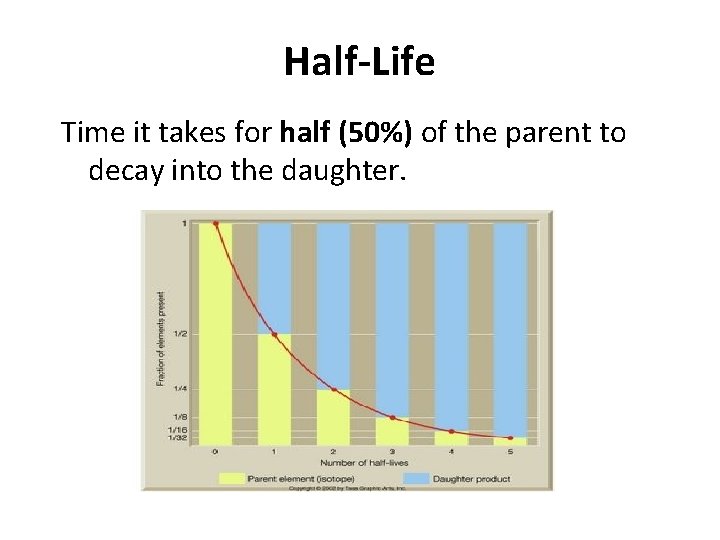
Absolute Age Radioactive Decay = the decay of unstable isotopes (parent) into stable elements (daughter). ex. U 238 (uranium) decays into Pb 206 (lead). The rate of decay is known and tested = half-life
Half-Life Time it takes for half (50%) of the parent to decay into the daughter.
Why use radioactivity? 1. Decay rate is predictable. 2. Heat, pressure, and chemistry have no effect on rate.
Limitations Dead animals and plants: - only carbon works (C 14). - Limited to ~50, 000 years. Rocks: - radioactive isotope must be in rock. - range from 10 million to 46 billion years