
How do we find the origin of an


- Slides: 23
How do we find the origin of an Earthquake? How do we measure the strength of an
VIRTUAL EARTHQUAK E
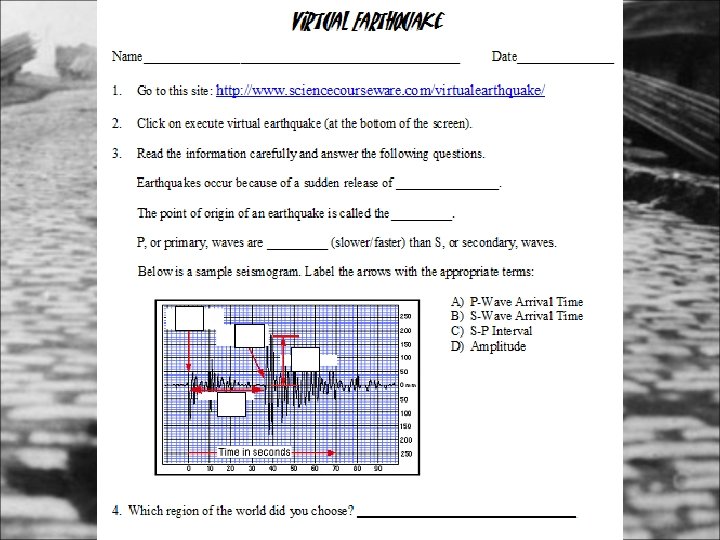
Website: http: //www. sciencecourse ware. com/virtualearthquak e/
Earthquakes – movement of earth’s crust caused by tectonic plates shifting and releasing stored energy Focus – The origin of the earthquake where rocks first break and move Seismograph – instrument used to detect and record seismic waves
Seismic Waves P(primary) waves are FASTER _______ than S(secondary) waves
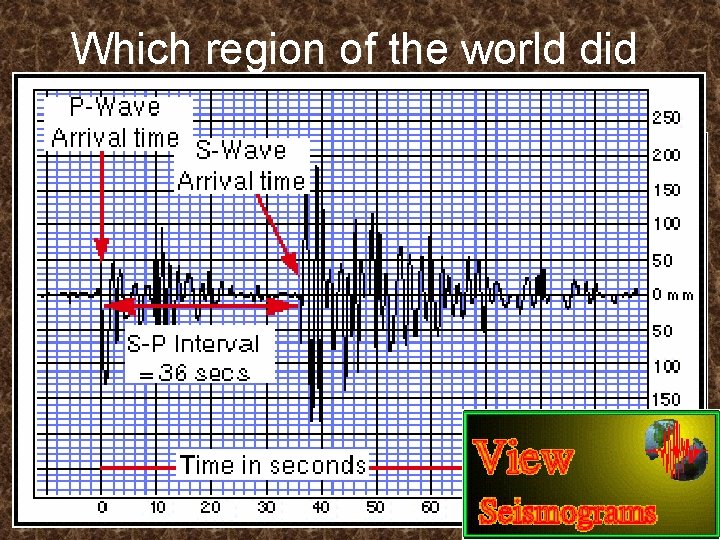
Which region of the world did you choose?
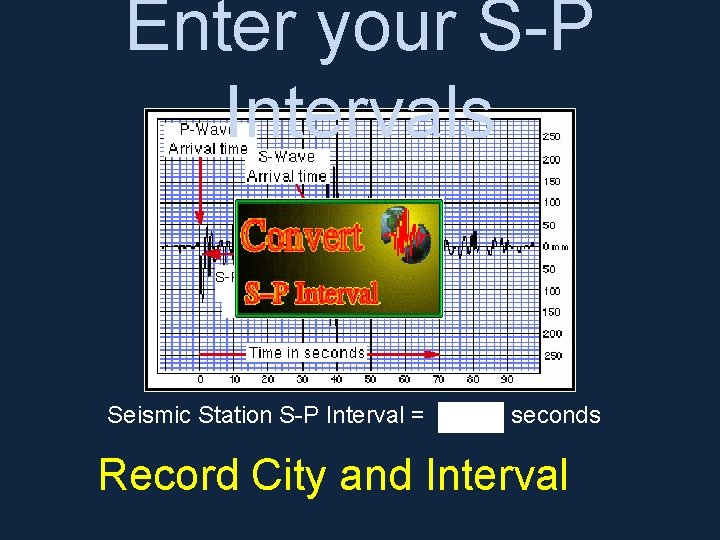
Enter your S-P Intervals Seismic Station S-P Interval = seconds Record City and Interval
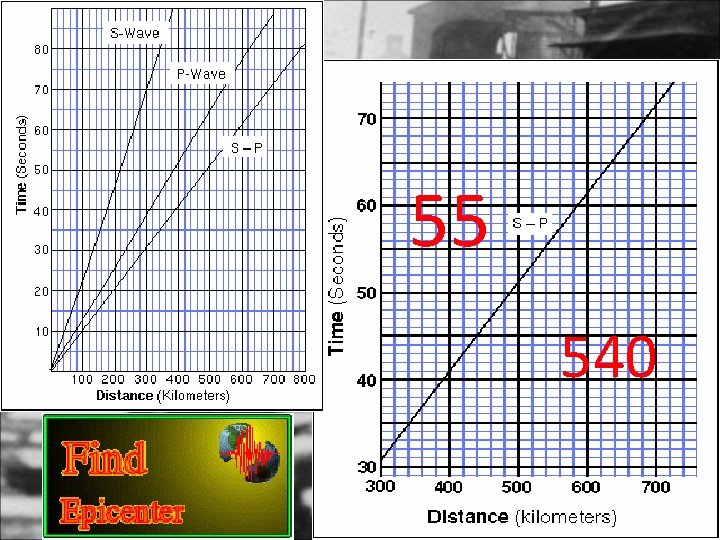
55 540
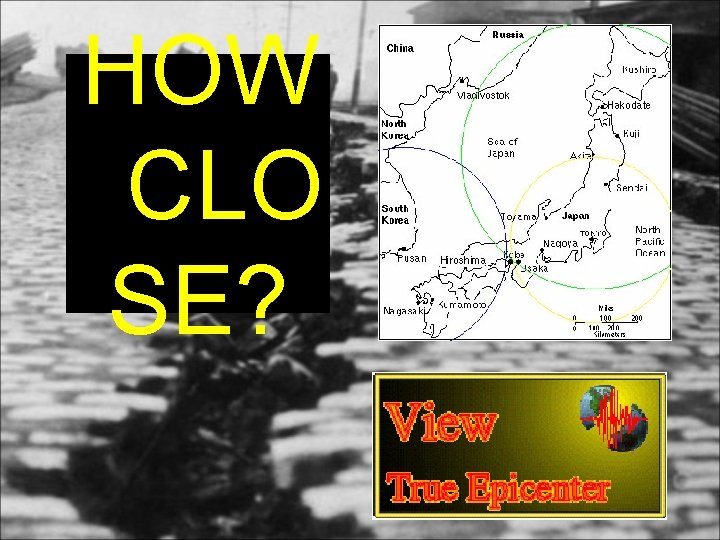
HOW CLO SE?
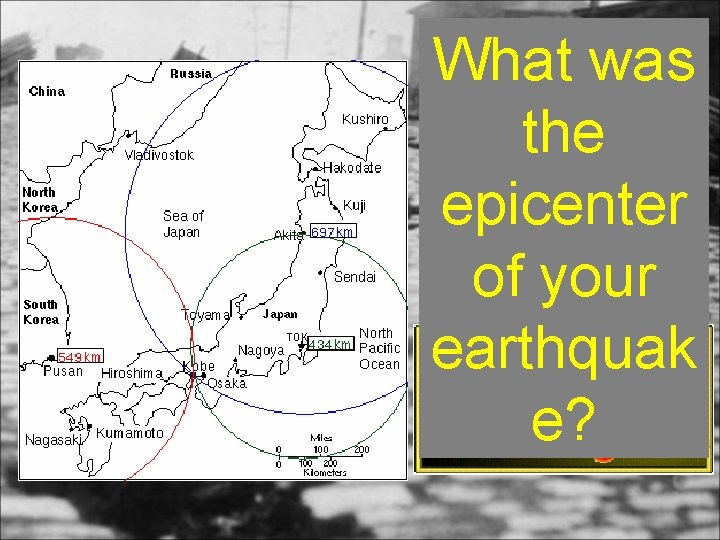
What was the epicenter of your earthquak e?
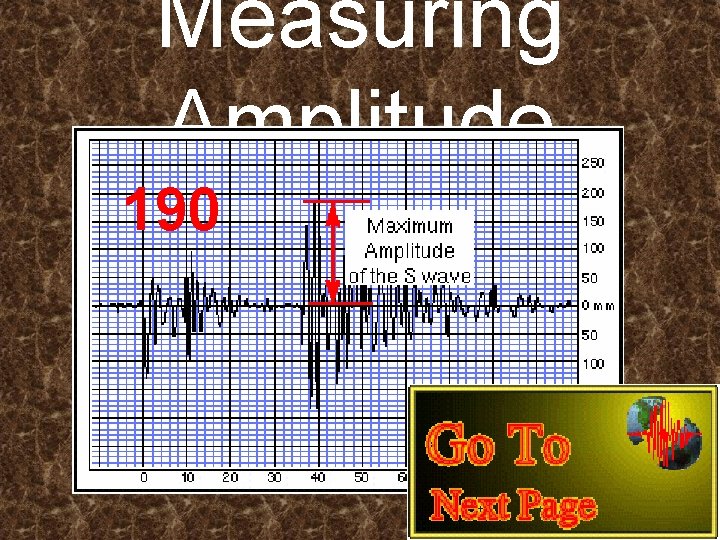
Measuring Amplitude 190
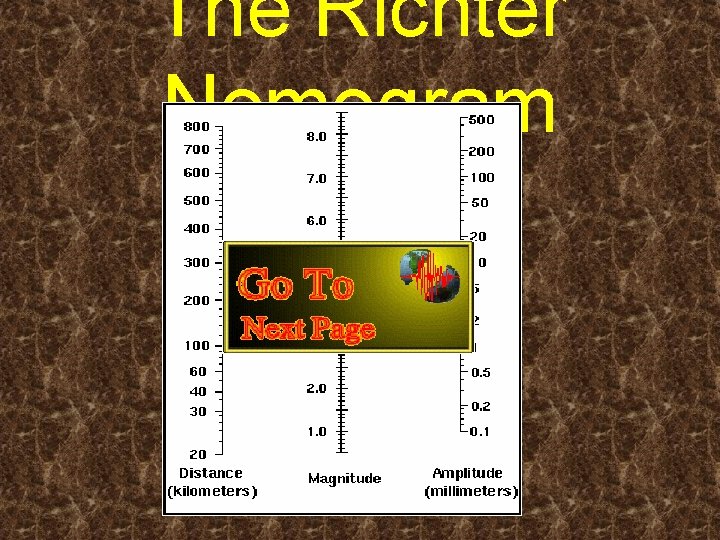
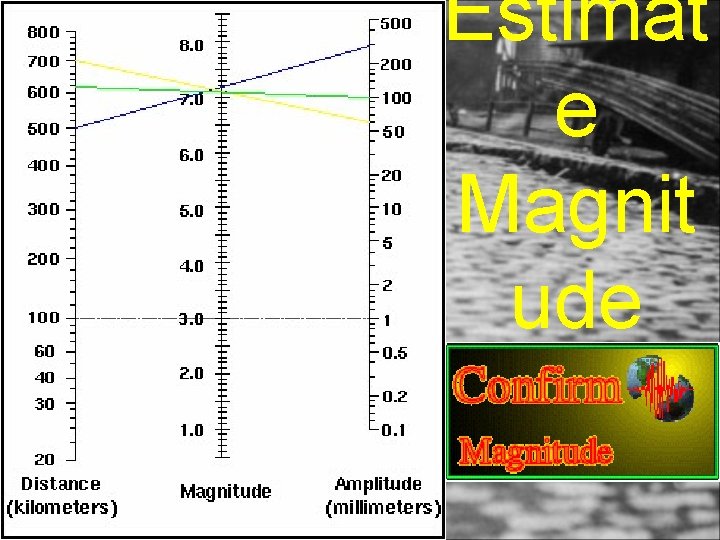
The Richter Nomogram
Enter Your Amplitud Maximum S Wave Amplitude=
Estimat e Magnit ude
CONGRATULATIONS! You've done a great job. Remember to write down the actual magnitude of your earthquake.
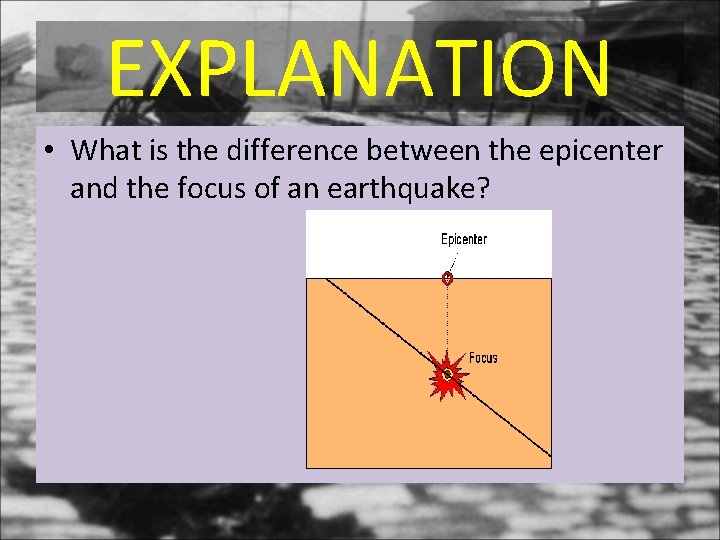
EXPLANATION • What is the difference between the epicenter and the focus of an earthquake?
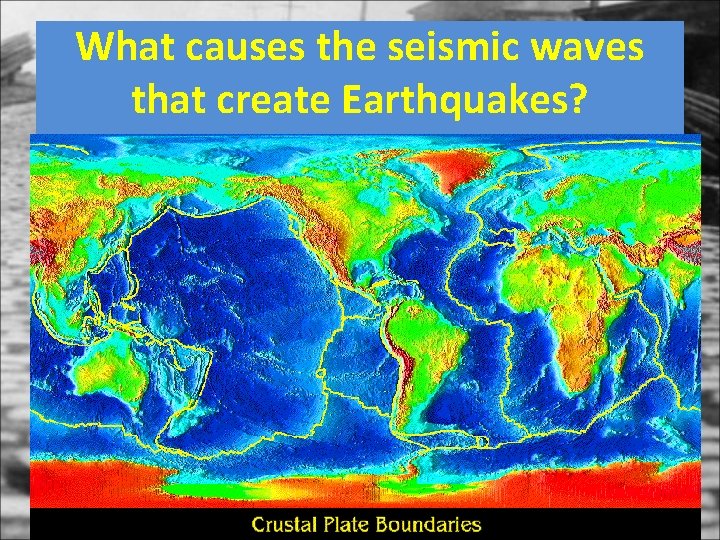
What causes the seismic waves that create Earthquakes?
This happens on a FAULT LINE when the plates: • separate from one another (Normal Fault) • squish closer together or compress (Reverse Fault) • slide alongside one another (Strike-Slip Fault) •
What are three types of seismic waves? • 1) P waves – primary waves faster, longitudinal (push & pull) • 2) S waves – secondary waves slower, transverse waves (side to side) • 3) L waves – love waves when P or S waves hit the surface slowest and most destructive
What scale is commonly used to measure the magnitude of earthquakes? The Richter Scale The Richter scale is a base ten scale. Can anyone explain what that means? A base ten scale means that each integer represents a 10 x increase in magnitude from the previous integer.
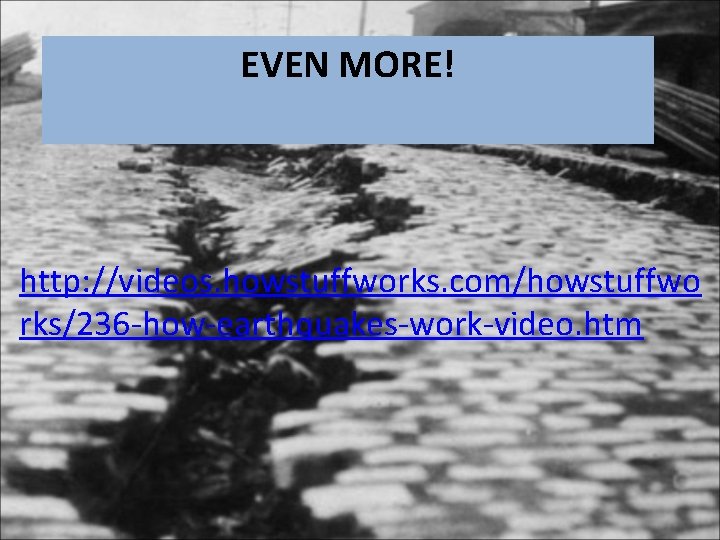
EVEN MORE! http: //videos. howstuffworks. com/howstuffwo rks/236 -how-earthquakes-work-video. htm
ELABORATION ARE EARTHQUAKES THE ONLY TYPE OF NATURAL DISASTER CAUSED BY THE MOVEMENT OF THE EARTH’S TECTONIC PLATES? ”