
How do we explain the behavior of light
How do we explain the behavior of light? Lesson 5 – Observing Beyond our Senses: Inquiry Drives Technology
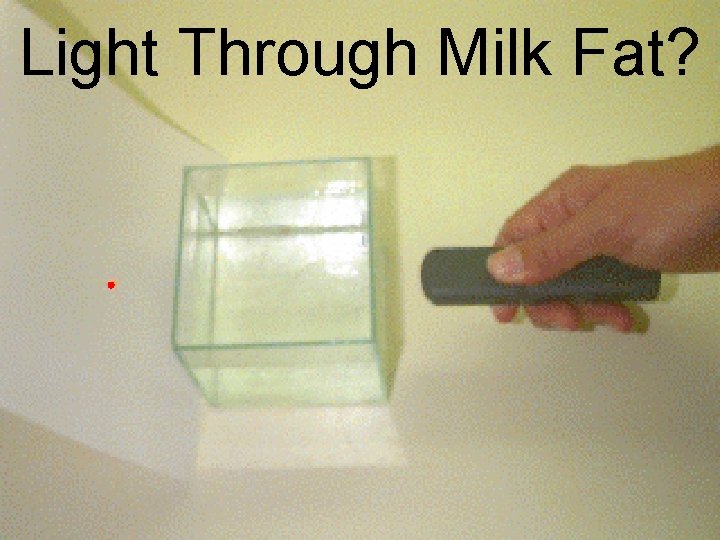
Light Through Milk Fat?
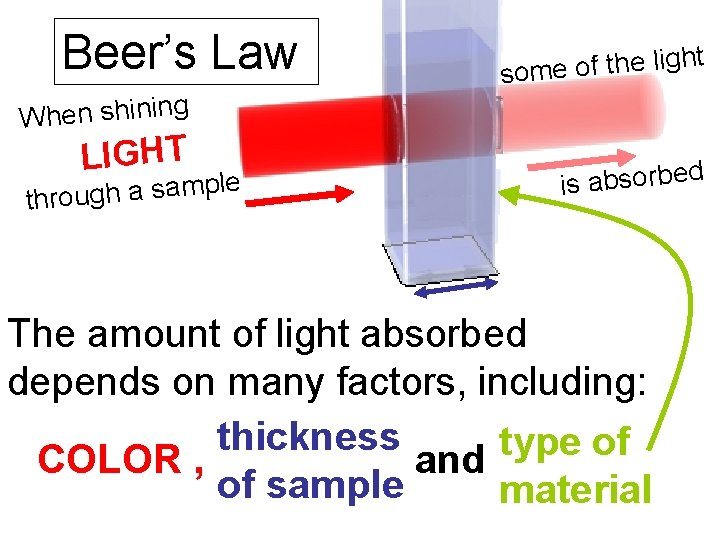
Beer’s Law t h g i l e h t f o e som g n i h s n e h W LIGHT e l p m a s a h throug is absorbed The amount of light absorbed depends on many factors, including: thickness type of COLOR , and of sample material
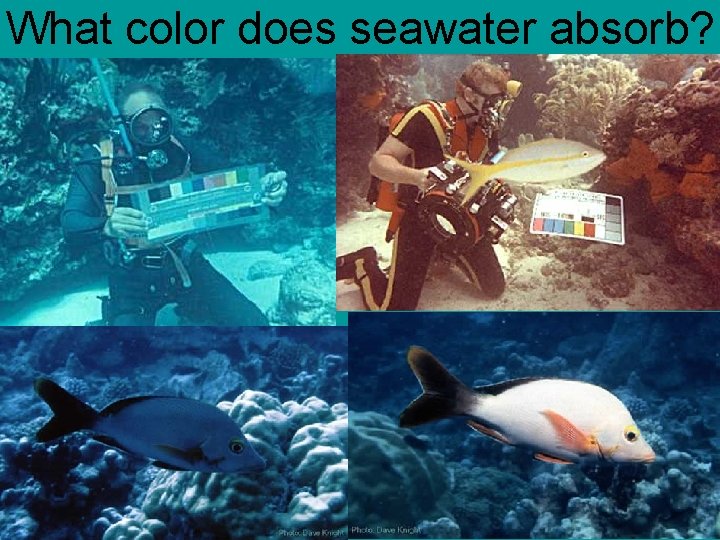
What color does seawater absorb? mostly the reds! What if we replace the red light taken from the sun?
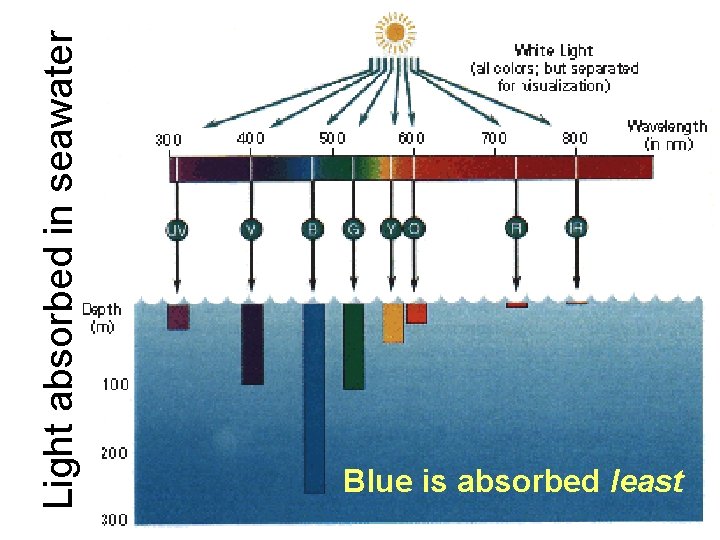
Light absorbed in seawater Blue is absorbed least
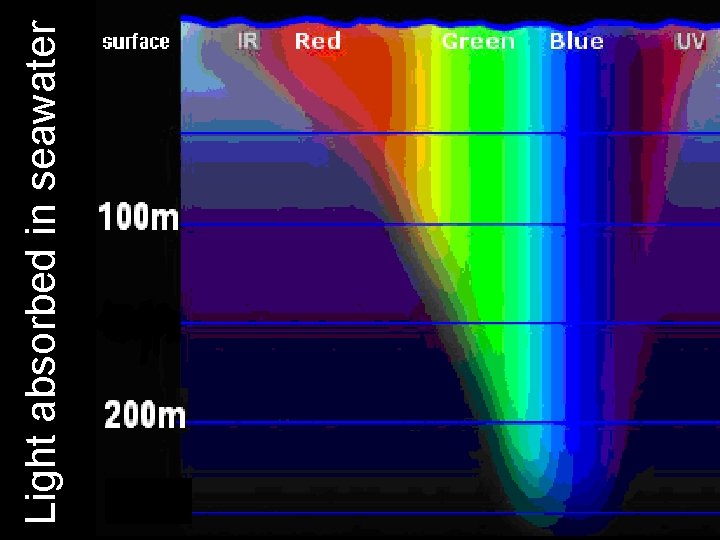
Light absorbed in seawater
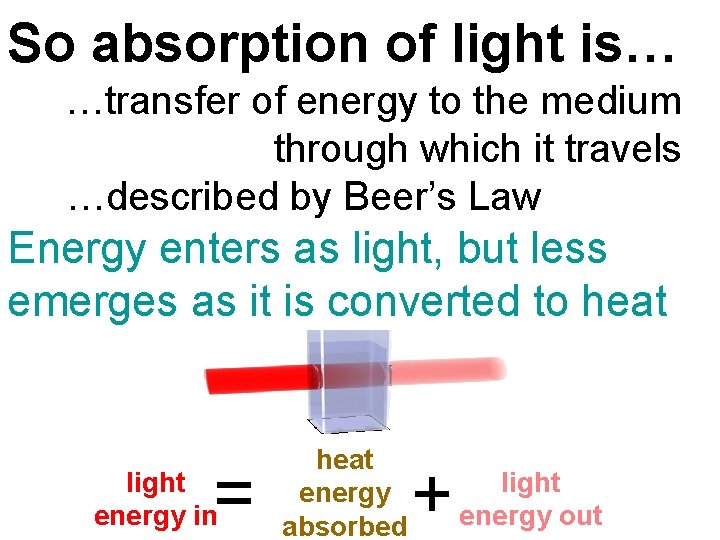
So absorption of light is… …transfer of energy to the medium through which it travels …described by Beer’s Law Energy enters as light, but less emerges as it is converted to heat = light energy in heat energy absorbed + light energy out
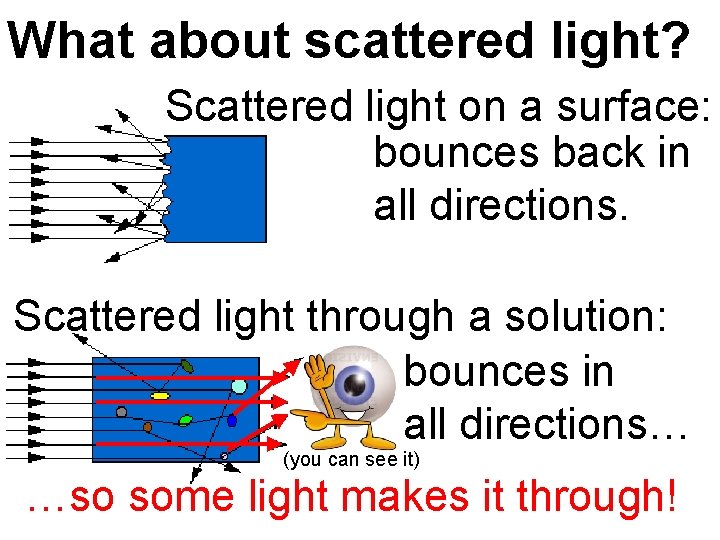
What about scattered light? Scattered light on a surface: bounces back in all directions. Scattered light through a solution: bounces in all directions… (you can see it) …so some light makes it through!

Blue Skies come from scattering BLUE light
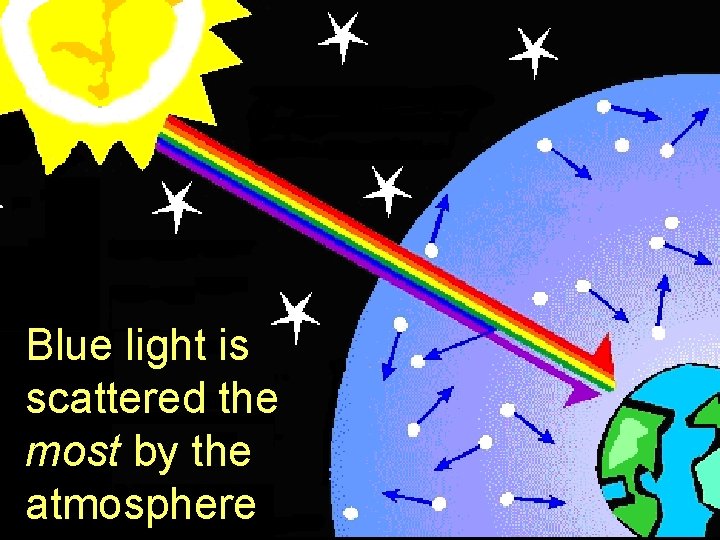
Blue light is scattered the most by the atmosphere
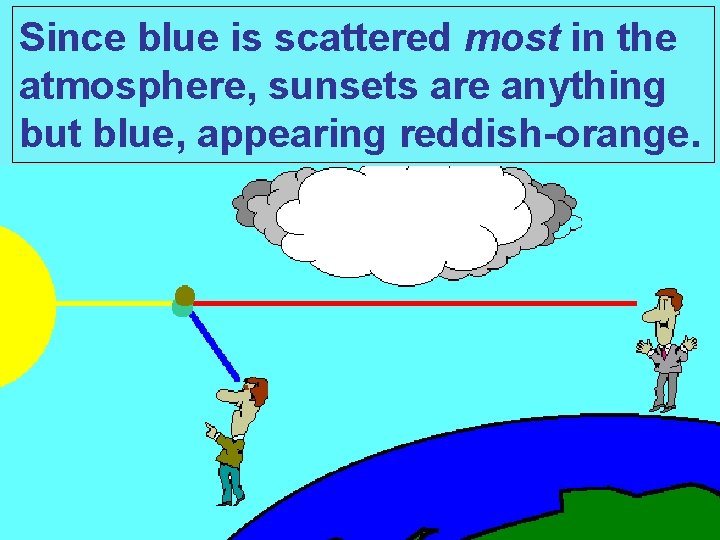
Since blue is scattered most in the atmosphere, sunsets are anything but blue, appearing reddish-orange.
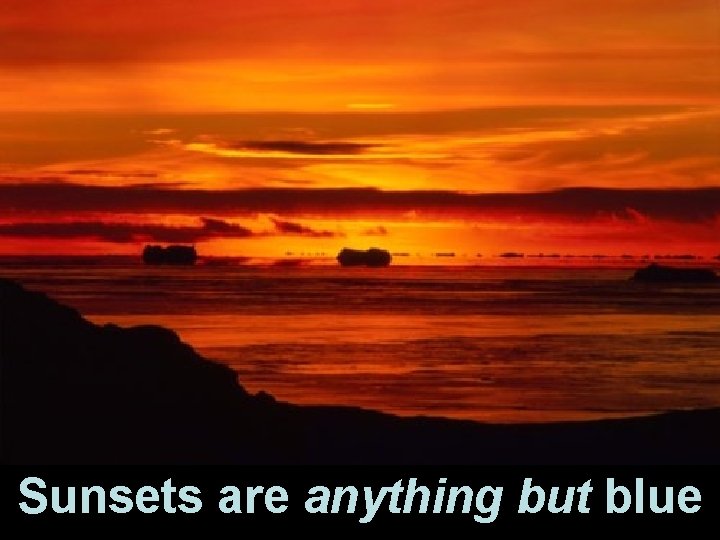
Sunsets are anything but blue
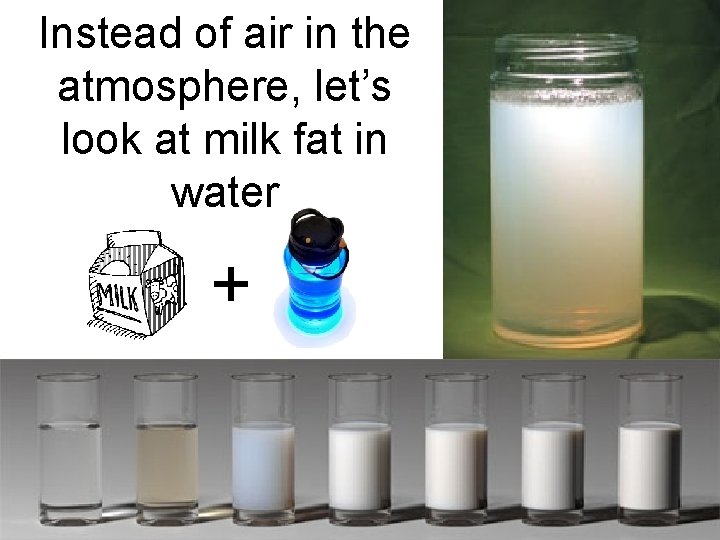
Instead of air in the atmosphere, let’s look at milk fat in water +
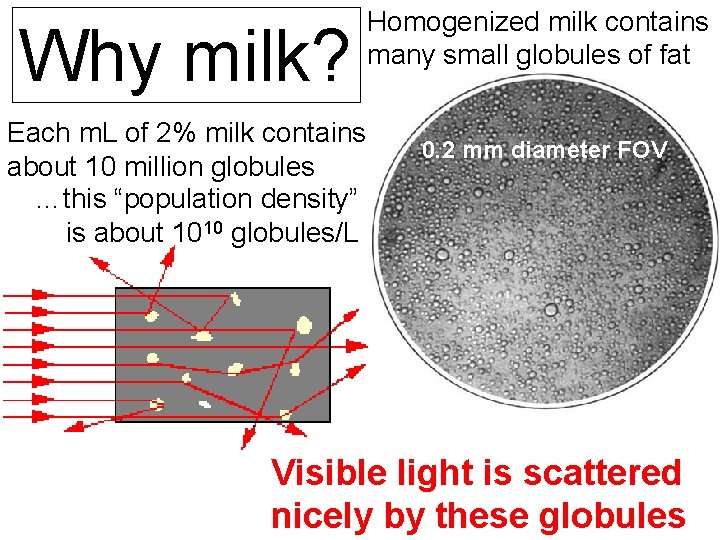
Why milk? Each m. L of 2% milk contains about 10 million globules …this “population density” is about 1010 globules/L Homogenized milk contains many small globules of fat 0. 2 mm diameter FOV Visible light is scattered nicely by these globules
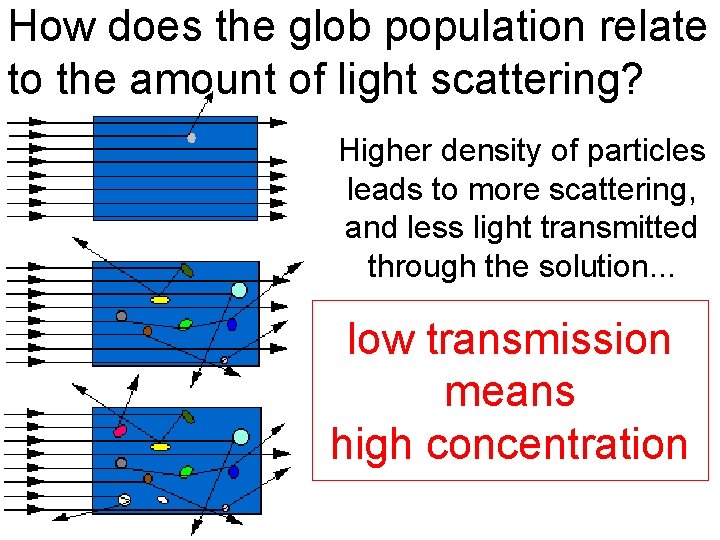
How does the glob population relate to the amount of light scattering? Higher density of particles leads to more scattering, and less light transmitted through the solution. . . low transmission means high concentration
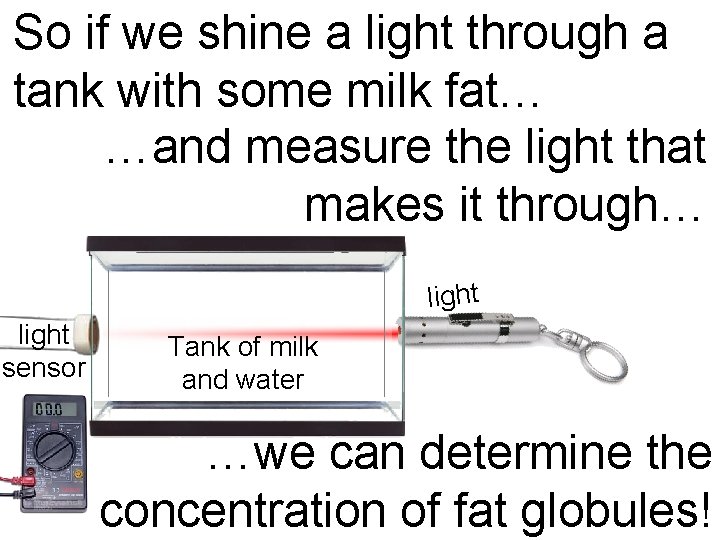
So if we shine a light through a tank with some milk fat… …and measure the light that makes it through… light sensor Tank of milk and water …we can determine the concentration of fat globules!
- Slides: 16