
How do we detect particles When energetic charged
- Slides: 17
How do we detect particles? When energetic charged particles pass through matter, they leave a trail of ions. Most detectors work by seeing these ions one way or another.
Classes of detectors • Plastic scintillators—rough spatial resolution, precise timing. • Tracking detectors--precise spatial resolution • Calorimeters—measure the full particle energy, including neutrals. An experiment will usually contain all these types.
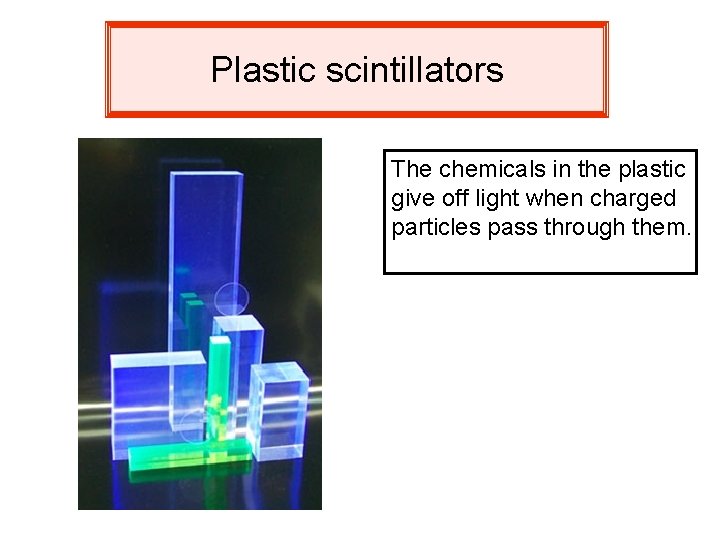
Plastic scintillators The chemicals in the plastic give off light when charged particles pass through them.
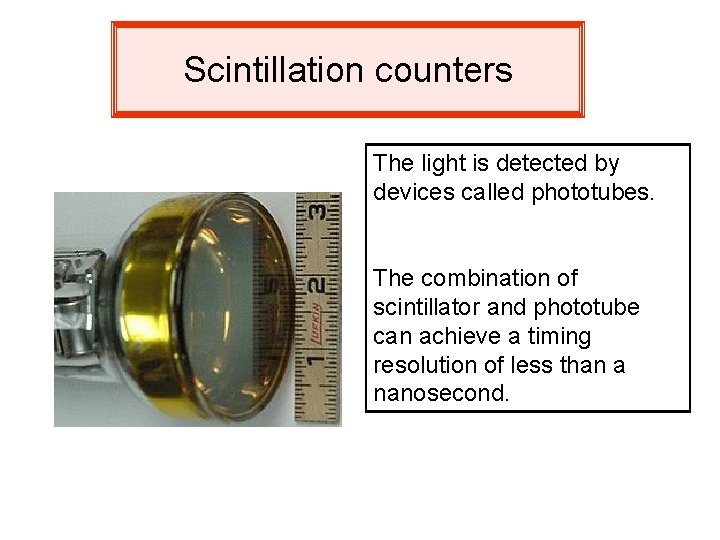
Scintillation counters The light is detected by devices called phototubes. The combination of scintillator and phototube can achieve a timing resolution of less than a nanosecond.
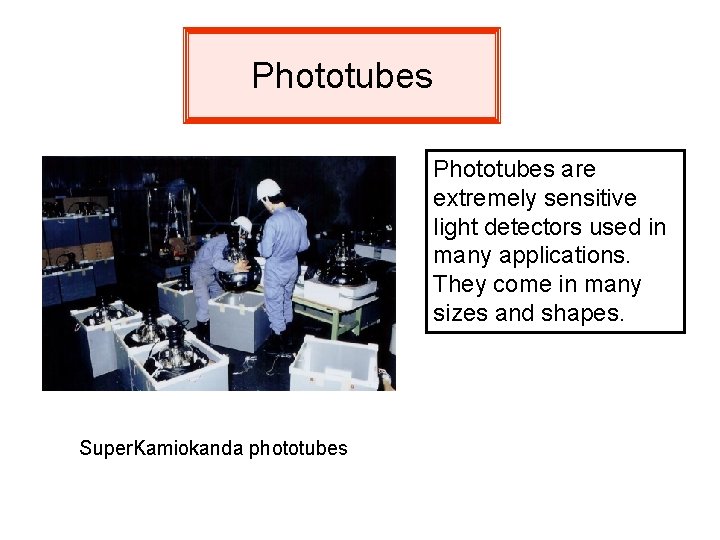
Phototubes are extremely sensitive light detectors used in many applications. They come in many sizes and shapes. Super. Kamiokanda phototubes
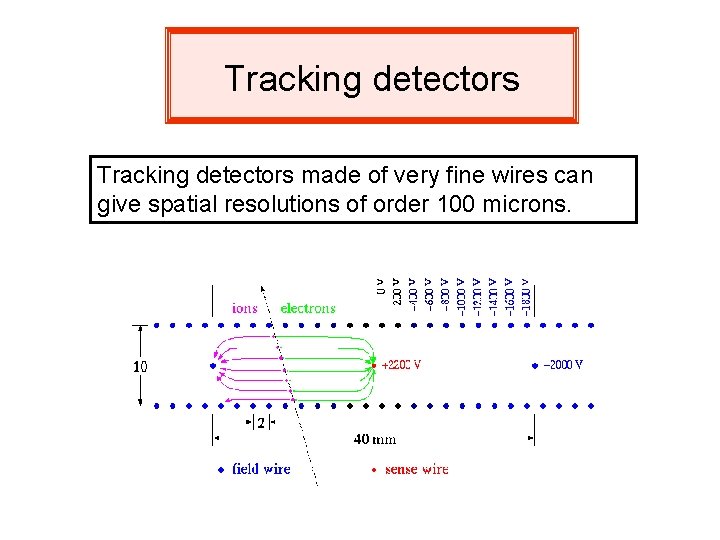
Tracking detectors made of very fine wires can give spatial resolutions of order 100 microns.
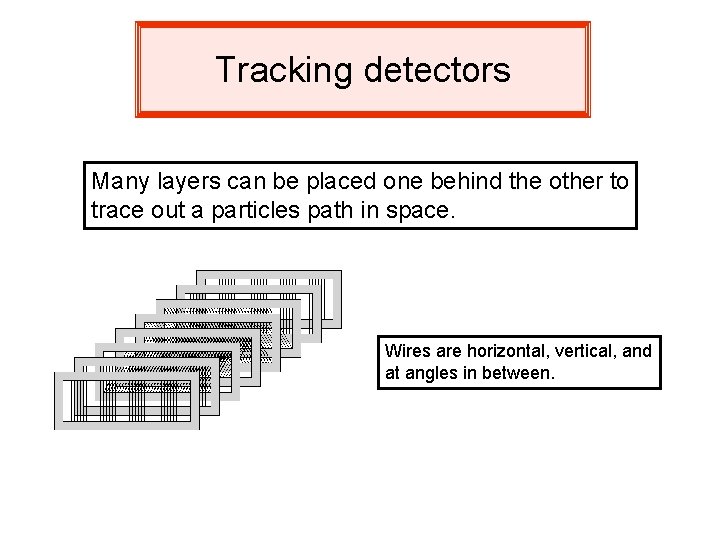
Tracking detectors Many layers can be placed one behind the other to trace out a particles path in space. Wires are horizontal, vertical, and at angles in between.
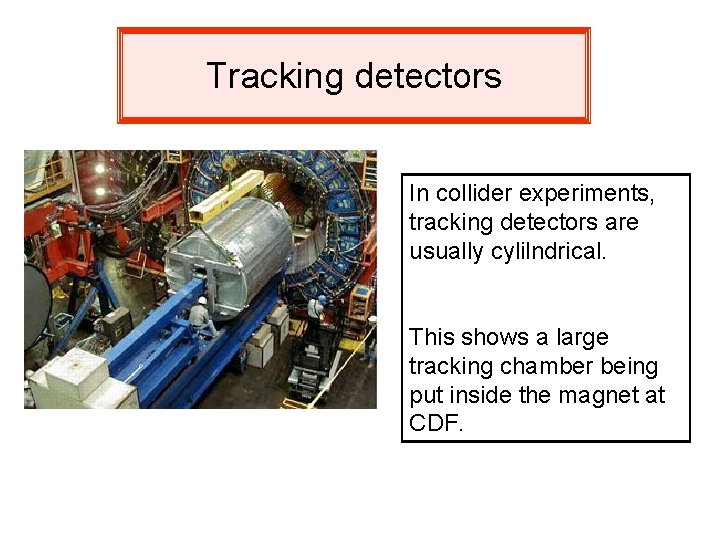
Tracking detectors In collider experiments, tracking detectors are usually cylilndrical. This shows a large tracking chamber being put inside the magnet at CDF.
Magnetic fields are used to measure a particle’s momemtum. Nonrelativistically, mv 2/r = qv. B (cancel one power of v ) mv/r = p/r = q. B The correct relativistic expression uses themomentum.
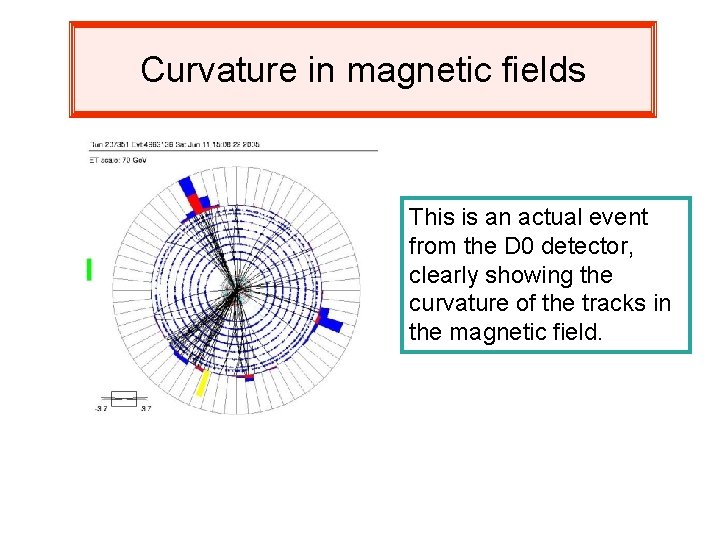
Curvature in magnetic fields This is an actual event from the D 0 detector, clearly showing the curvature of the tracks in the magnetic field.
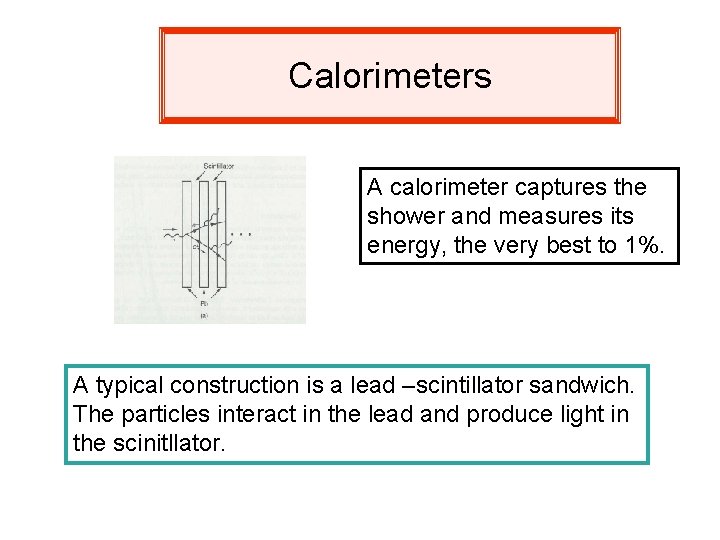
Calorimeters are detectors that measure a particle’s energy by stopping it completely. Particles enter the dense material of the calorimeter and interact. The secondary particles interact, then the next set and so on, producing hundreds of particles. Those particles are detected, giving a measure of the energy of the original particle.
Electromagnetic showers When a particle enters a dense material, it interacts producing more particles which in turn interact. After many interactions there will be hundreds of particles. Electromagnetic shower
Calorimeters A calorimeter captures the shower and measures its energy, the very best to 1%. A typical construction is a lead –scintillator sandwich. The particles interact in the lead and produce light in the scinitllator.
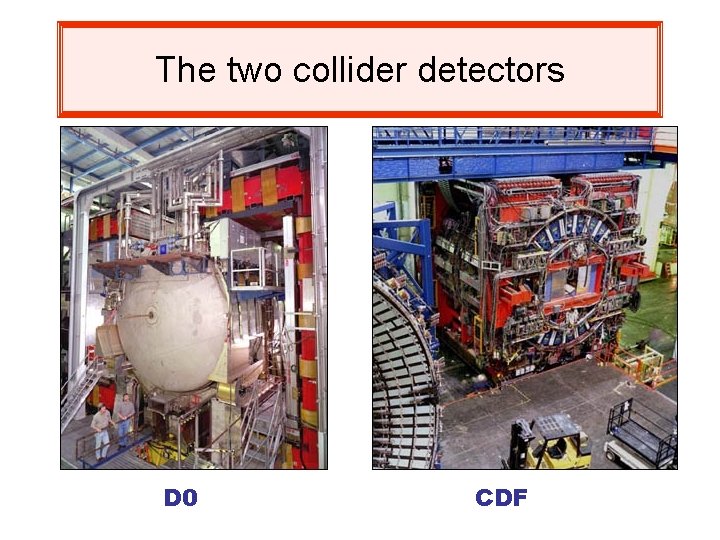
The two collider detectors D 0 CDF
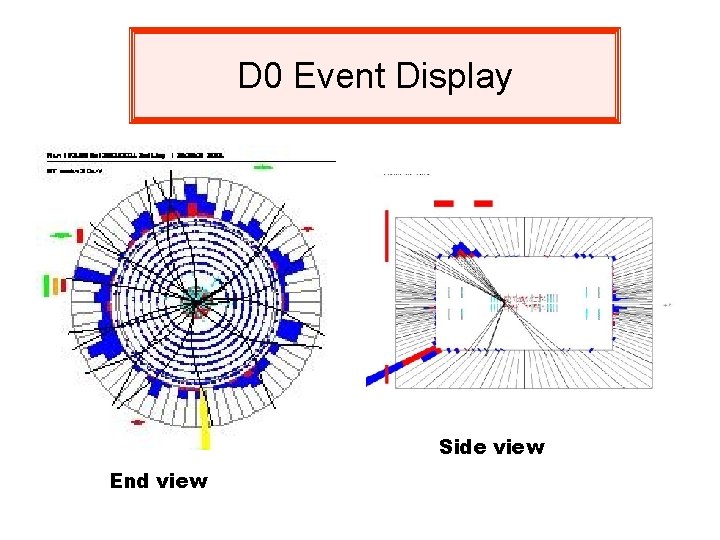
D 0 Event Display Side view End view
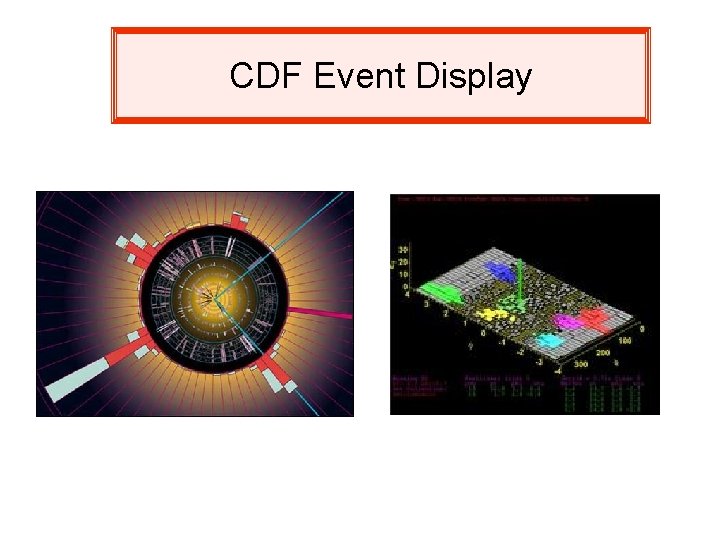
CDF Event Display
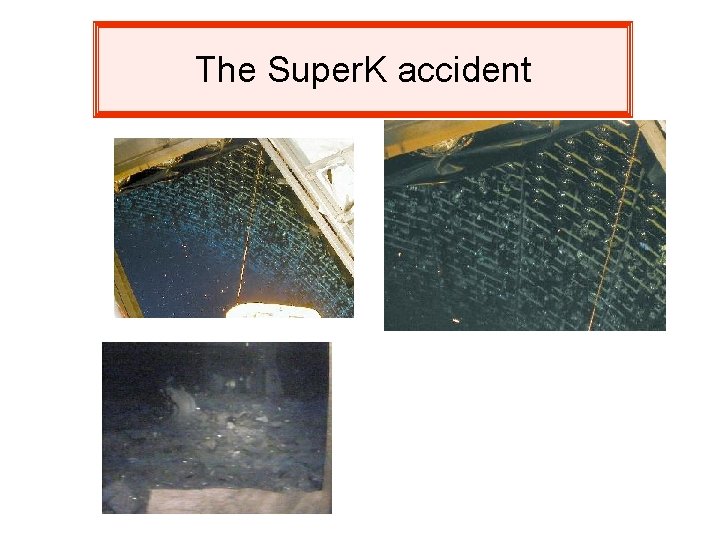
The Super. K accident