
How do we detect gamma rays Review What




- Slides: 27
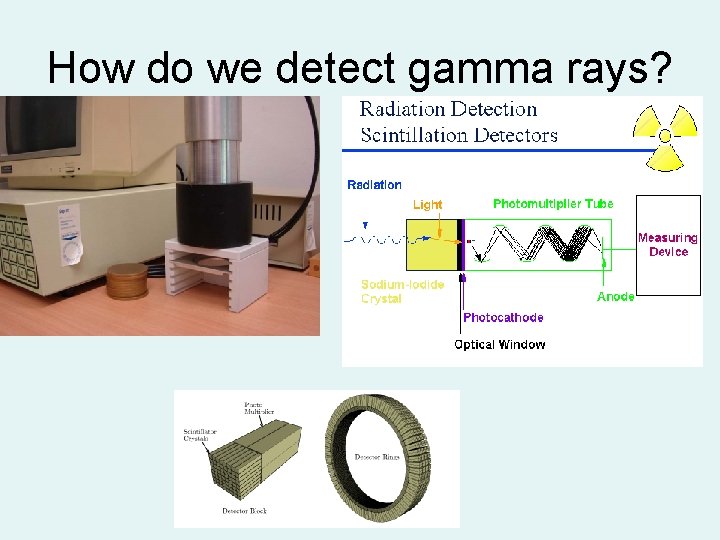
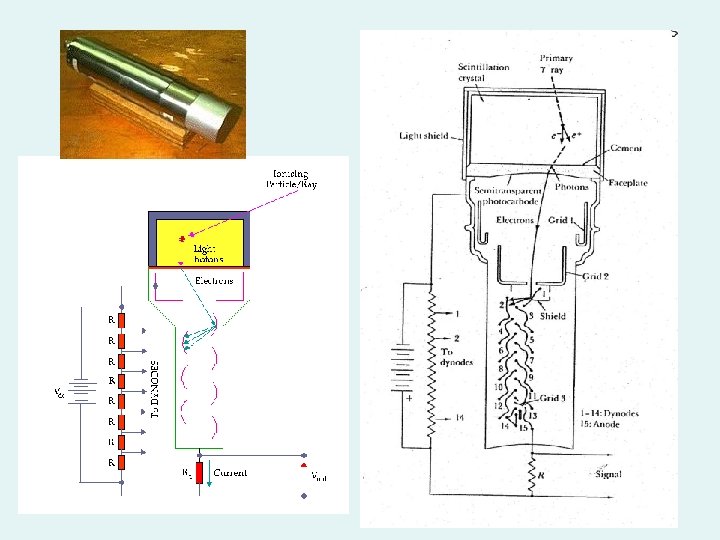
How do we detect gamma rays?
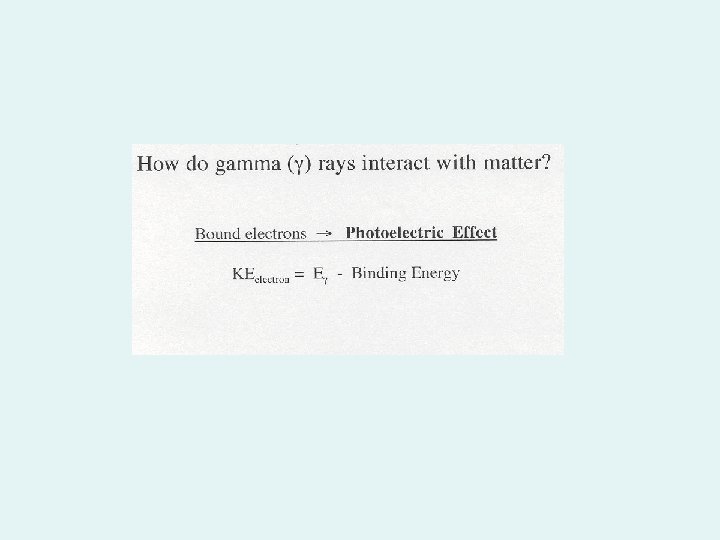
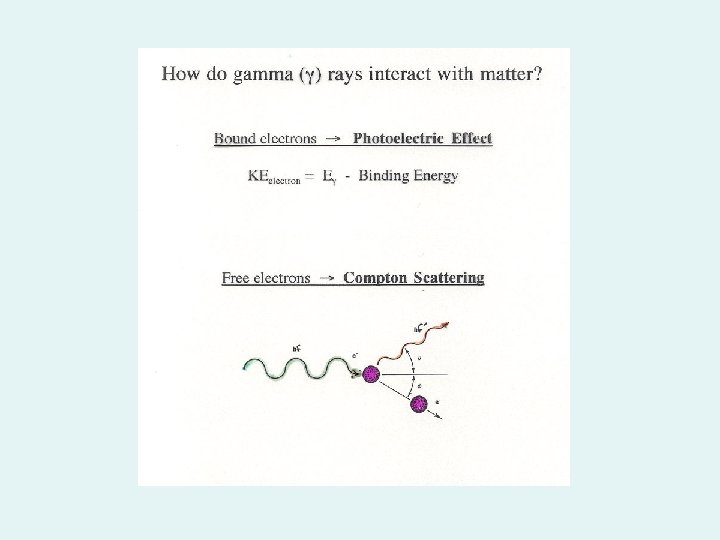
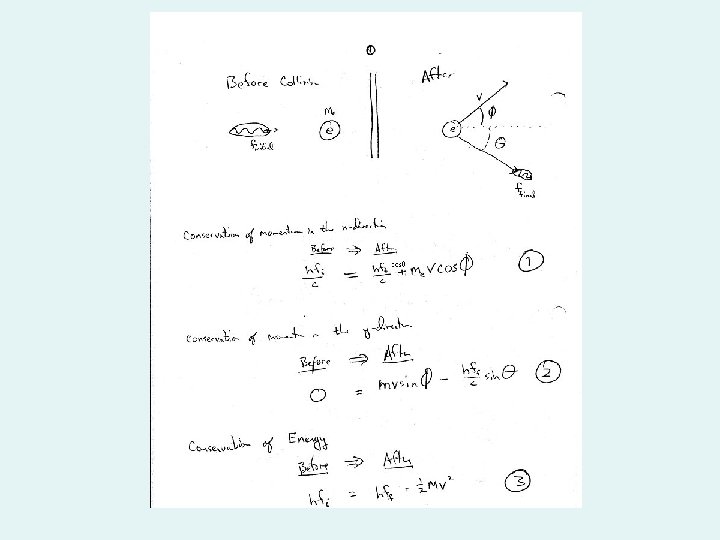
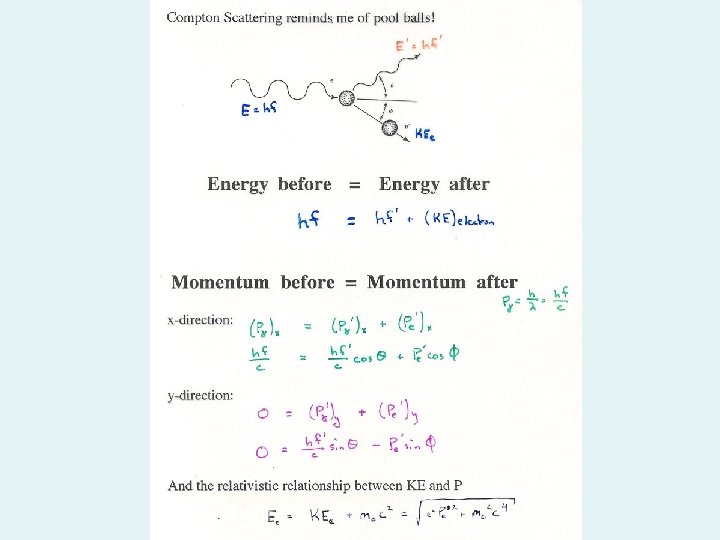
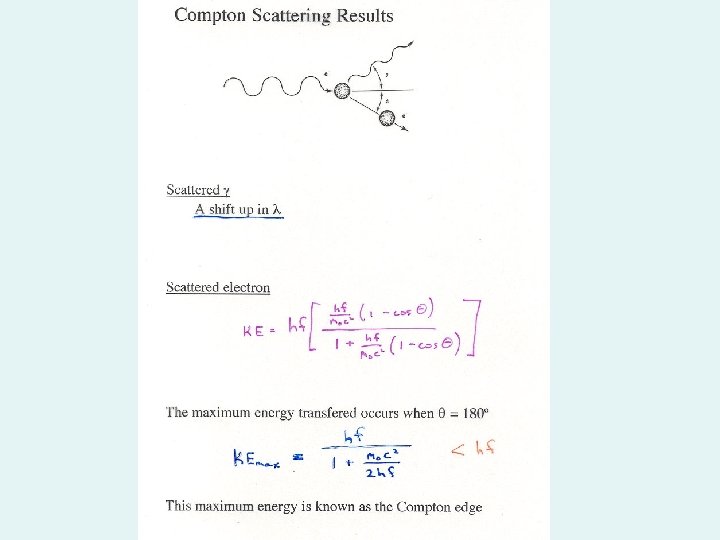
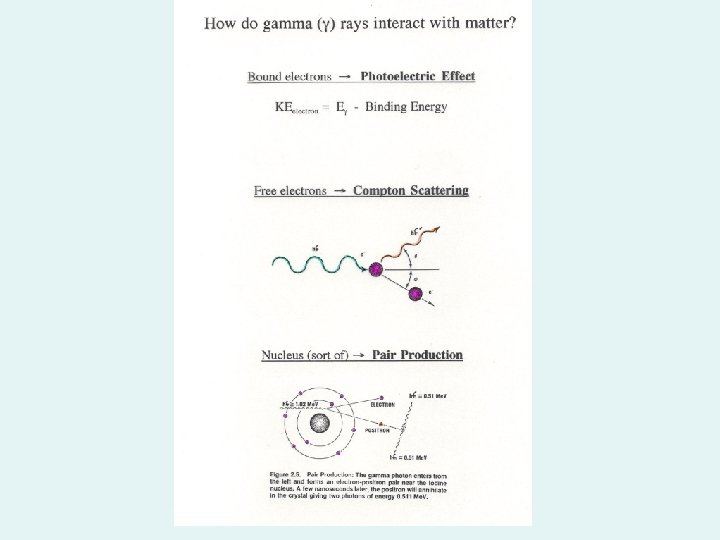
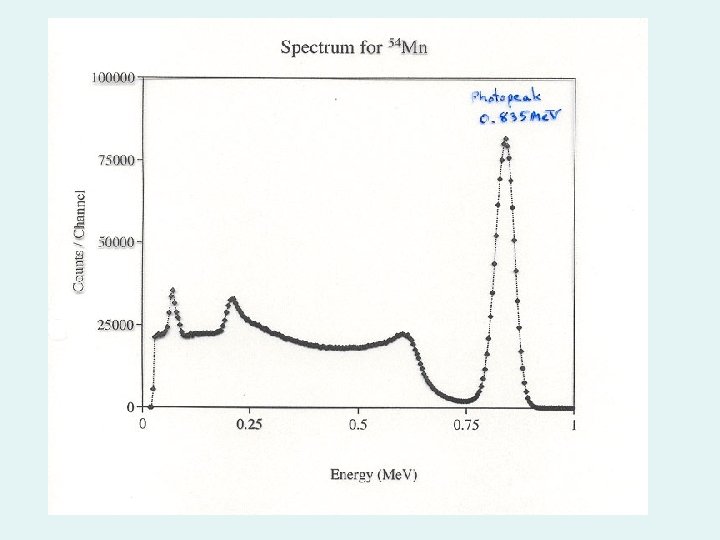
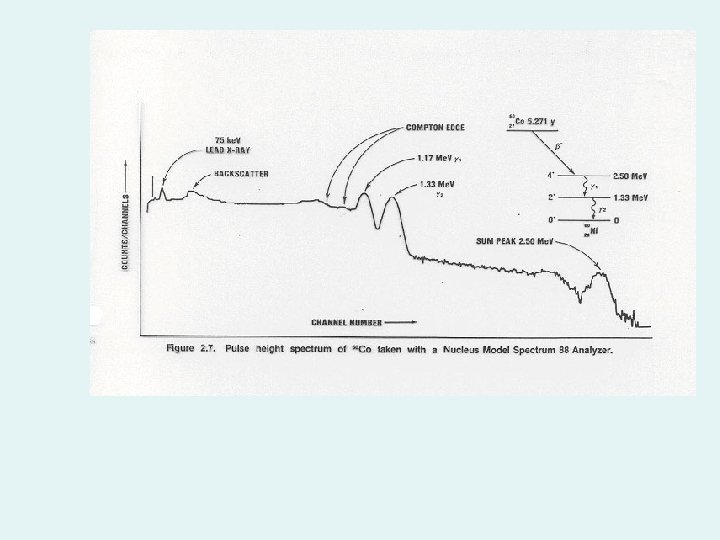
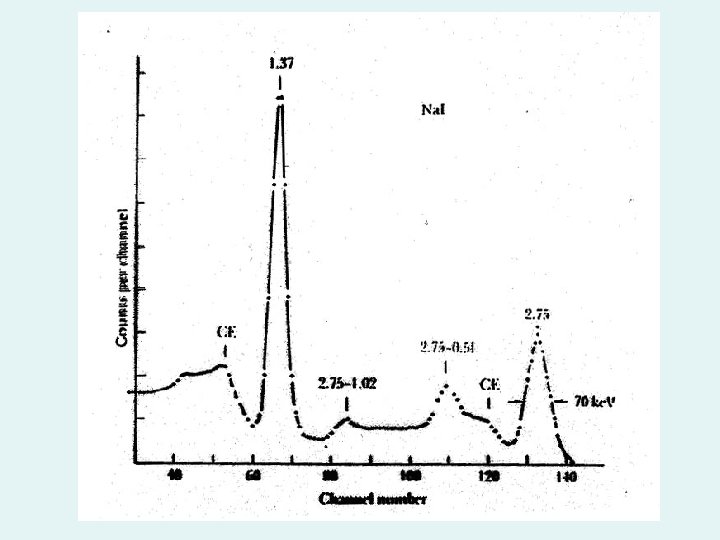
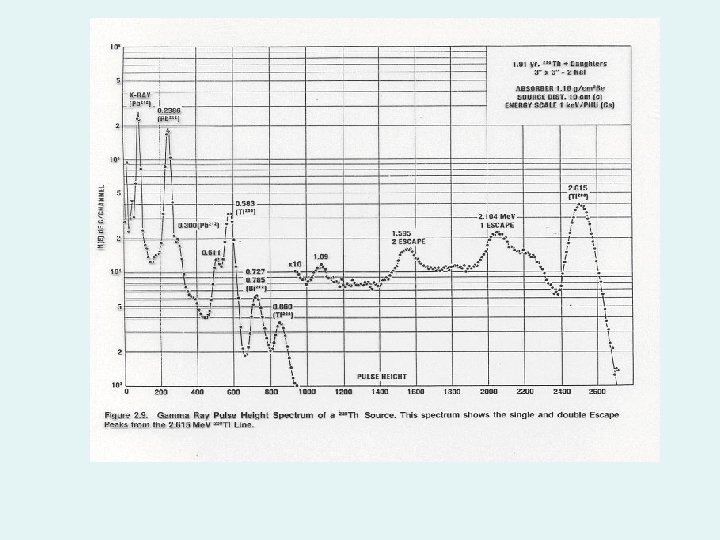
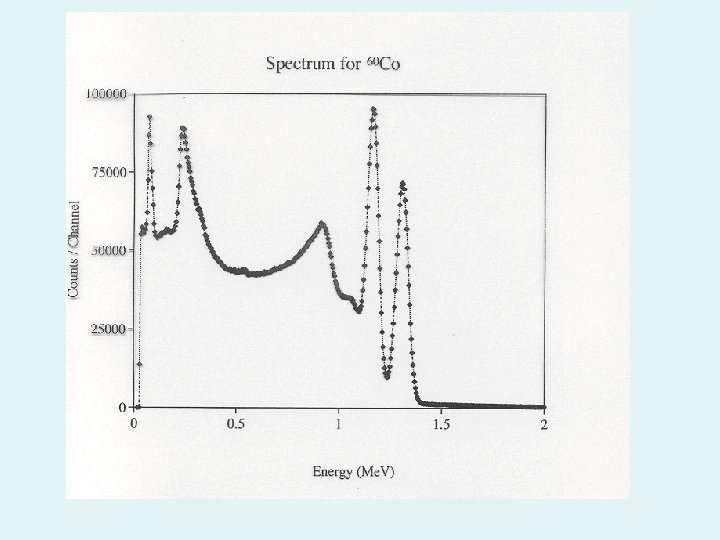
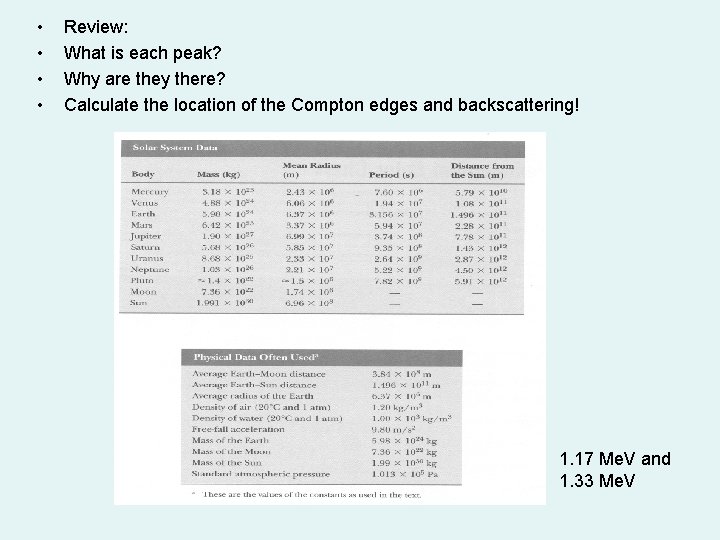
• • Review: What is each peak? Why are they there? Calculate the location of the Compton edges and backscattering! 1. 17 Me. V and 1. 33 Me. V
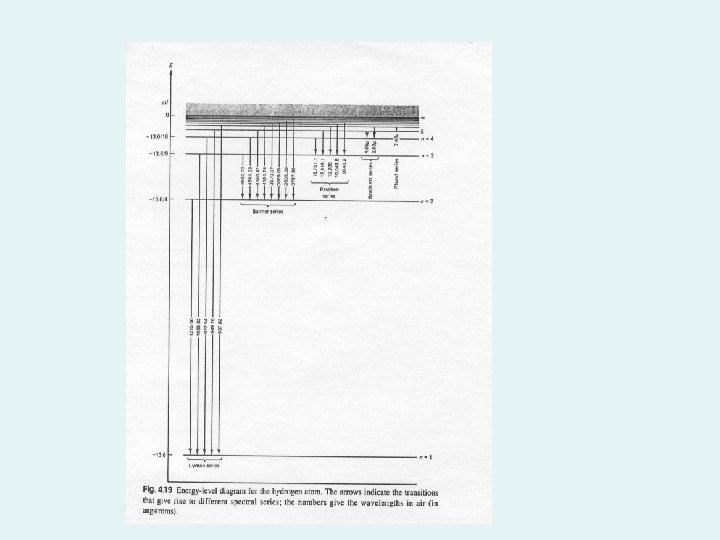
Five Minute Questions Review gamma spectroscopy data Photoelectons Compton Edge Back Scattering Pair Production X-ray Production Simple models of atoms – Evolution in our thought… Thompson’s plum pudding model – photon spectrum? Rutherford Scattering Bohr’s atom in all its glory X-ray spectra
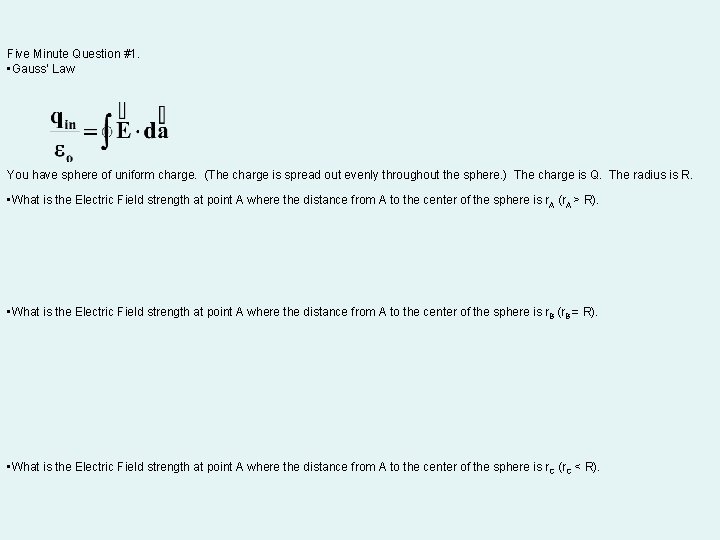
Five Minute Question #1. • Gauss’ Law You have sphere of uniform charge. (The charge is spread out evenly throughout the sphere. ) The charge is Q. The radius is R. • What is the Electric Field strength at point A where the distance from A to the center of the sphere is r. A (r. A > R). • What is the Electric Field strength at point A where the distance from A to the center of the sphere is r. B (r. B = R). • What is the Electric Field strength at point A where the distance from A to the center of the sphere is r. C (r. C < R).
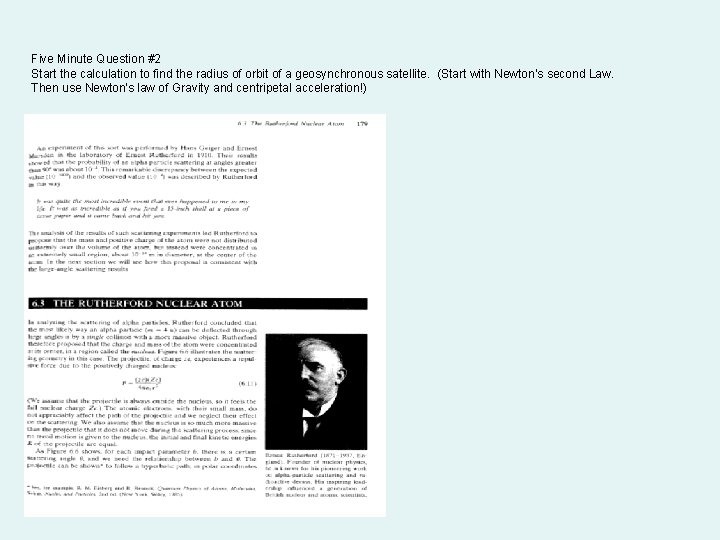
Five Minute Question #2 Start the calculation to find the radius of orbit of a geosynchronous satellite. (Start with Newton’s second Law. Then use Newton’s law of Gravity and centripetal acceleration!)
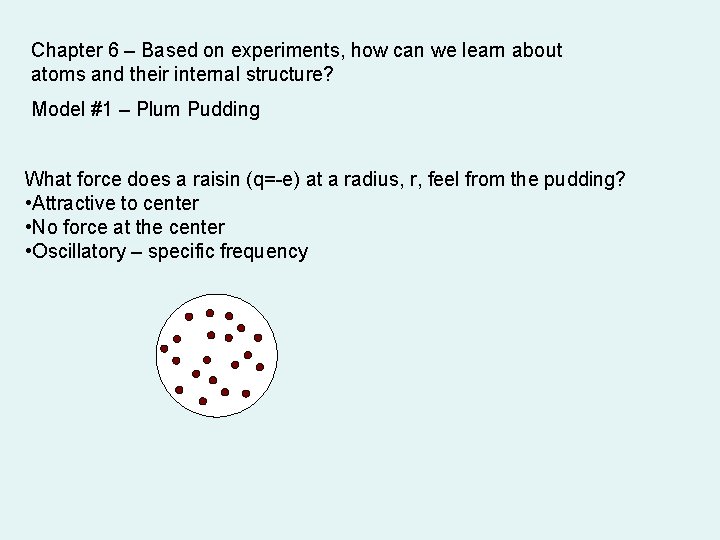
Chapter 6 – Based on experiments, how can we learn about atoms and their internal structure? Model #1 – Plum Pudding What force does a raisin (q=-e) at a radius, r, feel from the pudding? • Attractive to center • No force at the center • Oscillatory – specific frequency