
How do we create a nimble and adaptive
How do we create a nimble and adaptive culture that equips us to thrive in these turbulent times?

Two things our company doesn’t do well 1. Change We talk about being adaptive, but every day staff resist anything that even remotely upsets the familiar and comfortable routines. 2. Team Work We work in little teams with our own agendas and protect our own turf at all costs.

What does 'One Team' really mean? We can all agree that a ‘One Team’ mindset and approach will be beneficial Replas. The promise of better leveraging resources, greater speed and agility, and less waste is compelling.
The intent is not to make Replas one big department or encourage needless bureaucracy. Rather it’s a simple yet powerful message for building the effective and enduring partnerships and collaboration that is needed at Replas. One Team will offer a more productive and enjoyable way of working.

Three concepts form part of the Think One Team methodology and help create a common language and approach throughout Replas. 1. Creating greater alignment and teamwork within and between teams at Replas. 2. Removing the silos – embracing the five practices. 3. Developing One Team skills and capabilities.
1 – Creating greater alignment and teamwork within and between teams. • • • Within teams Between teams On cross-functional projects With alliances and other external partners Between board, managers and direct reports Teams: Sales/RRC/Marketing/Production/Accounts/Customer service/R&D These are our 'mission critical linkages' the next step is to remember that One Team isn't about demolishing silos. . . it's about connecting them.
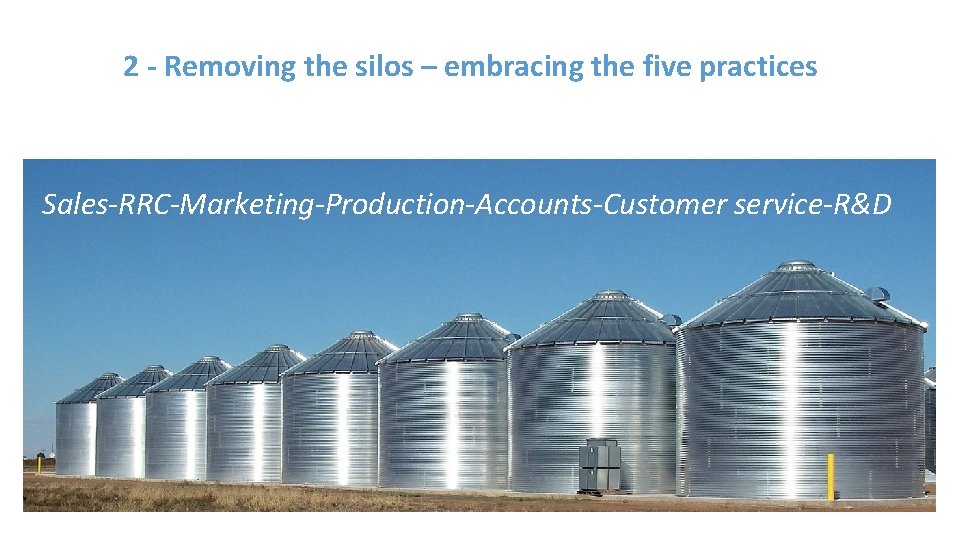
2 - Removing the silos – embracing the five practices Sales-RRC-Marketing-Production-Accounts-Customer service-R&D
Understanding what a silo in a business looks like A silo mentality can occur when a team or department share common tasks but derive their power and status from their group. They are less likely to share resources or ideas with other groups or welcome suggestions as to how they might improve. Collaboration in a business culture with silos will be limited, unless collaboration benefits the members of the team or department. In addition, the members of a silo tend to think alike. They get their power from association with their function and their shared technical knowledge.
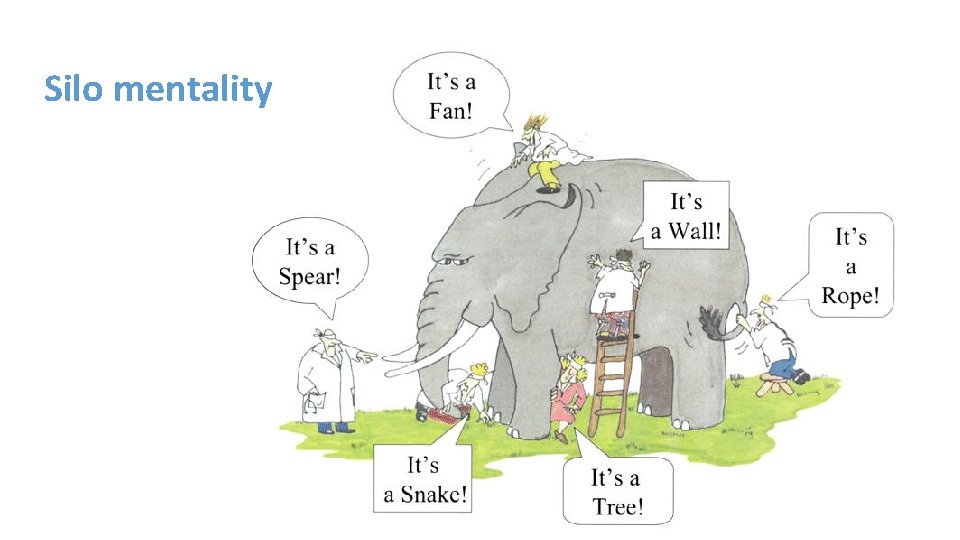
Silo mentality

The five practices model of Think One Team Describes the five groupings of behaviours and practices that distinguishes 'silo thinking' from 'one team' thinking Think Silo’s and Think one team We will learn 5 practices that define the difference between silo’s and one team.

Five practise to become ‘One Team’ Think Silo Think one team 1/ Pursue other agendas 2/ Avoid and deny 3/ Stifle communication 4/ Look after your own turf 5/ Play “ I win you lose” 1/ Share the big picture 2/ Share the reality 3/ Share the air 4/ Share the load 5/ Share the wins and losses

3 - Developing One Team skills and capabilities Think One Team skills encompass three words: Align - Collaborate - Learn. Share the big picture Share the reality Share the air Share the load Share the wins and losses
Our Goal 1. Define precisely where we most need alignment and teamwork within and between teams. 2. Understand assess the current practices in those 'mission critical' areas by using the five practices model. 3. Build One Team capabilities by instilling skills and tools that guide leaders and teams in our mission critical linkages/relationships to align - collaborate – and learn together.
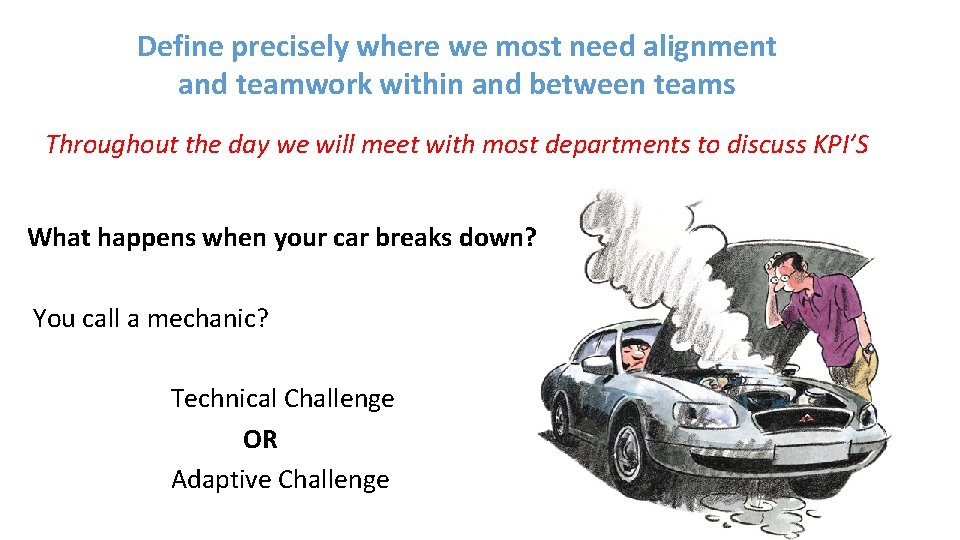
Define precisely where we most need alignment and teamwork within and between teams Throughout the day we will meet with most departments to discuss KPI’S What happens when your car breaks down? You call a mechanic? Technical Challenge OR Adaptive Challenge
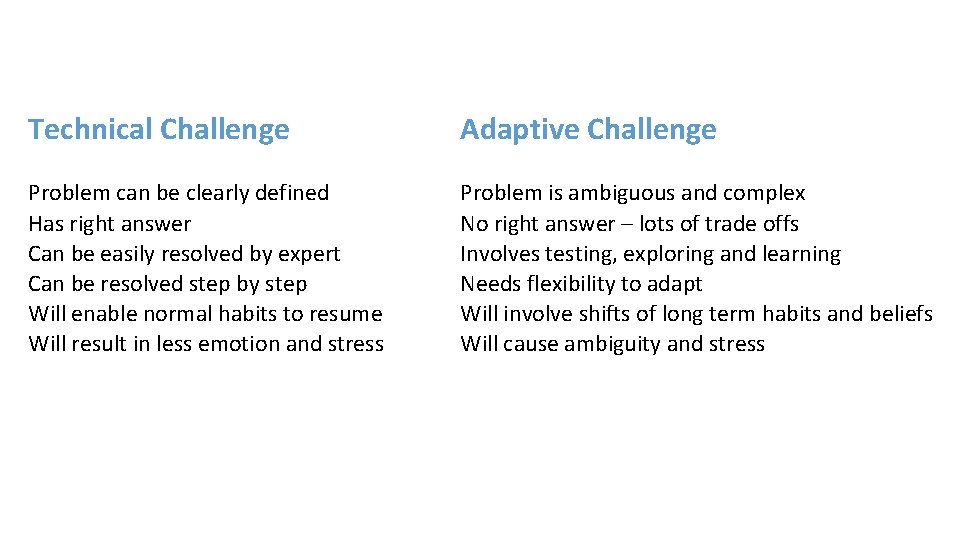
Technical Challenge Adaptive Challenge Problem can be clearly defined Has right answer Can be easily resolved by expert Can be resolved step by step Will enable normal habits to resume Will result in less emotion and stress Problem is ambiguous and complex No right answer – lots of trade offs Involves testing, exploring and learning Needs flexibility to adapt Will involve shifts of long term habits and beliefs Will cause ambiguity and stress
Fundamental Transformation Points • Our big challenges are complex and adaptive • We can’t meet these challenges successfully by giving them to experts in silos: technical or management. • We have to co-create the solutions and that’s going to mean working and learning together. Success or failure within Replas doesn’t rest with technical or management silos. Instead it’s about the culture at Replas where people and teams co– create solutions to the many big questions listed.
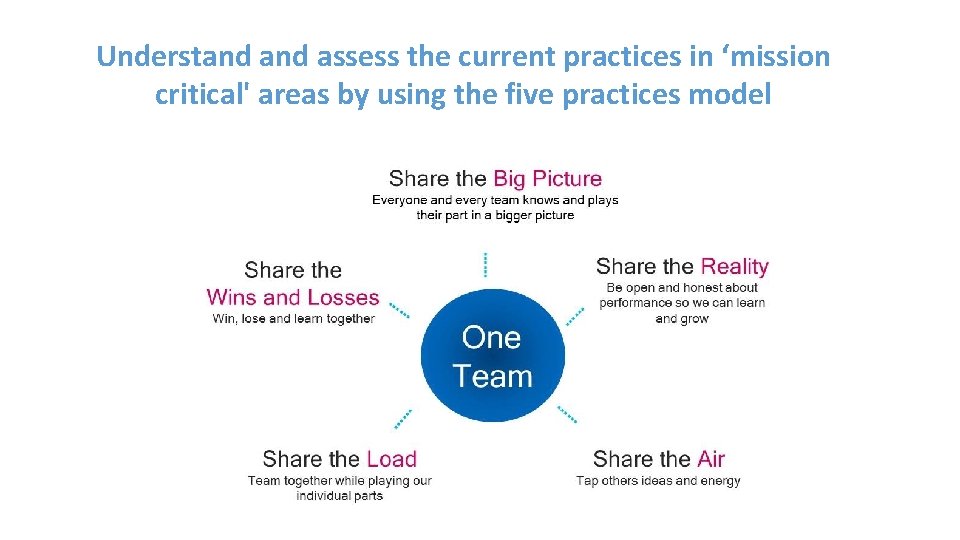
Understand assess the current practices in ‘mission critical' areas by using the five practices model

The concept of Think One Team and the skills that are required come down to three words: Align - Collaborate - Learn. Share the big picture Share the reality Share the air Share the load Share the wins and losses
Challenge Same product line up Focus on new market segments to provide new business in terms of customer needs and their satisfaction
- Slides: 19