
How do we classify something as living Living
- Slides: 14
How do we classify something as living? Living things… 1. Have a need for energy (from chemicals, sunlight, other animals, etc. ) 2. Respond to their environment (to survive) 3. Have the ability to reproduce= pass genetic info (asexual or sexual) 4. Are made up of one or more cells
Cell Theory � 3 basic components: 1. All organisms are made of cell(s). 2. All existing cells are produced by other living cells. 3. The cell is the most basic unit of life.
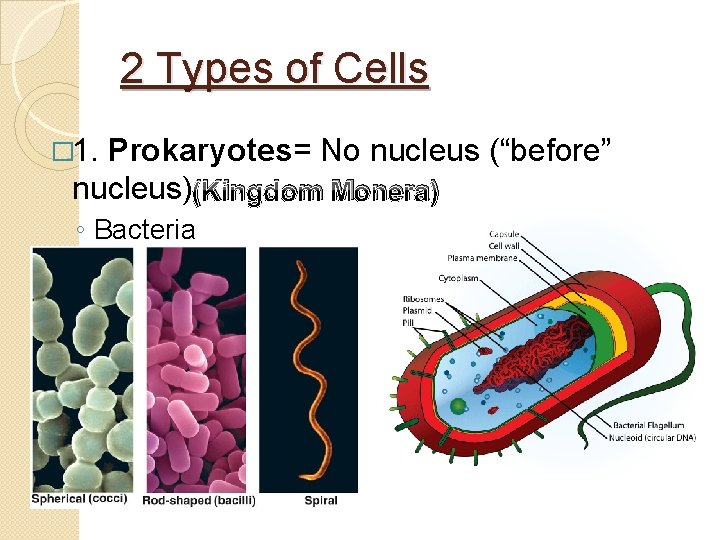
2 Types of Cells � 1. Prokaryotes= No nucleus (“before” nucleus)(Kingdom Monera) ◦ Bacteria
� 2. Eukaryotes= Nucleus (“true” nucleus) All other Kingdoms: ◦ ◦ Fungi(Kingdom Fungi) Plants(Kingdom Plantae) Protists (Kingdom Protista) *Animals (Kingdom Animalia) Eukaryotic cells have many organelles. Structures that perform specific functions. *plasma membrane, cytoplasm, nucleus
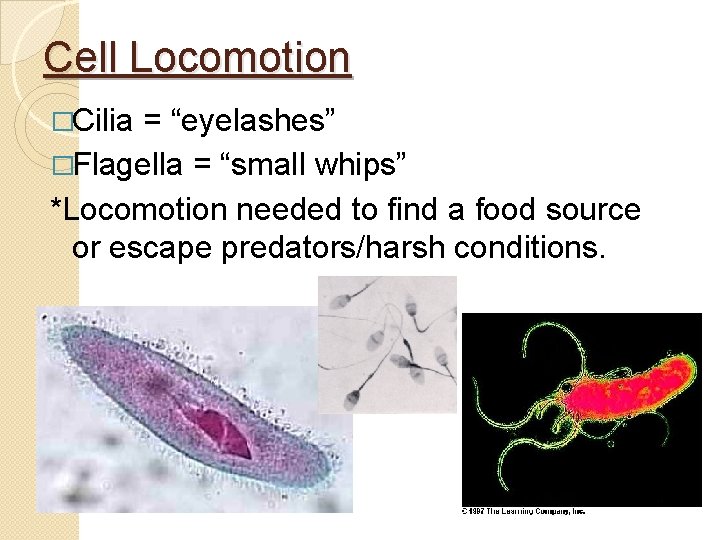
Cell Locomotion �Cilia = “eyelashes” �Flagella = “small whips” *Locomotion needed to find a food source or escape predators/harsh conditions.
Tools for Viewing Life �Light Microscope ◦ Compound ◦ Stereo/ Dissecting �Electron Microscope ◦ Scanning (SEM) ◦ Transmission (TEM) �X-rays �Ultrasound �MRI = Magnetic resonance imaging
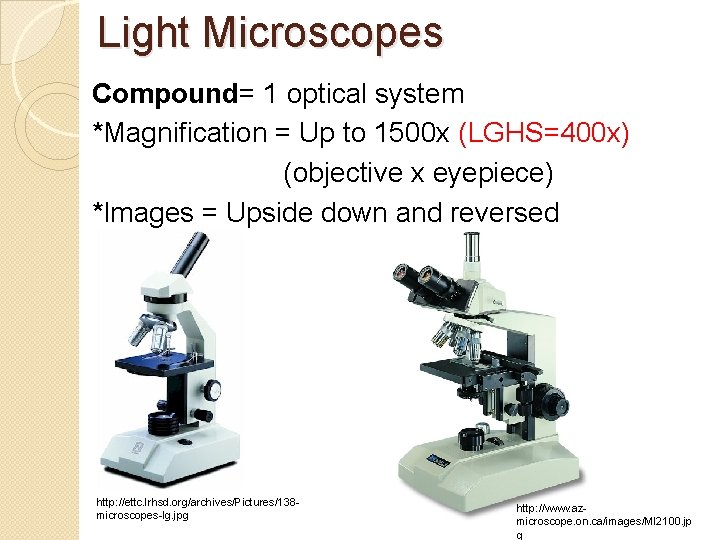
Light Microscopes Compound= 1 optical system *Magnification = Up to 1500 x (LGHS=400 x) (objective x eyepiece) *Images = Upside down and reversed http: //ettc. lrhsd. org/archives/Pictures/138 microscopes-lg. jpg http: //www. azmicroscope. on. ca/images/Ml 2100. jp g
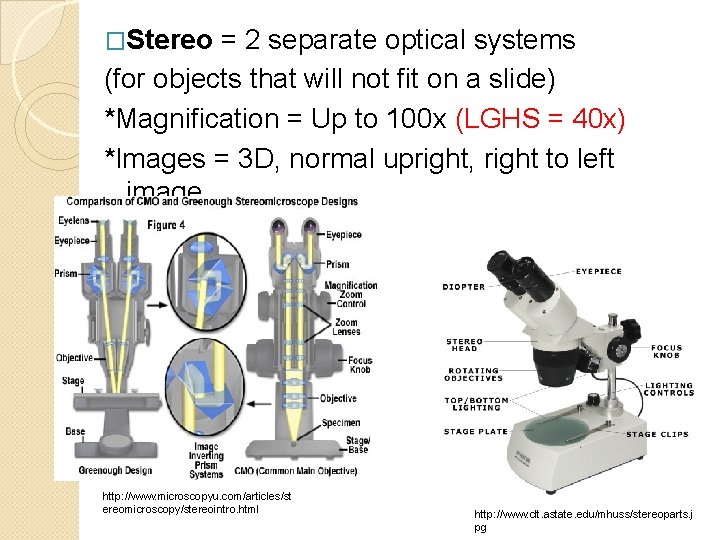
�Stereo = 2 separate optical systems (for objects that will not fit on a slide) *Magnification = Up to 100 x (LGHS = 40 x) *Images = 3 D, normal upright, right to left image http: //www. microscopyu. com/articles/st ereomicroscopy/stereointro. html http: //www. clt. astate. edu/mhuss/stereoparts. j pg
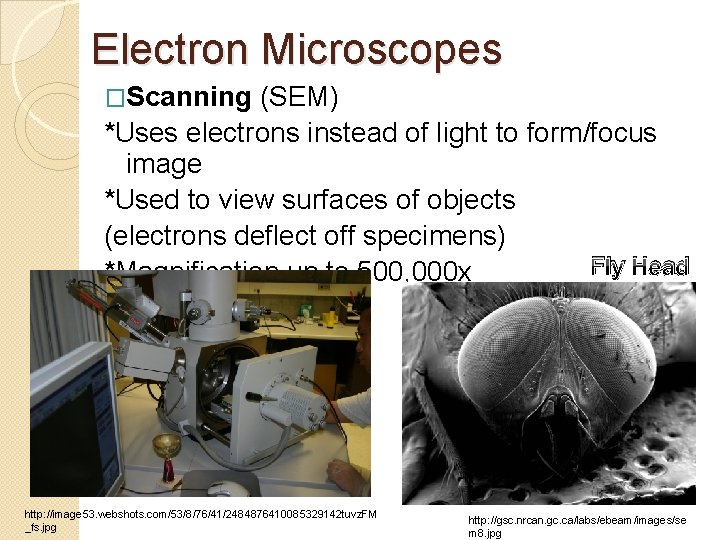
Electron Microscopes �Scanning (SEM) *Uses electrons instead of light to form/focus image *Used to view surfaces of objects (electrons deflect off specimens) Fly Head *Magnification up to 500, 000 x http: //image 53. webshots. com/53/8/76/41/2484876410085329142 tuvz. FM _fs. jpg http: //gsc. nrcan. gc. ca/labs/ebeam/images/se m 8. jpg
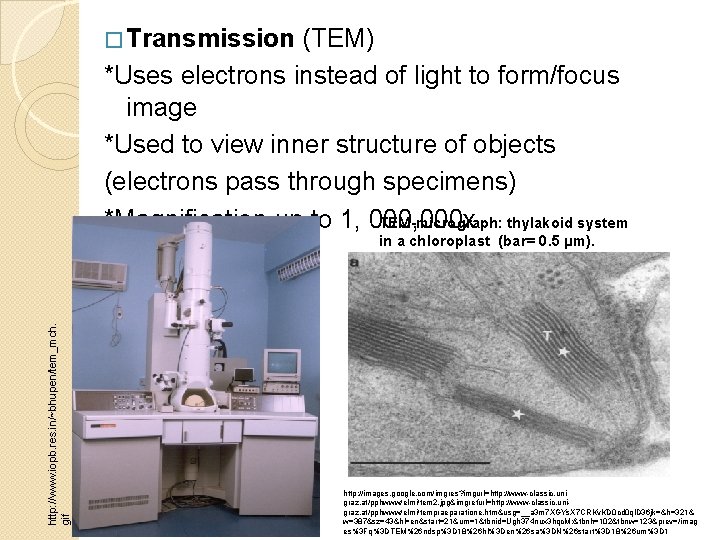
(TEM) *Uses electrons instead of light to form/focus image *Used to view inner structure of objects (electrons pass through specimens) *Magnification up to 1, 000 x TEM-micrograph: thylakoid system � Transmission http: //www. iopb. res. in/~bhupen/tem_mch. gif in a chloroplast (bar= 0. 5 µm). http: //images. google. com/imgres? imgurl=http: //www-classic. unigraz. at/pphwww/elmi/tem 2. jpg&imgrefurl=http: //www-classic. unigraz. at/pphwww/elmi/tempraeparatione. htm&usg=__a 3 m 7 XGYs. X 7 CRKv. KD 0 cd 0 ql. D 36 jk=&h=321& w=387&sz=43&hl=en&start=21&um=1&tbnid=Ugh 374 nux 3 hqc. M: &tbnh=102&tbnw=123&prev=/imag es%3 Fq%3 DTEM%26 ndsp%3 D 18%26 hl%3 Den%26 sa%3 DN%26 start%3 D 18%26 um%3 D 1
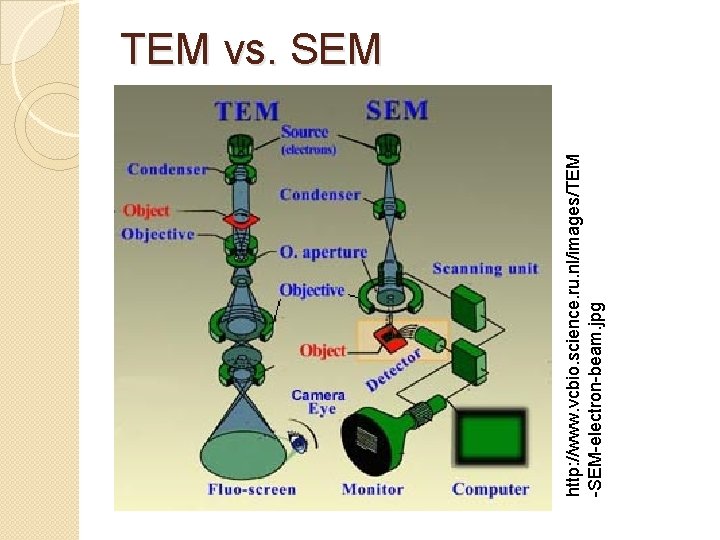
http: //www. vcbio. science. ru. nl/images/TEM -SEM-electron-beam. jpg TEM vs. SEM
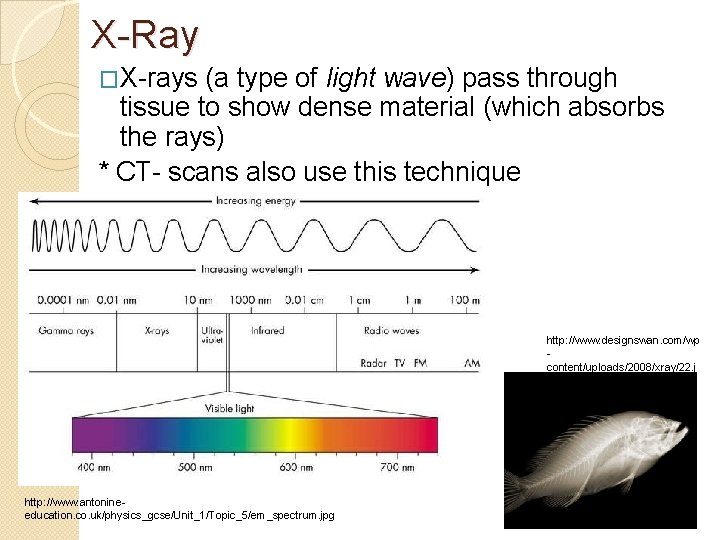
X-Ray �X-rays (a type of light wave) pass through tissue to show dense material (which absorbs the rays) * CT- scans also use this technique http: //www. designswan. com/wp content/uploads/2008/xray/22. j pg http: //www. antonineeducation. co. uk/physics_gcse/Unit_1/Topic_5/em_spectrum. jpg
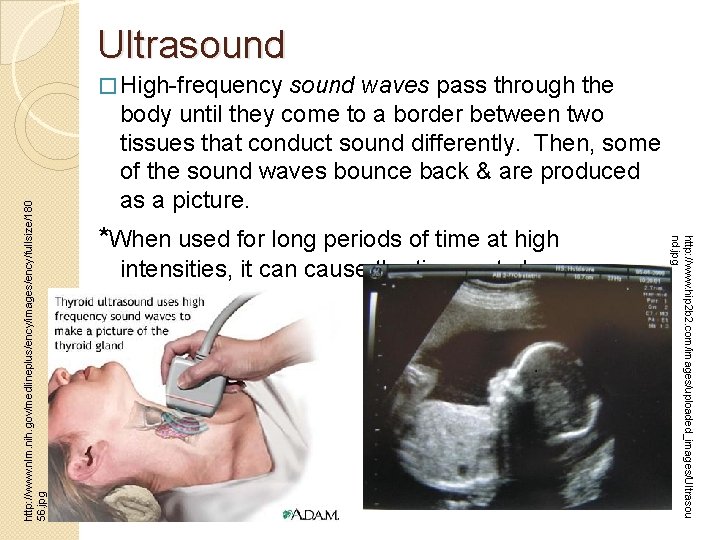
Ultrasound waves pass through the body until they come to a border between two tissues that conduct sound differently. Then, some of the sound waves bounce back & are produced as a picture. *When used for long periods of time at high intensities, it can cause the tissues to become heated. http: //www. hip 2 b 2. com/images/uploaded_images/Ultrasou nd. jpg http: //www. nlm. nih. gov/medlineplus/ency/images/ency/fullsize/180 56. jpg � High-frequency
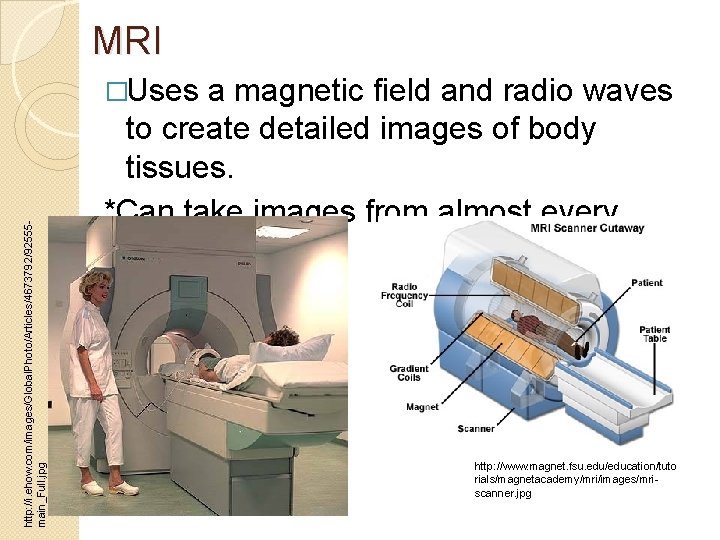
MRI http: //i. ehow. com/images/Global. Photo/Articles/4673792/92555 main_Full. jpg �Uses a magnetic field and radio waves to create detailed images of body tissues. *Can take images from almost every angle http: //www. magnet. fsu. edu/education/tuto rials/magnetacademy/mri/images/mriscanner. jpg