
How do the respiratory and circulatory systems help
- Slides: 41
How do the respiratory and circulatory systems help maintain the body’s homeostasis?
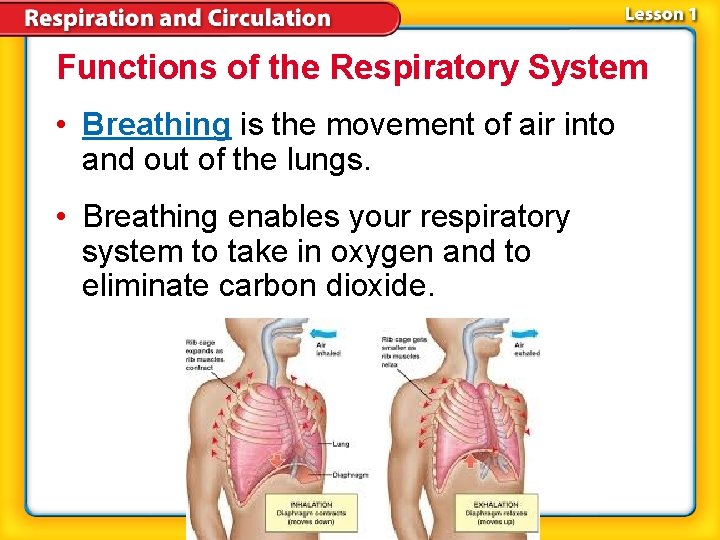
Functions of the Respiratory System • Breathing is the movement of air into and out of the lungs. • Breathing enables your respiratory system to take in oxygen and to eliminate carbon dioxide.
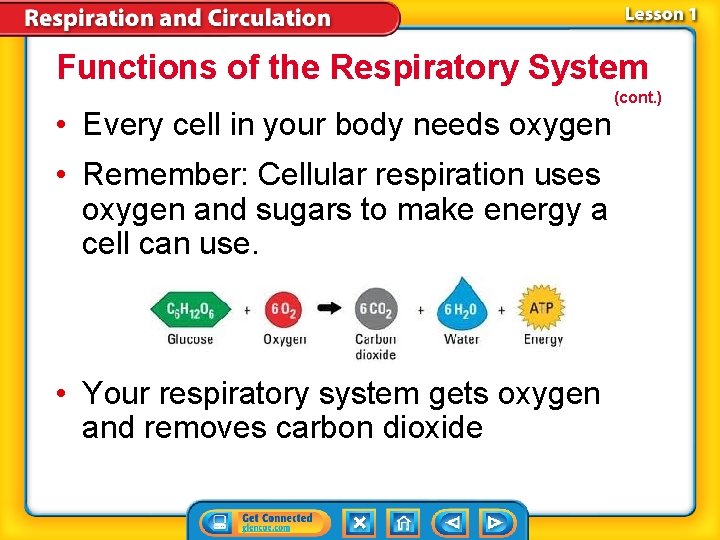
Functions of the Respiratory System • Every cell in your body needs oxygen • Remember: Cellular respiration uses oxygen and sugars to make energy a cell can use. • Your respiratory system gets oxygen and removes carbon dioxide (cont. )
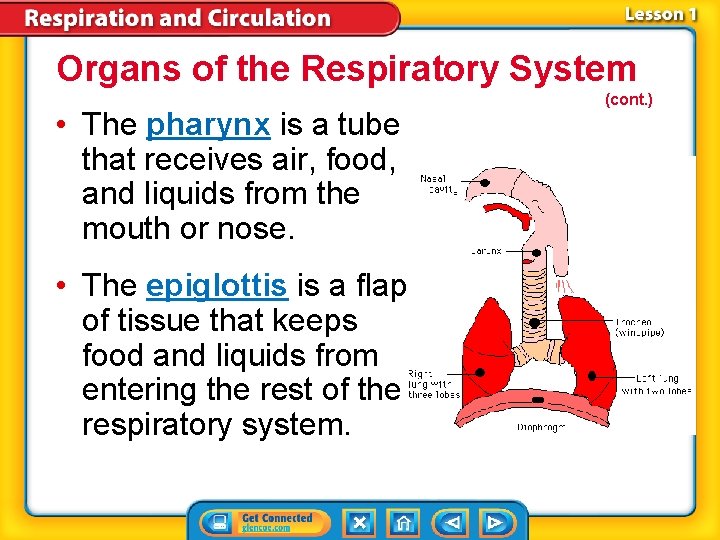
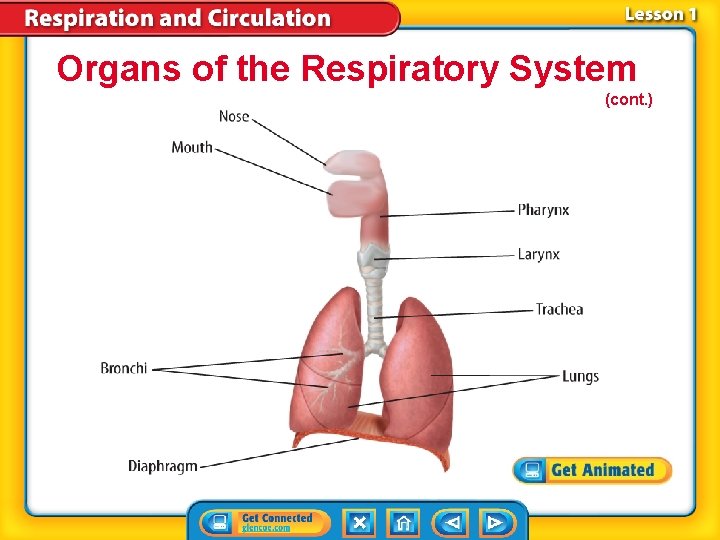
Organs of the Respiratory System • The pharynx is a tube that receives air, food, and liquids from the mouth or nose. • The epiglottis is a flap of tissue that keeps food and liquids from entering the rest of the respiratory system. (cont. )
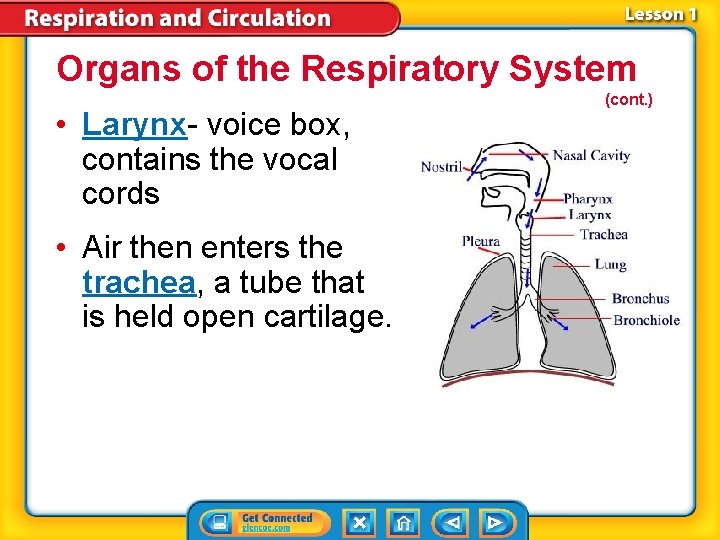
Organs of the Respiratory System • Larynx- voice box, contains the vocal cords • Air then enters the trachea, a tube that is held open cartilage. (cont. )
Organs of the Respiratory System (cont. )
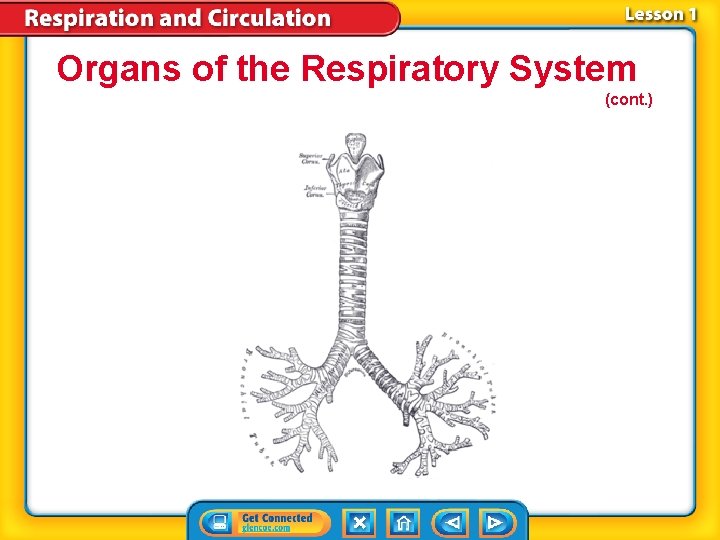
Organs of the Respiratory System • The trachea branches into two narrower tubes called bronchi that lead into the lungs. (cont. ) • Lungs are the main organs of the respiratory system. • Inside the lungs, the bronchi continue to branch into smaller and narrower tubes called bronchioles.
Organs of the Respiratory System (cont. )
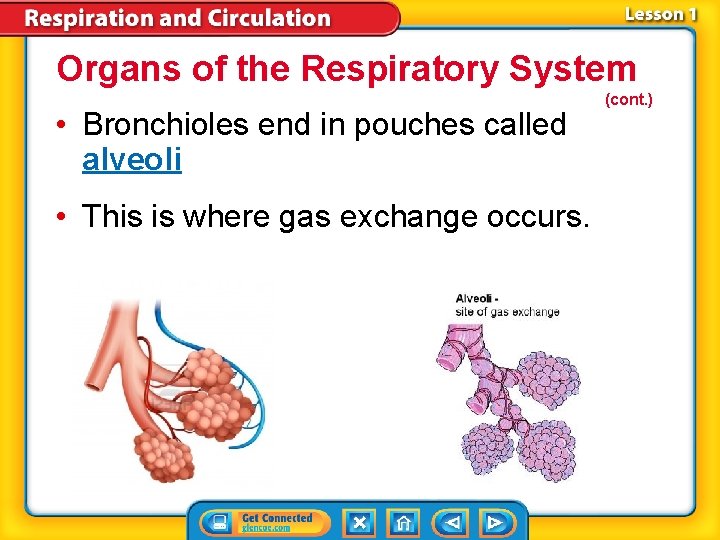
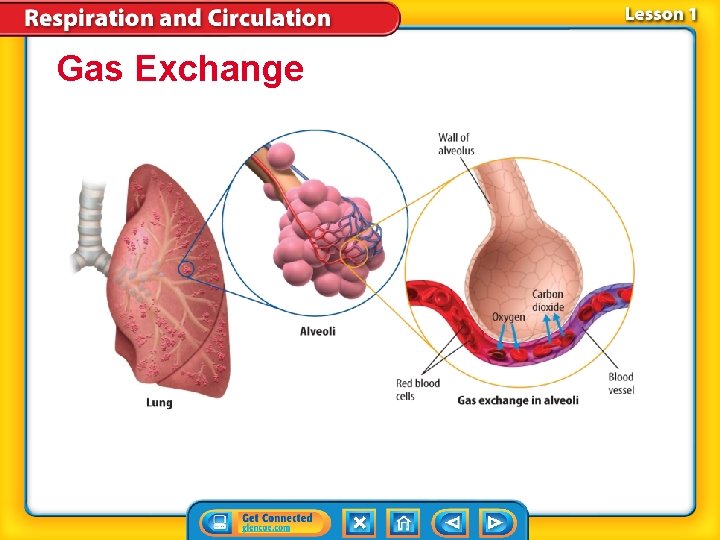
Organs of the Respiratory System • Bronchioles end in pouches called alveoli • This is where gas exchange occurs. (cont. )
Gas Exchange
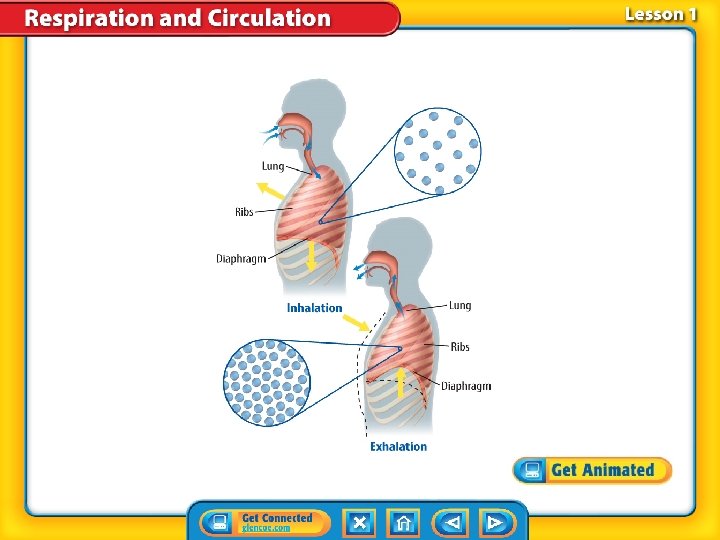
Breathing and Air Pressure • Below the lungs is a large muscle called the diaphragm • The movement of your diaphragm causes changes in the air pressure inside your chest. • Air rushes into and out of the lungs to equalize the air pressure inside and outside the body.
Organs of the Respiratory System • Cilia- little hair like structures that line • They carry trapped particles away from your lungs. • They prevent harmful particles from getting very far into your respiratory system.
Bell Ringer: Why do we breathe? Matthew Howle, you better get this right! THE CIRCULATORY SYSTEM
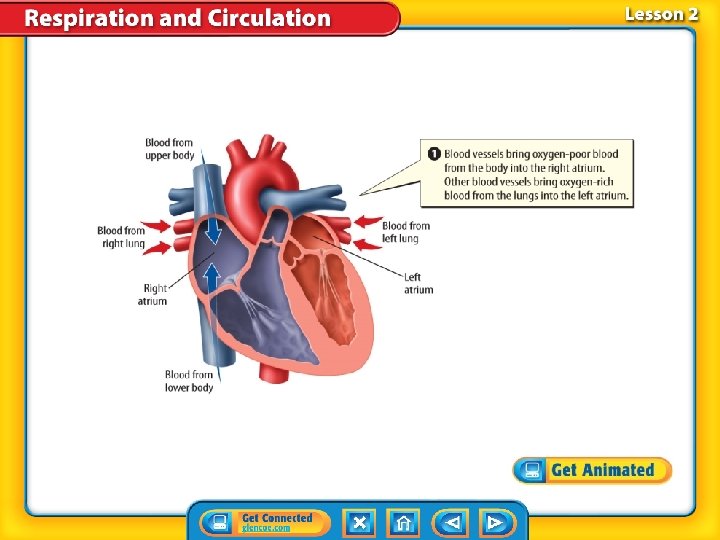
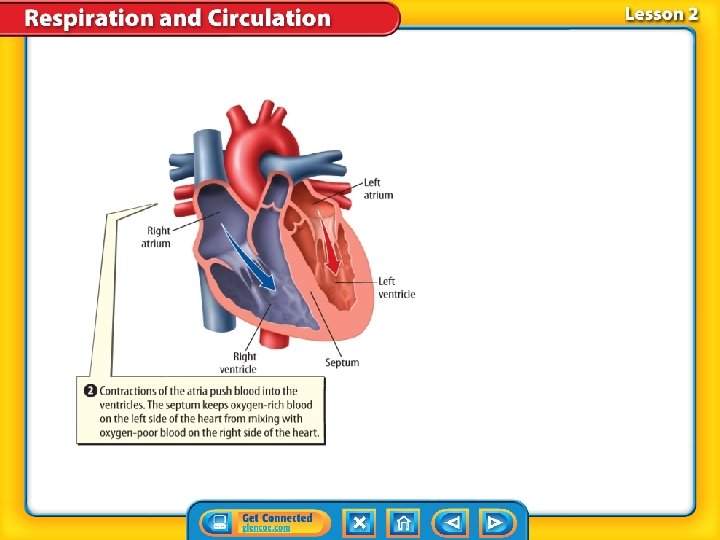
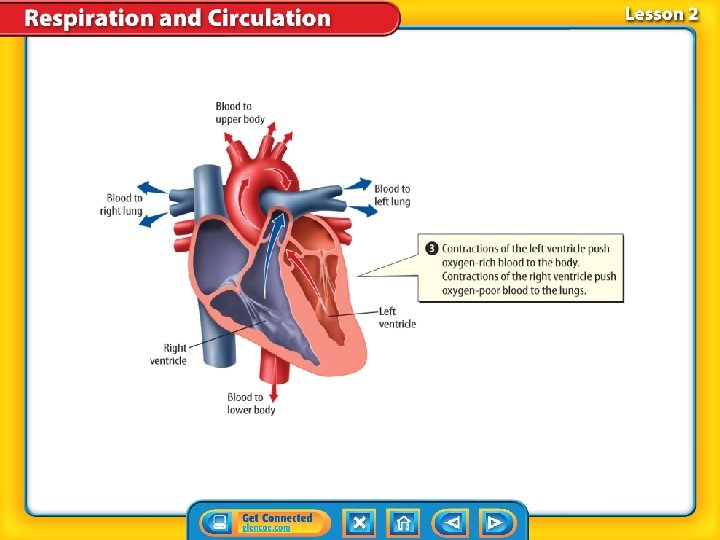
Circulatory System Organs • The heart is a muscle that pushes blood through the circulatory system. • Blood enters the upper two chambers of the heart, called the atria. • Blood leaves through the lower two chambers of the heart, called the ventricles.
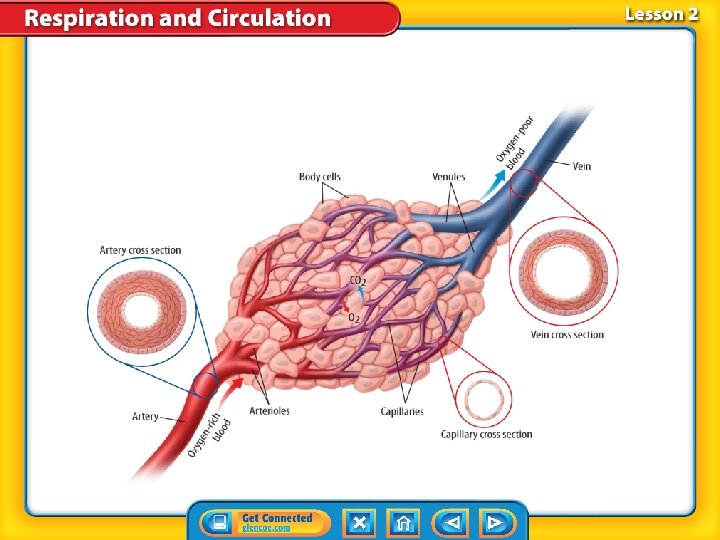
Circulatory System Organs (cont. ) • A vessel that takes blood away from the heart is an artery. • Blood pressure in arteries is high because arteries are near the pumping action of the heart. • The aorta, the largest artery, carries a large volume of blood.
Circulatory System Organs (cont. ) • Arterioles branch into capillaries, tiny blood vessels that deliver supplies to individual cells and take away waste materials.
Circulatory System Organs (cont. ) • A vessel that brings blood toward the heart is a vein. • The pressure in veins is lower than in arteries because capillaries separate veins from the pumping action of the heart.
High Blood Pressure • Blood pressure higher than 140/90 mm Hg is known as hypertension, or high blood pressure.
Heart Attack • A heart attack happens when part of the heart muscle dies or is damaged. • A heart attack is usually caused when not enough oxygen reaches cells in the heart.
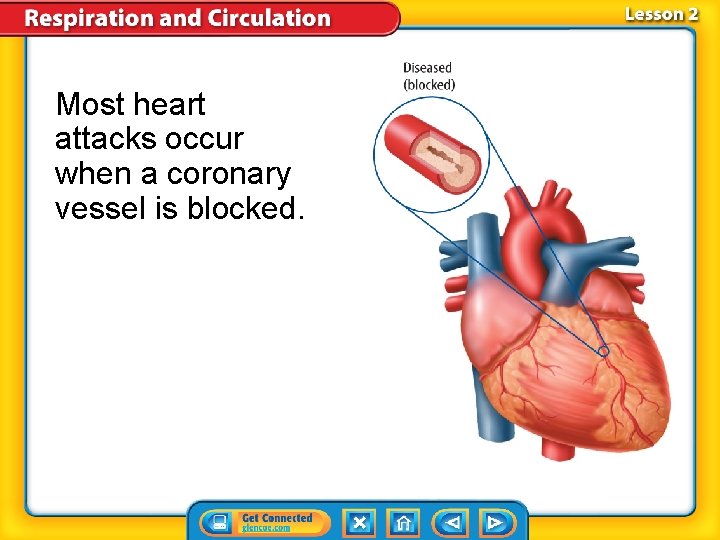
Most heart attacks occur when a coronary vessel is blocked.
Stroke • A stroke happens when part of the brain dies or is damaged because there is not enough oxygen reaching cells in the brain.
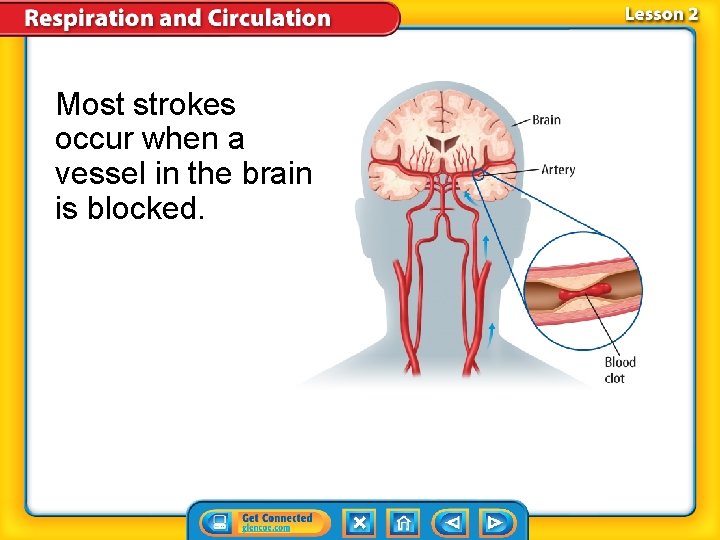
Most strokes occur when a vessel in the brain is blocked.
Circulatory System Health • Most circulatory system disorder risk factors can be controlled by eating a healthy diet, controlling weight, exercising, and not smoking.
Functions of the Circulatory System • The circulatory system is the highway of your body! • Blood carries food, water, oxygen, and other materials through your circulatory system to your body’s cells and tissues.
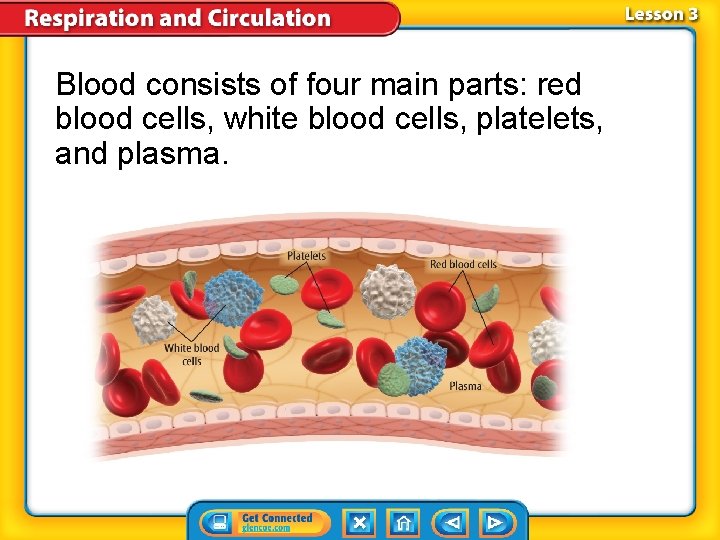
Blood consists of four main parts: red blood cells, white blood cells, platelets, and plasma.
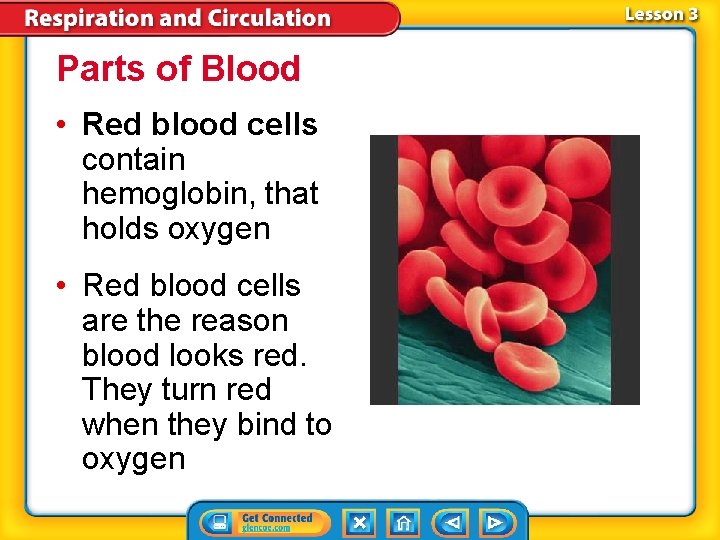
Parts of Blood • Red blood cells contain hemoglobin, that holds oxygen • Red blood cells are the reason blood looks red. They turn red when they bind to oxygen
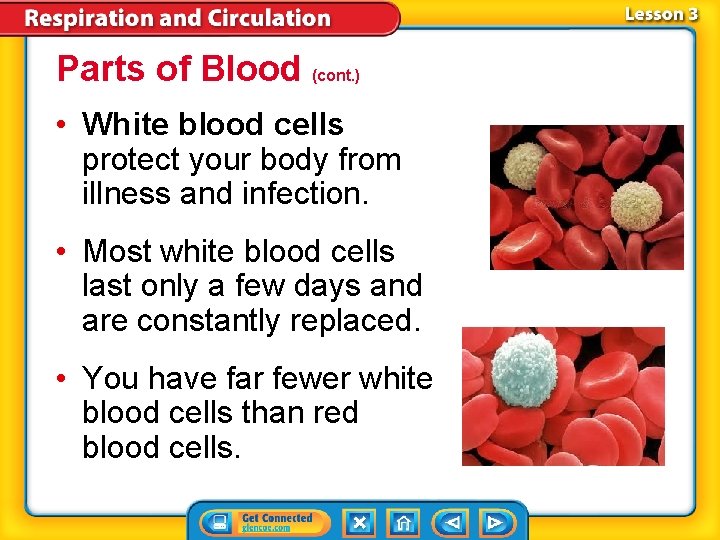
Parts of Blood (cont. ) • White blood cells protect your body from illness and infection. • Most white blood cells last only a few days and are constantly replaced. • You have far fewer white blood cells than red blood cells.
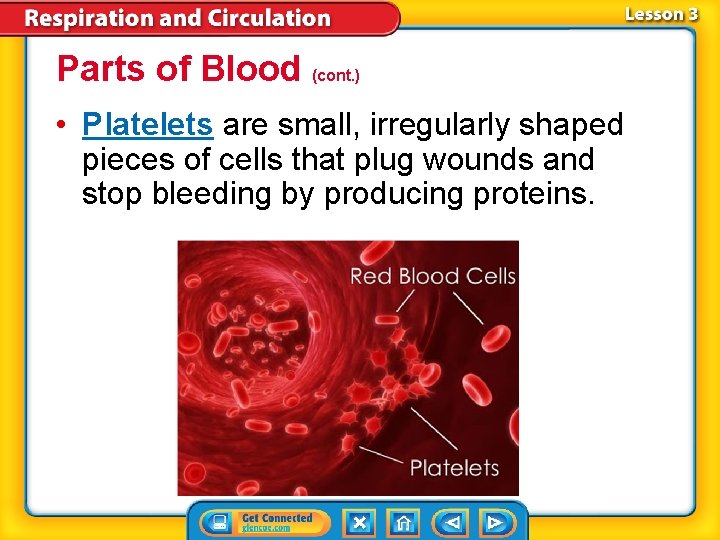
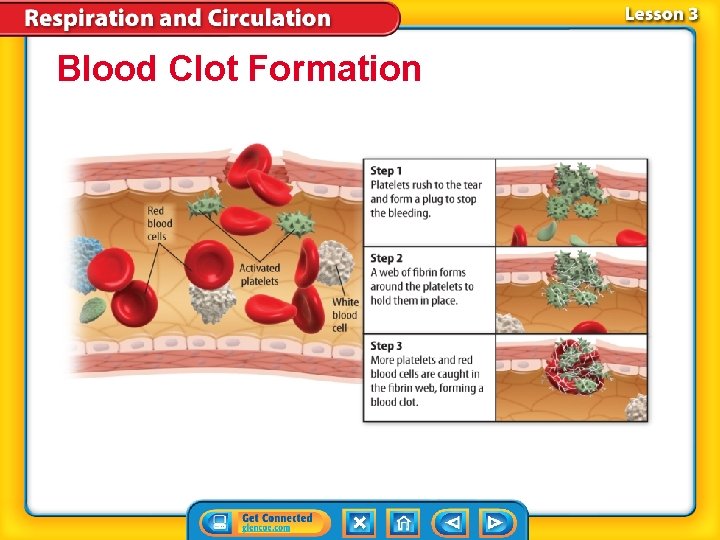
Parts of Blood (cont. ) • Platelets are small, irregularly shaped pieces of cells that plug wounds and stop bleeding by producing proteins.
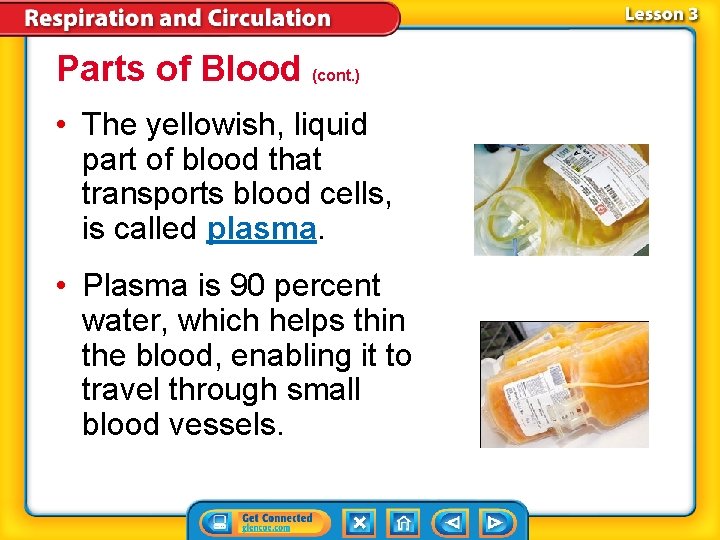
Parts of Blood (cont. ) • The yellowish, liquid part of blood that transports blood cells, is called plasma. • Plasma is 90 percent water, which helps thin the blood, enabling it to travel through small blood vessels.
Blood Clot Formation
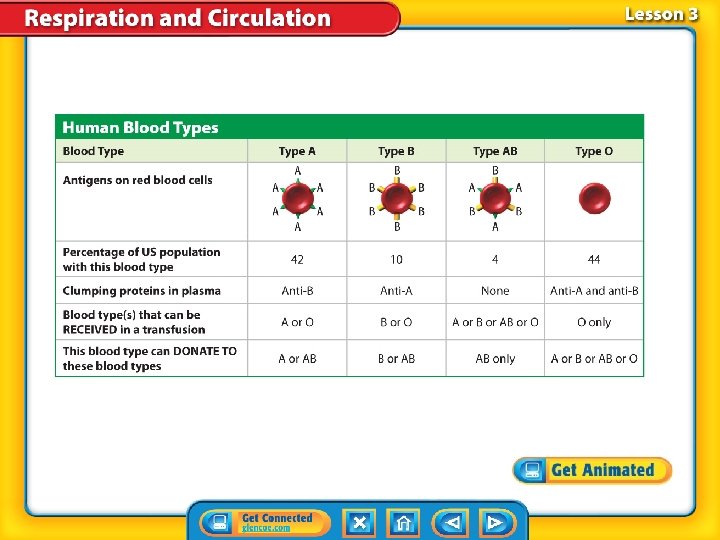
Blood Types • Blood type refers to the type of proteins, or antigens, on red blood cells. • The four human blood types are A, B, AB, and O. • Type A blood cells have the A antigen. • Type B cells have the B antigen. • Type AB has both A and B antigens. • Type O has no antigens.
Blood Types (cont. ) • Another protein found on red blood cells is a chemical marker called the Rh factor. • People with Rh and positive and those without are Rh negative.
Blood Disorders • Some medical conditions disrupt the normal functions of blood. • People with hemophilia lack a protein needed to clot blood. • People with anemia have low numbers of red blood cells or not enough hemoglobin. • Cancer of the bone marrow, or leukemia, can slow or prevent blood cell formation and lead to a damaged immune system.
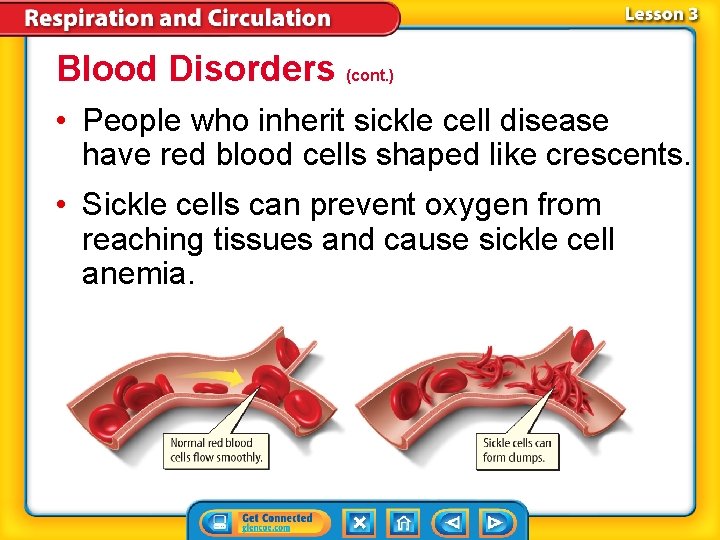
Blood Disorders (cont. ) • People who inherit sickle cell disease have red blood cells shaped like crescents. • Sickle cells can prevent oxygen from reaching tissues and cause sickle cell anemia.