
How do symbolic setting details help create a
How do symbolic setting details help create a story’s theme? “Through the Tunnel” By Doris Lessing Fun fact! Lessing was born in Iran and spent much of her childhood in Southern Rhodesia (Zimbabwe) She dropped out of school at 13. (It was 1932) She then educated herself. She recently commented that unhappy childhoods seem to produce fiction writers. "Yes, I think that is true. Though it wasn't apparent to me then. Of course, I wasn't thinking in terms of being a writer then - I was just thinking about how to escape, all the time. ” (SOUND FAMILIAR? ) Biography
“Our greatest weakness lies in giving up. The most certain way to succeed is always to try just one more time. ” -Thomas A. Edison Match the nine vocabulary terms with their definitions. Then create categories for the words. • Contrition • Inquisitive • Tenacity Promontory Persistence Importunity Supplication Incredulous Diligent • Finally, use 5 of them to answer the prompt below. • Prompt: What happens to a person when s/he achieves a goal? What motivates people to take risks?
The Power of Environment • Write down specific sensory details from the next 3 images. • What is the mood? • Explain why the atmosphere is what it is. (rephrase) • Share your results with a neighbor. Take note of similarities and differences.
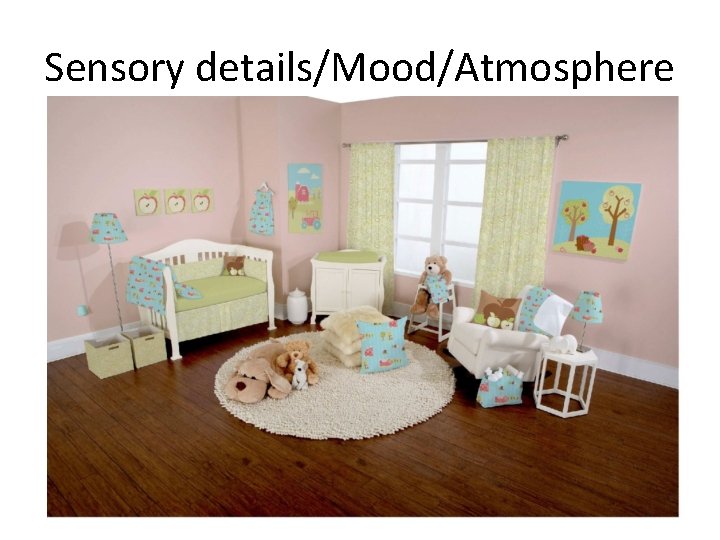
Sensory details/Mood/Atmosphere
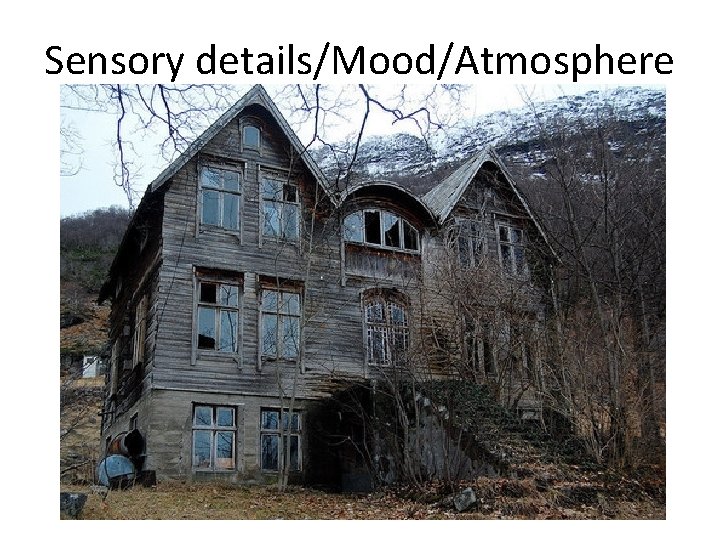
Sensory details/Mood/Atmosphere
BELLRINGER Oct 8/9 You don’t need to write these questions, but you DO need to answer with complete sentences. • What characteristic of humanity could an innocent baby’s room symbolize? • What characteristic of humanity could an eerie, abandoned house symbolize?
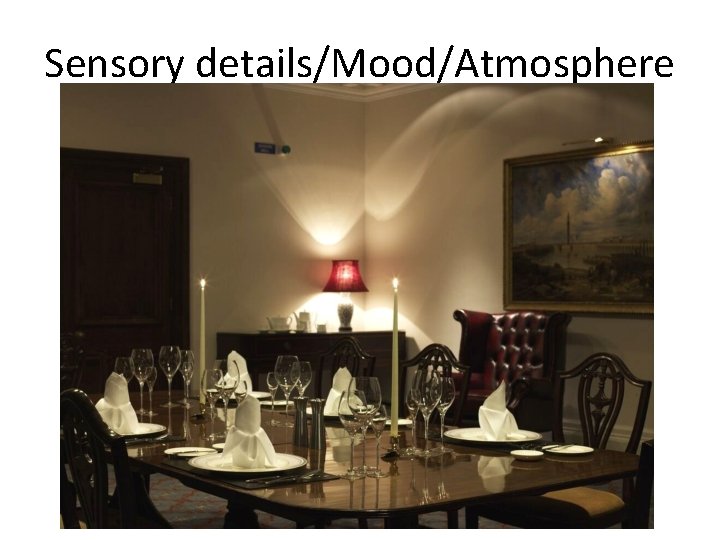
Sensory details/Mood/Atmosphere
Analyzing a poem for symbolism • Read the poem, “The Street”. • With your partner, pull out the different elements of the setting. Next, write down what could be a symbolic meaning for those elements. (rephrase? ) • What message is the author conveying about the speaker through the setting? Write your response on the back. Use details to show your point. • Be prepared to share out.
Bellringer Oct 10/11 • Write the questions and the date in your notebook. Then answer the questions. – What does a secret smell like? – What does happiness taste like? Sit with your same partner from the previous class.
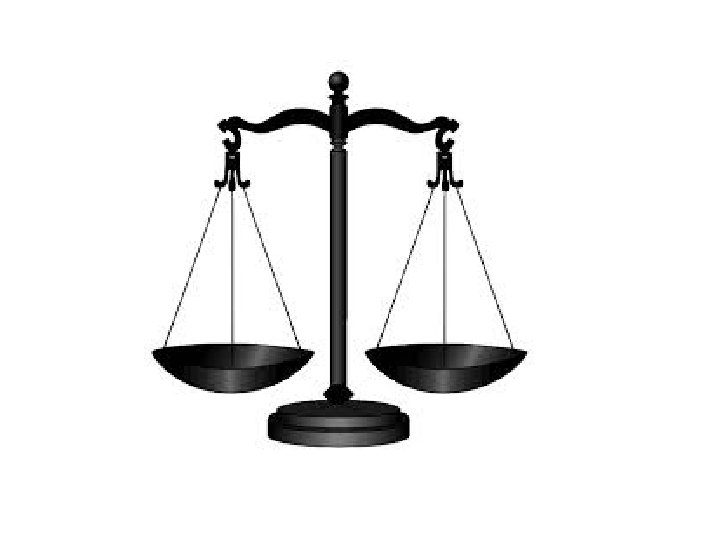
What’s the difference between the literal level and the symbolic level? • Literal 1. Involving the usual or ordinary meaning • Symbolic 1. Involving an action, object, event, person… that represents a quality or idea. 2. Free from exaggeration or embellishment 2. Open to interpretation 3. Not involving imagination and a most basic level. 3. Something that stands for or suggests something else by reason of relationship, association, convention, or accidental resemblance. Involves creative thinking to see the association.



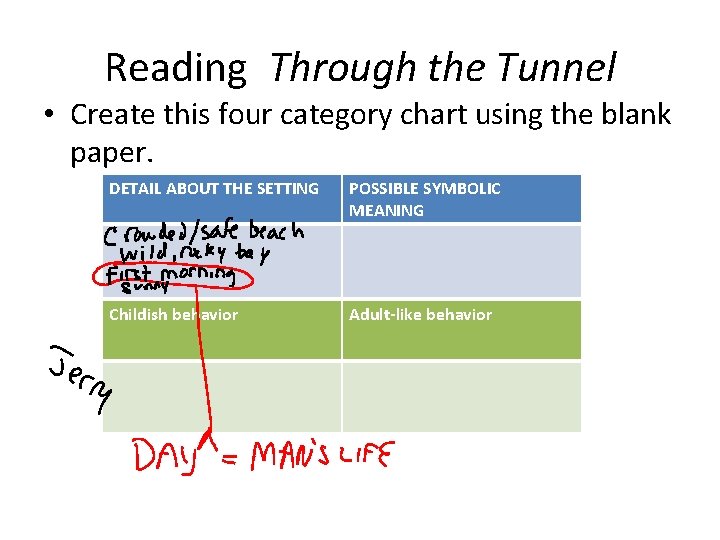
Reading Through the Tunnel • Create this four category chart using the blank paper. DETAIL ABOUT THE SETTING POSSIBLE SYMBOLIC MEANING Childish behavior Adult-like behavior
Reading using PALS • We will be using steps 1, 2, and 3 Step 3 uses a timer Countdown Timer Take notes on your chart as you read and remember to stop and discuss the pause and reflect questions.
Pause and Reflect Questions • Line 51 - What is the relationship between Jerry and his mother? (support)Why does he look for her? • Line 115 - What is Jerry’s relationship with the big boys? (support) Explain how Jerry’s interpretation of their relationship affects him. (? ) • Line 171 - How do the goggles empower Jerry? What might the line “eyes of a different kind” mean symbolically? (explain/support)
Pause and Reflect Questions • Line 204 - What is the process that Jerry has gone through in preparation of becoming an adult? (support) • Line 274 - Choose 3 details of Jerry’s trial through the tunnel and elaborate on his struggles and thoughts. • Line 301 - Why is it no longer important to go to the bay?
Written Response • How are the symbolic details about the environment used to create a message about becoming an adult? • Use your chart(s) and reflection questions to help write your response.
- Slides: 20