
How do students learn Part 1 Why is

- Slides: 54
How do students learn? Part 1 Why is memory so important in learning?
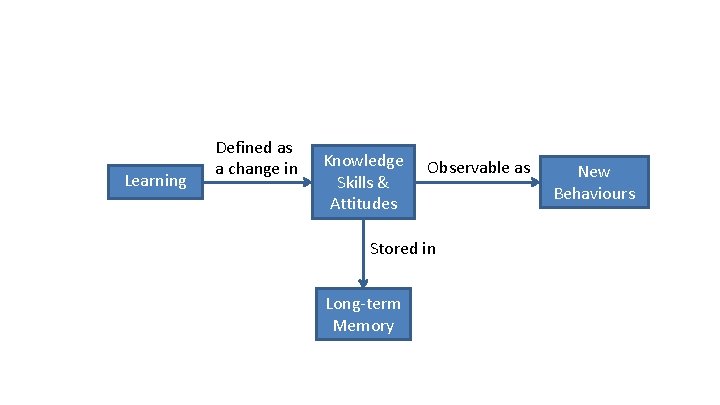
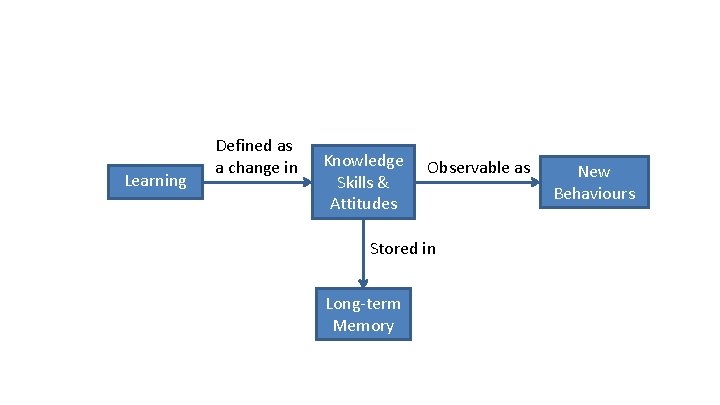
Learning Defined as a change in Knowledge Skills & Attitudes Observable as Stored in Long-term Memory New Behaviours
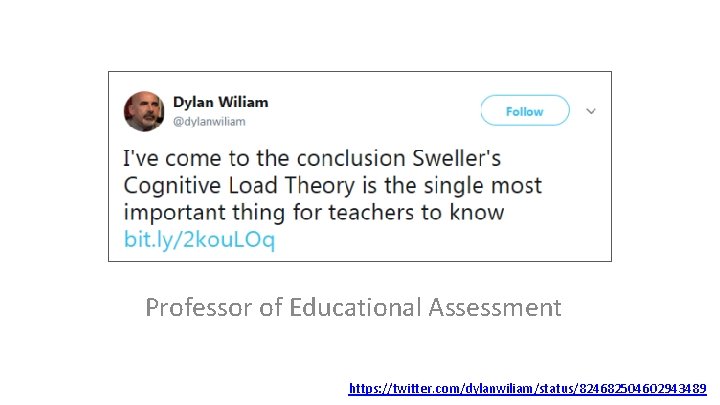
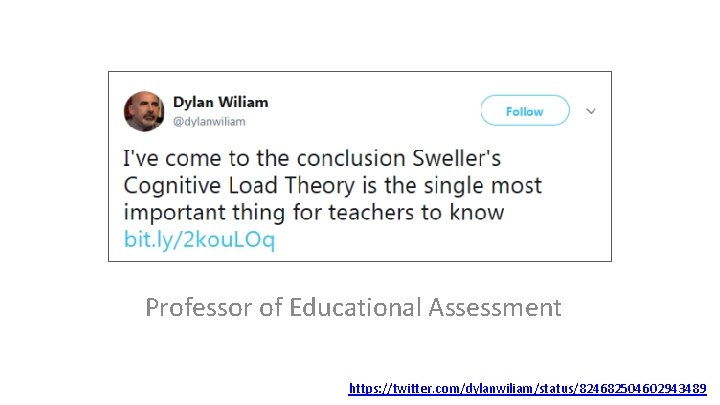
Professor of Educational Assessment https: //twitter. com/dylanwiliam/status/824682504602943489
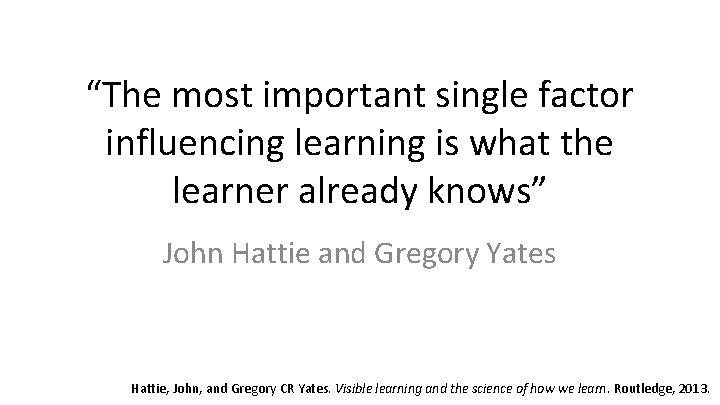
“The most important single factor influencing learning is what the learner already knows” John Hattie and Gregory Yates Hattie, John, and Gregory CR Yates. Visible learning and the science of how we learn. Routledge, 2013.
Learning Defined as a change in Knowledge Skills & Attitudes Observable as Stored in Long-term Memory New Behaviours
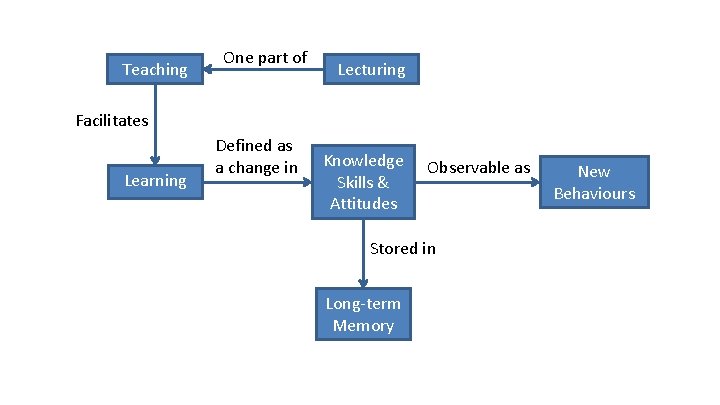
Teaching One part of Lecturing Facilitates Learning Defined as a change in Knowledge Skills & Attitudes Observable as Stored in Long-term Memory New Behaviours
How do students learn? Part 2 What are the main parts of human memory?
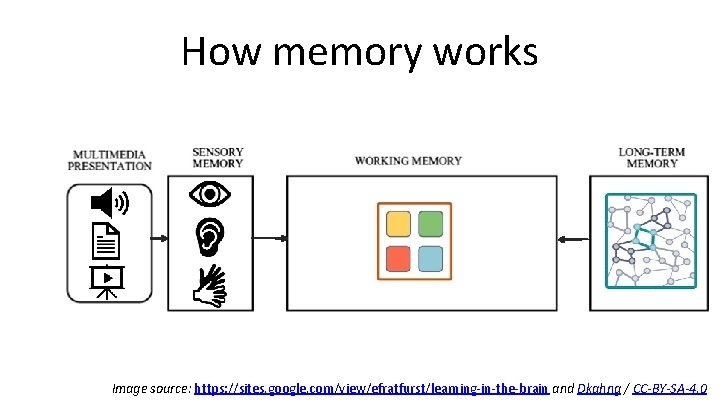
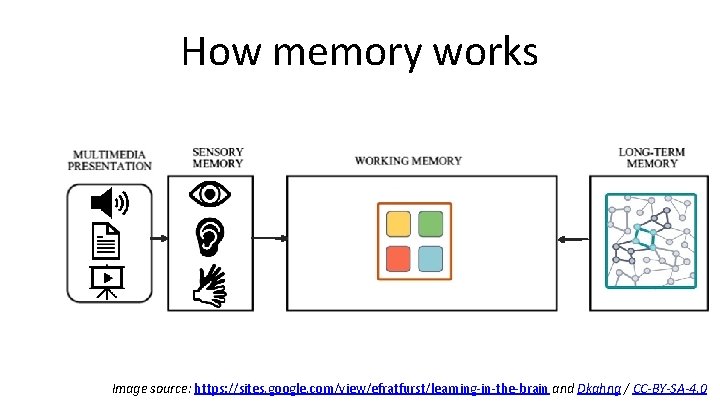
How memory works Image source: https: //sites. google. com/view/efratfurst/learning-in-the-brain and Dkahng / CC-BY-SA-4. 0
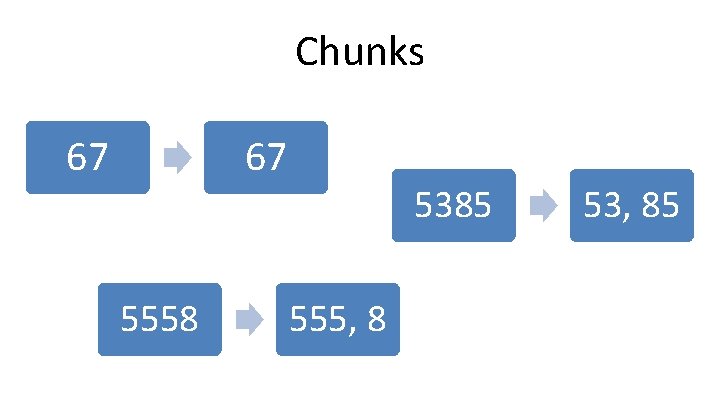
Chunks 67 67 5558 5385 555, 8 53, 85
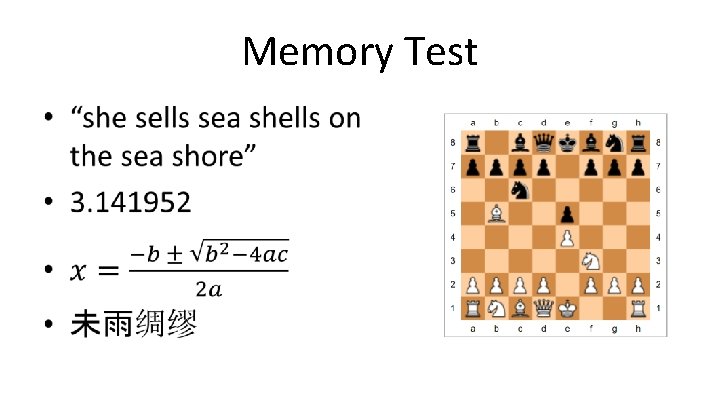
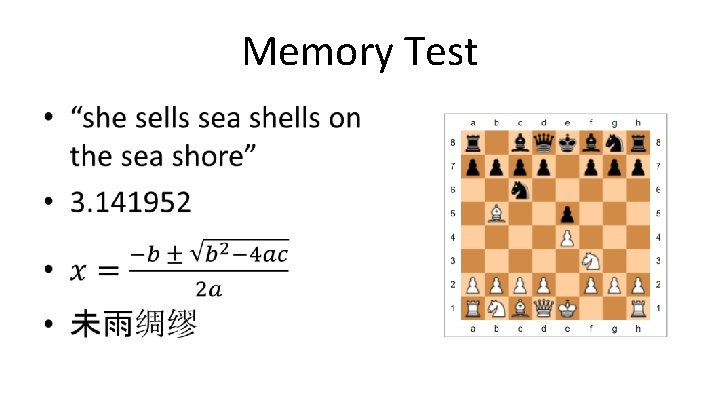
Memory Test •
“The most important single factor influencing learning is what the learner already knows” John Hattie and Gregory Yates Hattie, John, and Gregory CR Yates. Visible learning and the science of how we learn. Routledge, 2013.
Memory Test •
How memory works Image source: https: //sites. google. com/view/efratfurst/learning-in-the-brain and Dkahng / CC-BY-SA-4. 0
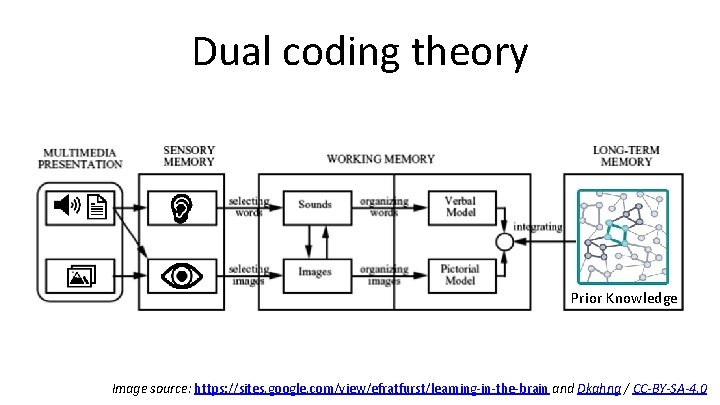
Dual coding theory Prior Knowledge Image source: https: //sites. google. com/view/efratfurst/learning-in-the-brain and Dkahng / CC-BY-SA-4. 0
How do students learn? Part 3 What is the process of storing and retrieving memories?
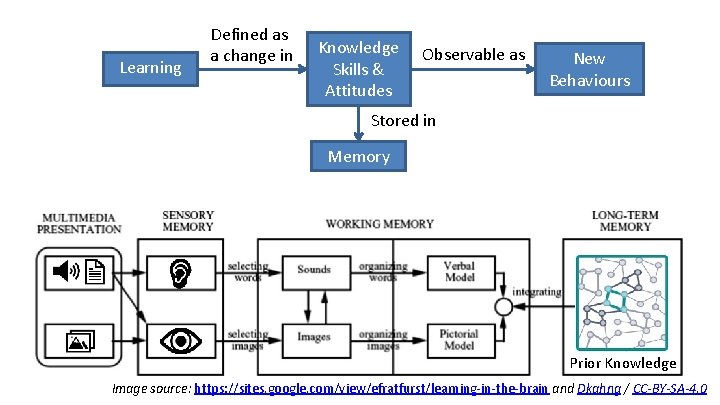
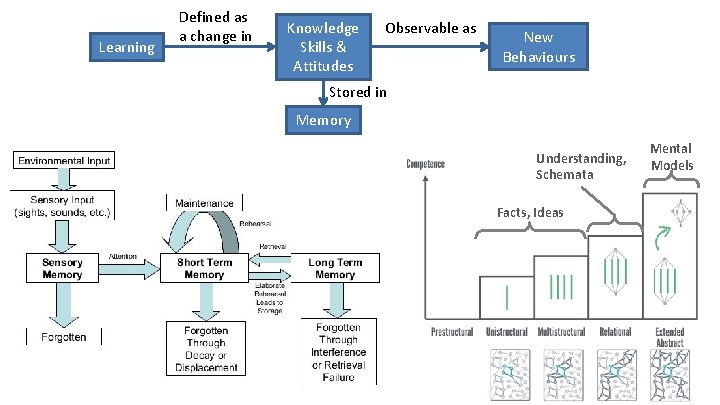
Learning Defined as a change in Knowledge Skills & Attitudes Observable as New Behaviours Stored in Memory Prior Knowledge Image source: https: //sites. google. com/view/efratfurst/learning-in-the-brain and Dkahng / CC-BY-SA-4. 0
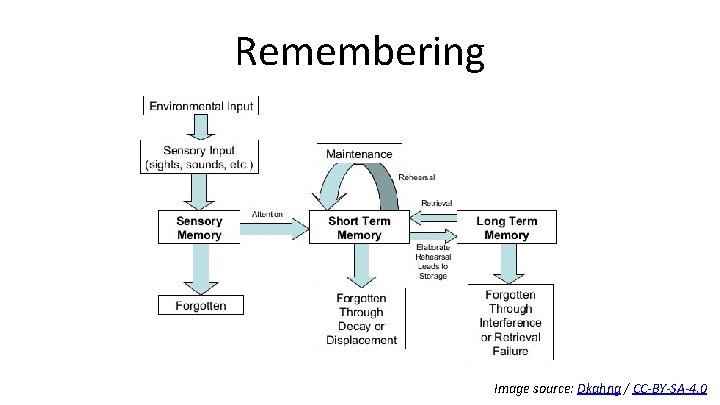
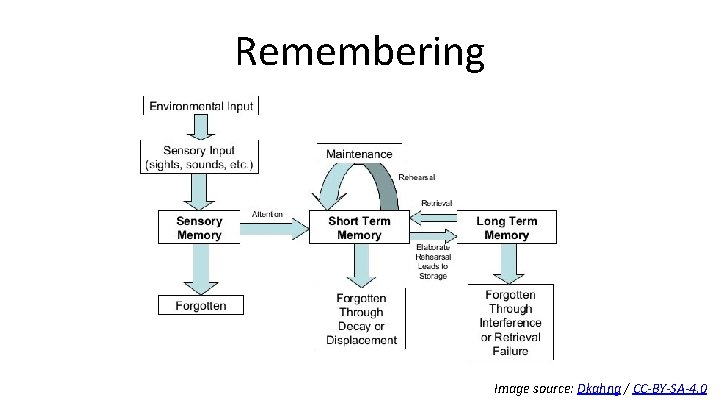
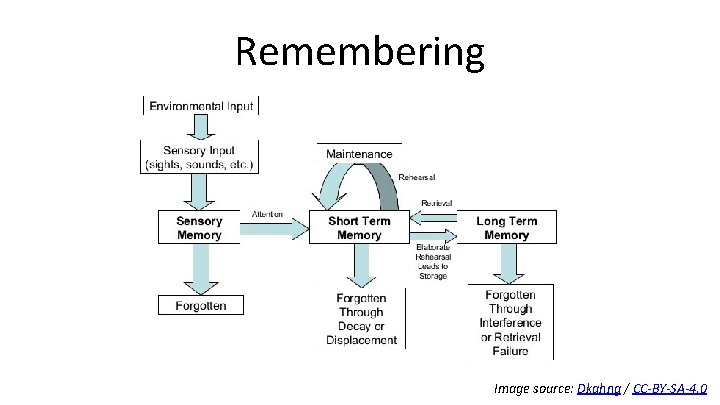
Remembering Image source: Dkahng / CC-BY-SA-4. 0
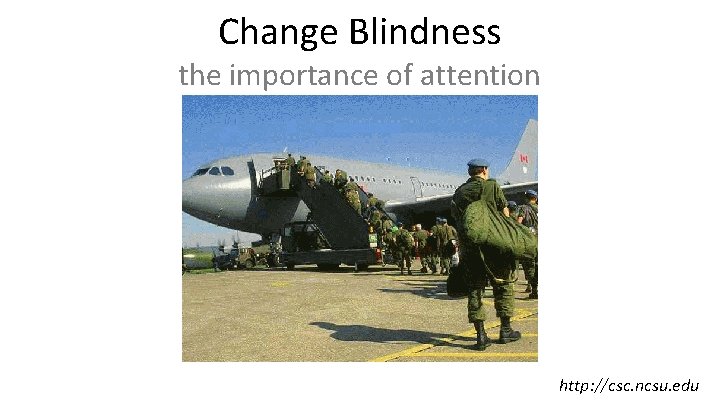
Change Blindness the importance of attention http: //csc. ncsu. edu
Change Blindness the importance of attention https: //www. youtube. com/watch? v=v. JG 698 U 2 Mvo https: //www. youtube. com/watch? v=v 3 i. Pr. Br. GSJM Simons, Daniel J. , and Michael S. Ambinder. "Change blindness: Theory and consequences. " Current directions in psychological science 14. 1 (2005): 44 -48.
Remembering Image source: Dkahng / CC-BY-SA-4. 0
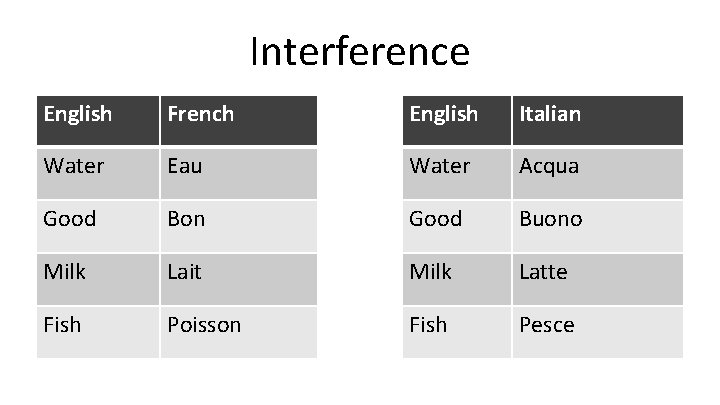
Interference English French English Italian Water Eau Water Acqua Good Bon Good Buono Milk Lait Milk Latte Fish Poisson Fish Pesce
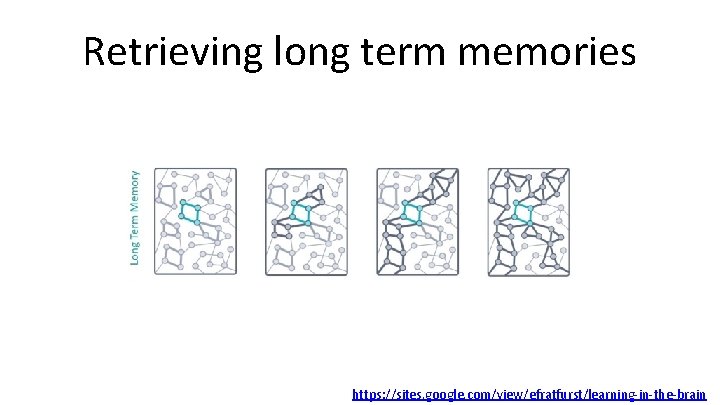
Retrieving long term memories https: //sites. google. com/view/efratfurst/learning-in-the-brain
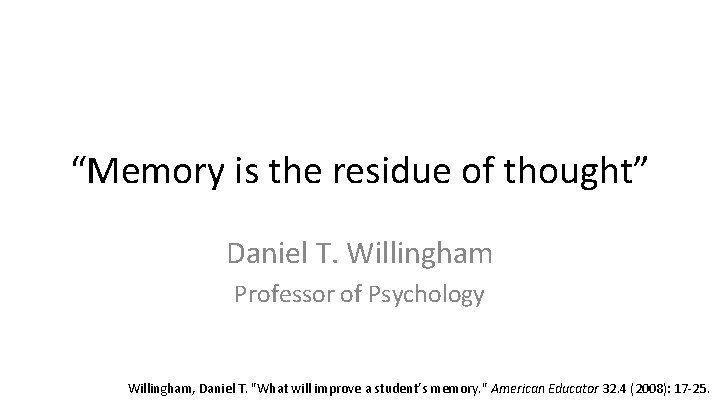
“Memory is the residue of thought” Daniel T. Willingham Professor of Psychology Willingham, Daniel T. "What will improve a student’s memory. " American Educator 32. 4 (2008): 17 -25.
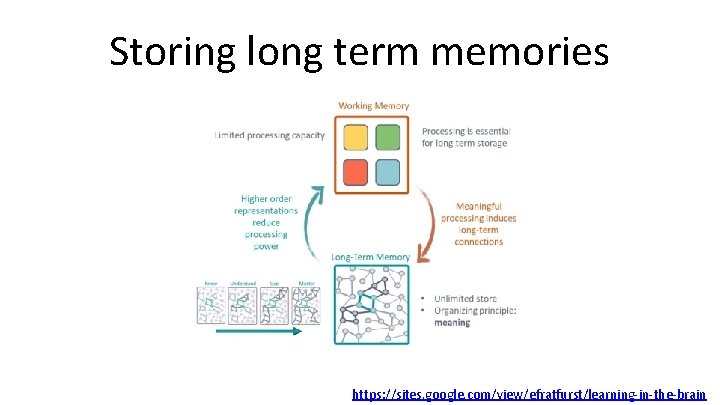
Storing long term memories https: //sites. google. com/view/efratfurst/learning-in-the-brain
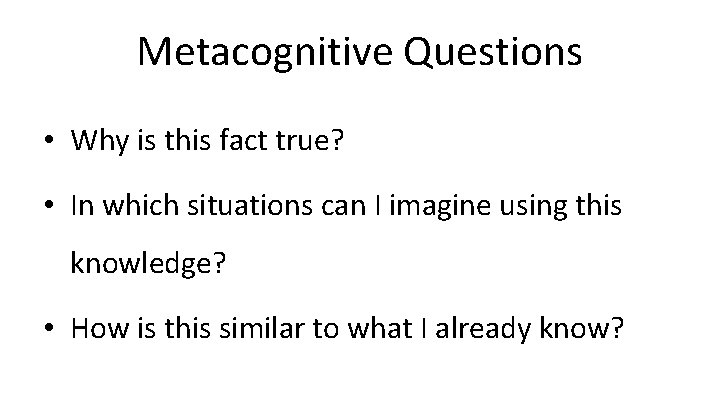
Metacognitive Questions • Why is this fact true? • In which situations can I imagine using this knowledge? • How is this similar to what I already know?
Remembering Image source: Dkahng / CC-BY-SA-4. 0
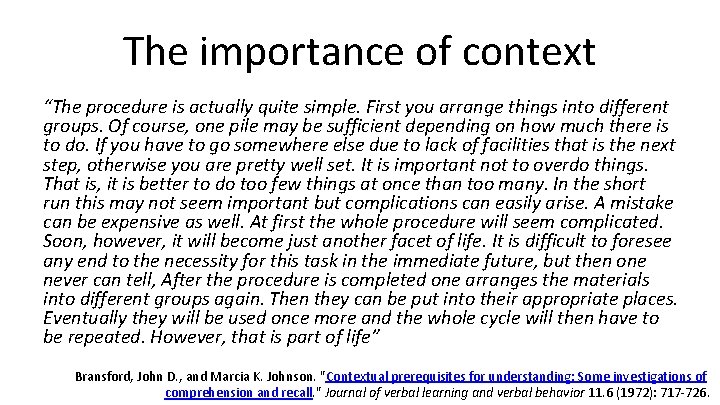
The importance of context “The procedure is actually quite simple. First you arrange things into different groups. Of course, one pile may be sufficient depending on how much there is to do. If you have to go somewhere else due to lack of facilities that is the next step, otherwise you are pretty well set. It is important not to overdo things. That is, it is better to do too few things at once than too many. In the short run this may not seem important but complications can easily arise. A mistake can be expensive as well. At first the whole procedure will seem complicated. Soon, however, it will become just another facet of life. It is difficult to foresee any end to the necessity for this task in the immediate future, but then one never can tell, After the procedure is completed one arranges the materials into different groups again. Then they can be put into their appropriate places. Eventually they will be used once more and the whole cycle will then have to be repeated. However, that is part of life” Bransford, John D. , and Marcia K. Johnson. "Contextual prerequisites for understanding: Some investigations of comprehension and recall. " Journal of verbal learning and verbal behavior 11. 6 (1972): 717 -726.
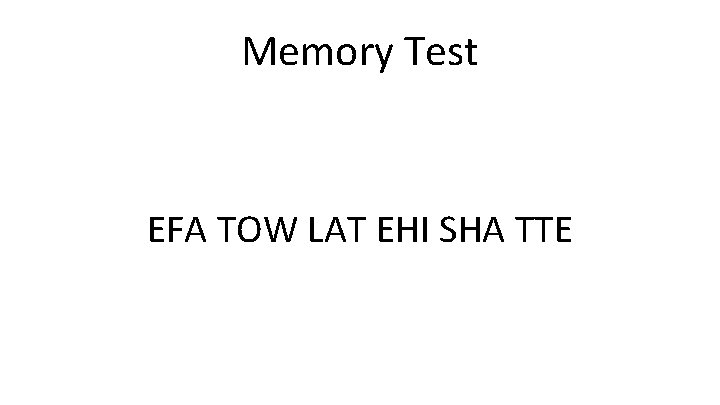
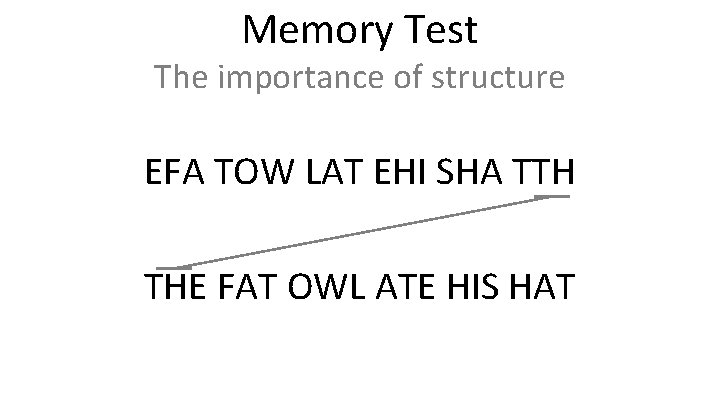
Memory Test EFA TOW LAT EHI SHA TTE
Memory Test The importance of structure EFA TOW LAT EHI SHA TTH THE FAT OWL ATE HIS HAT
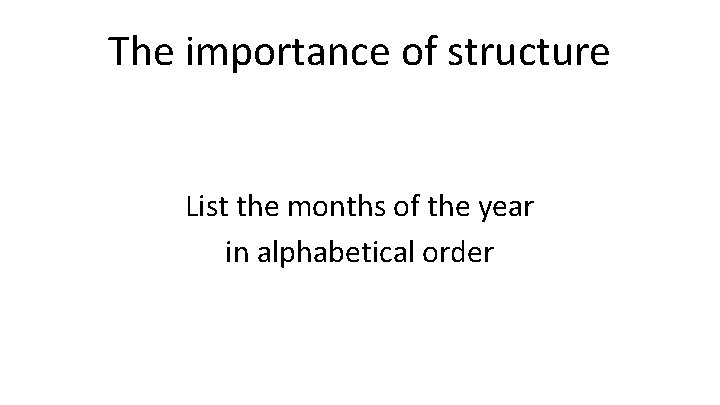
The importance of structure List the months of the year in alphabetical order
How do students learn? Part 4 How does knowing facts lead to understanding?
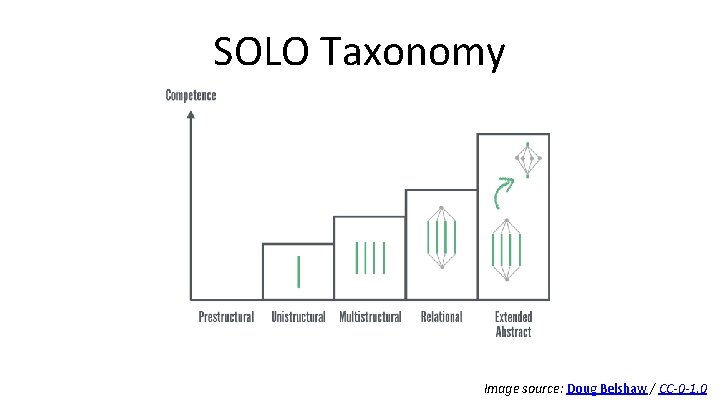
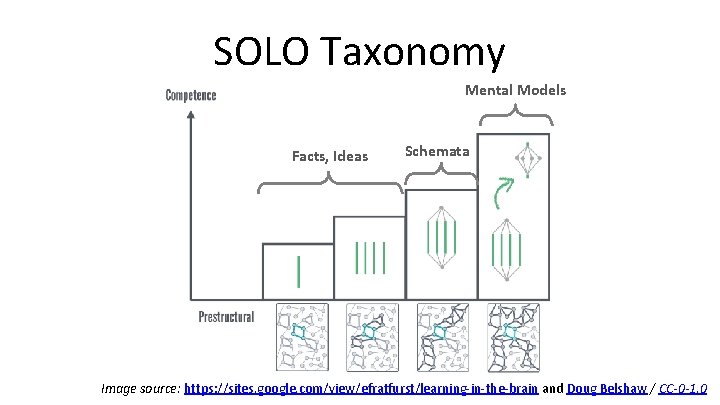
SOLO Taxonomy Image source: Doug Belshaw / CC-0 -1. 0
SOLO Taxonomy Mental Models Facts, Ideas Schemata Image source: https: //sites. google. com/view/efratfurst/learning-in-the-brain and Doug Belshaw / CC-0 -1. 0
How do students learn? Part 5 What determines our speed of learning?
“Memory is the residue of thought” Daniel T. Willingham Professor of Psychology Willingham, Daniel T. "What will improve a student’s memory. " American Educator 32. 4 (2008): 17 -25.
Which are “active learning”? • • • Sitting in lecture Taking notes in a lecture Group work Solving question sheets Group discussion
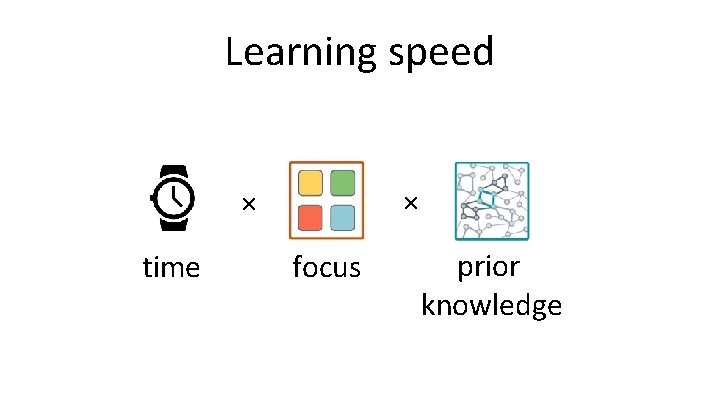
Learning speed × × time focus prior knowledge
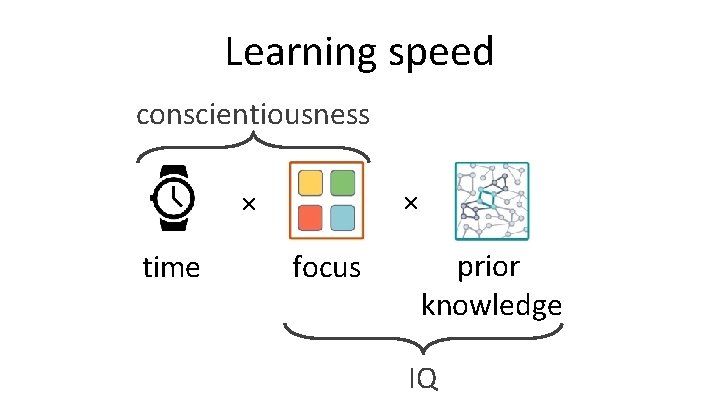
Learning speed conscientiousness × × time focus prior knowledge IQ
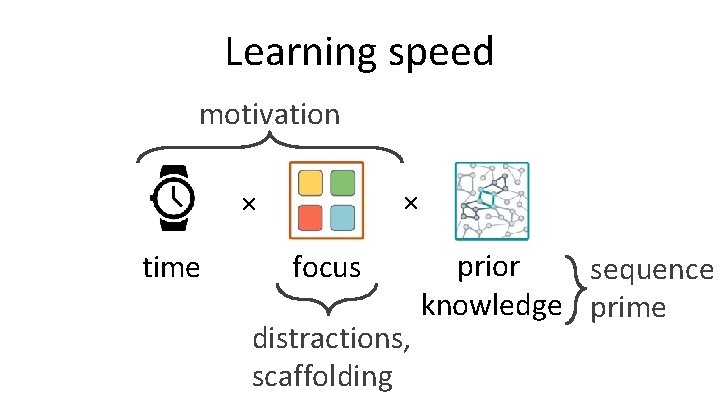
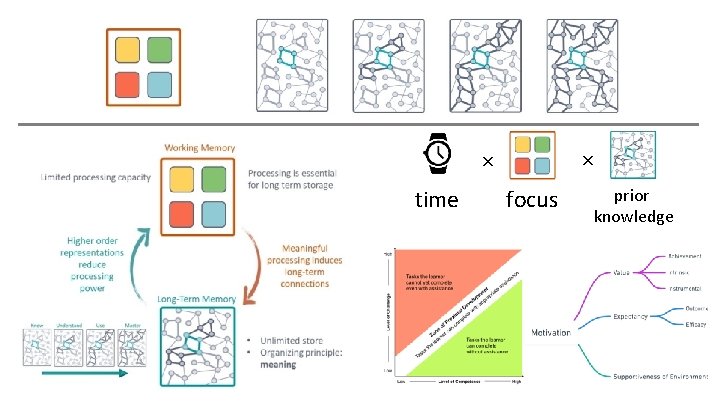
Learning speed motivation × × time focus distractions, scaffolding prior sequence knowledge prime
How do students learn? Part 6 What is Cognitive Load theory?
Professor of Educational Assessment https: //twitter. com/dylanwiliam/status/824682504602943489
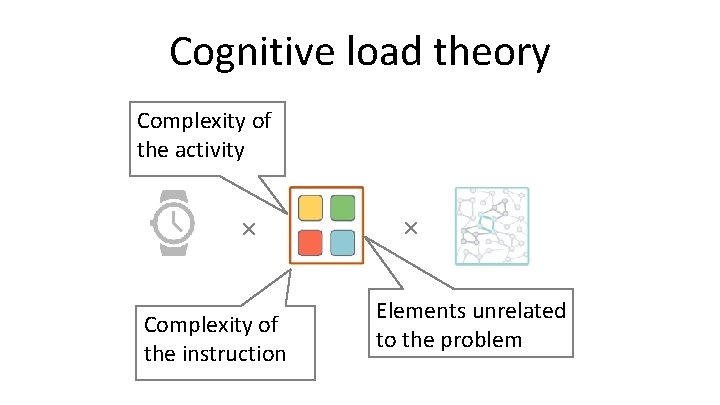
Cognitive load theory Complexity of the activity × Complexity of the instruction × Elements unrelated to the problem
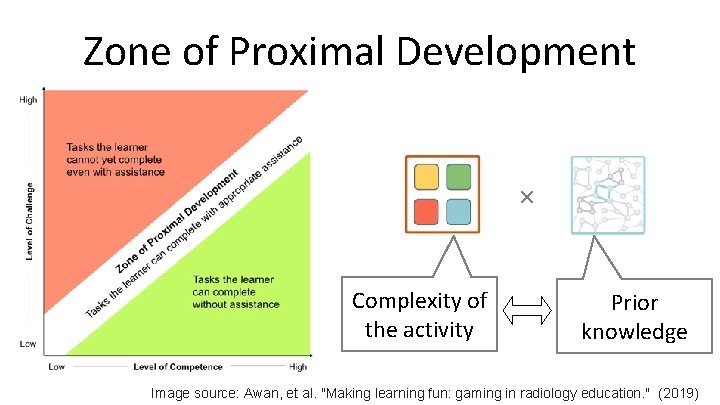
Zone of Proximal Development × Complexity of the activity Prior knowledge Image source: Awan, et al. "Making learning fun: gaming in radiology education. " (2019)
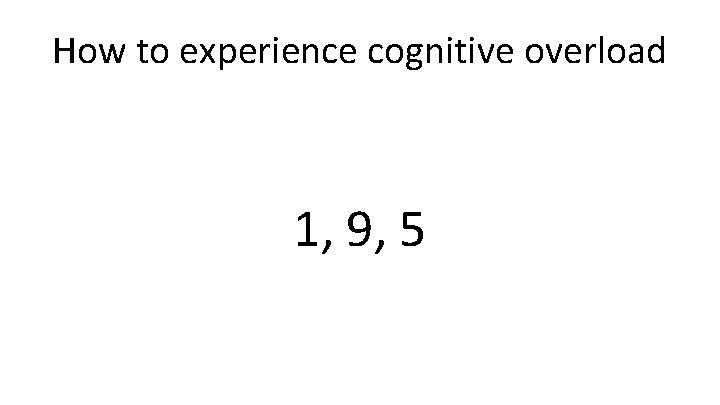
How to experience cognitive overload 1, 9, 5
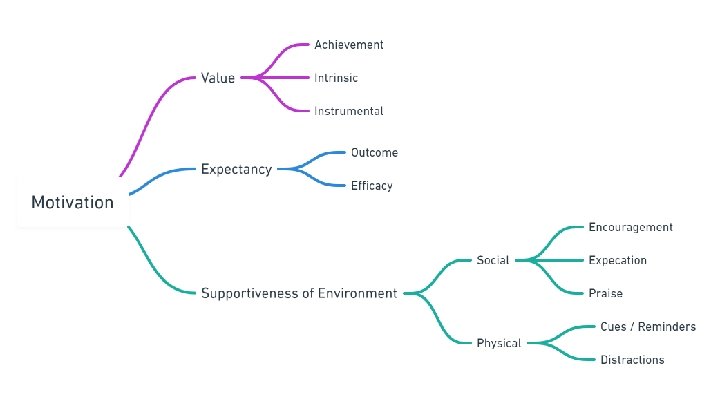
How do students learn? Part 7 What effects our motivation?
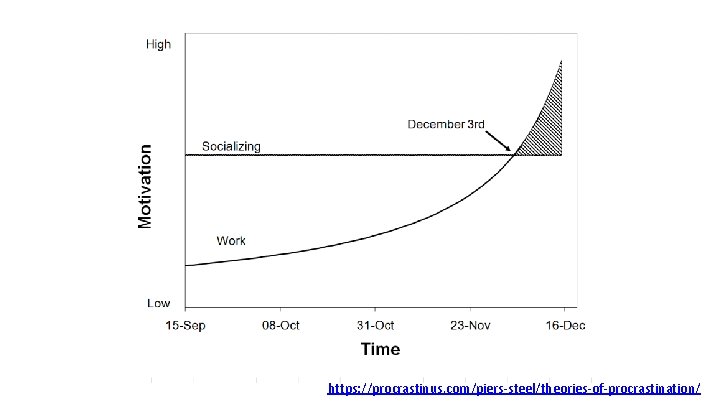
https: //procrastinus. com/piers-steel/theories-of-procrastination/
How do students learn? Part 8 Summary
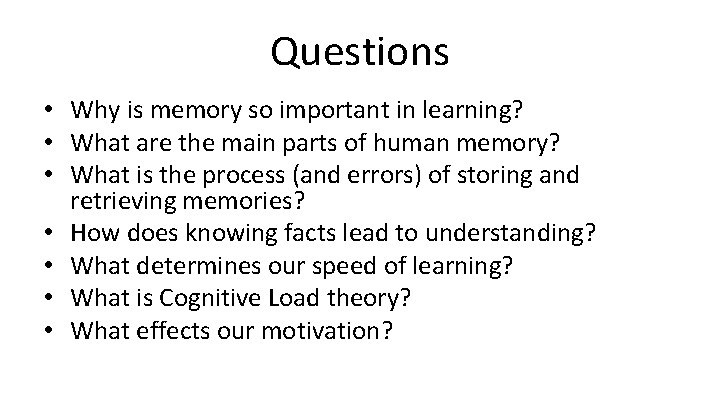
Questions • Why is memory so important in learning? • What are the main parts of human memory? • What is the process (and errors) of storing and retrieving memories? • How does knowing facts lead to understanding? • What determines our speed of learning? • What is Cognitive Load theory? • What effects our motivation?
Learning Defined as a change in Knowledge Skills & Attitudes Observable as New Behaviours Stored in Memory Understanding, Schemata Facts, Ideas Mental Models
× × time focus prior knowledge
Activity 1 Explain ‘how students learn’
Activity 2 Evaluate your course material against how students learn