
How do soils form Soil Profiles How do
- Slides: 22
How do soils form? Soil Profiles
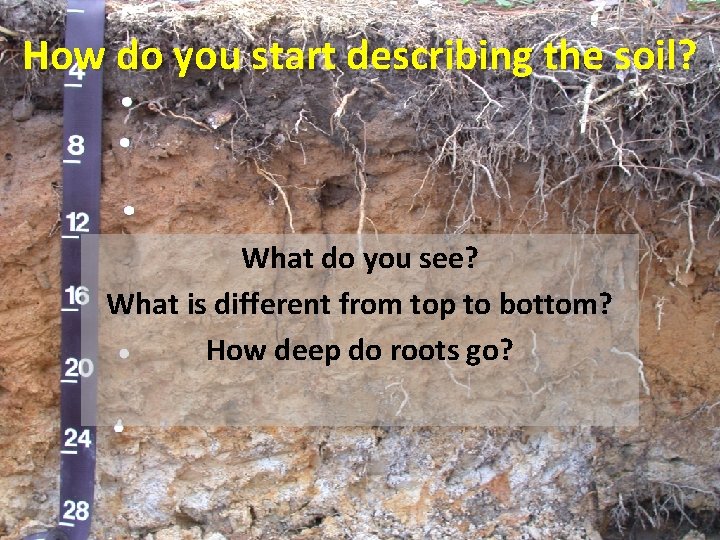
How do you start describing the soil? What do you see? What is different from top to bottom? How deep do roots go?
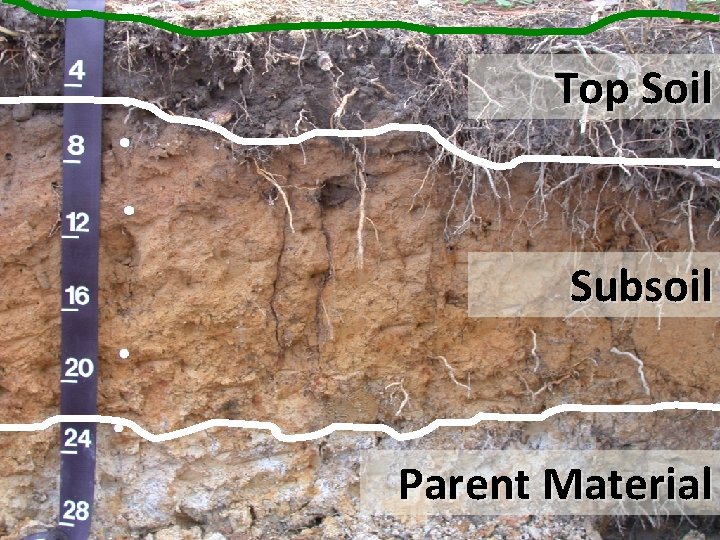
Soil Profile Descriptions • Soil Profile - A vertical section of the soil extending vertically through all its horizons and into the parent material. • Soil Horizon - A layer of soil, approximately parallel to the surface, with properties that differ from the horizons above or below it – the properties (characteristics) are produced by soil forming processes. • Soil Layer - A layer in the soil deposited by a geologic force (wind, water, glaciers, oceans, etc. ) and not relating to soil forming process.
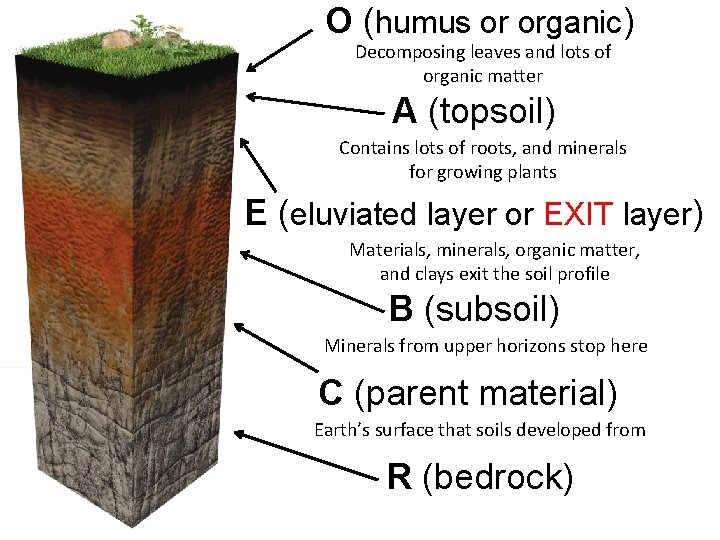
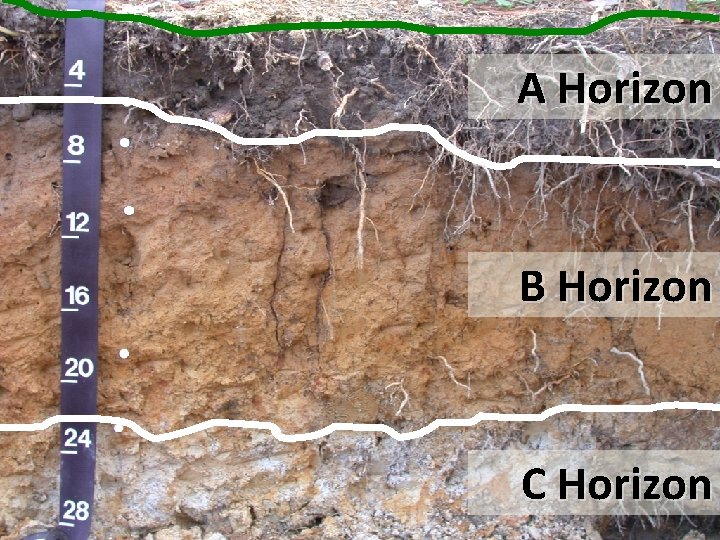
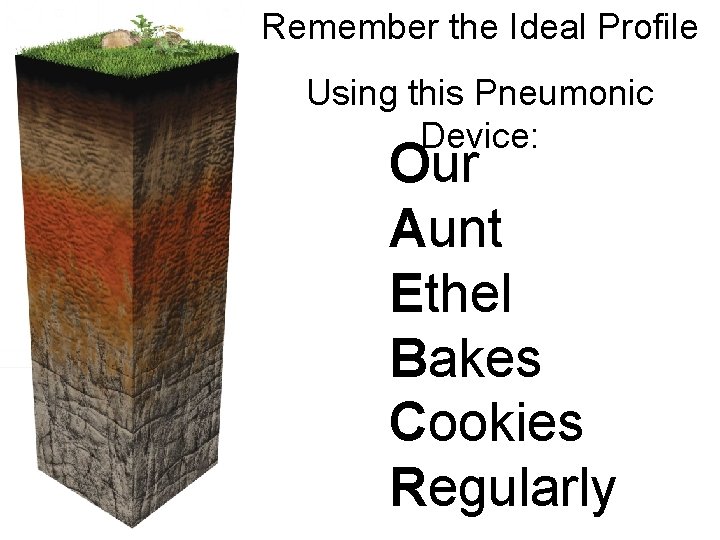
O (humus or organic) Decomposing leaves and lots of organic matter A (topsoil) Contains lots of roots, and minerals for growing plants E (eluviated layer or EXIT layer) Materials, minerals, organic matter, and clays exit the soil profile B (subsoil) Minerals from upper horizons stop here C (parent material) Earth’s surface that soils developed from R (bedrock)
Top Soil Subsoil Parent Material
A Horizon B Horizon C Horizon
Remember the Ideal Profile Using this Pneumonic Device: Our Aunt Ethel Bakes Cookies Regularly
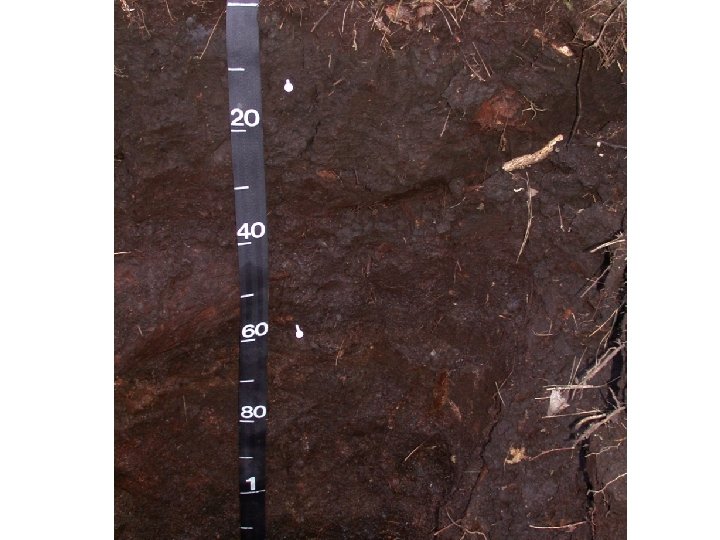
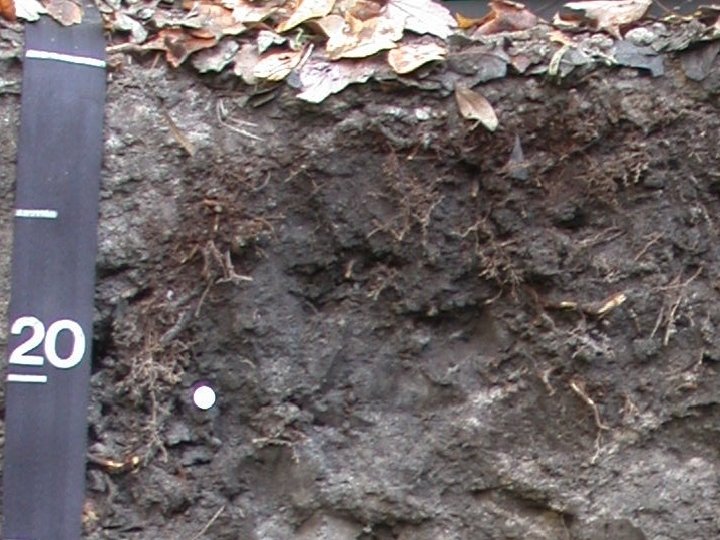
Organic (O) Horizons • O horizons or layers: Layers dominated by organic material. • Identification Criteria – >20% organic matter – Dark color (black, dark brown) – Feels ‘Squishy” – Identifiable dead leaves, grass, etc. accumulated at surface – Process Occurring: Decomposition
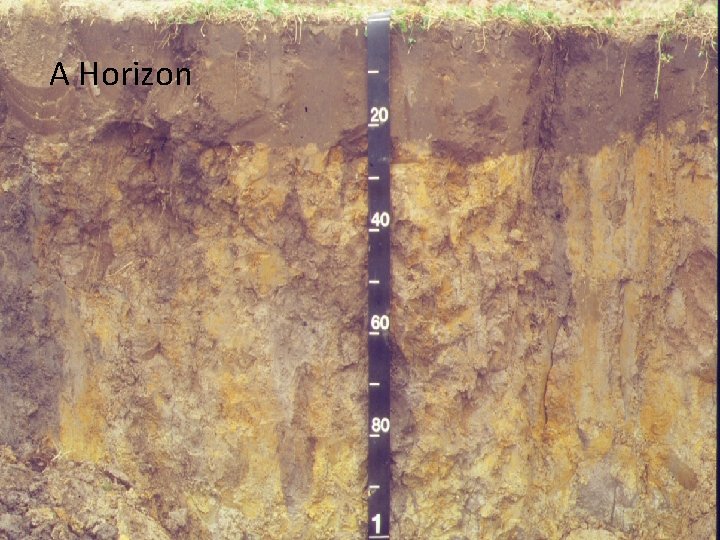
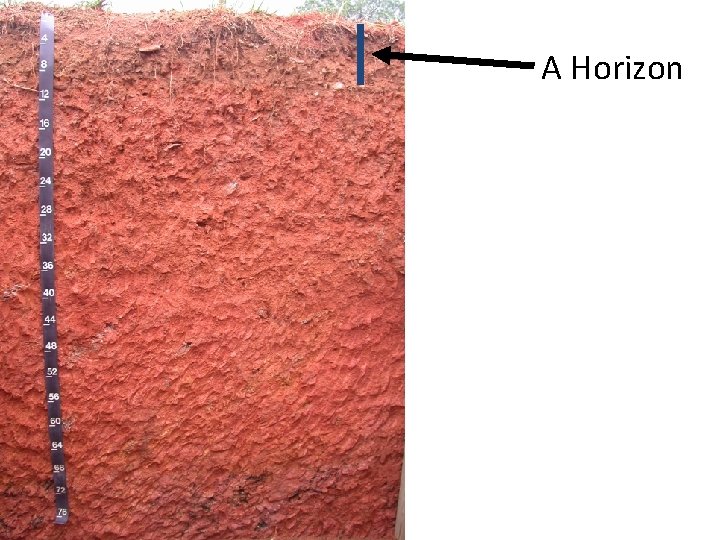
A Horizons • Referred to as topsoil • Typically ranging from 6 -30 centimeters thick • Mineral horizon formed at the surface or below an O horizon. • Identification Criteria – – – Mineral soil material Roots are present here, and seeds germinate Mix of well decomposed organic matter and mineral material Surface mineral horizon Typically dark in color-darker brown to yellow • Processes Occurring: Leaching and Nutrient Center
A Horizon
A Horizon
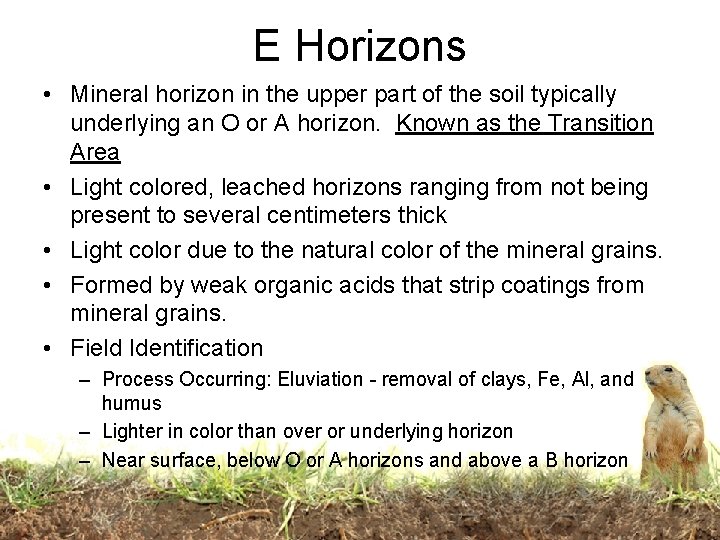
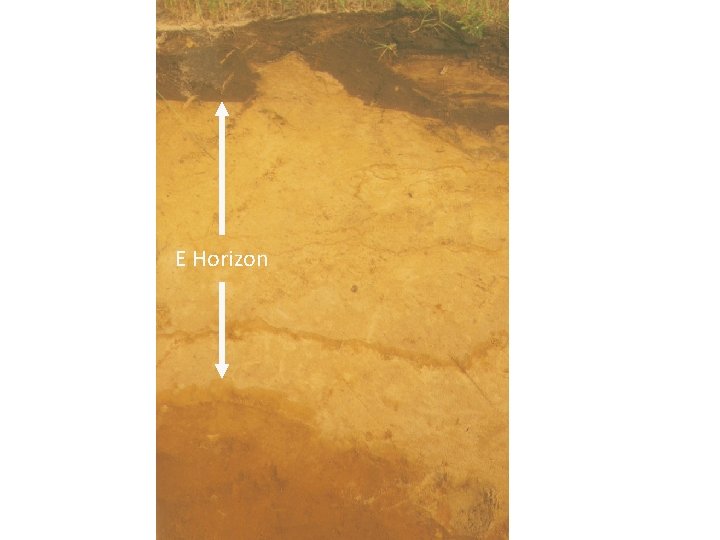
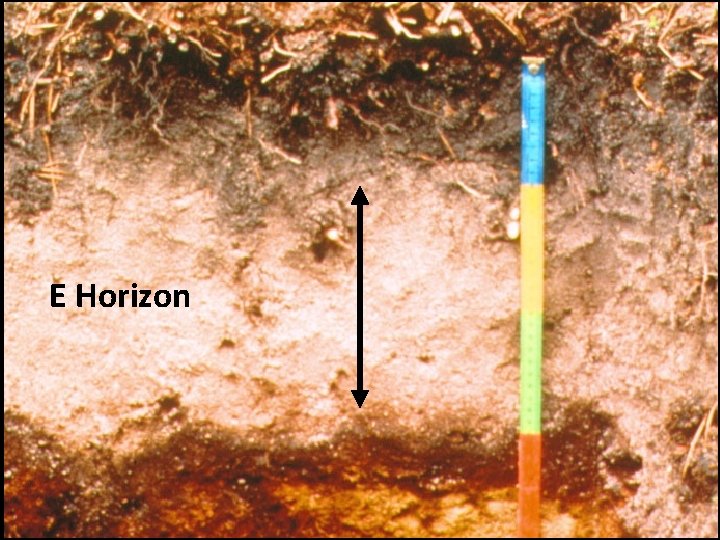
E Horizons • Mineral horizon in the upper part of the soil typically underlying an O or A horizon. Known as the Transition Area • Light colored, leached horizons ranging from not being present to several centimeters thick • Light color due to the natural color of the mineral grains. • Formed by weak organic acids that strip coatings from mineral grains. • Field Identification – Process Occurring: Eluviation - removal of clays, Fe, Al, and humus – Lighter in color than over or underlying horizon – Near surface, below O or A horizons and above a B horizon
E Horizon
E Horizon
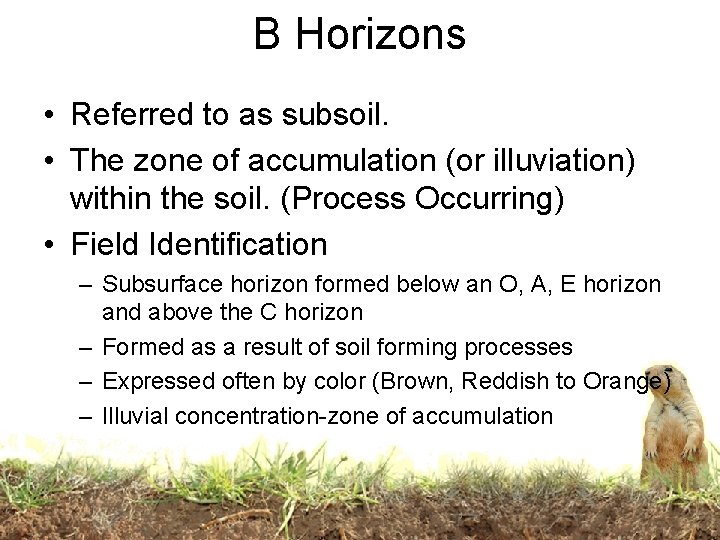
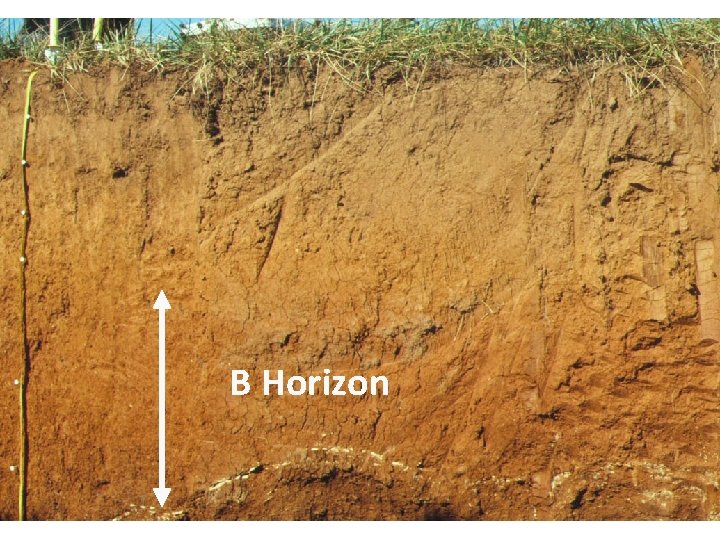
B Horizons • Referred to as subsoil. • The zone of accumulation (or illuviation) within the soil. (Process Occurring) • Field Identification – Subsurface horizon formed below an O, A, E horizon and above the C horizon – Formed as a result of soil forming processes – Expressed often by color (Brown, Reddish to Orange) – Illuvial concentration-zone of accumulation
B Horizon
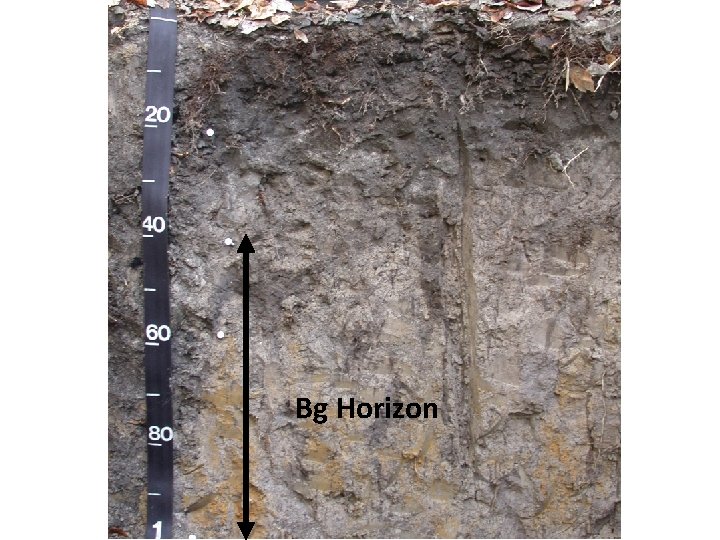
Bg Horizon
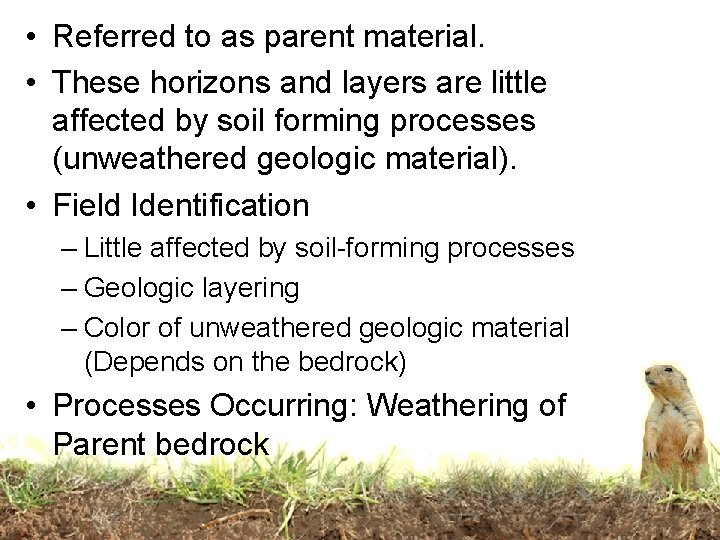
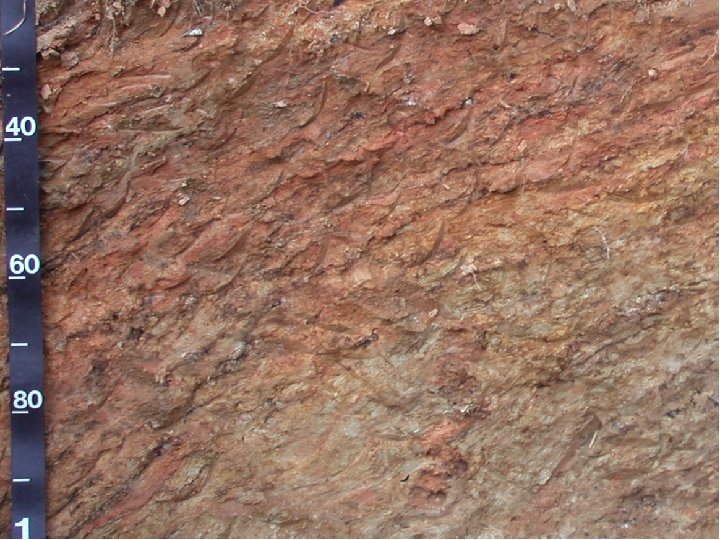
• Referred to as parent material. • These horizons and layers are little affected by soil forming processes (unweathered geologic material). • Field Identification – Little affected by soil-forming processes – Geologic layering – Color of unweathered geologic material (Depends on the bedrock) • Processes Occurring: Weathering of Parent bedrock
R Horizon • Referred to as Parent bedrock • Field Criteria – Can not dig it with a shovel or backhoe because it is generally solid – Only process occurring here is weathering of rock.