
How do scientists figure out which organisms are
- Slides: 16
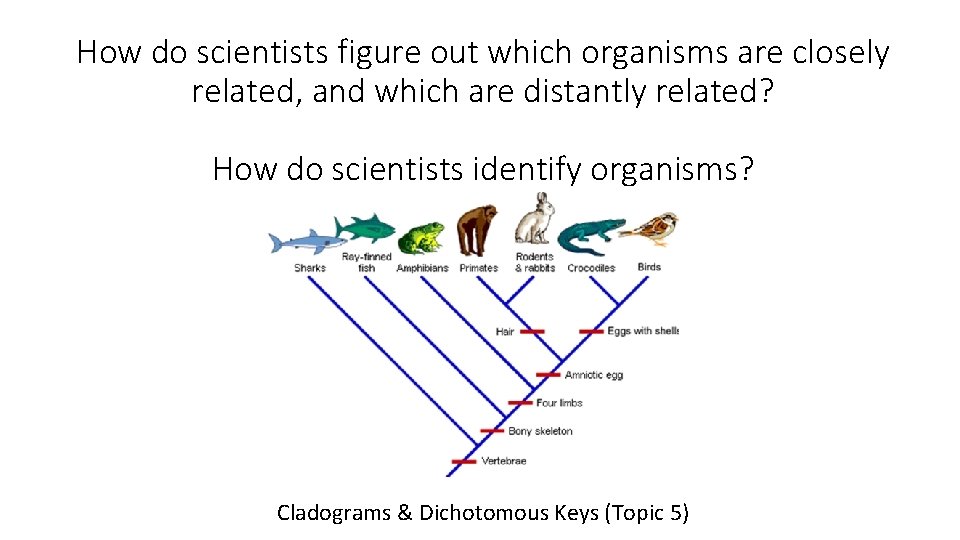
How do scientists figure out which organisms are closely related, and which are distantly related? How do scientists identify organisms? Cladograms & Dichotomous Keys (Topic 5)
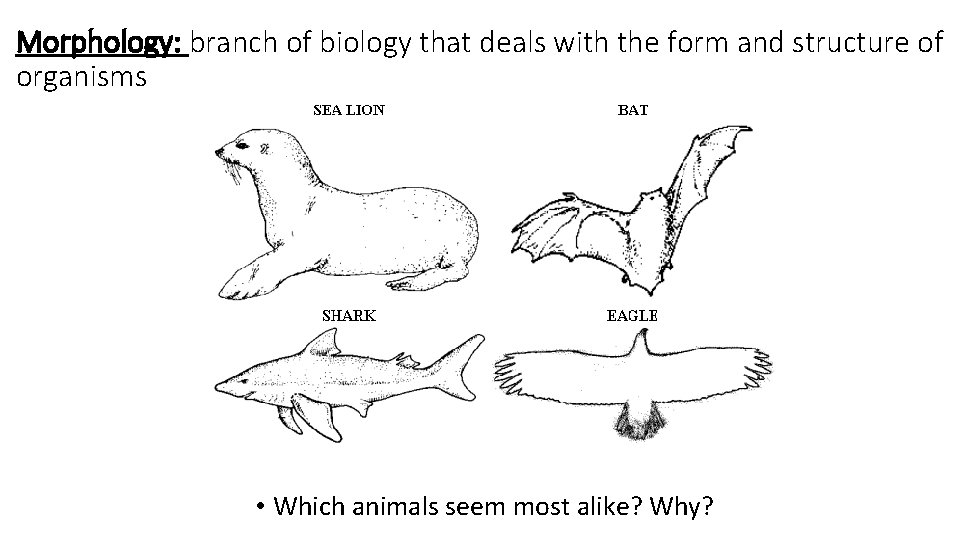
Morphology: branch of biology that deals with the form and structure of organisms • Which animals seem most alike? Why?
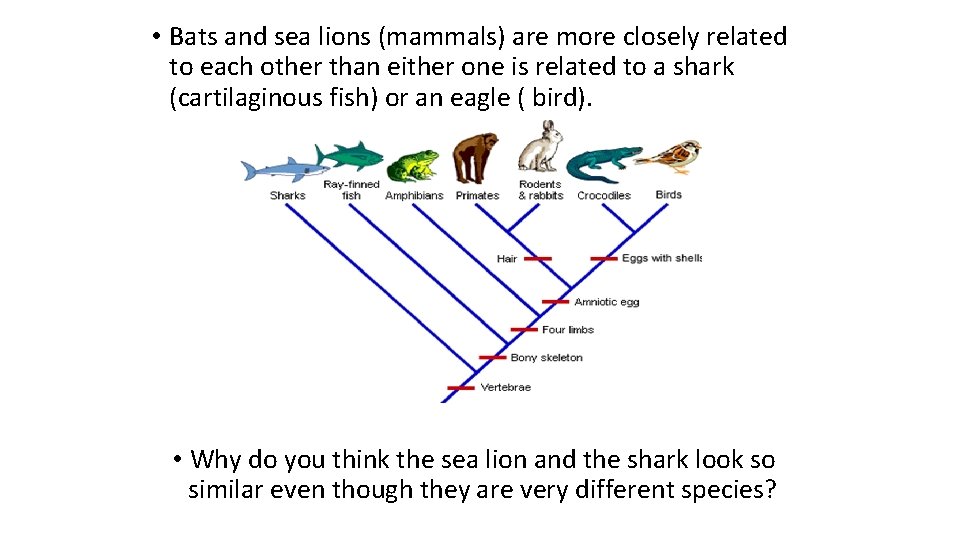
• Bats and sea lions (mammals) are more closely related to each other than either one is related to a shark (cartilaginous fish) or an eagle ( bird). • Why do you think the sea lion and the shark look so similar even though they are very different species?
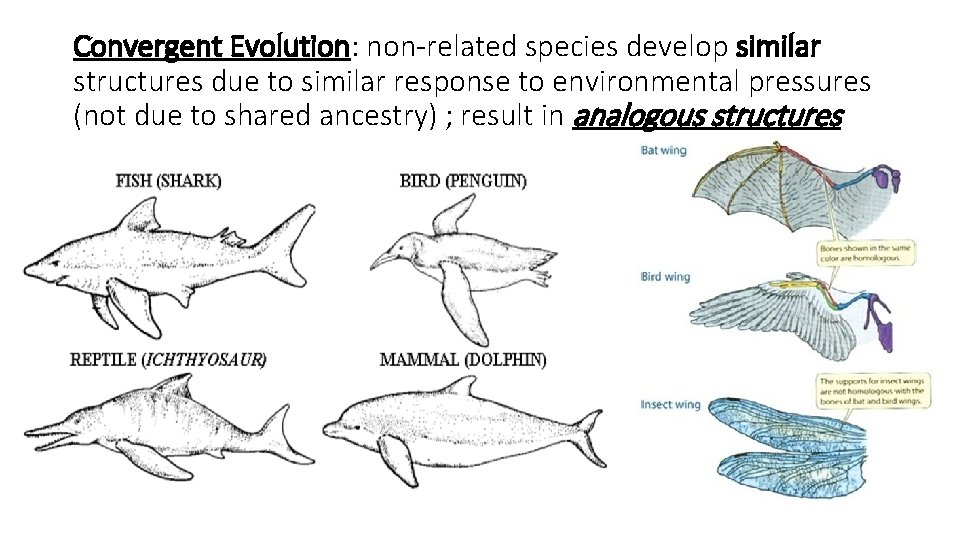
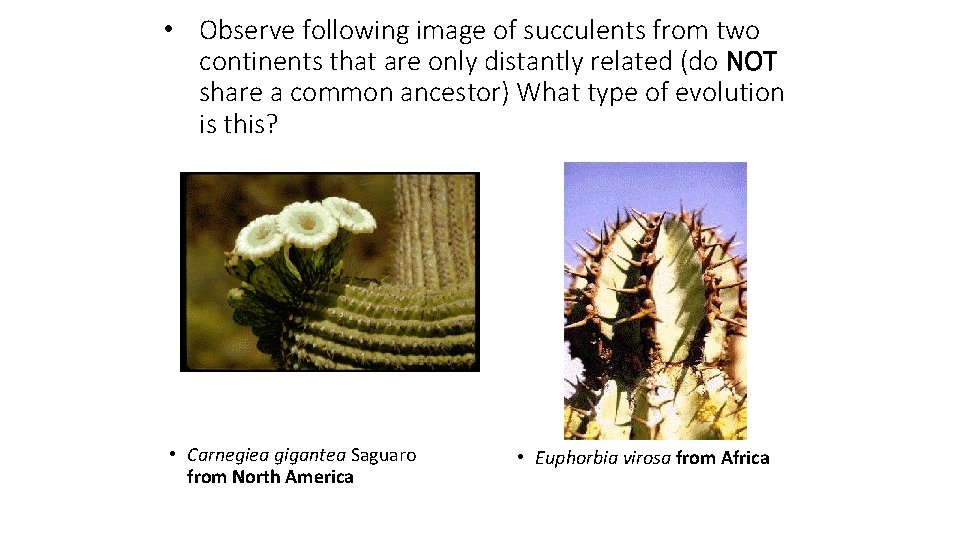
Convergent Evolution: non-related species develop similar structures due to similar response to environmental pressures (not due to shared ancestry) ; result in analogous structures
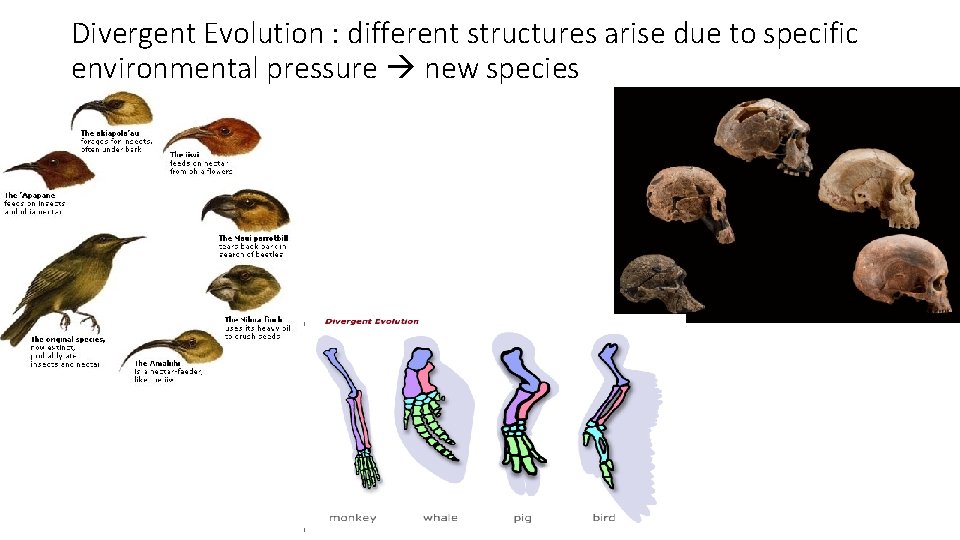
Divergent Evolution : different structures arise due to specific environmental pressure new species
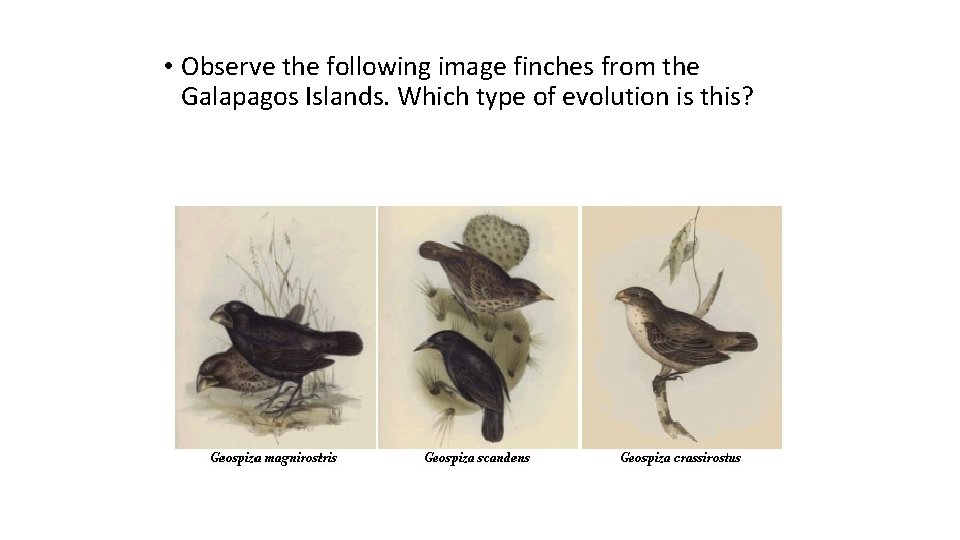
• Observe the following image finches from the Galapagos Islands. Which type of evolution is this?
• Observe following image of succulents from two continents that are only distantly related (do NOT share a common ancestor) What type of evolution is this? • Carnegiea gigantea Saguaro from North America • Euphorbia virosa from Africa
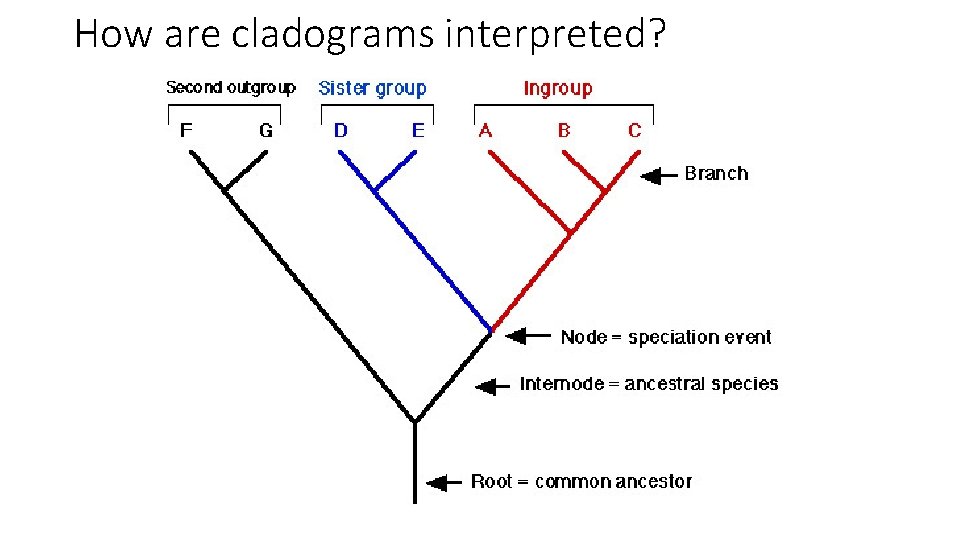
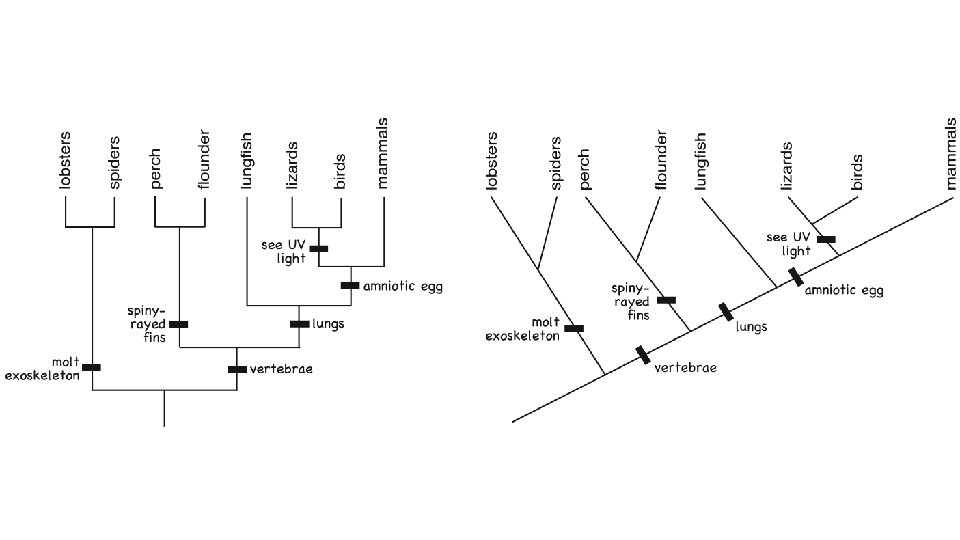
How are cladograms interpreted?
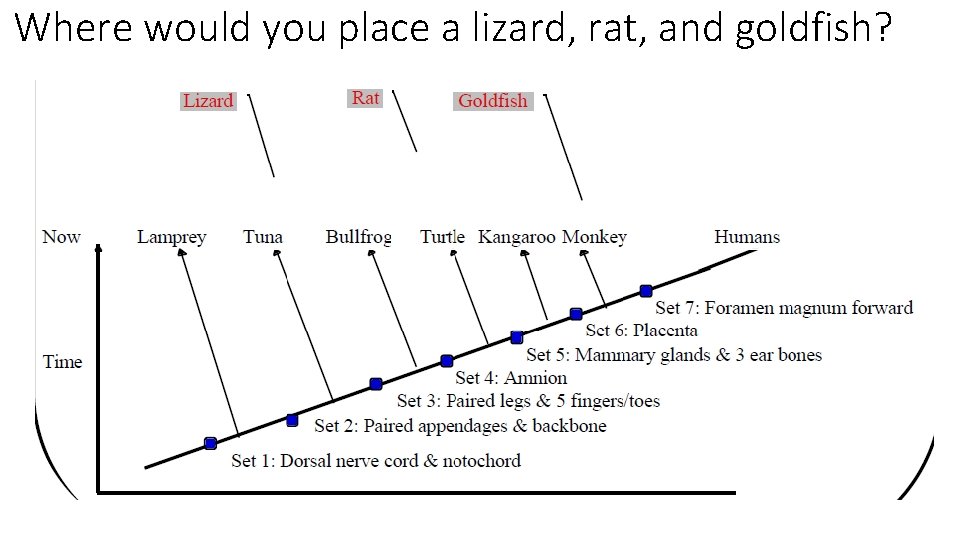
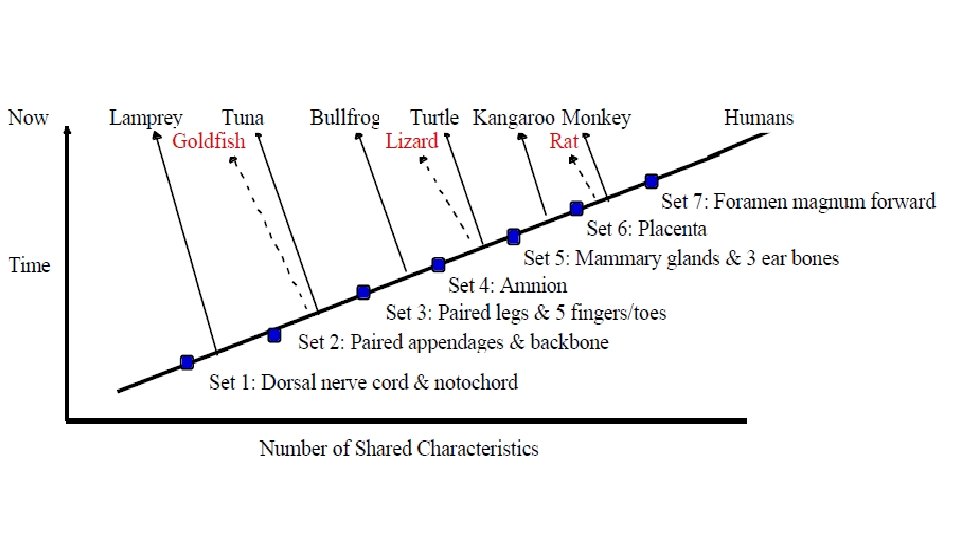
Where would you place a lizard, rat, and goldfish?
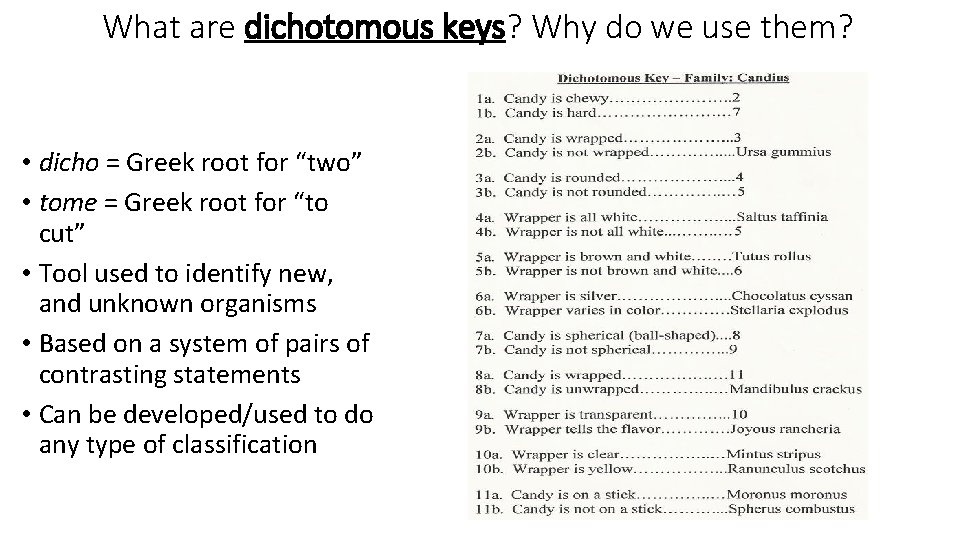
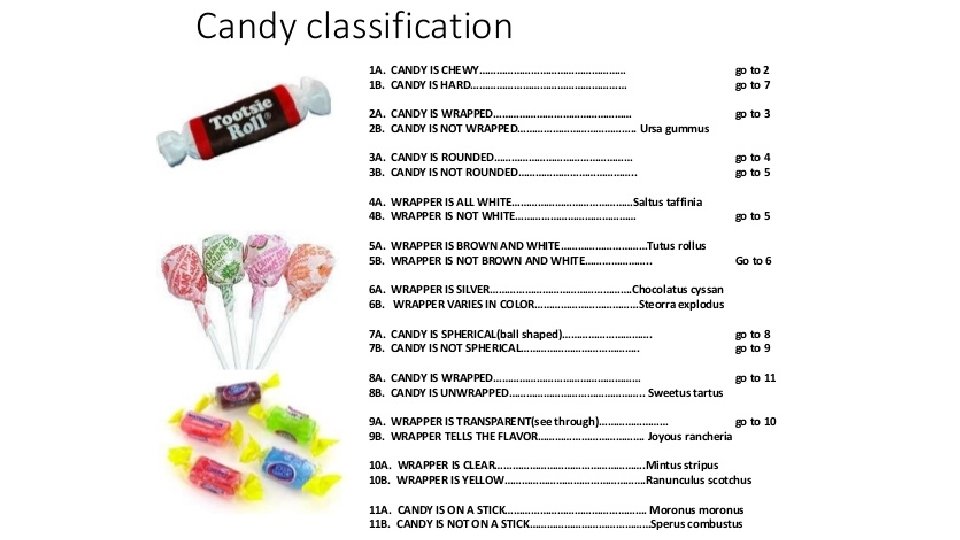
What are dichotomous keys? Why do we use them? • dicho = Greek root for “two” • tome = Greek root for “to cut” • Tool used to identify new, and unknown organisms • Based on a system of pairs of contrasting statements • Can be developed/used to do any type of classification
How can you create a dichotomous key of your own? • Start with a concept map to sort all items/organisms • Convert concept map in to dichotomous statements • Start with one side of concept map – continue statements until you’ve keyed out all organisms on one side. THEN do the other side. • For number of steps in your key, you should end up with 1 less than the number of items your are identifying. (If there are 12 items, there should be 11 steps in your key. )
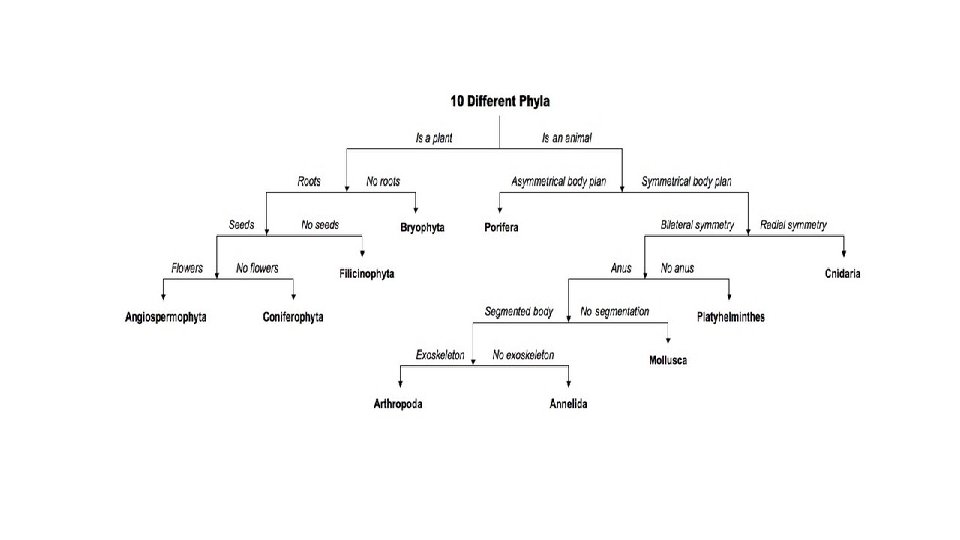
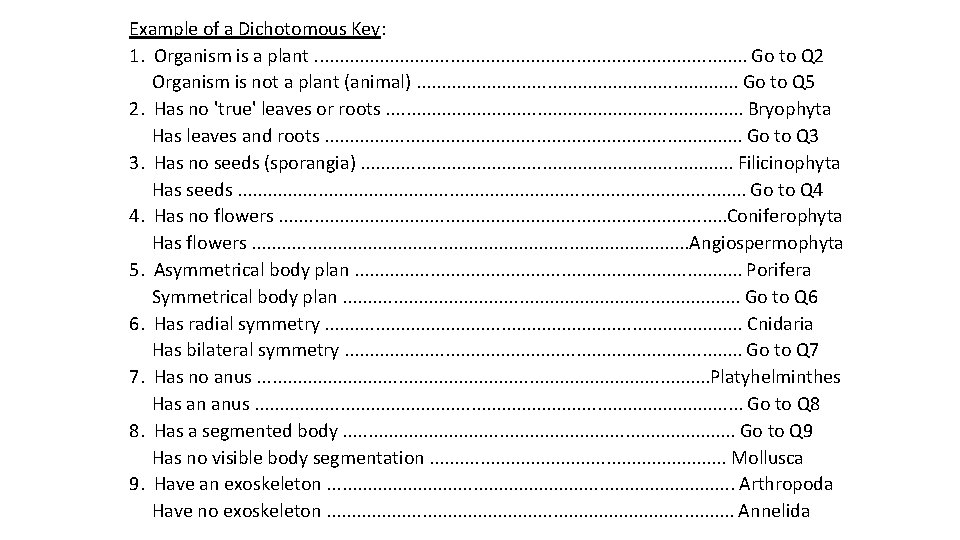
Example of a Dichotomous Key: 1. Organism is a plant. . . . . . Go to Q 2 Organism is not a plant (animal). . . . Go to Q 5 2. Has no 'true' leaves or roots. . . . . Bryophyta Has leaves and roots. . . . . . Go to Q 3 3. Has no seeds (sporangia). . . . . Filicinophyta Has seeds. . . . . . . Go to Q 4 4. Has no flowers. . . . . . Coniferophyta Has flowers. . . . . . Angiospermophyta 5. Asymmetrical body plan. . . . . Porifera Symmetrical body plan. . . . . Go to Q 6 6. Has radial symmetry. . . . . . Cnidaria Has bilateral symmetry. . . . . Go to Q 7 7. Has no anus. . . . . . Platyhelminthes Has an anus. . . . . . Go to Q 8 8. Has a segmented body. . . . . Go to Q 9 Has no visible body segmentation. . . . Mollusca 9. Have an exoskeleton. . . . . Arthropoda Have no exoskeleton. . . . . Annelida