
How do roller coasters work ROLLER COASTER PHYSICS
- Slides: 11
How do roller coasters work? ROLLER COASTER PHYSICS http: //parade. condenast. com/55888/hannah_dreyfus/10 -roller-coaster-safety-tips-that-could-save-your-life/
There are basic energies at work in a roller coaster Potential energy: Stored energy. Energy that has the ability to do something Kinetic energy: Energy in motion Heat energy: The energy created from the friction between the roller coaster car and the track Sound energy: The energy created as a result of the car moving on the track
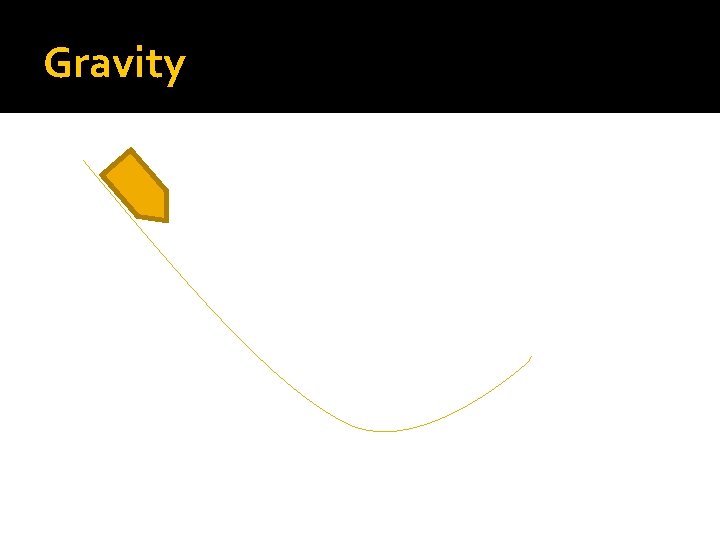
There also basic forces at work in a roller coaster Gravity: The force that PULLS the roller coaster down the hill and toward Earth
Gravity
FRICTION Friction The force that occurs when two objects rub against one another (opposes motion) There is friction throughout the whole ride between the car and the track Friction is strongest at the end when the brakes are applied to stop the ride
FRICTION Watch the roller coaster stop because of friction.
CENTRIPETAL FORCE Centripetal Force The force experienced when traveling in a circle or a loop on a roller coaster See here
INERTIA We have all experienced inertia on a bus or in a car. Video When do you think you would experience inertia on a roller coaster?
Inertia on a Roller Coaster When you make a turn and you slide over, Squashing your friend. When you stop suddenly and your body lurches forward. When you go through a loop! THANK GOODNESS FOR SEAT BELTS AND LAP BARS!!
Video Here is a video on Potential and Kinetic Energy. Video
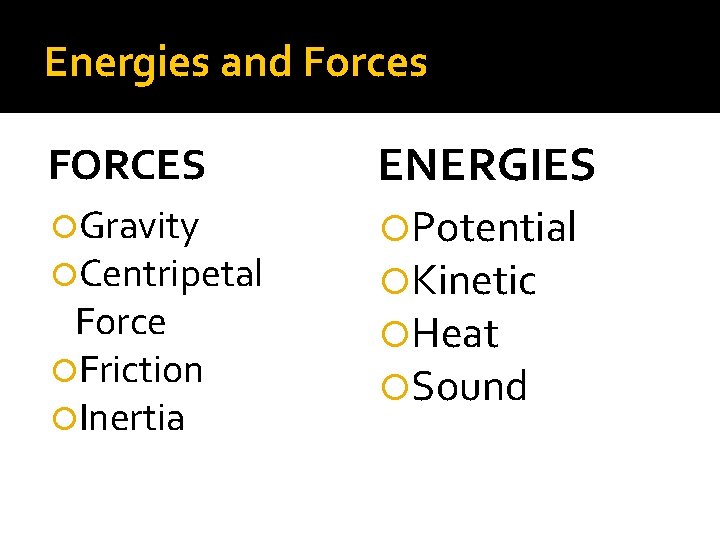
Energies and Forces FORCES ENERGIES Gravity Centripetal Potential Kinetic Heat Sound Force Friction Inertia