
How do organisms get their energy A Autotrophs


- Slides: 26
How do organisms get their energy? A. Autotrophs - use sun’s energy directly (plants) B. Heterotrophs - obtain energy by the foods they eat. (animals)
* all organisms use the energy from the
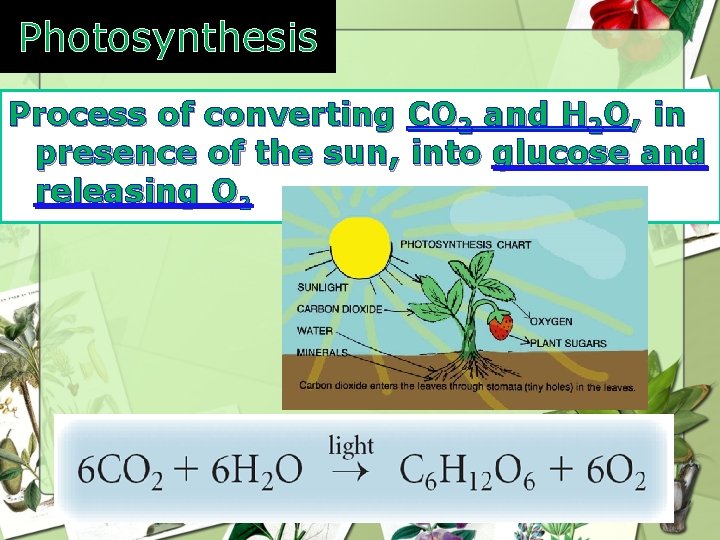
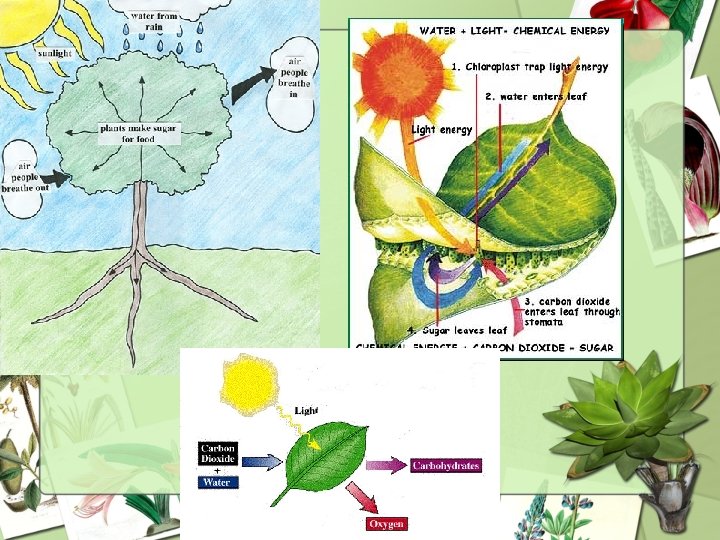
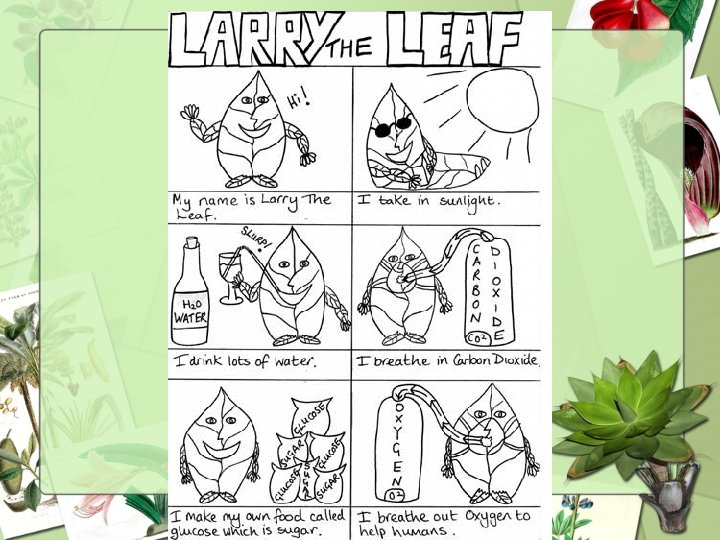
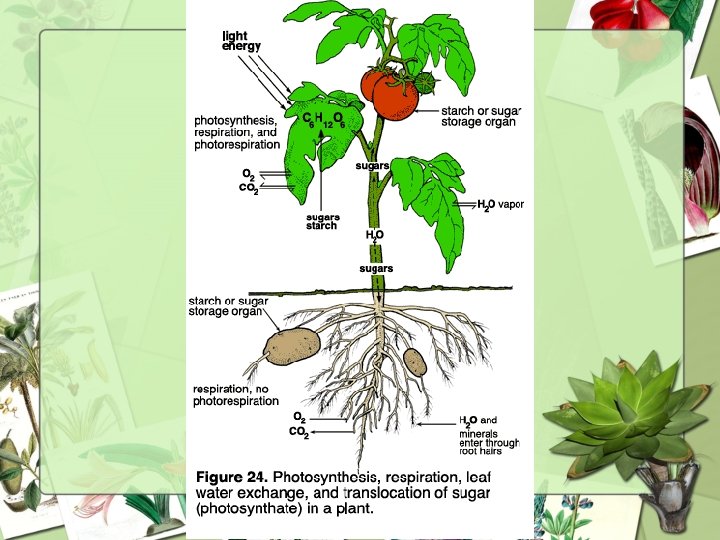
Photosynthesis Process of converting CO 2 and H 2 O, in presence of the sun, into glucose and releasing O 2
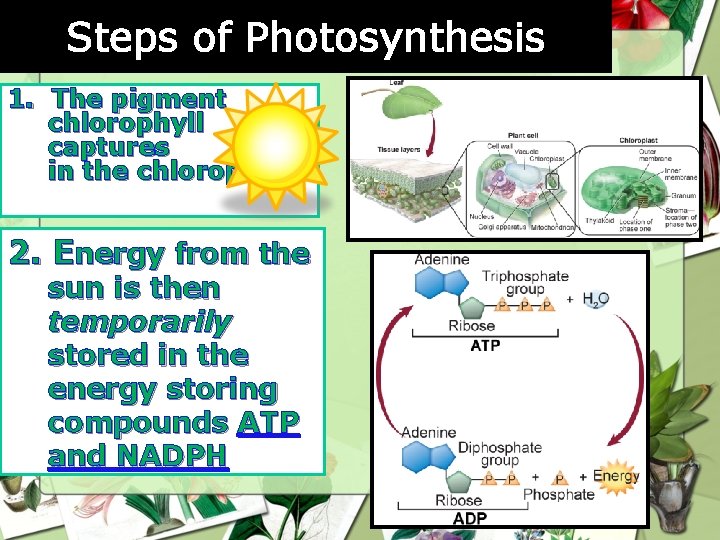
Steps of Photosynthesis 1. The pigment chlorophyll captures in the chloroplasts. 2. Energy from the sun is then temporarily stored in the energy storing compounds ATP and NADPH
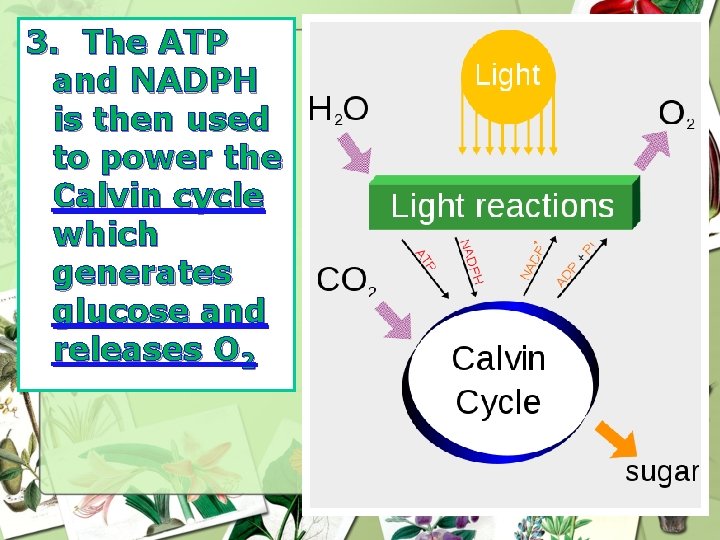
3. The ATP and NADPH is then used to power the Calvin cycle which generates glucose and releases O 2
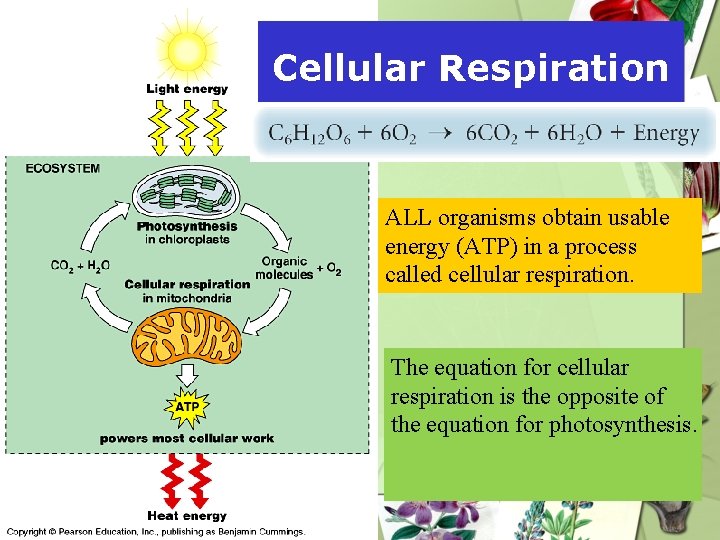
Cellular Respiration ALL organisms obtain usable energy (ATP) in a process called cellular respiration. The equation for cellular respiration is the opposite of the equation for photosynthesis.
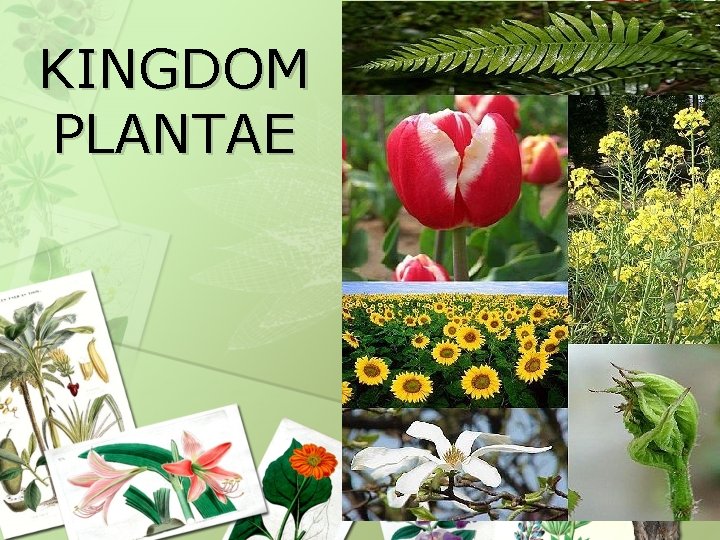
KINGDOM PLANTAE
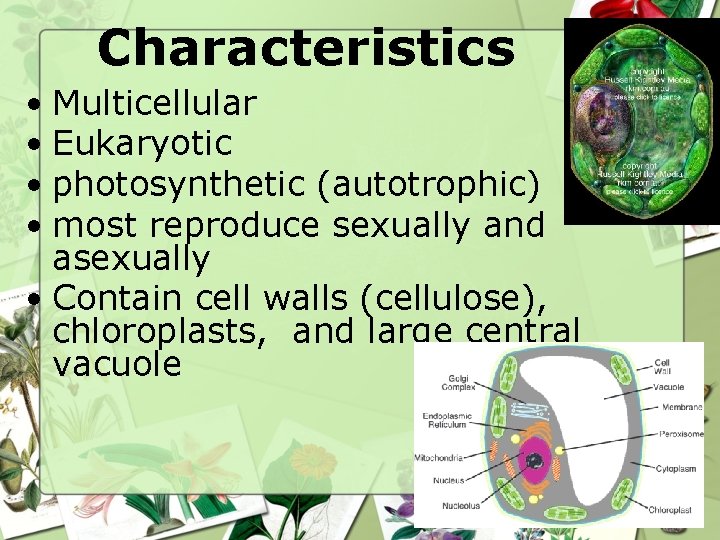
Characteristics • Multicellular • Eukaryotic • photosynthetic (autotrophic) • most reproduce sexually and asexually • Contain cell walls (cellulose), chloroplasts, and large central vacuole
Cellular Respiration and Photosynthesis Comparison Diagram
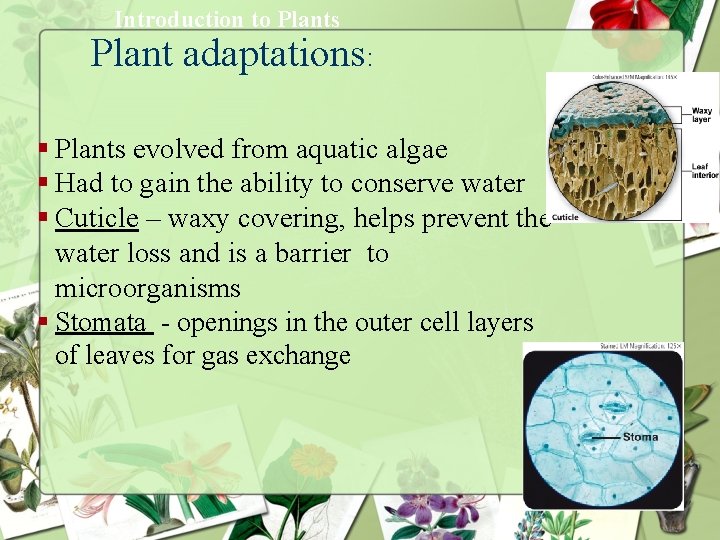
Introduction to Plants Plant adaptations: § Plants evolved from aquatic algae § Had to gain the ability to conserve water § Cuticle – waxy covering, helps prevent the water loss and is a barrier to microorganisms § Stomata - openings in the outer cell layers of leaves for gas exchange
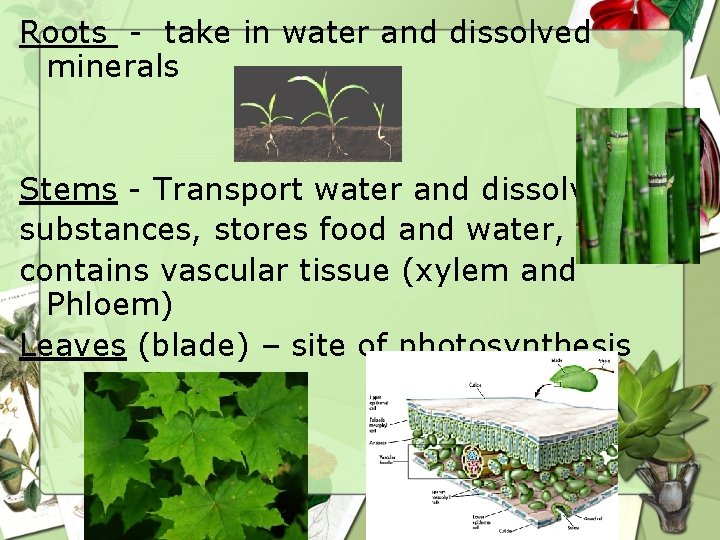
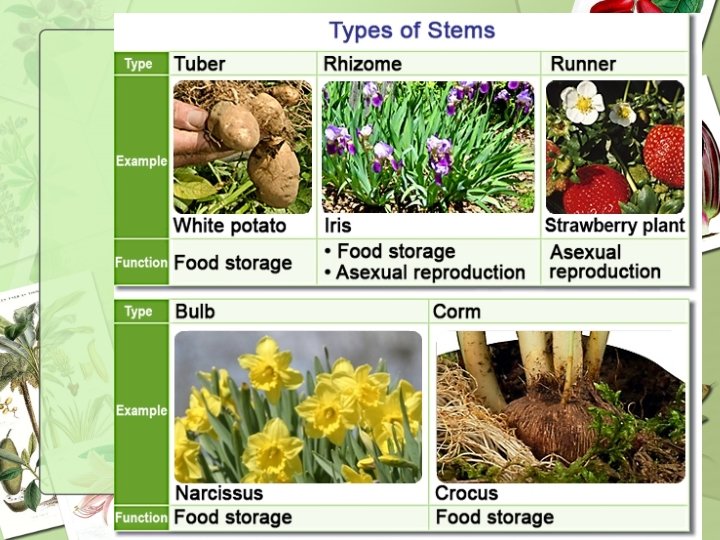
Roots - take in water and dissolved minerals Stems - Transport water and dissolved substances, stores food and water, contains vascular tissue (xylem and Phloem) Leaves (blade) – site of photosynthesis
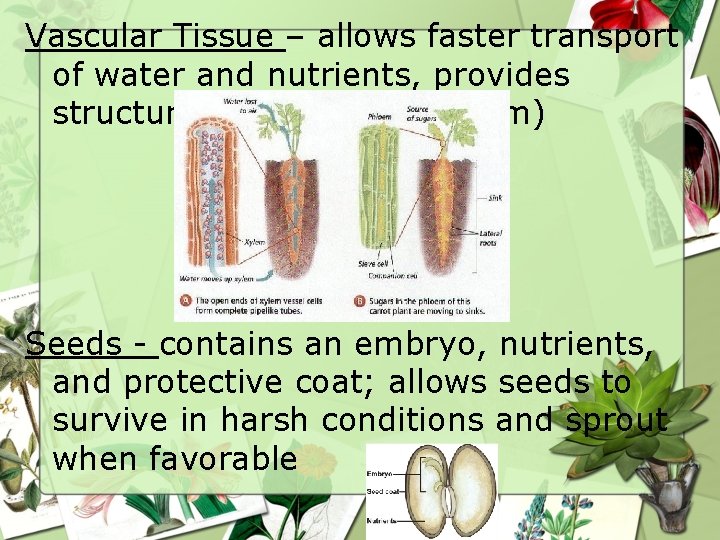
Vascular Tissue – allows faster transport of water and nutrients, provides structure (xylem and phloem) Seeds - contains an embryo, nutrients, and protective coat; allows seeds to survive in harsh conditions and sprout when favorable
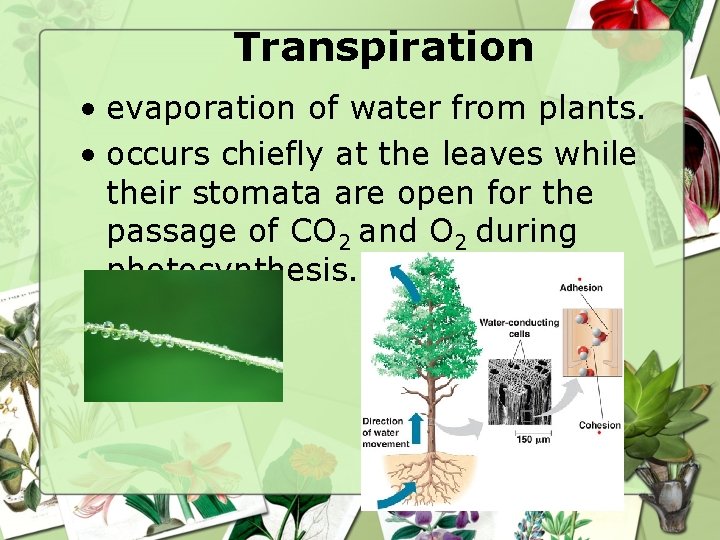
Transpiration • evaporation of water from plants. • occurs chiefly at the leaves while their stomata are open for the passage of CO 2 and O 2 during photosynthesis.
Classification of Plants
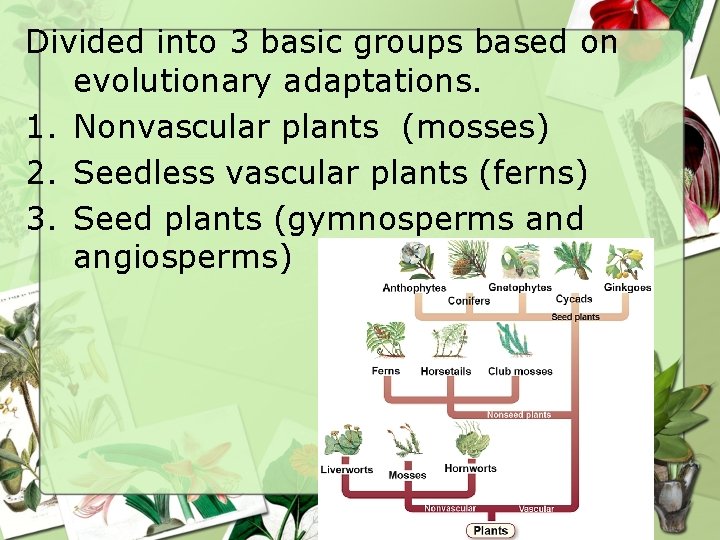
Divided into 3 basic groups based on evolutionary adaptations. 1. Nonvascular plants (mosses) 2. Seedless vascular plants (ferns) 3. Seed plants (gymnosperms and angiosperms)
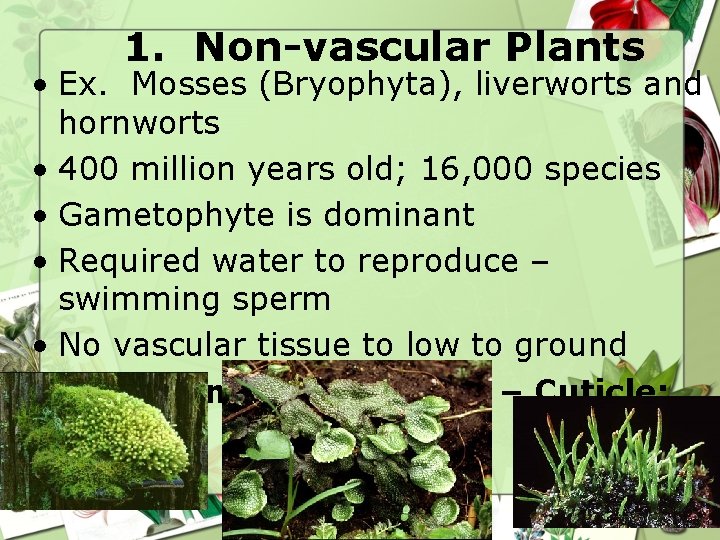
1. Non-vascular Plants • Ex. Mosses (Bryophyta), liverworts and hornworts • 400 million years old; 16, 000 species • Gametophyte is dominant • Required water to reproduce – swimming sperm • No vascular tissue to low to ground • Evolutionary adaptation – Cuticle; stomata
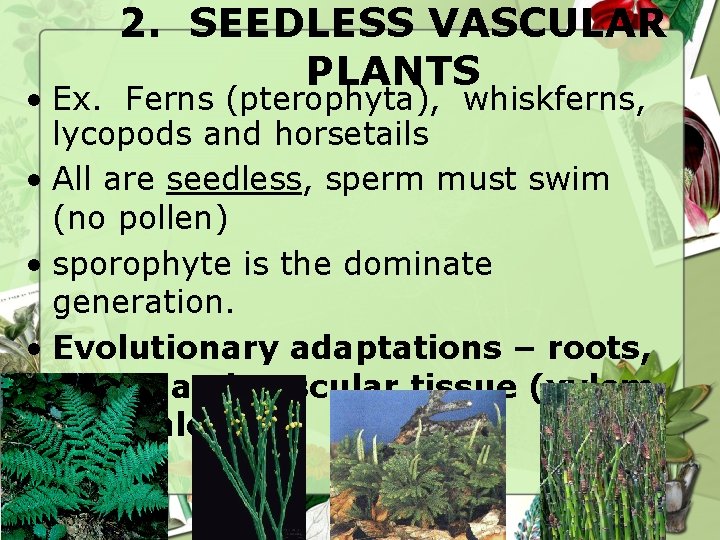
2. SEEDLESS VASCULAR PLANTS • Ex. Ferns (pterophyta), whiskferns, lycopods and horsetails • All are seedless, sperm must swim (no pollen) • sporophyte is the dominate generation. • Evolutionary adaptations – roots, stems and vascular tissue (xylem and phloem)
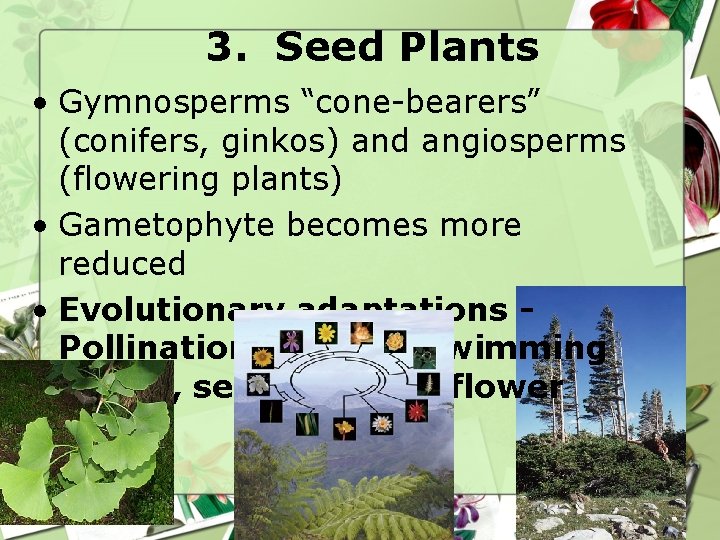
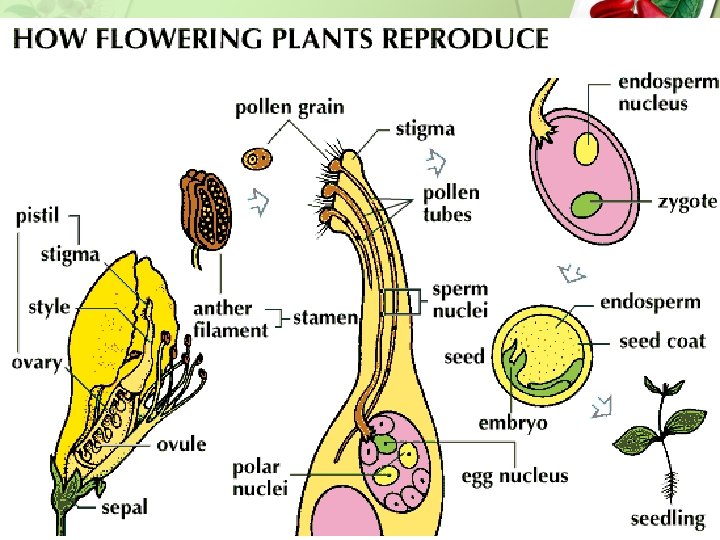
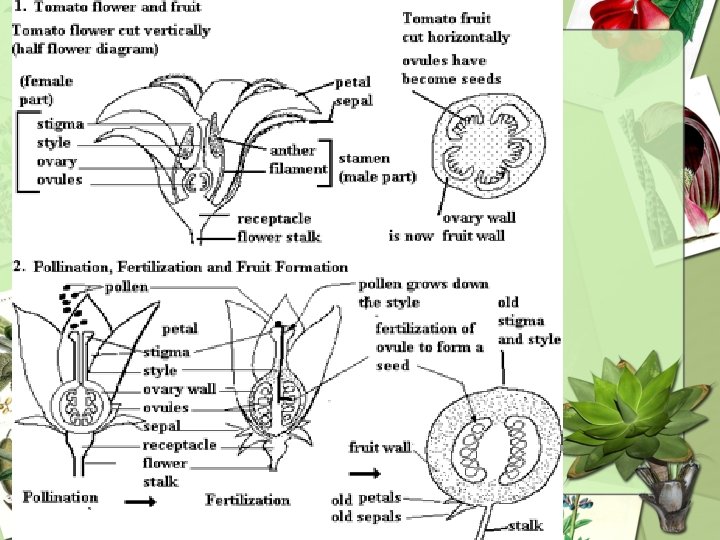
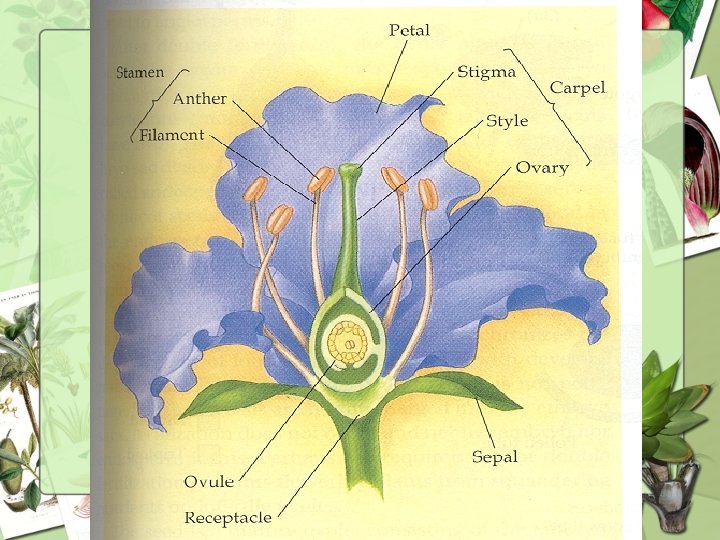
3. Seed Plants • Gymnosperms “cone-bearers” (conifers, ginkos) and angiosperms (flowering plants) • Gametophyte becomes more reduced • Evolutionary adaptations Pollination replaces swimming sperm, seed evolved, flower