
HOW DO MICROBES SPREAD HOW DO MICROBES SPREAD
HOW DO MICROBES SPREAD?
HOW DO MICROBES SPREAD? Starter: Match the disease to the microbe which causes it: Athlete’s foot Flu Common cold Aids Food poisoning Cancer HIV virus Bacteria Fungus Not caused by a microbe Virus
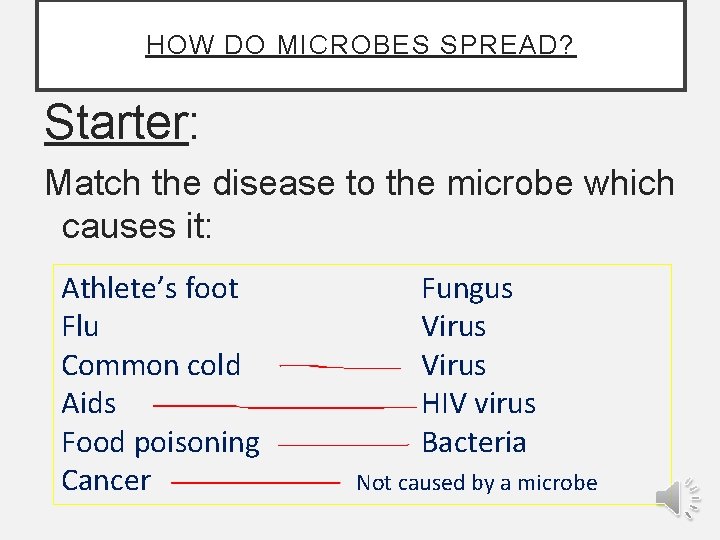
HOW DO MICROBES SPREAD? Starter: Match the disease to the microbe which causes it: Athlete’s foot Flu Common cold Aids Food poisoning Cancer Fungus Virus HIV virus Bacteria Not caused by a microbe
LEARNING OBJECTIVES • Name three types of microbes & describe how they make us ill • Know the 6 different ways in which diseases can spread • Describe the symptoms, causes & treatments of different diseases
HOW MIGHT DISEASES SPREAD?
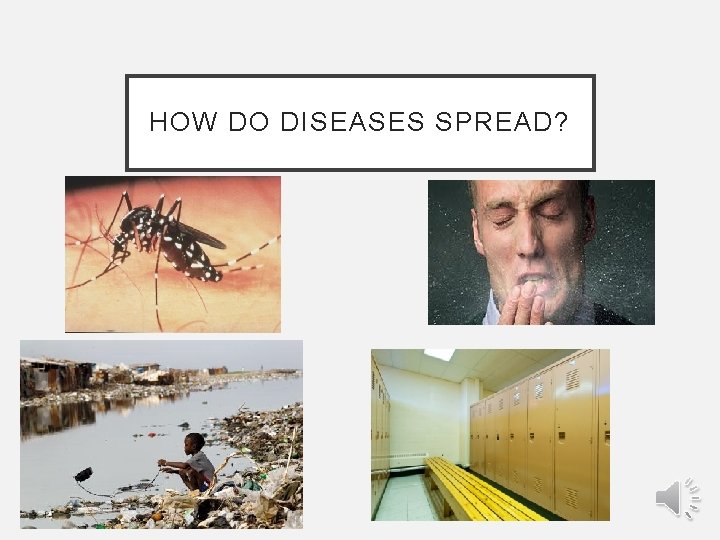
HOW DO DISEASES SPREAD?
HOW MIGHT DISEASES SPREAD?
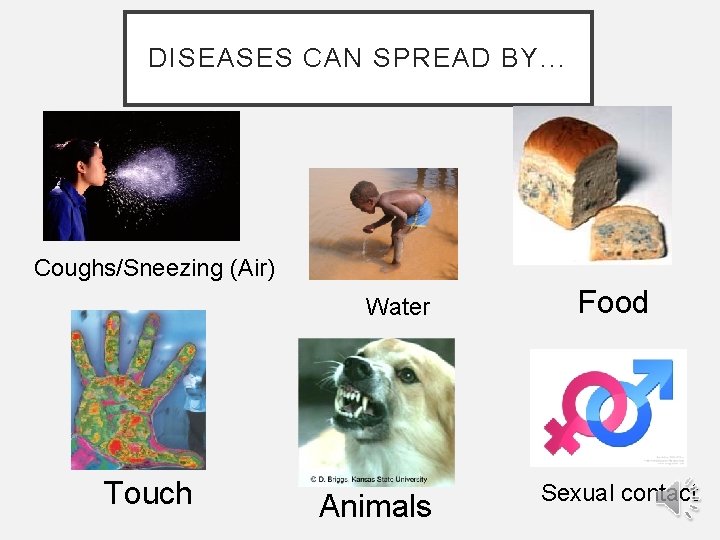
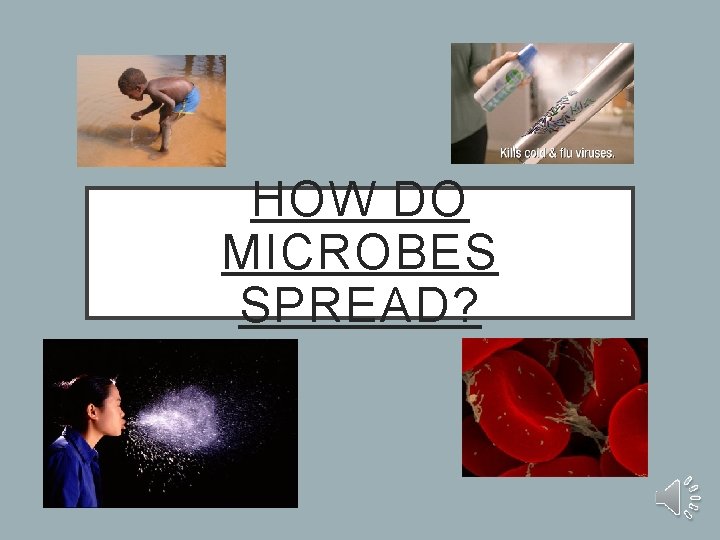
DISEASES CAN SPREAD BY. . . Coughs/Sneezing (Air) Water Touch Animals Food Sexual contact
SOME EXAMPLES
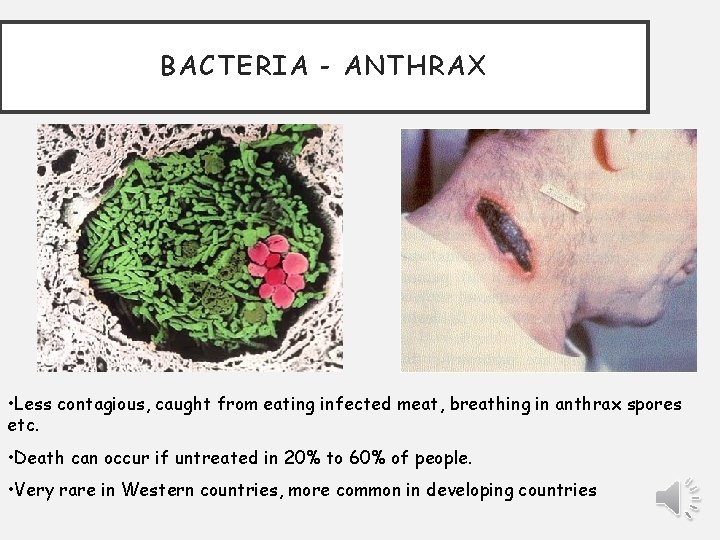
BACTERIA - ANTHRAX • Less contagious, caught from eating infected meat, breathing in anthrax spores etc. • Death can occur if untreated in 20% to 60% of people. • Very rare in Western countries, more common in developing countries
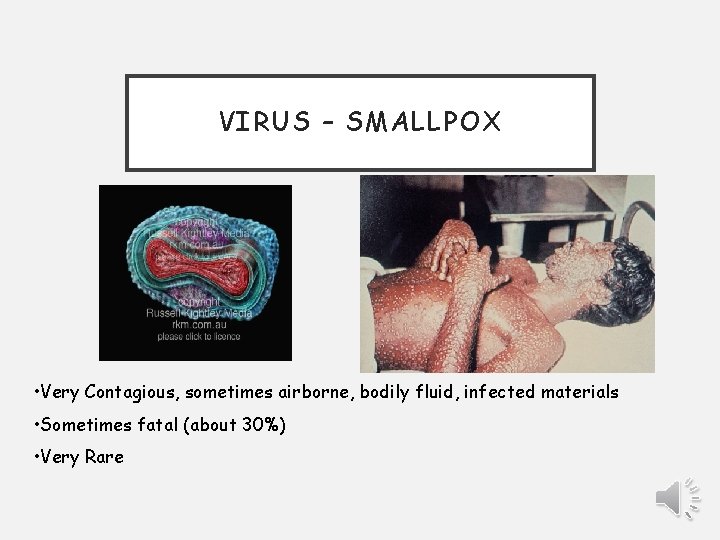
VIRUS – SMALLPOX • Very Contagious, sometimes airborne, bodily fluid, infected materials • Sometimes fatal (about 30%) • Very Rare
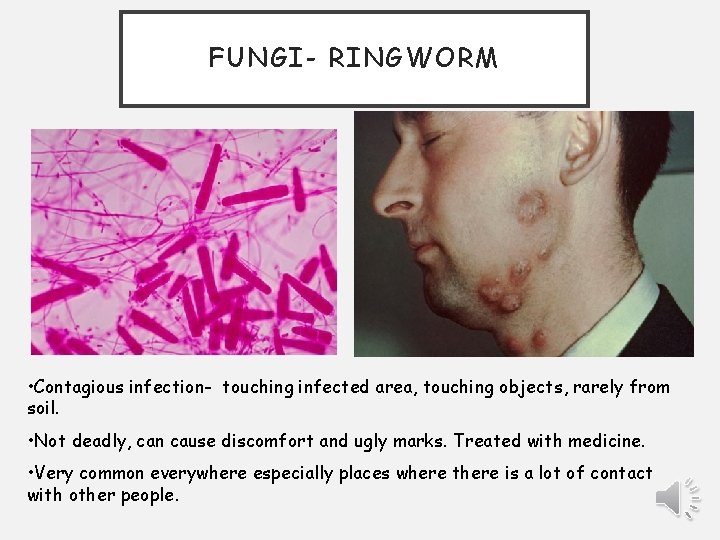
FUNGI- RINGWORM • Contagious infection- touching infected area, touching objects, rarely from soil. • Not deadly, can cause discomfort and ugly marks. Treated with medicine. • Very common everywhere especially places where there is a lot of contact with other people.
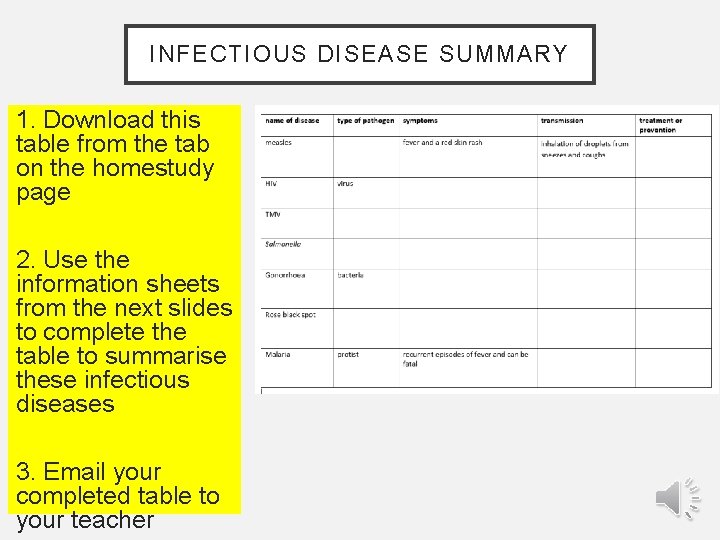
INFECTIOUS DISEASE SUMMARY 1. Download this table from the tab on the homestudy page 2. Use the information sheets from the next slides to complete the table to summarise these infectious diseases 3. Email your completed table to your teacher
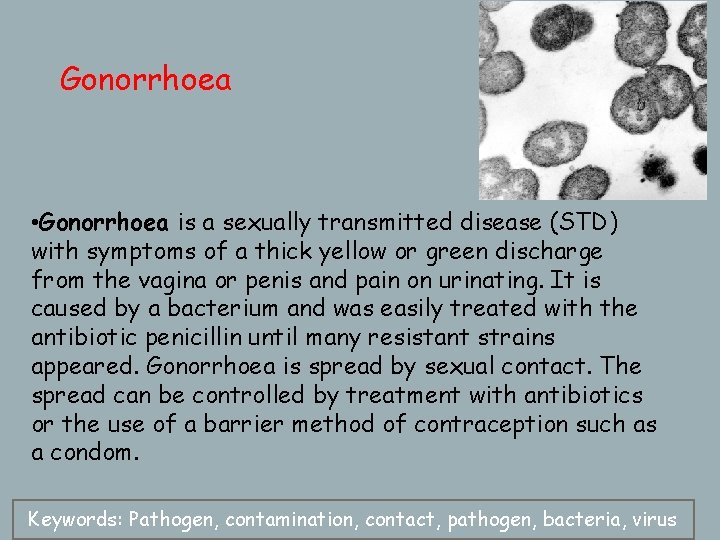
Gonorrhoea • Gonorrhoea is a sexually transmitted disease (STD) with symptoms of a thick yellow or green discharge from the vagina or penis and pain on urinating. It is caused by a bacterium and was easily treated with the antibiotic penicillin until many resistant strains appeared. Gonorrhoea is spread by sexual contact. The spread can be controlled by treatment with antibiotics or the use of a barrier method of contraception such as a condom. Keywords: Pathogen, contamination, contact, pathogen, bacteria, virus
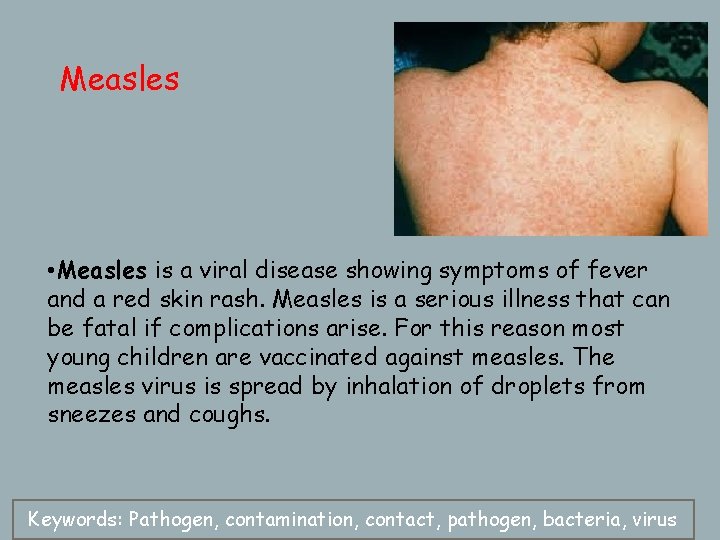
Measles • Measles is a viral disease showing symptoms of fever and a red skin rash. Measles is a serious illness that can be fatal if complications arise. For this reason most young children are vaccinated against measles. The measles virus is spread by inhalation of droplets from sneezes and coughs. Keywords: Pathogen, contamination, contact, pathogen, bacteria, virus
HIV • HIV initially causes a flu-like illness. Unless successfully controlled with antiretroviral drugs the virus attacks the body’s immune cells. Late stage HIV infection, or AIDS, occurs when the body’s immune system becomes so badly damaged it can no longer deal with other infections or cancers. HIV is spread by sexual contact or exchange of body fluids such as blood which occurs when drug users share needles. Keywords: Pathogen, contamination, contact, pathogen, bacteria, virus

Tobacco mosaic virus (TMV) • Tobacco mosaic virus (TMV) is a widespread plant pathogen affecting many species of plants including tomatoes. It gives a distinctive ‘mosaic’ pattern of discolouration on the leaves which affects the growth of the plant due to lack of photosynthesis. Keywords: Pathogen, contamination, contact, pathogen, bacteria, virus
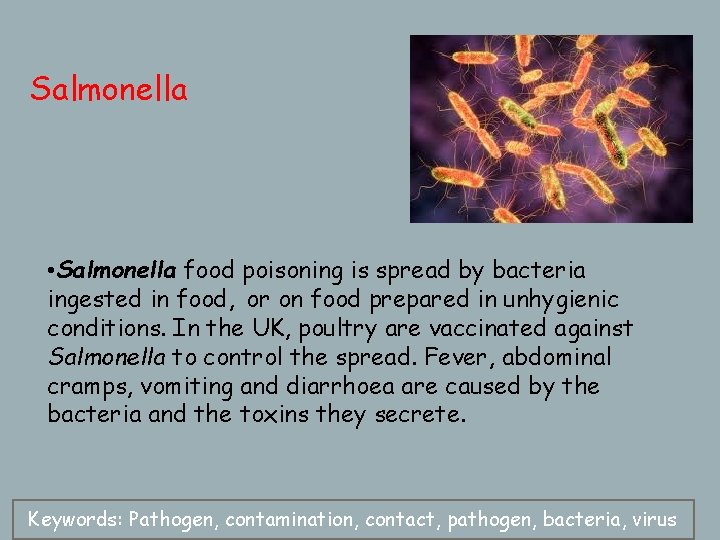
Salmonella • Salmonella food poisoning is spread by bacteria ingested in food, or on food prepared in unhygienic conditions. In the UK, poultry are vaccinated against Salmonella to control the spread. Fever, abdominal cramps, vomiting and diarrhoea are caused by the bacteria and the toxins they secrete. Keywords: Pathogen, contamination, contact, pathogen, bacteria, virus

Rose black spot • Rose black spot is a fungal disease where purple or black spots develop on leaves, which often turn yellow and drop early. It affects the growth of the plant as photosynthesis is reduced. It is spread in the environment by water or wind. Rose black spot can be treated by using fungicides and/or removing and destroying the affected leaves. Keywords: Pathogen, contamination, contact, pathogen, bacteria, virus
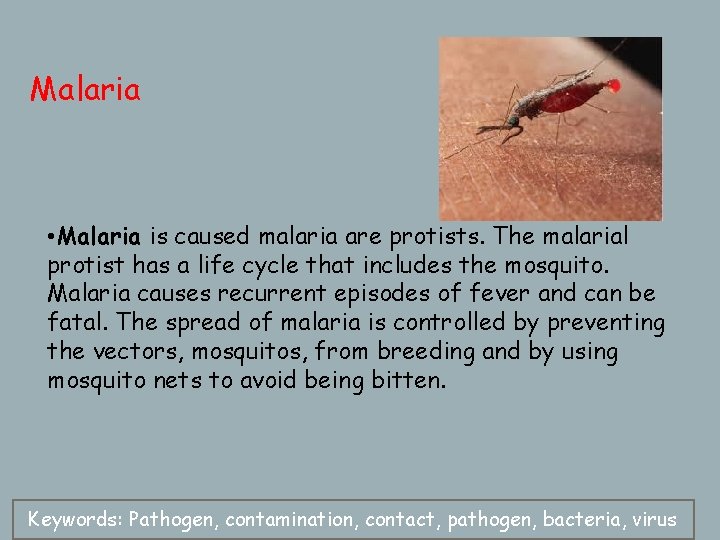
Malaria • Malaria is caused malaria are protists. The malarial protist has a life cycle that includes the mosquito. Malaria causes recurrent episodes of fever and can be fatal. The spread of malaria is controlled by preventing the vectors, mosquitos, from breeding and by using mosquito nets to avoid being bitten. Keywords: Pathogen, contamination, contact, pathogen, bacteria, virus
- Slides: 20