
How do matter and energy link organisms to

- Slides: 27
How do matter and energy link organisms to each other and their environments? Agenda for Wednesday Jan 4 th 1. Present posters 2. Food web notes
• If an ecosystem is to be self-sustaining it must contain a flow of energy. • The pathways of energy through the living components of an ecosystem are represented by food chains and food webs. • Trophic level – feeding level
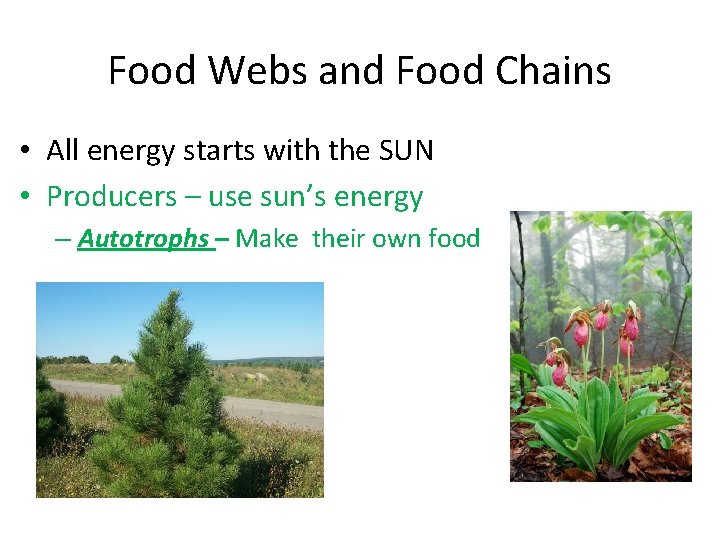
Food Webs and Food Chains • All energy starts with the SUN • Producers – use sun’s energy – Autotrophs – Make their own food
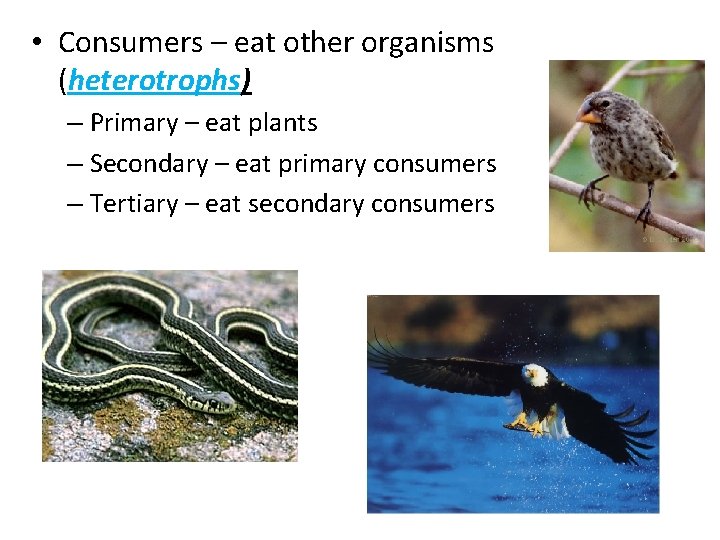
• Consumers – eat other organisms (heterotrophs) – Primary – eat plants – Secondary – eat primary consumers – Tertiary – eat secondary consumers
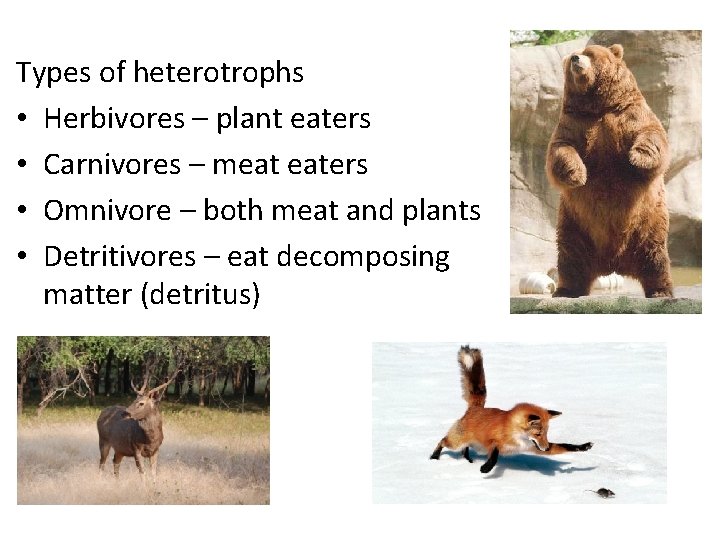
Types of heterotrophs • Herbivores – plant eaters • Carnivores – meat eaters • Omnivore – both meat and plants • Detritivores – eat decomposing matter (detritus)
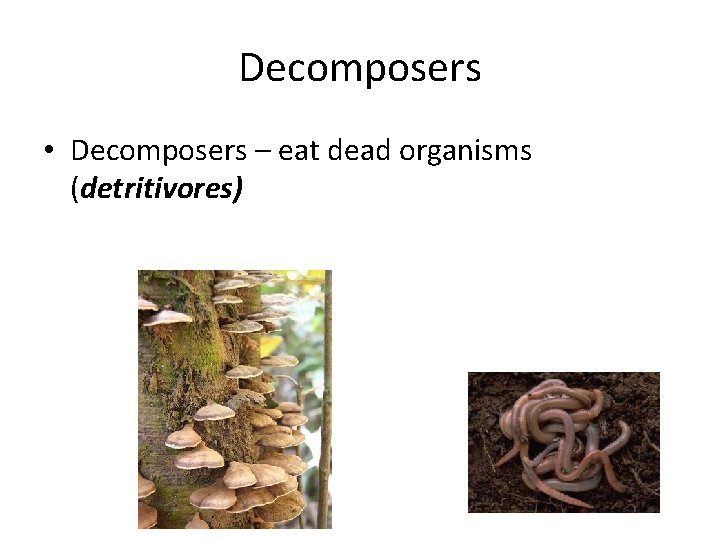
Decomposers • Decomposers – eat dead organisms (detritivores)
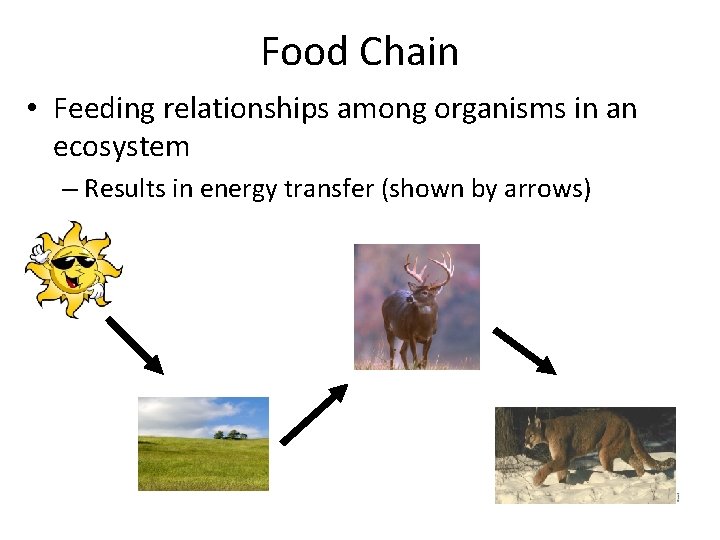
Food Chain • Feeding relationships among organisms in an ecosystem – Results in energy transfer (shown by arrows)
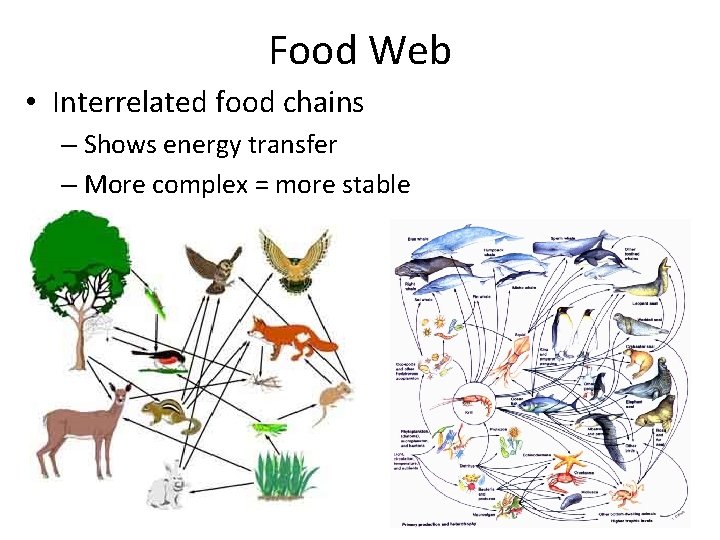
Food Web • Interrelated food chains – Shows energy transfer – More complex = more stable
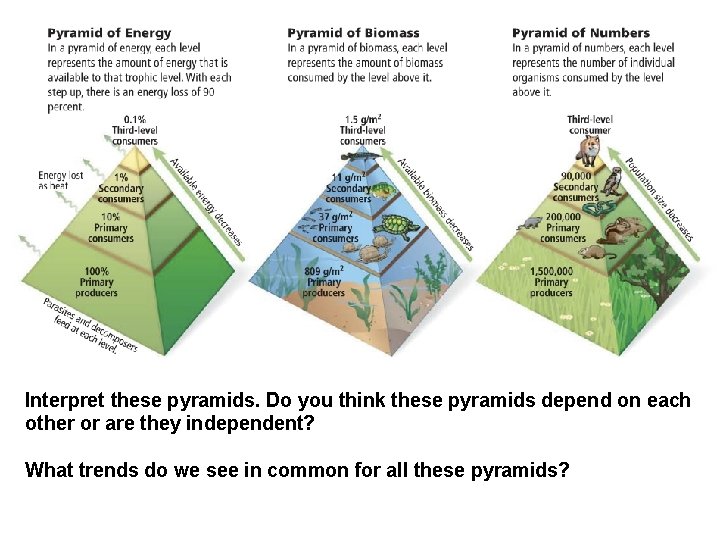
Interpret these pyramids. Do you think these pyramids depend on each other or are they independent? What trends do we see in common for all these pyramids?
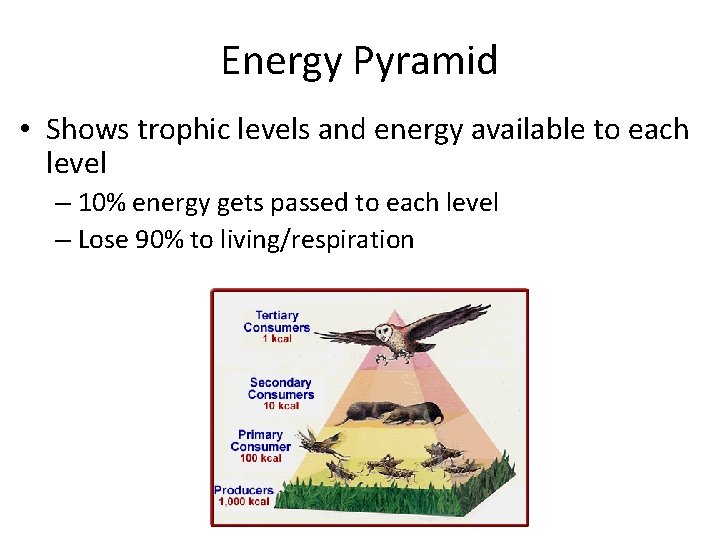
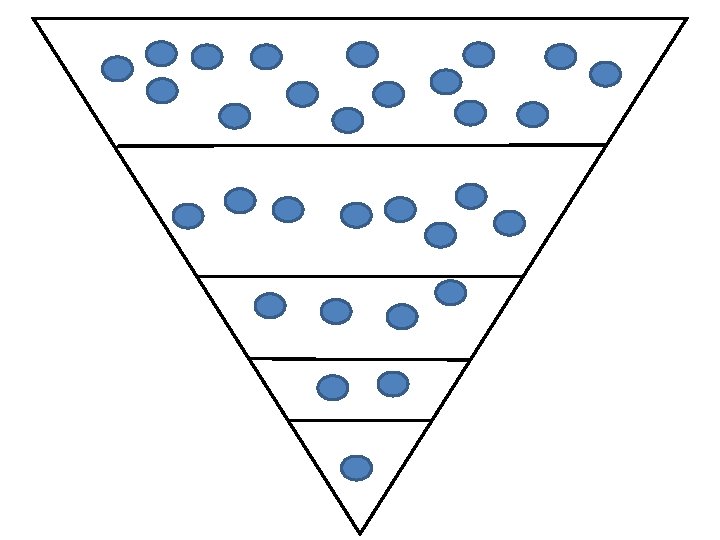
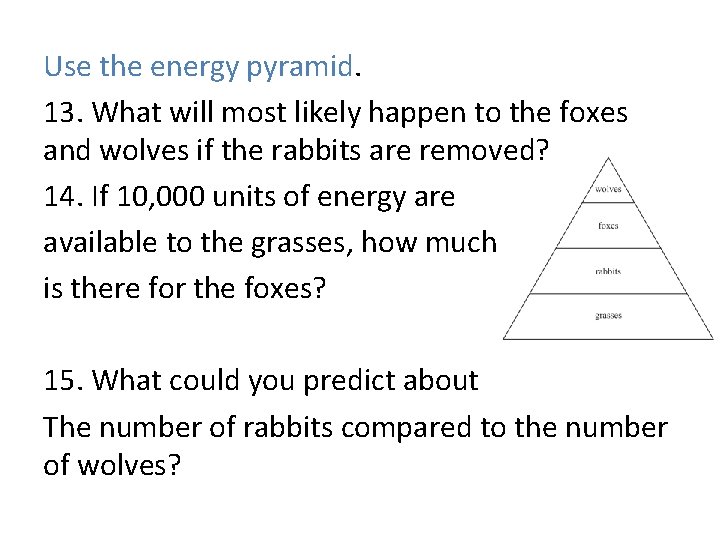
Energy Pyramid • Shows trophic levels and energy available to each level – 10% energy gets passed to each level – Lose 90% to living/respiration
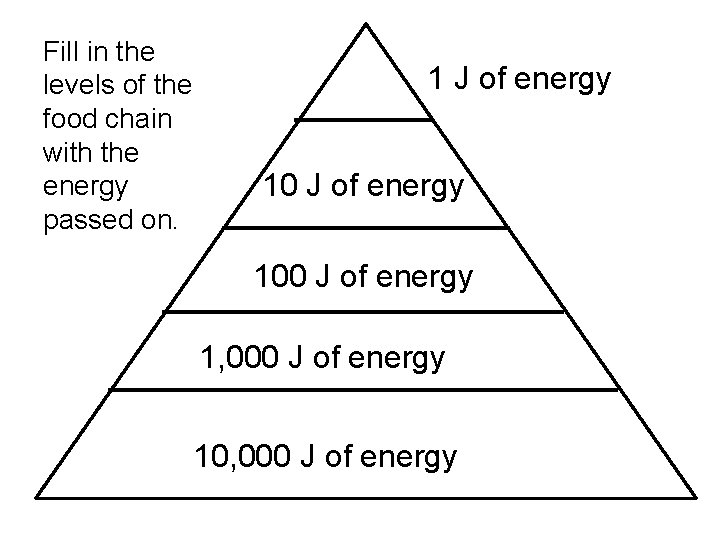
Fill in the levels of the food chain with the energy passed on. 1 J of energy 100 J of energy 1, 000 J of energy 10, 000 J of energy
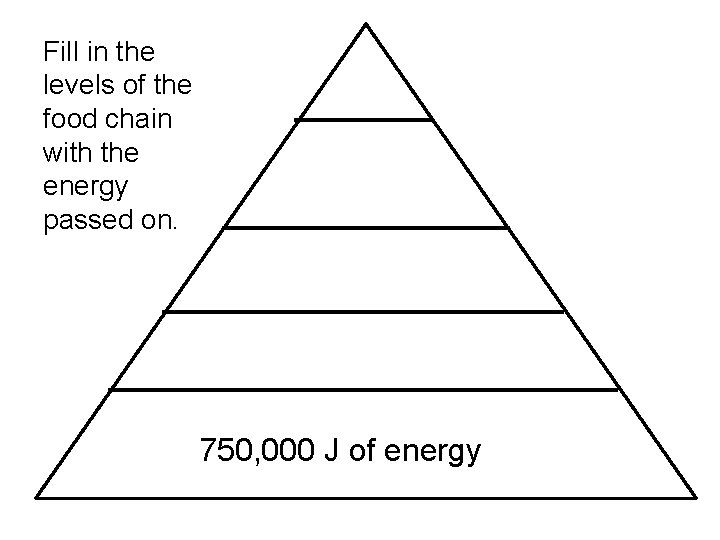
Fill in the levels of the food chain with the energy passed on. 750, 000 J of energy
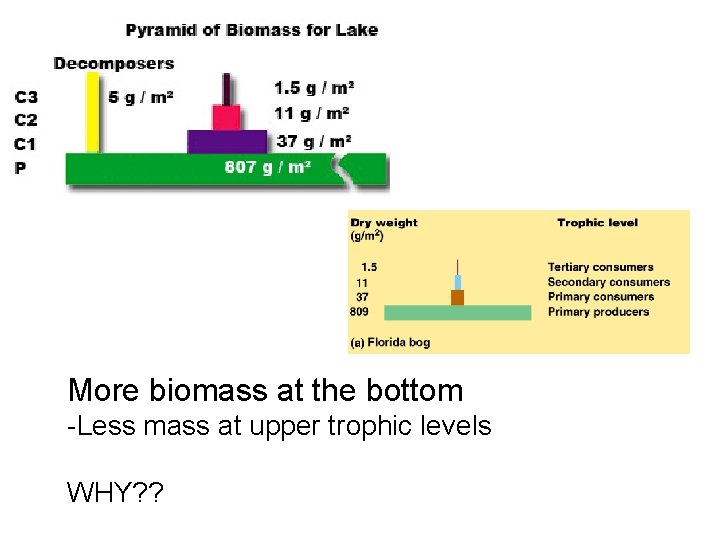
More biomass at the bottom -Less mass at upper trophic levels WHY? ?
• http: //www. youtube. com/watch? v=TE 6 wq. G 4 nb 3 M
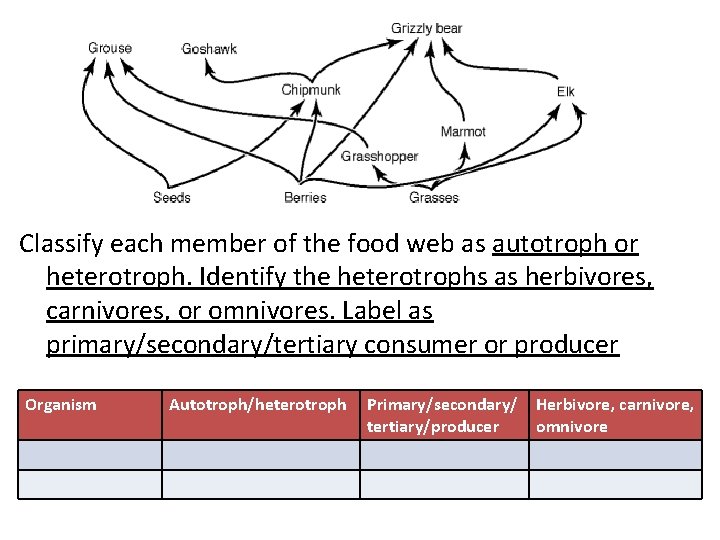
Classify each member of the food web as autotroph or heterotroph. Identify the heterotrophs as herbivores, carnivores, or omnivores. Label as primary/secondary/tertiary consumer or producer Organism Autotroph/heterotroph Primary/secondary/ tertiary/producer Herbivore, carnivore, omnivore
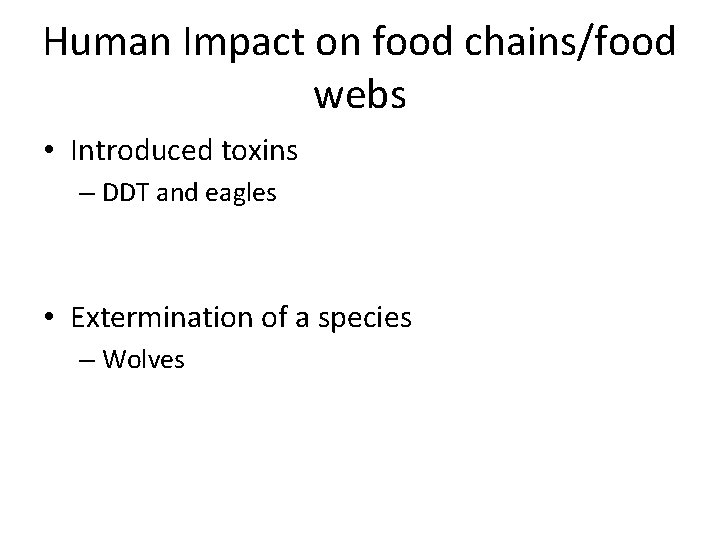
Human Impact on food chains/food webs • Introduced toxins – DDT and eagles • Extermination of a species – Wolves
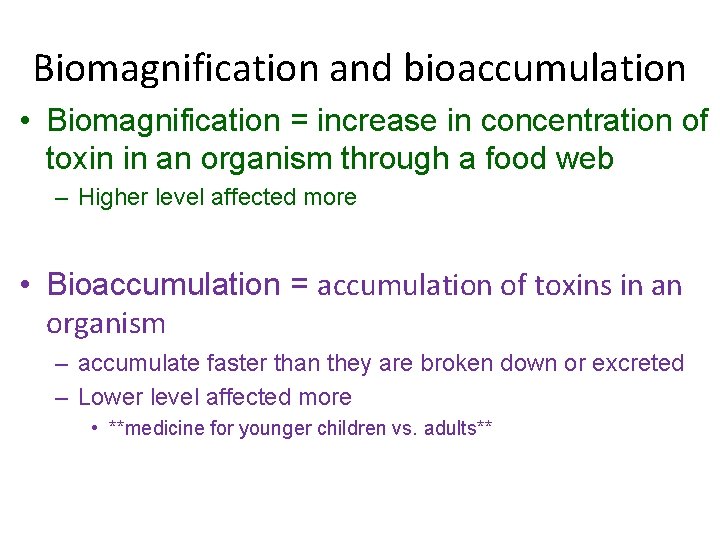
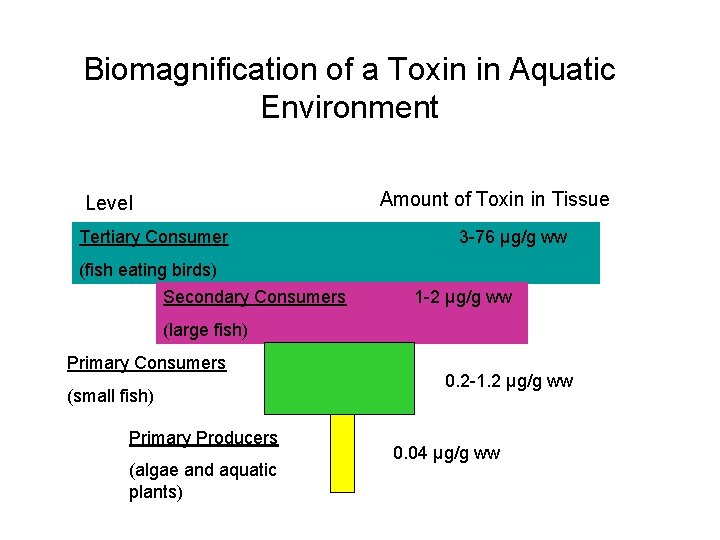
Biomagnification and bioaccumulation • Biomagnification = increase in concentration of toxin in an organism through a food web – Higher level affected more • Bioaccumulation = accumulation of toxins in an organism – accumulate faster than they are broken down or excreted – Lower level affected more • **medicine for younger children vs. adults**
Biomagnification of a Toxin in Aquatic Environment Amount of Toxin in Tissue Level Tertiary Consumer 3 -76 µg/g ww (fish eating birds) Secondary Consumers 1 -2 µg/g ww (large fish) Primary Consumers (small fish) Primary Producers (algae and aquatic plants) 0. 2 -1. 2 µg/g ww 0. 04 µg/g ww
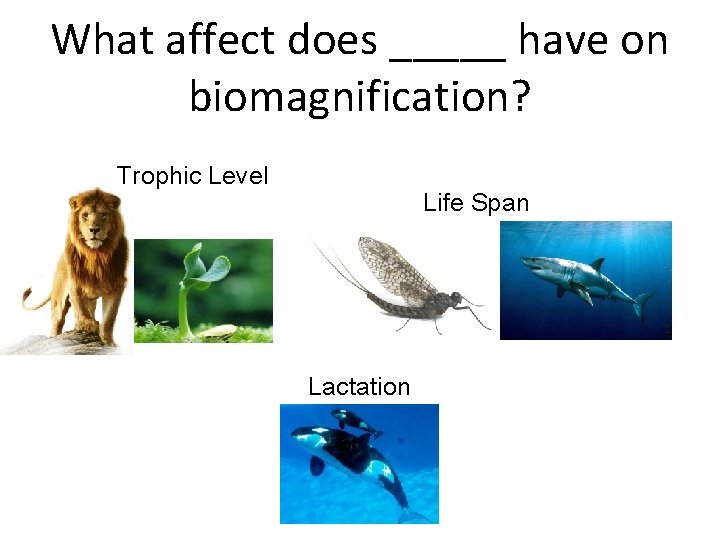
What affect does _____ have on biomagnification? Trophic Level Life Span Lactation
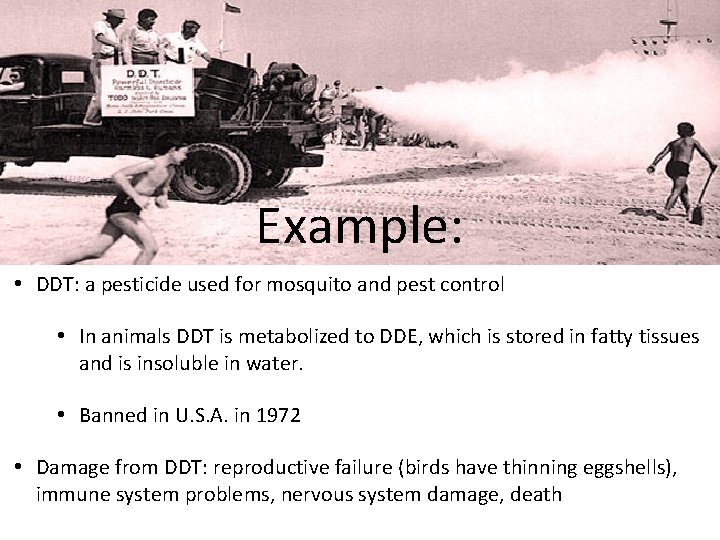
Example: • DDT: a pesticide used for mosquito and pest control • In animals DDT is metabolized to DDE, which is stored in fatty tissues and is insoluble in water. • Banned in U. S. A. in 1972 • Damage from DDT: reproductive failure (birds have thinning eggshells), immune system problems, nervous system damage, death
What does this mean for us? Watch where your food comes from!
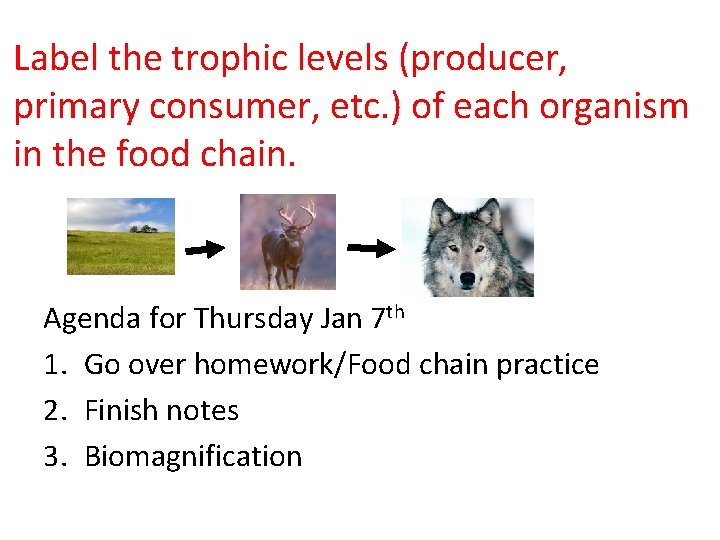
Label the trophic levels (producer, primary consumer, etc. ) of each organism in the food chain. Agenda for Thursday Jan 7 th 1. Go over homework/Food chain practice 2. Finish notes 3. Biomagnification
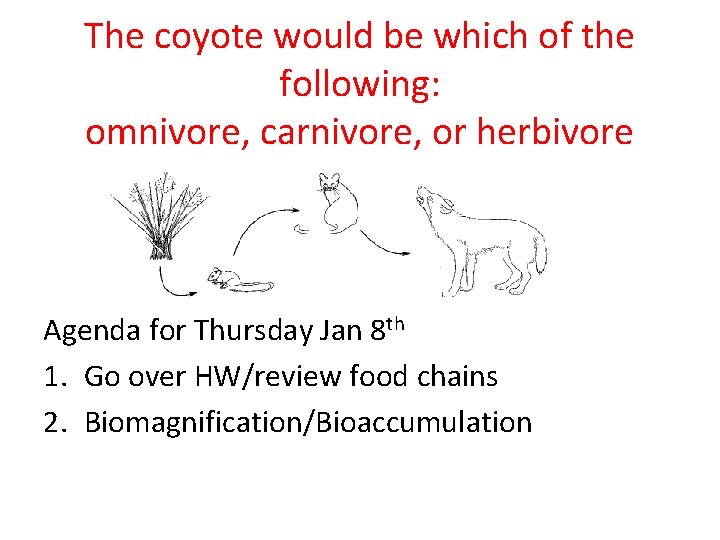
The coyote would be which of the following: omnivore, carnivore, or herbivore Agenda for Thursday Jan 8 th 1. Go over HW/review food chains 2. Biomagnification/Bioaccumulation
Whiteboards Which level are the following 1. A single lion 2. All the moose, deer, trees, grasses, and birds in an area. 3. The total amount of dandelions in a given area. 4. All areas on earth that hold life. 5. All the moose, deer, trees, grasses, and birds in an area interacting with the sunlight, humidity, soil, water, and temperature.
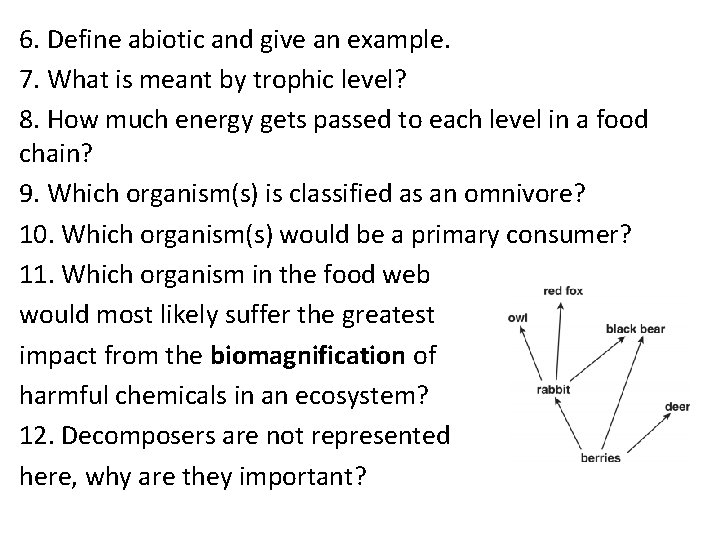
6. Define abiotic and give an example. 7. What is meant by trophic level? 8. How much energy gets passed to each level in a food chain? 9. Which organism(s) is classified as an omnivore? 10. Which organism(s) would be a primary consumer? 11. Which organism in the food web would most likely suffer the greatest impact from the biomagnification of harmful chemicals in an ecosystem? 12. Decomposers are not represented here, why are they important?
Use the energy pyramid. 13. What will most likely happen to the foxes and wolves if the rabbits are removed? 14. If 10, 000 units of energy are available to the grasses, how much is there for the foxes? 15. What could you predict about The number of rabbits compared to the number of wolves?