
How Do I scan Latin Meter The rhythm

- Slides: 16
How Do I scan Latin?
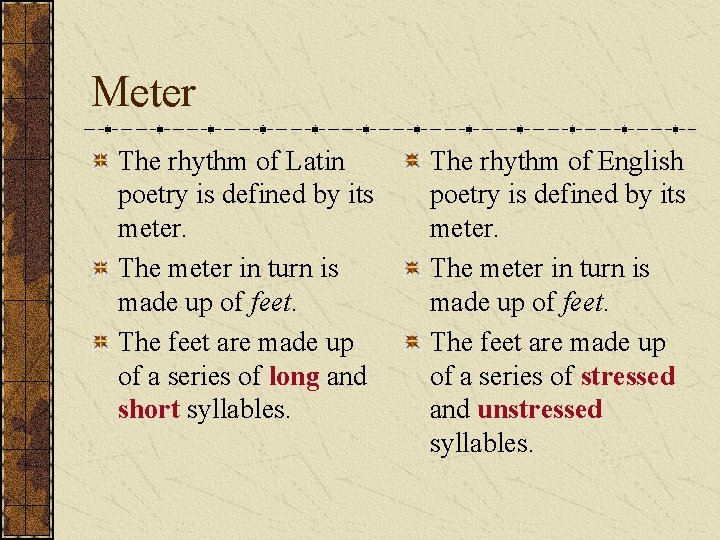
Meter The rhythm of Latin poetry is defined by its meter. The meter in turn is made up of feet. The feet are made up of a series of long and short syllables. The rhythm of English poetry is defined by its meter. The meter in turn is made up of feet. The feet are made up of a series of stressed and unstressed syllables.
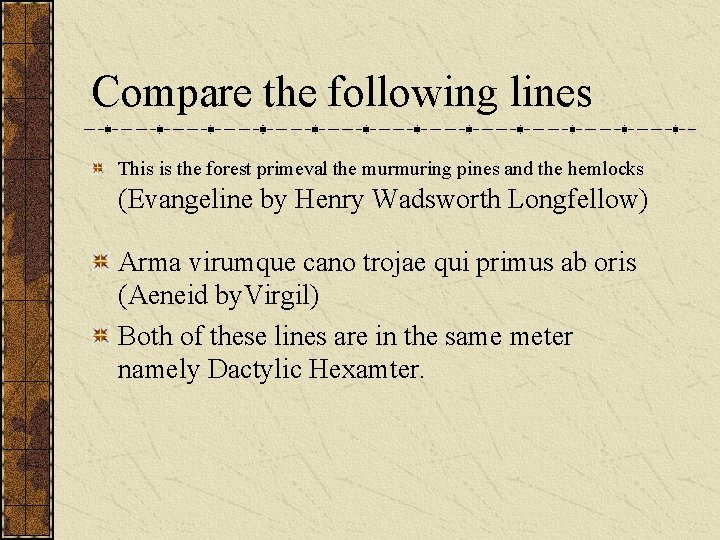
Compare the following lines This is the forest primeval the murmuring pines and the hemlocks (Evangeline by Henry Wadsworth Longfellow) Arma virumque cano trojae qui primus ab oris (Aeneid by. Virgil) Both of these lines are in the same meter namely Dactylic Hexamter.
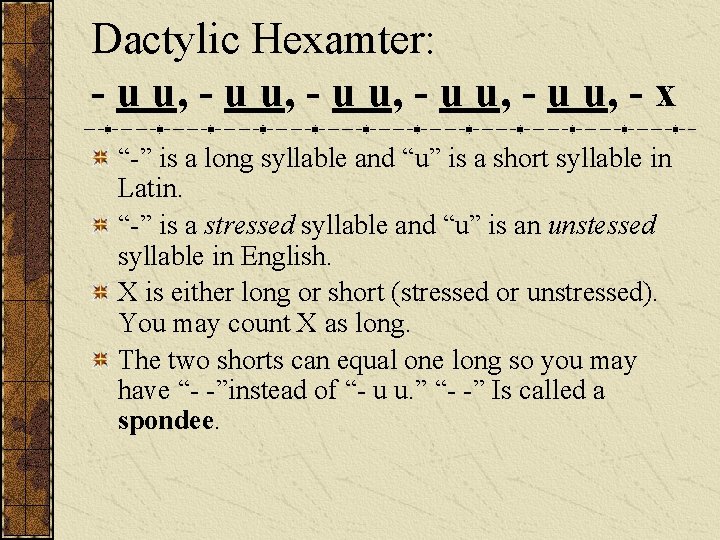
Dactylic Hexamter: - u u, - u u, - x “-” is a long syllable and “u” is a short syllable in Latin. “-” is a stressed syllable and “u” is an unstessed syllable in English. X is either long or short (stressed or unstressed). You may count X as long. The two shorts can equal one long so you may have “- -”instead of “- u u. ” “- -” Is called a spondee.
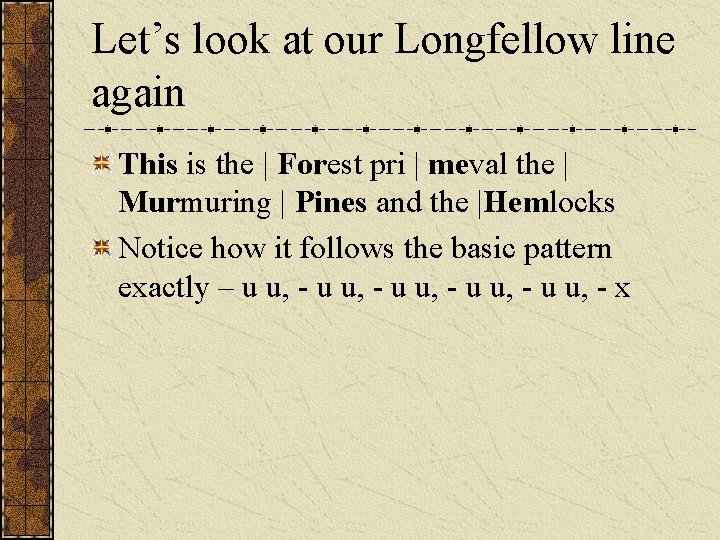
Let’s look at our Longfellow line again This is the | Forest pri | meval the | Murmuring | Pines and the |Hemlocks Notice how it follows the basic pattern exactly – u u, - u u, - x
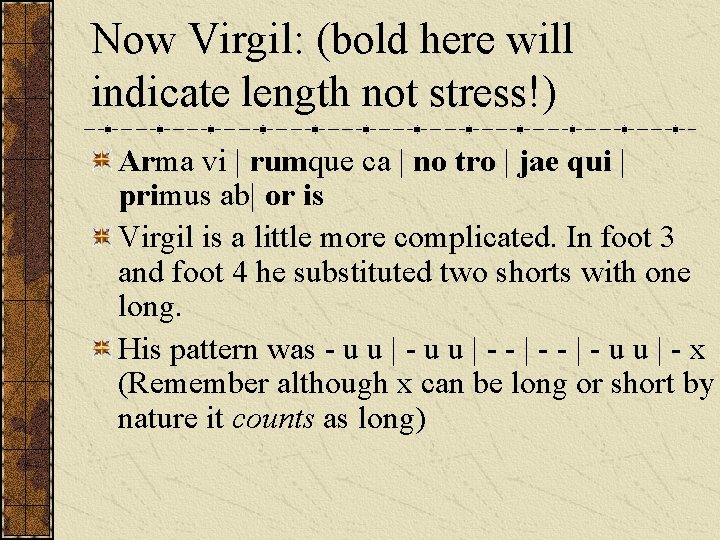
Now Virgil: (bold here will indicate length not stress!) Arma vi | rumque ca | no tro | jae qui | primus ab| or is Virgil is a little more complicated. In foot 3 and foot 4 he substituted two shorts with one long. His pattern was - u u | - - | - u u | - x (Remember although x can be long or short by nature it counts as long)
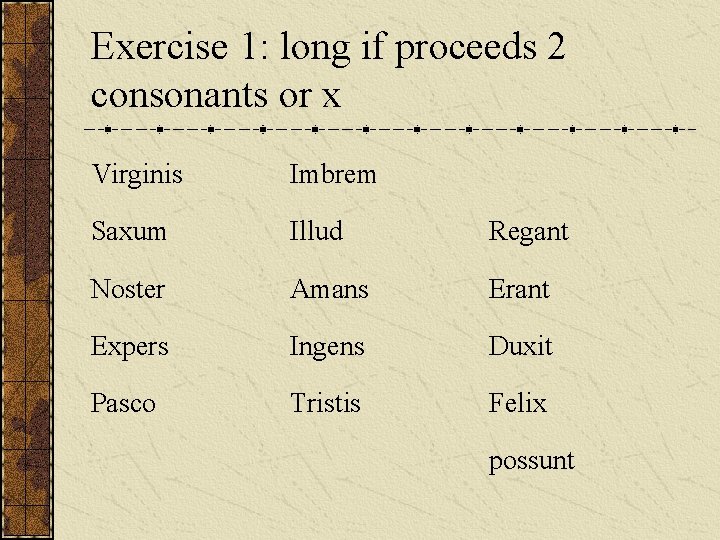
Exercise 1: long if proceeds 2 consonants or x Virginis Imbrem Saxum Illud Regant Noster Amans Erant Expers Ingens Duxit Pasco Tristis Felix possunt
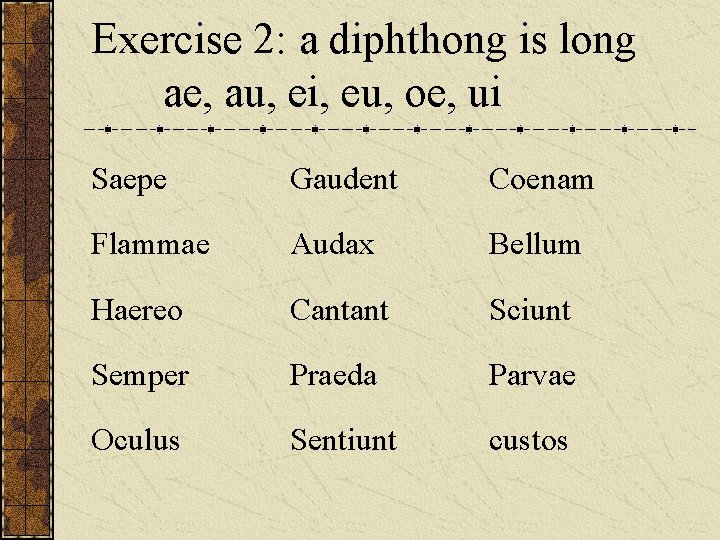
Exercise 2: a diphthong is long ae, au, ei, eu, oe, ui Saepe Gaudent Coenam Flammae Audax Bellum Haereo Cantant Sciunt Semper Praeda Parvae Oculus Sentiunt custos
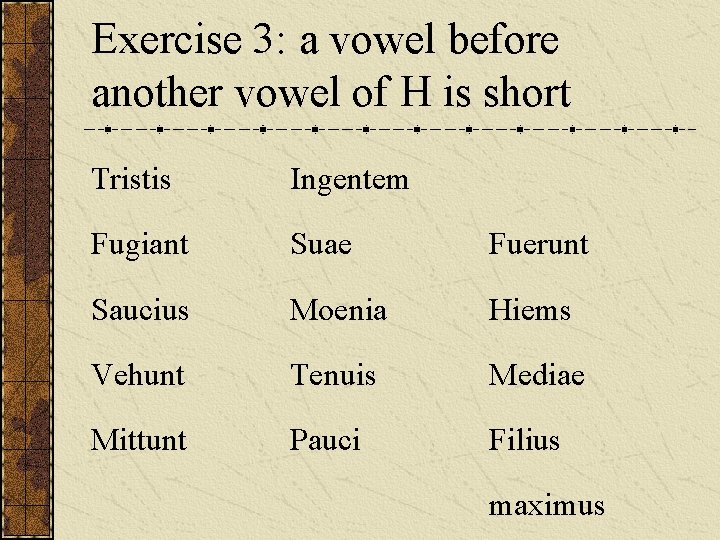
Exercise 3: a vowel before another vowel of H is short Tristis Ingentem Fugiant Suae Fuerunt Saucius Moenia Hiems Vehunt Tenuis Mediae Mittunt Pauci Filius maximus
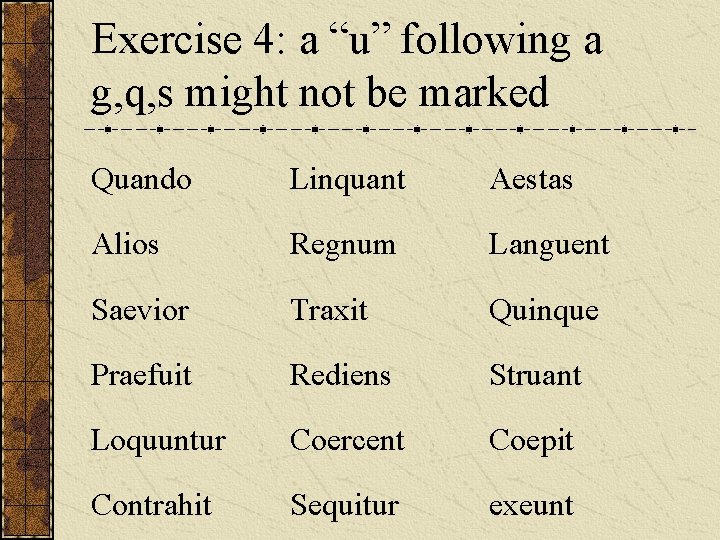
Exercise 4: a “u” following a g, q, s might not be marked Quando Linquant Aestas Alios Regnum Languent Saevior Traxit Quinque Praefuit Rediens Struant Loquuntur Coercent Coepit Contrahit Sequitur exeunt
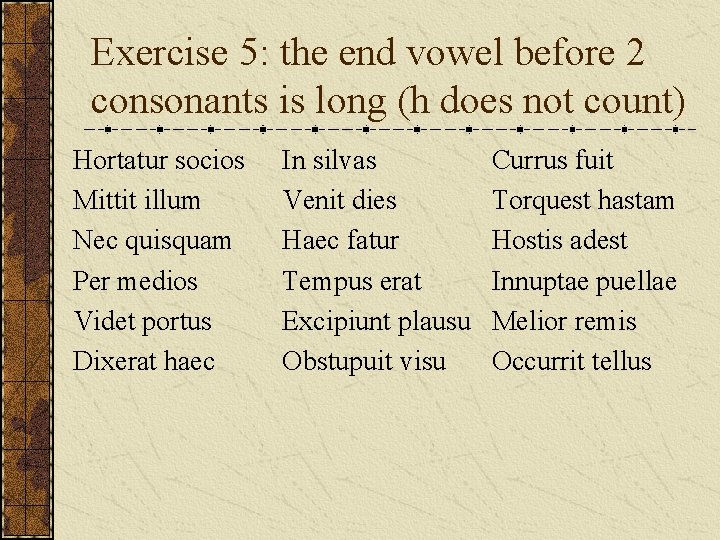
Exercise 5: the end vowel before 2 consonants is long (h does not count) Hortatur socios Mittit illum Nec quisquam Per medios Videt portus Dixerat haec In silvas Venit dies Haec fatur Tempus erat Excipiunt plausu Obstupuit visu Currus fuit Torquest hastam Hostis adest Innuptae puellae Melior remis Occurrit tellus
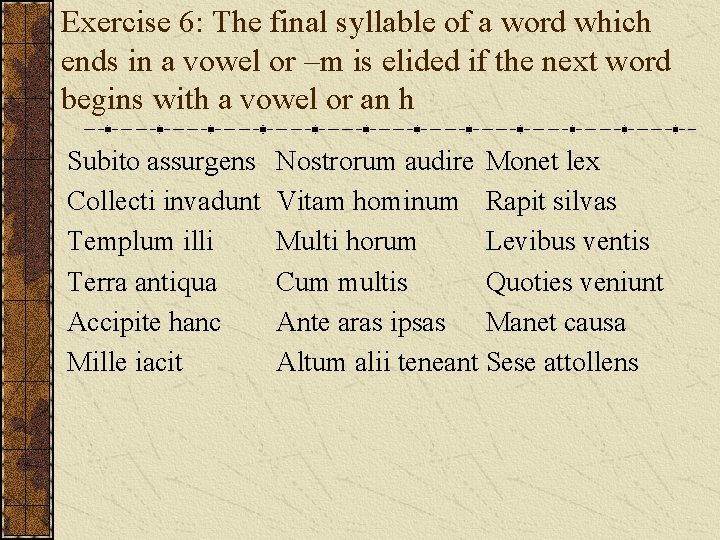
Exercise 6: The final syllable of a word which ends in a vowel or –m is elided if the next word begins with a vowel or an h Subito assurgens Collecti invadunt Templum illi Terra antiqua Accipite hanc Mille iacit Nostrorum audire Monet lex Vitam hominum Rapit silvas Multi horum Levibus ventis Cum multis Quoties veniunt Ante aras ipsas Manet causa Altum alii teneant Sese attollens
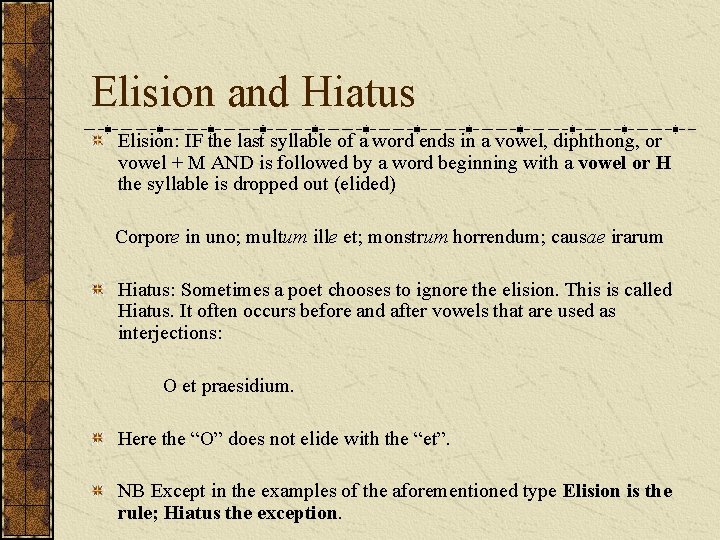
Elision and Hiatus Elision: IF the last syllable of a word ends in a vowel, diphthong, or vowel + M AND is followed by a word beginning with a vowel or H the syllable is dropped out (elided) Corpore in uno; multum ille et; monstrum horrendum; causae irarum Hiatus: Sometimes a poet chooses to ignore the elision. This is called Hiatus. It often occurs before and after vowels that are used as interjections: O et praesidium. Here the “O” does not elide with the “et”. NB Except in the examples of the aforementioned type Elision is the rule; Hiatus the exception.
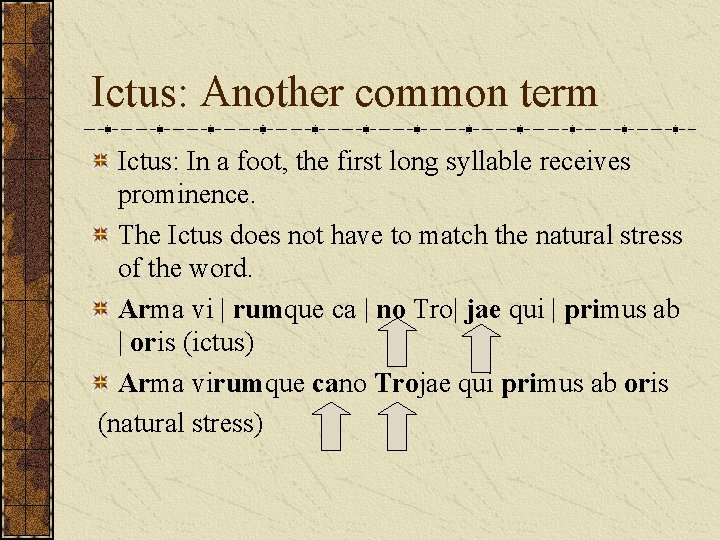
Ictus: Another common term Ictus: In a foot, the first long syllable receives prominence. The Ictus does not have to match the natural stress of the word. Arma vi | rumque ca | no Tro| jae qui | primus ab | oris (ictus) Arma virumque cano Trojae qui primus ab oris (natural stress)
Steps in scanning Latin 1. Find all the naturally long syllables. (In Pharr they are marked). 2. Find all the syllables that are long by position. (watch for elision). 3. Mark the first syllable “-” and the last foot as “- -”. 4. The penultimate foot (foot 5) is almost always “– u u”. If it is “- -” it is called spondaic. Mark the 5 th foot as “– u u” after you make sure it isn’t spondaic. 5. Work backwards. 6. Read the Latin allowed. This last step will make it easier to scan future lines. Eventually you will be able to start with the first foot.
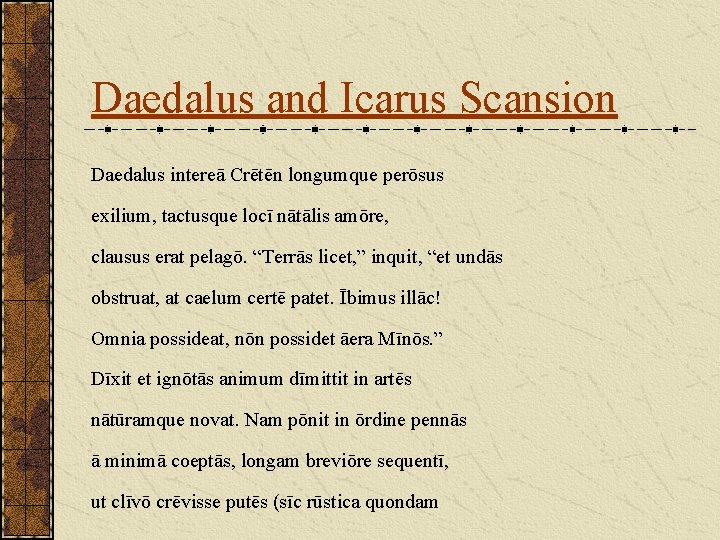
Daedalus and Icarus Scansion Daedalus intereā Crētēn longumque perōsus exilium, tactusque locī nātālis amōre, clausus erat pelagō. “Terrās licet, ” inquit, “et undās obstruat, at caelum certē patet. Ībimus illāc! Omnia possideat, nōn possidet āera Mīnōs. ” Dīxit et ignōtās animum dīmittit in artēs nātūramque novat. Nam pōnit in ōrdine pennās ā minimā coeptās, longam breviōre sequentī, ut clīvō crēvisse putēs (sīc rūstica quondam