
How do humans affect the marine environment both
How do humans affect the marine environment both directly and indirectly? For each effect, discuss how it affects a specific marine environment and why this effect is harmful to marine life. For one effect, discuss how it can have an impact both locally and across an entire ocean.
Effects of humans on the marine environment • Direct effects • Indirect effects
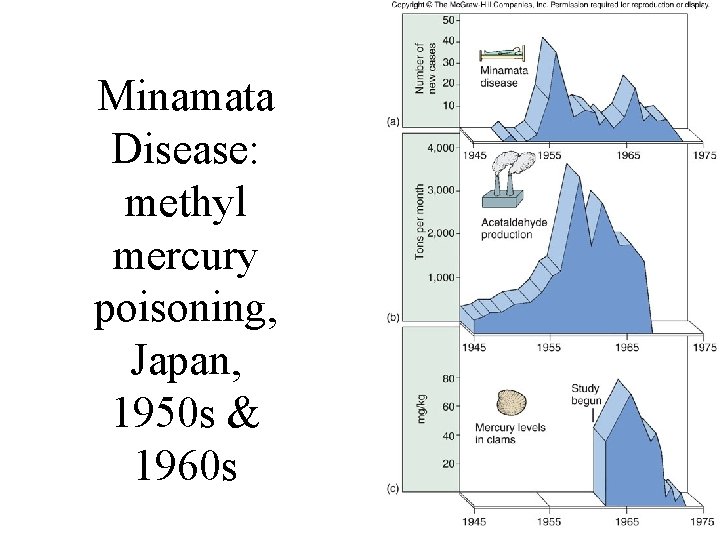
Minamata Disease: methyl mercury poisoning, Japan, 1950 s & 1960 s
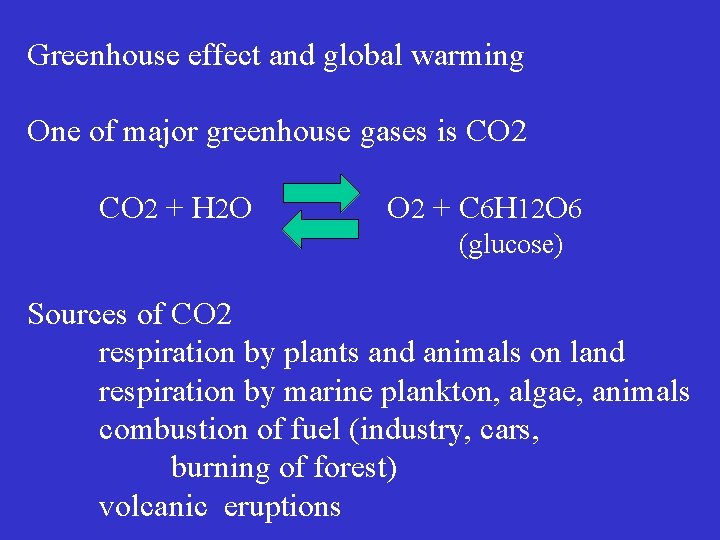
Greenhouse effect and global warming One of major greenhouse gases is CO 2 + H 2 O O 2 + C 6 H 12 O 6 (glucose) Sources of CO 2 respiration by plants and animals on land respiration by marine plankton, algae, animals combustion of fuel (industry, cars, burning of forest) volcanic eruptions
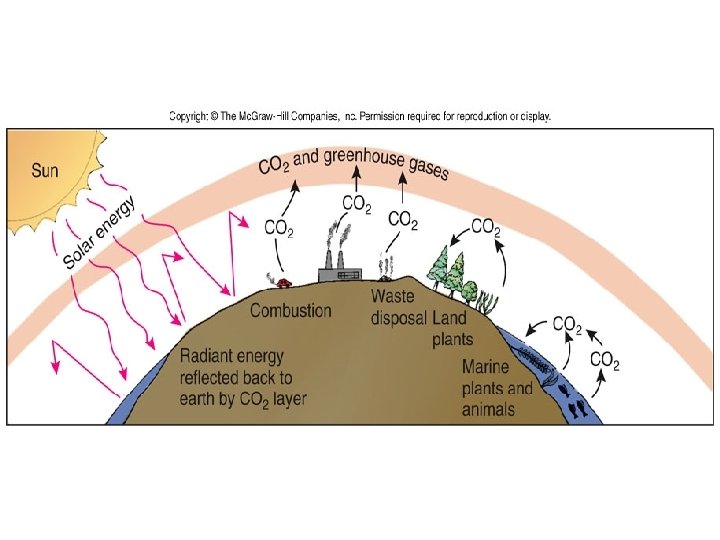
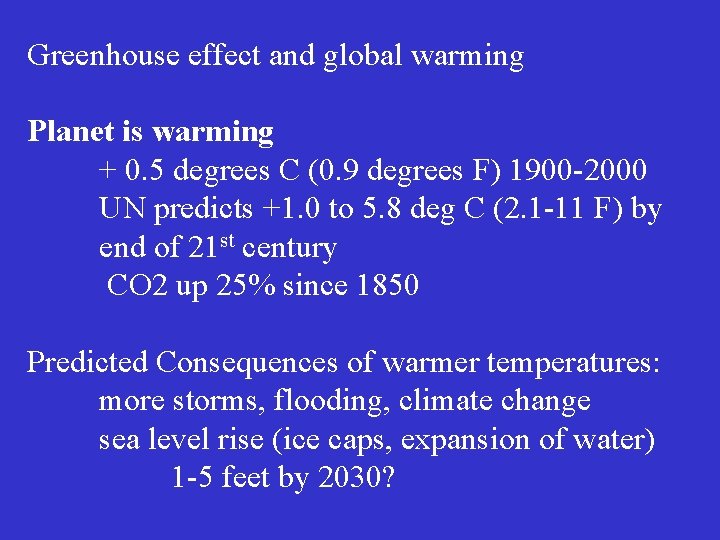
Greenhouse effect and global warming Planet is warming + 0. 5 degrees C (0. 9 degrees F) 1900 -2000 UN predicts +1. 0 to 5. 8 deg C (2. 1 -11 F) by end of 21 st century CO 2 up 25% since 1850 Predicted Consequences of warmer temperatures: more storms, flooding, climate change sea level rise (ice caps, expansion of water) 1 -5 feet by 2030?
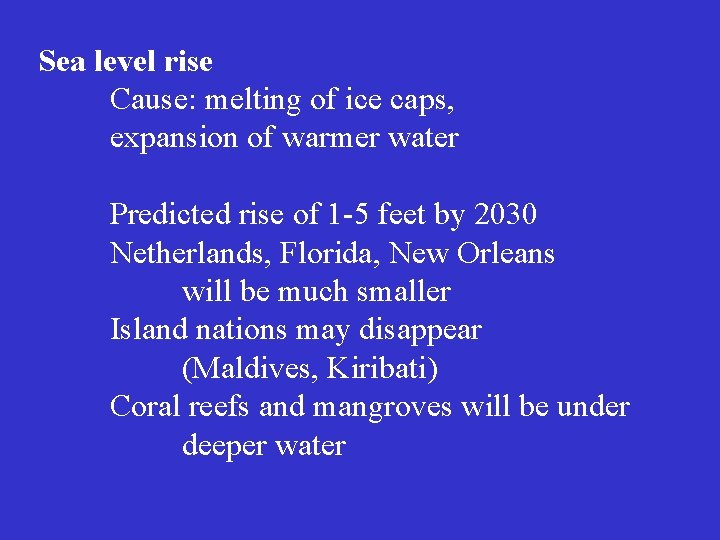
Sea level rise Cause: melting of ice caps, expansion of warmer water Predicted rise of 1 -5 feet by 2030 Netherlands, Florida, New Orleans will be much smaller Island nations may disappear (Maldives, Kiribati) Coral reefs and mangroves will be under deeper water
Predicted effects on global warming on marine life Coral bleaching and disease Change in ocean currents Gulf Stream moves: NW Europe colder Flooding of mangroves and estuaries Change in species that are fished Plankton hurt by radiation in Antarctica (ozone hole) indirect effects on rest of life there
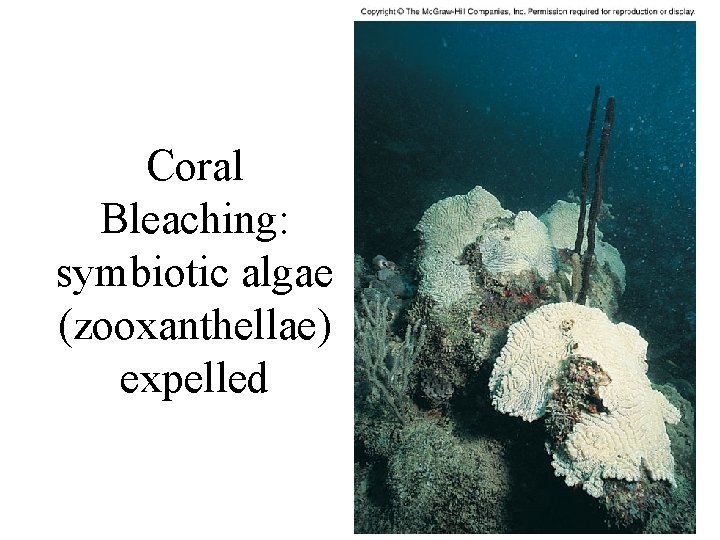
Coral Bleaching: symbiotic algae (zooxanthellae) expelled
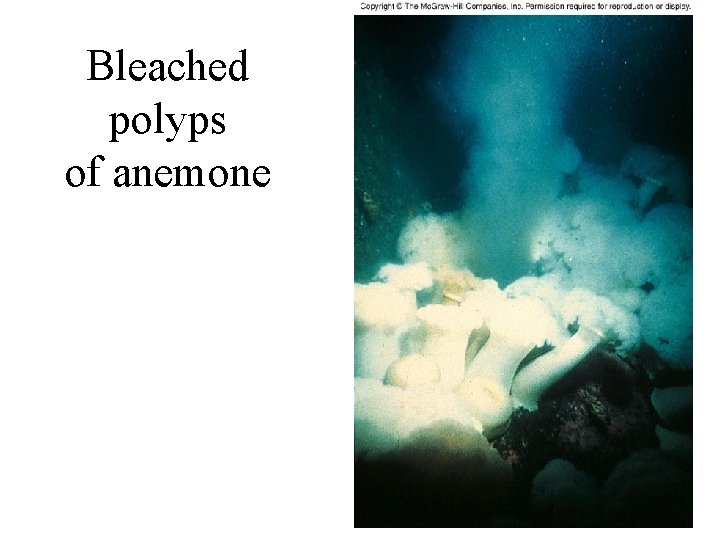
Bleached polyps of anemone
CFCs (Chloroflourocarbons) used in sprays and air conditioners: CFCs: are a greenhouse gas Destroy the ozone layer (O 3) that cuts out UV Ozone hole over Antarctica was 3 X size of USA in 2000
Predicted effects on global warming on marine life Coral bleaching and disease Change in ocean currents Gulf Stream moves: NW Europe colder Flooding of mangroves and estuaries Change in species that are fished Plankton hurt by radiation in Antarctica (ozone hole) indirect effects on rest of life there
What can be done? 1) Kyoto Climate Change Conference (1997) Agreed to 6% to 8% reduction in greenhouse gases from 1990 levels by 2012 Requires consumers and industries to cut use of fossil fuels and CFCs USA withdrew from agreement in 2001
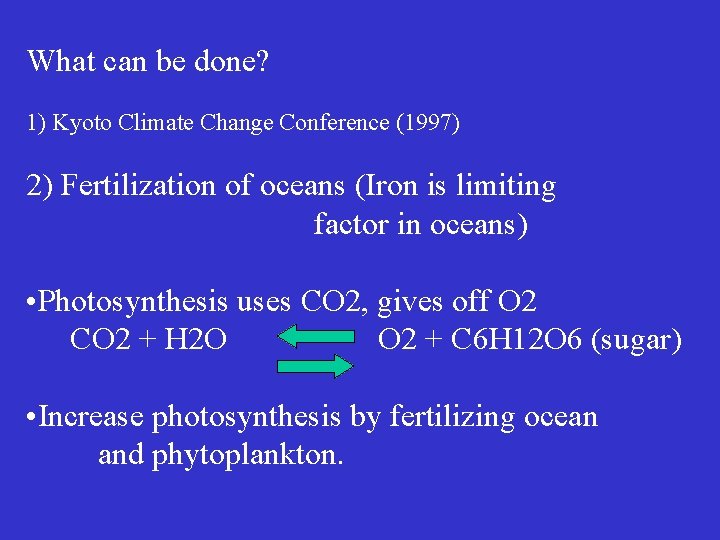
What can be done? 1) Kyoto Climate Change Conference (1997) 2) Fertilization of oceans (Iron is limiting factor in oceans) • Photosynthesis uses CO 2, gives off O 2 CO 2 + H 2 O O 2 + C 6 H 12 O 6 (sugar) • Increase photosynthesis by fertilizing ocean and phytoplankton.
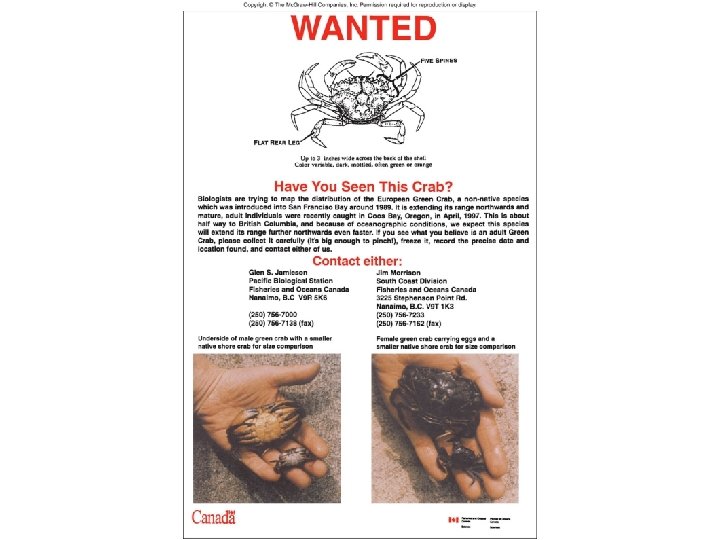
Figure 18 p. 422
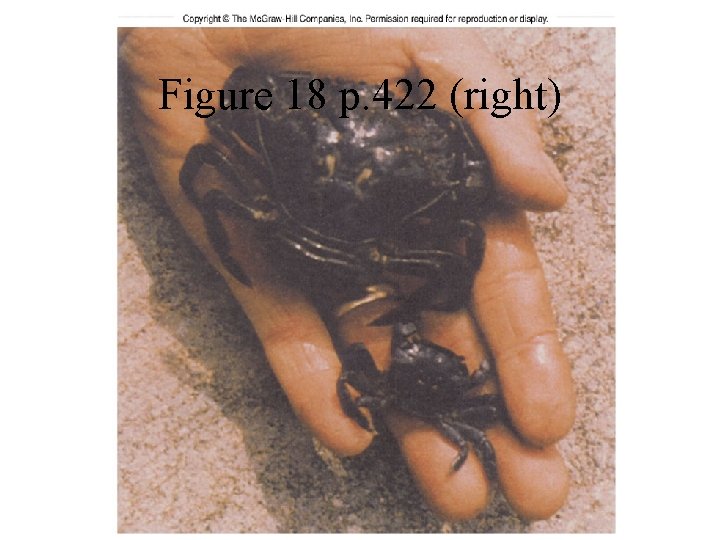
Figure 18 p. 422 (right)
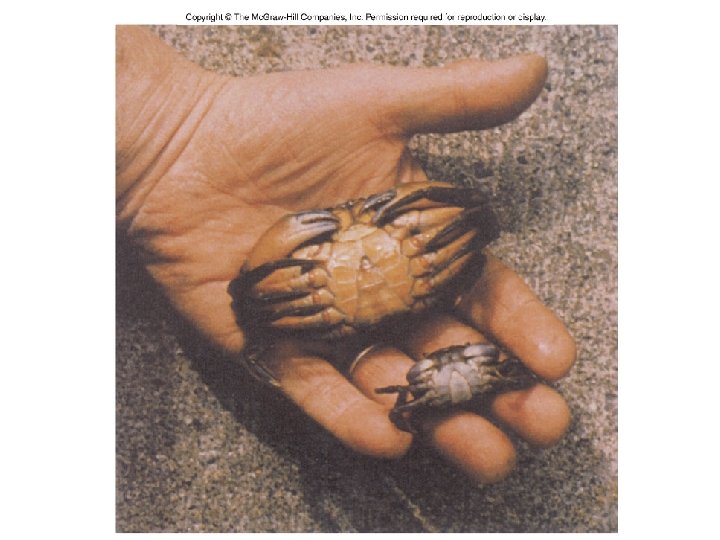
European green shore crab introduced SF 1989 Spread along Pacific, NE USA, Australia, South Africa Can live in wide range of salinities Voracious predator Comb jelly (Mnemiopsis leidyi) from N and S America Devastated fishery in Black Sea, also in SF Bay Zebra mussel from Europe to Great Lakes 1988
San Francisco Bay: 250 introduced species Busy port (ballast water of ships brings in non-native species) Highly disturbed habitat invasives (weeds) more tolerant of fluctuating physical conditions, pollution Diseases of non-natives transferred to native species (Still unclear why non-native species often do so well and outcompete native species) Cultural bias against introduced species?
Toxic Algae Blooms Increasing worldwide Accumulate in fish, shellfish Can sicken or kill people
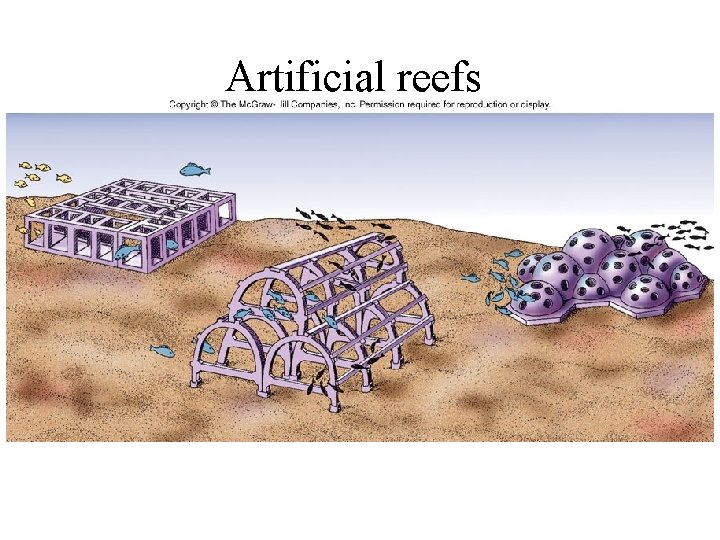
Artificial reefs
What can you do to save the oceans?
- Slides: 23