
How do entrepreneurs learn share learning Entrepreneurial Learning
- Slides: 30
How do entrepreneurs learn & share learning? Entrepreneurial Learning in Organisations Special Interest Group Manchester Metropolitan University 25 June 2012 Professor David Rae ISBE Vice-president, education drae@lincoln. ac. uk Entrepreneurial Learning
Professor David Rae Career in small business, government & higher education • Entrepreneurship researcher, educator & writer • Entrepreneurial learning: Ph. D & publications 1999 -2012 • Director of Enterprise & Innovation, Lincoln Business School, University of Lincoln • Vice-president, Institute of Small Business & Entrepreneurship • New editor, IJEBR • Optimist, based on human creativity & potential for learning • drae@lincoln. ac. uk ‘Warycat’ on Twitter Entrepreneurial Learning
Session topics…. • • What is entrepreneurial learning? Why does it matter? Entrepreneurial learning in organisations New perspectives on how entrepreneurs learn & share learning • Questions for the ELSIG… Entrepreneurial Learning
1. What is entrepreneurial learning? 2. What does it mean to you? 3. Why does it matter to us today? Entrepreneurial Learning
What is entrepreneurial learning? Entrepreneurial Learning
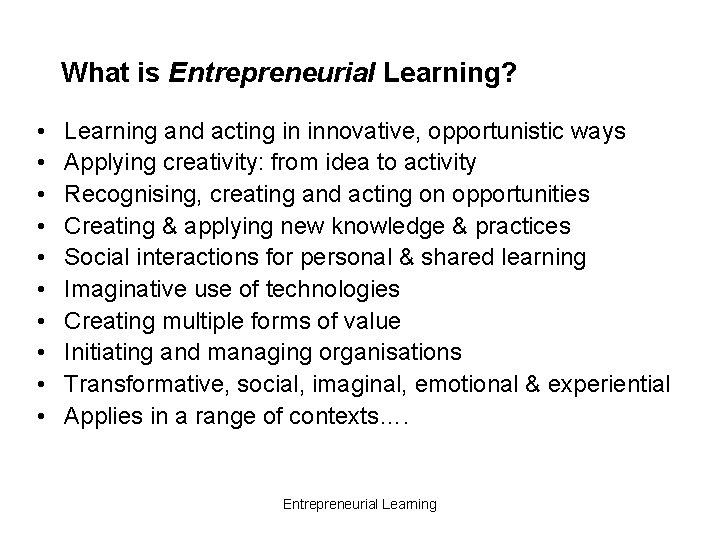
What is Entrepreneurial Learning? • • • Learning and acting in innovative, opportunistic ways Applying creativity: from idea to activity Recognising, creating and acting on opportunities Creating & applying new knowledge & practices Social interactions for personal & shared learning Imaginative use of technologies Creating multiple forms of value Initiating and managing organisations Transformative, social, imaginal, emotional & experiential Applies in a range of contexts…. Entrepreneurial Learning
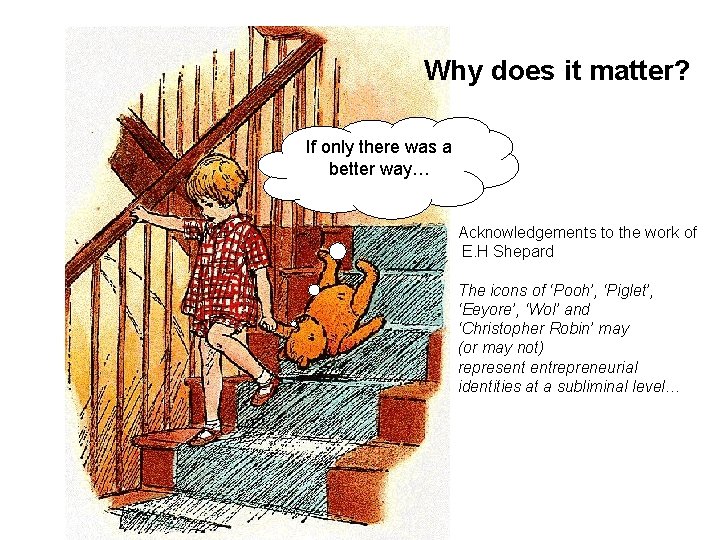
Why does it matter? If only there was a better way… Acknowledgements to the work of E. H Shepard The icons of ‘Pooh’, ‘Piglet’, ‘Eeyore’, ‘Wol’ and ‘Christopher Robin’ may (or may not) represent entrepreneurial identities at a subliminal level…
Why does entrepreneurial learning matter? Economic: • Regeneration & growth, innovation, job & wealth creation • Find and enact opportunities which create value from latent resources Educational: • Enhance human capability & potential in the new era • Enable excluded & disadvantaged groups to participate in learning & society more effectively • Develop peoples’ confidence to act in uncertainty Research: • Create & use new knowledge in a rapidly changing world Entrepreneurial Learning
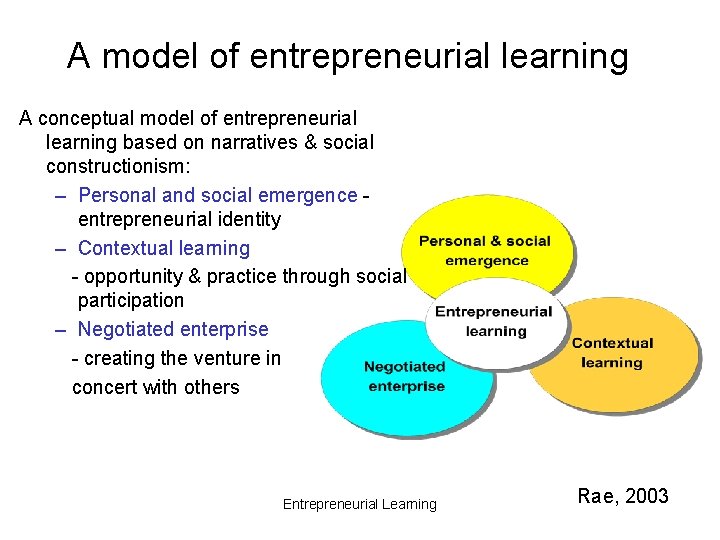
A model of entrepreneurial learning A conceptual model of entrepreneurial learning based on narratives & social constructionism: – Personal and social emergence entrepreneurial identity – Contextual learning - opportunity & practice through social participation – Negotiated enterprise - creating the venture in concert with others Entrepreneurial Learning Rae, 2003
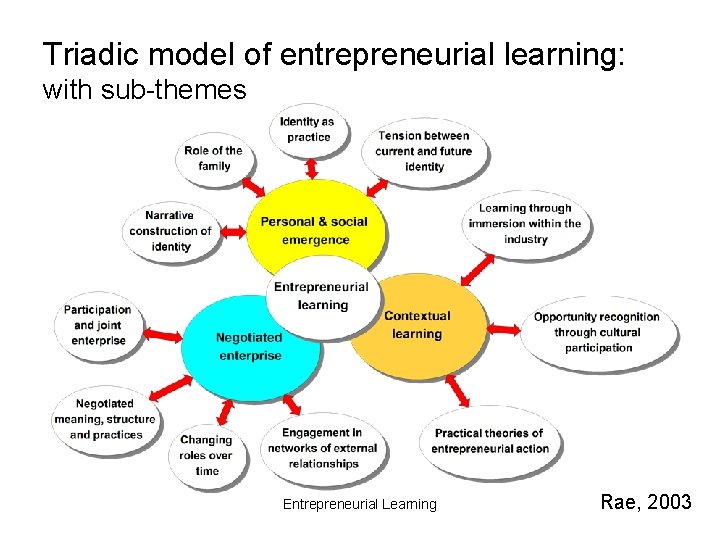
Triadic model of entrepreneurial learning: with sub-themes Entrepreneurial Learning Rae, 2003
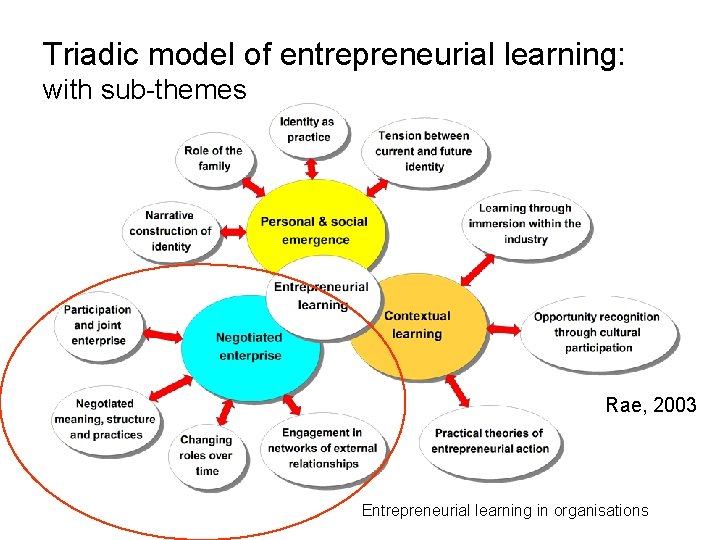
Triadic model of entrepreneurial learning: with sub-themes Rae, 2003 Entrepreneurial learning in organisations
Applying Entrepreneurial Learning in education Entrepreneurial Learning
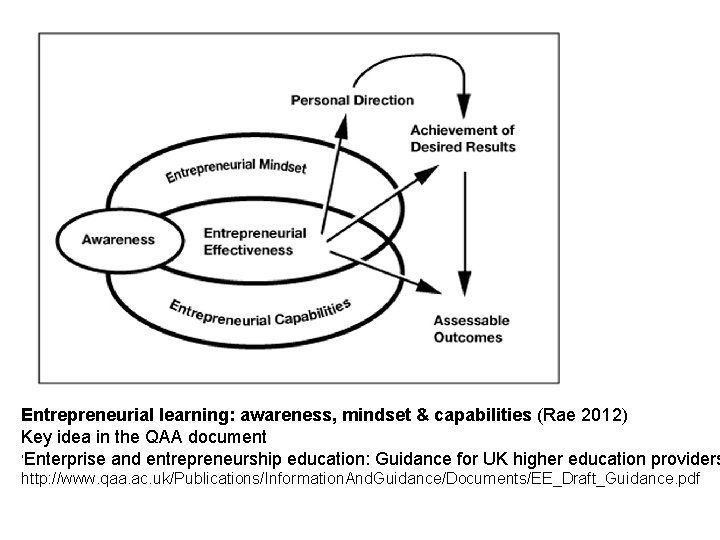
Entrepreneurial learning: awareness, mindset & capabilities (Rae 2012) Key idea in the QAA document ‘Enterprise and entrepreneurship education: Guidance for UK higher education providers http: //www. qaa. ac. uk/Publications/Information. And. Guidance/Documents/EE_Draft_Guidance. pdf
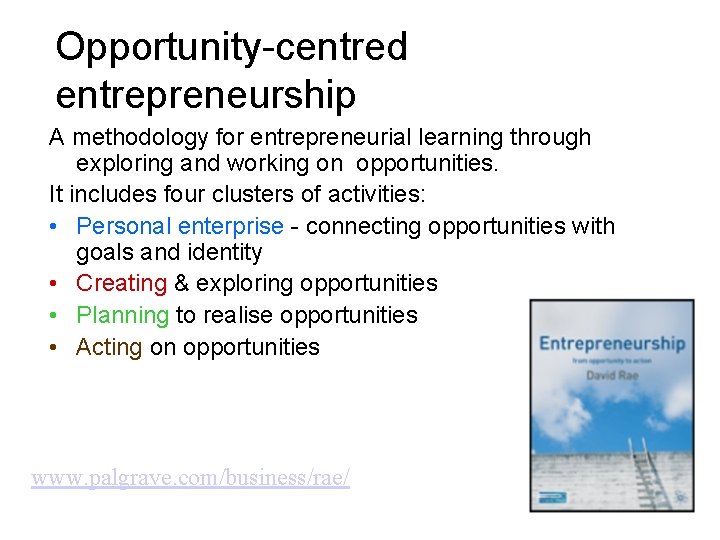
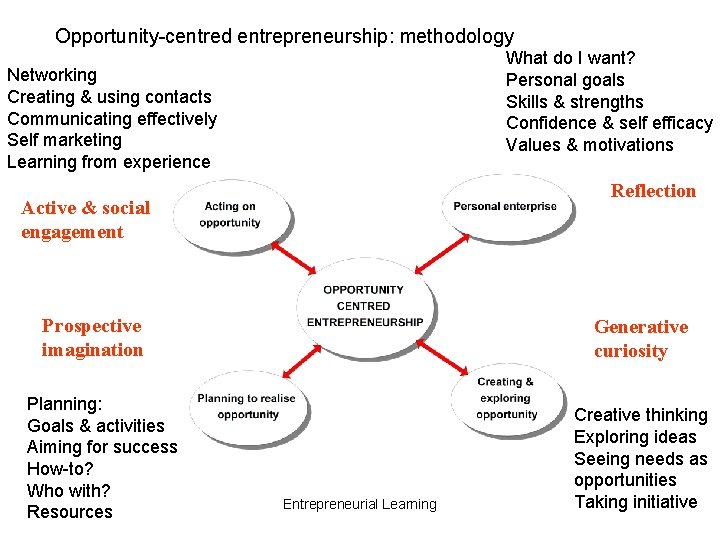
Opportunity-centred entrepreneurship A methodology for entrepreneurial learning through exploring and working on opportunities. It includes four clusters of activities: • Personal enterprise - connecting opportunities with goals and identity • Creating & exploring opportunities • Planning to realise opportunities • Acting on opportunities www. palgrave. com/business/rae/
Opportunity-centred entrepreneurship: methodology What do I want? Personal goals Skills & strengths Confidence & self efficacy Values & motivations Networking Creating & using contacts Communicating effectively Self marketing Learning from experience Reflection Active & social engagement Prospective imagination Planning: Goals & activities Aiming for success How-to? Who with? Resources Generative curiosity Entrepreneurial Learning Creative thinking Exploring ideas Seeing needs as opportunities Taking initiative
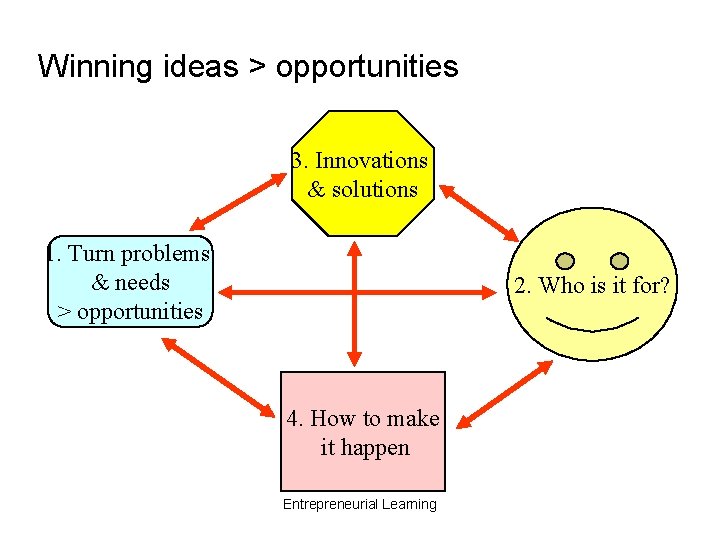
Winning ideas > opportunities 3. Innovations & solutions 1. Turn problems & needs > opportunities 2. Who is it for? 4. How to make it happen Entrepreneurial Learning
Entrepreneurial learning in practice: the case of Business Inspiration Small business leadership recovery programme for owners & managers of 60 firms • How did people learn? • What did they learn? • Comparison with ‘LEAD’ & Goldman Sachs 10 k programs? • From ISBE conference paper 2011 • To be published in ‘Industry & Higher Education’ Dec 2012 Entrepreneurial Learning
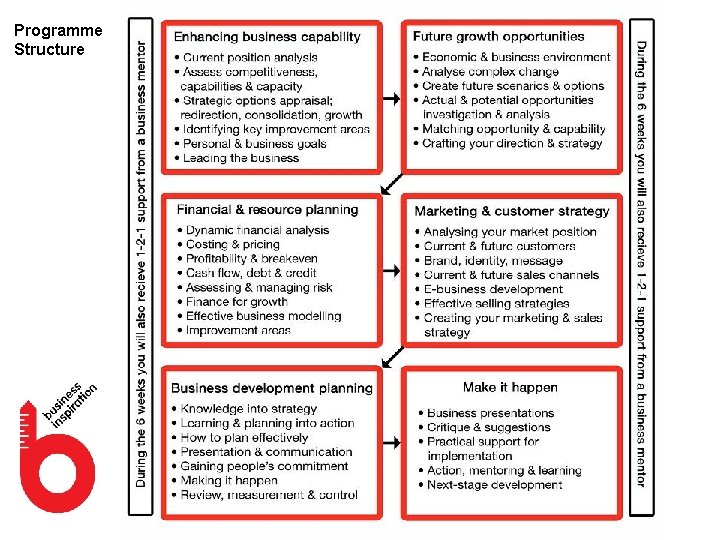
Programme Structure
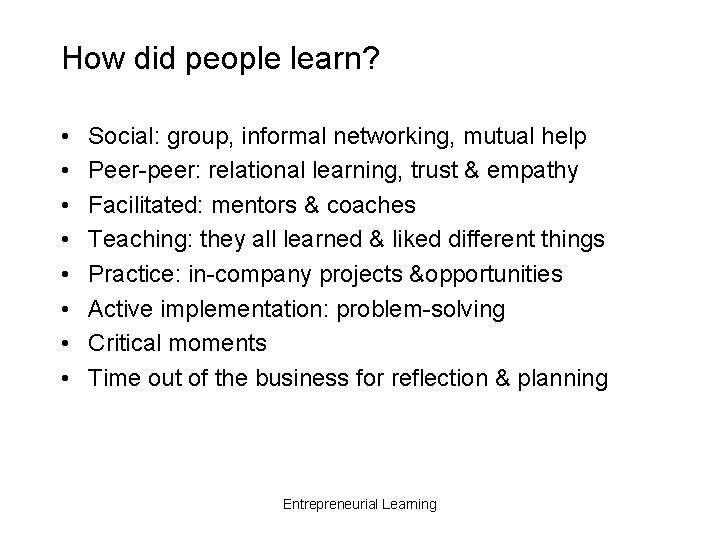
How did people learn? • • Social: group, informal networking, mutual help Peer-peer: relational learning, trust & empathy Facilitated: mentors & coaches Teaching: they all learned & liked different things Practice: in-company projects &opportunities Active implementation: problem-solving Critical moments Time out of the business for reflection & planning Entrepreneurial Learning
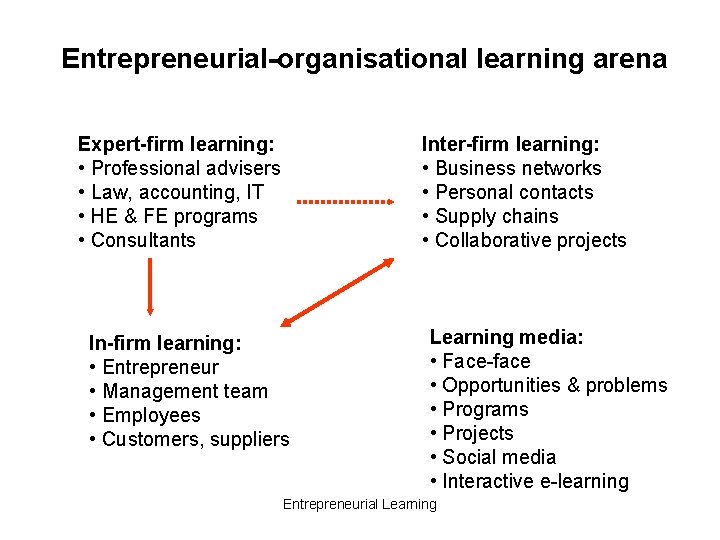
Entrepreneurial-organisational learning arena Inter-firm learning: • Business networks • Personal contacts • Supply chains • Collaborative projects Expert-firm learning: • Professional advisers • Law, accounting, IT • HE & FE programs • Consultants In-firm learning: • Entrepreneur • Management team • Employees • Customers, suppliers Learning media: • Face-face • Opportunities & problems • Programs • Projects • Social media • Interactive e-learning Entrepreneurial Learning
Momentary perspective on entrepreneurial learning: the power of the moment Entrepreneurial Learning
Why moments matter for entrepreneurs, researchers & educators • • • The ‘aha’ or ‘Eureka’ discovery moment Recognising opportunities ‘Moments of truth’ in interactions with people Serendipity – ‘chance’ encounters, meetings & discoveries Split-second decision-making Using intuition, instinct & gut-feel Emotional awareness & subconscious processes Value creation & capture in the moment (buying online) Digital eye-brain interactions: • Twitter messages • Website visits • Email & messaging • Realising you’ve just got it wrong…. Entrepreneurial Learning
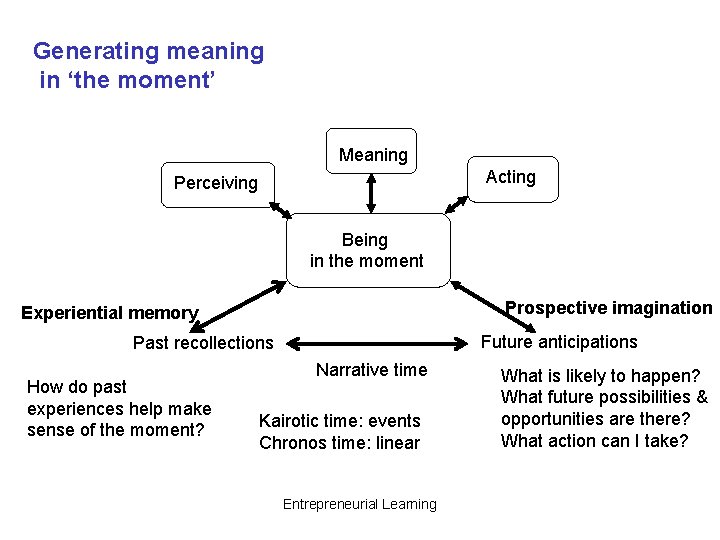
Living in the moment • ‘Now’ is an important time • Moment: ‘a point in time, an instant’; ‘a turning point in a series of events’. • We live in the moment: authentic experience & self-actualisation situated in consciousness between past experience and future anticipation • Creative entrepreneurs make sense and act in the moment, connecting subjective experience with wider context • Momentary perspective offers new understanding of entrepreneurial learning & behaviour: creativity, transformation, action. Entrepreneurial Learning
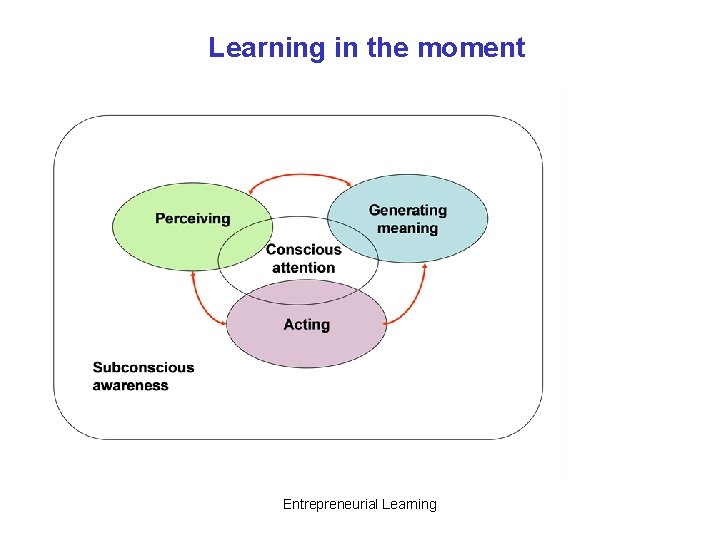
Learning in the moment Entrepreneurial Learning
Generating meaning in ‘the moment’ Meaning Acting Perceiving Being in the moment Prospective imagination Experiential memory Future anticipations Past recollections How do past experiences help make sense of the moment? Narrative time Kairotic time: events Chronos time: linear Entrepreneurial Learning What is likely to happen? What future possibilities & opportunities are there? What action can I take?
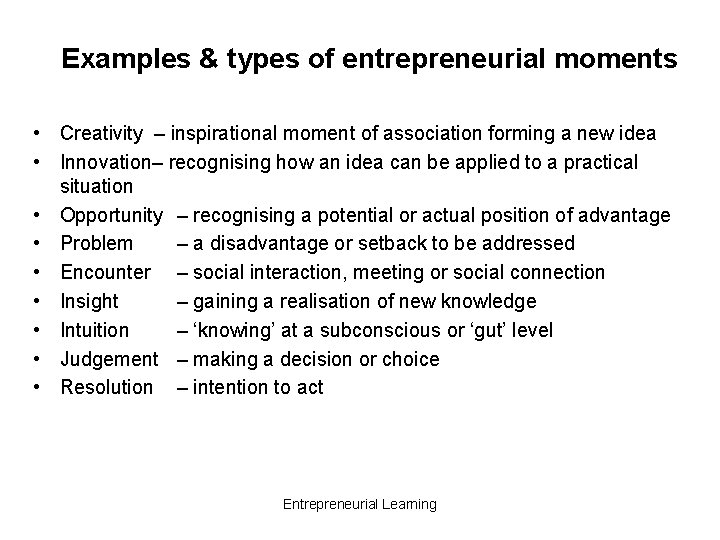
Examples & types of entrepreneurial moments • Creativity – inspirational moment of association forming a new idea • Innovation– recognising how an idea can be applied to a practical situation • Opportunity – recognising a potential or actual position of advantage • Problem – a disadvantage or setback to be addressed • Encounter – social interaction, meeting or social connection • Insight – gaining a realisation of new knowledge • Intuition – ‘knowing’ at a subconscious or ‘gut’ level • Judgement – making a decision or choice • Resolution – intention to act Entrepreneurial Learning
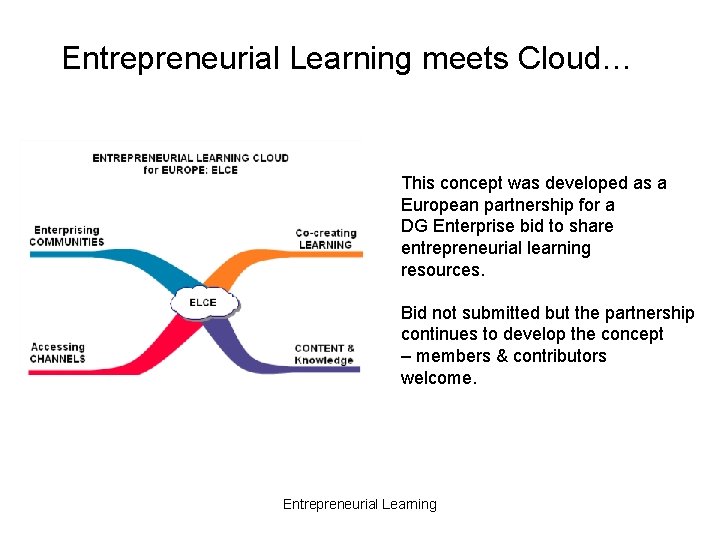
Entrepreneurial Learning meets Cloud… This concept was developed as a European partnership for a DG Enterprise bid to share entrepreneurial learning resources. Bid not submitted but the partnership continues to develop the concept – members & contributors welcome. Entrepreneurial Learning
Entrepreneurial learning special interest group: questions for discussion 1. What new knowledge in entrepreneurial learning and organisations is being produced? 2. How can this be shared – between researchers, entrepreneurs, educators, advisors? 3. How can this be applied – in business practice & support, education, policy, research? 4. What perspectives can be shared with other fields? 5. e. g. social, public & health sectors? 6. How can we gain ‘official’ endorsement of this? 7. What will make this group sustainable? Entrepreneurial Learning
Creating Opportunities through Innovation: Local Energy, Global Vision DUBLIN, Ireland. 7 th-8 th November 2012 www. isbe. org. uk/ISBE 2012
Thank you! drae@lincoln. ac. uk Entrepreneurial Learning