
How do DNA RNA and proteins link together
- Slides: 15
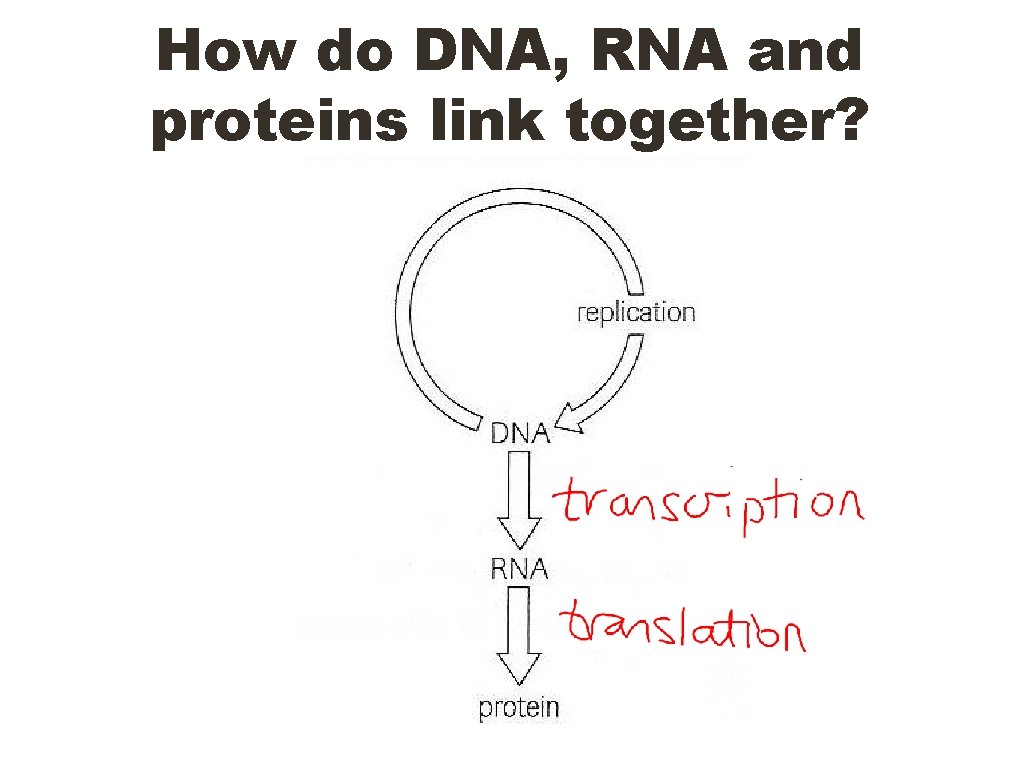
How do DNA, RNA and proteins link together?
(g) the two major functions of DNA; replication in dividing cells and protein synthesis (h) the semi-conservative replication of DNA including the roles of DNA polymerase and helicase and be able to use evidence from the Meselson and Stahl experiments Booklet pg 146
DNA Replication in dividing cells Semi-Conservative Replication
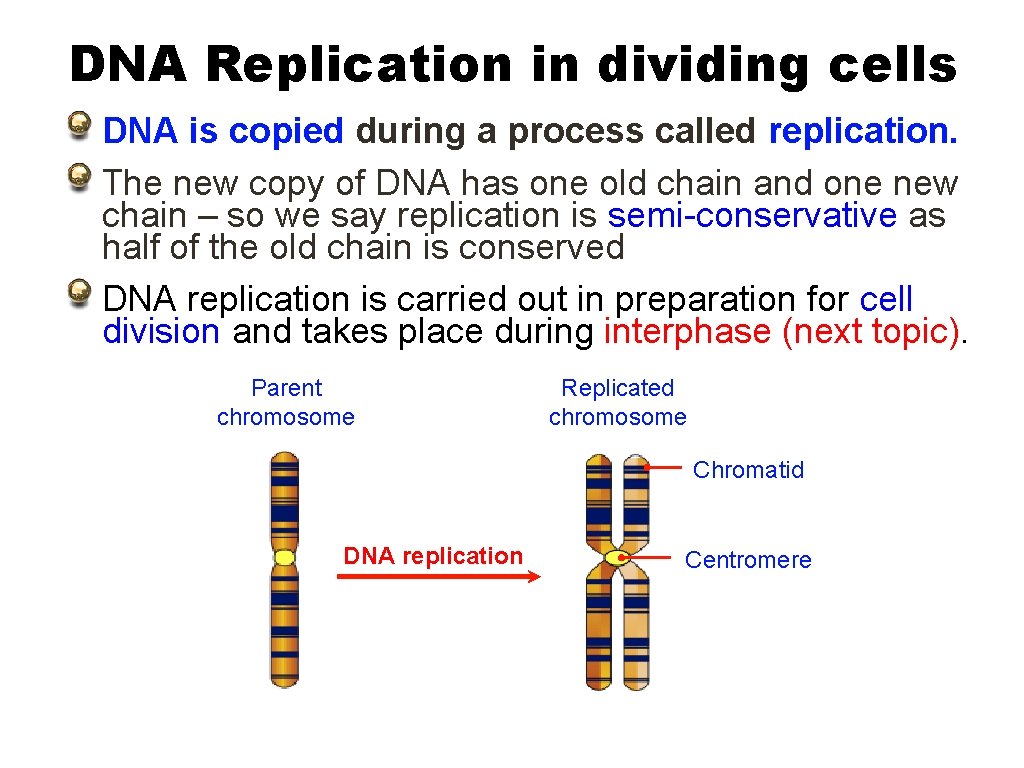
DNA Replication in dividing cells DNA is copied during a process called replication. The new copy of DNA has one old chain and one new chain – so we say replication is semi-conservative as half of the old chain is conserved DNA replication is carried out in preparation for cell division and takes place during interphase (next topic). Parent chromosome Replicated chromosome Chromatid DNA replication Centromere
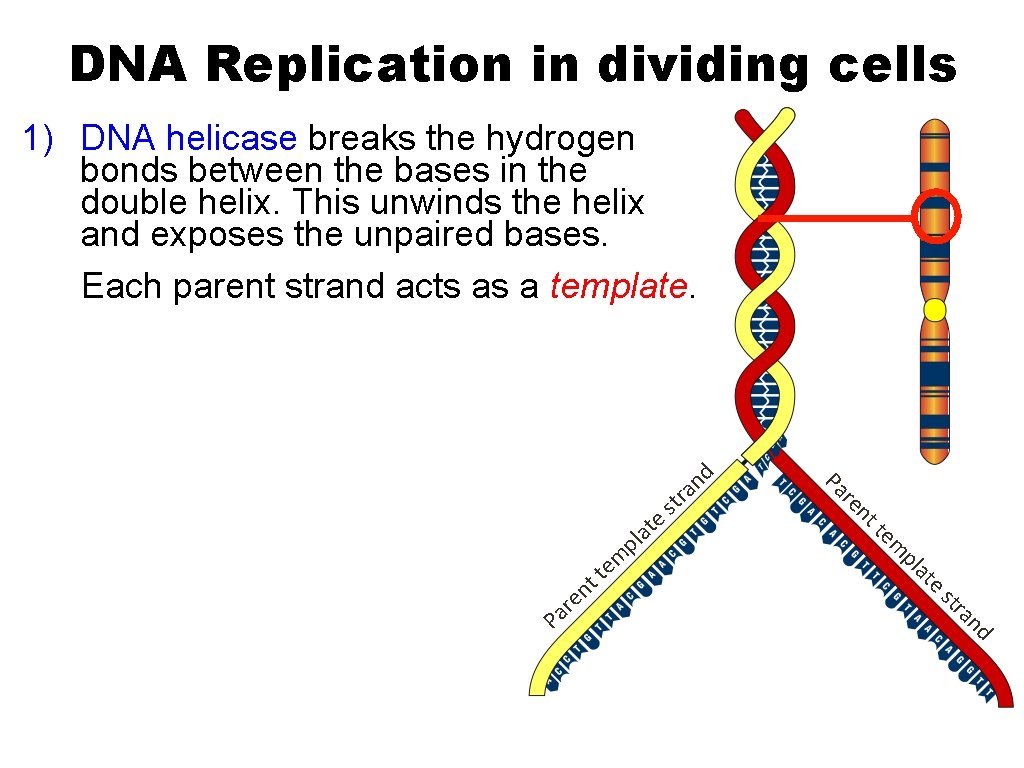
DNA Replication in dividing cells 1) DNA helicase breaks the hydrogen bonds between the bases in the double helix. This unwinds the helix and exposes the unpaired bases. Each parent strand acts as a template. e at pl nd ra st P e r a em t t n tt em p e t la r st n re Pa d n a
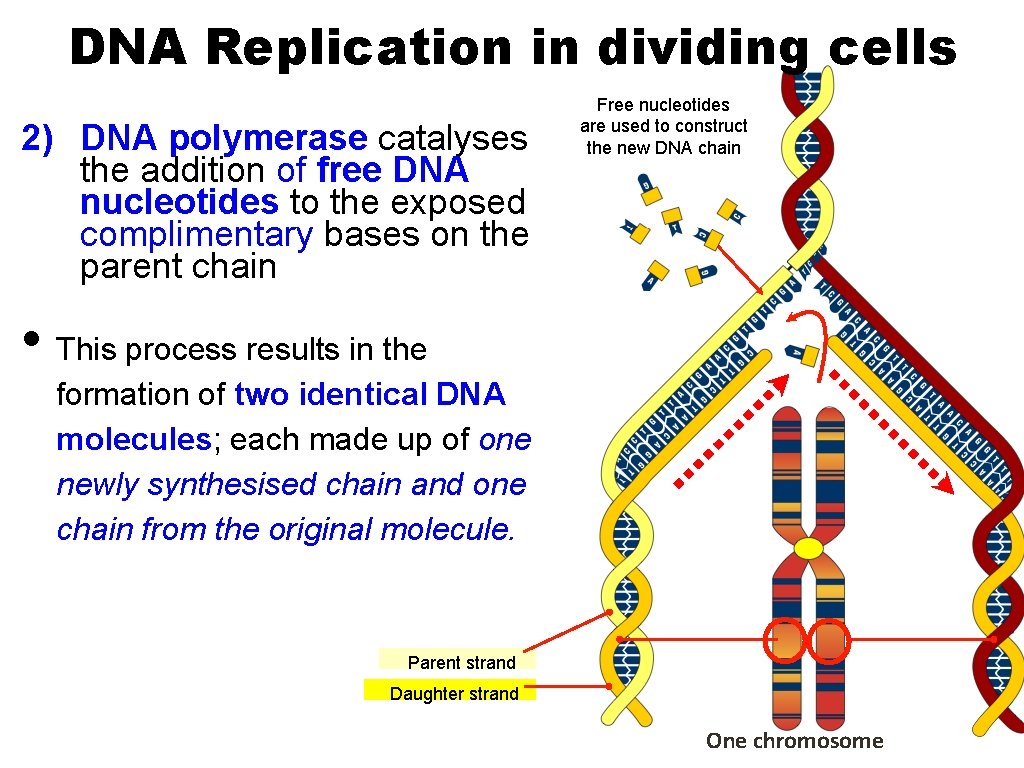
DNA Replication in dividing cells 2) DNA polymerase catalyses the addition of free DNA nucleotides to the exposed complimentary bases on the parent chain Free nucleotides are used to construct the new DNA chain • This process results in the formation of two identical DNA molecules; each made up of one newly synthesised chain and one chain from the original molecule. Parent strand Daughter strand One chromosome
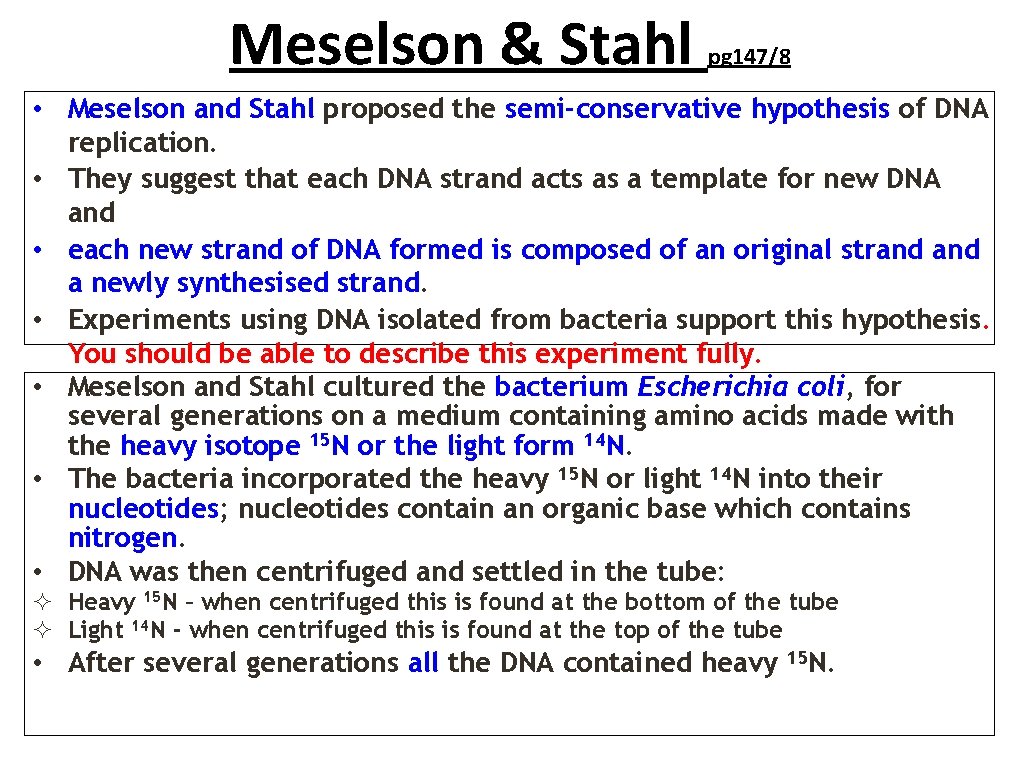
Meselson & Stahl pg 147/8 • Meselson and Stahl proposed the semi-conservative hypothesis of DNA replication. • They suggest that each DNA strand acts as a template for new DNA and • each new strand of DNA formed is composed of an original strand a newly synthesised strand. • Experiments using DNA isolated from bacteria support this hypothesis. You should be able to describe this experiment fully. • Meselson and Stahl cultured the bacterium Escherichia coli, for several generations on a medium containing amino acids made with the heavy isotope 15 N or the light form 14 N. • The bacteria incorporated the heavy 15 N or light 14 N into their nucleotides; nucleotides contain an organic base which contains nitrogen. • DNA was then centrifuged and settled in the tube: ² Heavy 15 N – when centrifuged this is found at the bottom of the tube ² Light 14 N - when centrifuged this is found at the top of the tube • After several generations all the DNA contained heavy 15 N.
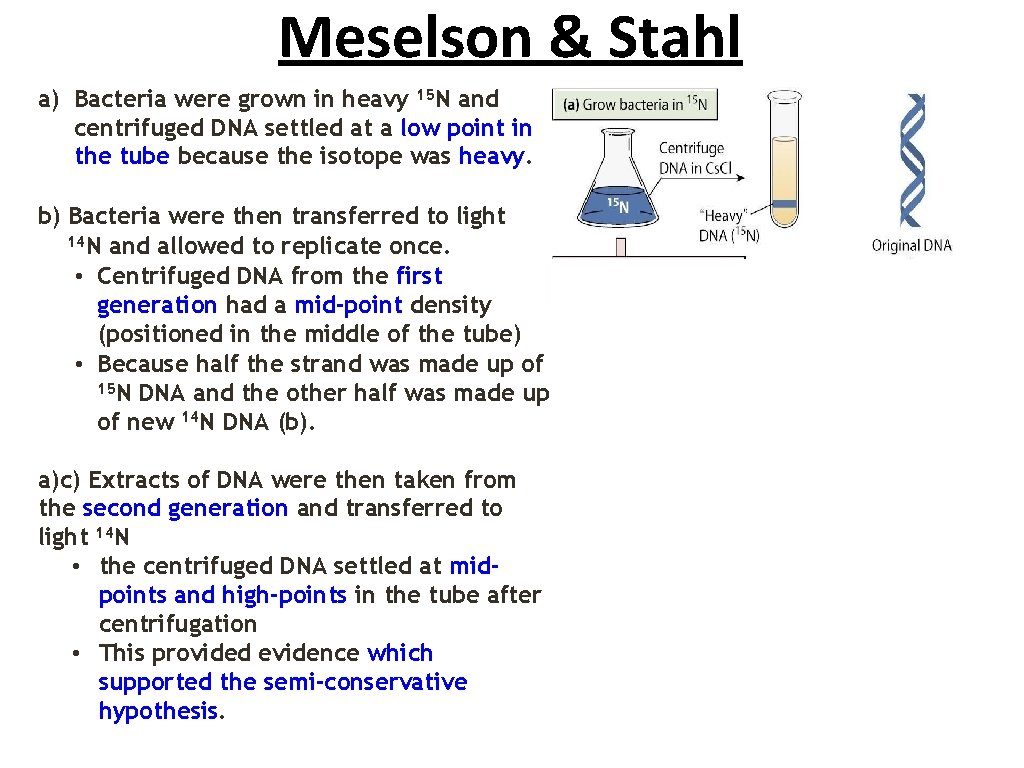
Meselson & Stahl a) Bacteria were grown in heavy 15 N and centrifuged DNA settled at a low point in the tube because the isotope was heavy. b) Bacteria were then transferred to light 14 N and allowed to replicate once. • Centrifuged DNA from the first generation had a mid-point density (positioned in the middle of the tube) • Because half the strand was made up of 15 N DNA and the other half was made up of new 14 N DNA (b). a)c) Extracts of DNA were then taken from the second generation and transferred to light 14 N • the centrifuged DNA settled at midpoints and high-points in the tube after centrifugation • This provided evidence which supported the semi-conservative hypothesis.
Complete past paper question Pg 107 -108
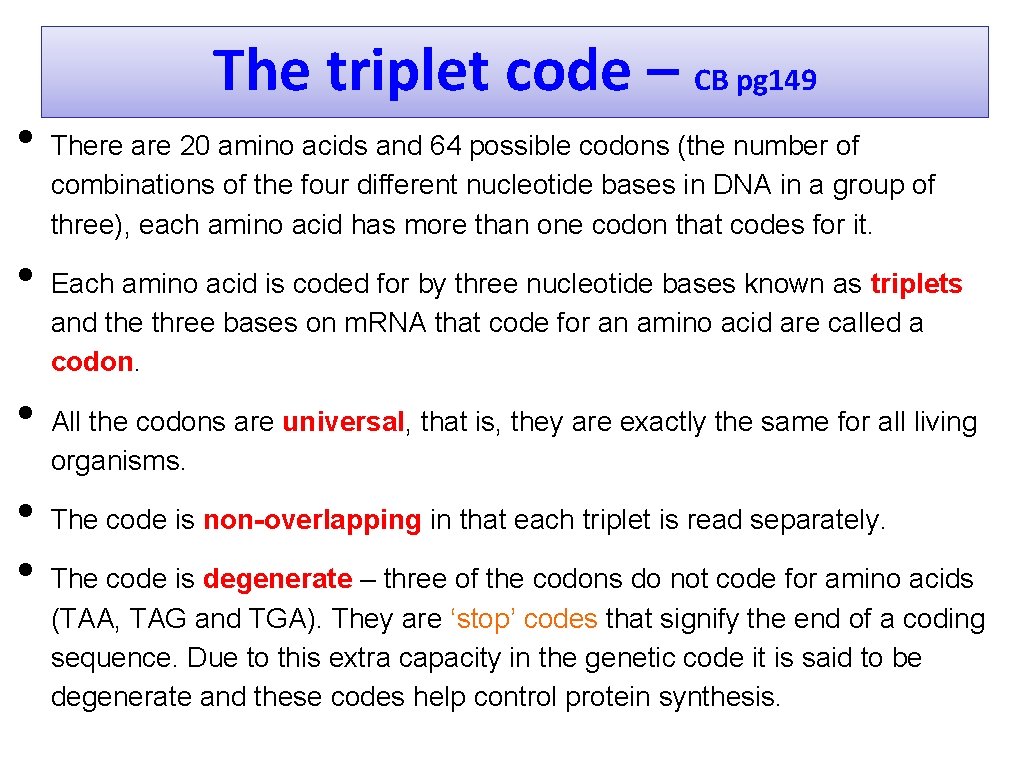
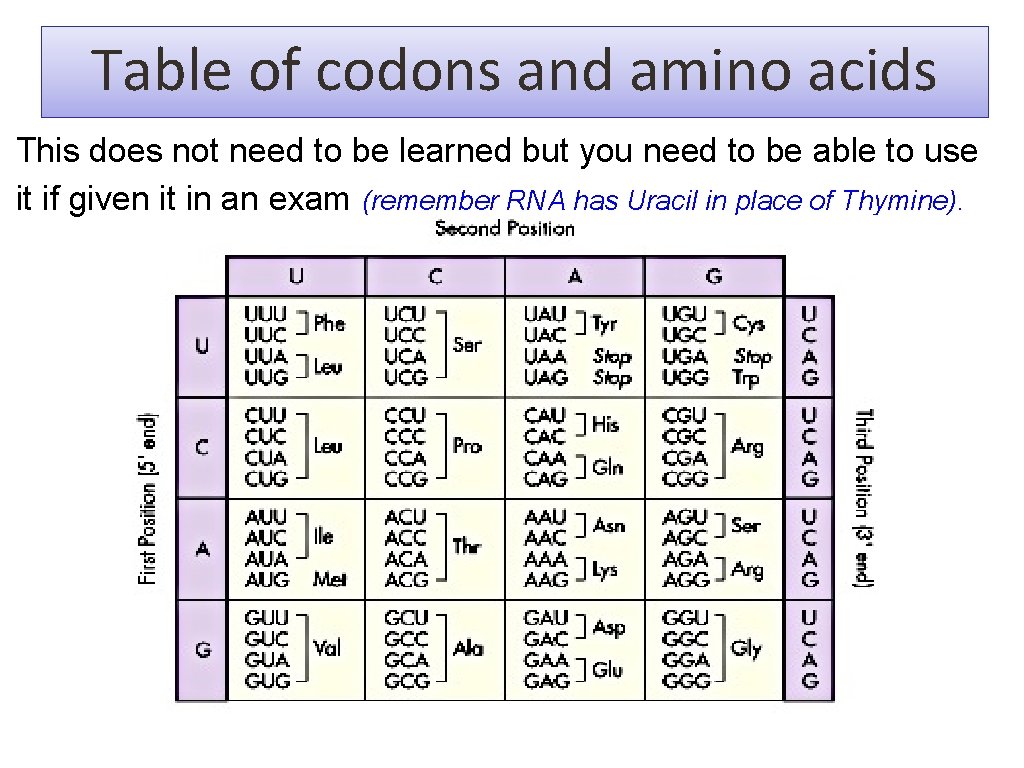
• • • The triplet code – CB pg 149 There are 20 amino acids and 64 possible codons (the number of combinations of the four different nucleotide bases in DNA in a group of three), each amino acid has more than one codon that codes for it. Each amino acid is coded for by three nucleotide bases known as triplets and the three bases on m. RNA that code for an amino acid are called a codon. All the codons are universal, that is, they are exactly the same for all living organisms. The code is non-overlapping in that each triplet is read separately. The code is degenerate – three of the codons do not code for amino acids (TAA, TAG and TGA). They are ‘stop’ codes that signify the end of a coding sequence. Due to this extra capacity in the genetic code it is said to be degenerate and these codes help control protein synthesis.
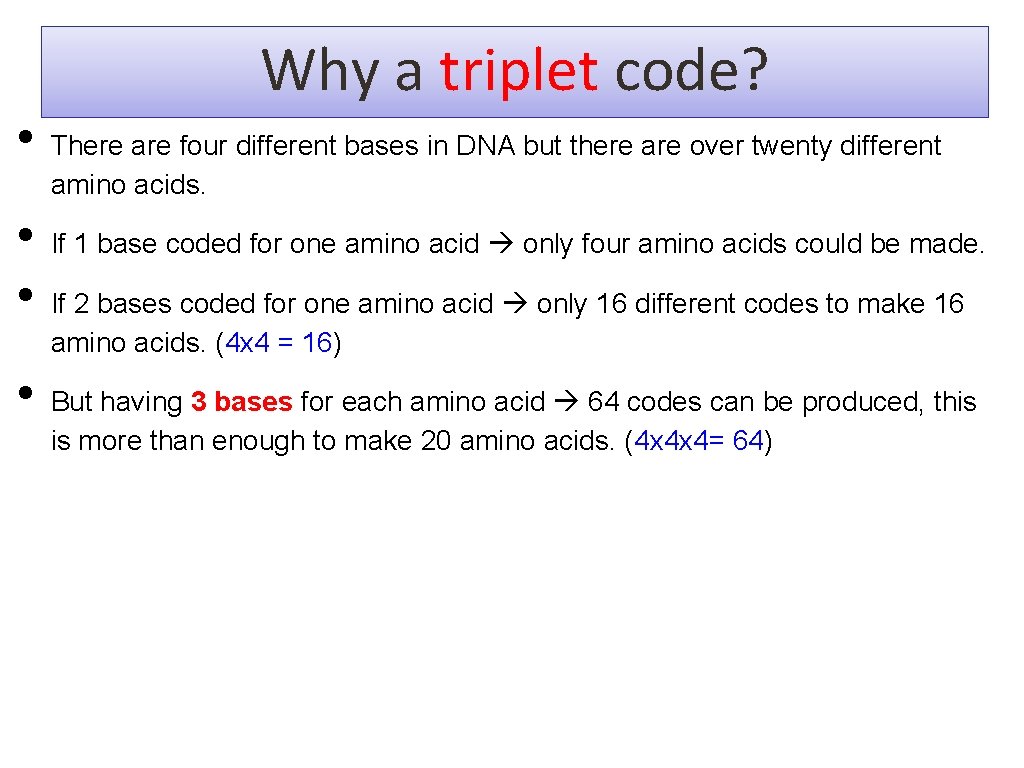
• • Why a triplet code? There are four different bases in DNA but there are over twenty different amino acids. If 1 base coded for one amino acid only four amino acids could be made. If 2 bases coded for one amino acid only 16 different codes to make 16 amino acids. (4 x 4 = 16) But having 3 bases for each amino acid 64 codes can be produced, this is more than enough to make 20 amino acids. (4 x 4 x 4= 64)
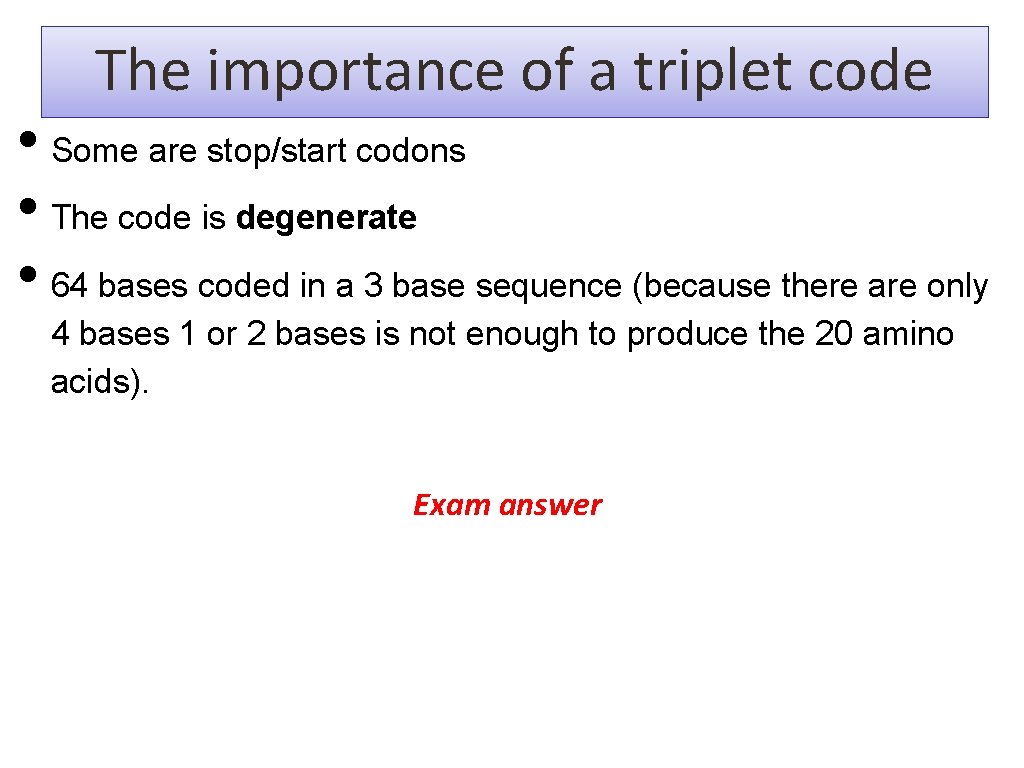
The importance of a triplet code • Some are stop/start codons • The code is degenerate • 64 bases coded in a 3 base sequence (because there are only 4 bases 1 or 2 bases is not enough to produce the 20 amino acids). Exam answer
Table of codons and amino acids This does not need to be learned but you need to be able to use it if given it in an exam (remember RNA has Uracil in place of Thymine).
One gene – one polypeptide hypothesis Beadle & Tatum Beadle and Tatum proposed the one gene – one polypeptide hypothesis. They stated that a single gene codes for a single polypeptide chain. Since we know the quaternary structure of a protein is composed of two or more globular polypeptide chains bonded together, there must be several genes involved to carry the information for a single protein because one gene would be needed for each polypeptide chain. needed to code for a fully functional protein. This is called the one gene – one polypeptide hypothesis.
Complete PPQ on pg 109110 (not 5 biii) H/W: Pg 103 -106