
How do Chemical Reactions Happen In Contact Reactions

- Slides: 16
How do Chemical Reactions Happen?
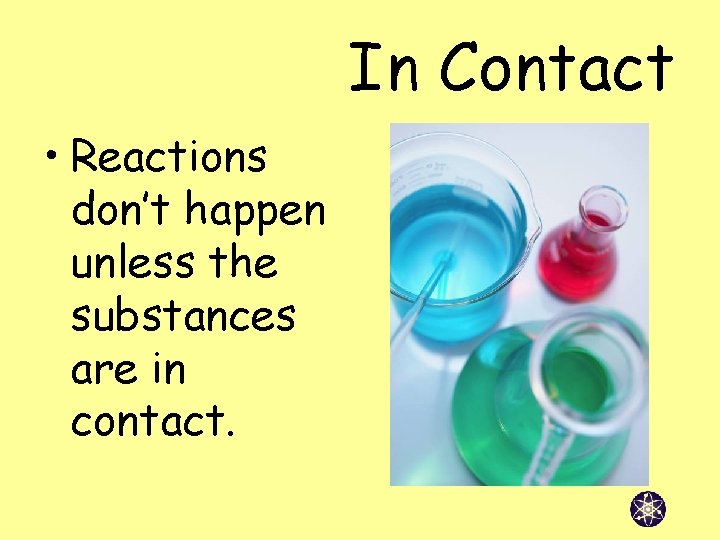
In Contact • Reactions don’t happen unless the substances are in contact.
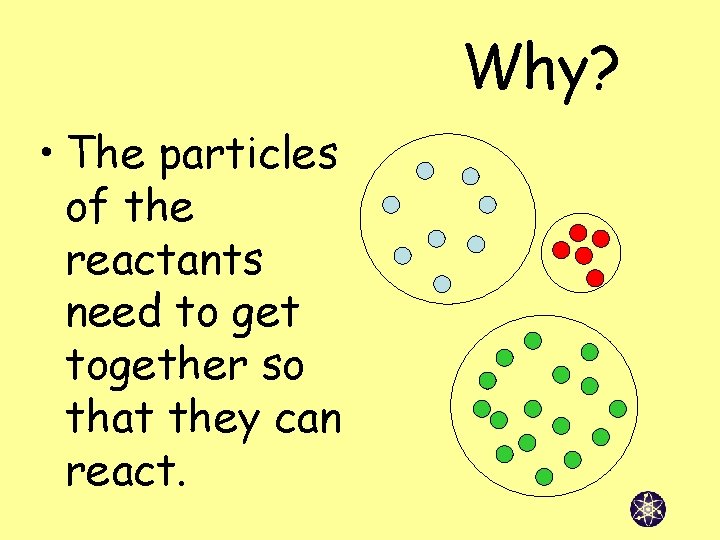
Why? • The particles of the reactants need to get together so that they can react.
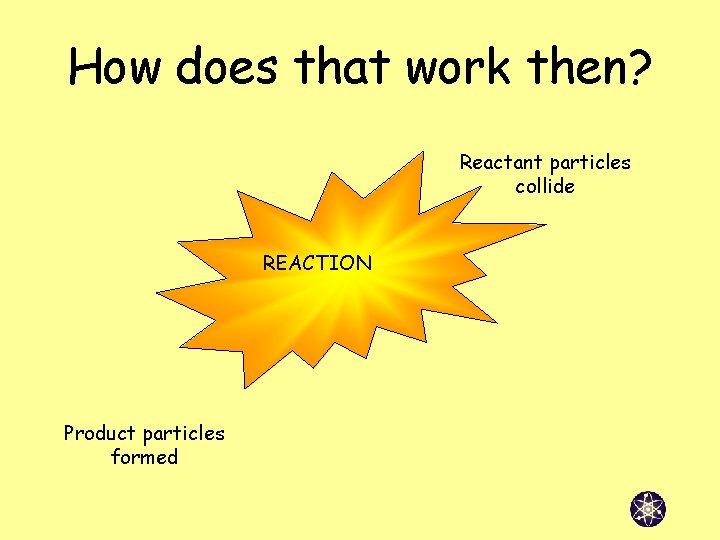
How does that work then? Reactant particles collide REACTION Product particles formed
Is it really that simple? Yes Well, sort of. not really. OK, not quite!
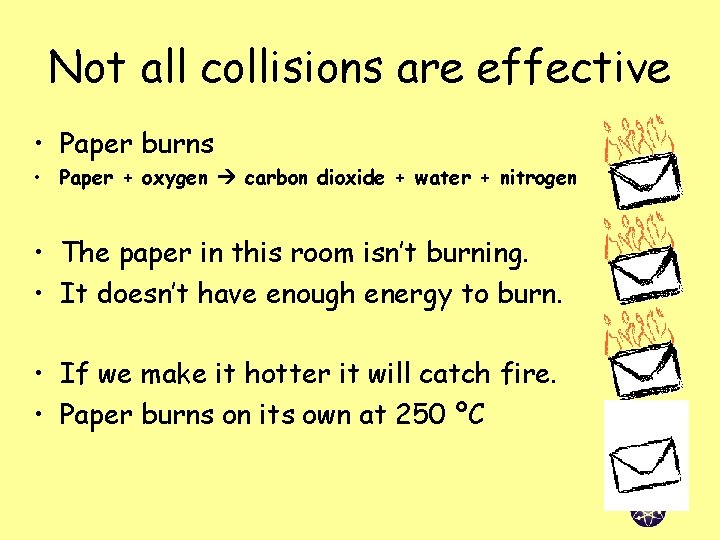
Not all collisions are effective • Paper burns • Paper + oxygen carbon dioxide + water + nitrogen • The paper in this room isn’t burning. • It doesn’t have enough energy to burn. • If we make it hotter it will catch fire. • Paper burns on its own at 250 ºC
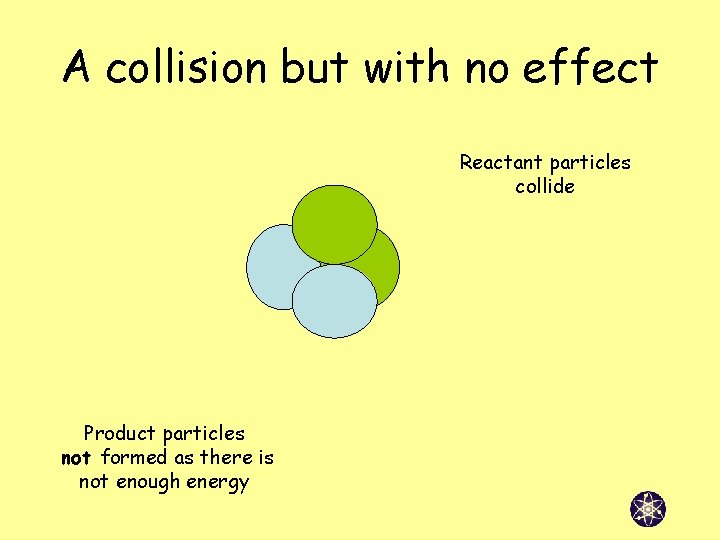
A collision but with no effect Reactant particles collide Product particles not formed as there is not enough energy
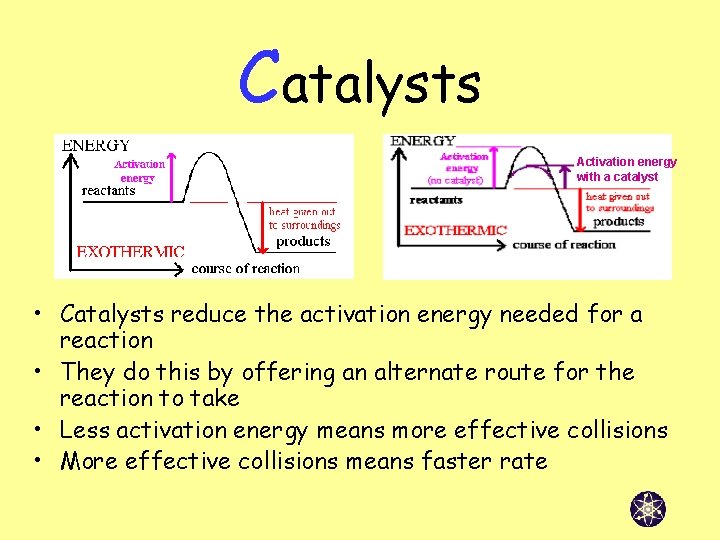
Activation Energy • Reactions only happen if the particles have enough energy. • The minimum amount of energy needed to start a reaction is called the Activation Energy • The amount of activation energy needed is different for each reaction. • But • Every reaction has activation energy, they all need a little push to get started.
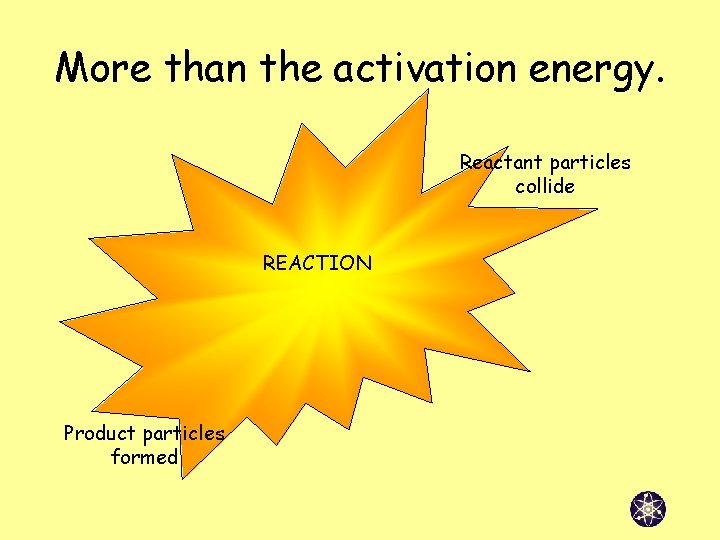
More than the activation energy. Reactant particles collide REACTION Product particles formed
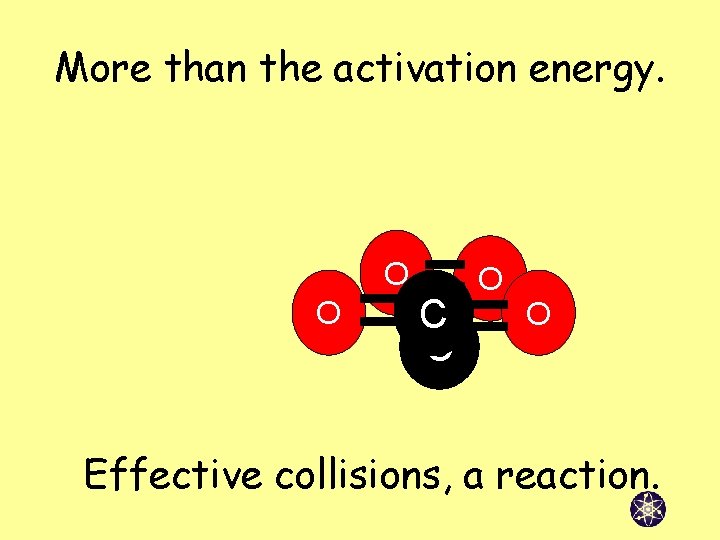
More than the activation energy. O O C C O O Effective collisions, a reaction.
The Collision Theory • Particles are constantly moving • For a chemical reaction to take place the reactant particles must collide first • For the collision to be effective the particles must have the right amount of energy • The minimum amount of energy required for an effective collision is called the activation energy
Factors affecting rate • Concentration • Temperature • Catalysts • Surface Area
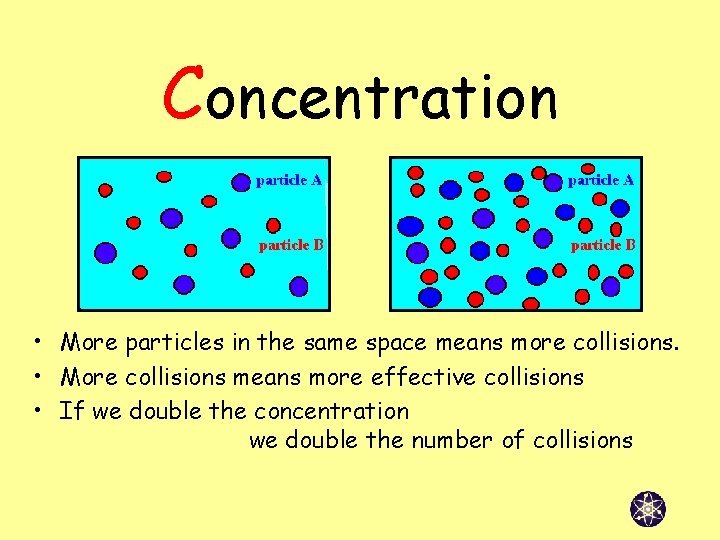
Concentration • More particles in the same space means more collisions. • More collisions means more effective collisions • If we double the concentration we double the number of collisions
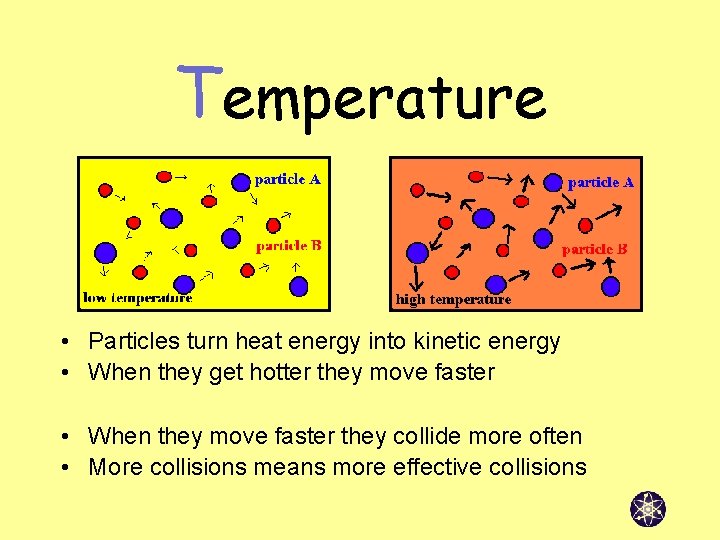
Temperature • Particles turn heat energy into kinetic energy • When they get hotter they move faster • When they move faster they collide more often • More collisions means more effective collisions
Catalysts Activation energy with a catalyst • Catalysts reduce the activation energy needed for a reaction • They do this by offering an alternate route for the reaction to take • Less activation energy means more effective collisions • More effective collisions means faster rate
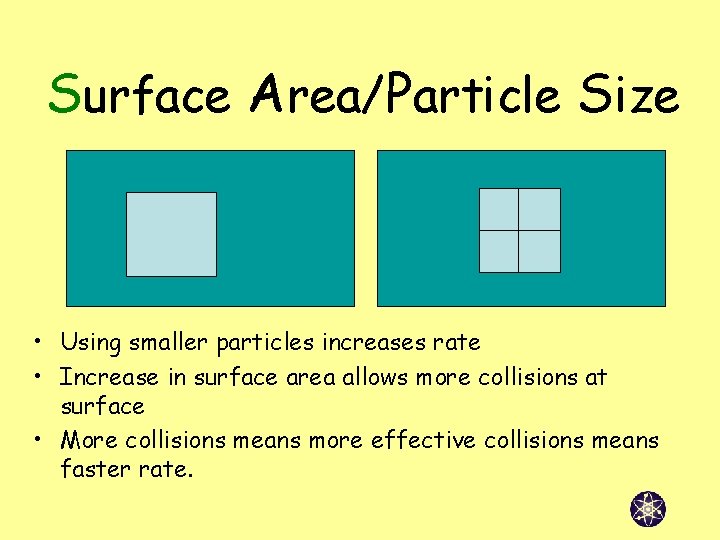
Surface Area/Particle Size • Using smaller particles increases rate • Increase in surface area allows more collisions at surface • More collisions means more effective collisions means faster rate.