
How Do Cells Work A Cell is a
- Slides: 19
How Do Cells Work?
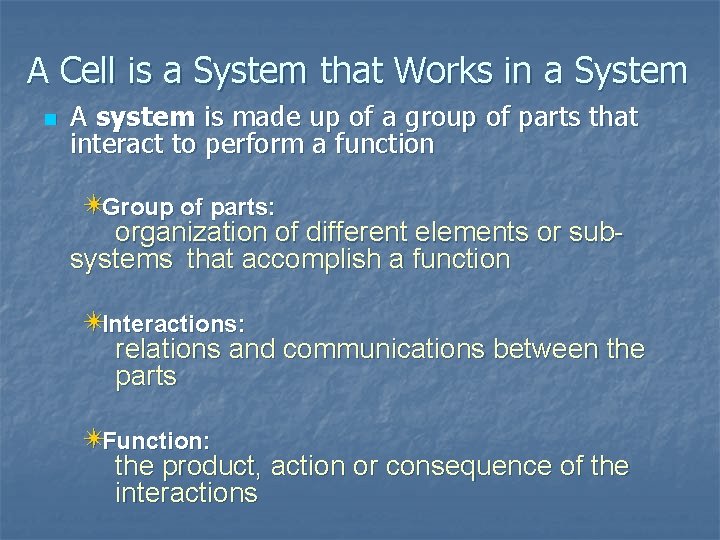
A Cell is a System that Works in a System n A system is made up of a group of parts that interact to perform a function ✴Group of parts: organization of different elements or subsystems that accomplish a function ✴Interactions: relations and communications between the parts ✴Function: the product, action or consequence of the interactions
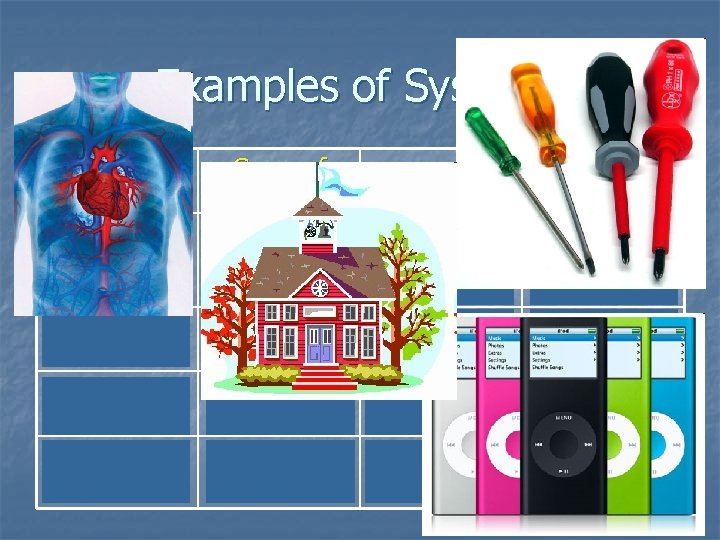
Examples of Systems System Group of parts Interaction Function i. Pod Body, electronics, battery, earphones Store and organize data, energize, produce sound Play music, videos. . . Screw driver Shaped tip, shaft, handle Transfer rotation Turn a screw Cardiovascular Heart, arteries, capillaries, veins. Pump, regulate, distribution Transport the blood Education School Boards, Schools, Educators Transfer knowledge and culture Socialize
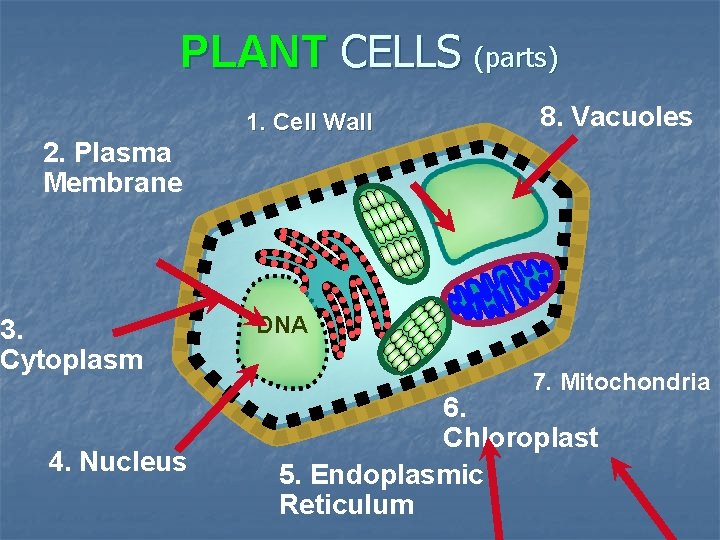
PLANT CELLS (parts) 1. Cell Wall 8. Vacuoles 2. Plasma Membrane 3. Cytoplasm 4. Nucleus DNA 7. Mitochondria 6. Chloroplast 5. Endoplasmic Reticulum
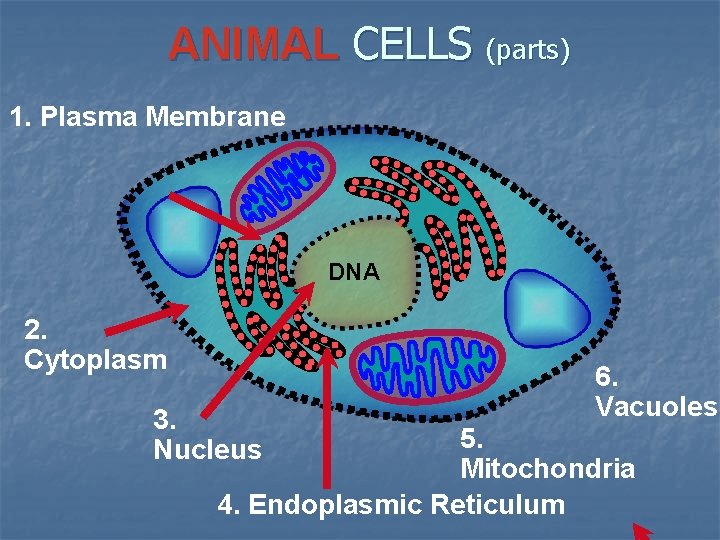
ANIMAL CELLS (parts) 1. Plasma Membrane DNA 2. Cytoplasm 3. Nucleus 6. Vacuoles 5. Mitochondria 4. Endoplasmic Reticulum
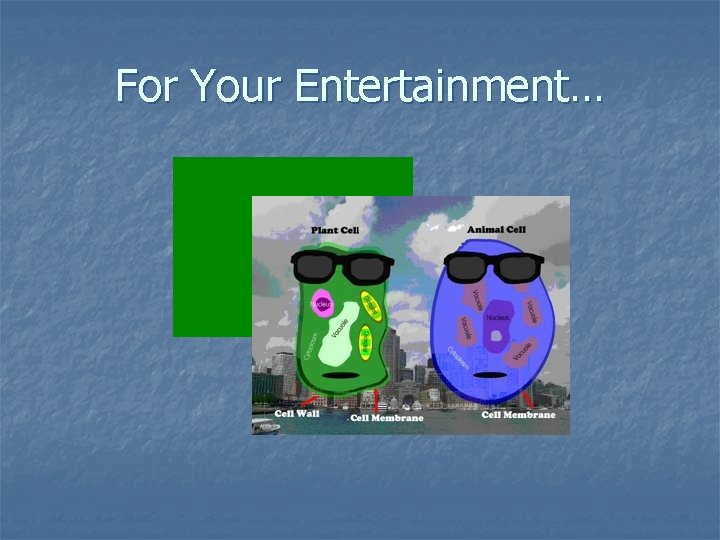
For Your Entertainment…
Cells need nutrients n Nutrients: The particles from which cells are nourished. They are derived from digested food
Inputs and Outputs n Inputs: Inputs are substances that enter the cell and are necessary to its activities n Main Inputs: Water, nutrients and oxygen n n The cell’s mitochondria release the energy from the nutrients when the nutrients come in contact with oxygen. These nutrients are used as material for construction (to grow) or repair (to heal) the organism.
Inputs and Outputs n n Outputs: Wastes or useless substances that must leave the cell Main outputs: Water, carbon dioxide, and waste from cellular functions
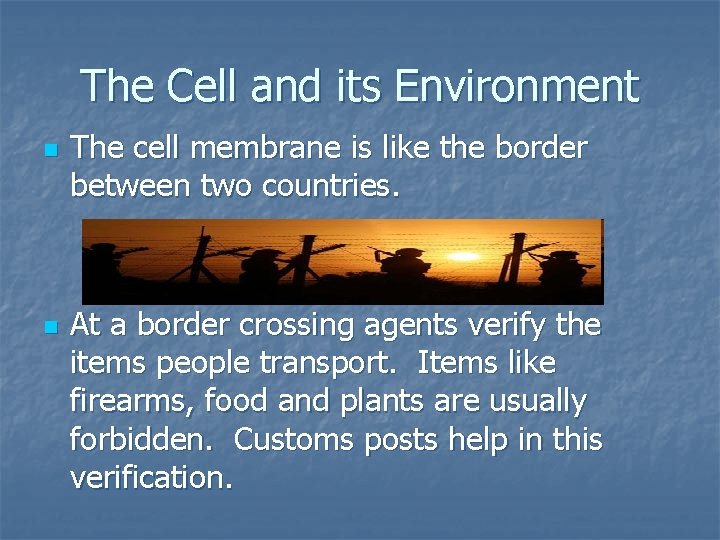
The Cell and its Environment n n The cell membrane is like the border between two countries. At a border crossing agents verify the items people transport. Items like firearms, food and plants are usually forbidden. Customs posts help in this verification.
n n n The cell membrane verifies materials entering the cell or exiting it. Like a customs post, a cell membrane lets certain substances to enter or exit, but forbids passage to others. Because the membrane only lets certain substances pass we call this type of membrane selectively permeable.
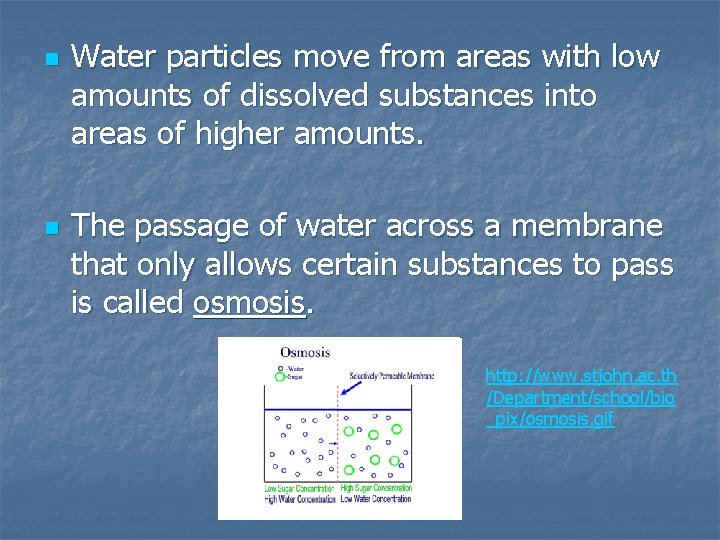
Diffusion n To enter a cell membrane a substance must move. Diffusion is the movement of particles when they shift from a region where they are more concentrated to a region where they are less concentrated. Substances enter and exit the cell by diffusion.
Osmosis n n n Water is the most abundant substance both inside and outside the cell. Approximately 70% of a cell is water. In the cell, the water contains various dissolved particles: nutrients, carbon dioxide, waste. Water particles are very small: they can enter and exit the cell easily.
n n Water particles move from areas with low amounts of dissolved substances into areas of higher amounts. The passage of water across a membrane that only allows certain substances to pass is called osmosis. http: //www. stjohn. ac. th /Department/school/bio _pix/osmosis. gif
Vital Functions of the Cell n n Energy contained in the food is released during a chemical reaction called cellular respiration. Plants produce their food themselves with a function called photosynthesis.
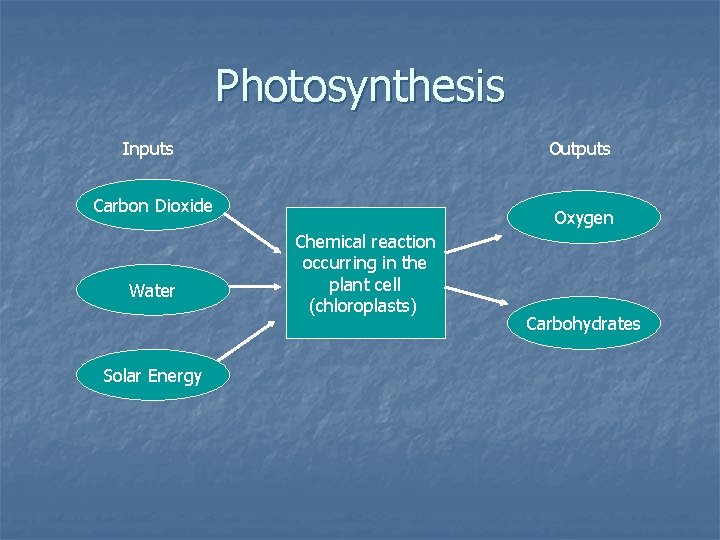
Photosynthesis n n Plants use sunlight as a source of energy Sunlight in plant cells manufactures sugars called carbohydrates from water and carbon dioxide. The water comes from the roots, which draws it from the soil. The leaves absorb carbon dioxide present in the air.
Photosynthesis Inputs Outputs Carbon Dioxide Water Solar Energy Oxygen Chemical reaction occurring in the plant cell (chloroplasts) Carbohydrates
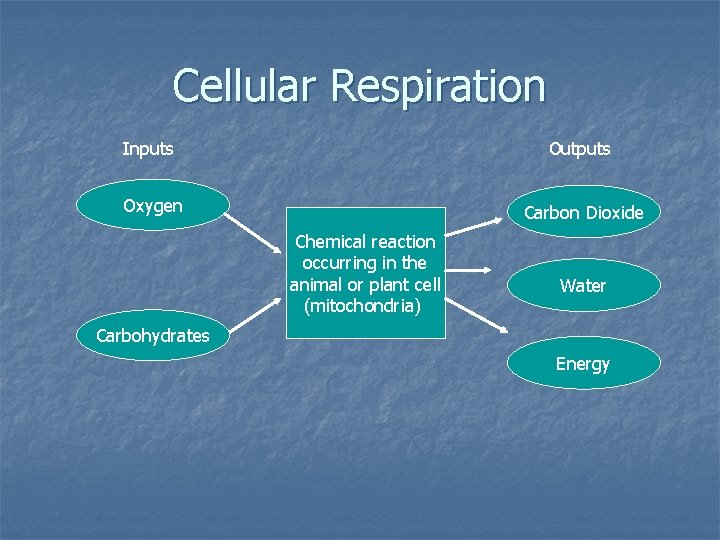
Cellular Respiration n n In living things, cellular respiration is necessary. It transforms carbohydrates into energy. This transformation takes place in the mitochondria. The mitochondria absorbs carbohydrates and oxygen and then a chemical reaction causes the oxygen to release the energy present in the carbohydrates. This energy can then be used by the cells
Cellular Respiration Inputs Outputs Oxygen Carbon Dioxide Chemical reaction occurring in the animal or plant cell (mitochondria) Water Carbohydrates Energy