
How do cells the building blocks of life
How do cells, the building blocks of life, create a living organism? SPI 0707. 1. 2
Place in order from simplest to most complex. cells organisms organ systems tissues
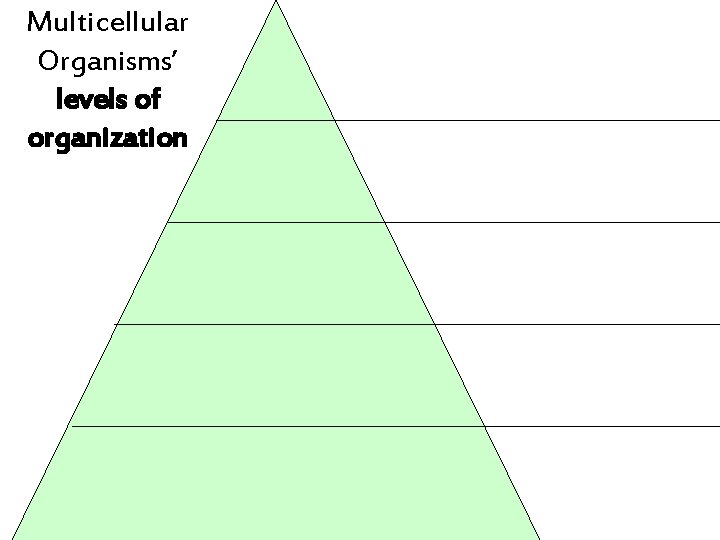
Multicellular Organisms’ levels of organization
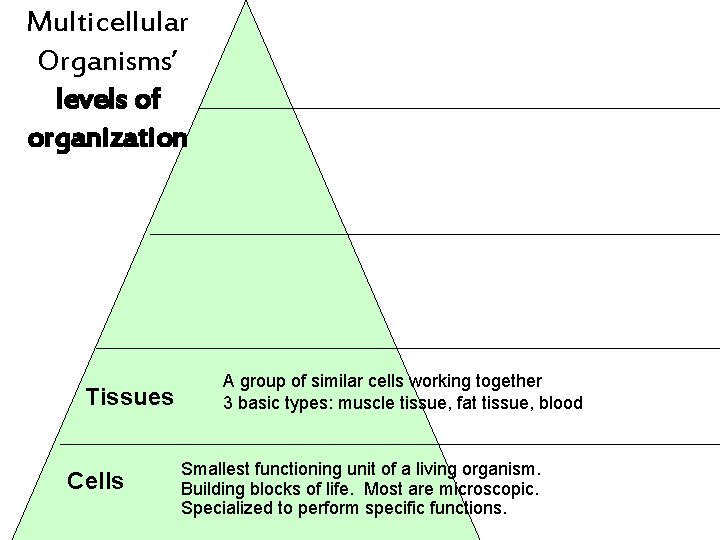
Multicellular Organisms’ levels of organization Tissues Cells A group of similar cells working together 3 basic types: muscle tissue, fat tissue, blood Smallest functioning unit of a living organism. Building blocks of life. Most are microscopic. Specialized to perform specific functions.
Think… Ink Share Why are cells found at the bottom of the pyramid? Why is blood considered a tissue?

Multicellular Organisms’ levels of organization Organ Systems Organs Tissues Cells Made up of many organs. Ex. Digestive system, nervous system, respiratory system, circulatory system, root system, leaf system, etc. A group of tissues working together. Ex. Heart, lung, brain, stomach, leaf, root, etc. A group of similar cells working together. 3 basic types: muscle tissue, fat tissue, blood Smallest functioning unit of a living organism. Building blocks of life. Most are microscopic. Specialized to perform specific functions.
Think… Pair Share Explain the relationship of the organ called the heart with muscle tissue. Explain the relationship of the organ called the heart with the circulatory system.
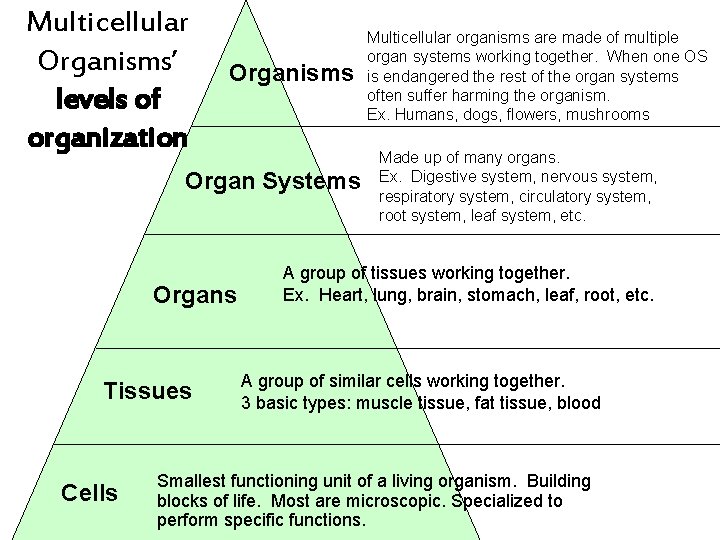
Multicellular Organisms’ levels of organization Organisms Organ Systems Organs Tissues Cells Multicellular organisms are made of multiple organ systems working together. When one OS is endangered the rest of the organ systems often suffer harming the organism. Ex. Humans, dogs, flowers, mushrooms Made up of many organs. Ex. Digestive system, nervous system, respiratory system, circulatory system, root system, leaf system, etc. A group of tissues working together. Ex. Heart, lung, brain, stomach, leaf, root, etc. A group of similar cells working together. 3 basic types: muscle tissue, fat tissue, blood Smallest functioning unit of a living organism. Building blocks of life. Most are microscopic. Specialized to perform specific functions.
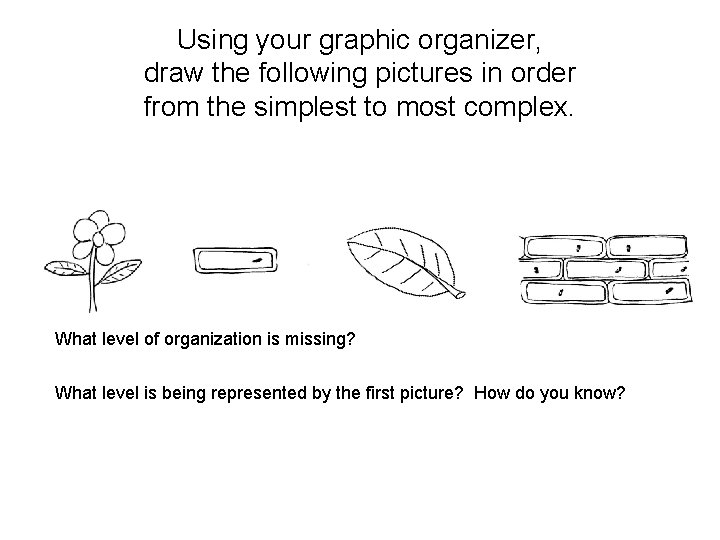
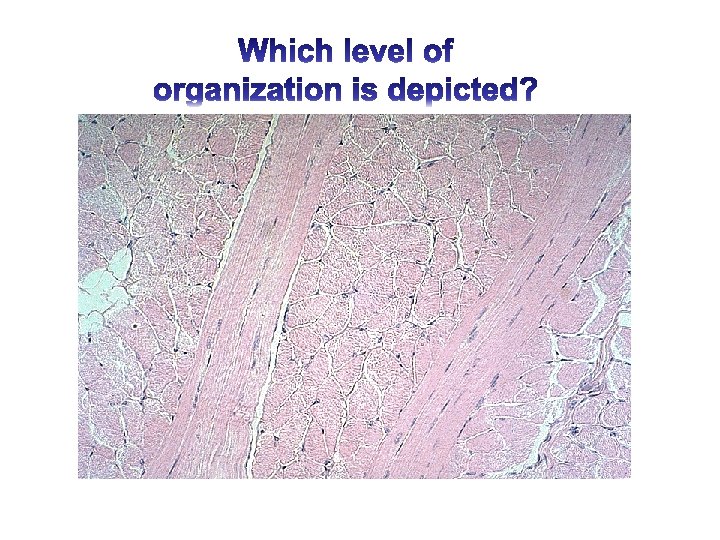
Using your graphic organizer, draw the following pictures in order from the simplest to most complex. What level of organization is missing? What level is being represented by the first picture? How do you know?
Determine the Level of Organization • There will be a variety of pictures on the following slides, you must determine the level of organization for each. • 1 finger = organism • 2 fingers = organ system • 3 fingers = organ • 4 fingers = tissue • 5 fingers = cell
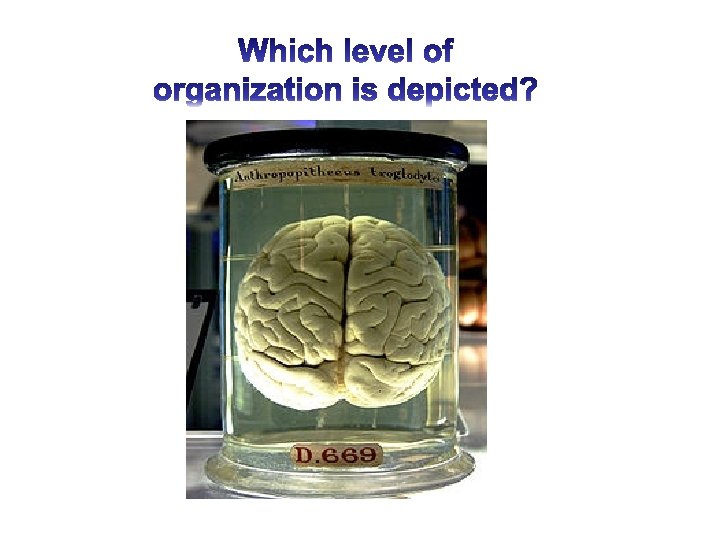
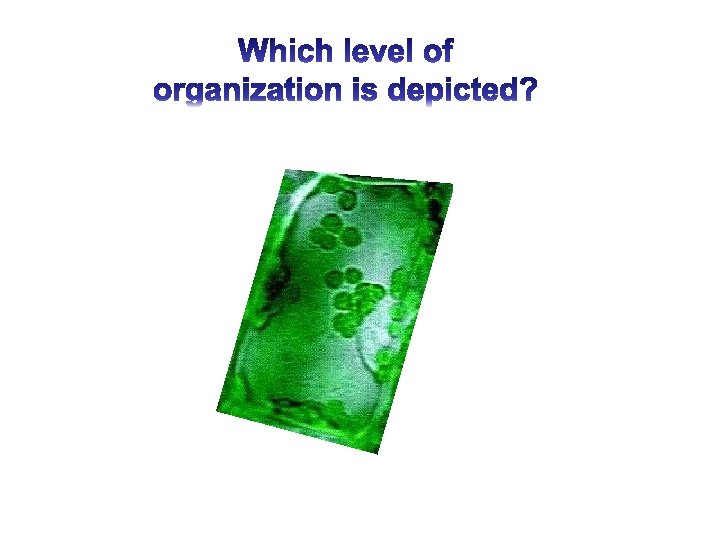
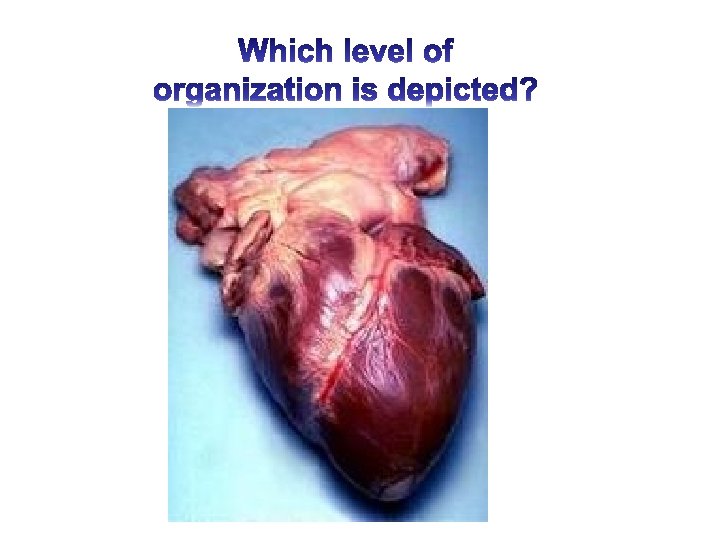
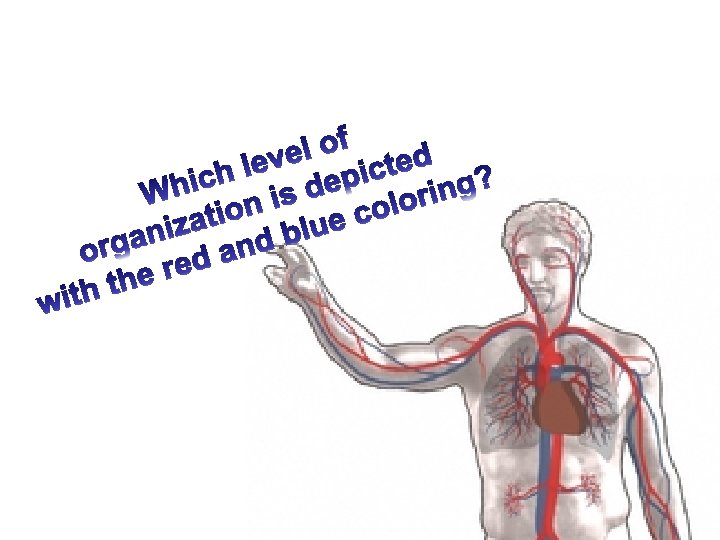
? Cells : tissues : : ____ : organisms
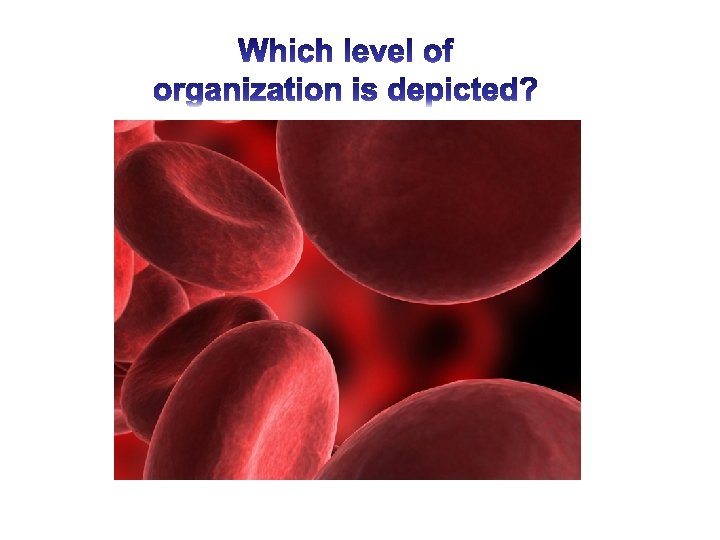

? blood : tissue : : stomach : _____
Summary You are applying to Church Hill Medical School. You must convince me that you understand the basics of organization in living organisms. If you are accepted you will receive a bonus point towards your class reward as well as an education. Please choose one of the following questions to answer. 1. Explain the levels of organization from least to most complex and explain how damage to one level would affect the other levels. 2. Explain how the digestive system is related to all levels of organization. Include what would happen to the body if the intestines failed.

Homework • Use The Organization of Life graphic organizer to label each level, give a brief summary of each, and draw an example picture to go with each. • Colorful = Bonus Points • This will be due the following class.
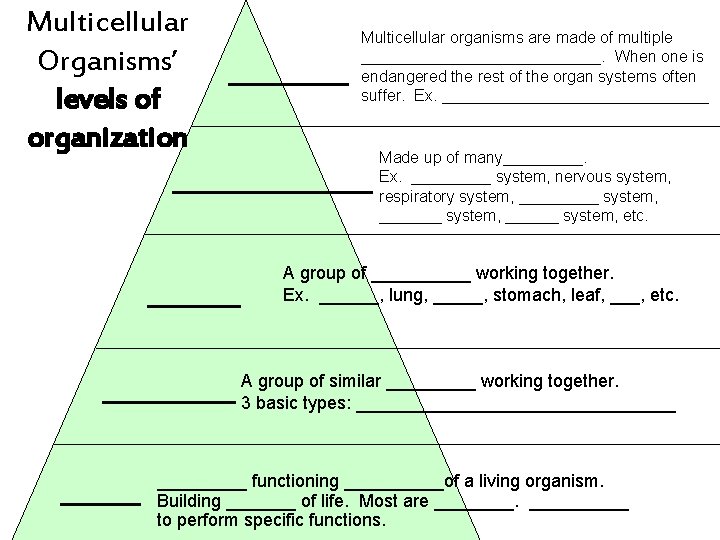
Multicellular Organisms’ levels of organization _____ Multicellular organisms are made of multiple ______________. When one is endangered the rest of the organ systems often suffer. Ex. _______________ _______ Made up of many_____. Ex. _____ system, nervous system, respiratory system, ______ system, etc. A group of _____ working together. Ex. ______, lung, _____, stomach, leaf, ___, etc. group of similar _____ working together. _____ A 3 basic types: ________________ functioning _____of a living organism. Building _______ of life. Most are _____ to perform specific functions.
- Slides: 22