
How Do Cells Know When To Divide How


- Slides: 51
How Do Cells Know When To Divide?
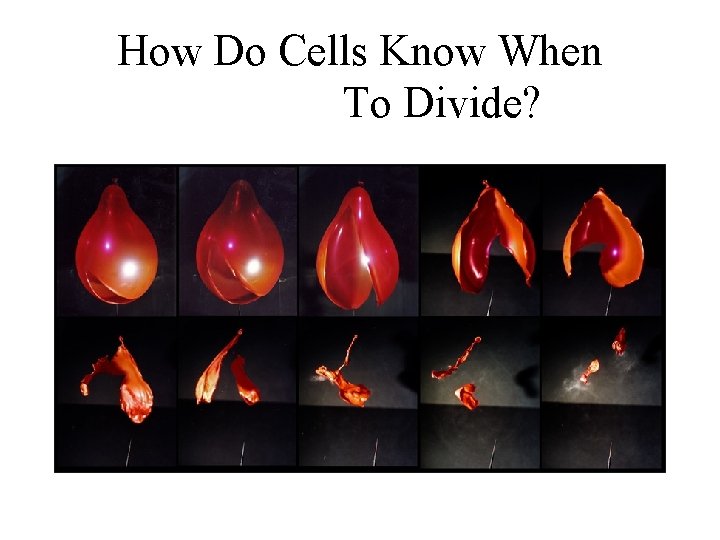
How Do Cells Know When To Divide? When the needs of the cell are not being met (the volume exceeds the surface area), the cell divides.
What are cellular needs? – Diffusion of nutrients into the cell – Diffusion of waste products out of the cell – Diffusion within the cell
What are cellular needs? When these occur, the cell either stops growing or divides. This process is called mitosis.
Mitosis is the process by which a cell makes an identical copy of itself.
MITOSIS 1. The nucleus copies itself 2. The nucleus divides equally 3. The cytoplasm divides equally
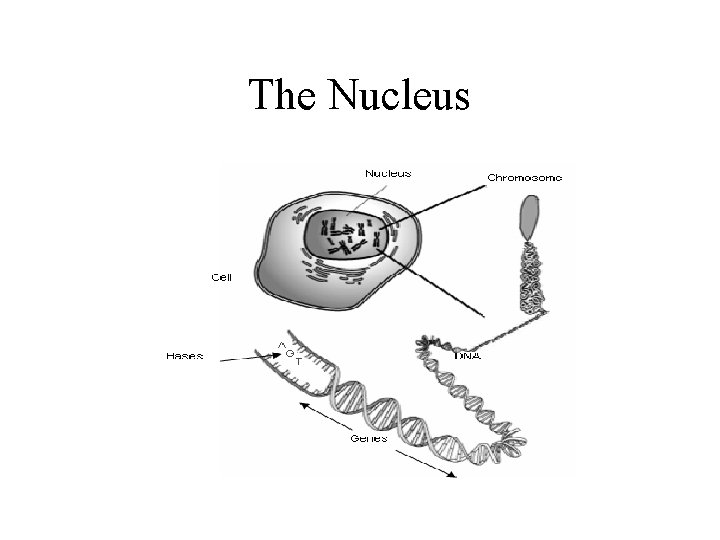
The Nucleus The nucleus contains DNA in the form of chromosomes.
The Nucleus The nucleus contains DNA in the form of chromosomes. Chromosomes are divided up into genes.
The Nucleus The nucleus contains DNA in the form of chromosomes. Chromosomes are divided up into genes. A gene contains the information necessary to make a specific protein.
The Nucleus
Consider the human. Each cell in our body contains 46 chromosomes. 23 from each parent.
Consider the human. Each of our cells requires a complete set in order to function properly.
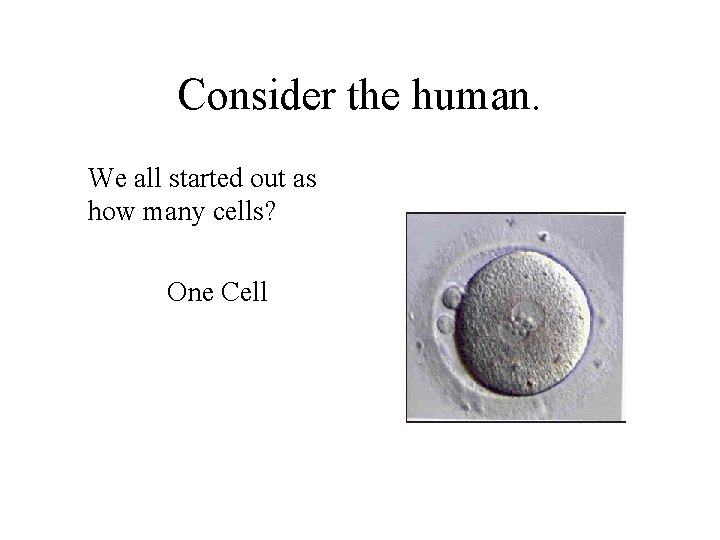
Consider the human. We all started out as how many cells?
Consider the human. We all started out as how many cells? One Cell
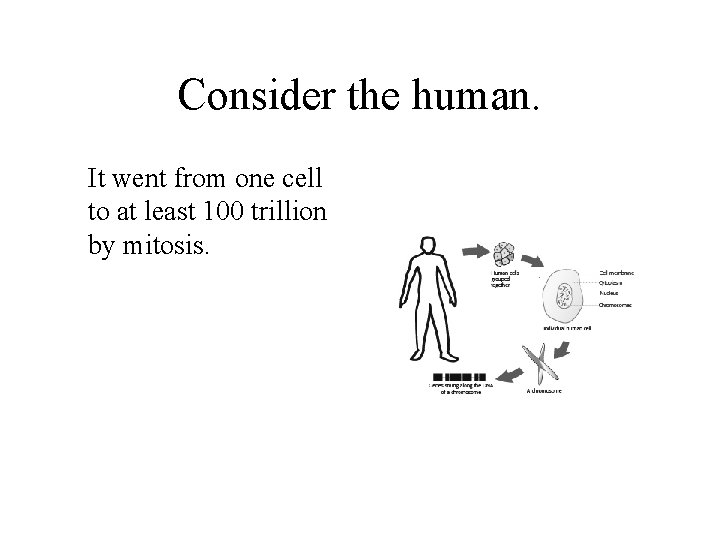
Consider the human. It went from one cell to at least 100 trillion by mitosis.
The phases of cell division Cell division is divided up into 5 phases. 1. Interphase 2. Prophase 3. Metaphase 4. Anaphase 5. Telophase
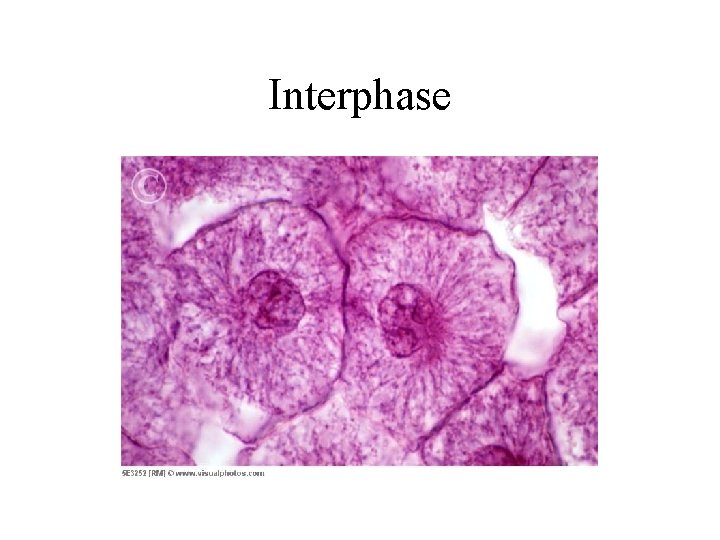
Interphase During this phase, the cell’s volume increases. It is during this phase that the chromosomes replicate.
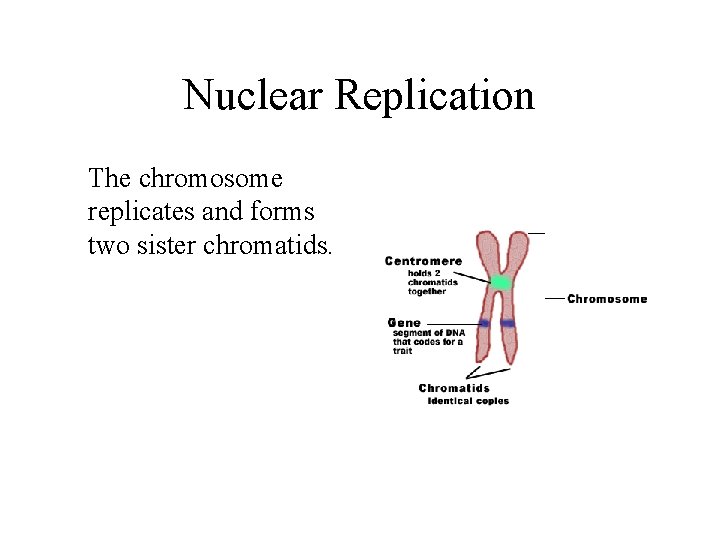
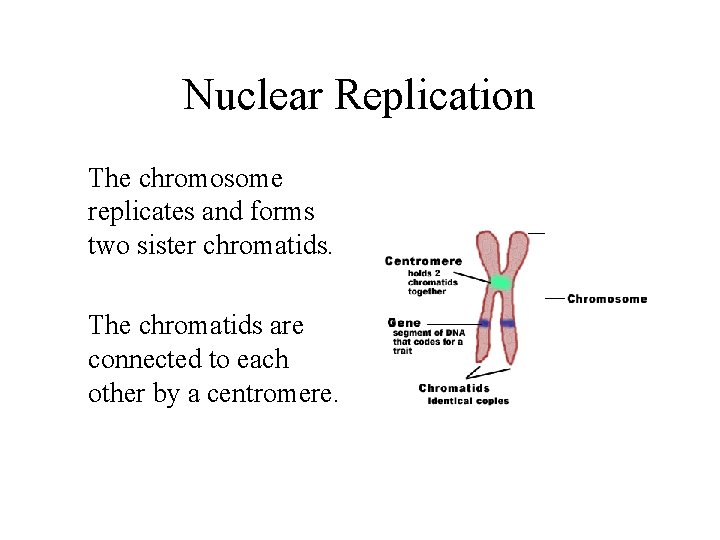
Nuclear Replication The chromosome replicates and forms two sister chromatids.
Nuclear Replication The chromosome replicates and forms two sister chromatids. The chromatids are connected to each other by a centromere.
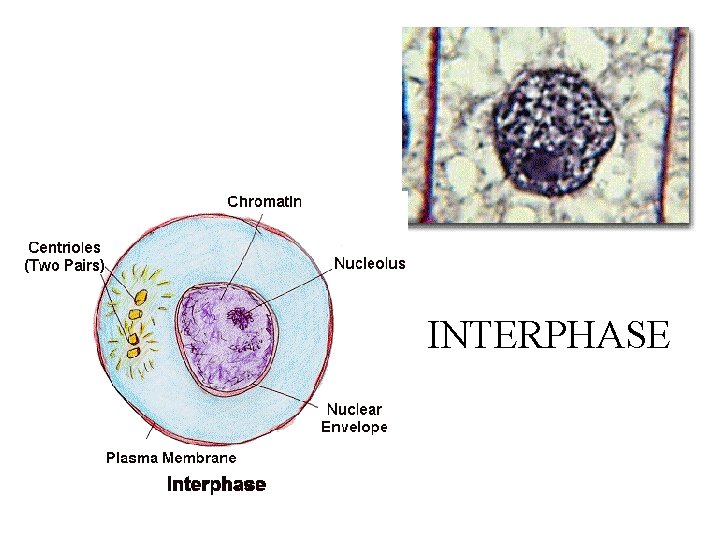
Interphase During interphase the chromosomes are spread out (dispersed) into small string like fibers called chromatin. Usually the nucleolus is visible.
Interphase
INTERPHASE
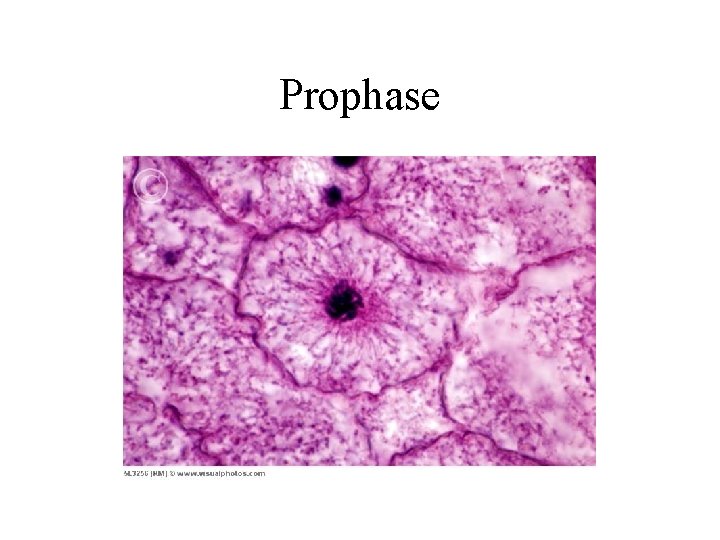
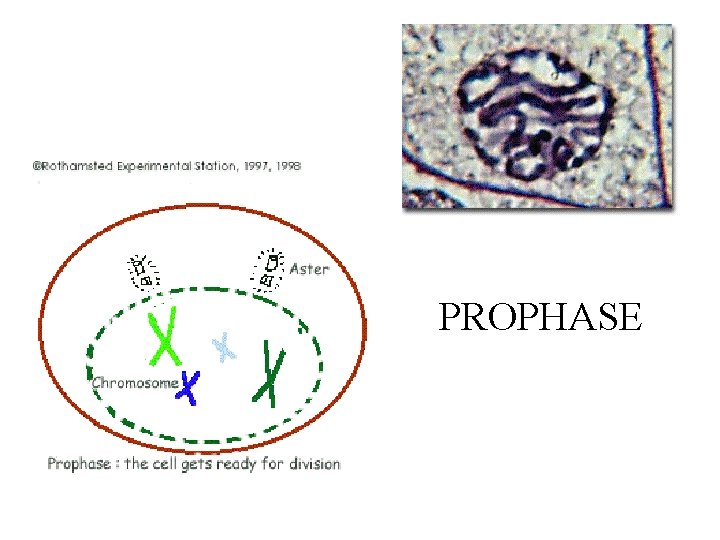
Prophase During prophase, the chromatin begins to condense (thicken) and the chromosomes become visible.
Prophase During prophase, the chromatin begins to condense (thicken) and the chromosomes become visible. The nuclear membrane begins to break down.
Prophase During prophase, the chromatin begins to condense (thicken) and the chromosomes become visible. The nuclear membrane begins to break down. In an animal cell, the centrioles move to opposite sides of the cell.
Prophase
PROPHASE
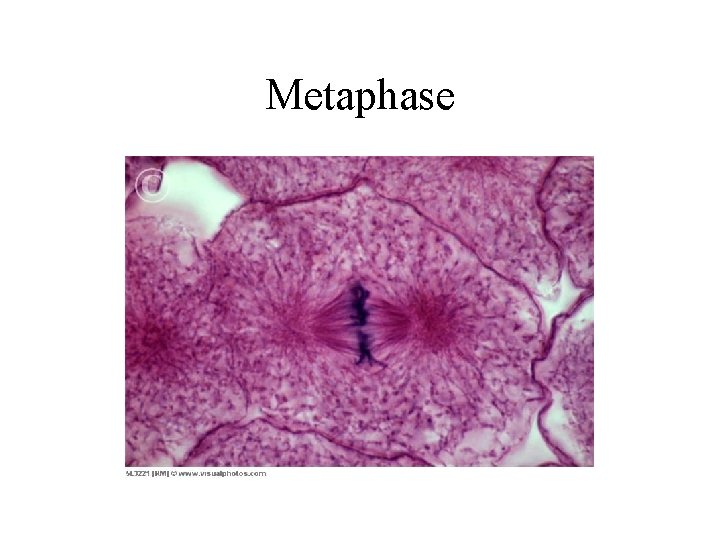
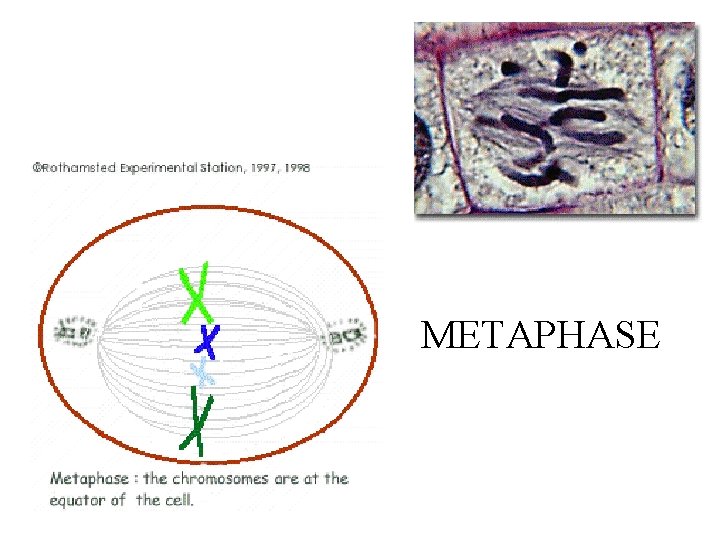
Metaphase During metaphase, the chromatids move to the center of the cell. The nuclear membrane is now absent.
Metaphase
METAPHASE
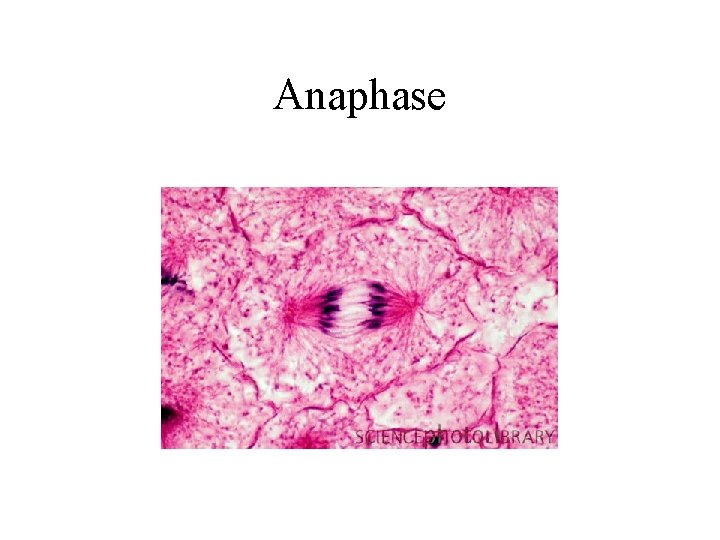
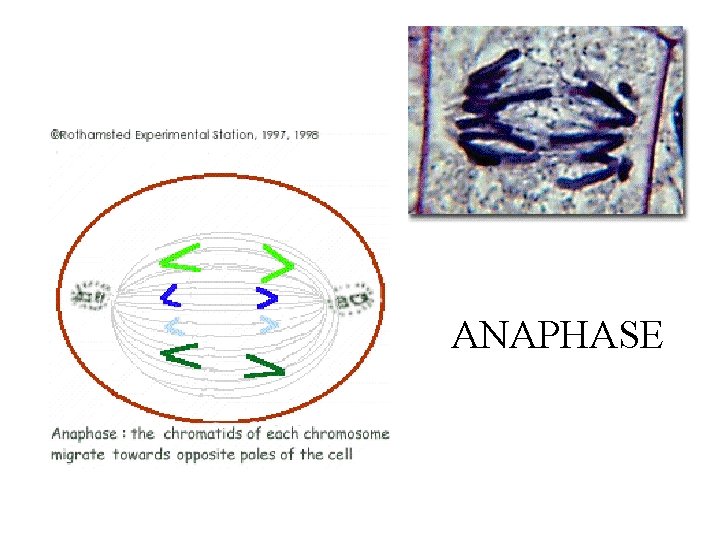
Anaphase During Anaphase, the centromeres split. The chromatids move to opposite sides of the cell. Spindle fibers move the chromatids.
Anaphase
ANAPHASE
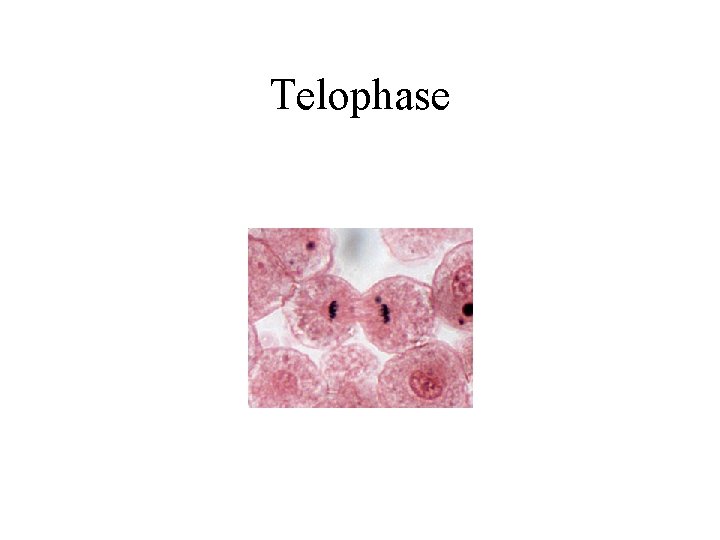
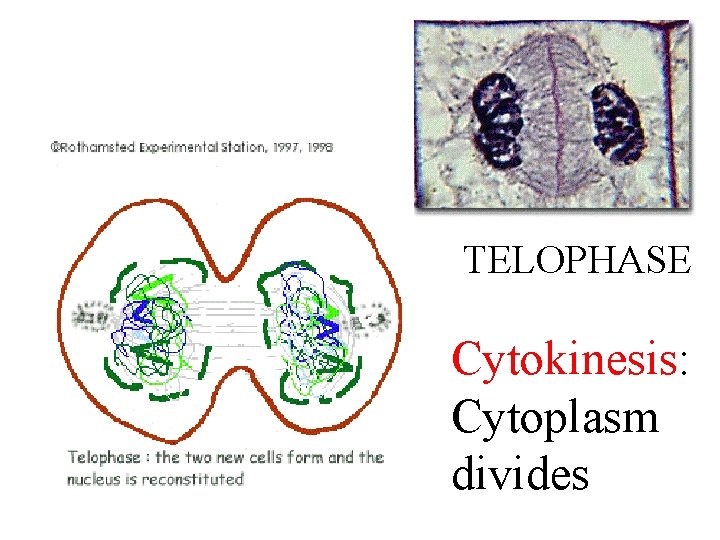
Telophase During Telophase, Cytokinesis occurs. Each new daughter cell begins to form a nucleus.
Telophase
TELOPHASE Cytokinesis: Cytoplasm divides
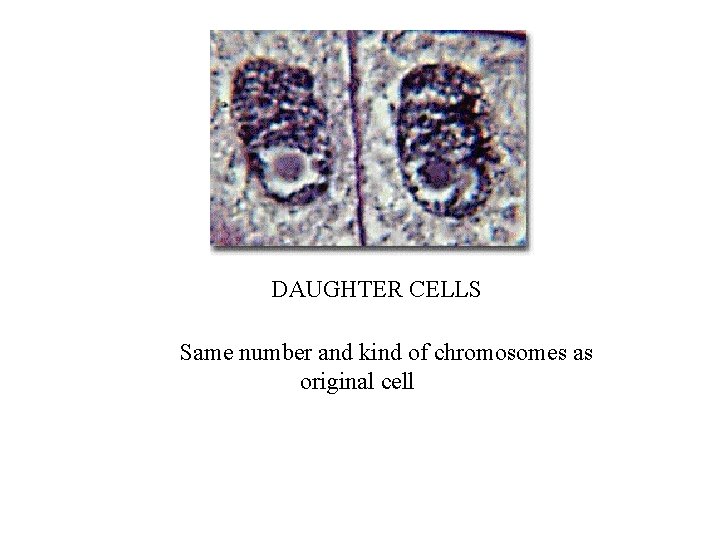
DAUGHTER CELLS Same number and kind of chromosomes as original cell
Mitosis produces two cells that have the same number and kind of chromosomes as the original cell.
Where in your body can you find cells undergoing mitosis? • • • Cells lining the digestive tract Cells lining the respiratory tract Bone marrow Uterus/Mammary Glands Prostate Bones
Cancer: Uncontrolled cell division Tumor: Mass of cancer cells
Where does cancer occur?
Where does cancer occur? • Areas where mitosis occurs frequently
Where in your body can you find cancer? • • • Cells lining the digestive tract Cells lining the respiratory tract Bone marrow Uterus/Mammary Glands Prostate Bones
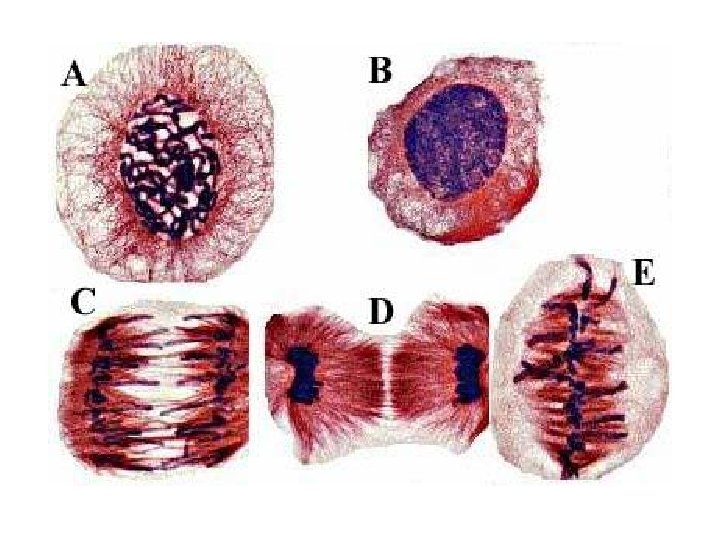
Review of Mitosis Examine the following figures and identify which one is in: Interphase Prophase Metaphase Anaphase Telophase
Review of Mitosis 1. In which phase do the chromosomes replicate?
Review of Mitosis 1. In which phase do the chromosomes replicate? 2. Why is replication important?
Review of Mitosis 1. In which phase do the chromosomes replicate? 2. Why is replication important? 3. In which phase does the nuclear membrane begin to break down?
Review of Mitosis 4. In which phase do the chromatids split?
Review of Mitosis 4. In which phase do the chromatids split? 5. In which phase does Cytokinesis occur?
Review of Mitosis 4. In which phase do the chromatids split? 5. In which phase does Cytokinesis occur? 6. Which phase is characterized by the chromosomes being lined up in the center of the cell?