
How difference makes the mentoring relationship stronger David
![Difference As a mentee, it doesn’t hurt my feelings if someone acknowledges the [racial]](https://slidetodoc.com/presentation_image_h/ac7cb0006cef1aed61919591477599e6/image-15.jpg "Difference As a mentee, it doesn’t hurt my feelings if someone acknowledges the [racial]")
- Slides: 21
How difference makes the mentoring relationship stronger David Clutterbuck © Clutterbuck Associates 2006 C 1
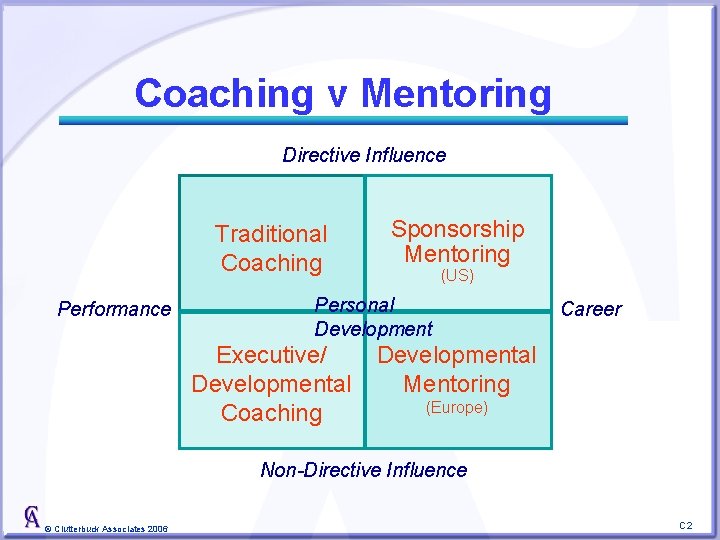
Coaching v Mentoring Directive Influence Traditional Coaching Performance Sponsorship Mentoring (US) Personal Development Executive/ Developmental Coaching Career Developmental Mentoring (Europe) Non-Directive Influence © Clutterbuck Associates 2006 C 2
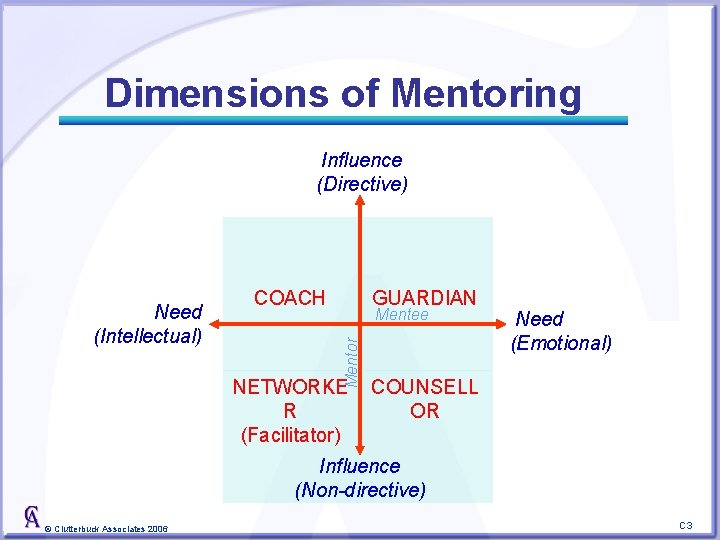
Dimensions of Mentoring Influence (Directive) COACH GUARDIAN Mentee Mentor Need (Intellectual) NETWORKE R (Facilitator) Need (Emotional) COUNSELL OR Influence (Non-directive) © Clutterbuck Associates 2006 C 3
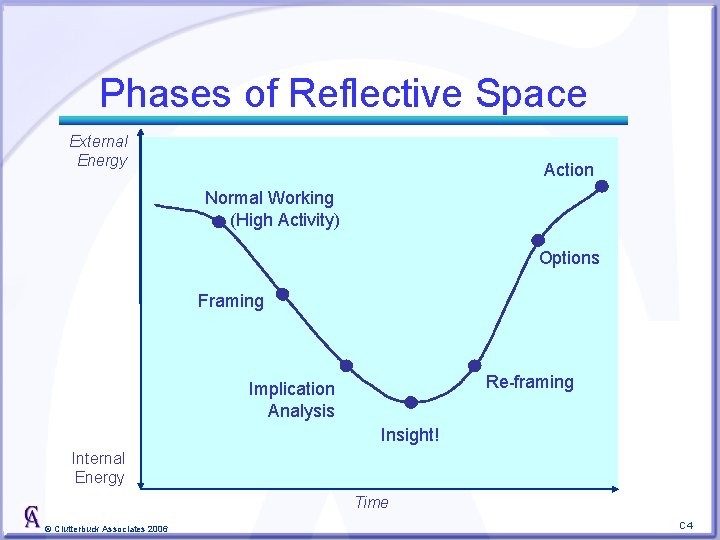
Phases of Reflective Space External Energy Action Normal Working (High Activity) Options Framing Re-framing Implication Analysis Insight! Internal Energy Time © Clutterbuck Associates 2006 C 4
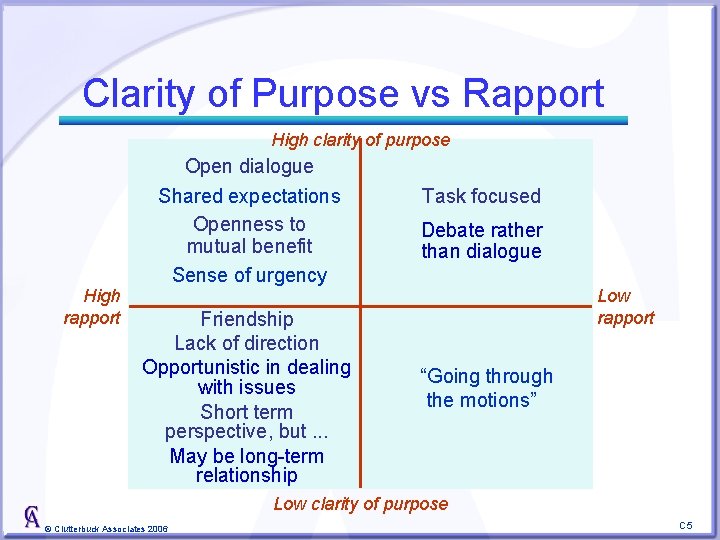
Clarity of Purpose vs Rapport High clarity of purpose High rapport Open dialogue Shared expectations Openness to mutual benefit Sense of urgency Friendship Lack of direction Opportunistic in dealing with issues Short term perspective, but. . . May be long-term relationship Task focused Debate rather than dialogue Low rapport “Going through the motions” Low clarity of purpose © Clutterbuck Associates 2006 C 5
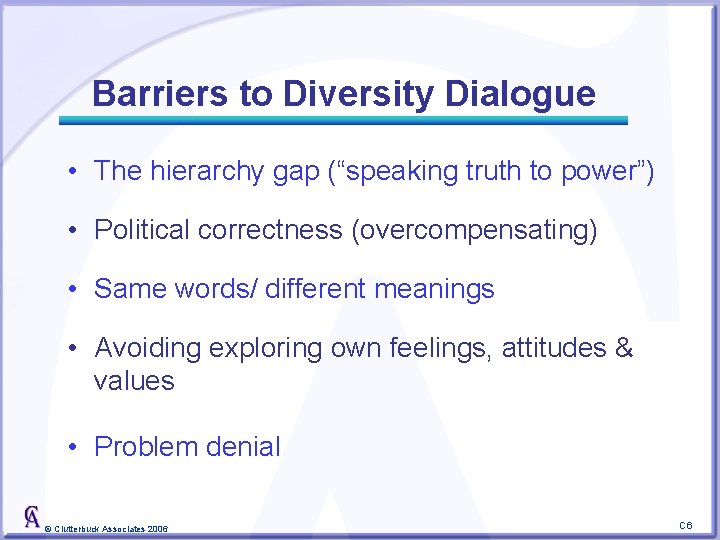
Barriers to Diversity Dialogue • The hierarchy gap (“speaking truth to power”) • Political correctness (overcompensating) • Same words/ different meanings • Avoiding exploring own feelings, attitudes & values • Problem denial © Clutterbuck Associates 2006 C 6
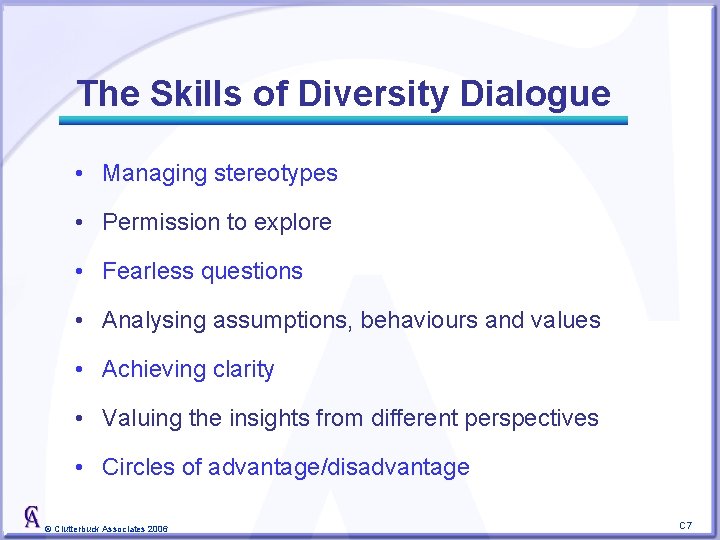
The Skills of Diversity Dialogue • Managing stereotypes • Permission to explore • Fearless questions • Analysing assumptions, behaviours and values • Achieving clarity • Valuing the insights from different perspectives • Circles of advantage/disadvantage © Clutterbuck Associates 2006 C 7
What do we know about the role of difference in mentoring? © Clutterbuck Associates 2006 C 8
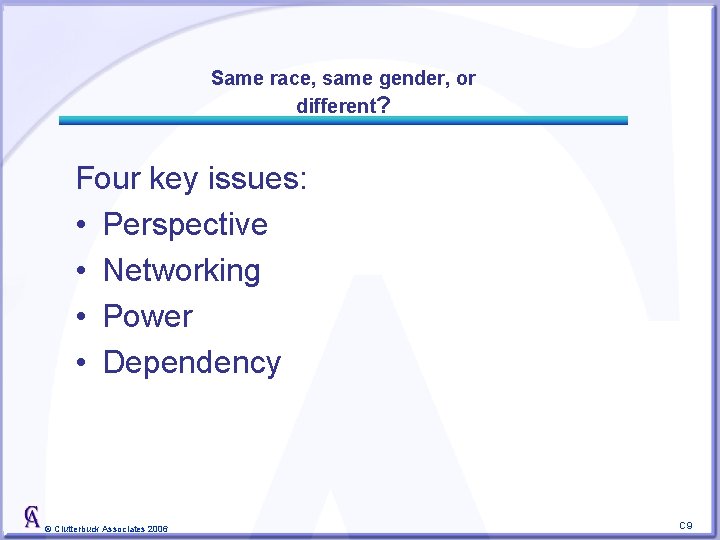
Same race, same gender, or different? Four key issues: • Perspective • Networking • Power • Dependency © Clutterbuck Associates 2006 C 9
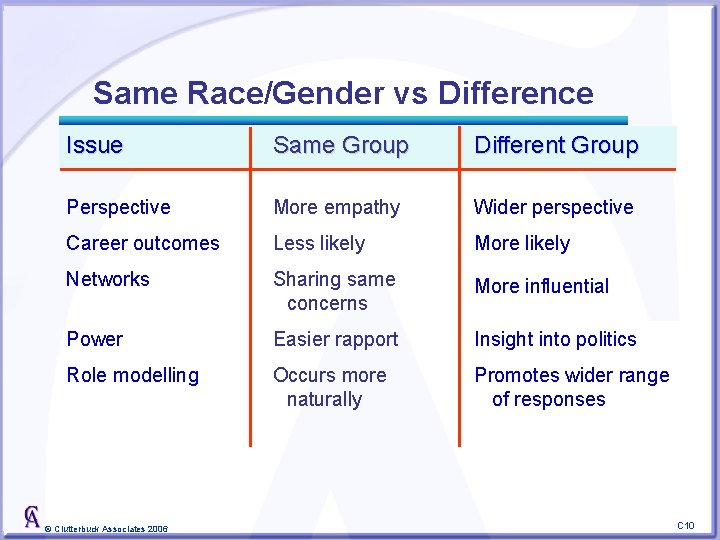
Same Race/Gender vs Difference Issue Same Group Different Group Perspective More empathy Wider perspective Career outcomes Less likely More likely Networks Sharing same concerns More influential Power Easier rapport Insight into politics Role modelling Occurs more naturally Promotes wider range of responses © Clutterbuck Associates 2006 C 10
Mentoring as a diversity dialogue © Clutterbuck Associates 2006 C 11
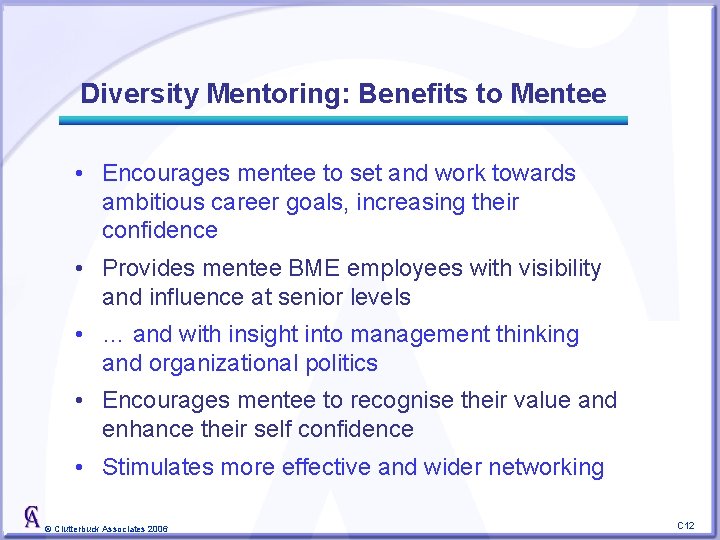
Diversity Mentoring: Benefits to Mentee • Encourages mentee to set and work towards ambitious career goals, increasing their confidence • Provides mentee BME employees with visibility and influence at senior levels • … and with insight into management thinking and organizational politics • Encourages mentee to recognise their value and enhance their self confidence • Stimulates more effective and wider networking © Clutterbuck Associates 2006 C 12
Diversity Mentoring: Benefits to Mentors • Provides senior managers with personal understanding of diversity issues • Opens dialogue across differences • Allows input to achieving diversity/ equal opportunity management targets • Helps the mentor see issues from more than one perspective (so better decisions are made) • Brings stereotypes and micro-discrimination into focus for the mentor • Helps mentor recognise and manage intrinsic and extrinsic barriers to achievement • Stimulates more effective and wider networking © Clutterbuck Associates 2006 C 13
Diversity mentoring competencies include Empathy with the mentee’s dilemmas Positioning disadvantage appropriately Ability to value differences Ability to reconcile differences Being a role model for open-mindedness Ability to role adapt appropriately between sponsor/guide/adviser/ and developer of self-sufficiency © Clutterbuck Associates 2006 standard C 14
Difference As a mentee, it doesn’t hurt my feelings if someone acknowledges the [racial] difference between us. In some ways I like those relationships better. It makes me feel more comfortable – we’re not dancing around the issues in some artificial way. What’s uncomfortable for me is when we have to pretend there isn’t a difference. From Mentoring Across Differences, 2003 – report on mentoring in US law firms © Clutterbuck Associates 2006 C 15
Cross-Gender/Race Relationships that Worked* • Established confidence by beginning with workrelated issues • Identified common interests and values • Made efforts to learn about each other • Showed empathy • Were clear about needs and expectations • Avoided stereotypes and untested assumptions • Risked discomfort to make the relationship work * From Mentoring Across Differences, 2003 – report on mentoring in US law firms © Clutterbuck Associates 2006 C 16
The critical role of the mentoring coordinator © Clutterbuck Associates 2006 C 17
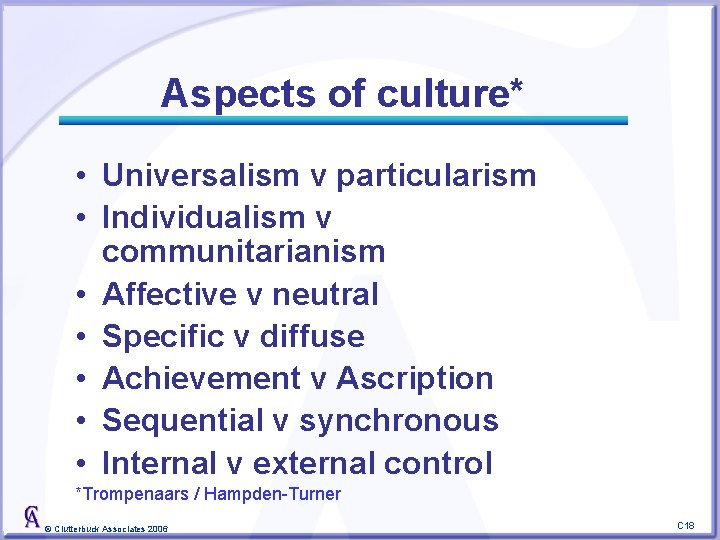
Aspects of culture* • Universalism v particularism • Individualism v communitarianism • Affective v neutral • Specific v diffuse • Achievement v Ascription • Sequential v synchronous • Internal v external control *Trompenaars / Hampden-Turner © Clutterbuck Associates 2006 C 18
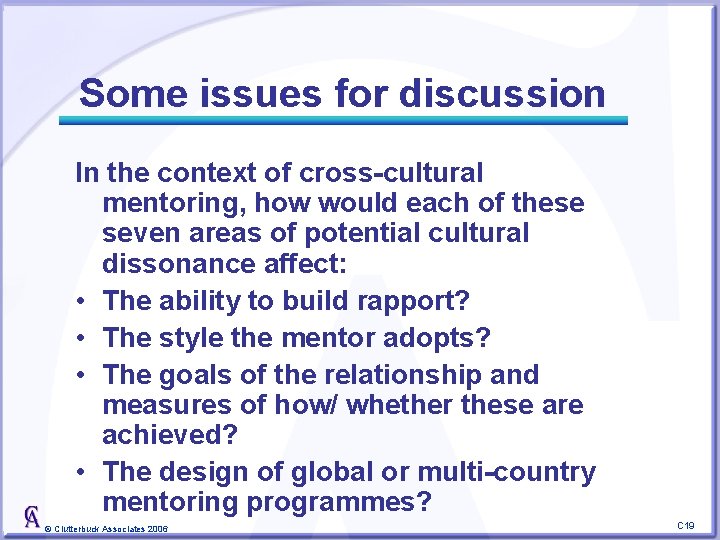
Some issues for discussion In the context of cross-cultural mentoring, how would each of these seven areas of potential cultural dissonance affect: • The ability to build rapport? • The style the mentor adopts? • The goals of the relationship and measures of how/ whether these are achieved? • The design of global or multi-country mentoring programmes? © Clutterbuck Associates 2006 C 19
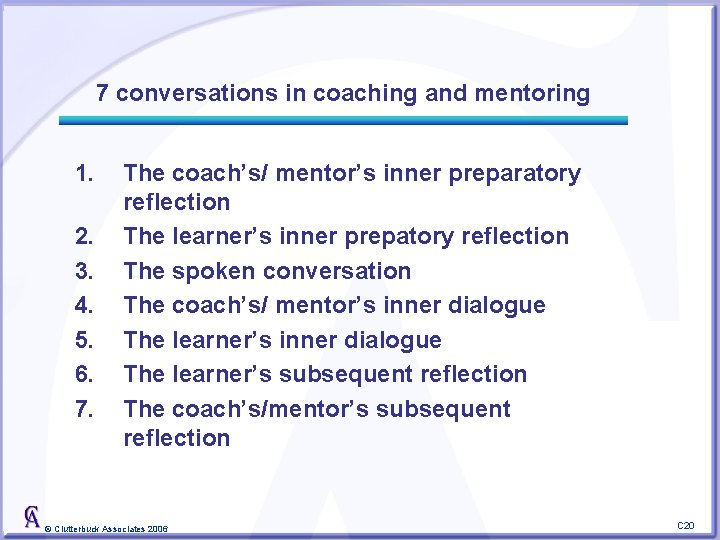
7 conversations in coaching and mentoring 1. 2. 3. 4. 5. 6. 7. The coach’s/ mentor’s inner preparatory reflection The learner’s inner prepatory reflection The spoken conversation The coach’s/ mentor’s inner dialogue The learner’s subsequent reflection The coach’s/mentor’s subsequent reflection © Clutterbuck Associates 2006 C 20
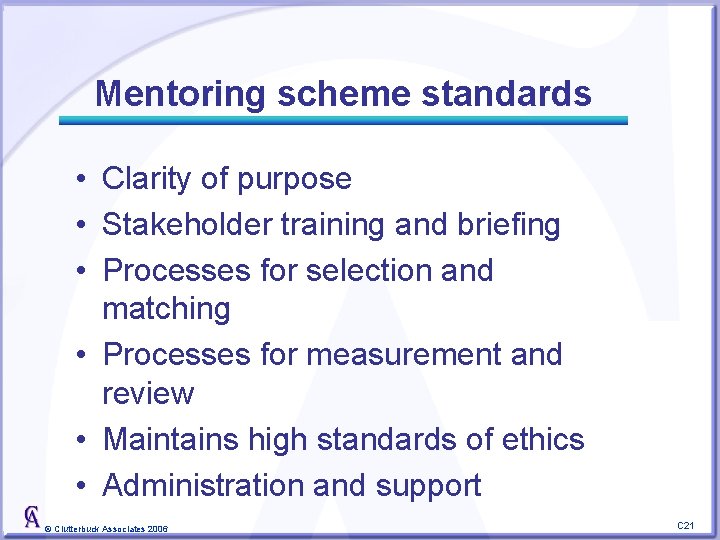
Mentoring scheme standards • Clarity of purpose • Stakeholder training and briefing • Processes for selection and matching • Processes for measurement and review • Maintains high standards of ethics • Administration and support © Clutterbuck Associates 2006 C 21