
HOW DID THE WORKING CONDITIONS IN THE INDUSTRIAL
- Slides: 9
HOW DID THE WORKING CONDITIONS IN THE INDUSTRIAL REVOLUTION AFFECT THE CHILDREN? By: Lindsay Bettesworth
My Guiding Questions: WHAT WERE THE AVERAGE JOBS FOR THE CHILDREN? HOW MUCH DID THEY GET PAID? HOW WERE THE CHILDREN TREATED? HOW DID THE JOBS AFFECT THEM OVERALL? HOW DID THE CHILD LABOUR LAWS HELP THE CHILDREN?
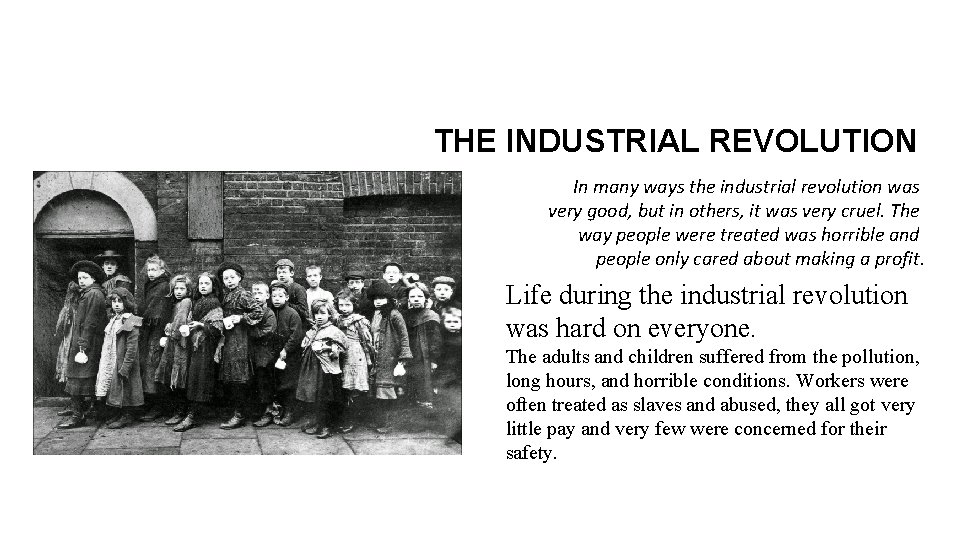
THE INDUSTRIAL REVOLUTION In many ways the industrial revolution was very good, but in others, it was very cruel. The way people were treated was horrible and people only cared about making a profit. Life during the industrial revolution was hard on everyone. The adults and children suffered from the pollution, long hours, and horrible conditions. Workers were often treated as slaves and abused, they all got very little pay and very few were concerned for their safety.
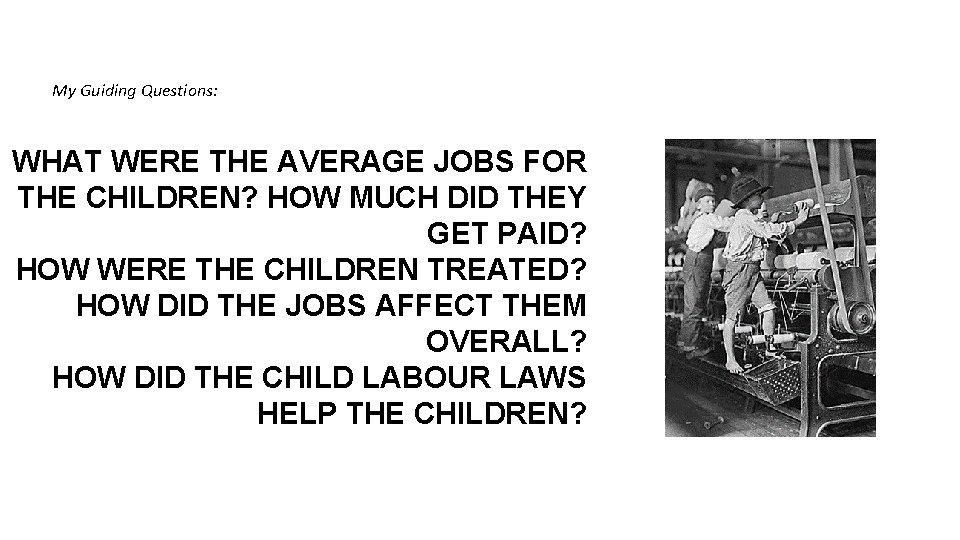
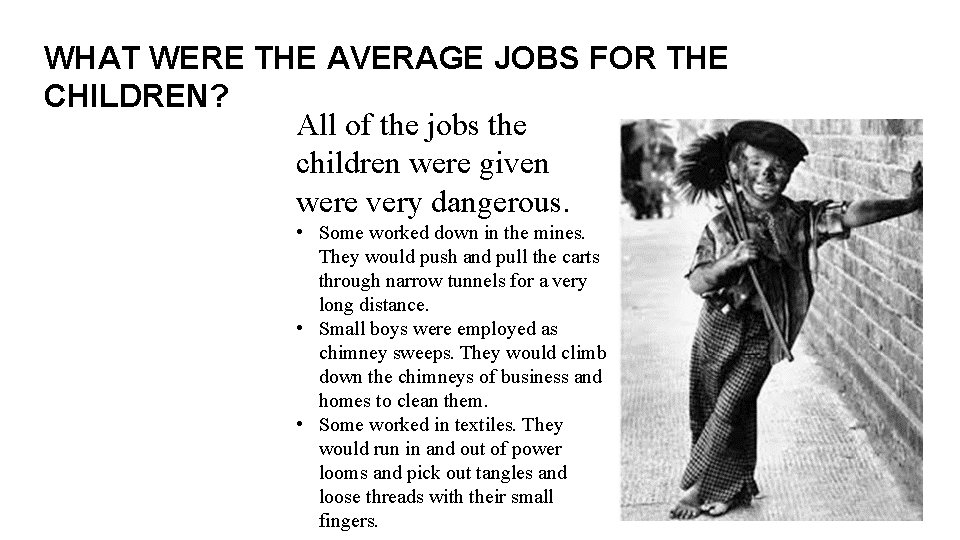
WHAT WERE THE AVERAGE JOBS FOR THE CHILDREN? All of the jobs the children were given were very dangerous. • Some worked down in the mines. They would push and pull the carts through narrow tunnels for a very long distance. • Small boys were employed as chimney sweeps. They would climb down the chimneys of business and homes to clean them. • Some worked in textiles. They would run in and out of power looms and pick out tangles and loose threads with their small fingers.
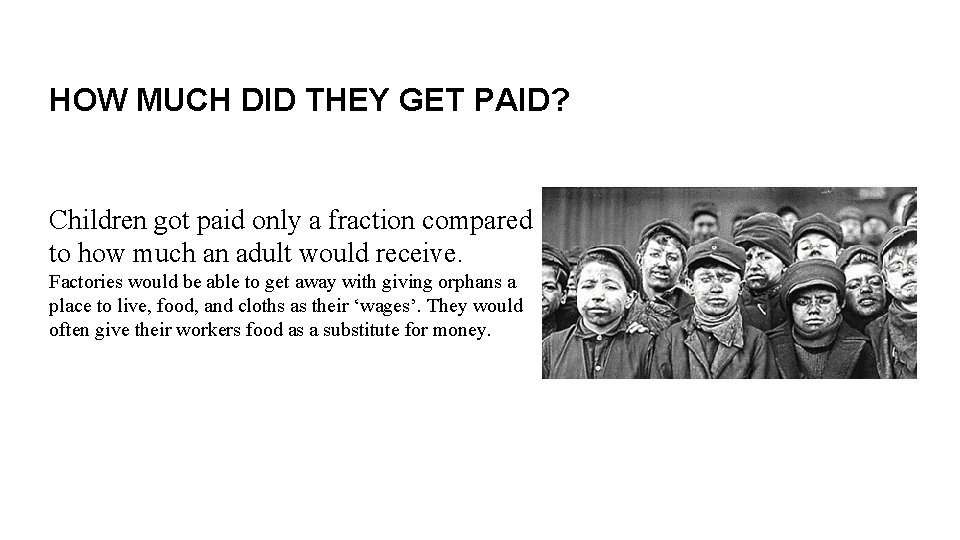
HOW MUCH DID THEY GET PAID? Children got paid only a fraction compared to how much an adult would receive. Factories would be able to get away with giving orphans a place to live, food, and cloths as their ‘wages’. They would often give their workers food as a substitute for money.
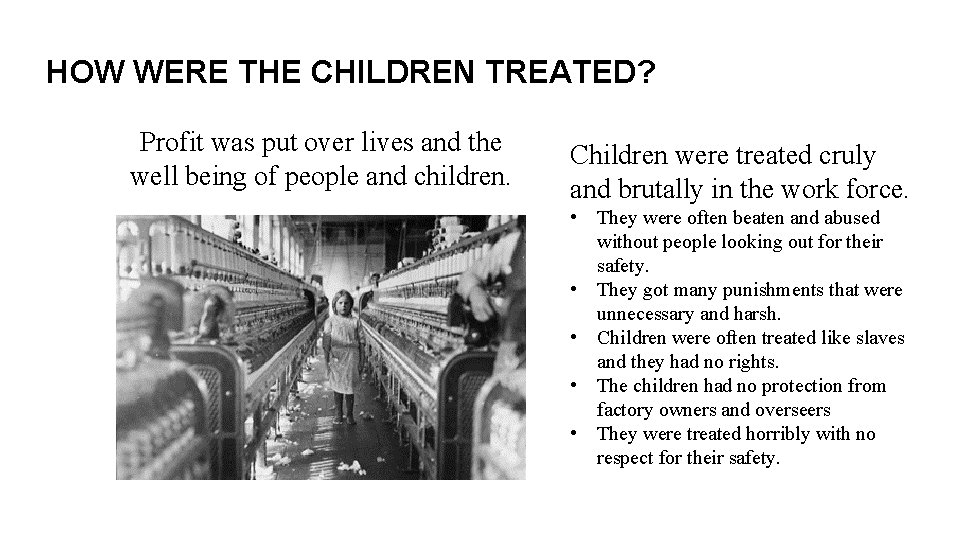
HOW WERE THE CHILDREN TREATED? Profit was put over lives and the well being of people and children. Children were treated cruly and brutally in the work force. • They were often beaten and abused without people looking out for their safety. • They got many punishments that were unnecessary and harsh. • Children were often treated like slaves and they had no rights. • The children had no protection from factory owners and overseers • They were treated horribly with no respect for their safety.
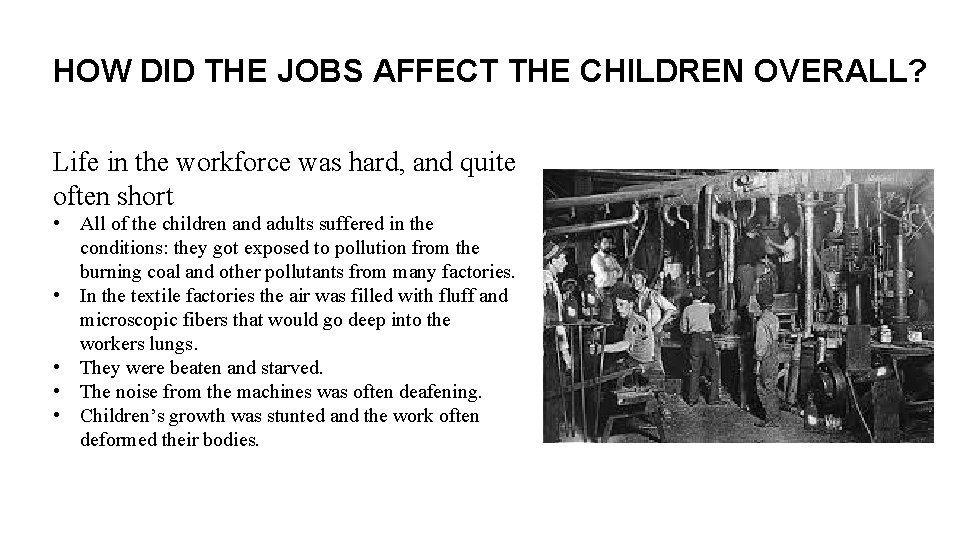
HOW DID THE JOBS AFFECT THE CHILDREN OVERALL? Life in the workforce was hard, and quite often short • All of the children and adults suffered in the conditions: they got exposed to pollution from the burning coal and other pollutants from many factories. • In the textile factories the air was filled with fluff and microscopic fibers that would go deep into the workers lungs. • They were beaten and starved. • The noise from the machines was often deafening. • Children’s growth was stunted and the work often deformed their bodies.
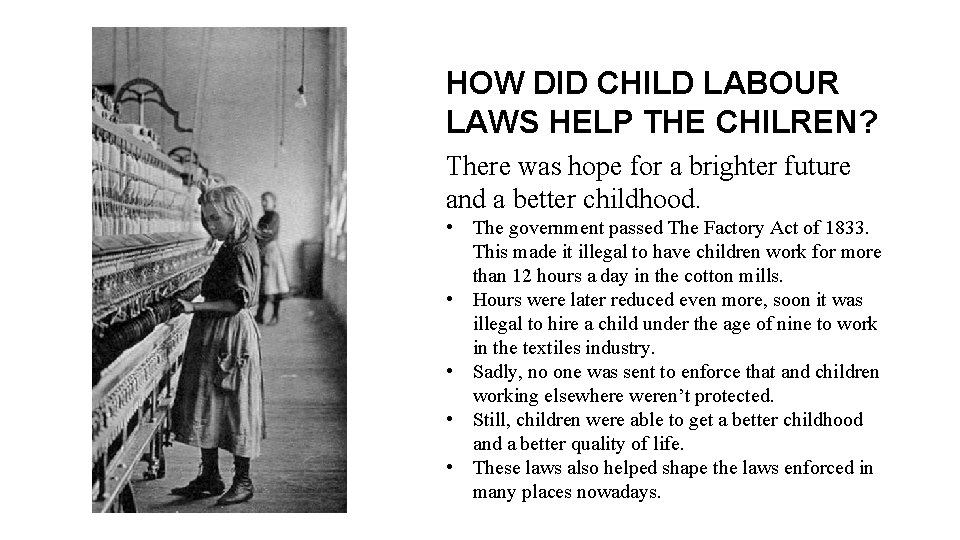
HOW DID CHILD LABOUR LAWS HELP THE CHILREN? There was hope for a brighter future and a better childhood. • The government passed The Factory Act of 1833. This made it illegal to have children work for more than 12 hours a day in the cotton mills. • Hours were later reduced even more, soon it was illegal to hire a child under the age of nine to work in the textiles industry. • Sadly, no one was sent to enforce that and children working elsewhere weren’t protected. • Still, children were able to get a better childhood and a better quality of life. • These laws also helped shape the laws enforced in many places nowadays.
Thanks for watching! Works Cited: 1. http: //www 2. needham. k 12. ma. us/nhs/cur/Baker_00/2002_p 7/ak_p 7/childlabor. html#intro 2. The Triumph of Steam Crossroads (1 st ed) 3. The Industrial Revolution Crossroads (2 nd ed)