
How did Europe respond to the Great Depression
- Slides: 5
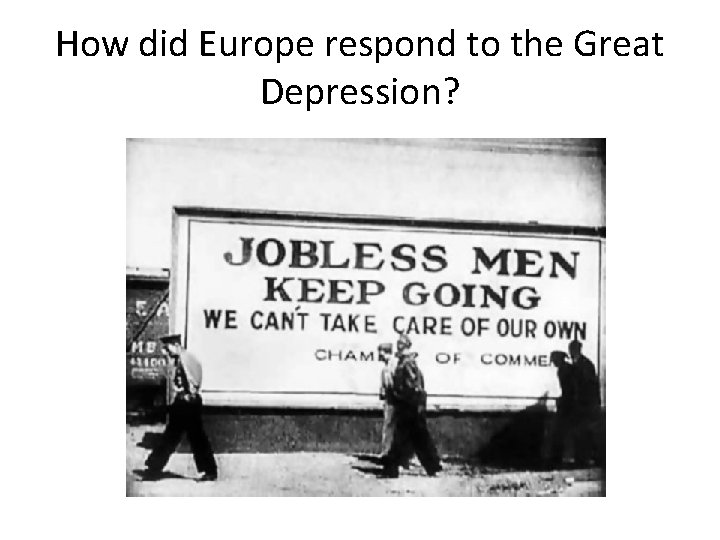
How did Europe respond to the Great Depression?
GREAT BRITAIN • Follows traditional orthodox economic theory. . • A neo-Mercantilist point of view • Looks inward, avoid sforeign problems • Balanced-budget, unemployed workers receive barely enough welfare to live
FRANCE • Economic stagnation reflects continued political crisis of the 1930’s • No stability in government, moderate republicans being zapped from all sides (Communists, Fascists, semi. Fascists, etc. ) • “Popular Front” rules from 1936’ 37, tries social reform using the U. S. A “New Deal” as their model • Wild swings in the economy • On the verge of civil war
SCANDINAVIAN COUNTRIES – Norway, Sweden, Denmark Social Democrats advocate. Cooperative Community Action Lots of government spending, hightaxes, large bureaucracy This “Welfare System” offers a middleway between Capitalism and the rising cruel world of Fascism and Communism in practice. . Most successful response of ANY region in Europe to the cirse
GERMANY • American loans to help rebuild German economy stop • Unemployment rate reaches 32% in 1932! • Anti-capitalist political ideologies swell in popularity (Nazis, Communists) • Many think the old ideas of liberty individual rights/responsibilities elected governments economic freedom are outmoded. .