
How Computers Work Lecture 9 The Static Discipline
- Slides: 31
How Computers Work Lecture 9 The Static Discipline + Regular Logic The Statistical Nature of the Universe, and how we make computers work despite it. How Computers Work Lecture 9 Page 1
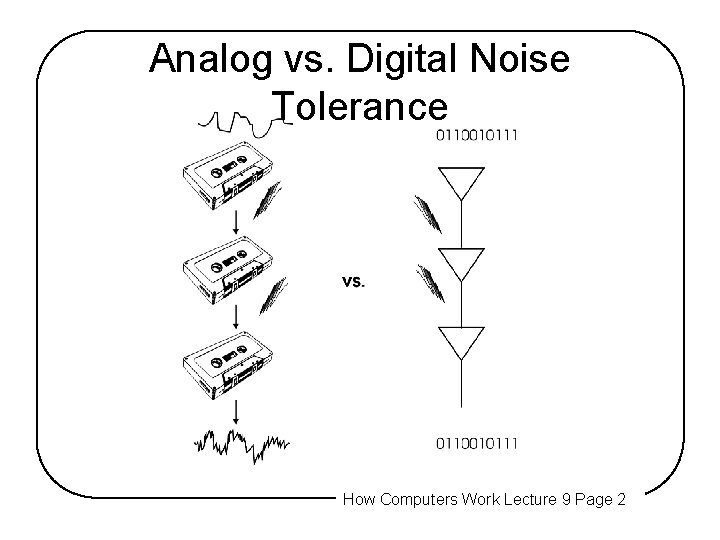
Analog vs. Digital Noise Tolerance How Computers Work Lecture 9 Page 2
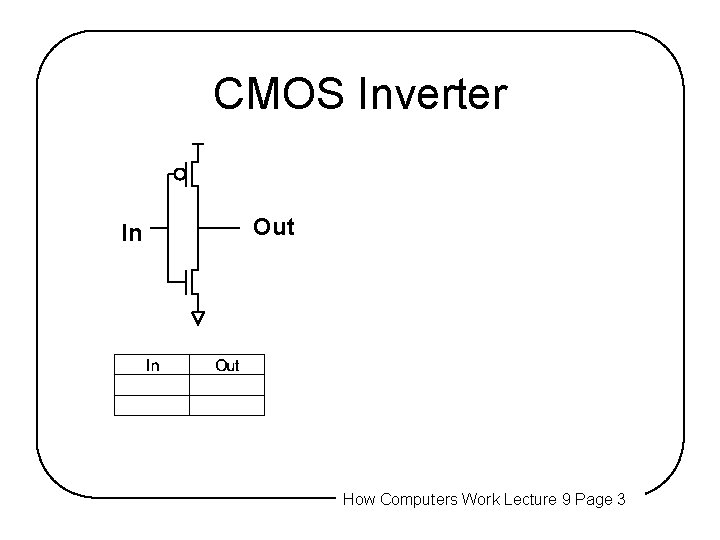
CMOS Inverter In Out How Computers Work Lecture 9 Page 3
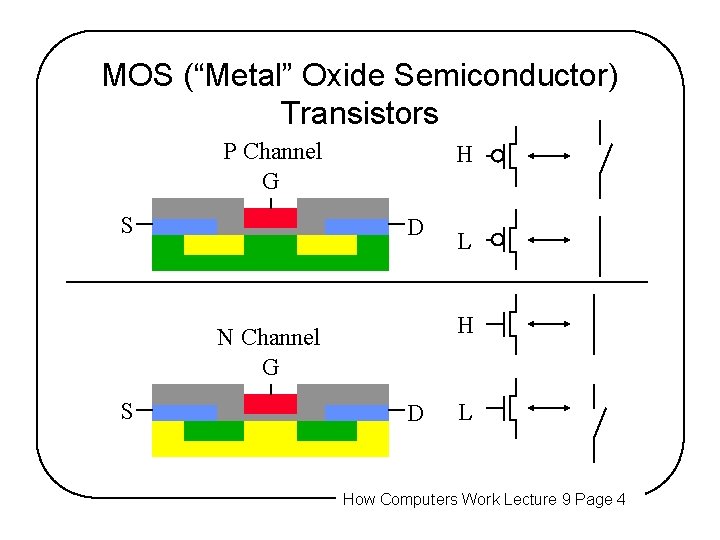
MOS (“Metal” Oxide Semiconductor) Transistors P Channel G S H D H N Channel G S L D L How Computers Work Lecture 9 Page 4
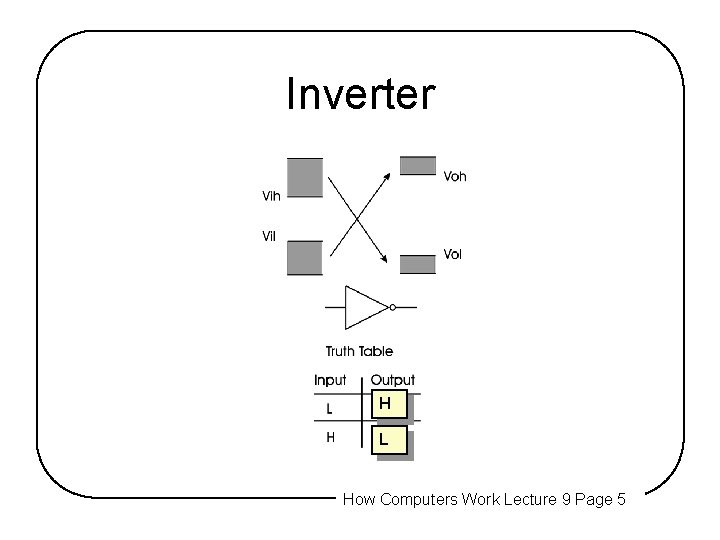
Inverter H L How Computers Work Lecture 9 Page 5
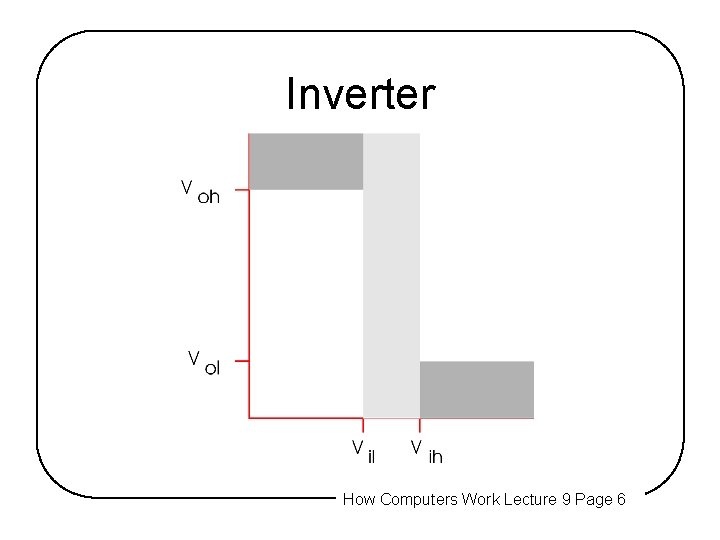
Inverter How Computers Work Lecture 9 Page 6
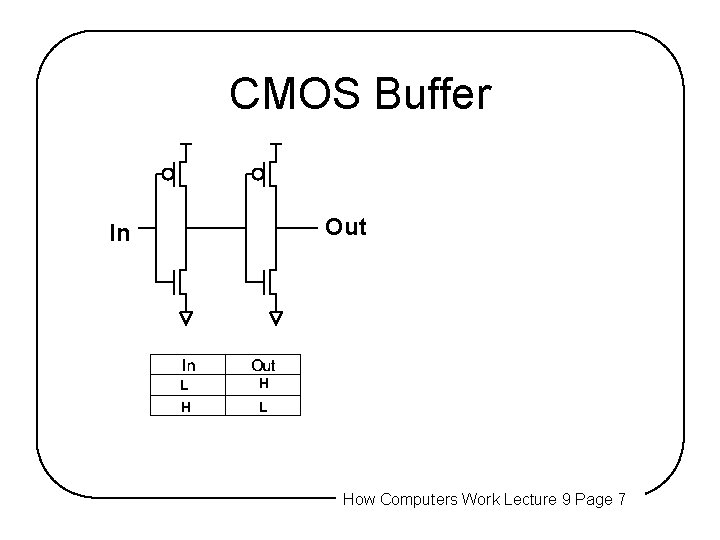
CMOS Buffer Out In L H H L How Computers Work Lecture 9 Page 7
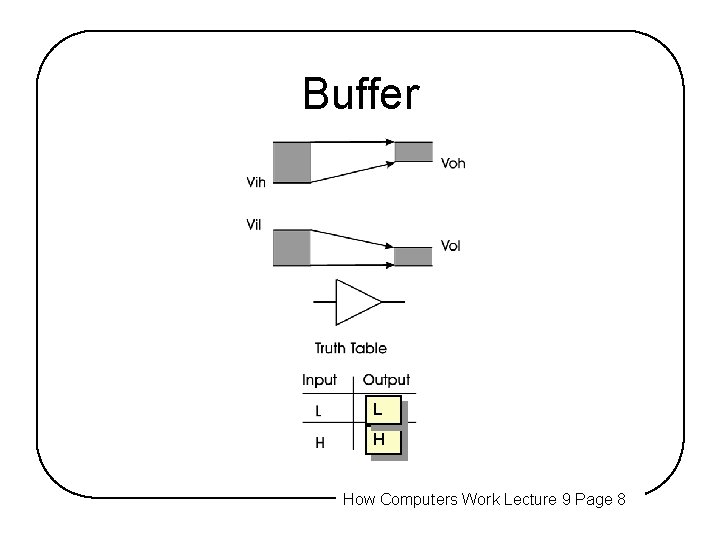
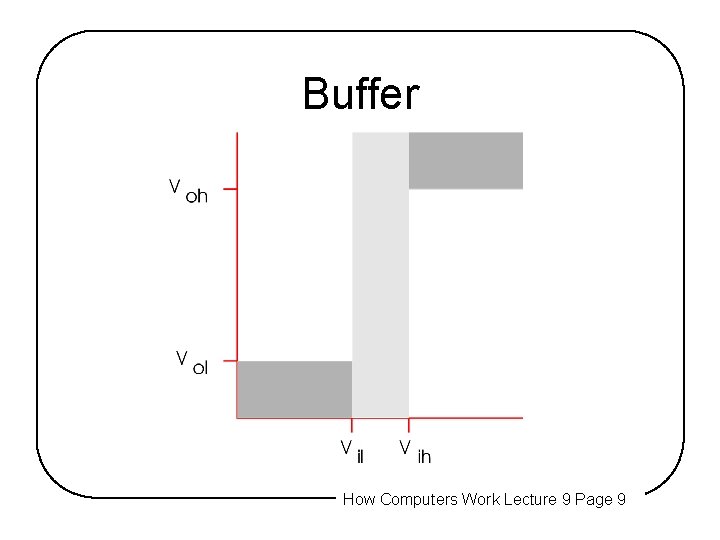
Buffer L H How Computers Work Lecture 9 Page 8
Buffer How Computers Work Lecture 9 Page 9
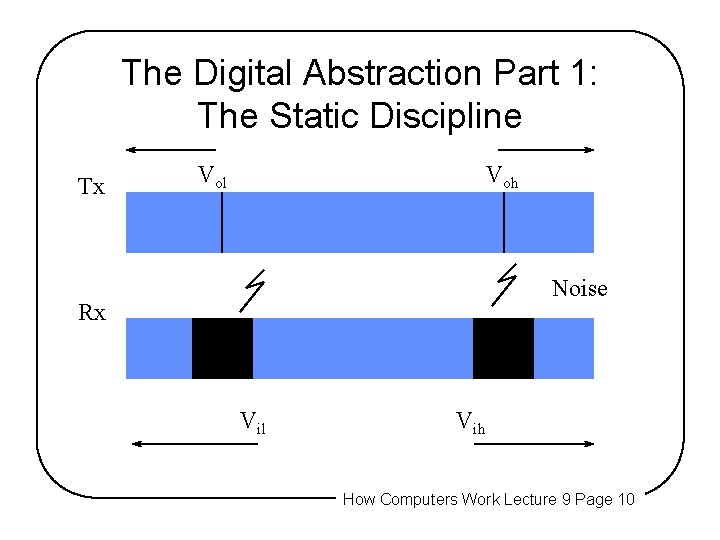
The Digital Abstraction Part 1: The Static Discipline Tx Vol Voh Noise Rx Vil Vih How Computers Work Lecture 9 Page 10
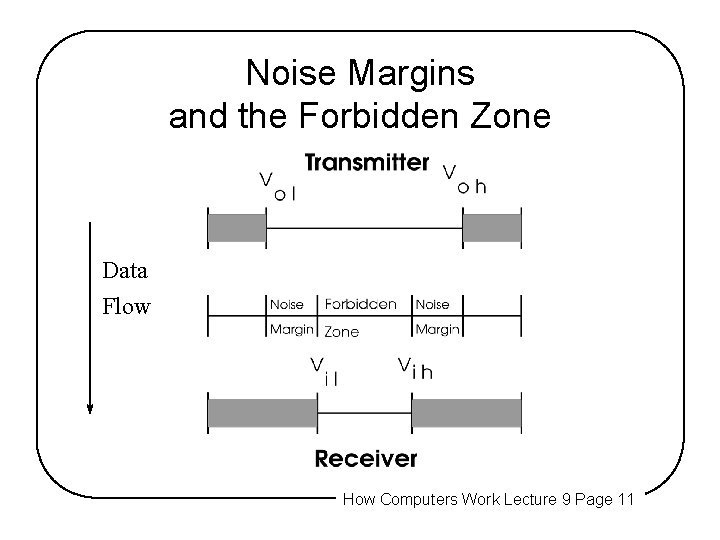
Noise Margins and the Forbidden Zone Data Flow How Computers Work Lecture 9 Page 11
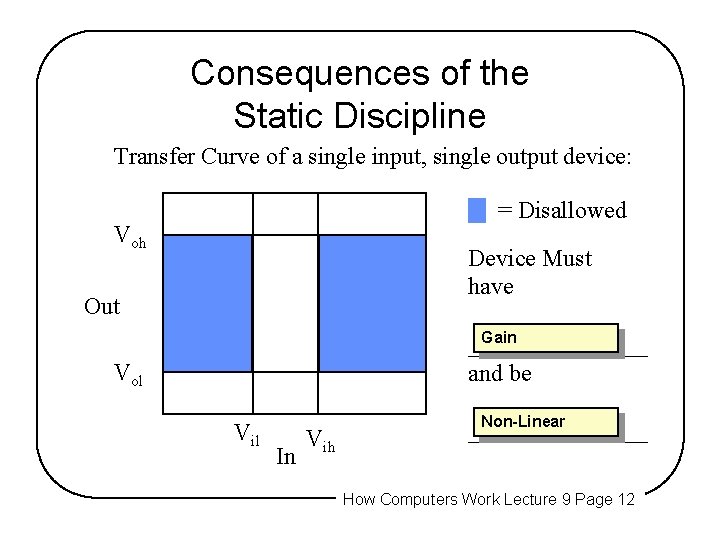
Consequences of the Static Discipline Transfer Curve of a single input, single output device: = Disallowed Voh Device Must have Out Gain ________ and be Vol Vil In Vih Non-Linear ________ How Computers Work Lecture 9 Page 12
Recall that the probability of asynchronous arbitration metastability after a finite Tpd is nonzero • So What about the Static Discipline? – A: It, like many abstractions you learn about in computer design is really a probabilistic one. – Parts fail too. • Reliability typically follows a “bathtub” curve – If the probability of the static discipline failing is much less than the probability of any part failing, we can basically ignore the problem. How Computers Work Lecture 9 Page 13
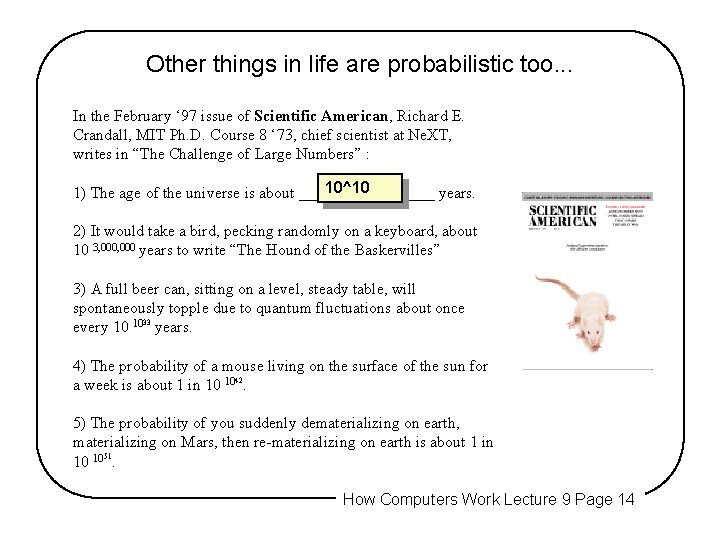
Other things in life are probabilistic too. . . In the February ‘ 97 issue of Scientific American, Richard E. Crandall, MIT Ph. D. Course 8 ‘ 73, chief scientist at Ne. XT, writes in “The Challenge of Large Numbers” : 10^10 1) The age of the universe is about _________ years. 2) It would take a bird, pecking randomly on a keyboard, about 10 3, 000 years to write “The Hound of the Baskervilles” 3) A full beer can, sitting on a level, steady table, will spontaneously topple due to quantum fluctuations about once every 10 1033 years. 4) The probability of a mouse living on the surface of the sun for a week is about 1 in 10 1042. 5) The probability of you suddenly dematerializing on earth, materializing on Mars, then re-materializing on earth is about 1 in 10 1051. How Computers Work Lecture 9 Page 14
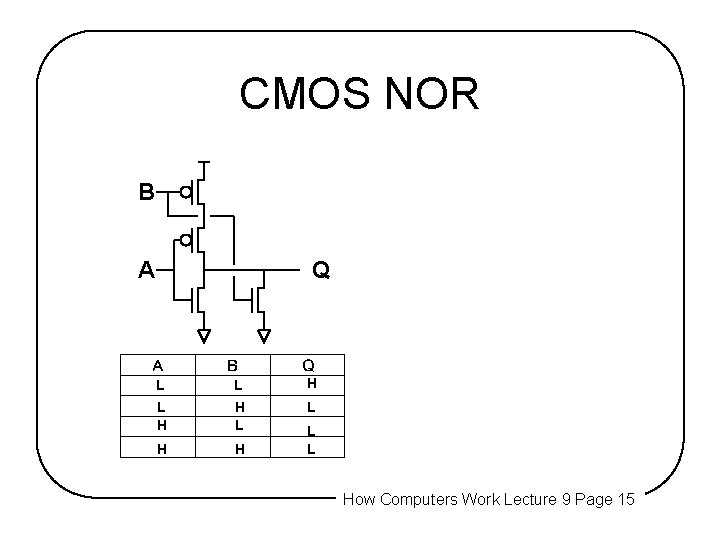
CMOS NOR B A Q L L H H L L How Computers Work Lecture 9 Page 15
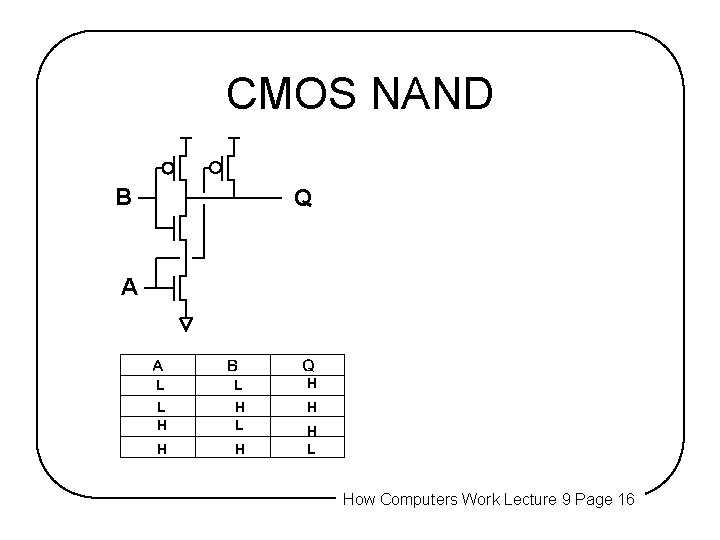
CMOS NAND B Q A L L H H L How Computers Work Lecture 9 Page 16
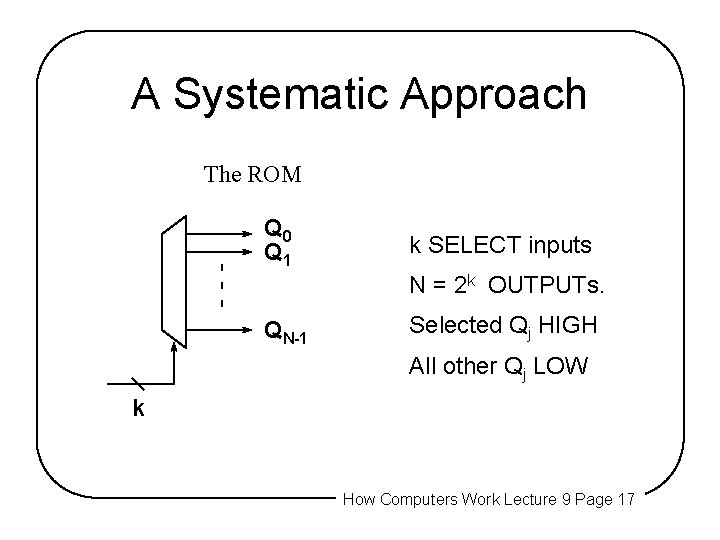
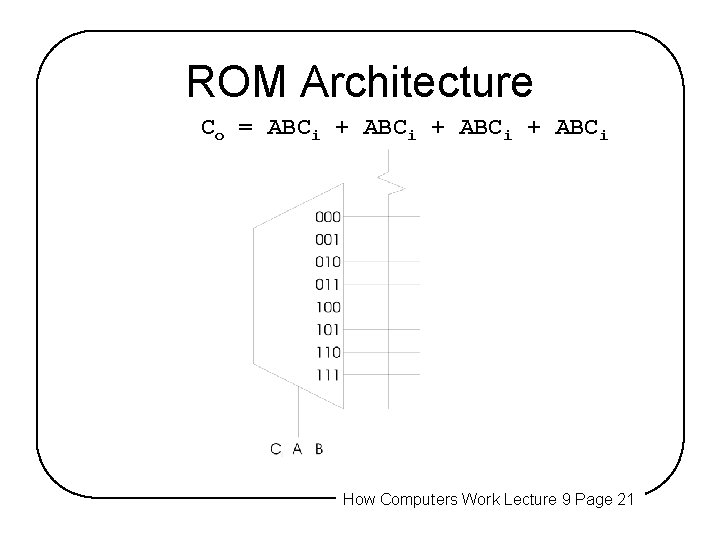
A Systematic Approach The ROM Q 0 Q 1 k SELECT inputs N = 2 k OUTPUTs. QN-1 Selected Qj HIGH All other Qj LOW k How Computers Work Lecture 9 Page 17
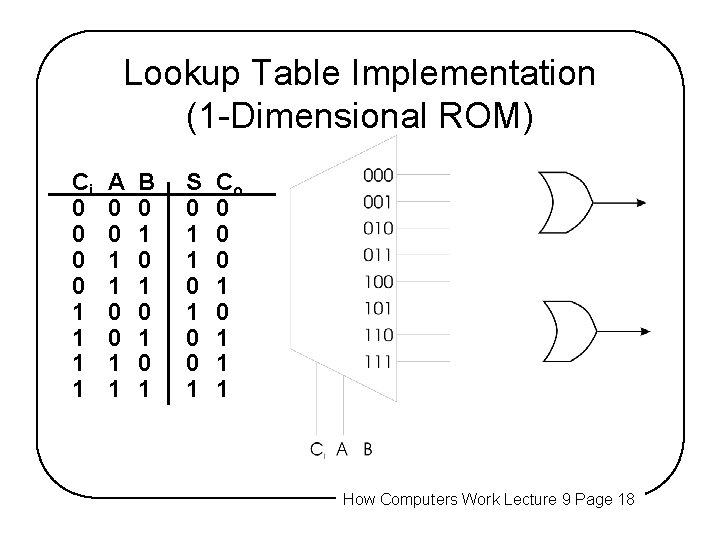
Lookup Table Implementation (1 -Dimensional ROM) Ci 0 0 1 1 A 0 0 1 1 B 0 1 0 1 S 0 1 1 0 0 1 Co 0 0 0 1 1 1 How Computers Work Lecture 9 Page 18
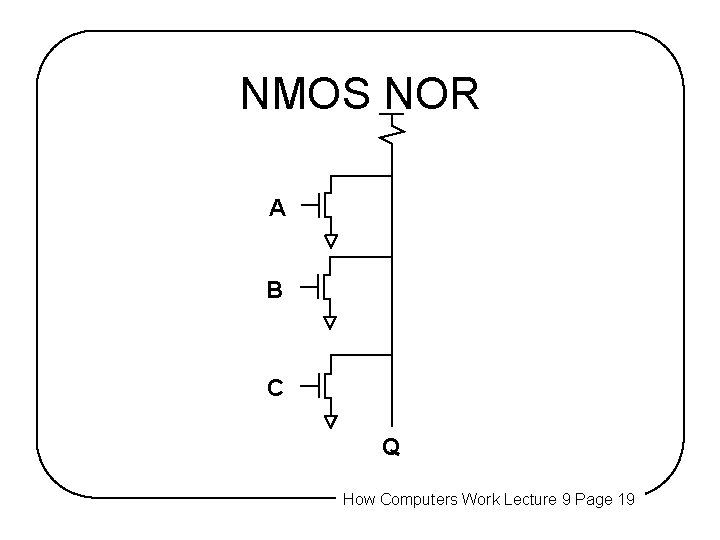
NMOS NOR A B C Q How Computers Work Lecture 9 Page 19
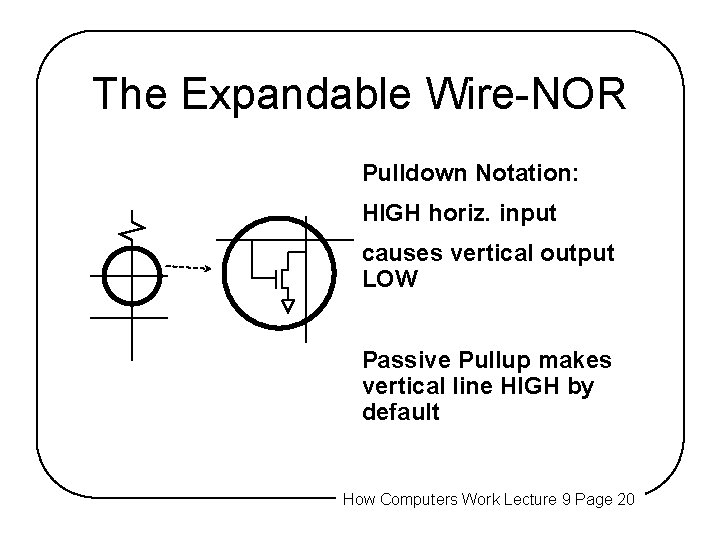
The Expandable Wire-NOR Pulldown Notation: HIGH horiz. input causes vertical output LOW Passive Pullup makes vertical line HIGH by default How Computers Work Lecture 9 Page 20
ROM Architecture Co = ABCi + ABCi How Computers Work Lecture 9 Page 21
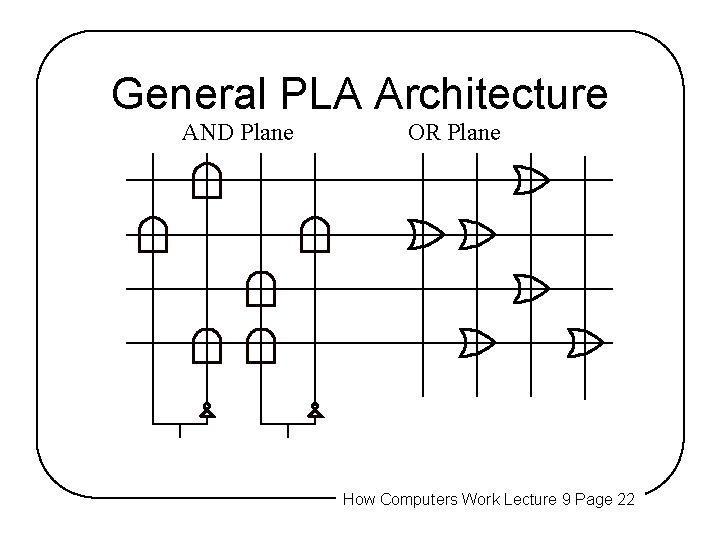
General PLA Architecture AND Plane OR Plane How Computers Work Lecture 9 Page 22
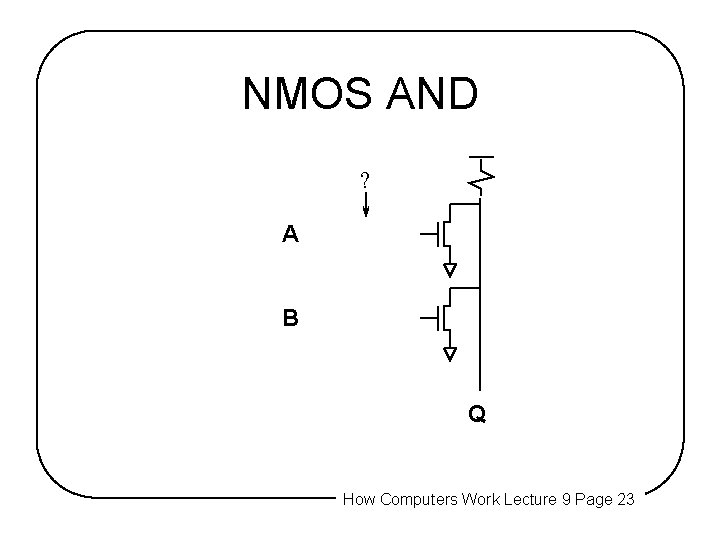
NMOS AND ? A B Q How Computers Work Lecture 9 Page 23
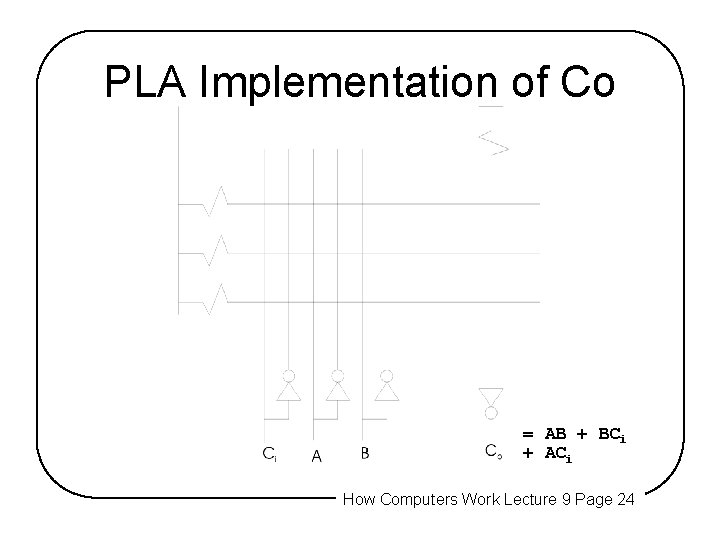
PLA Implementation of Co = AB + BCi + ACi How Computers Work Lecture 9 Page 24
PALS • PLA with fixed OR plane • Usually contain memory devices as well How Computers Work Lecture 9 Page 25
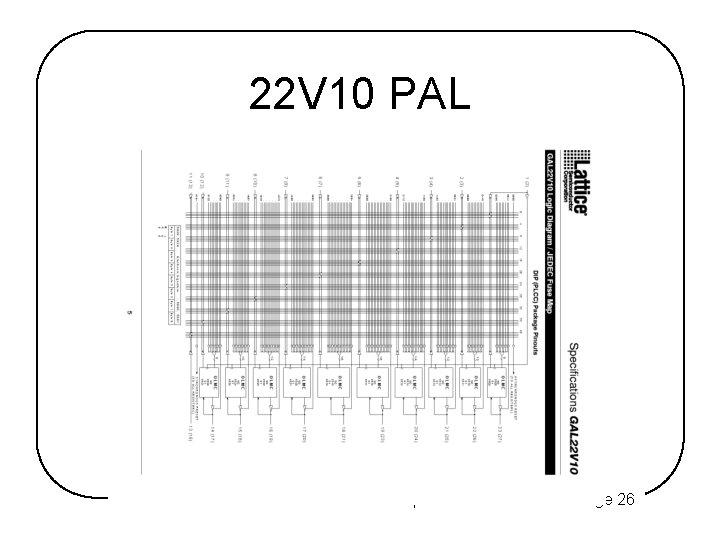
22 V 10 PAL How Computers Work Lecture 9 Page 26
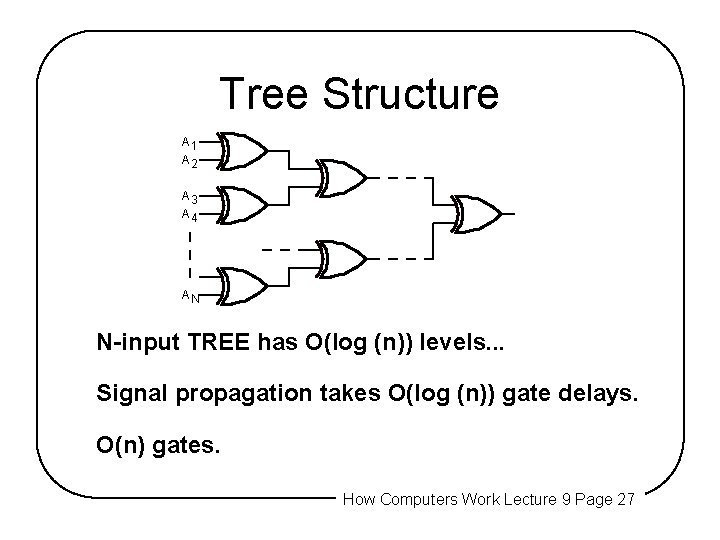
Tree Structure A 1 A 2 A 3 A 4 AN N-input TREE has O(log (n)) levels. . . Signal propagation takes O(log (n)) gate delays. O(n) gates. How Computers Work Lecture 9 Page 27
FPGAs • Recognition that PLA 2 -Level Architecture is poor match to many functions • Network of many small programmable logic elements – ROMs – PLAs – Gates • Programmable Interconnection Network How Computers Work Lecture 9 Page 28
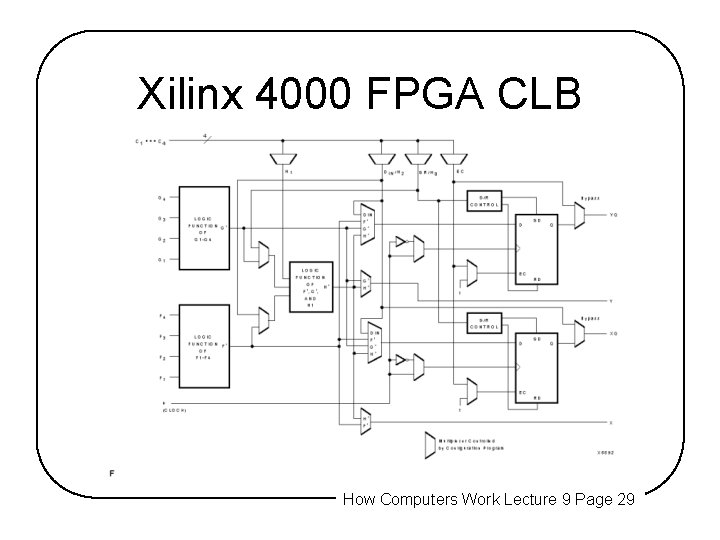
Xilinx 4000 FPGA CLB How Computers Work Lecture 9 Page 29
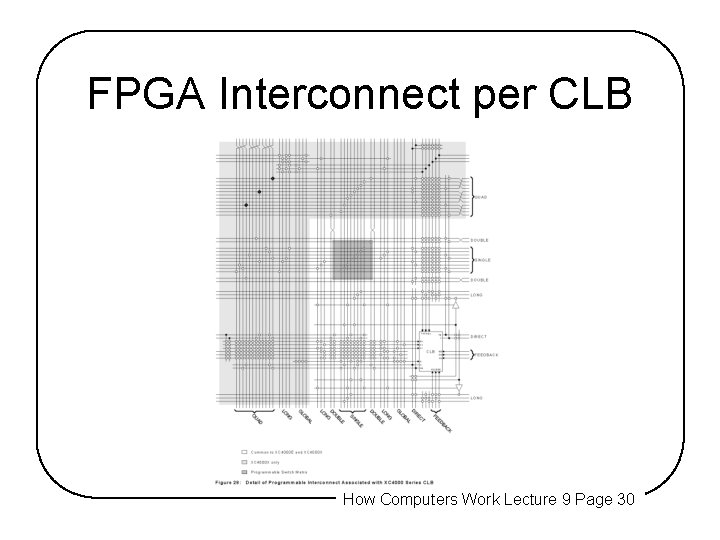
FPGA Interconnect per CLB How Computers Work Lecture 9 Page 30
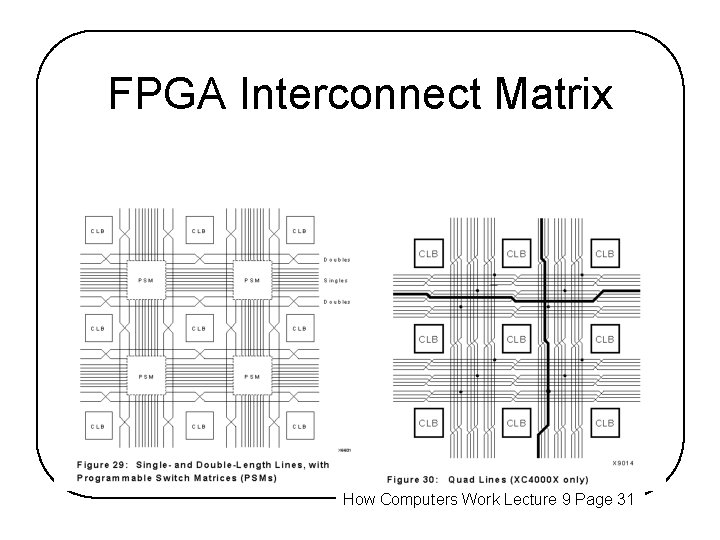
FPGA Interconnect Matrix How Computers Work Lecture 9 Page 31