
How Come Nobody Ever Told Me This Before
“How Come Nobody Ever Told Me This Before? " Skills for successful remediation of underperforming trainees. Trish Kritek, MD, Ed. M, University of Washington Timothy Gilligan, MD, MS, Cleveland Clinic

Case
Key Concepts for Remediation Prework Focus on Outcomes Provide Structure and Accountability Pay Attention to Communication Skills Trainee Owns It Attend to the Relationship Throughout

Prework
Diagnosis: Deficit Categories Professionalism Medical Knowledge Clinical Reasoning Interpersonal & Communication Skills Physical Exam & Procedural Skills

Focus on Outcomes
Provide Structure & Accountability
Communication Skills

Trainee Owns It
Attend to Relationship Throughout
Feedback
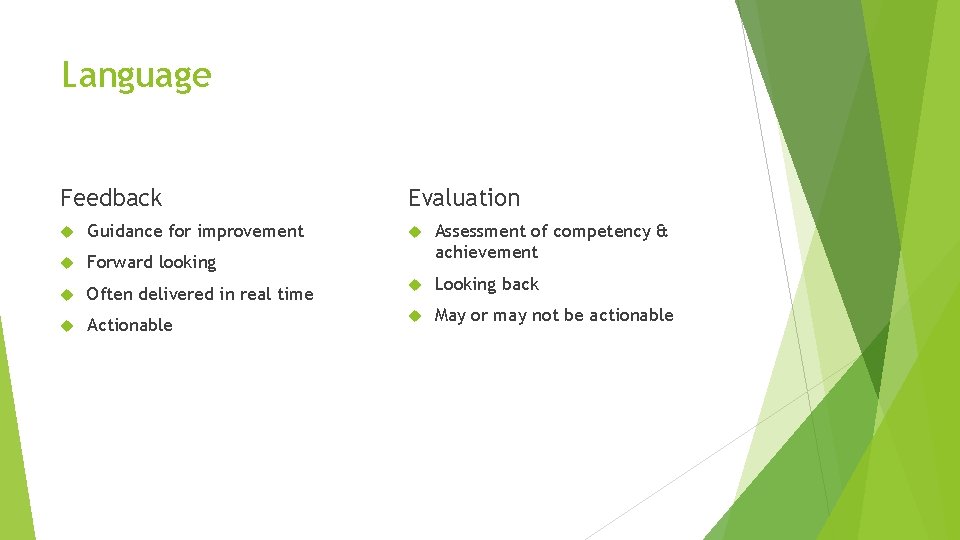
Language Feedback Guidance for improvement Forward looking Evaluation Assessment of competency & achievement Often delivered in real time Looking back Actionable May or may not be actionable
Challenges to feedback
Six Feedback Pearls
#1 – Create a Culture of Feedback
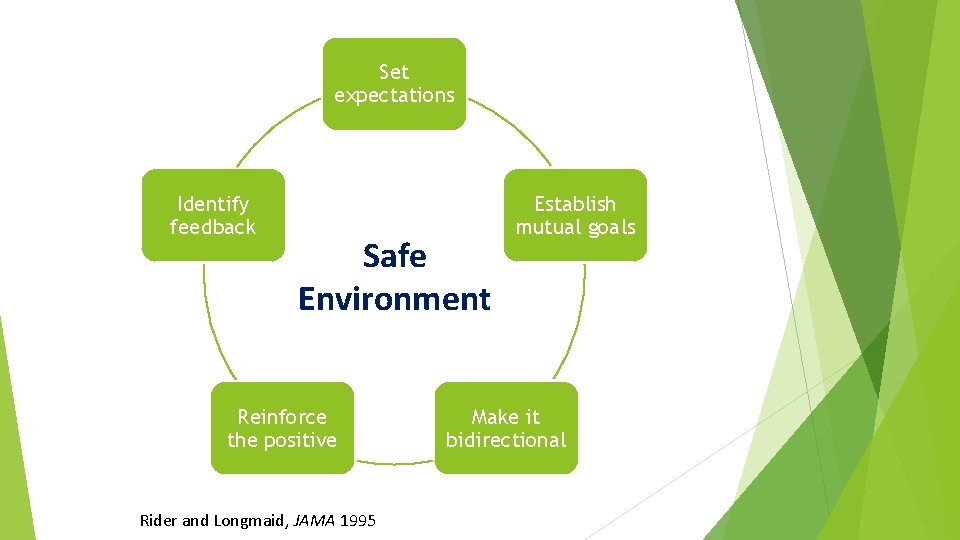
Set expectations Identify feedback Safe Environment Reinforce the positive Rider and Longmaid, JAMA 1995 Establish mutual goals Make it bidirectional
The Feedback Sandwich
Transparency test Imagine telling the people your strategy. “Alex and Stacey, I have some negative feedback to give you. I’ll start with some positive feedback to relax you, and then give you the negative feedback, which is the real purpose of our meeting. I’ll end with more positive feedback so you won’t be so disappointed or angry at me when you leave my office. How does that work for you? ” Roger Schwarz, Harvard Business Review, April 19, 2013 hbr. org
An alternative approach What do you think you are doing effectively? This is what I think you are doing effectively …. What would you like to do differently to be more effective? I’d like to share what I see as your biggest opportunity to improve your performance.

ASK – TELL – ASK
#2 – Create a Culture of Appreciation

#3 – Invest sufficient time and energy
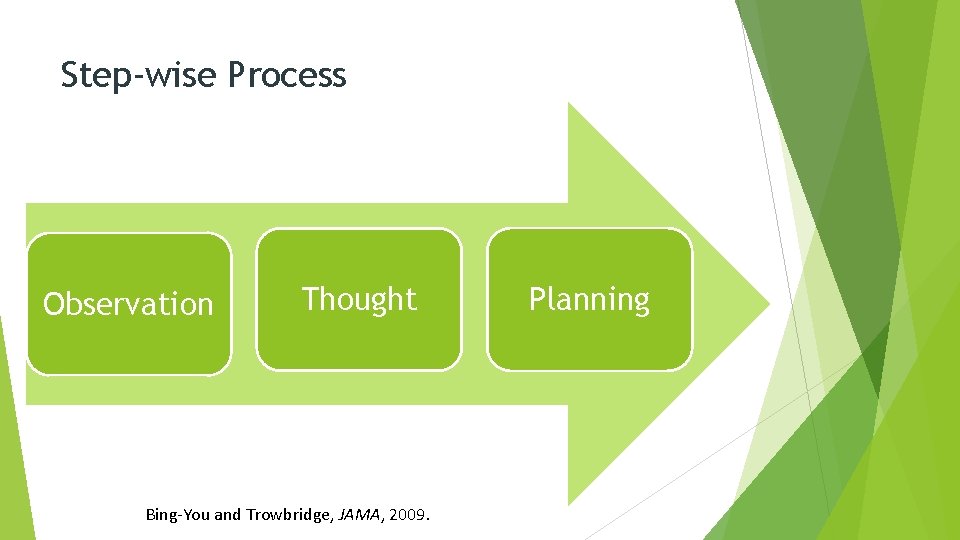
Step-wise Process Observation Thought Bing-You and Trowbridge, JAMA, 2009. Planning
#4 – Make it Bidirectional Reciprocity
#5 – Make it specific and about behaviors Distinguish impact from intention
#6 – Establish Accountability
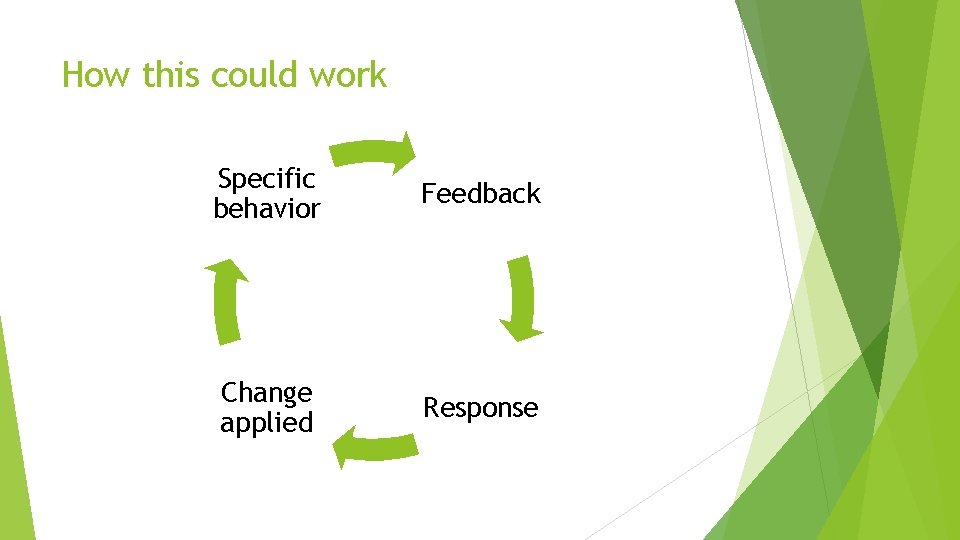
How this could work Specific behavior Feedback Change applied Response
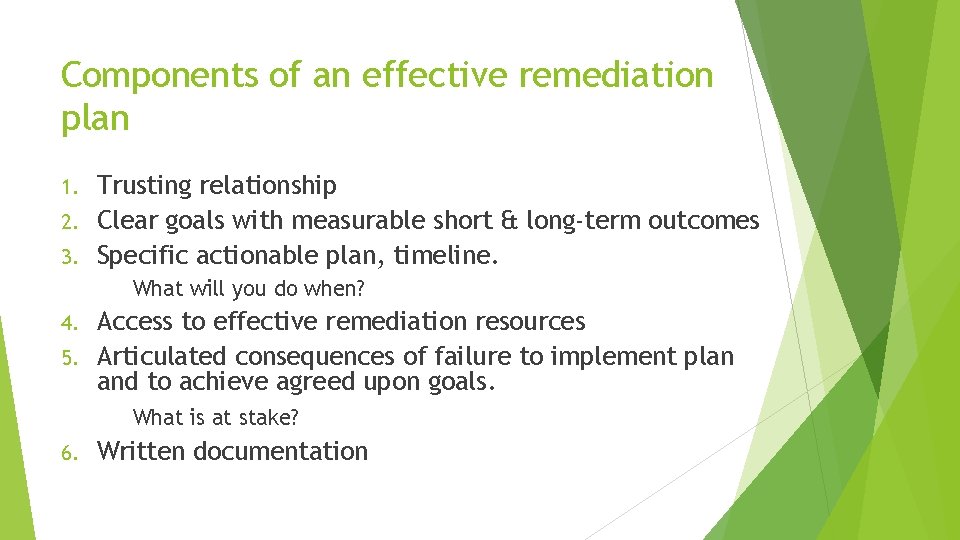
Components of an effective remediation plan Trusting relationship 2. Clear goals with measurable short & long-term outcomes 3. Specific actionable plan, timeline. 1. What will you do when? Access to effective remediation resources 5. Articulated consequences of failure to implement plan and to achieve agreed upon goals. 4. What is at stake? 6. Written documentation
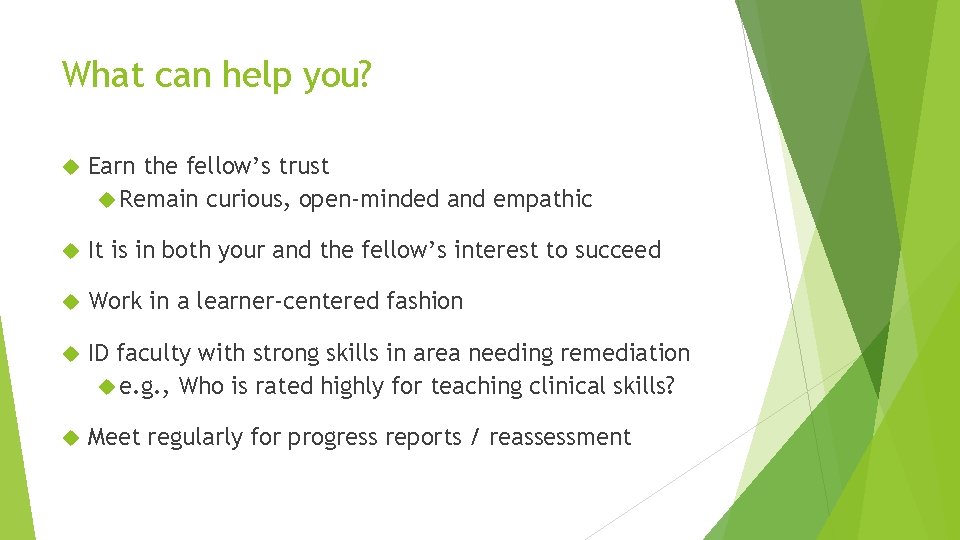
What can help you? Earn the fellow’s trust Remain curious, open-minded and empathic It is in both your and the fellow’s interest to succeed Work in a learner-centered fashion ID faculty with strong skills in area needing remediation e. g. , Who is rated highly for teaching clinical skills? Meet regularly for progress reports / reassessment

An excellent resource.
- Slides: 30