
How coastal upwelling can affect the offshore component


- Slides: 28
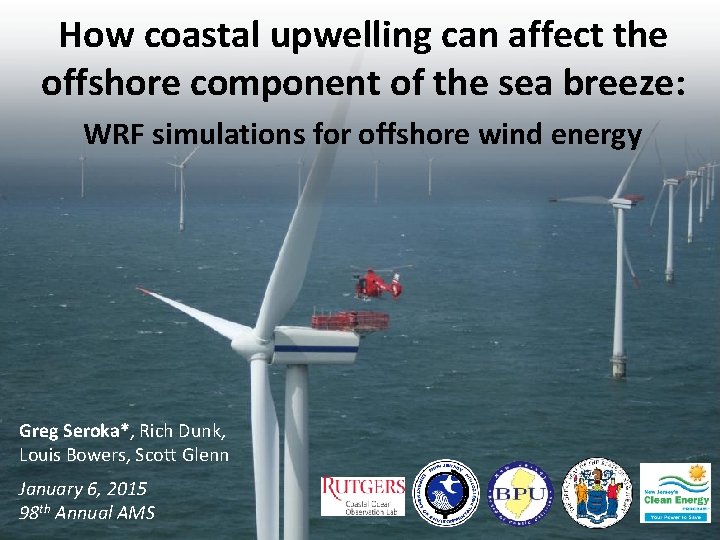
How coastal upwelling can affect the offshore component of the sea breeze: WRF simulations for offshore wind energy Greg Seroka*, Rich Dunk, Louis Bowers, Scott Glenn January 6, 2015 98 th Annual AMS
Introduction • On July 21, 2014, BOEM issued Proposed Sale Notice for NJ – Nearly 344, 000 acres for leasing offshore wind (OSW) – Auction to take place in (early? ) 2015 • OSW developer(s) who win (2 -3) lease zones will submit application to develop to NJ Board of Public Utilities (NJ BPU)
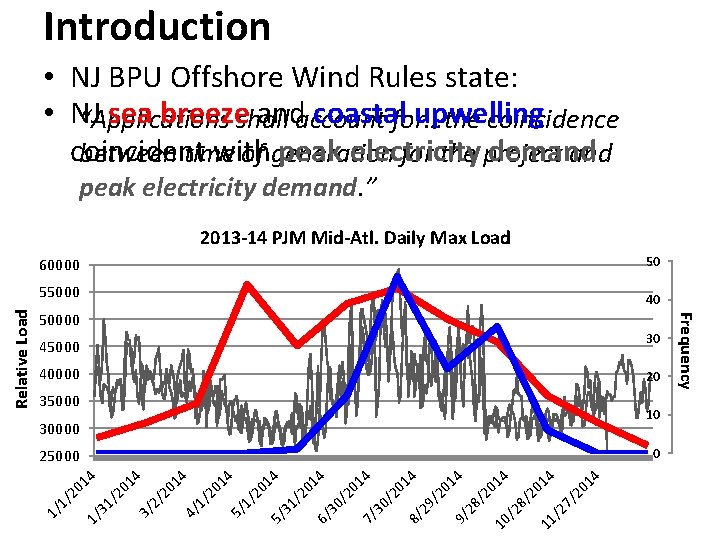
Introduction • NJ BPU Offshore Wind Rules state: • NJ sea breezeshall andaccount coastalfor…the upwelling “Applications coincidence coincident with peak electricity demand between time of generation for the project and peak electricity demand. ” 60000 50 55000 40 50000 45000 40000 35000 30000 1/ 1/ 20 1 4 1/ 31 /2 01 4 3/ 2/ 20 14 4/ 1/ 20 14 5/ 31 /2 01 4 6/ 30 /2 01 4 7/ 30 /2 01 4 8/ 29 /2 01 4 9/ 28 /2 01 10 4 /2 8/ 20 14 11 /2 7/ 20 14 25000 30 20 10 0 Frequency Relative Load 2013 -14 PJM Mid-Atl. Daily Max Load
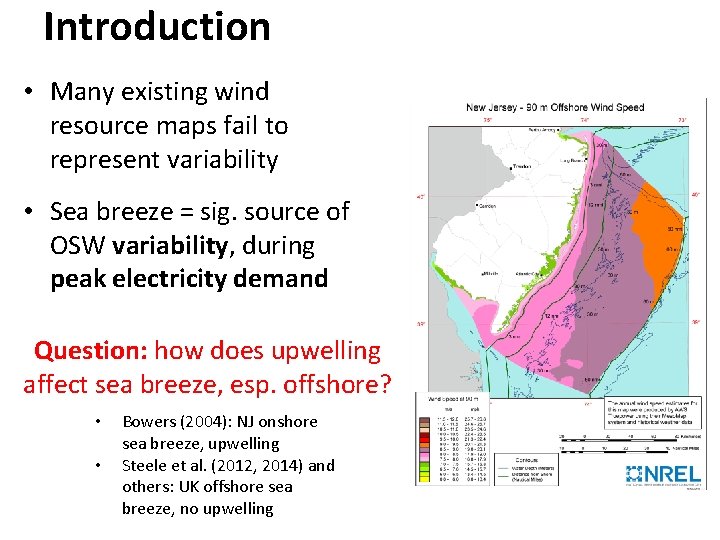
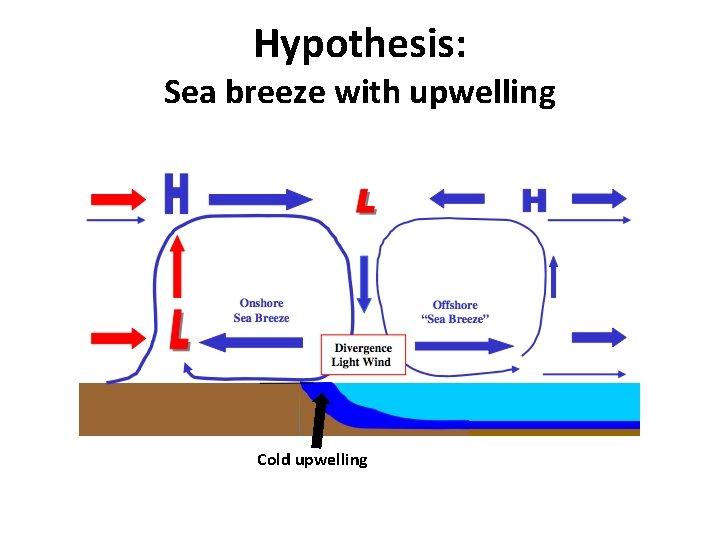
Introduction • Many existing wind resource maps fail to represent variability • Sea breeze = sig. source of OSW variability, during peak electricity demand Question: how does upwelling affect sea breeze, esp. offshore? • • Bowers (2004): NJ onshore sea breeze, upwelling Steele et al. (2012, 2014) and others: UK offshore sea breeze, no upwelling
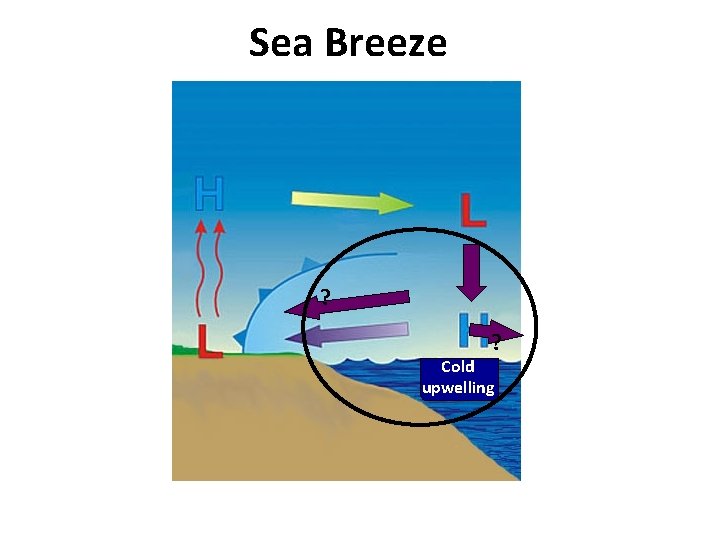
Hypothesis: Sea breeze with upwelling Cold upwelling
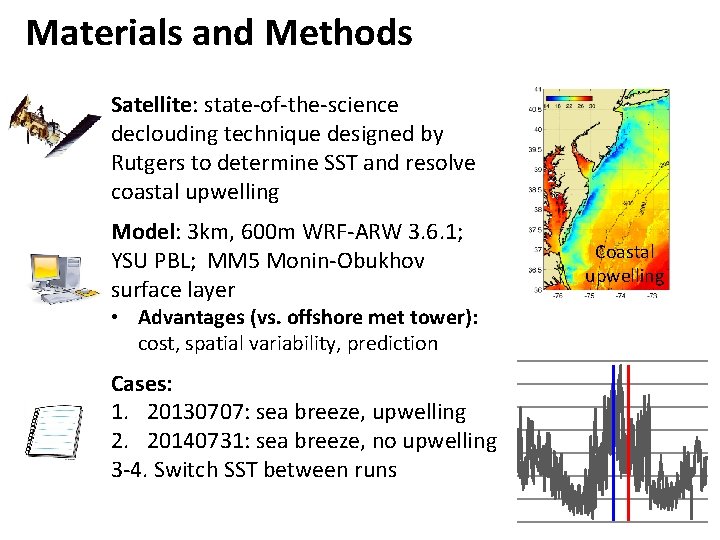
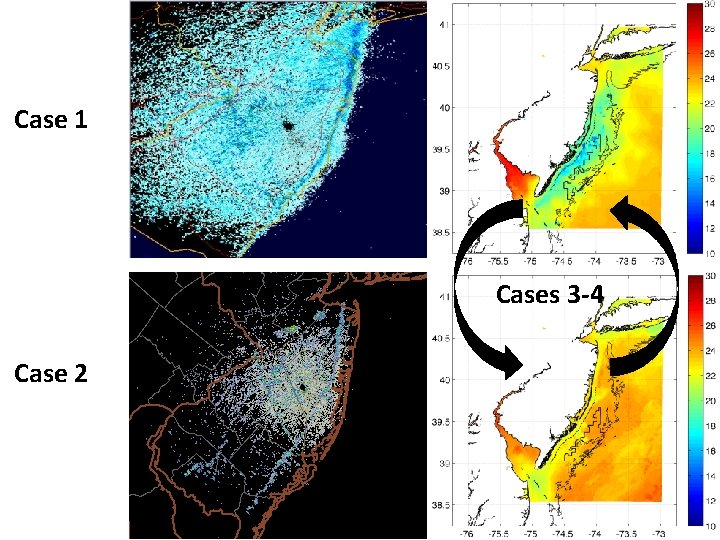
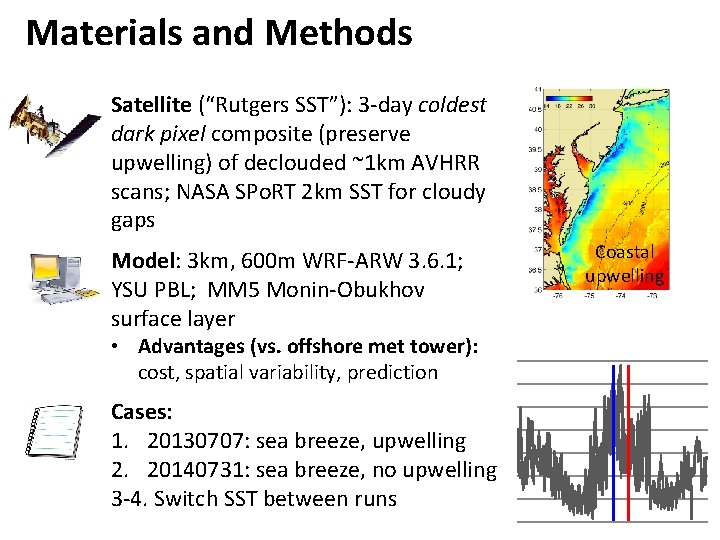
Materials and Methods Satellite: state-of-the-science declouding technique designed by Rutgers to determine SST and resolve coastal upwelling Model: 3 km, 600 m WRF-ARW 3. 6. 1; YSU PBL; MM 5 Monin-Obukhov surface layer • Advantages (vs. offshore met tower): cost, spatial variability, prediction Cases: 1. 20130707: sea breeze, upwelling 2. 20140731: sea breeze, no upwelling 3 -4. Switch SST between runs Coastal upwelling
Case 1 Cases 3 -4 Case 2
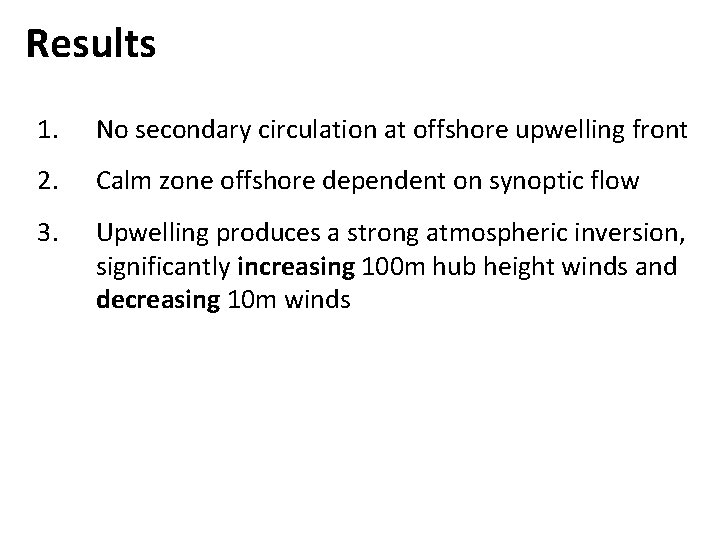
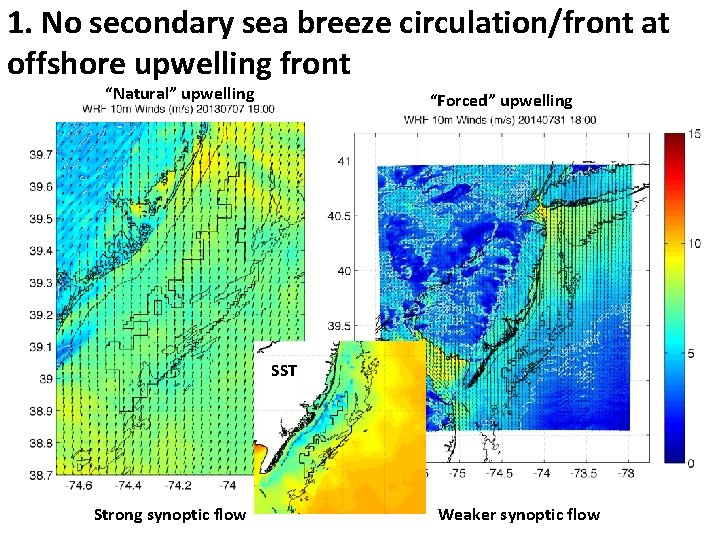
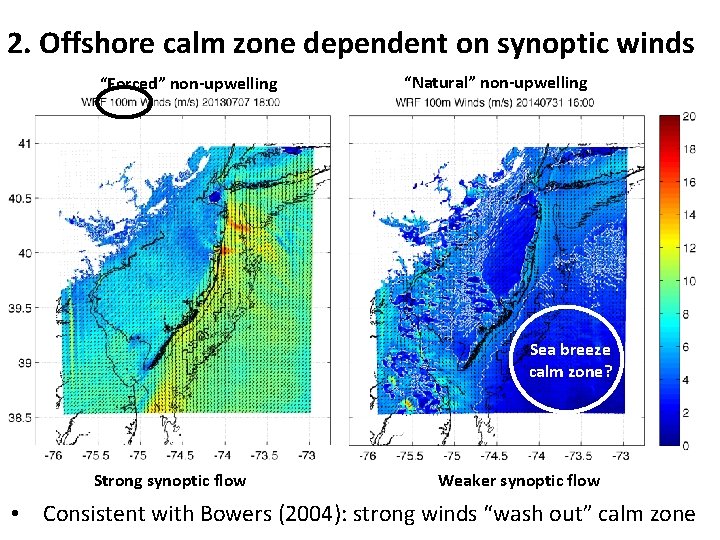
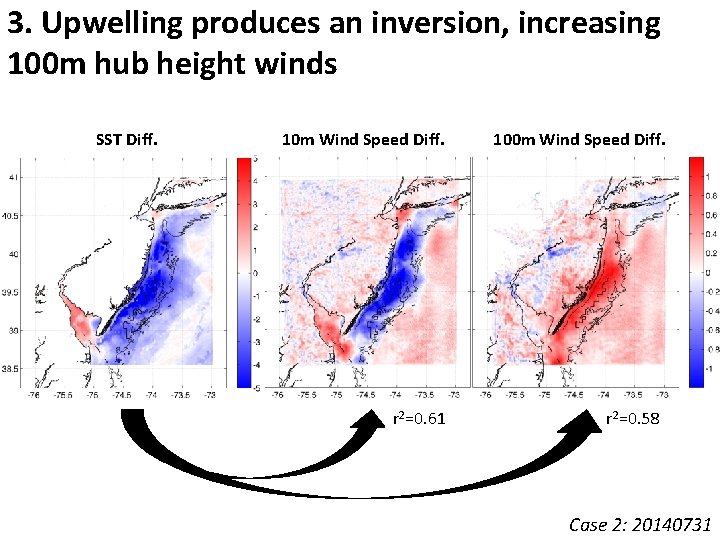
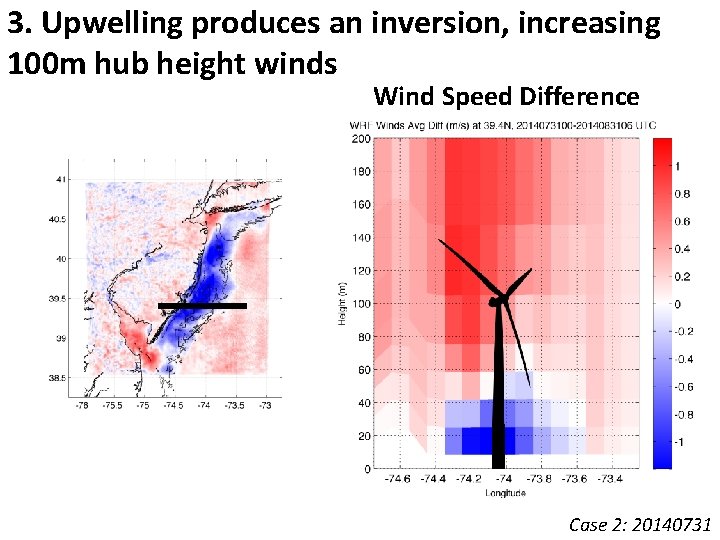
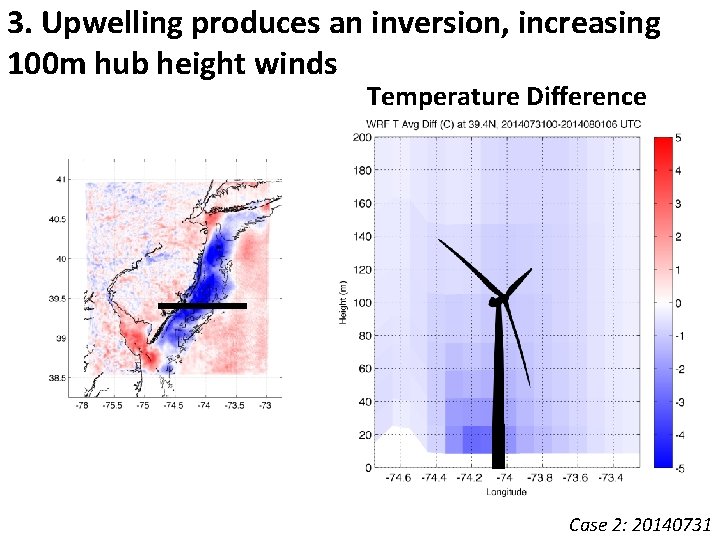
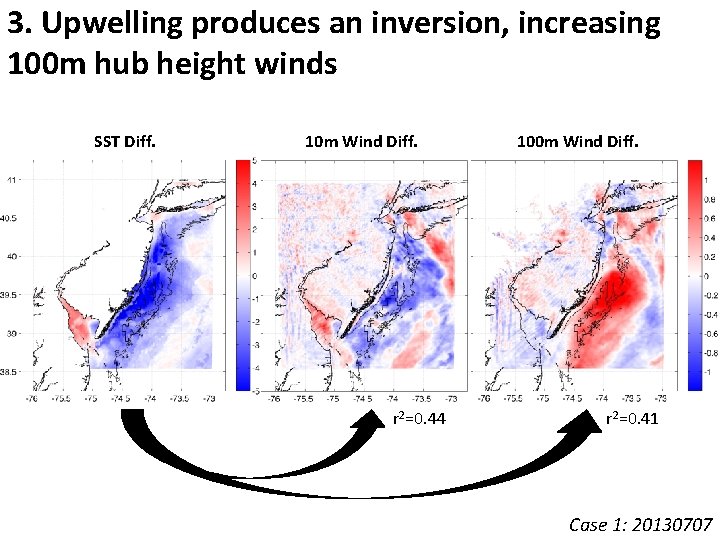
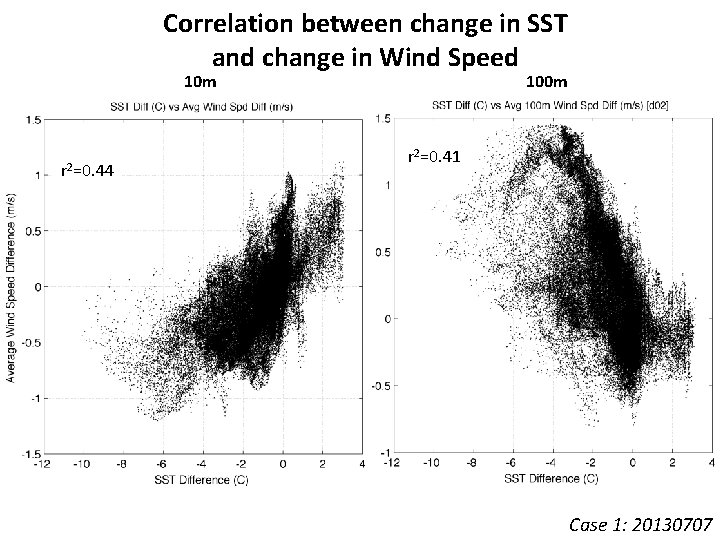
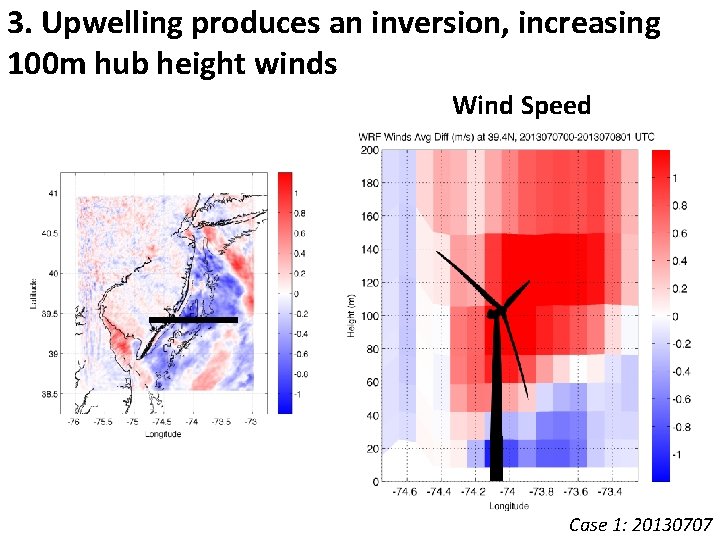
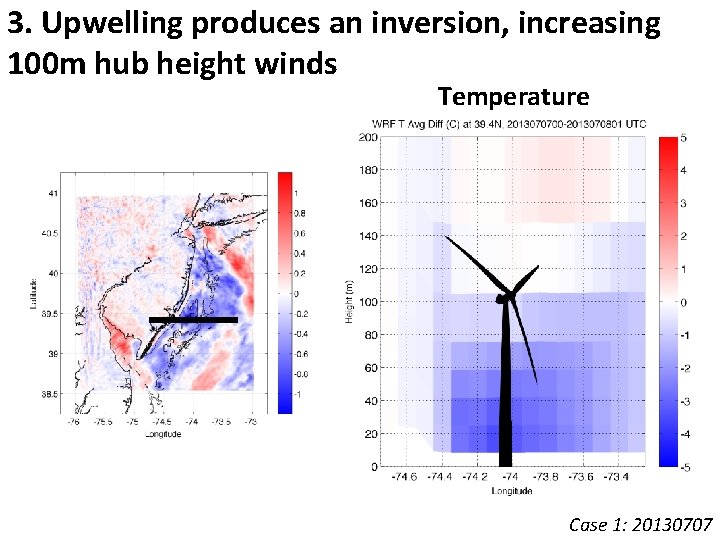
Results 1. No secondary circulation at offshore upwelling front 2. Calm zone offshore dependent on synoptic flow 3. Upwelling produces a strong atmospheric inversion, significantly increasing 100 m hub height winds and decreasing 10 m winds
1. No secondary sea breeze circulation/front at offshore upwelling front “Natural” upwelling “Forced” upwelling SST Strong synoptic flow Weaker synoptic flow
2. Offshore calm zone dependent on synoptic winds “Forced” non-upwelling “Natural” non-upwelling Sea breeze calm zone? Strong synoptic flow Weaker synoptic flow • Consistent with Bowers (2004): strong winds “wash out” calm zone
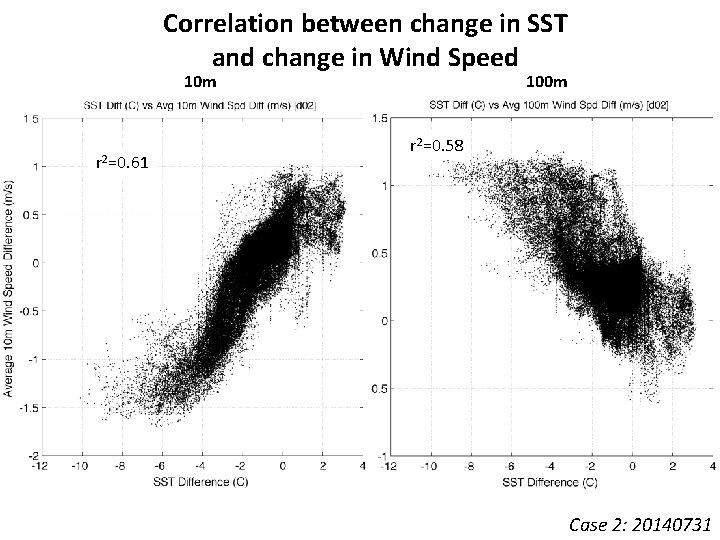
3. Upwelling produces an inversion, increasing 100 m hub height winds SST Diff. 10 m Wind Speed Diff. r 2=0. 61 100 m Wind Speed Diff. r 2=0. 58 Case 2: 20140731
3. Upwelling produces an inversion, increasing 100 m hub height winds Wind Speed Difference Case 2: 20140731
3. Upwelling produces an inversion, increasing 100 m hub height winds Temperature Difference Case 2: 20140731
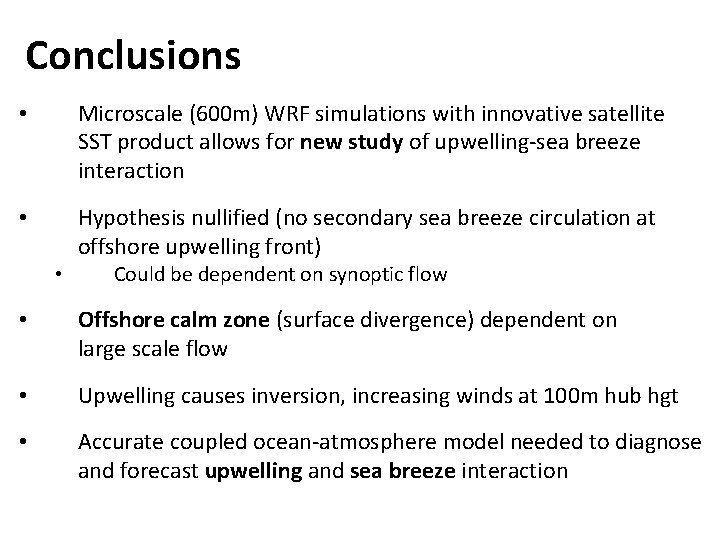
Conclusions • Microscale (600 m) WRF simulations with innovative satellite SST product allows for new study of upwelling-sea breeze interaction • Hypothesis nullified (no secondary sea breeze circulation at offshore upwelling front) • Could be dependent on synoptic flow • Offshore calm zone (surface divergence) dependent on large scale flow • Upwelling causes inversion, increasing winds at 100 m hub hgt • Accurate coupled ocean-atmosphere model needed to diagnose and forecast upwelling and sea breeze interaction
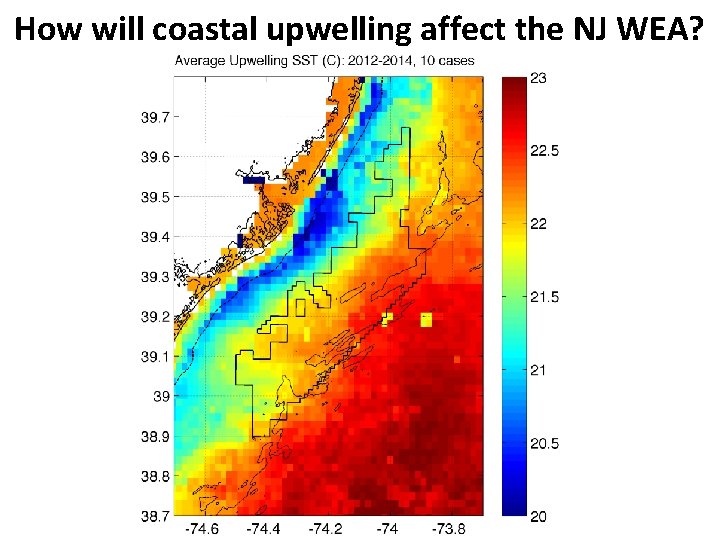
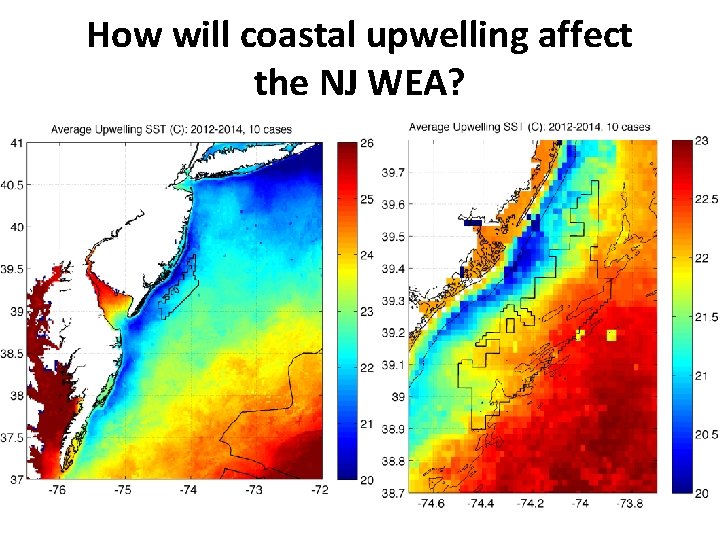
How will coastal upwelling affect the NJ WEA?
16 Thank You
17 Extra Slides
Future work Model evaluation for cases • • Coastal SODAR, Wind Cube LIDAR (TI), and 60 m tower WRF-related: • • • PBL scheme sensitivity Wind turbine parameterization LES More cases • Coupled modeling w/ satellite SST, underwater glider validation of ocean model (for upwelling) • SST improvements with DINEOF • Link with economic models 18
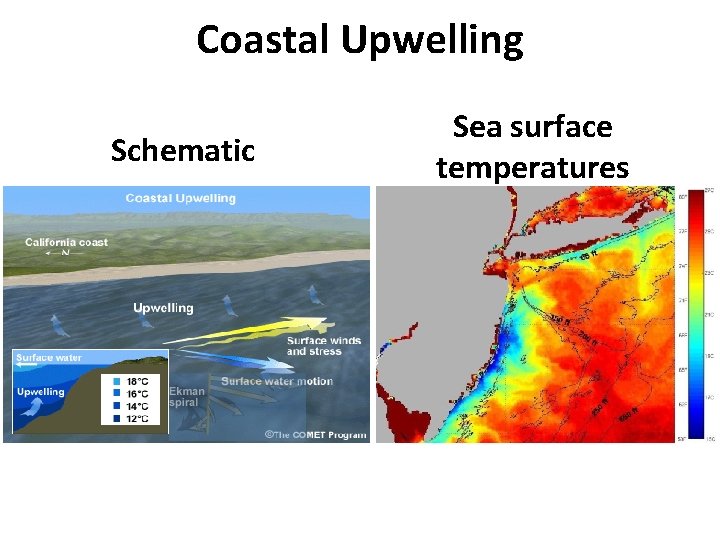
Coastal Upwelling Schematic Sea surface temperatures
Sea Breeze ? ? Cold upwelling
Materials and Methods Satellite (“Rutgers SST”): 3 -day coldest dark pixel composite (preserve upwelling) of declouded ~1 km AVHRR scans; NASA SPo. RT 2 km SST for cloudy gaps Model: 3 km, 600 m WRF-ARW 3. 6. 1; YSU PBL; MM 5 Monin-Obukhov surface layer • Advantages (vs. offshore met tower): cost, spatial variability, prediction Cases: 1. 20130707: sea breeze, upwelling 2. 20140731: sea breeze, no upwelling 3 -4. Switch SST between runs Coastal upwelling
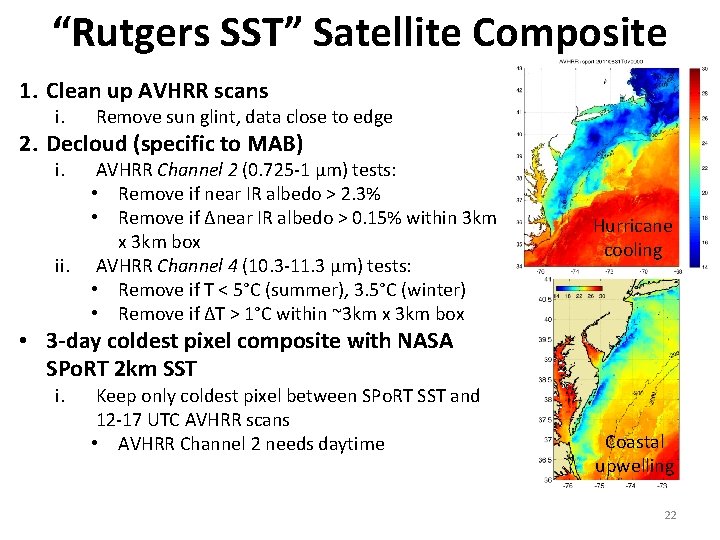
“Rutgers SST” Satellite Composite 1. Clean up AVHRR scans i. Remove sun glint, data close to edge i. AVHRR Channel 2 (0. 725 -1 μm) tests: • Remove if near IR albedo > 2. 3% • Remove if Δnear IR albedo > 0. 15% within 3 km x 3 km box AVHRR Channel 4 (10. 3 -11. 3 μm) tests: • Remove if T < 5°C (summer), 3. 5°C (winter) • Remove if ΔT > 1°C within ~3 km x 3 km box 2. Decloud (specific to MAB) ii. Hurricane cooling • 3 -day coldest pixel composite with NASA SPo. RT 2 km SST i. Keep only coldest pixel between SPo. RT SST and 12 -17 UTC AVHRR scans • AVHRR Channel 2 needs daytime Coastal upwelling 22
3. Upwelling produces an inversion, increasing 100 m hub height winds SST Diff. 10 m Wind Diff. r 2=0. 44 100 m Wind Diff. r 2=0. 41 Case 1: 20130707
Correlation between change in SST and change in Wind Speed 10 m r 2=0. 44 100 m r 2=0. 41 Case 1: 20130707
Correlation between change in SST and change in Wind Speed 10 m r 2=0. 61 100 m r 2=0. 58 Case 2: 20140731
3. Upwelling produces an inversion, increasing 100 m hub height winds Wind Speed Case 1: 20130707
3. Upwelling produces an inversion, increasing 100 m hub height winds Temperature Case 1: 20130707
How will coastal upwelling affect the NJ WEA?