
How Cells Reproduce Chapter 8 Understanding Cell Division

- Slides: 35
How Cells Reproduce Chapter 8
Understanding Cell Division • What instructions are necessary for inheritance? • How are those instructions duplicated for distribution into daughter cells? • By what mechanisms are instructions parceled out to daughter cells?
Reproduction • Parents produce a new generation of cells or multicelled individuals like themselves • Parents must provide daughter cells with hereditary instructions, encoded in DNA, and enough metabolic machinery to start up their own operation
Division Mechanisms Eukaryotic organisms – Mitosis – Meiosis Prokaryotic organisms – Prokaryotic fission
Roles of Mitosis • Multicelled organisms – Growth – Cell replacement • Some protistans, fungi, plants, animals – Asexual reproduction
Meiosis • Functions only in sexual reproduction • Precedes the formation of gametes (sperm and eggs) or spores
Chromosome • A DNA molecule & attached proteins • Duplicated in preparation for mitosis
Sister Chromatids • Each chromosome and its copy stay attached to each other as sister chromatids until late in the nuclear division process • Attach at the centromere
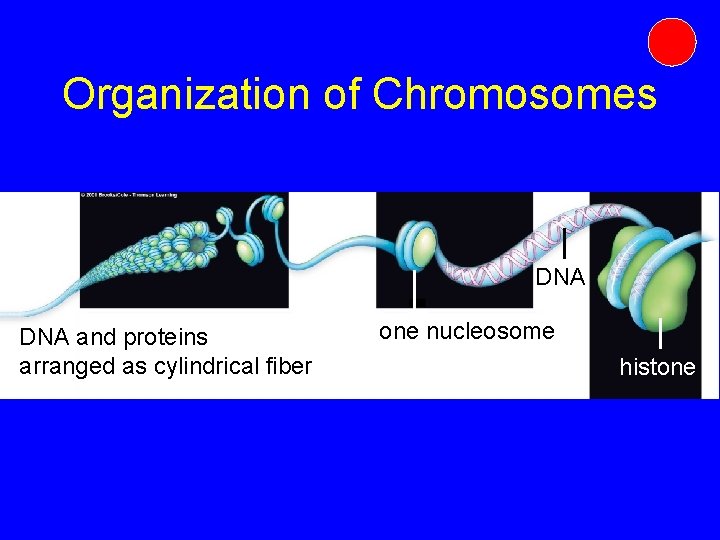
Nucleosome • A nucleosome consists of part of a DNA molecule looped twice around a core of histone proteins
Organization of Chromosomes DNA and proteins arranged as cylindrical fiber one nucleosome histone
Cell Cycle • Cycle starts when a new cell forms • During cycle, cell increases in mass and duplicates its chromosomes • Cycle ends when the new cell divides
Interphase • Usually longest part of the cycle • Cell increases in mass • Number of cytoplasmic components doubles • DNA is duplicated
Stages of Interphase
Control of the Cycle • Once S begins, the cycle automatically runs through G 2 and mitosis • The cycle has a built-in molecular brake in G 1 • Cancer involves a loss of control over the cycle, malfunction of the “brakes”
Stopping the Cycle • Some cells normally stop in interphase – Neurons in human brain – Arrested cells do not divide • Adverse conditions can stop cycle – Nutrient-deprived amoebas get stuck in interphase
Chromosome Number • Sum total of chromosomes in a cell • Somatic cells – Chromosome number is diploid (2 n) – Two of each type of chromosome • Gametes – Chromosome number is haploid (n) – One of each chromosome type
Human Chromosome Number • Diploid chromosome number (n) = 46 • Two sets of 23 chromosomes each – One set from father – One set from mother • Mitosis produces cells with 46 chromosomes – two of each type
Lots of DNA • Stretched out, the DNA from one human somatic cell would be more than two meters long • A single line of DNA from a salamander cell would extend for ten meters
Stages of Mitosis Prophase Metaphase Anaphase Telophase
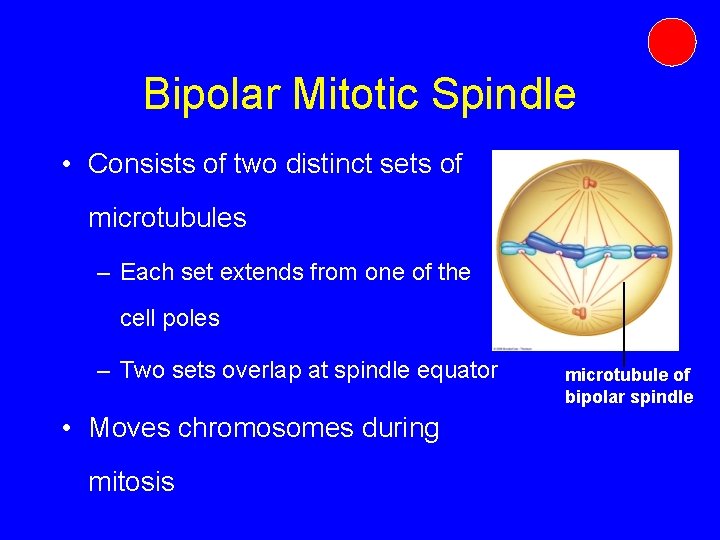
Bipolar Mitotic Spindle • Consists of two distinct sets of microtubules – Each set extends from one of the cell poles – Two sets overlap at spindle equator • Moves chromosomes during mitosis microtubule of bipolar spindle
Mitosis • Period of nuclear division • Usually followed by cytoplasmic division • Four stages: Prophase Metaphase Anaphase Telophase
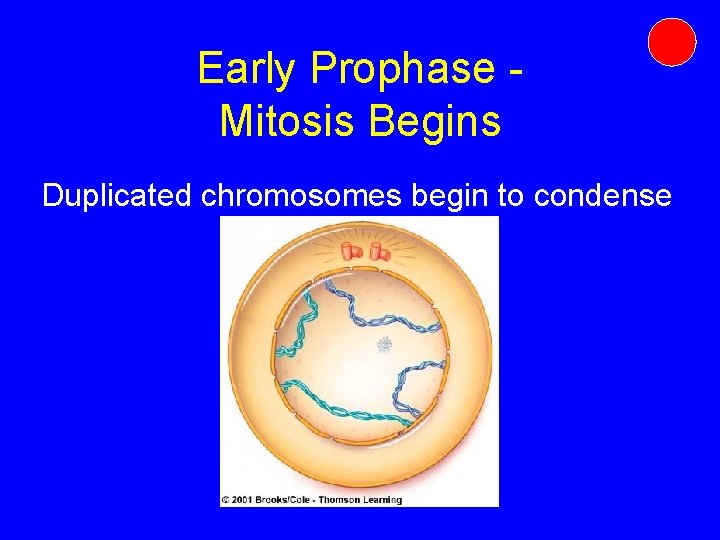
Early Prophase Mitosis Begins Duplicated chromosomes begin to condense
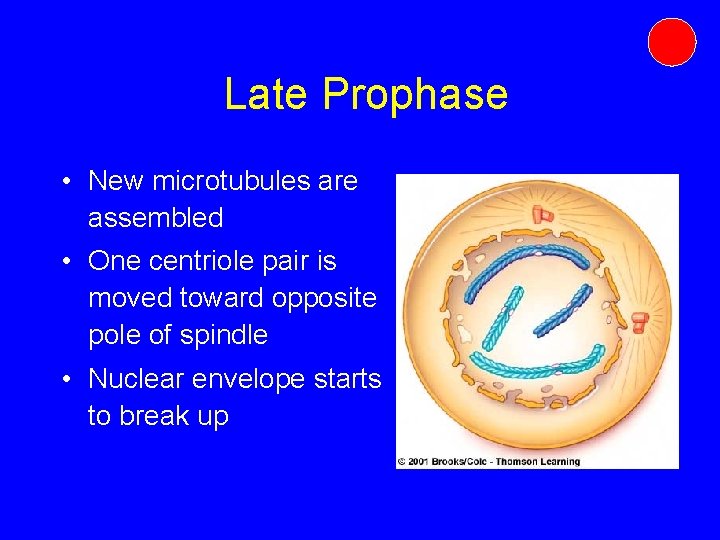
Late Prophase • New microtubules are assembled • One centriole pair is moved toward opposite pole of spindle • Nuclear envelope starts to break up
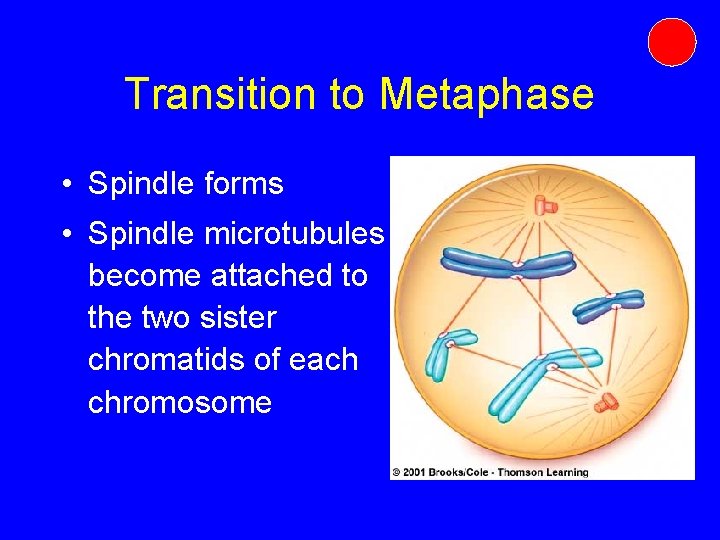
Transition to Metaphase • Spindle forms • Spindle microtubules become attached to the two sister chromatids of each chromosome
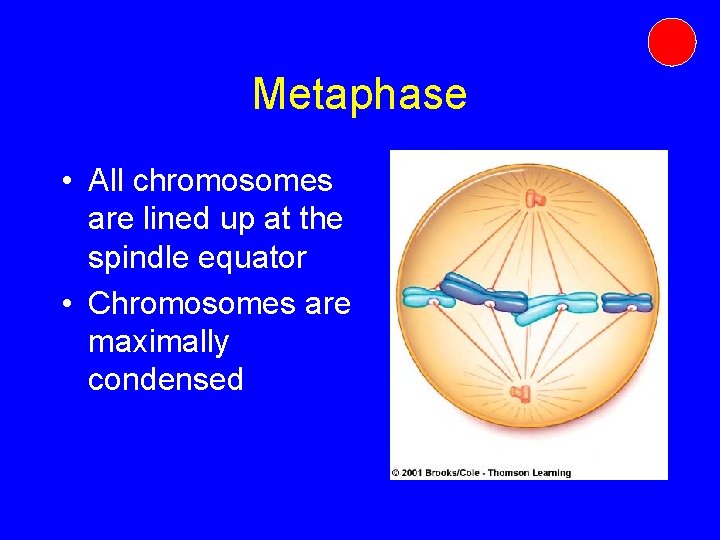
Metaphase • All chromosomes are lined up at the spindle equator • Chromosomes are maximally condensed
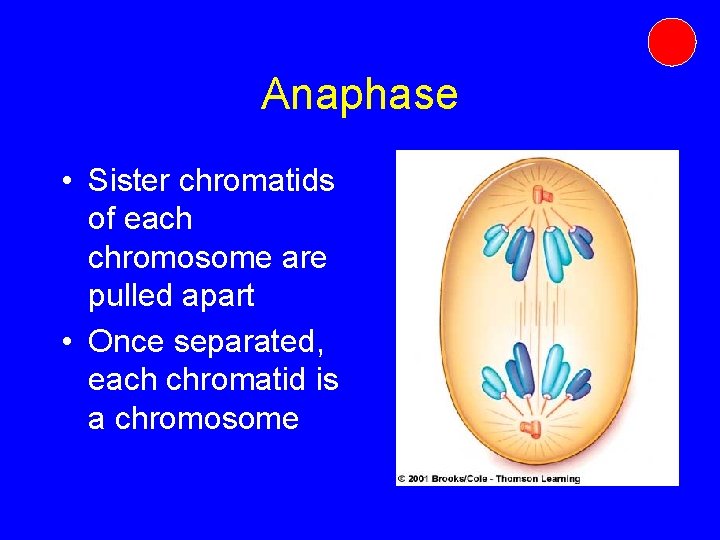
Anaphase • Sister chromatids of each chromosome are pulled apart • Once separated, each chromatid is a chromosome
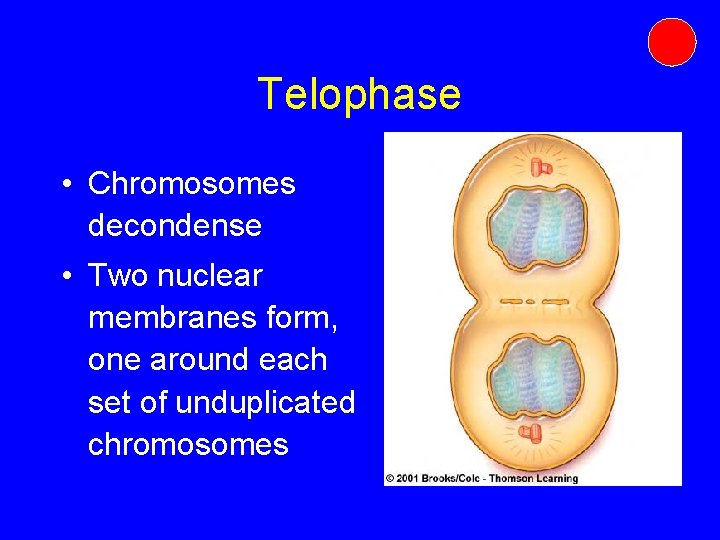
Telophase • Chromosomes decondense • Two nuclear membranes form, one around each set of unduplicated chromosomes
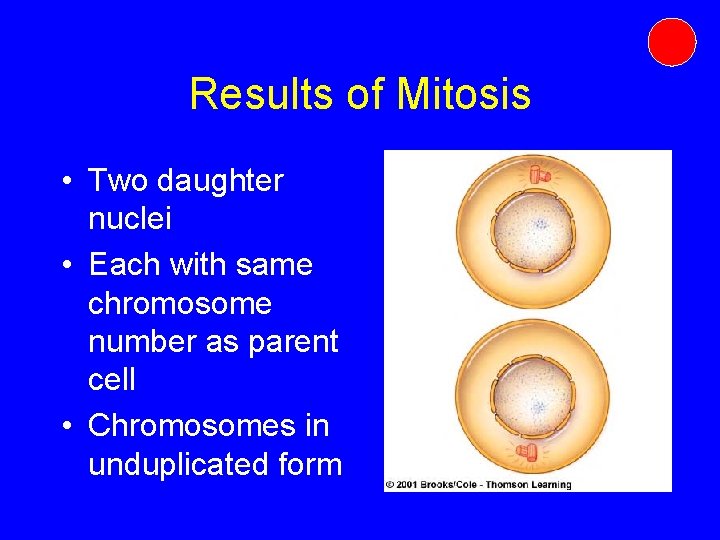
Results of Mitosis • Two daughter nuclei • Each with same chromosome number as parent cell • Chromosomes in unduplicated form
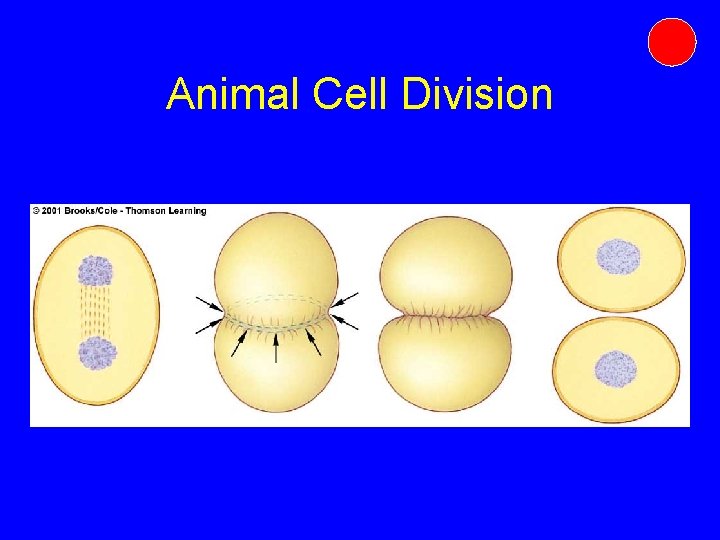
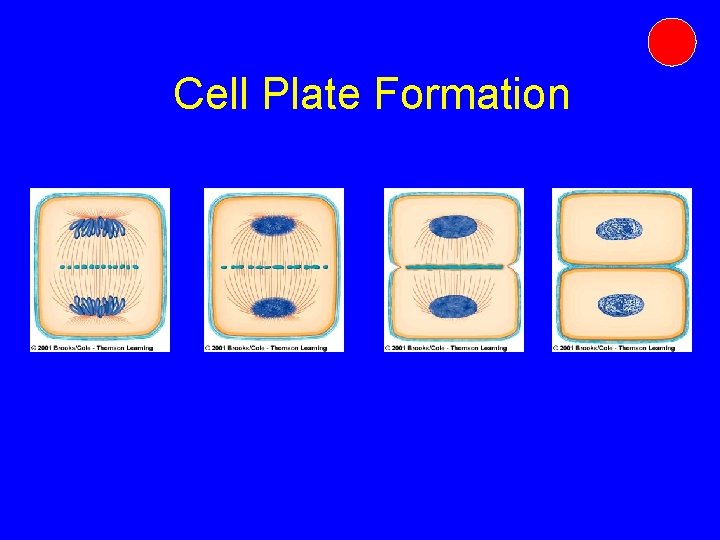
Cytoplasmic Division • Usually occurs between late anaphase and end of telophase • Two mechanisms – Cleavage (animals) – Cell plate formation (plants)
Animal Cell Division
Cell Plate Formation
When Control Is Lost • Growth and reproduction depend on controls over cell division • Checkpoint proteins: – Growth factors invite transcription of genes that help the body grow – Other proteins inhibit cell cycle changes, such as after chromosomal DNA gets damaged • When all checkpoint mechanisms for a particular process fail, a cell loses control over its replication cycle • An example of this is cancer
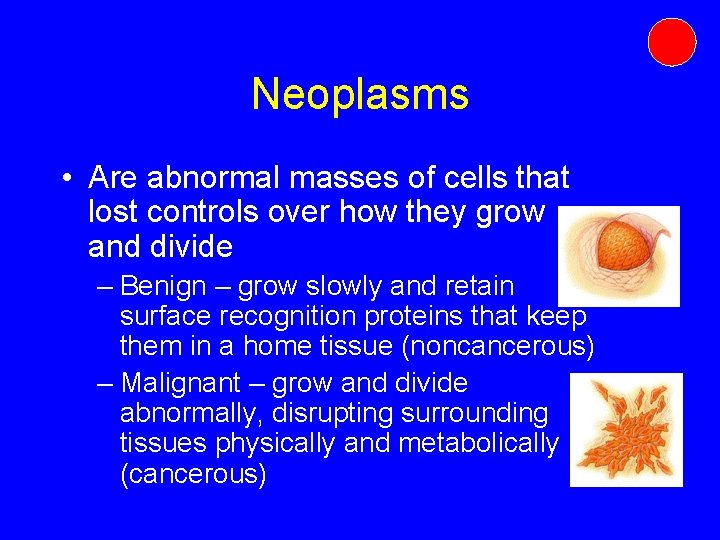
Neoplasms • Are abnormal masses of cells that lost controls over how they grow and divide – Benign – grow slowly and retain surface recognition proteins that keep them in a home tissue (noncancerous) – Malignant – grow and divide abnormally, disrupting surrounding tissues physically and metabolically (cancerous)
He. La Cells • Line of human cancer cells that can be grown in culture • Descendents of tumor cells from a woman named Henrietta Lacks • Lacks died at 31, but her cells continue to live and divide in labs around the world
Culturing Cells • Growing cells in culture allows researchers to investigate processes and test treatments without danger to patients • Most cells cannot be grown in culture