
How Cells Release Stored Energy Chapter 7 ATP

















- Slides: 40
How Cells Release Stored Energy Chapter 7
ATP Is Universal Energy Source • Photosynthesizers get energy from the sun • Animals get energy second- or third -hand from plants or other organisms • Regardless, the energy is converted to the chemical bond energy of ATP
Making ATP • Plants make ATP during photosynthesis • Cells of all organisms make ATP by breaking down carbohydrates, fats, and protein
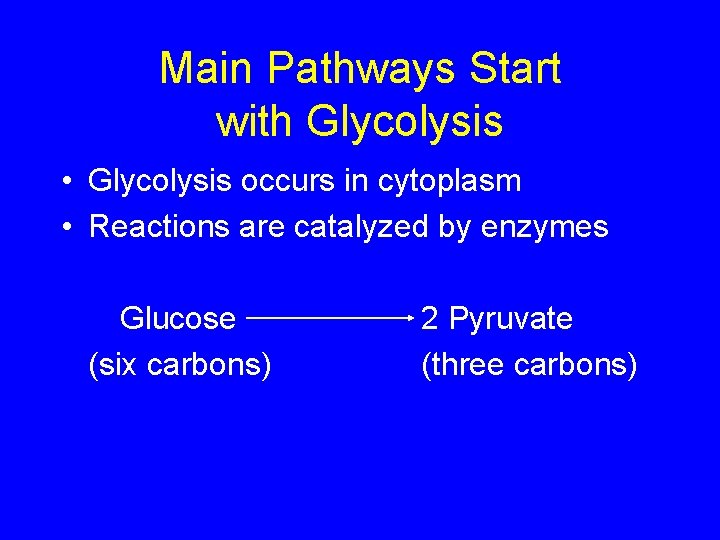
Main Pathways Start with Glycolysis • Glycolysis occurs in cytoplasm • Reactions are catalyzed by enzymes Glucose (six carbons) 2 Pyruvate (three carbons)
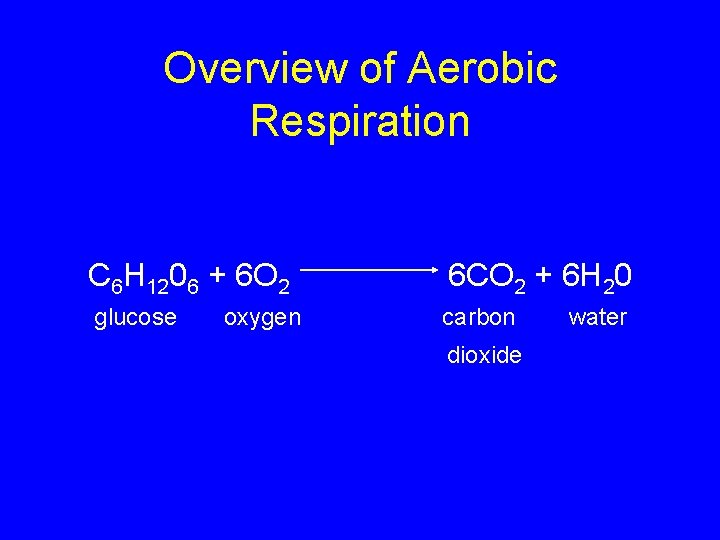
Overview of Aerobic Respiration C 6 H 1206 + 6 O 2 6 CO 2 + 6 H 20 glucose carbon oxygen dioxide water
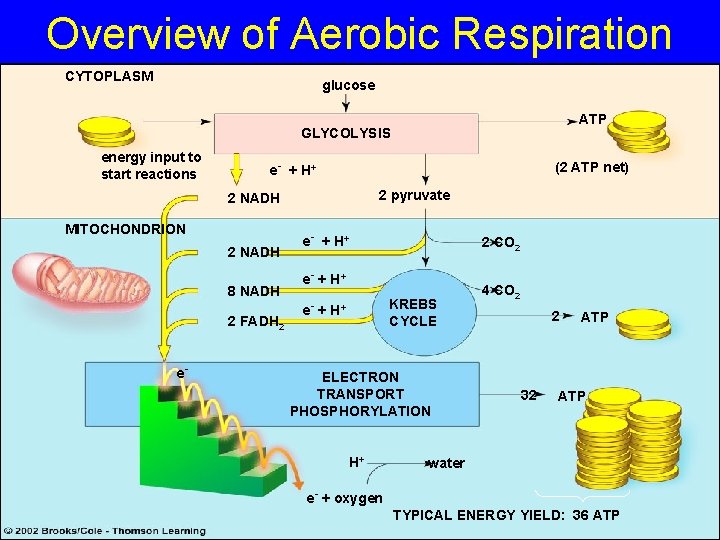
Overview of Aerobic Respiration CYTOPLASM glucose ATP GLYCOLYSIS energy input to start reactions e- + H + (2 ATP net) 2 pyruvate 2 NADH MITOCHONDRION 2 NADH 8 NADH 2 FADH 2 e- e- + H + 2 CO 2 e- + H + KREBS CYCLE e- + H + ELECTRON TRANSPORT PHOSPHORYLATION H+ 4 CO 2 2 32 ATP water e- + oxygen TYPICAL ENERGY YIELD: 36 ATP
The Role of Coenzymes • NAD+ and FAD accept electrons and hydrogen from intermediates during the first two stages • When reduced, they are NADH and FADH 2 • In the third stage, these coenzymes deliver the electrons and hydrogen to the transport system
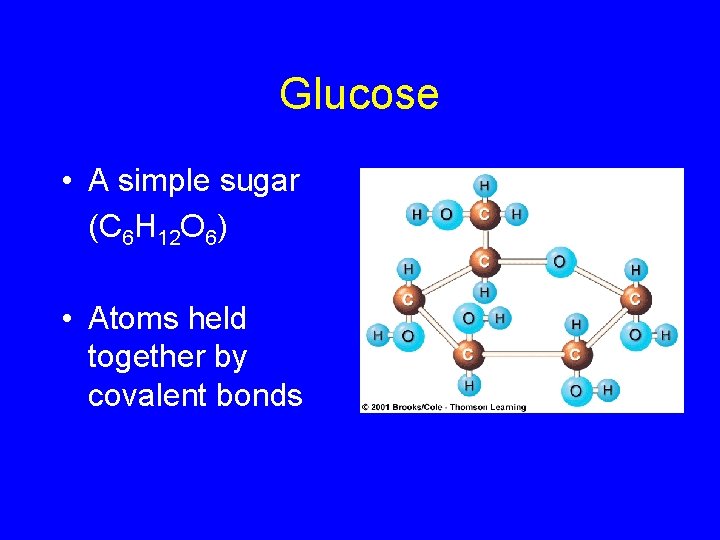
Glucose • A simple sugar (C 6 H 12 O 6) • Atoms held together by covalent bonds
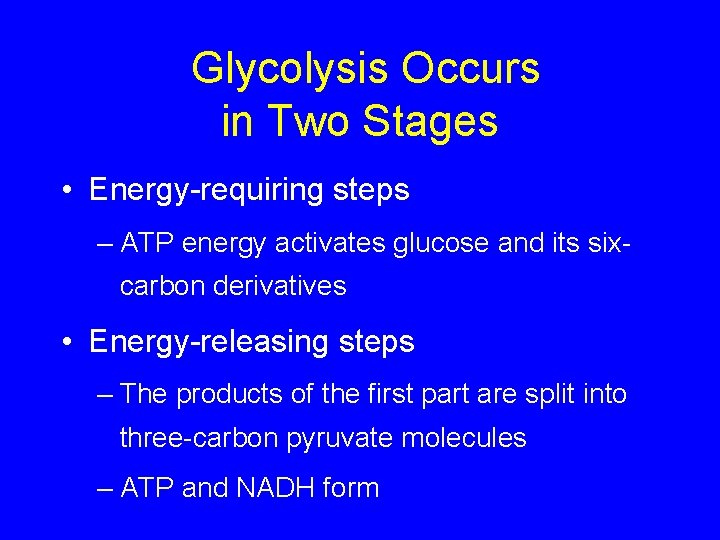
Glycolysis Occurs in Two Stages • Energy-requiring steps – ATP energy activates glucose and its sixcarbon derivatives • Energy-releasing steps – The products of the first part are split into three-carbon pyruvate molecules – ATP and NADH form
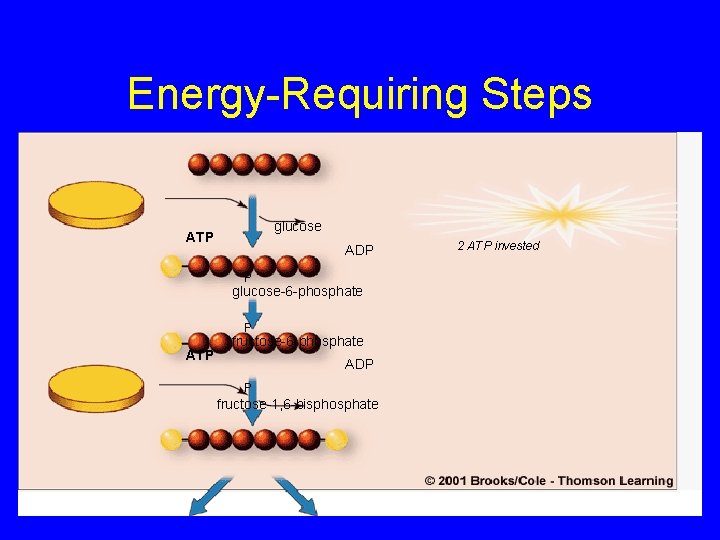
Energy-Requiring Steps glucose ATP ADP P glucose-6 -phosphate P ATP fructose-6 -phosphate ADP P fructose-1, 6 -bisphosphate 2 ATP invested
Energy. Releasing Steps PGAL NAD+ NADH Pi P P NADH Pi P 1, 3 -bisphoglycerate ADP NAD+ ATP P 1, 3 -bisphoglycerate ADP ATP substrate-level phosphorylation 2 ATP invested P P 3 -phosphoglycerate P P 2 -phosphoglycerate H 2 O P P PEP ADP ATP substrate-level phosphorylation 2 ATP invested pyruvate
Net Energy Yield from Glycolysis • Energy requiring steps: 2 ATP invested • Energy releasing steps: 2 NADH formed 4 ATP formed • Net yield is 2 ATP and 2 NADH
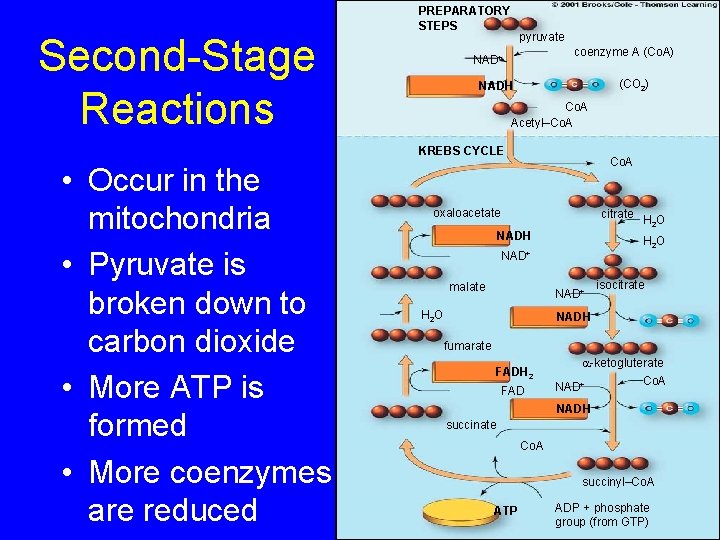
Second-Stage Reactions PREPARATORY STEPS pyruvate coenzyme A (Co. A) NAD+ (CO 2) NADH Co. A Acetyl–Co. A KREBS CYCLE • Occur in the mitochondria • Pyruvate is broken down to carbon dioxide • More ATP is formed • More coenzymes are reduced Co. A oxaloacetate citrate H O 2 NADH H 2 O NAD+ malate NAD+ H 2 O isocitrate NADH fumarate FADH 2 FAD a-ketogluterate Co. A NAD+ NADH succinate Co. A succinyl–Co. A ATP ADP + phosphate group (from GTP)
Two Parts of Second Stage • Preparatory reactions – Pyruvate is oxidized into two-carbon acetyl units and carbon dioxide – NAD+ is reduced • Krebs cycle – The acetyl units are oxidized to carbon dioxide – NAD+ and FAD are reduced
Preparatory Reactions pyruvate + coenzyme A + NAD+ acetyl-Co. A + NADH + CO 2 • One of the carbons from pyruvate is released in CO 2 • Two carbons are attached to coenzyme A and continue on to the Krebs cycle
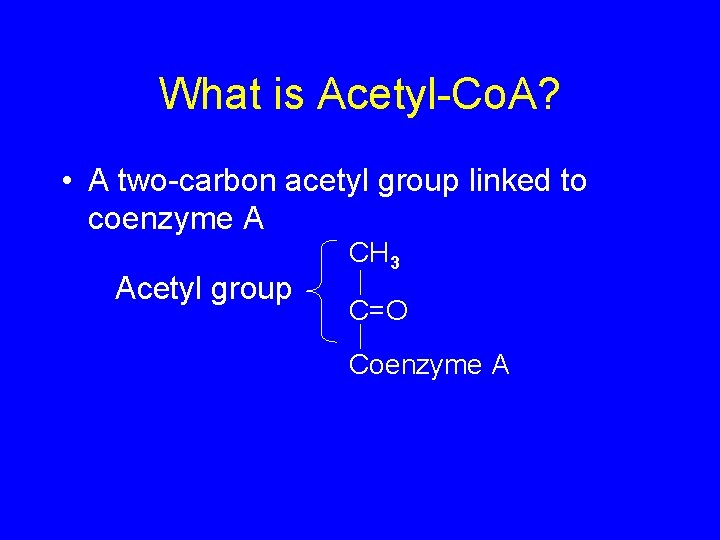
What is Acetyl-Co. A? • A two-carbon acetyl group linked to coenzyme A Acetyl group CH 3 C=O Coenzyme A
The Krebs Cycle (for each pyruvate) Overall Reactants Overall Products • • • Acetyl-Co. A 3 NAD+ FAD ADP and Pi Coenzyme A 2 CO 2 3 NADH FADH 2 ATP
Results of the Second Stage • All of the carbon molecules in pyruvate end up in carbon dioxide • Coenzymes are reduced (they pick up electrons and hydrogen) • One molecule of ATP is formed • Four-carbon oxaloacetate is regenerated
Coenzyme Reductions During First Two Stages • Glycolysis • Preparatory reactions • Krebs cycle 2 NADH 2 FADH 2 + 6 NADH • Total 2 FADH 2 + 10 NADH For each glucose = 2 pyruvates
Electron Transport Phosphorylation • Occurs in the mitochondria • Coenzymes deliver electrons to electron transport systems • Electron transport sets up H+ ion gradients • Flow of H+ down gradients powers ATP formation
Electron Transport • Electron transport systems are embedded in inner mitochondrial compartment • NADH and FADH 2 give up electrons that they picked up in earlier stages to electron transport system • Electrons are transported through the system • The final electron acceptor is oxygen
Creating an H+ Gradient OUTER COMPARTMENT NADH INNER COMPARTMENT
Making ATP: Chemiosmotic Model ATP INNER COMPARTMENT ADP + Pi
Importance of Oxygen • Electron transport phosphorylation requires the presence of oxygen • Oxygen withdraws spent electrons from the electron transport system, then combines with H+ to form water
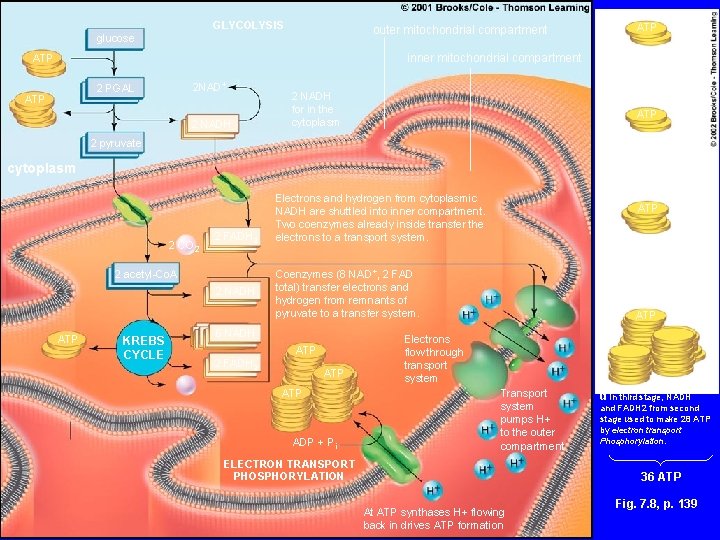
Summary of Energy Harvest (per molecule of glucose) • Glycolysis – 2 ATP formed by substrate-level phosphorylation • Krebs cycle and preparatory reactions – 2 ATP formed by substrate-level phosphorylation • Electron transport phosphorylation – 32 ATP formed
Energy Harvest from Coenzyme Reductions What are the sources of electrons used to generate the 32 ATP in the final stage? – 4 ATP - generated using electrons released during glycolysis and carried by NADH – 28 ATP - generated using electrons formed during second-stage reactions and carried by NADH and FADH 2
Efficiency of Aerobic Respiration • 686 kcal of energy are released • 7. 5 kcal are conserved in each ATP • When 36 ATP form, 270 kcal (36 X 7. 5) are captured in ATP • Efficiency is 270 / 686 X 100 = 39 percent • Most energy is lost as heat
Overview of Aerobic Respiration CYTOPLASM glucose ATP GLYCOLYSIS energy input to start reactions e- + H + (2 ATP net) 2 pyruvate 2 NADH MITOCHONDRION 2 NADH 8 NADH 2 FADH 2 e- e- + H + 2 CO 2 e- + H + KREBS CYCLE e- + H + ELECTRON TRANSPORT PHOSPHORYLATION H+ 4 CO 2 2 32 ATP water e- + oxygen TYPICAL ENERGY YIELD: 36 ATP
Anaerobic Pathways • Do not use oxygen • Produce less ATP than aerobic pathways • Two types – Fermentation pathways – Anaerobic electron transport
Fermentation Pathways • Begin with glycolysis • Do not break glucose down completely to carbon dioxide and water • Yield only the 2 ATP from glycolysis • Steps that follow glycolysis serve only to regenerate NAD+
Lactate Fermentation GLYCOLYSIS C 6 H 12 O 6 2 ATP energy input 2 NAD+ 2 ADP 2 4 NADH ATP energy output 2 pyruvate 2 ATP net LACTATE FORMATION electrons, hydrogen from NADH 2 lactate
Alcoholic Fermentation GLYCOLYSIS C 6 H 12 O 6 2 ATP energy input 2 NAD+ 2 ADP 2 4 NADH ATP 2 pyruvate energy output 2 ATP net ETHANOL FORMATION 2 H 2 O 2 CO 2 2 acetaldehyde electrons, hydrogen from NADH 2 ethanol
Carbohydrate Breakdown and Storage • Glucose is absorbed into blood • Pancreas releases insulin • Insulin stimulates glucose uptake by cells • Cells convert glucose to glucose-6 -phosphate • This traps glucose in cytoplasm where it can be used for glycolysis
Making Glycogen • If glucose intake is high, ATP-making machinery goes into high gear • When ATP levels rise high enough, glucose-6 -phosphate is diverted into glycogen synthesis (mainly in liver and muscle) • Glycogen is the main storage polysaccharide in animals
Using Glycogen • When blood levels of glucose decline, pancreas releases glucagon • Glucagon stimulates liver cells to convert glycogen back to glucose and to release it to the blood • (Muscle cells do not release their stored glycogen)
Energy Reserves • Glycogen makes up only about 1 percent of the body’s energy reserves • Proteins make up 21 percent of energy reserves • Fat makes up the bulk of reserves (78 percent)
Energy from Proteins • Proteins are broken down to amino acids • Amino acids are broken apart • Amino group is removed, ammonia forms, is converted to urea and excreted • Carbon backbones can enter the Krebs cycle or its preparatory reactions
Energy from Fats • Most stored fats are triglycerides • Triglycerides are broken down to glycerol and fatty acids • Glycerol is converted to PGAL, an intermediate of glycolysis • Fatty acids are broken down and converted to acetyl-Co. A, which enters Krebs cycle
GLYCOLYSIS outer mitochondrial compartment glucose inner mitochondrial compartment ATP 2 NAD+ 2 PGAL ATP 2 NADH ATP a In glycolysis, 2 ATP used; 4 ATP form by substratelevel phosphorylation. So net yield is 2 ATP. 2 NADH for in the cytoplasm 2 2 pyruvate ATP b In Krebs cycle of second stage, 2 ATP form by substrate-level phosphorylation. cytoplasm 2 CO 2 2 FADH 2 2 acetyl-Co. A 2 NADH ATP 2 KREBS CYCLE Electrons and hydrogen from cytoplasmic NADH are shuttled into inner compartment. Two coenzymes already inside transfer the electrons to a transport system. 4 c In third stage, NADH from glycolysis used to form 4 ATP by electron transport phosphorylation. Coenzymes (8 NAD+, 2 FAD total) transfer electrons and hydrogen from remnants of pyruvate to a transfer system. 6 NADH ATP 2 FADH 2 ATP ADP + Pi ATP 28 ATP Electrons flow through transport system Transport system pumps H+ to the outer compartment ELECTRON TRANSPORT PHOSPHORYLATION d In third stage, NADH and FADH 2 from second stage used to make 28 ATP by electron transport Phosphorylation. 36 ATP At ATP synthases H+ flowing back in drives ATP formation Fig. 7. 8, p. 139
FOOD fats fatty acids glycogen glycerol complex carbohydrates proteins simple sugars, e. g. , glucose amino acids NH 3 glucose-6 -phosphate urea carbon backbones PGAL 2 ATP 4 ATP GLYCOLYSIS pyruvate NADH acetyl-Co. A NADH FADH 2 CO 2 KREBS CYCLE e- 2 ATP CO 2 ELECTRON TRANSPORT PHOSPHORYLATION H+ e- oxygen ATP ATP many ATP water Fig. 7. 12, p. 121