
HOW CELLS RELEASE ENERGY Chapter 7 All cells
- Slides: 22
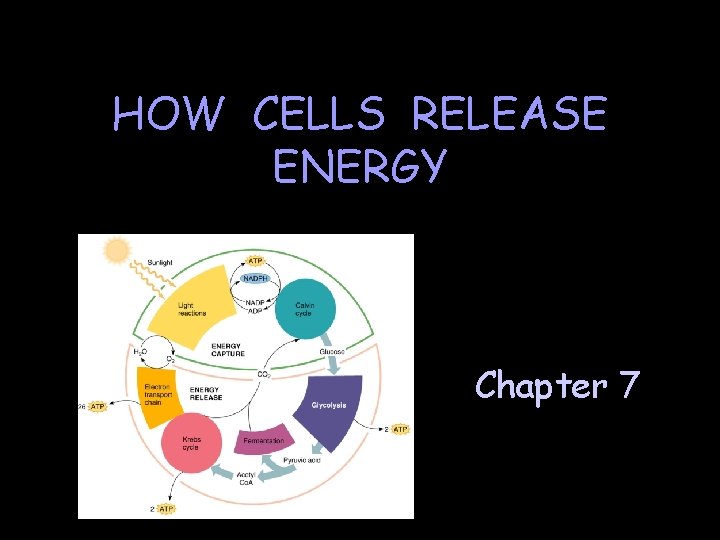
HOW CELLS RELEASE ENERGY Chapter 7
All cells (prokaryotic & eukaryotic) require energy to: F combat entropy F carry out day-to-day functions F repair/replace worn out organelles F reproduce What form of energy do cells use? ATP
How do cells obtain ATP? All cells must make their own ATP from nutrients they have either synthesized (autotrophs) or consumed (heterotrophs). Most cells break down nutrients to make ATP by: ] Cellular respiration (aerobic process) ] Fermentation (anaerobic process)
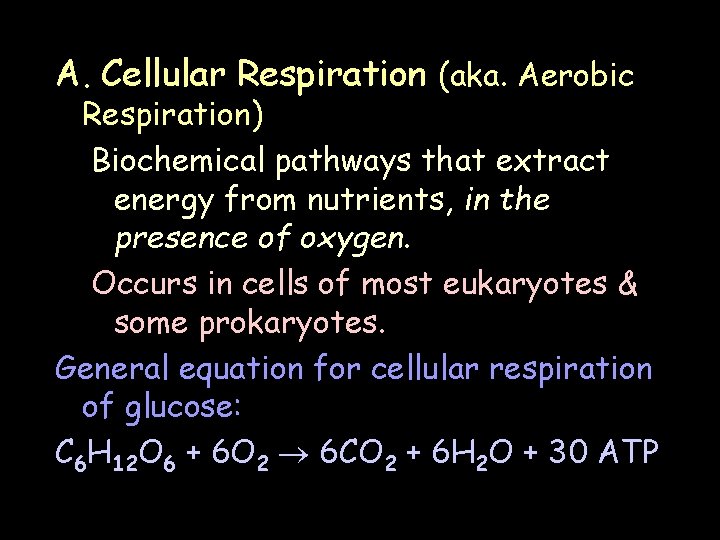
A. Cellular Respiration (aka. Aerobic Respiration) Biochemical pathways that extract energy from nutrients, in the presence of oxygen. Occurs in cells of most eukaryotes & some prokaryotes. General equation for cellular respiration of glucose: C 6 H 12 O 6 + 6 O 2 6 CO 2 + 6 H 2 O + 30 ATP
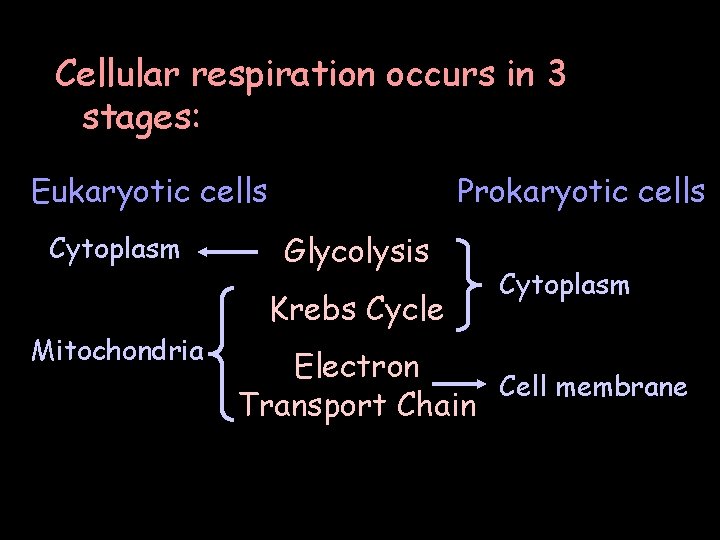
Cellular respiration occurs in 3 stages: Eukaryotic cells Cytoplasm Prokaryotic cells Glycolysis Krebs Cycle Mitochondria Cytoplasm Electron Cell membrane Transport Chain
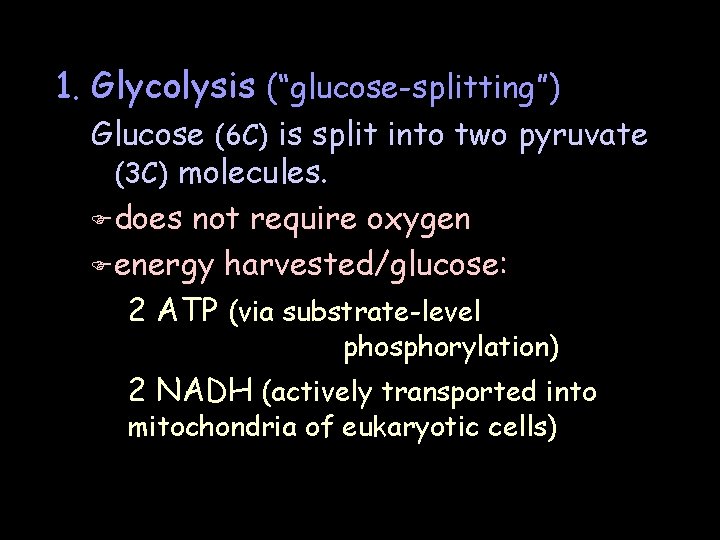
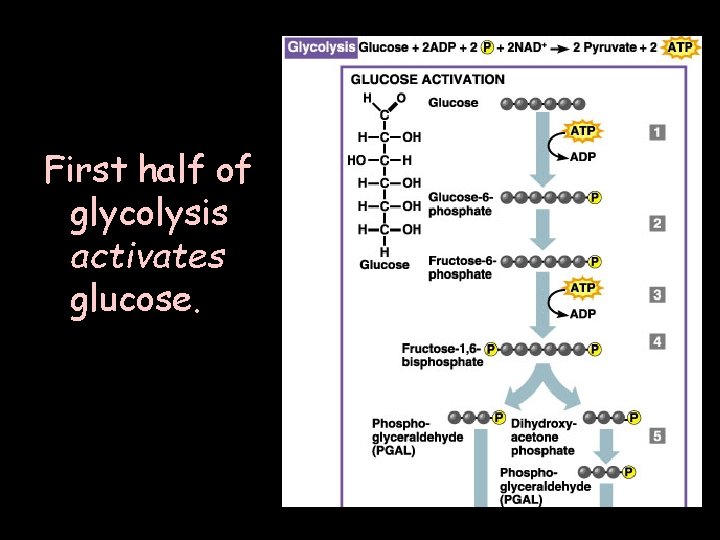
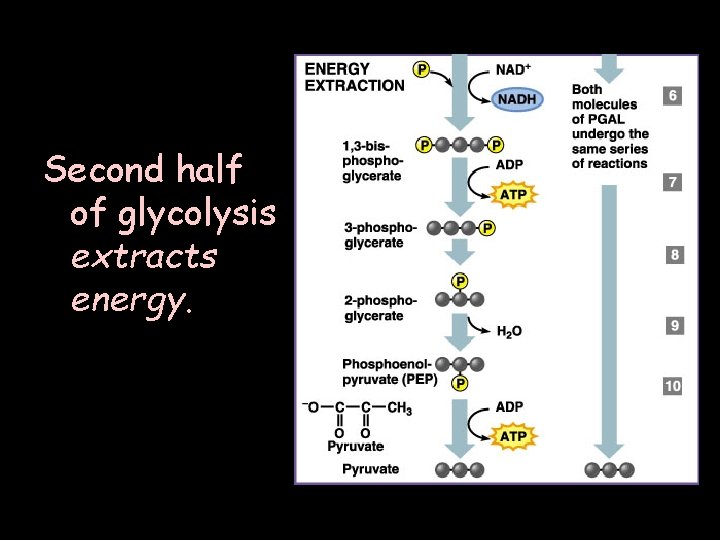
1. Glycolysis (“glucose-splitting”) Glucose (6 C) is split into two pyruvate (3 C) molecules. F does not require oxygen F energy harvested/glucose: 2 ATP (via substrate-level phosphorylation) 2 NADH (actively transported into mitochondria of eukaryotic cells)
First half of glycolysis activates glucose.
Second half of glycolysis extracts energy.
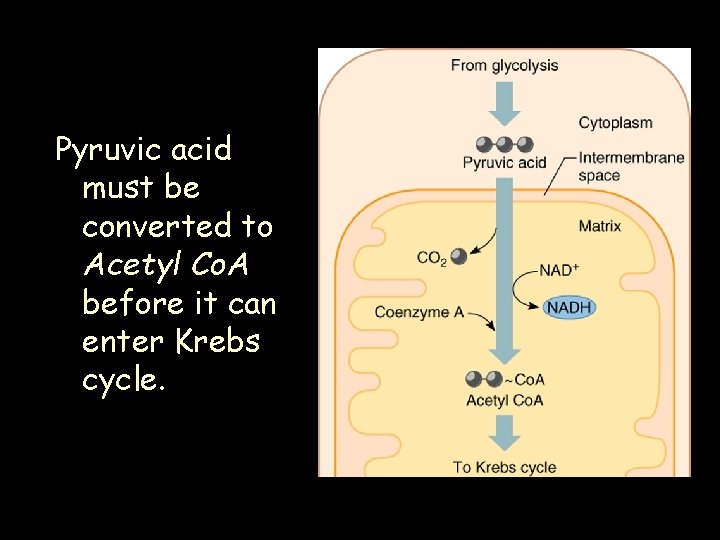
Pyruvic acid must be converted to Acetyl Co. A before it can enter Krebs cycle.
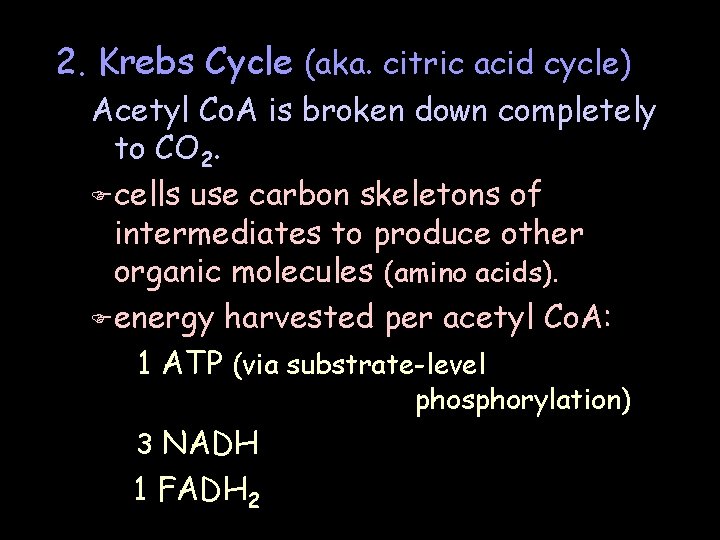
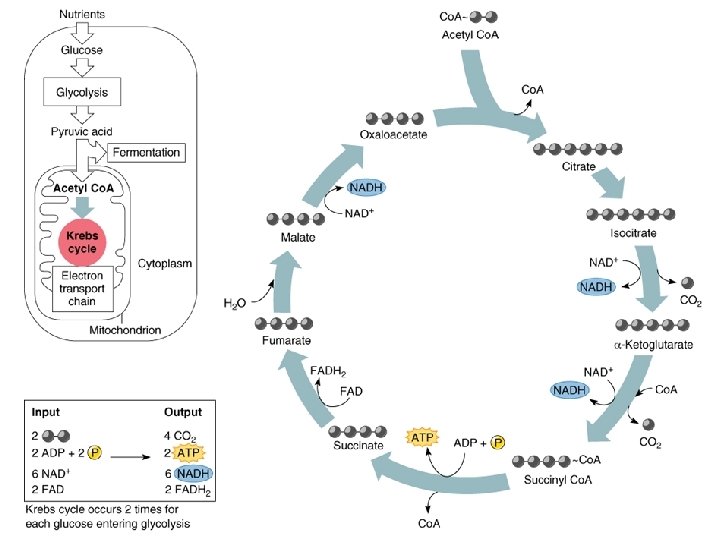
2. Krebs Cycle (aka. citric acid cycle) Acetyl Co. A is broken down completely to CO 2. F cells use carbon skeletons of intermediates to produce other organic molecules (amino acids). F energy harvested per acetyl Co. A: 1 ATP (via substrate-level phosphorylation) 3 NADH 1 FADH 2
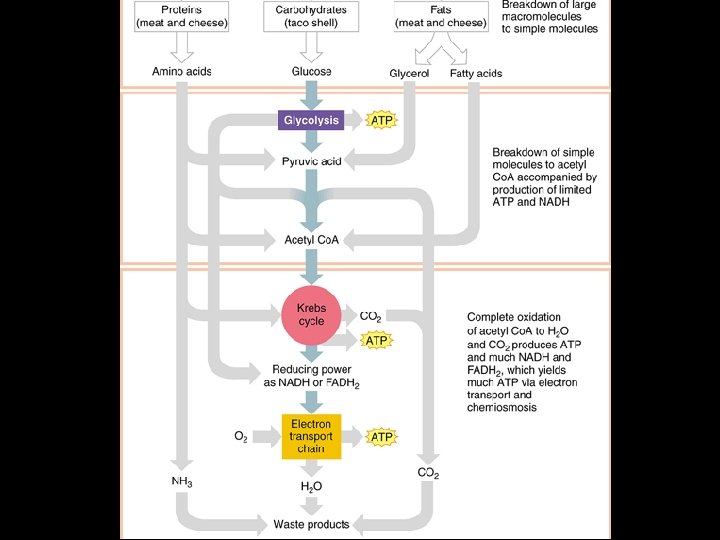
Thus far, how much useable energy has been produced from the breakdown of 1 glucose molecule? 4 ATPs Need the electron transport chain to harvest potential energy in NADHs & FADH 2 s.
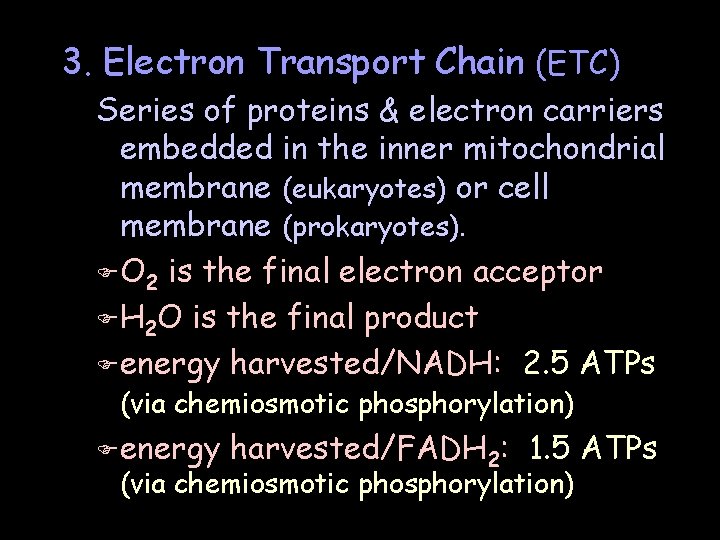
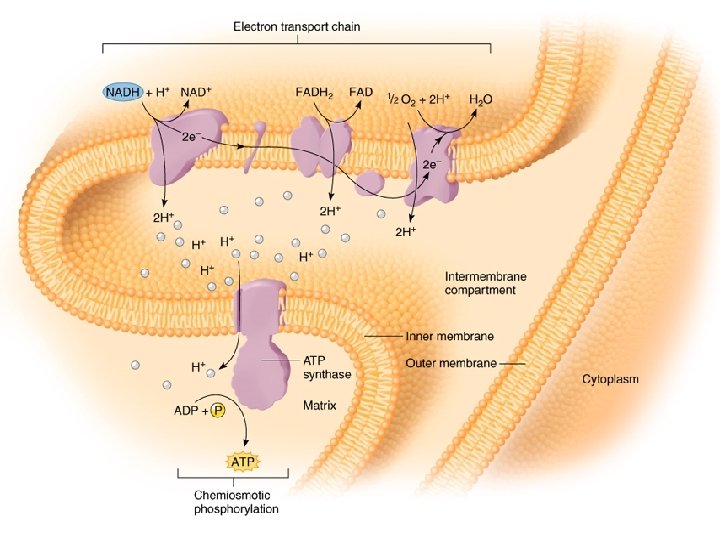
3. Electron Transport Chain (ETC) Series of proteins & electron carriers embedded in the inner mitochondrial membrane (eukaryotes) or cell membrane (prokaryotes). F O 2 is the final electron acceptor F H 2 O is the final product F energy harvested/NADH: 2. 5 ATPs (via chemiosmotic phosphorylation) F energy harvested/FADH 2: 1. 5 ATPs (via chemiosmotic phosphorylation)
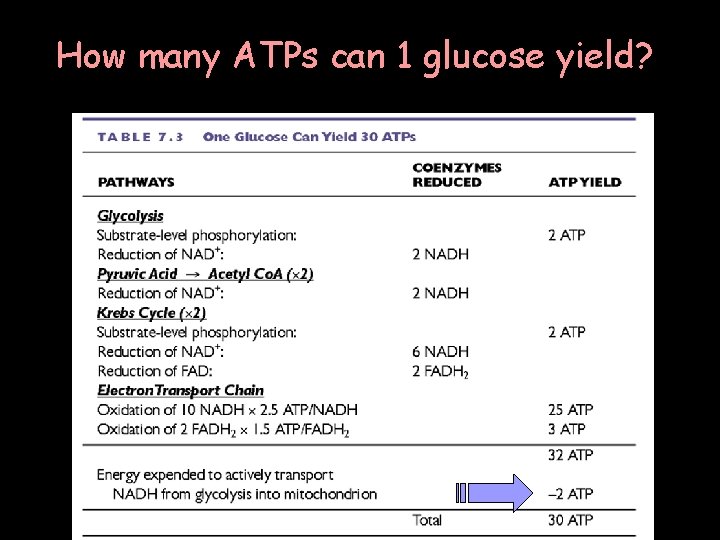
How many ATPs can 1 glucose yield?
Can cells use proteins & lipids to produce energy?
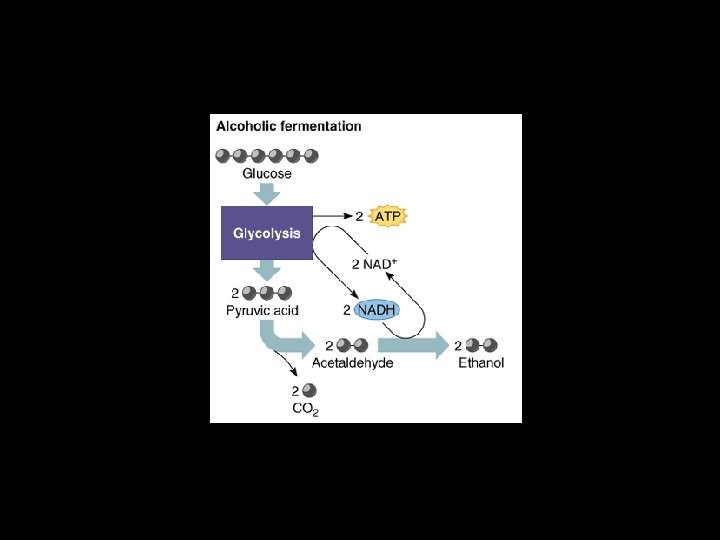
B. Fermentation Biochemical pathways that extract energy from nutrients, in the absence of oxygen. 1. Alcoholic fermentation Pyruvic acid is broken down to ethanol and carbon dioxide. Ex. yeast (used in production of baked goods & alcoholic beverages)
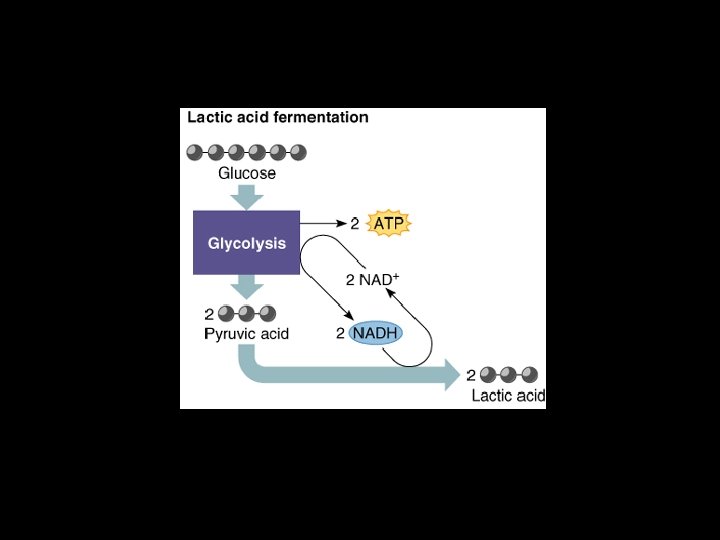
2. Lactic acid fermentation Pyruvic acid is broken down to lactic acid. Examples: F certain bacteria (used in production of cheese & yogurt) F human muscle cells in oxygen debt
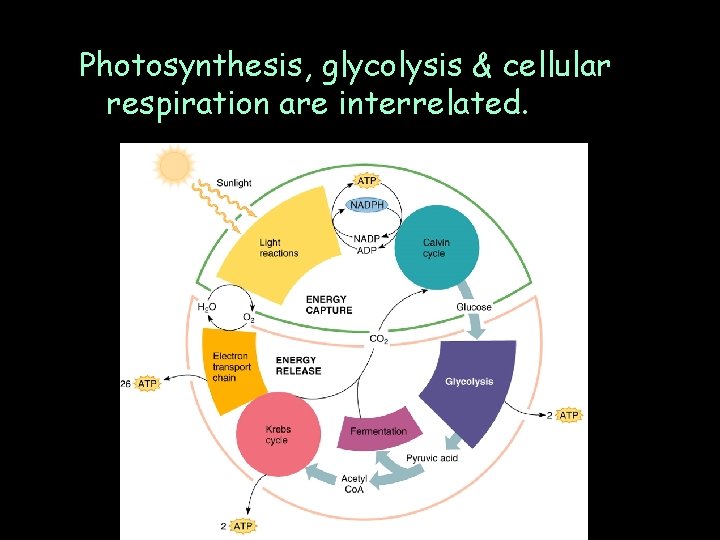
Photosynthesis, glycolysis & cellular respiration are interrelated.