
How can we increase potency of DNA vaccines


- Slides: 37
How can we increase potency of DNA vaccines? Broad-Spectrum Influenza Vaccines Alex Shneider, Ph. D.
Safe Harbor Statement Under the Private Securities Litigation Reform Act of 1995. In accordance with the safe harbor provisions of the Private Securities Litigation reform Act of 1995, the Company notes that statements in this presentation, and elsewhere, that look forward in time, which include everything other than historical information, involve risks and uncertainties that may affect the Company's actual results of operations. The following important factors could cause actual results to differ materially from those set forth in the forward-looking statements: project financing; new scientific findings; our products may not be accepted by the market; and we may have difficulty in hiring and retaining key personnel. 2
3
POLYGLUTAMINE DOMAINS AS NOVEL INTRA-MOLECULAR ADJUVANTS
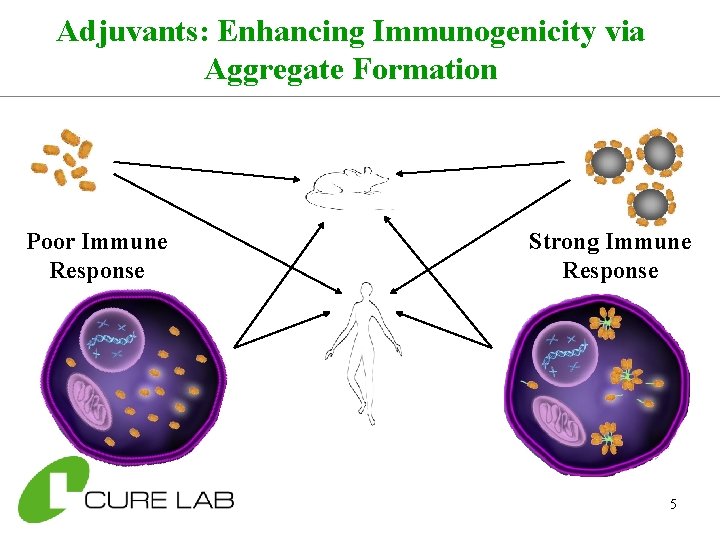
Adjuvants: Enhancing Immunogenicity via Aggregate Formation Poor Immune Response Strong Immune Response 5
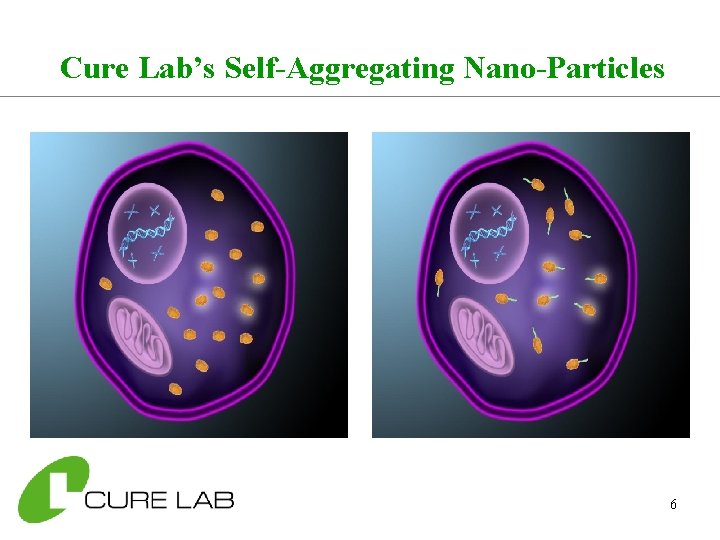
Cure Lab’s Self-Aggregating Nano-Particles 6
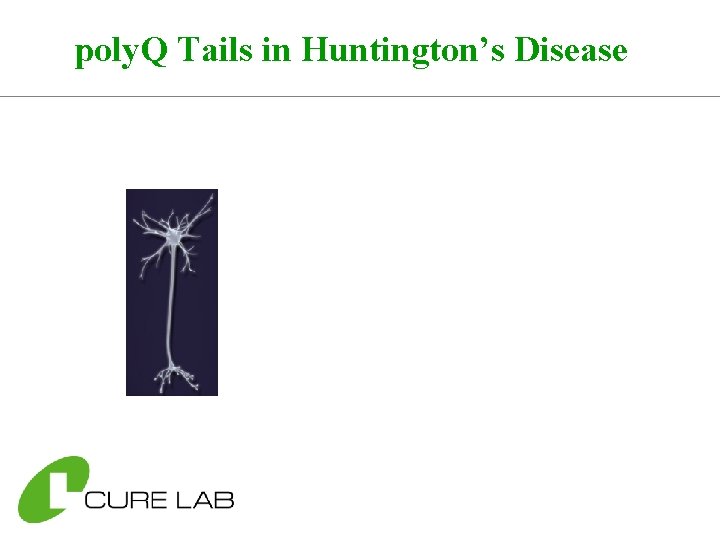
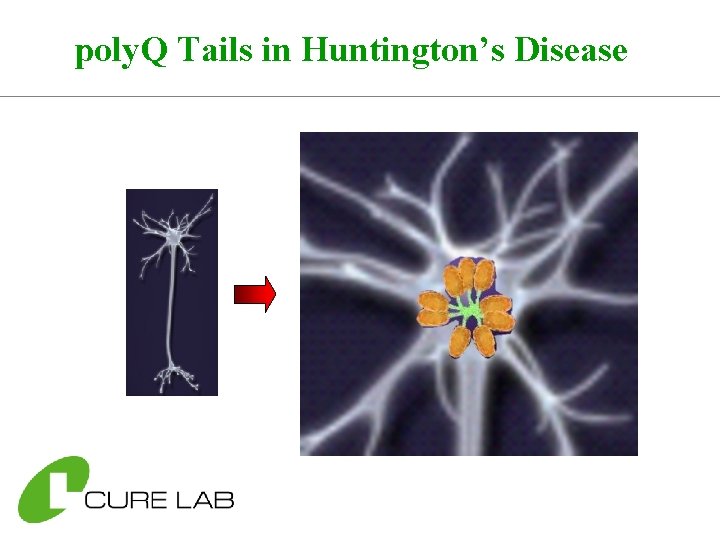
poly. Q Tails in Huntington’s Disease
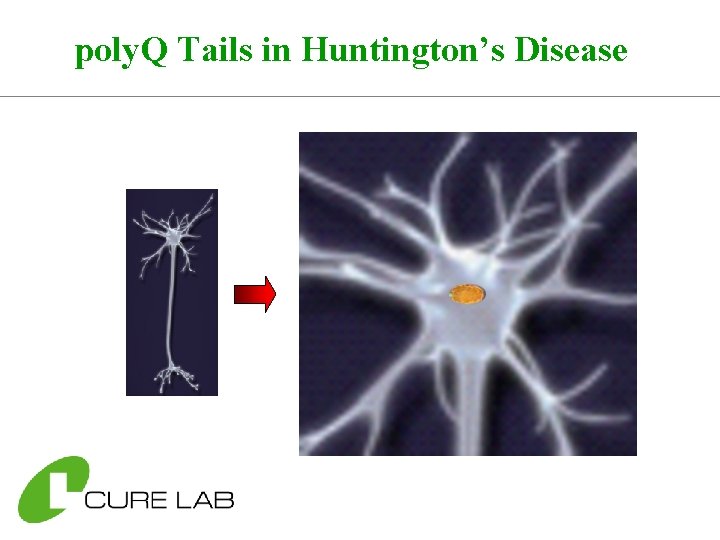
poly. Q Tails in Huntington’s Disease
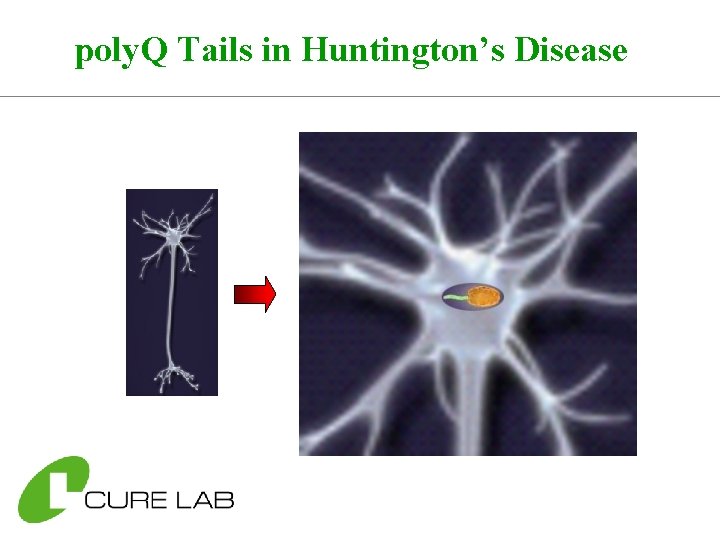
poly. Q Tails in Huntington’s Disease
poly. Q Tails in Huntington’s Disease
poly. Q Tails in Huntington’s Disease
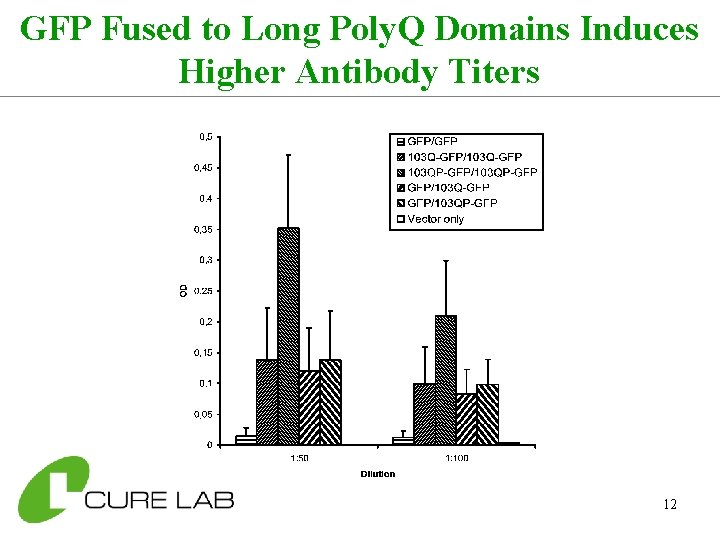
GFP Fused to Long Poly. Q Domains Induces Higher Antibody Titers 12
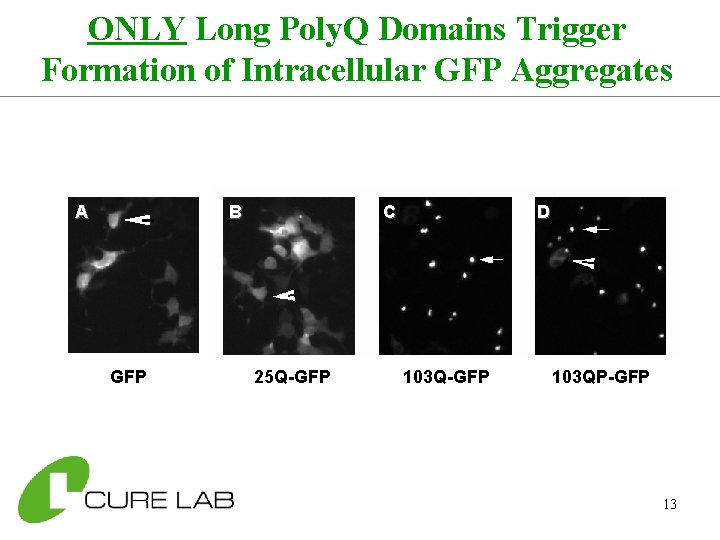
ONLY Long Poly. Q Domains Trigger Formation of Intracellular GFP Aggregates A B GFP C 25 Q-GFP D 103 Q-GFP 103 QP-GFP 13
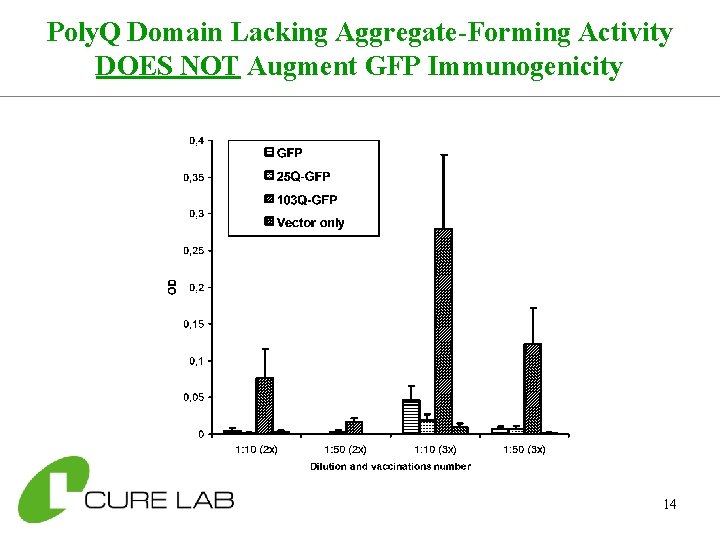
Poly. Q Domain Lacking Aggregate-Forming Activity DOES NOT Augment GFP Immunogenicity 14
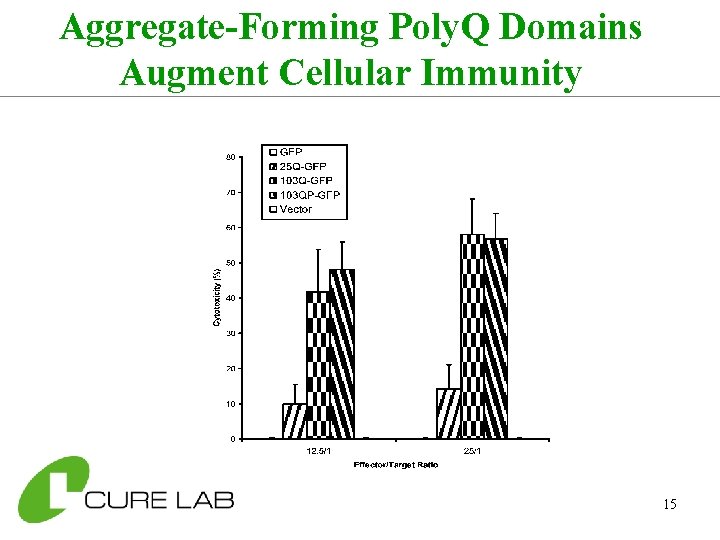
Aggregate-Forming Poly. Q Domains Augment Cellular Immunity 15
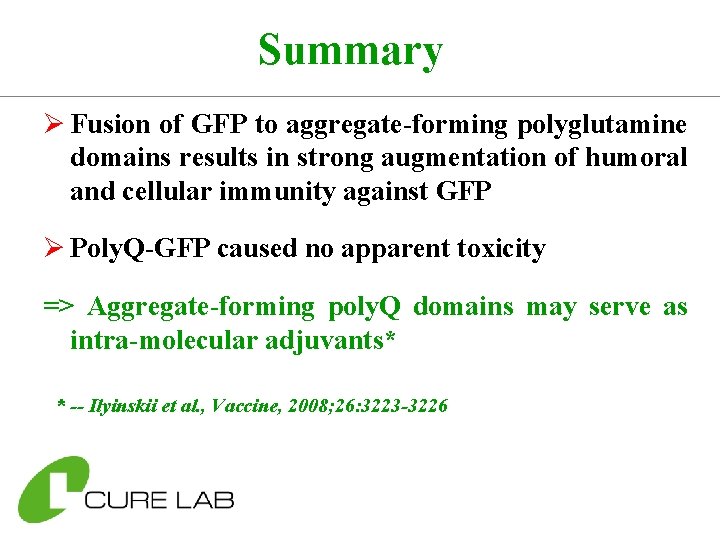
Summary Ø Fusion of GFP to aggregate-forming polyglutamine domains results in strong augmentation of humoral and cellular immunity against GFP Ø Poly. Q-GFP caused no apparent toxicity => Aggregate-forming poly. Q domains may serve as intra-molecular adjuvants* * -- Ilyinskii et al. , Vaccine, 2008; 26: 3223 -3226
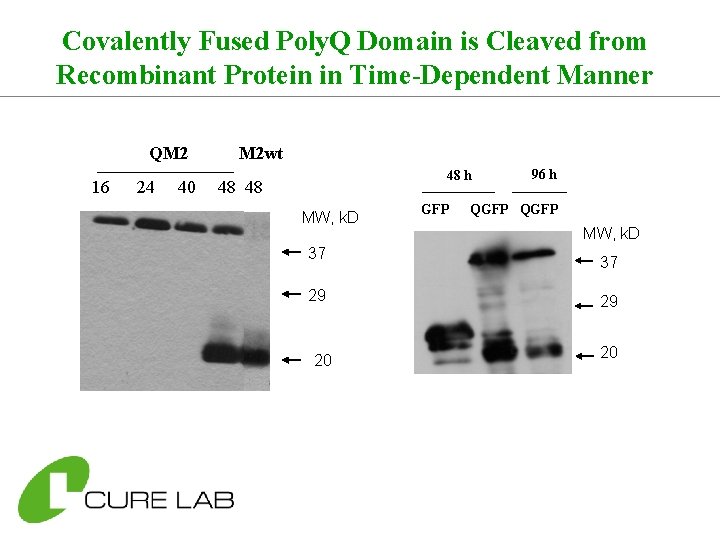
Covalently Fused Poly. Q Domain is Cleaved from Recombinant Protein in Time-Dependent Manner QM 2 16 24 40 M 2 wt 48 h 48 48 MW, k. D 37 29 20 GFP 96 h QGFP MW, k. D 37 29 20
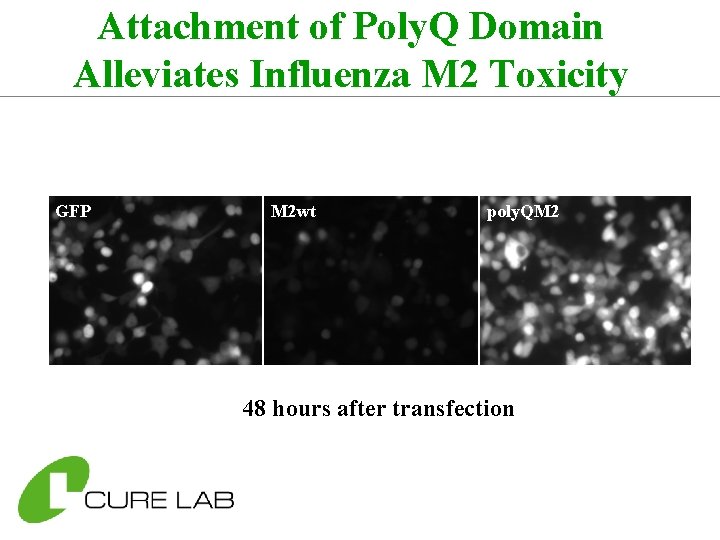
Attachment of Poly. Q Domain Alleviates Influenza M 2 Toxicity GFP M 2 wt poly. QM 2 48 hours after transfection
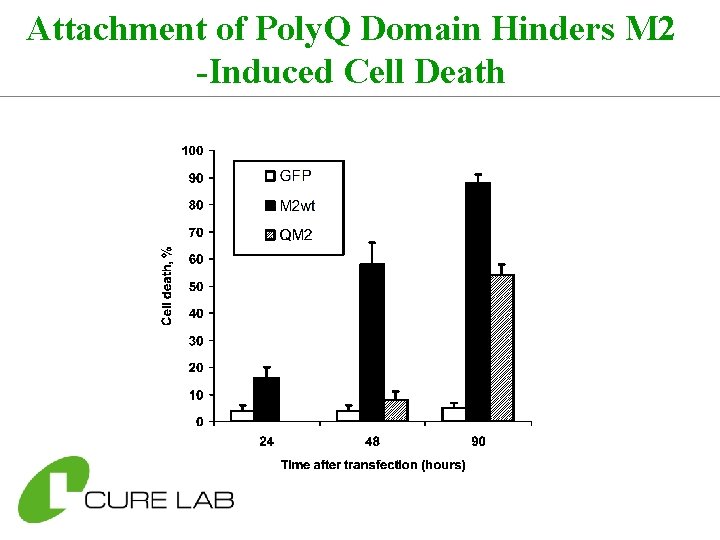
Attachment of Poly. Q Domain Hinders M 2 -Induced Cell Death
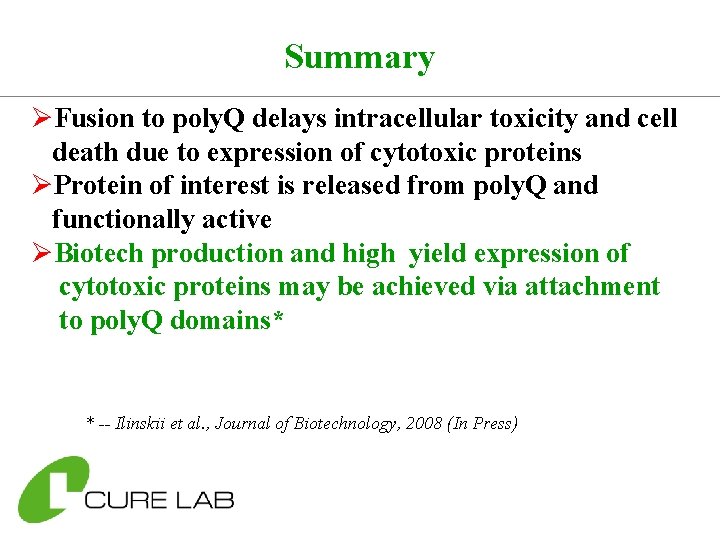
Summary ØFusion to poly. Q delays intracellular toxicity and cell death due to expression of cytotoxic proteins ØProtein of interest is released from poly. Q and functionally active ØBiotech production and high yield expression of cytotoxic proteins may be achieved via attachment to poly. Q domains* * -- Ilinskii et al. , Journal of Biotechnology, 2008 (In Press)
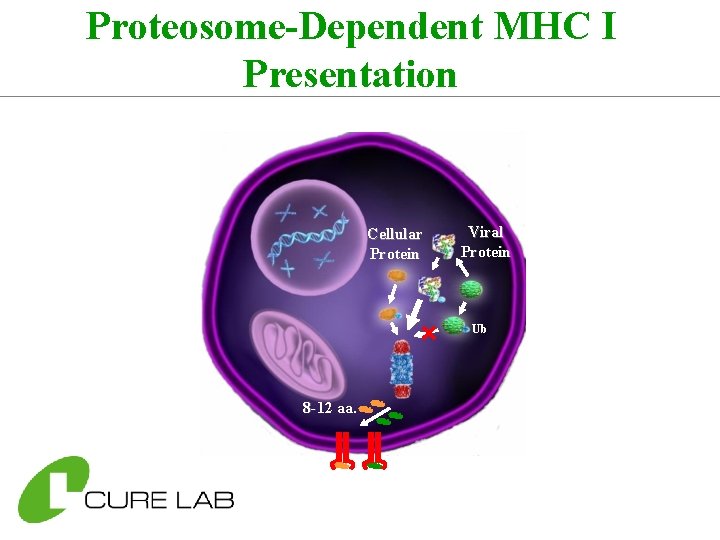
Vaccination with a Combination of Proteosome-degradable and Non-degradable Forms of Viral Proteins
Proteosome-Dependent MHC I Presentation Cellular Protein Viral Protein Ub 8 -12 aa.
Proteosome-Resistant and -Degradable Protein Forms at Different Stages of Immune Response DNA Proteosome-Resistant Antigens Proteosome-Degradable Antigens Antigen Donor Cell Antigen Presenting Cell injected/transfected DNA Peptide Transfer HSP Protein Antigen cross-presentation Antigen presentation
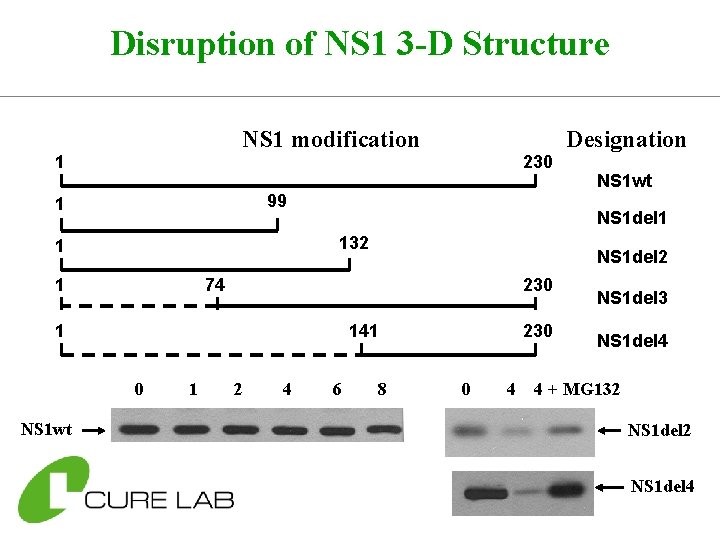
Disruption of NS 1 3 -D Structure NS 1 modification 1 99 1 1 NS 1 del 2 74 230 1 141 0 1 2 4 NS 1 wt NS 1 del 1 132 1 NS 1 wt 230 Designation 6 8 230 0 4 NS 1 del 3 NS 1 del 4 4 + MG 132 NS 1 del 4
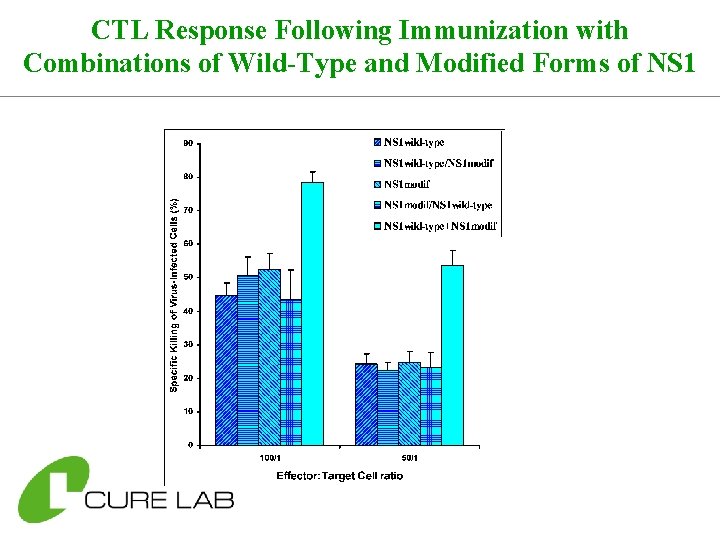
CTL Response Following Immunization with Combinations of Wild-Type and Modified Forms of NS 1
Summary Ø Combining proteosome-resistant and -degradable forms of an antigen in a vaccination regimen results in a elevated cellular immune response Ø Targeted disruption of 3 -D structure of proteosomeresistant viral proteins results in proteosomedegradable protein forms Ø The new vaccination scheme should be tested with previously known and newly developed recombinant vaccines and antigens* * -- Ilinskii et al. , Vaccine 2008; 26: 2177 -2185
How can we “trick” secondary RNA structures to make recombinant vaccines both safe and efficient?
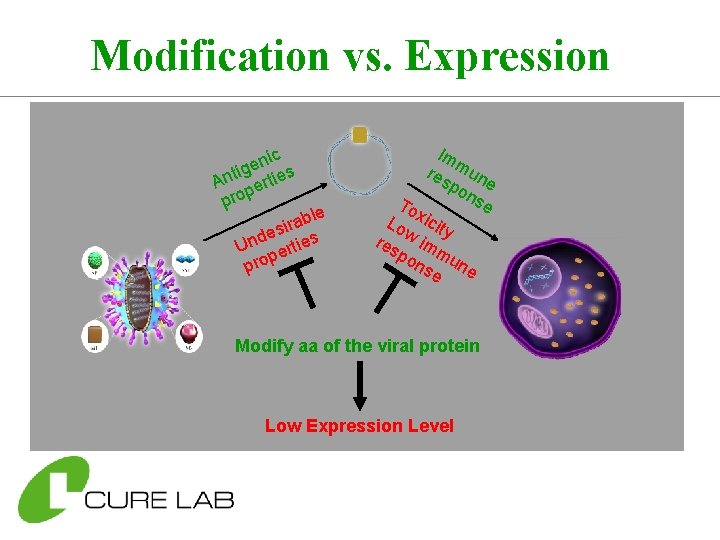
Modification vs. Expression nic e g s ti An pertie pro le b a r si e d Un erties p pro Im res mun po e ns To e x Lo icity res w im po mu ns ne e T T Modify aa of the viral protein Low Expression Level
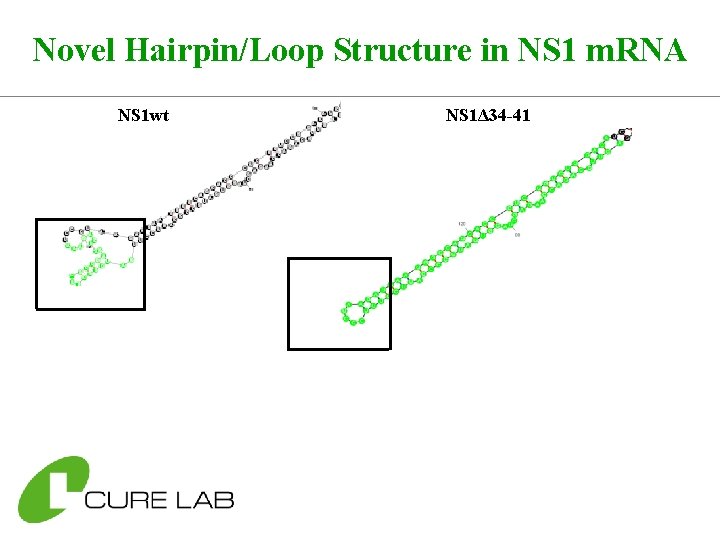
Novel Hairpin/Loop Structure in NS 1 m. RNA NS 1 wt NS 1Δ 34 -41
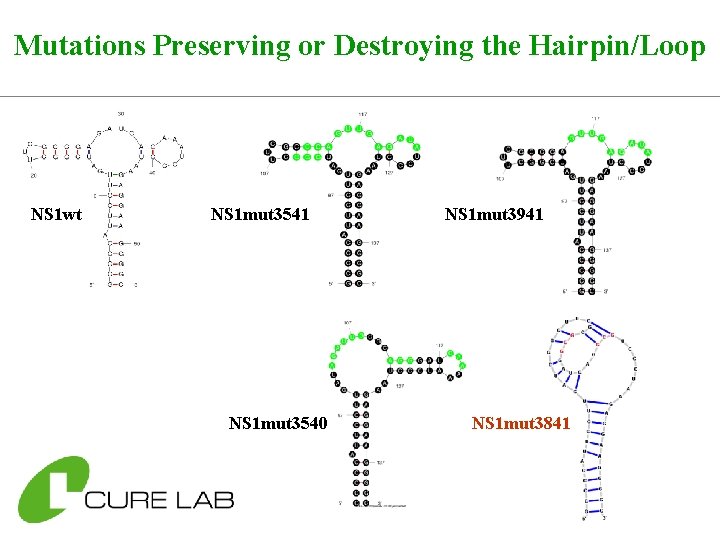
Mutations Preserving or Destroying the Hairpin/Loop NS 1 wt NS 1 mut 3541 NS 1 mut 3540 NS 1 mut 3941 NS 1 mut 3841
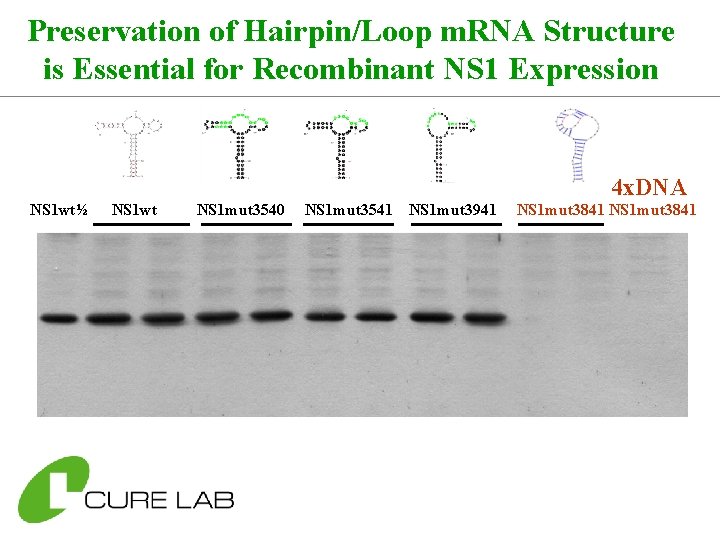
Preservation of Hairpin/Loop m. RNA Structure is Essential for Recombinant NS 1 Expression 4 x. DNA NS 1 wt½ NS 1 wt NS 1 mut 3540 NS 1 mut 3541 NS 1 mut 3941 NS 1 mut 3841
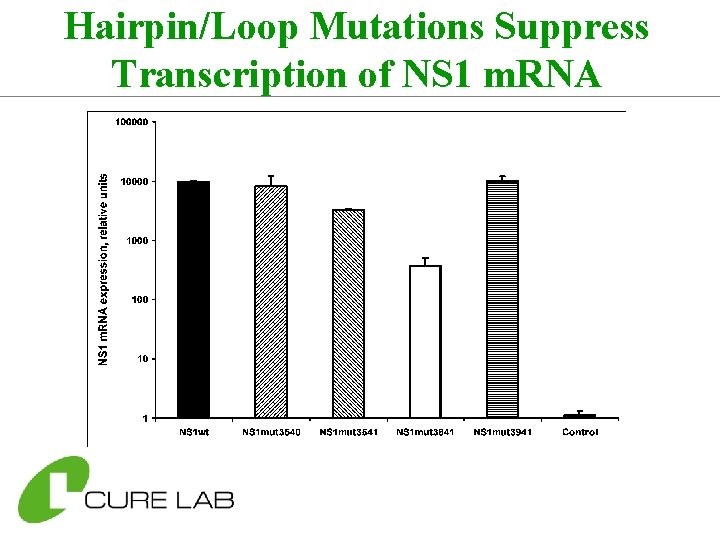
Hairpin/Loop Mutations Suppress Transcription of NS 1 m. RNA
Cold-Adapted and Temperature-Sensitive Life Attenuated Influenza Vaccines Ø ts LAVs constitute one of the most promising class of vaccines. Ø Flu. Mist is the A/Ann Arbor 6/60 and Russian A/Leningrad/134/57 Ø Few ts strains are known Ø Known ts strains were found empirically Ø ts phenotype could not be explained based on protein structure/function alteration Ø Methods of rational design of ts LAVs would be of a great public health benefit
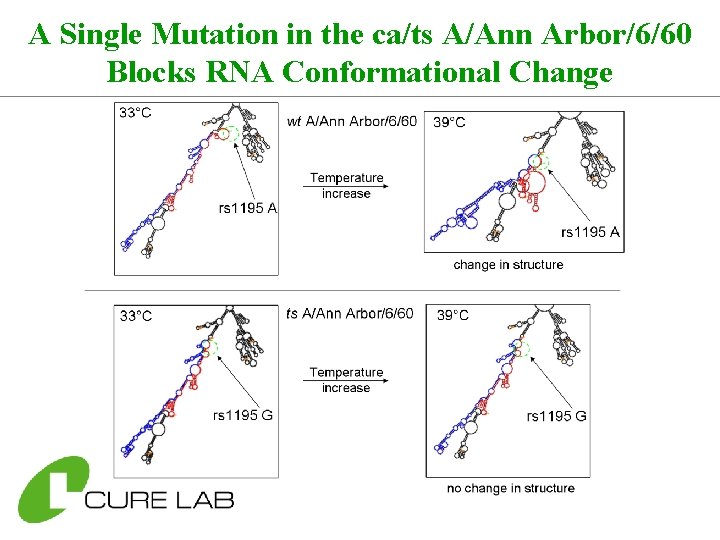
A Single Mutation in the ca/ts A/Ann Arbor/6/60 Blocks RNA Conformational Change
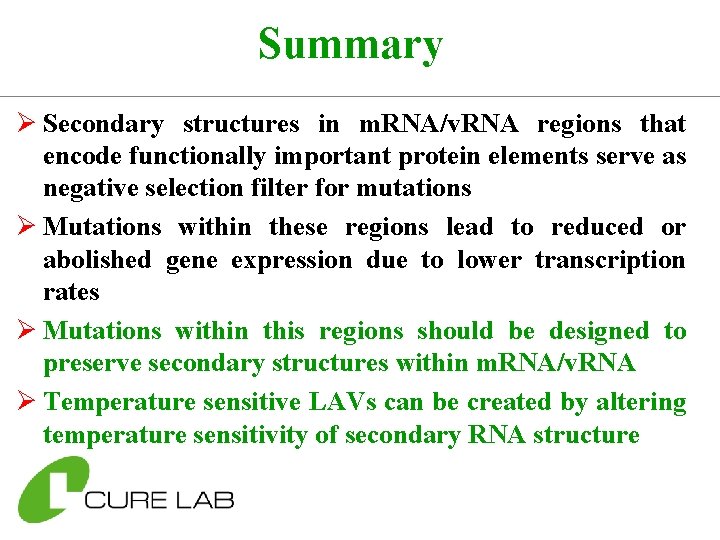
Summary Ø Secondary structures in m. RNA/v. RNA regions that encode functionally important protein elements serve as negative selection filter for mutations Ø Mutations within these regions lead to reduced or abolished gene expression due to lower transcription rates Ø Mutations within this regions should be designed to preserve secondary structures within m. RNA/v. RNA Ø Temperature sensitive LAVs can be created by altering temperature sensitivity of secondary RNA structure
Acknowledgments Cure Lab, Inc. Ivanonsky Institute of Virology Peter Ilyinskii Galini Thoidis Ignat Leschiner Victor Shifrin Oleg Zhirnov Technical University of Munich Dmitry Frishman Thorsten Schmidt Northeastern University Dmitry Lukashev Boston University Harvard Medical School Michael Sherman Shamil Sunyaev’s Lab Anatoly Meriin Vlad Gabai MIT Alex Klibaov’s Lab
THANK YOU!