
How can we help to sustain aquatic biodiversity
How can we help to sustain aquatic biodiversity?
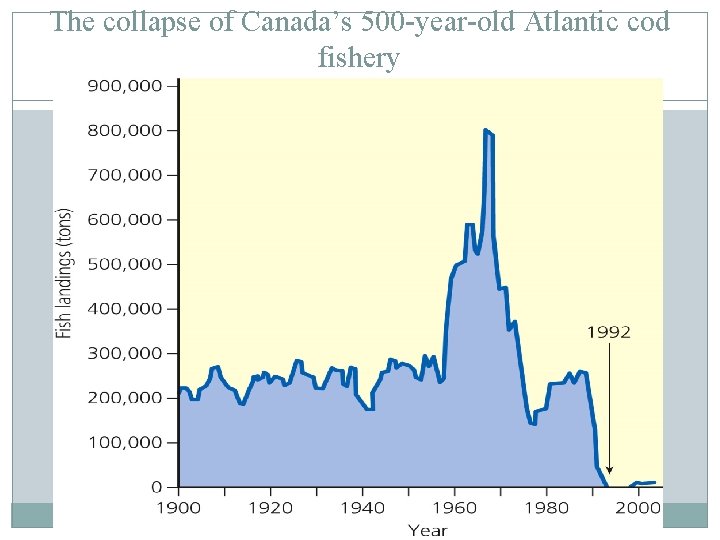
The collapse of Canada’s 500 -year-old Atlantic cod fishery
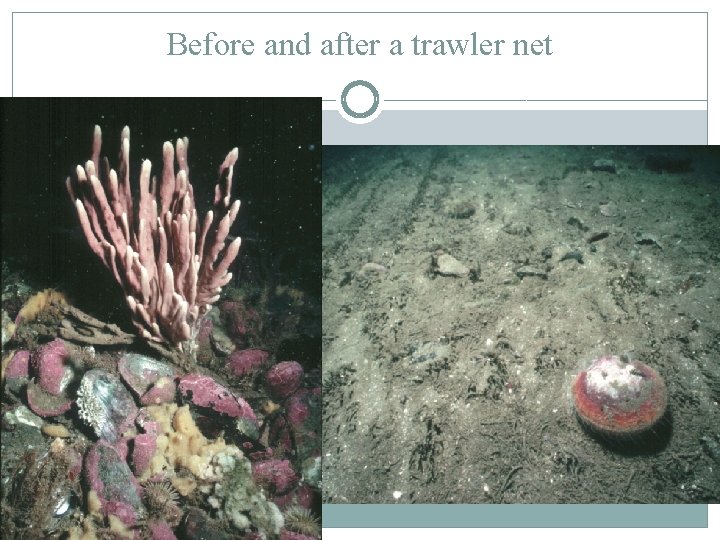
Before and after a trawler net
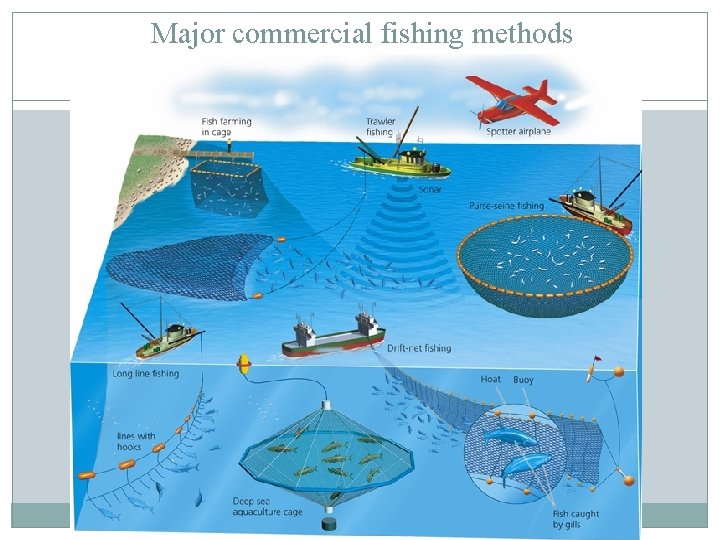
Major commercial fishing methods
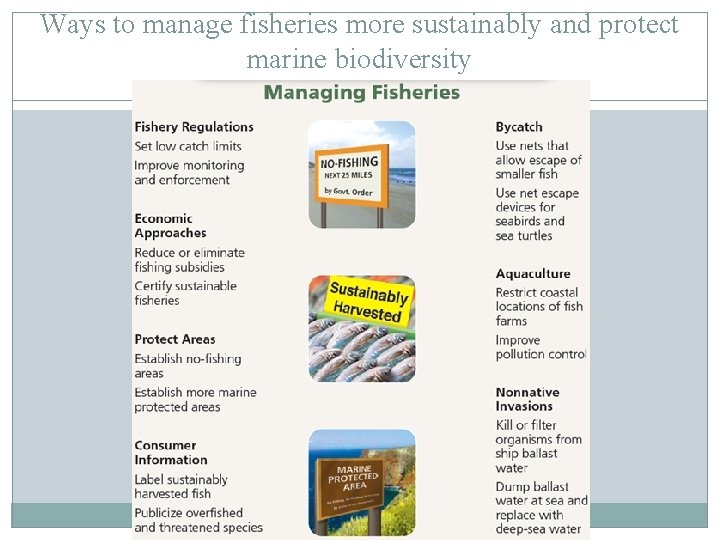
Ways to manage fisheries more sustainably and protect marine biodiversity
What are humans doing to aquatic ecosystems? �Human activities have destroyed or degraded a large portion of the world’s coastal wetlands, coral reefs, mangroves, and ocean bottom, and disrupted many of the world’s freshwater ecosystems. �Rising sea levels are likely to destroy many coral reefs and flood some low-lying islands along with their protective coastal mangrove forests. �Loss and degradation of many sea-bottom habitats caused by dredging operations and trawler fishing boats.
Humans actions continued �In freshwater aquatic zones, dam building and excessive water withdrawal from rivers for irrigation and urban water supplies destroy aquatic habitats, degrade water flows, and disrupt freshwater biodiversity. �The deliberate or accidental introduction of hundreds of harmful invasive species threatens aquatic biodiversity. � 34% of the world’s known marine fish species and 71% of the world’s freshwater fish species face premature extinction.
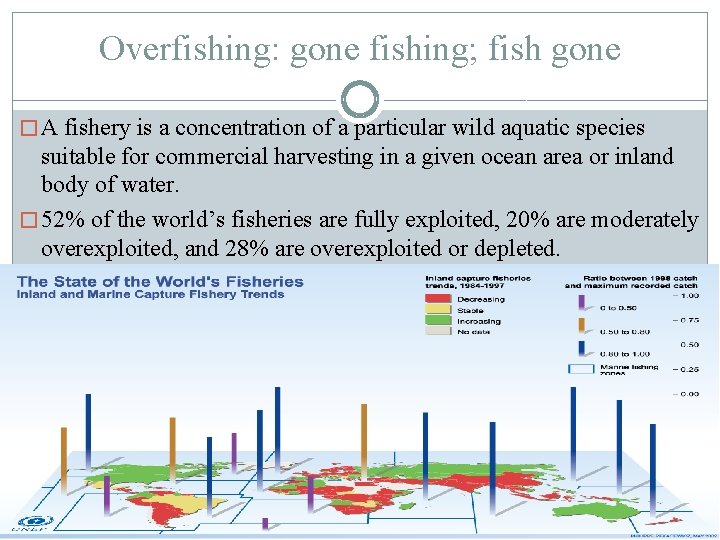
Overfishing: gone fishing; fish gone � A fishery is a concentration of a particular wild aquatic species suitable for commercial harvesting in a given ocean area or inland body of water. � 52% of the world’s fisheries are fully exploited, 20% are moderately overexploited, and 28% are overexploited or depleted.
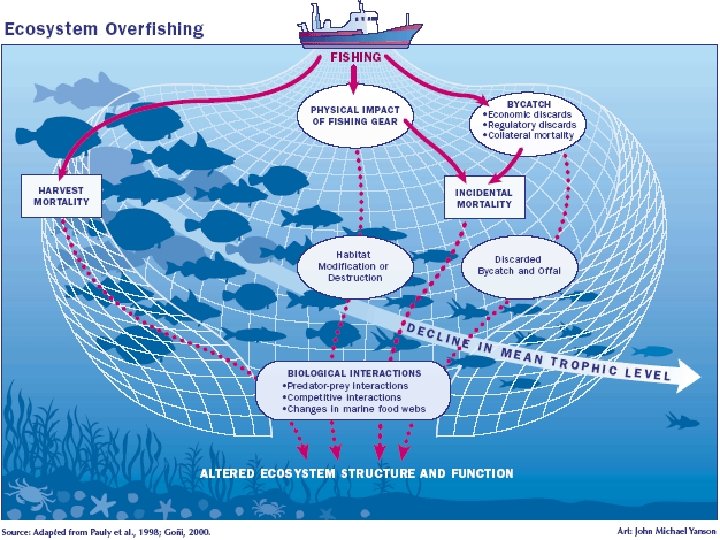
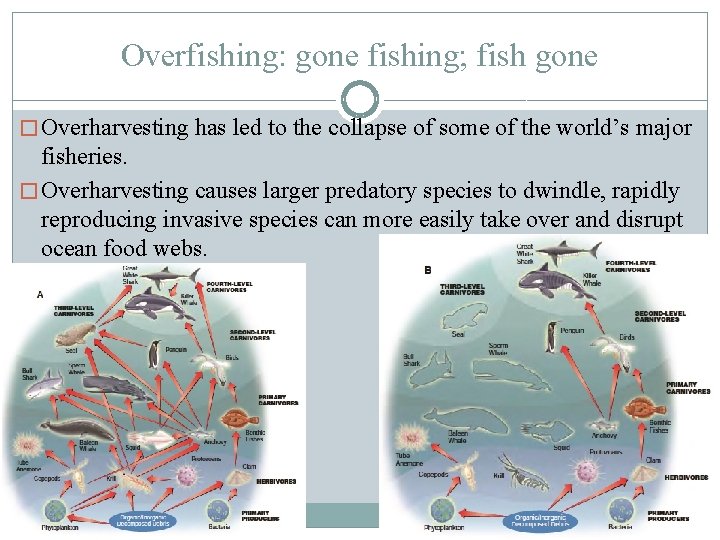
Overfishing: gone fishing; fish gone � Overharvesting has led to the collapse of some of the world’s major fisheries. � Overharvesting causes larger predatory species to dwindle, rapidly reproducing invasive species can more easily take over and disrupt ocean food webs.
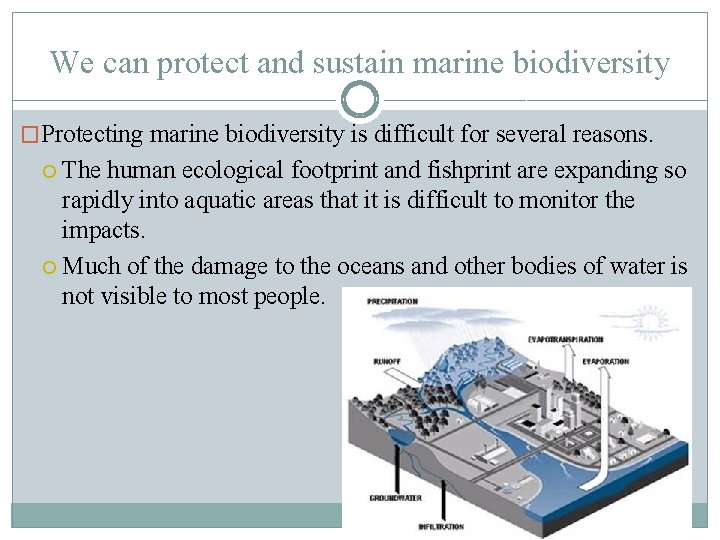
We can protect and sustain marine biodiversity �Protecting marine biodiversity is difficult for several reasons. The human ecological footprint and fishprint are expanding so rapidly into aquatic areas that it is difficult to monitor the impacts. Much of the damage to the oceans and other bodies of water is not visible to most people.
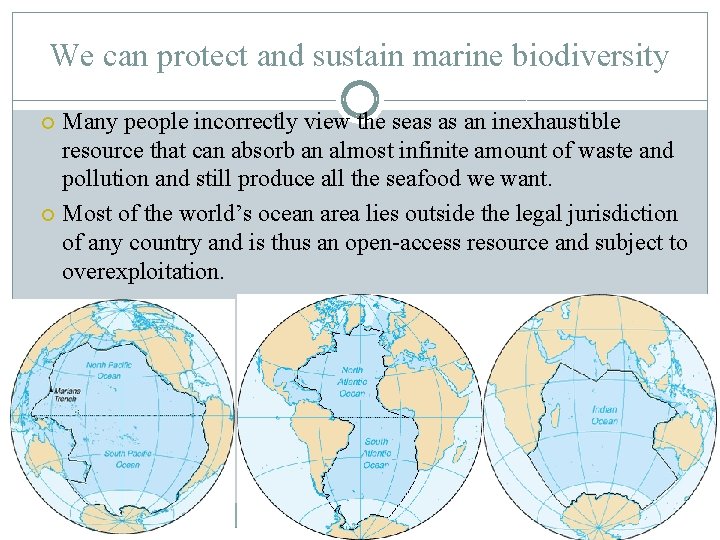
We can protect and sustain marine biodiversity Many people incorrectly view the seas as an inexhaustible resource that can absorb an almost infinite amount of waste and pollution and still produce all the seafood we want. Most of the world’s ocean area lies outside the legal jurisdiction of any country and is thus an open-access resource and subject to overexploitation.
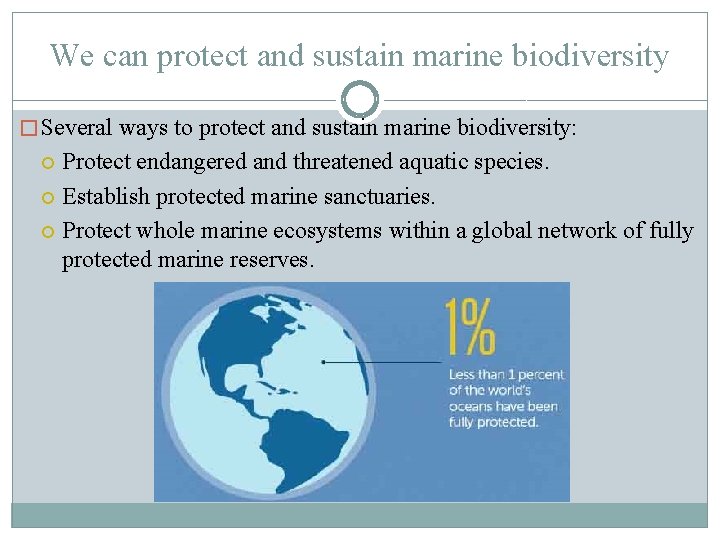
We can protect and sustain marine biodiversity � Several ways to protect and sustain marine biodiversity: Protect endangered and threatened aquatic species. Establish protected marine sanctuaries. Protect whole marine ecosystems within a global network of fully protected marine reserves.
Taking an Ecosystem Approach to Sustaining Aquatic Biodiversity �Strategies for applying the ecosystem approach to aquatic biodiversity include: Complete the mapping of the world’s aquatic biodiversity, identifying and locating as many plant and animal species as possible. Identify and preserve the world’s aquatic biodiversity hotspots and areas where deteriorating ecosystem services threaten people and other forms of life.
Taking an Ecosystem Approach to Sustaining Aquatic Biodiversity Create large and fully protected marine reserves to allow damaged marine ecosystems to recover and to allow fish stocks to be replenished. Protect and restore the world’s lakes and river systems (the most threatened ecosystems of all). Initiate worldwide ecological restoration projects in systems such as coral reefs and inland coastal wetlands. Find ways to raise the incomes of people who live in or near protected lands and waters so that they can become partners in the protection and sustainable use of ecosystems.
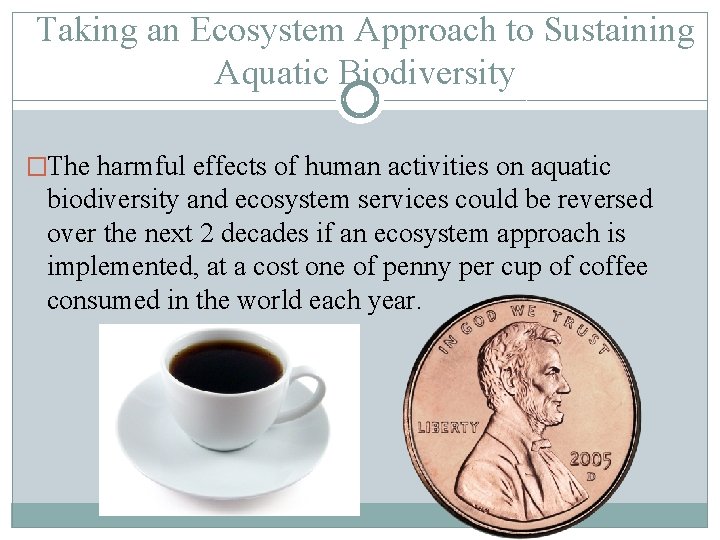
Taking an Ecosystem Approach to Sustaining Aquatic Biodiversity �The harmful effects of human activities on aquatic biodiversity and ecosystem services could be reversed over the next 2 decades if an ecosystem approach is implemented, at a cost one of penny per cup of coffee consumed in the world each year.
- Slides: 16