
How can parents encourage their children to use






- Slides: 29
How can parents encourage their children to use problem solving skills?
• In general, children’s lives are not in their control. • Children love to play because it is child-initiated and child-controlled. • Children’s problem solving skills are a key feature in the development of social competence.
How can parents encourage their children to use problem solving skills? TEACH PROBLEM SOLVING SKILLS 1. WHAT IS THE PROBLEM? 2. WHAT ARE SOME SOLUTIONS? 3. WHAT WOULD HAPPEN NEXT?
How can parents creatively build a sense of responsibility in their children? At what ages should we expect these things?
9 Key Techniques for Raising Respectful Children Who Make Responsible Choices KAREN RUSKIN, PSY. D.
1. Start Young 2. Let Them Help You 3. Show Kids the Way 4. Model Responsibility 5. Praise Them 6. Manage Your Expectations 7. Avoid Rewards 8. Provide Structure and Routine 9. Teach Consequences
Typical Responsibilitie s by Age
Two-Year-Olds • Clean up toys Three-Year-Olds • Putting dirty clothes in hamper • Help you make their bed • Put water in pet bowls • Pull up their own elastic waist pants or skirts • Brush their teeth with your guidance
Four-Year-Olds • Continue to refine their previously practiced tasks as a 3 • Take a bath with your supervision • Choose their clothing • Set the table • Help wash the car • Sweep the floor, dust, etc.
Five-Year-Olds • Continue to refine their previously practiced tasks as a 4 • Dress themselves • Complete simple homework assignments with your supervision • Help you make their lunches • Help with younger siblings • Clean up after themselves
Do you see different benefits to interactive play with adults and independent play?
BENEFITS OF INDEPENDENT PLAY • Learning to express themselves • Solve problems • Cope with new situations • Vital to development of creativity and imagination
PLAYING WITH ADULTS Play Helps Your Child Understand care about his peers and the external environment Develop his confidence and self-esteem Develop good physical coordination
PLAYING WITH ADULTS Develop focus, creativity and independence Prepare themselves for adulthood Discover their talents and passion Communicate their feelings Make decisions on their own
Play Helps Parents Understand their child's interests, feelings and thoughts Impart values that influences their children's attitude at home, school and his peers Communicate to their child Develop a special bond with their children
Play Helps Parents Learn how their child reacts to success, failures and obstacles Determine the learning style that works best with their child
What are some creative ways parents can help children regulate their emotions?
• Modeling - by demonstrating appropriate behavior, adults show children how to accomplish a task and use the self regulation needed to complete it
• Using Hints and Cues – when adults use simple directions, gestures, and touch, they provide young children with valuable cues about how and when to regulate their emotions, attention, and behavior
• Gradually Withdrawing Adult Support – Adults turn over more of the regulatory responsibilities to the children’s control while monitoring their progress and intervening when necessary to provide the appropriate support.
Why do temper tantrums happen?
• battling between dependence and independence • limited skills to influence the events that take place in their lives • inconsistency and unrealistic expectations
• undue strictness • over-protectiveness • overindulgence • lack of assertive limit setting
What actions do you suggest taking with children who are experiencing a tantrum?
Easy To Love, Difficult To Discipline Dr. Becky Bailey You Tube Video
Dr. Bailey explains how to help children calm down so they can move through their tantrums more quickly, and also how to wire children’s brains for greater self-control (fewer tantrums in the future). She makes the following suggestions:
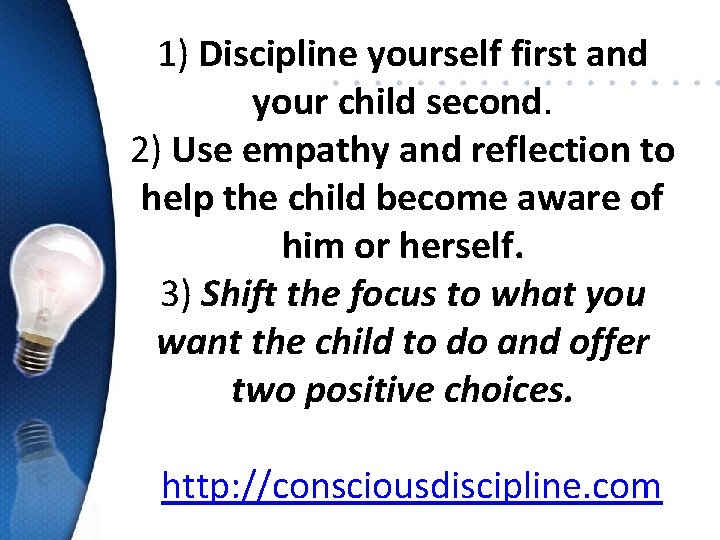
1) Discipline yourself first and your child second. 2) Use empathy and reflection to help the child become aware of him or herself. 3) Shift the focus to what you want the child to do and offer two positive choices. http: //consciousdiscipline. com
What are some creative ways parents can encourage children to express feelings?
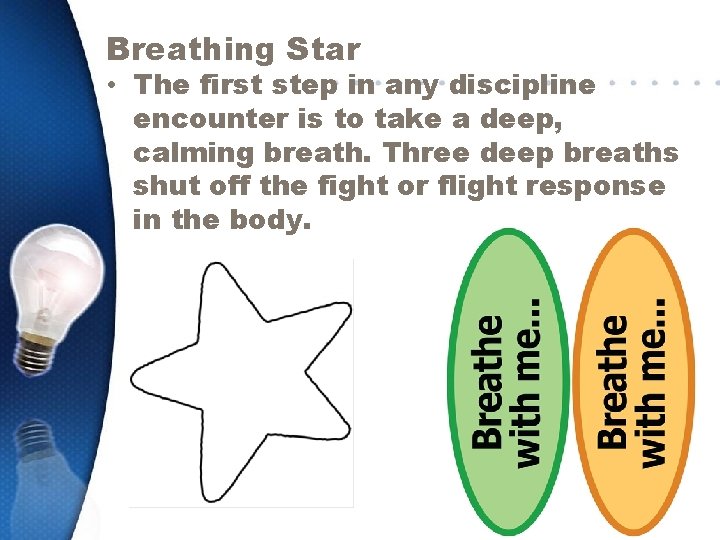
Breathing Star • The first step in any discipline encounter is to take a deep, calming breath. Three deep breaths shut off the fight or flight response in the body.