
HOW BIG IS INFINITY Sarah Hagen Oregon State
HOW BIG IS INFINITY? Sarah Hagen, Oregon State University November 1 st, 2018
WHAT IS INFINITY? There is no single coherent notion of infinity! v. Unending process v. The end of a process v. Infinitely small/infinitely large ?
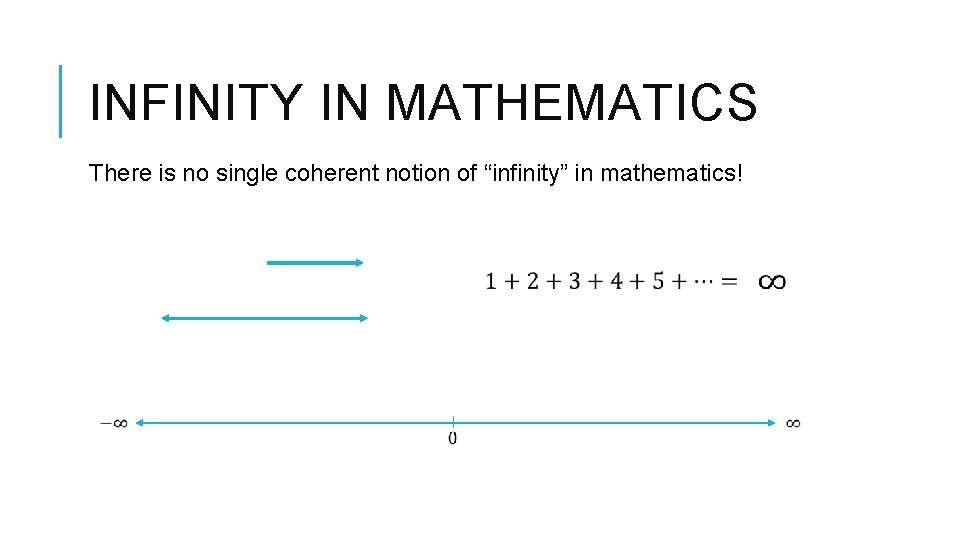
INFINITY IN MATHEMATICS There is no single coherent notion of “infinity” in mathematics!
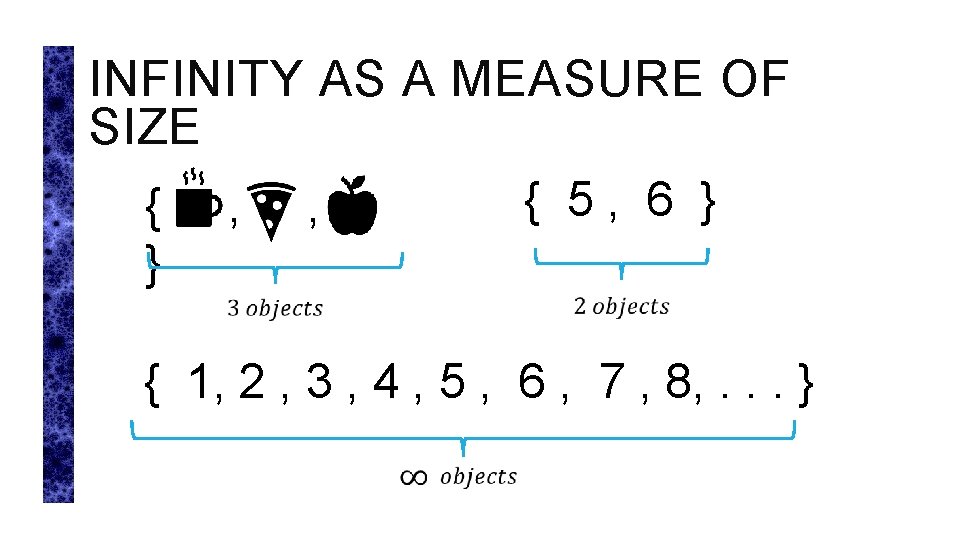
INFINITY AS A MEASURE OF SIZE { 5, 6 } { , , } { 1, 2 , 3 , 4 , 5 , 6 , 7 , 8, . . . }
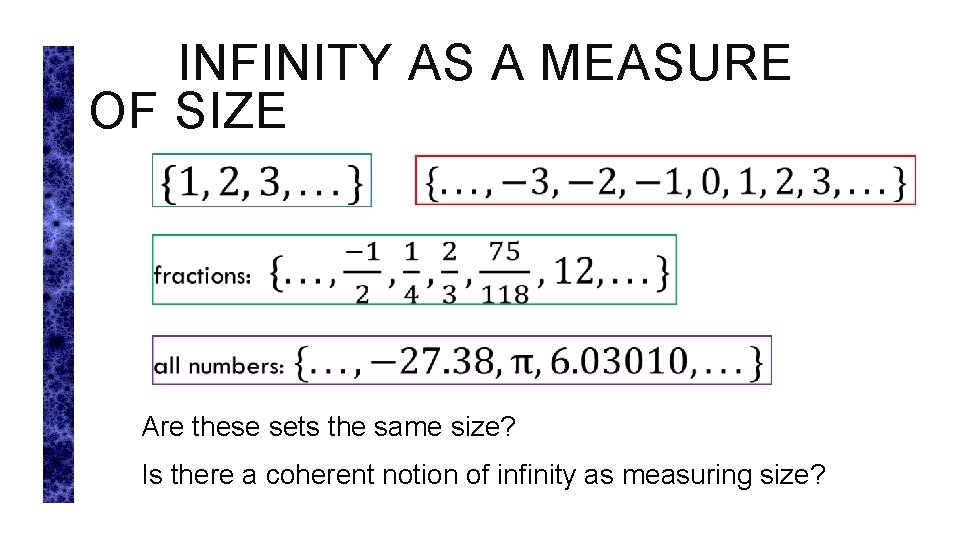
INFINITY AS A MEASURE OF SIZE Are these sets the same size? Is there a coherent notion of infinity as measuring size?
YES! But you are going to have to give up something that you love…

A LITTLE HISTORY
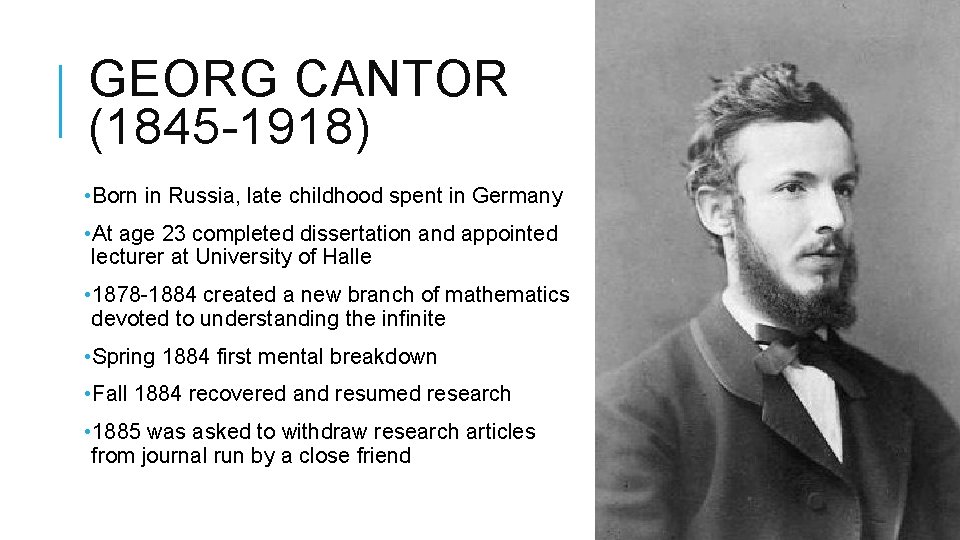
GEORG CANTOR (1845 -1918) • Born in Russia, late childhood spent in Germany • At age 23 completed dissertation and appointed lecturer at University of Halle • 1878 -1884 created a new branch of mathematics devoted to understanding the infinite • Spring 1884 first mental breakdown • Fall 1884 recovered and resumed research • 1885 was asked to withdraw research articles from journal run by a close friend
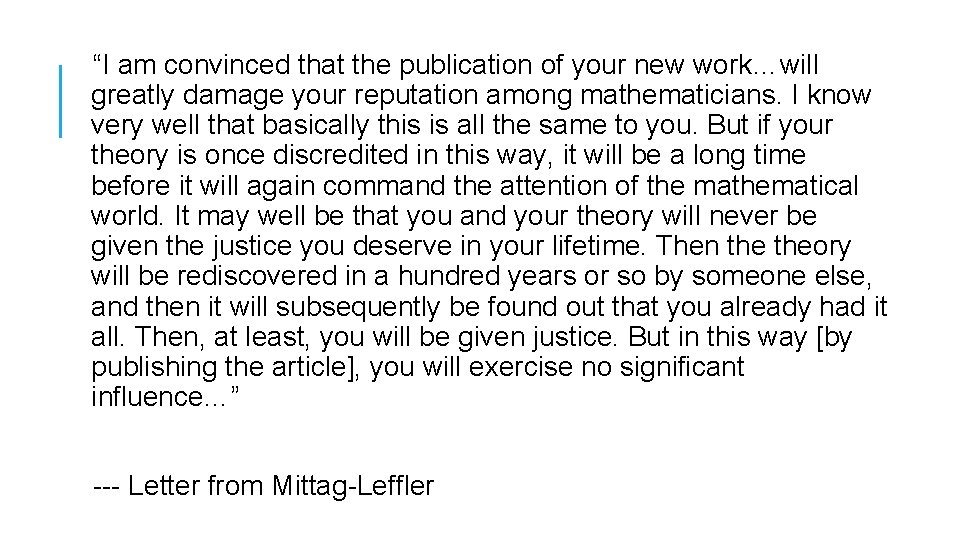
“I am convinced that the publication of your new work…will greatly damage your reputation among mathematicians. I know very well that basically this is all the same to you. But if your theory is once discredited in this way, it will be a long time before it will again command the attention of the mathematical world. It may well be that you and your theory will never be given the justice you deserve in your lifetime. Then theory will be rediscovered in a hundred years or so by someone else, and then it will subsequently be found out that you already had it all. Then, at least, you will be given justice. But in this way [by publishing the article], you will exercise no significant influence…” --- Letter from Mittag-Leffler
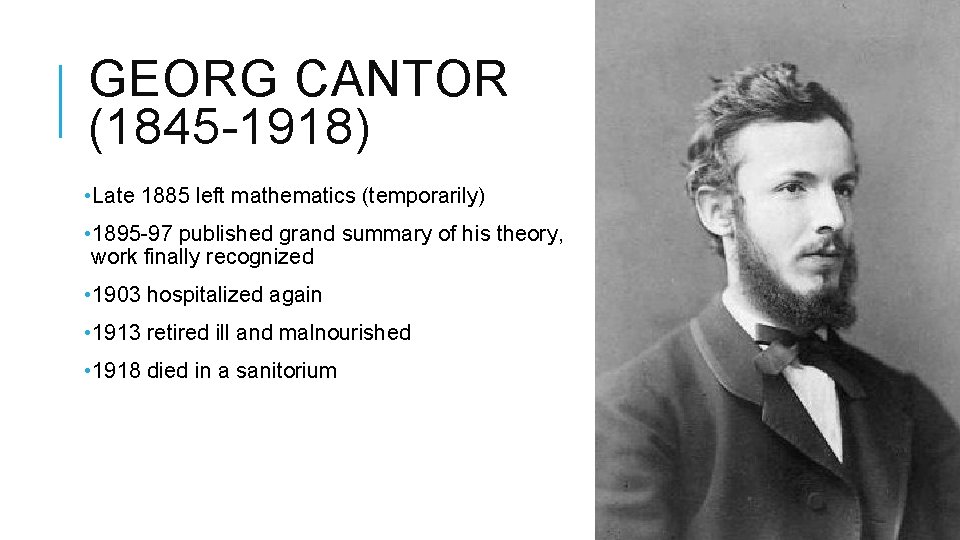
GEORG CANTOR (1845 -1918) • Late 1885 left mathematics (temporarily) • 1895 -97 published grand summary of his theory, work finally recognized • 1903 hospitalized again • 1913 retired ill and malnourished • 1918 died in a sanitorium

A LITTLE ACTIVITY
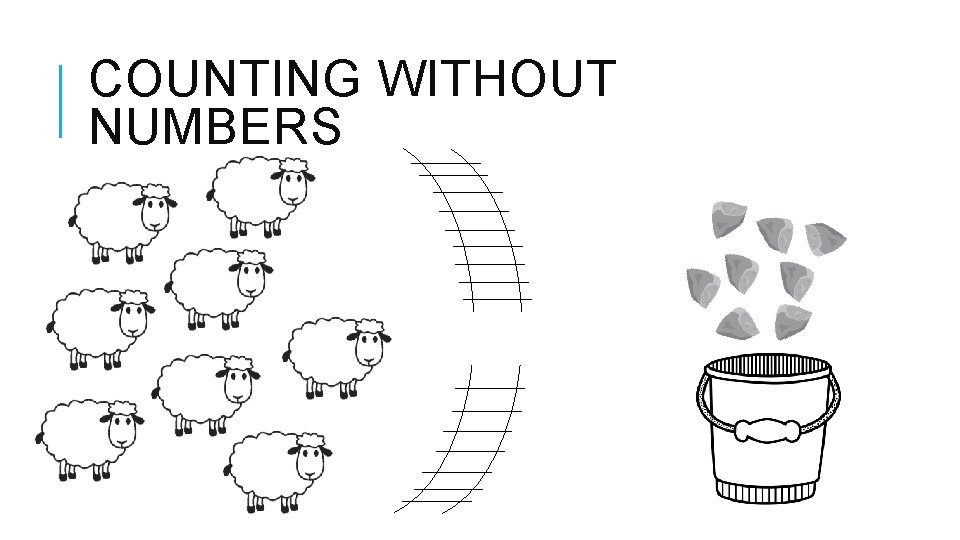
COUNTING WITHOUT NUMBERS
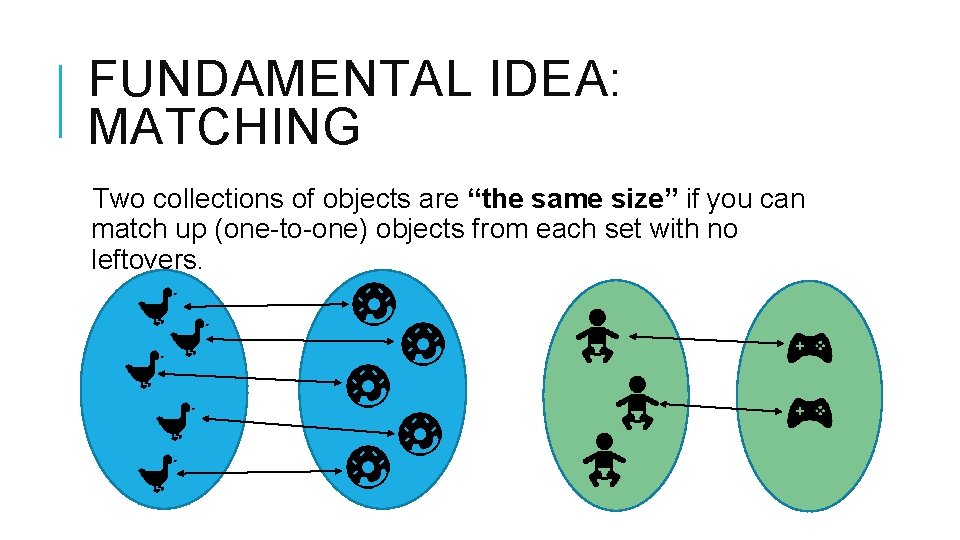
FUNDAMENTAL IDEA: MATCHING Two collections of objects are “the same size” if you can match up (one-to-one) objects from each set with no leftovers.
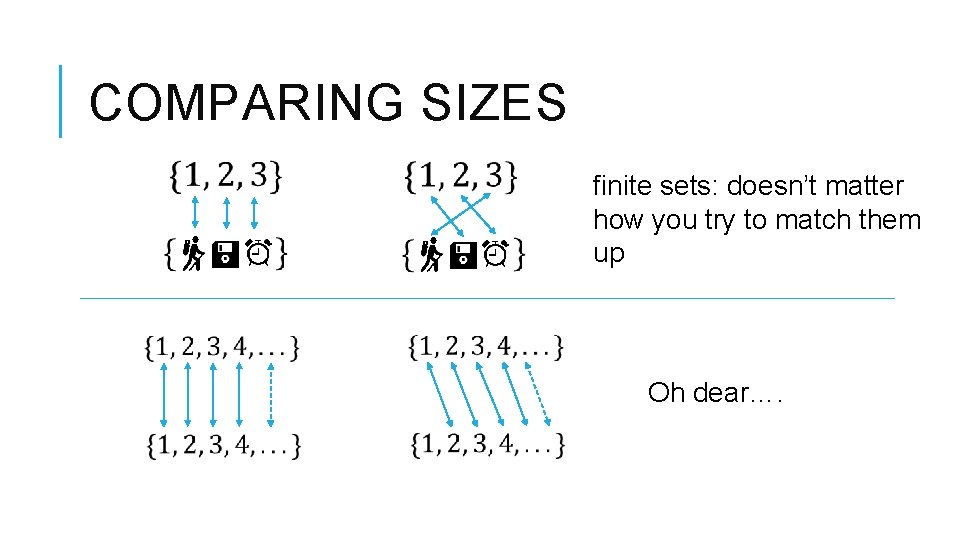
COMPARING SIZES finite sets: doesn’t matter how you try to match them up Oh dear….
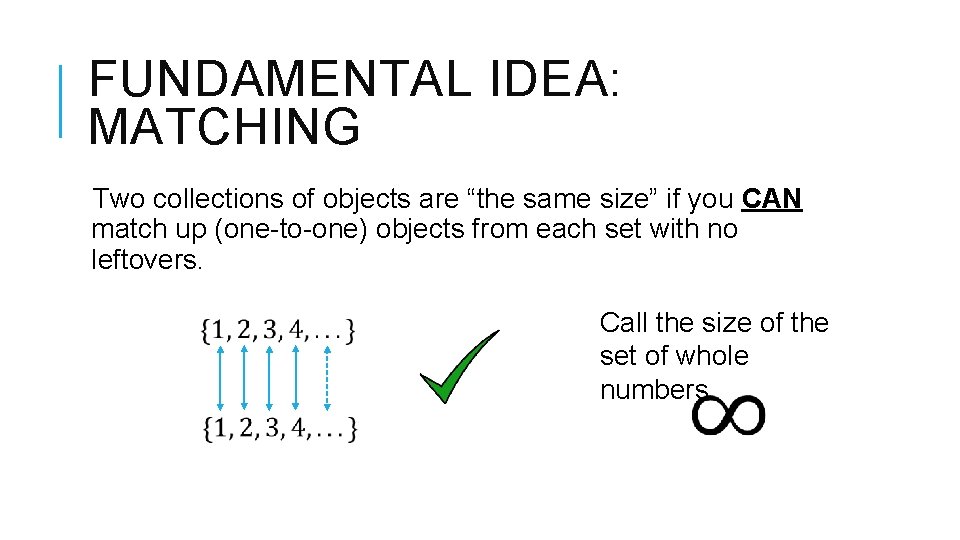
FUNDAMENTAL IDEA: MATCHING Two collections of objects are “the same size” if you CAN match up (one-to-one) objects from each set with no leftovers. Call the size of the set of whole numbers
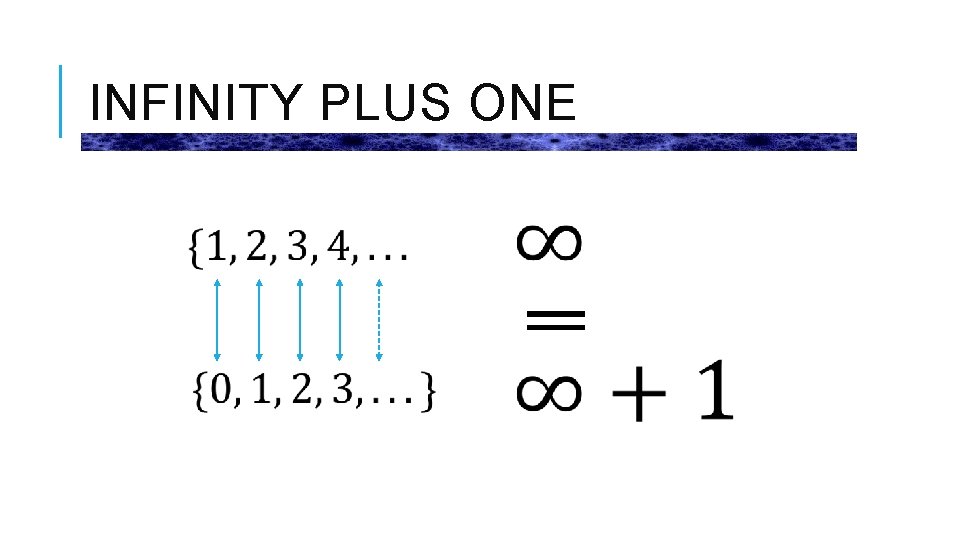
INFINITY PLUS ONE
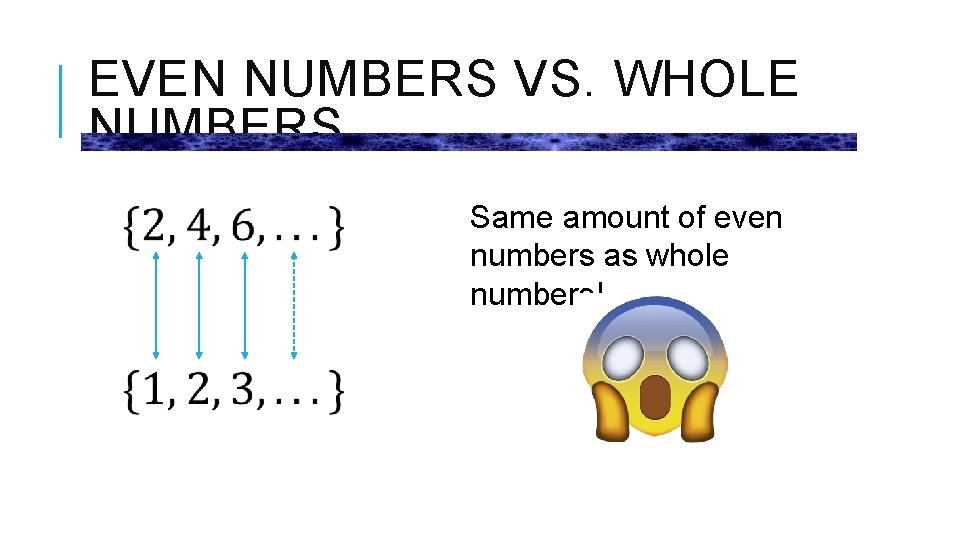
EVEN NUMBERS VS. WHOLE NUMBERS Same amount of even numbers as whole numbers!
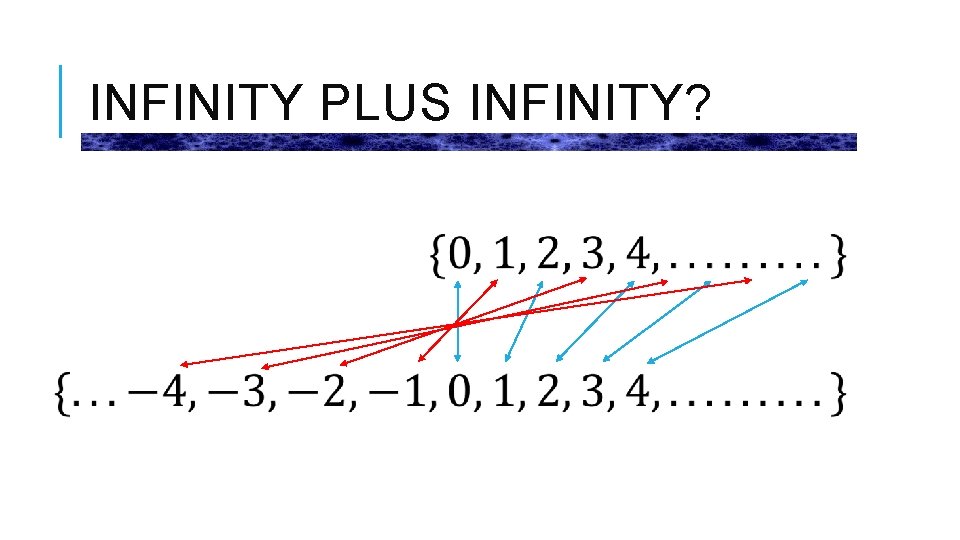
INFINITY PLUS INFINITY?
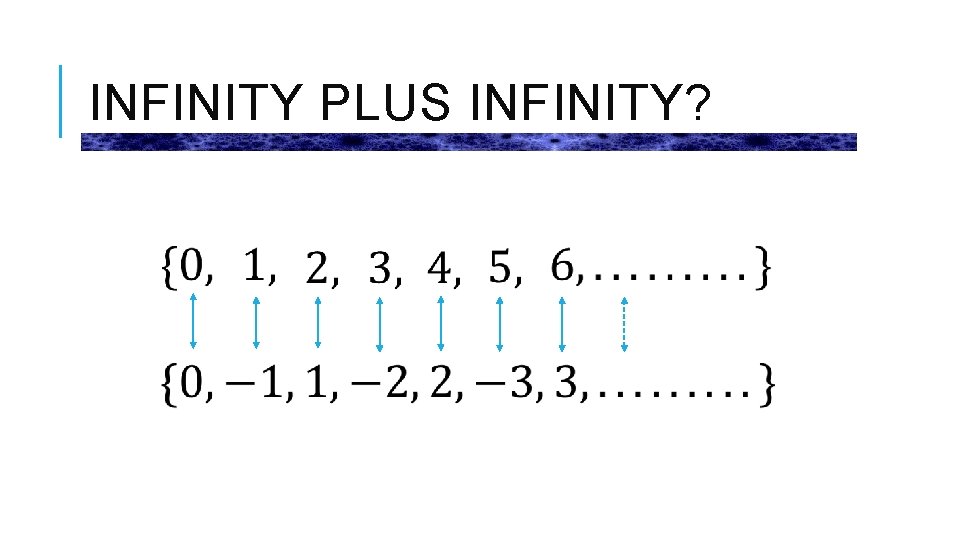
INFINITY PLUS INFINITY?
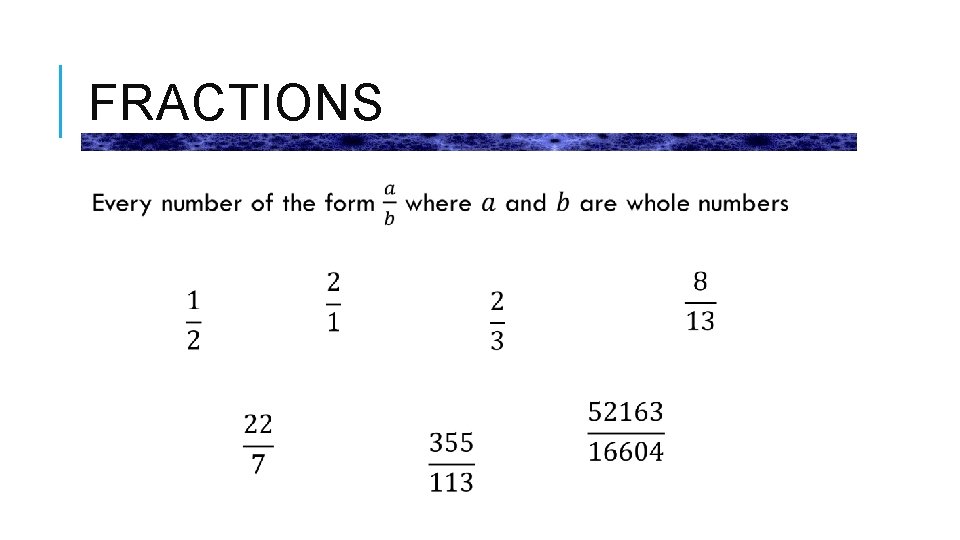
FRACTIONS
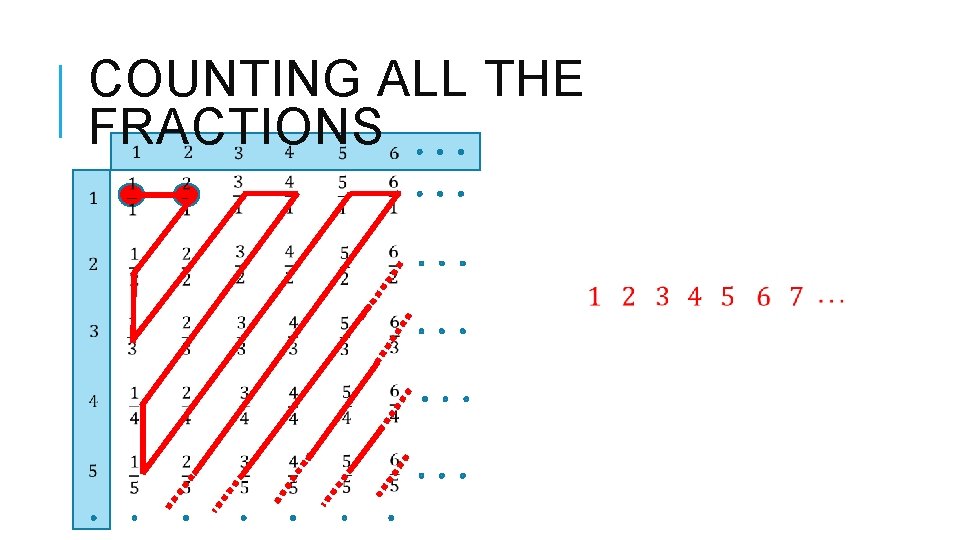
COUNTING ALL THE FRACTIONS
SO ARE ALL INFINITE SETS THE SAME SIZE?
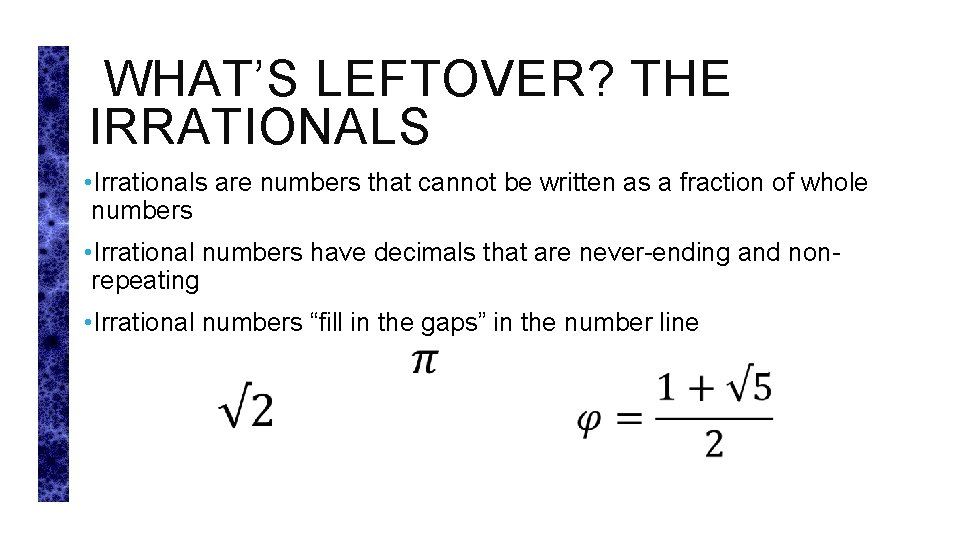
WHAT’S LEFTOVER? THE IRRATIONALS • Irrationals are numbers that cannot be written as a fraction of whole numbers • Irrational numbers have decimals that are never-ending and nonrepeating • Irrational numbers “fill in the gaps” in the number line
WHEN ARE INFINITE SETS NOT THE SAME SIZE? Two collections of objects are “the same size” if you can match up (one-to-one) objects from each set with no leftovers. Two collections of objects are “different sizes” if there is NO WAY to match up (one-to-one) objects from each set without any leftovers. The goal: to show that any attempt at matching the irrationals with the whole numbers will leave leftover irrationals
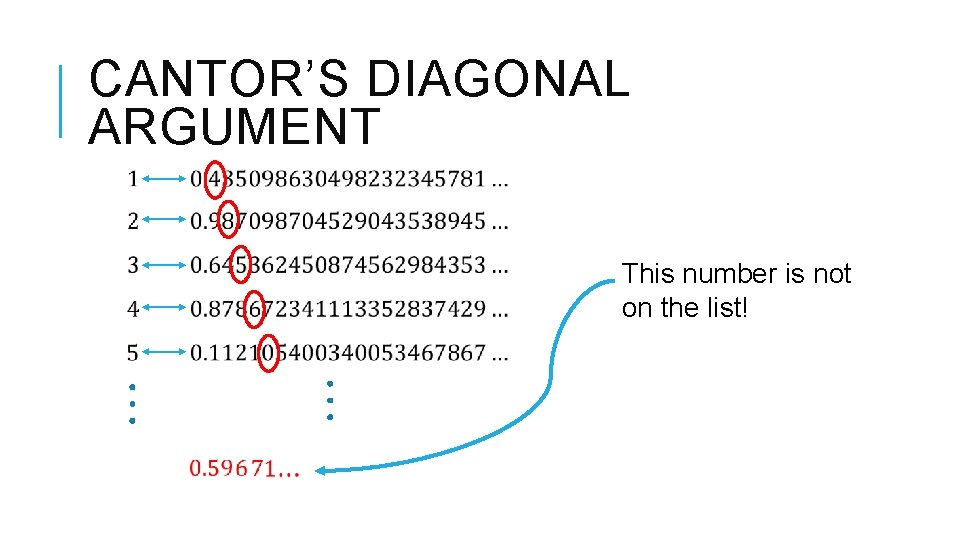
CANTOR’S DIAGONAL ARGUMENT This number is not on the list!
WE DID IT! There are more numbers between 0 and 1 than fractions on the entire number line! There are different sizes of infinity!!!!!
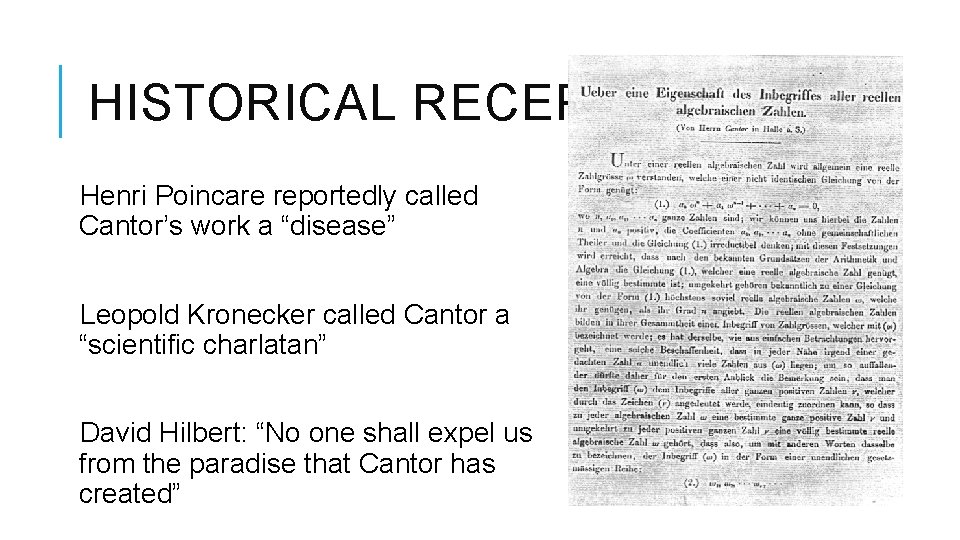
HISTORICAL RECEPTION Henri Poincare reportedly called Cantor’s work a “disease” Leopold Kronecker called Cantor a “scientific charlatan” David Hilbert: “No one shall expel us from the paradise that Cantor has created”
RELATED RESULTS • Is there a smallest infinity? v. Yes! The size of the whole numbers is the smallest • Is there a largest infinity? v. No! There an infinity of infinities! • Is there an infinity between the infinity of the counting numbers and the infinity of the irrationals? v. We don’t know! This is known as the “Continuum Hypotheses” and has been shown to be independent of the axioms of set theory
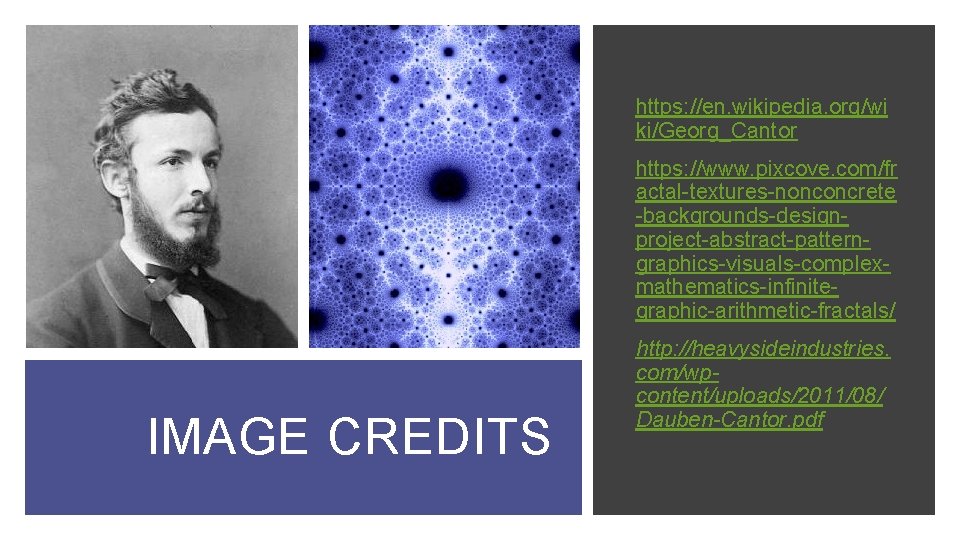
https: //en. wikipedia. org/wi ki/Georg_Cantor https: //www. pixcove. com/fr actal-textures-nonconcrete -backgrounds-designproject-abstract-patterngraphics-visuals-complexmathematics-infinitegraphic-arithmetic-fractals/ IMAGE CREDITS http: //heavysideindustries. com/wpcontent/uploads/2011/08/ Dauben-Cantor. pdf
REFERENC ES Laubenbacher, Reinhard; Pengelley, David. (1999) Mathematical Expeditions. Springer Wikipedia: https: //en. wikipedia. org/wiki/Ge org_Cantor Dauben, Joseph. (2004) "Georg Cantor and the Battle for Transfinite Set Theory" (PDF), Proceedings of the 9 th ACMS Conference (Westmont College, Santa Barbara, CA), pp. 1– 22.

THANK YOU!
- Slides: 31