
How are Rivers Formed Recap the water cycle
- Slides: 19
How are Rivers Formed? Recap the water cycle Compare the differences between river images Analyse how all rivers begin and end
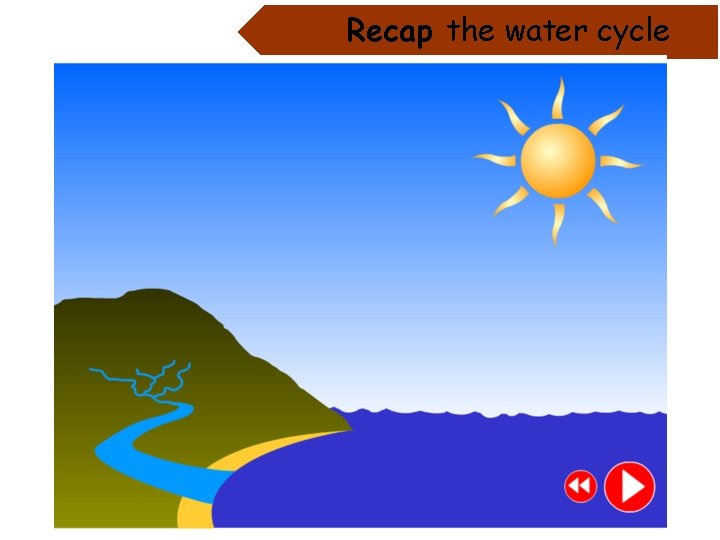
Recap the water cycle
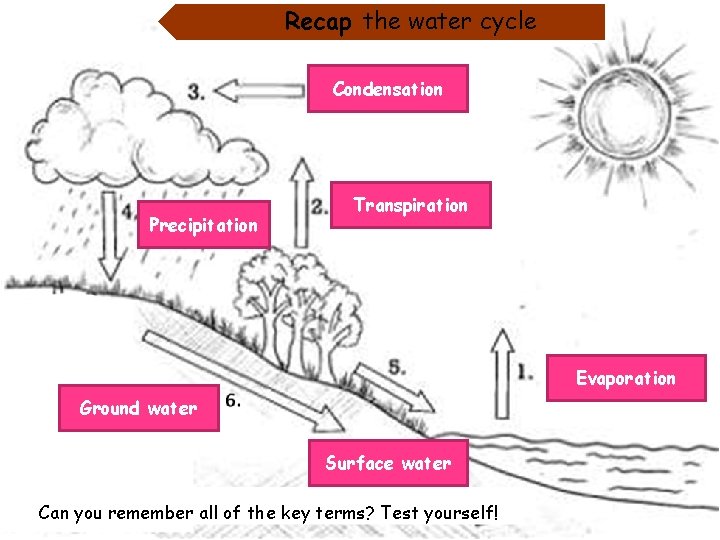
Recap the water cycle Condensation Precipitation Transpiration Evaporation Ground water Surface water Can you remember all of the key terms? Test yourself!
Rivers= Surface water • So, rivers make up the surface water in the water cycle because they are made up of water that is on top of the ground. • They help rain water (precipitation) to make it’s way back to the seas and oceans. Recap the water cycle
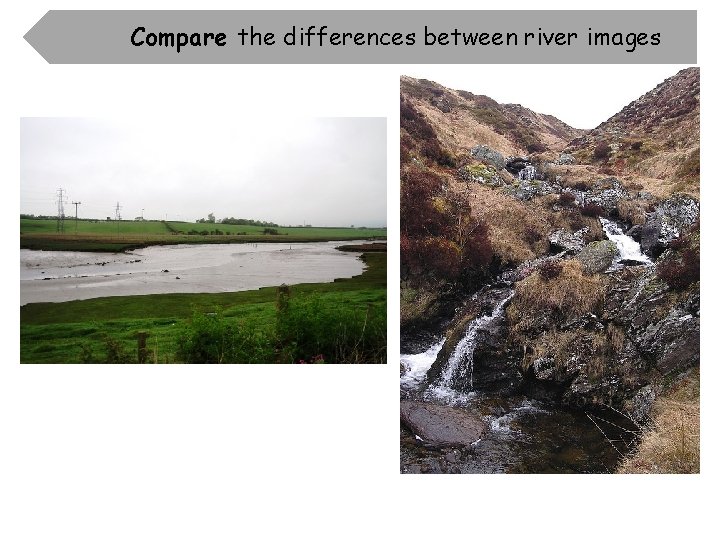
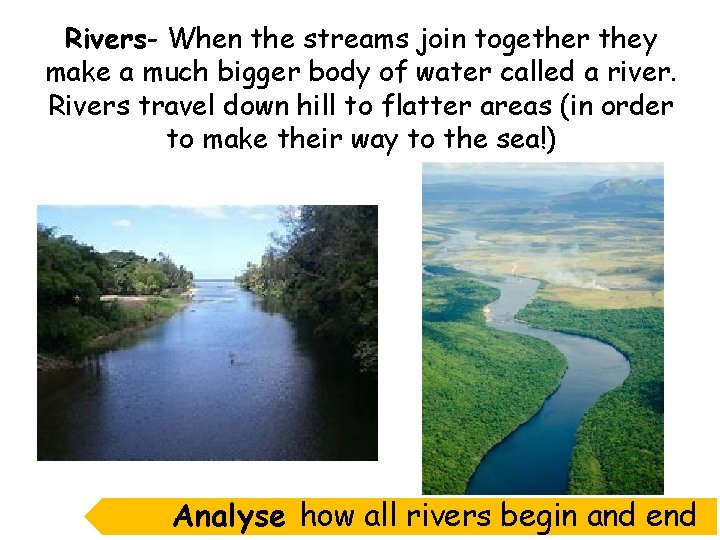
Compare the differences between river images • Look at the two pictures on the following slide • Describe what the rivers look like using adjectives • What is the difference between the two pictures? Killer Question: Can you justify (give reasons why) the rivers might look this way?
Compare the differences between river images
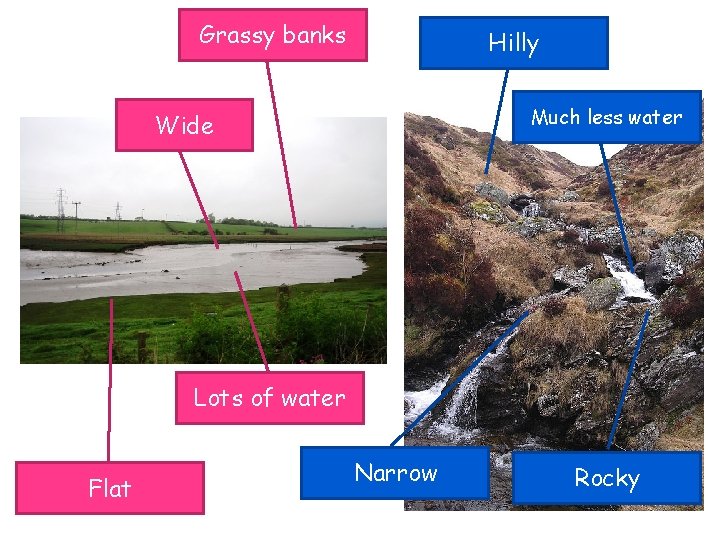
Grassy banks Hilly Much less water Wide Lots of water Flat Narrow Rocky
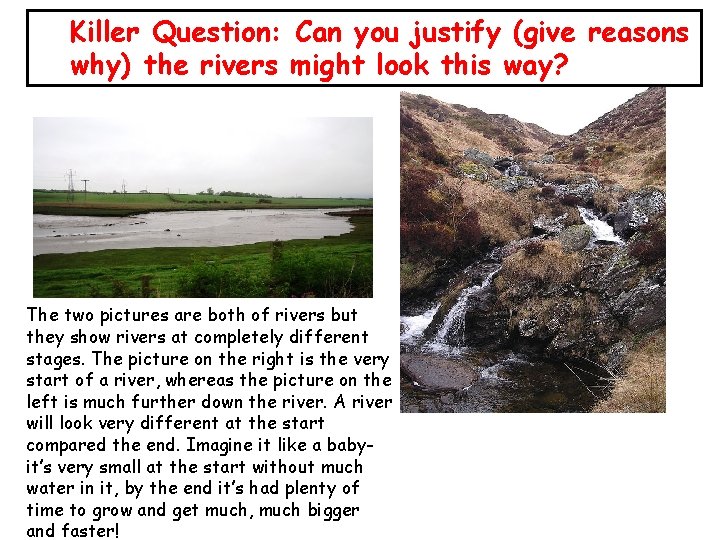
Killer Question: Can you justify (give reasons why) the rivers might look this way? The two pictures are both of rivers but they show rivers at completely different stages. The picture on the right is the very start of a river, whereas the picture on the left is much further down the river. A river will look very different at the start compared the end. Imagine it like a babyit’s very small at the start without much water in it, by the end it’s had plenty of time to grow and get much, much bigger and faster!
Analyse how all rivers begin and end Watch this short clip: BBC - Learning Zone Class Clips - Rivers and the water cycle - Geography Video After watching the clip, try to explain in your own words how a river is formed.
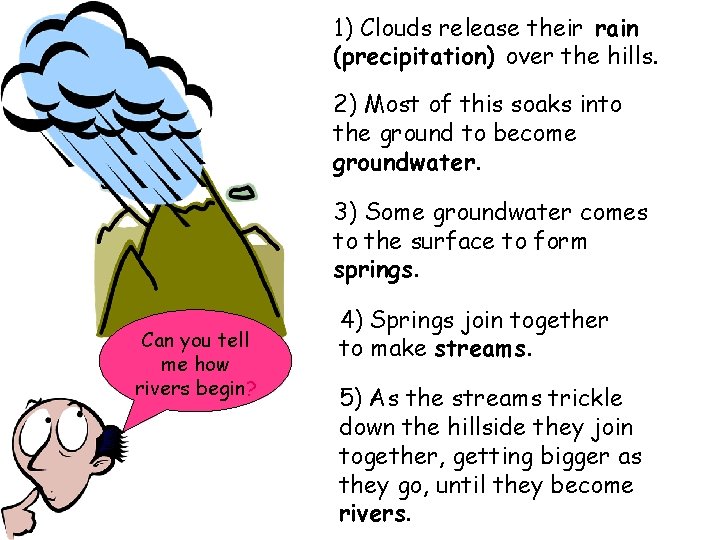
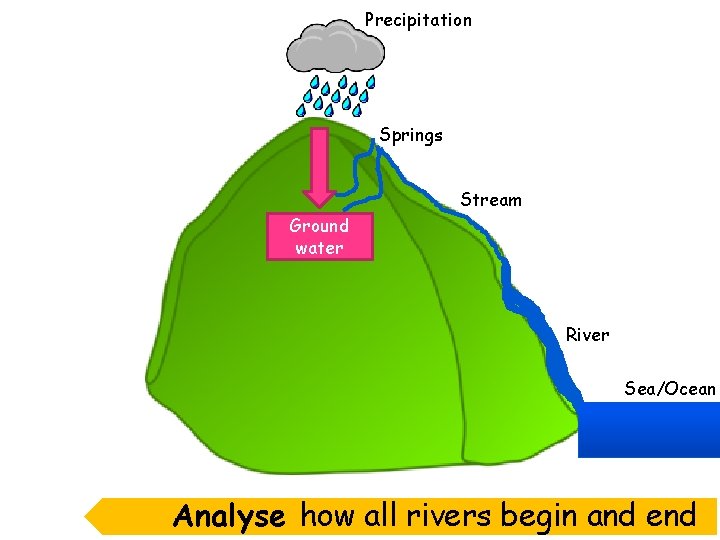
1) Clouds release their rain (precipitation) over the hills. 2) Most of this soaks into the ground to become groundwater. 3) Some groundwater comes to the surface to form springs. Can you tell me how rivers begin? 4) Springs join together to make streams. 5) As the streams trickle down the hillside they join together, getting bigger as they go, until they become rivers.
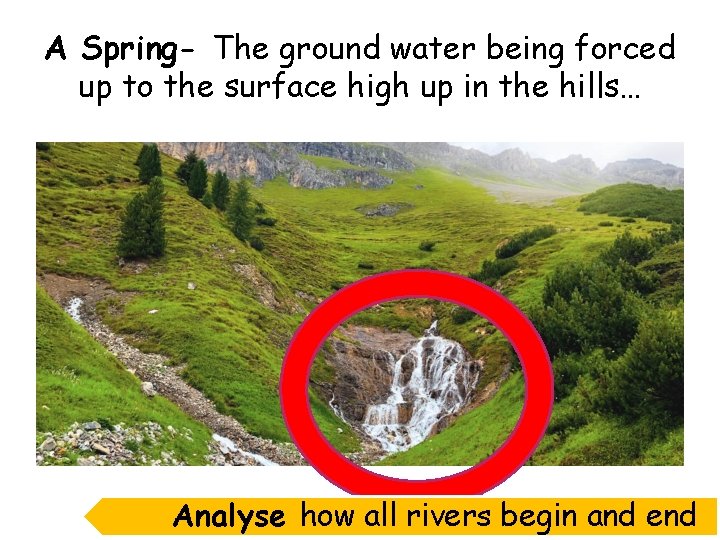
A Spring- The ground water being forced up to the surface high up in the hills… Analyse how all rivers begin and end
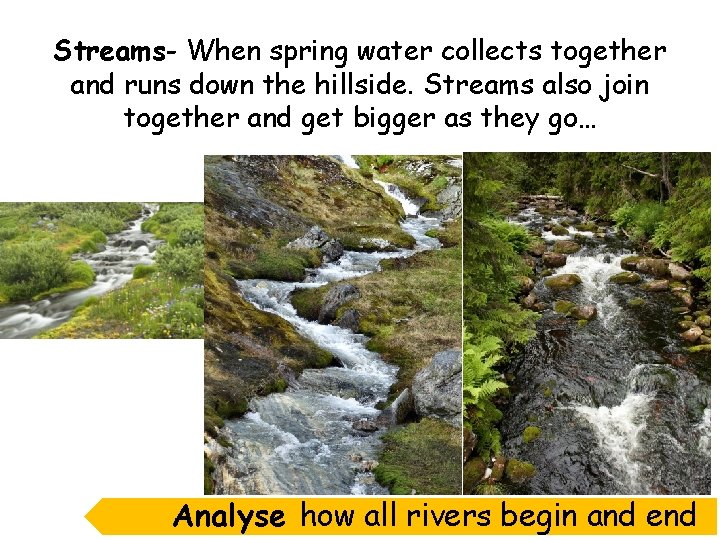
Streams- When spring water collects together and runs down the hillside. Streams also join together and get bigger as they go… Analyse how all rivers begin and end
Rivers- When the streams join together they make a much bigger body of water called a river. Rivers travel down hill to flatter areas (in order to make their way to the sea!) Analyse how all rivers begin and end
Precipitation Springs Stream Ground water River Sea/Ocean Analyse how all rivers begin and end
Now you’ve got all the knowledge you need for this lesson, have a go at the questions on the next slides to test your knowledge… Write your answers down then use the answers (on the answers PPT) to check if you were right. If you got one wrong don’t worry- do as we always do and correct it! (yes- you should do this in purple pen at school, but don’t worry if you don’t have one of those, any colour will do!) Remember you should all do the developing and secure questions. If you are targeted S+, or you would like to challenge yourself, do those questions too!
Test your knowledge: Developing 1) What are the 6 water cycle key terms? 2) Describe which part of the water cycle rivers would be found in.
Test your knowledge: Secure 3) What are some adjectives to describe how a river may look at the start of it’s journey? 4) What are some adjectives to describe how a river may look further down it’s journey? 5) Explain why rivers don’t look the same all the way along from the start to the finish.
Test your knowledge: Secure+ 6) Define the following key terms: • Springs • Streams • Rivers 7) Draw a diagram to show all rivers are formed 8) Now write an explanation to show you understand how and where all rivers start, how they grow, and where they end.
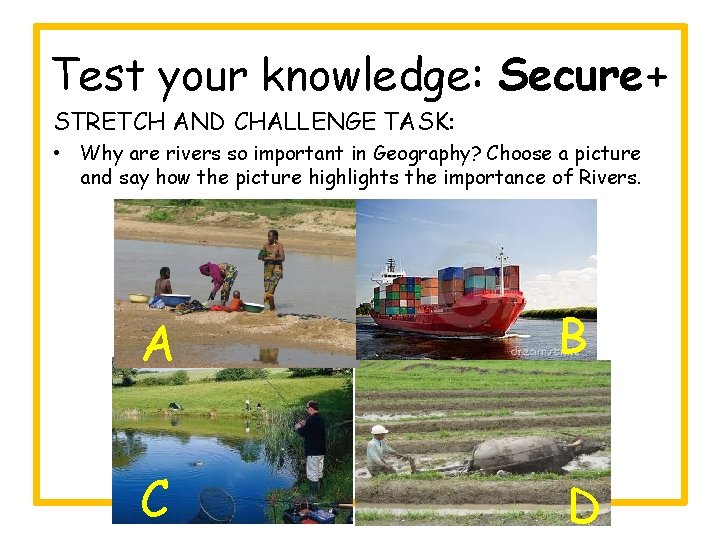
Test your knowledge: Secure+ STRETCH AND CHALLENGE TASK: • Why are rivers so important in Geography? Choose a picture and say how the picture highlights the importance of Rivers. A B C D