
How are ecosystems modified by humans for food
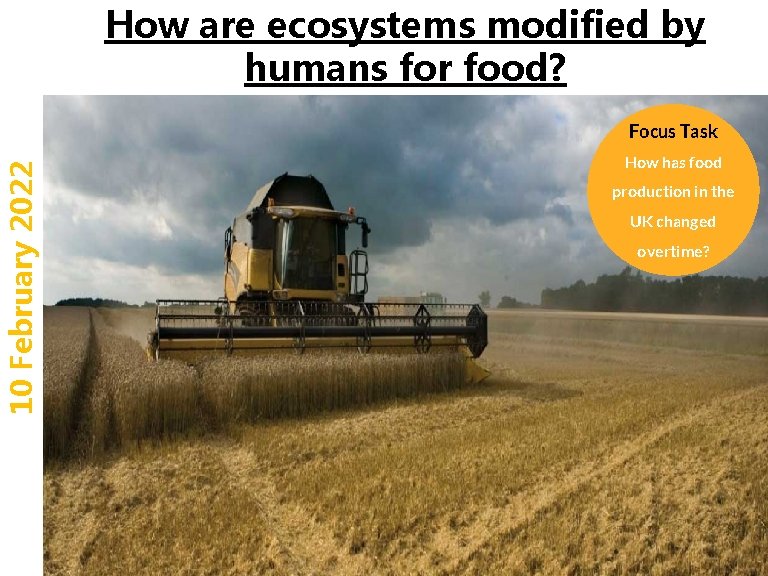
How are ecosystems modified by humans for food? 10 February 2022 Focus Task How has food production in the UK changed overtime?
How are ecosystems modified? Most of the UK is made up of land which humans have heavily modified to help them grow food, produce energy and obtain water. The UK used to be covered by woodland, which over time has been cut down to be used for fuel and to make space for land for housing, farm animals and growing crops.
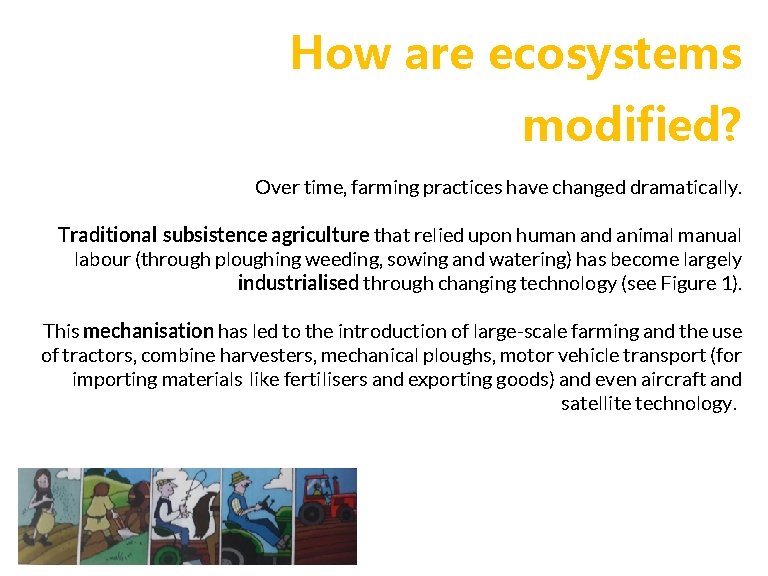
How are ecosystems modified? Over time, farming practices have changed dramatically. Traditional subsistence agriculture that relied upon human and animal manual labour (through ploughing weeding, sowing and watering) has become largely industrialised through changing technology (see Figure 1). This mechanisation has led to the introduction of large-scale farming and the use of tractors, combine harvesters, mechanical ploughs, motor vehicle transport (for importing materials like fertilisers and exporting goods) and even aircraft and satellite technology.

How are ecosystems modified? Identify how humans may have modified (changed) ecosystems in the UK to provide food. What impacts has the mechanisation of farming had on ecosystems?
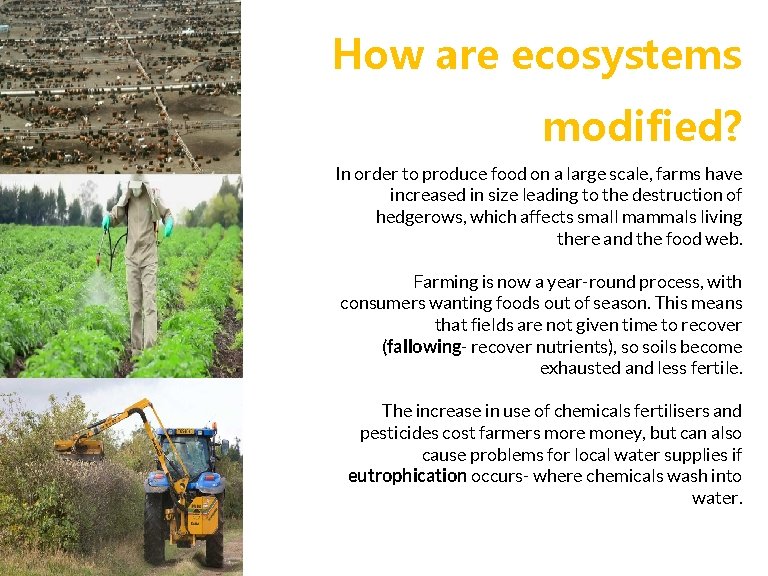
How are ecosystems modified? In order to produce food on a large scale, farms have increased in size leading to the destruction of hedgerows, which affects small mammals living there and the food web. Farming is now a year-round process, with consumers wanting foods out of season. This means that fields are not given time to recover (fallowing- recover nutrients), so soils become exhausted and less fertile. The increase in use of chemicals fertilisers and pesticides cost farmers more money, but can also cause problems for local water supplies if eutrophication occurs- where chemicals wash into water.
How are ecosystems modified? Identify how humans may have modified (changed) ecosystems in the UK to provide food. Why do people rely on fish? What impacts has commercial fishing had on ecosystems?
How are ecosystems modified? Commercial fishing techniques have led to the over-fishing of popular species. Too many young fish are caught, so there are not enough left in the sea to breed and produce fish to replace those that have been taken. It takes cod four years to reach breeding age and many have been taken before this stage. Accidental deaths of other species caught (such as dolphins in tuna nets). The amount of fish caught has declined in the last 10 years (cod/tuna). This means that fishing boats have to travel further to catch fish, using more fuel and increasing pollution by using fossil fuels.
![Exam Questions Explain what is meant by the term mechanisation. [2] Discuss the idea](http://slidetodoc.com/presentation_image_h2/a8556ccfcb7b040833f1b57a825be317/image-8.jpg "Exam Questions Explain what is meant by the term mechanisation. [2] Discuss the idea")
Exam Questions Explain what is meant by the term mechanisation. [2] Discuss the idea that modern farming techniques in the United Kingdom harm the environment and ecosystems. [6]
Mark Scheme Use of machinery (P) rather than using labour (people) (P) for development.
Mark Scheme Simple (1 -2 marks) Increased use of fertiliser/pesticide can harm ecosystems/pollute water. Increased demand for food means that soils do not get a chance to recover. Developed (3 -4 marks) Increased use of fertiliser and pesticides get contaminate water supplies of people, plants and animals. These increased levels can cause the complete destruction of local delicate ecosystems. Fish and other aquatic life are particularly vulnerable. Increased demand for food means that nutrients are repeatedly removed from soils. Year after year. This makes soil infertile and unable to sustain crop growth. Well Developed (5 -6 marks) An increase in the use of chemical fertilisers and pesticides can cause contamination of water supplies for people. Especially those who draw water from natural springs/wells or aquifers (underground rocks which can be used as a water supply). These areas are known as Nitrate Vulnerable Zones (areas were ecosystems are at risk due to soils being contaminated by nitrates from fertilisers). As people want produce out of season (e. g. strawberries in winter) fields are not given time to recover, meaning that there are less fertile soils.
Resources
- Slides: 11