
How and why do we need to change
- Slides: 8
How and why do we need to change our management of peat? Dr Chris Field Manchester Metropolitan University
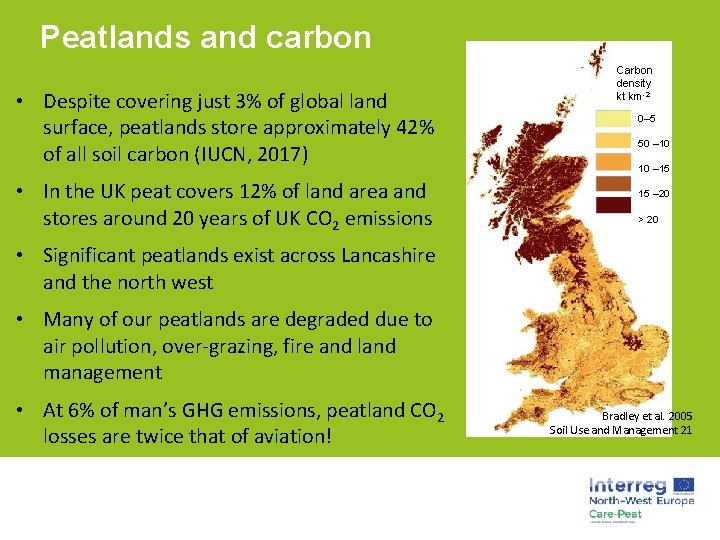
Peatlands and carbon • Despite covering just 3% of global land surface, peatlands store approximately 42% of all soil carbon (IUCN, 2017) • In the UK peat covers 12% of land area and stores around 20 years of UK CO 2 emissions Carbon density kt km-2 0– 5 50 – 10 10 – 15 15 – 20 > 20 • Significant peatlands exist across Lancashire and the north west • Many of our peatlands are degraded due to air pollution, over-grazing, fire and land management • At 6% of man’s GHG emissions, peatland CO 2 losses are twice that of aviation! Bradley et al. 2005 Soil Use and Management 21
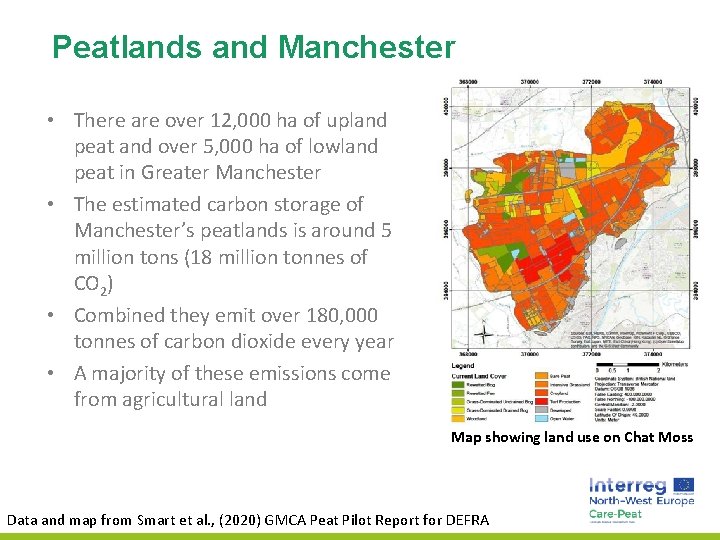
Peatlands and Manchester • There are over 12, 000 ha of upland peat and over 5, 000 ha of lowland peat in Greater Manchester • The estimated carbon storage of Manchester’s peatlands is around 5 million tons (18 million tonnes of CO 2) • Combined they emit over 180, 000 tonnes of carbon dioxide every year • A majority of these emissions come from agricultural land Map showing land use on Chat Moss Data and map from Smart et al. , (2020) GMCA Peat Pilot Report for DEFRA
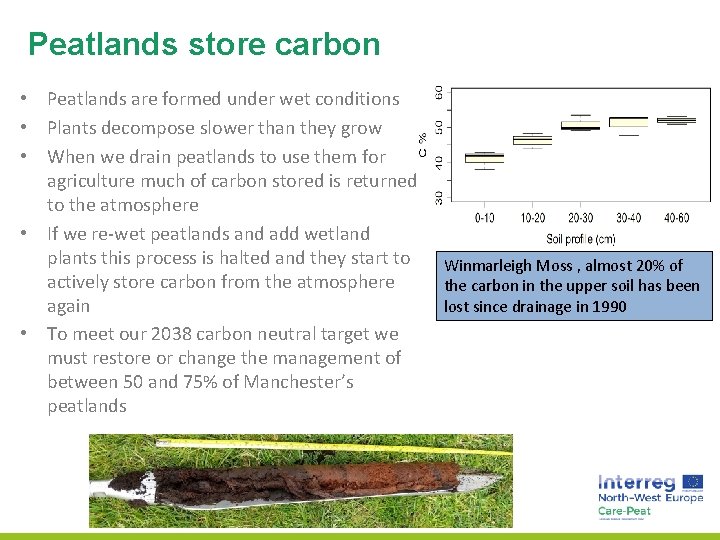
Peatlands store carbon • Peatlands are formed under wet conditions • Plants decompose slower than they grow • When we drain peatlands to use them for agriculture much of carbon stored is returned to the atmosphere • If we re-wet peatlands and add wetland plants this process is halted and they start to actively store carbon from the atmosphere again • To meet our 2038 carbon neutral target we must restore or change the management of between 50 and 75% of Manchester’s peatlands Winmarleigh Moss , almost 20% of the carbon in the upper soil has been lost since drainage in 1990
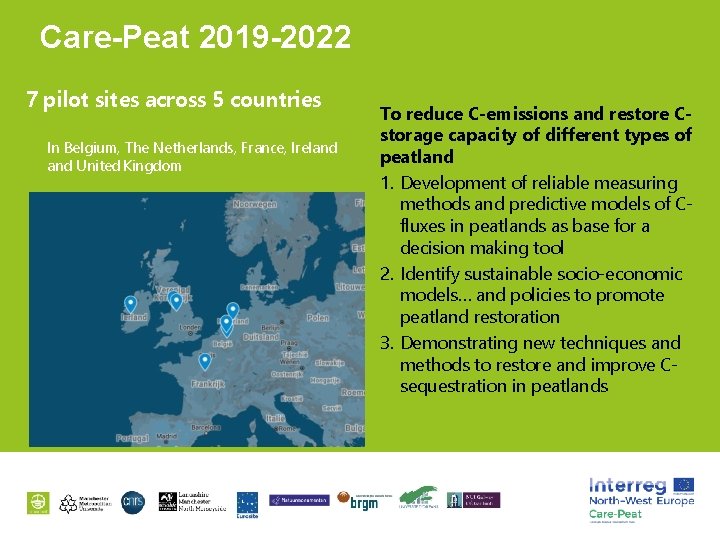
Care-Peat 2019 -2022 7 pilot sites across 5 countries In Belgium, The Netherlands, France, Ireland United Kingdom To reduce C-emissions and restore Cstorage capacity of different types of peatland 1. Development of reliable measuring methods and predictive models of Cfluxes in peatlands as base for a decision making tool 2. Identify sustainable socio-economic models… and policies to promote peatland restoration 3. Demonstrating new techniques and methods to restore and improve Csequestration in peatlands
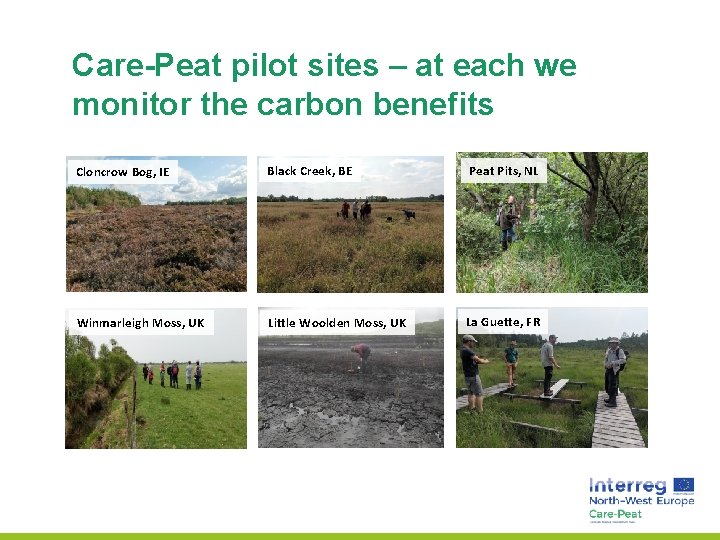
Care-Peat pilot sites – at each we monitor the carbon benefits Cloncrow Bog, IE Black Creek, BE Peat Pits, NL Winmarleigh Moss, UK Little Woolden Moss, UK La Guette, FR
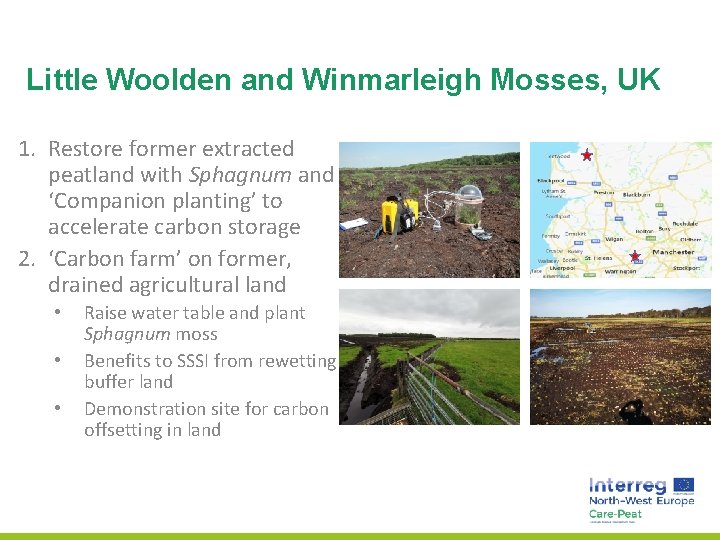
Little Woolden and Winmarleigh Mosses, UK 1. Restore former extracted peatland with Sphagnum and ‘Companion planting’ to accelerate carbon storage 2. ‘Carbon farm’ on former, drained agricultural land • • • Raise water table and plant Sphagnum moss Benefits to SSSI from rewetting buffer land Demonstration site for carbon offsetting in land
Summary • Peatlands are huge carbon stores • Human pressures and current management means these carbon stores are sources of carbon dioxide emissions • It is ‘easy’ to reduce these emissions but we need the policy and economic enablers • Restoration of peatlands is seen as key in achieving carbon targets