
HOW A BILL BECOMES LAW 10 Steps to

HOW A BILL BECOMES LAW
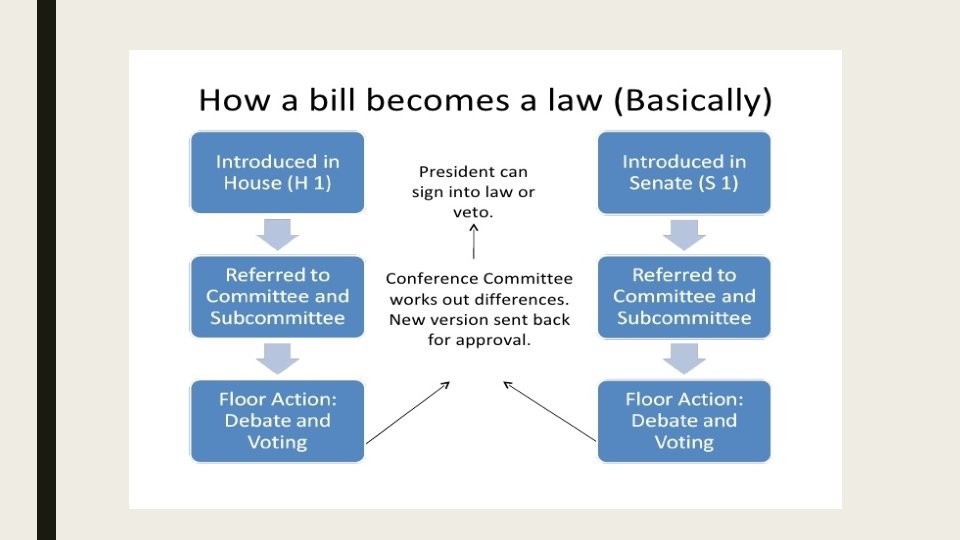
10 Steps to Become a Law ■ Step 1: A Bill is Introduced – Anyone can draft a bill, but only members of Congress can introduce legislation – Member(s) who introduce a bill become known as its sponsor(s). – The executive branch may propose legislation but a member of Congress must introduce it.
10 Steps to Become a Law ■ Step 2: Committee Action – When introduced, a bill is referred to a committee. – In committee, a bill is examined and its chances for passage are determined. – If a committee fails to act on a bill, the bill becomes effectively ‘dead’.
10 Steps to Become a Law ■ Step 3: Subcommittee Review – Bills are referred to a subcommittee for study and hearings. – Hearings allow for documenting the views of the executive branch, experts, public officials, supporters as well as opponents of the legislation.
10 Steps to Become a Law ■ Step 4: Mark Up – Following hearings, the subcommittee meets to “mark up” the bill – Mark Up: make changes and amendments prior to recommending the bill to a full committee. – If a subcommittee votes not to report the legislation to a full committee the bill dies. – If the committee votes for the bill, it is sent to the floor.
10 Steps to Become a Law ■ Step 5: Committee Action to Report a Bill – On receipt of the subcommittee’s report, the full committee votes on its recommendation to the House or Senate. – This process is known as ordering a bill reported.

10 Steps to Become a Law ■ Step 6: Voting – After debate and approval of any amendments, the bill is passed or defeated by the members voting.
10 Steps to Become a Law ■ Step 7: Referral to Other Chamber – When the House or Senate passes a bill, it is referred to the other chamber. – The same route through committee and floor action is followed. – The other chamber may: ■ Approve the bill as received ■ Reject the bill ■ Ignore the bill ■ Change the bill
10 Steps to Become a Law ■ Step 8: Conference Committee Action – When the actions of the other chamber significantly alter the bill, a conference committee is formed to reconcile the differences between the House and Senate versions. – If the conference is unable to reach agreement, the legislation dies. – If agreement is reached, a conference report is prepared describing recommendations for any changes. – Both the House and Senate must approve the conference report.
10 Steps to Become a Law ■ Step 9: Final Action – After both the House and Senate have approved a bill (must be in identical form), it is sent to the president. – If the president approves of the legislation, he/she signs it and it becomes law – If the president takes no action for ten days, while Congress is in session, it automatically becomes law. – If the president opposes the bill, he/she can veto it. – If the president takes no action after Congress has adjourned its second session, it is known as a pocket veto and the legislation dies.
10 Steps to Become a Law ■ Step 10: Overriding a Veto – If the president vetoes a bill, Congress may attempt to override the veto. – If both the Senate and the House pass the bill by a two-thirds majority, the president’s veto is overruled and the bill becomes a law.
- Slides: 12